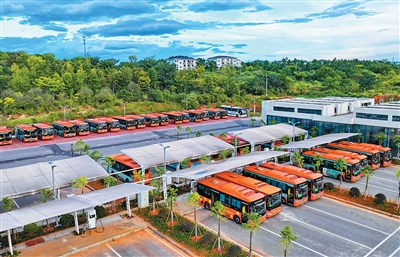
绿色出行

Search documents
我国城镇居民每100次出行中,约有30次由自行车、电动自行车完成 两轮出行为何越来越受青睐(美丽中国)
Ren Min Ri Bao· 2025-09-21 22:05
Core Insights - The two-wheeled transportation, primarily bicycles and electric bicycles, is increasingly favored for short-distance commuting and leisure due to its convenience and flexibility, contributing to a green transition in related industries [1][2] Group 1: Market Growth and Trends - The number of bicycles in China has surpassed 200 million, while electric bicycles have reached approximately 380 million, with urban residents completing about 30 out of every 100 trips using two-wheeled transportation [1] - From 2021 to 2023, the average riding time for urban residents increased from 12.6 minutes to 13.88 minutes, indicating a growing preference for two-wheeled commuting [2] - Daily carbon emissions reduced by two-wheeled transportation amount to approximately 10,000 tons, equating to a savings of about 6.6 million liters of gasoline [2] Group 2: Cultural and Social Impact - The rise of cycling culture has led to over 18 million cycling enthusiasts in China, with more than 100 million people cycling regularly, making it a new social trend [3] Group 3: Shared Mobility and Infrastructure - Over 12 million shared bicycles have been deployed nationwide, with an average of 24 million rides per day, highlighting the importance of shared mobility in urban transport [4] - The integration of rail and cycling is becoming more prevalent, with a steady increase in cycling activities around rail transit stations from 2021 to 2023 [4] Group 4: Sustainable Development Initiatives - The introduction of hydrogen-powered shared bicycles in Qingdao marks a shift towards using green energy in two-wheeled transportation [5] - The recycling rate of bicycles in the Guangdong-Hong Kong-Macao Greater Bay Area is about 25%, with shared bicycles achieving nearly 100% recycling [5] - The industry is evolving into a healthier, greener, and low-carbon lifestyle, with expectations for continued growth in two-wheeled transportation as infrastructure improves and environmental awareness increases [5]
北京绿色出行环境改善,公交地铁50米内换乘比例超过9成
Bei Jing Shang Bao· 2025-09-21 08:41
Core Points - The Beijing Municipal Transportation Commission and other agencies launched the "Hand in Hand for Civilization, Green Travel Together - 2025 Green Travel Promotion Month" event to promote green travel initiatives [1] - As of August 2025, the total length of urban rail transit has exceeded 879 kilometers, with ongoing improvements in rail network density and service levels [1] - The city has optimized connections at rail stations, completing renovations at 50 key stations and enhancing accessibility features [1] - The average daily ridership of shared bicycles has surpassed 3 million, addressing the "last mile" travel challenge [1] Group 1 - The transportation department has accelerated the optimization of rail station connections, adding 81,700 square meters of non-motorized vehicle parking [1] - The bus and subway transfer rate within 50 meters has exceeded 90% [1] - A total of 62 conventional bus routes have been scientifically optimized, increasing network coverage by 46.6 kilometers [1] Group 2 - The city is actively promoting non-motorized vehicle parking management, enhancing the green travel environment [2] - Over 50,000 non-motorized vehicle parking spaces and 763 guiding signs have been added at 85 key locations [2] - The removal of 95 rail station fences, totaling 17,554 linear meters, has facilitated a more orderly parking system for cyclists [2]
神州租车预测中秋国庆租车市场再攀新高
Zheng Quan Ri Bao Wang· 2025-09-19 11:47
Core Insights - Shenzhou Car Rental has reported a significant increase in car rental bookings for the upcoming Mid-Autumn Festival and National Day, with over 40% of users booking their trips more than a month in advance, indicating a strong trend towards early planning [1][2] - The average rental period has extended to 5.2 days, with long-term rentals (over 8 days) increasing by over 30% compared to last year, reflecting a shift in user preferences towards deeper travel experiences [1][2] Booking Trends - The top ten cities for National Day car rentals include Chengdu, Urumqi, Xining, Beijing, Hohhot, Harbin, Guangzhou, Guiyang, Shenzhen, and Haikou, with a notable interest in destinations known for autumn scenery and road trips [2] - Cross-city self-driving trips have become the mainstream choice, with popular routes such as Xining-Dunhuang and Haikou-Sanya leading in bookings, highlighting the demand for flexible travel options [2] User Demographics - The rental market is seeing a younger demographic, with nearly 40% of early bookers being new users and over 50% of users from the post-2000 and 1990 generations, indicating a shift towards a more youthful customer base [2] - There is a notable preference for new energy vehicles among younger users, with top models including BYD Song Pro, BYD Qin PLUS, and others, reflecting a growing interest in green travel and smart experiences [2] Company Overview - Shenzhou Car Rental operates a fleet of over 190,000 vehicles and has approximately 180 million registered users, with service points strategically located at airports, high-speed rail stations, and key business districts [3] - The company offers convenient services such as credit-free deposits and 24-hour self-service pick-up and return, ensuring a smooth process from booking to vehicle return [3]
兴邦能源首批氢能两轮车交付北理工
势银能链· 2025-09-18 04:00
Core Viewpoint - Jiangsu Xingbang Energy Technology Co., Ltd. has made a significant step in the commercialization of hydrogen energy transportation by delivering its first batch of 10 hydrogen-powered two-wheelers to the Beijing Institute of Technology's Yangtze River Delta Research Institute [3][5]. Group 1: Product Features and Advantages - The hydrogen-powered two-wheelers are equipped with a self-developed air-cooled fuel cell system and utilize advanced low-pressure solid-state hydrogen storage technology, achieving a range of 80 kilometers and hydrogen refueling in approximately 30 seconds [5]. - Compared to traditional lithium battery two-wheelers, hydrogen-powered vehicles offer advantages in safety, range, refueling time, lifespan, and environmental impact [5]. Group 2: Market Strategy and Future Plans - Xingbang Energy plans to collaborate with more cities, universities, communities, and enterprises to gradually expand the deployment scale and scope of hydrogen-powered two-wheelers [7]. - The company aims to deepen its focus on the hydrogen energy sector, prioritize green development, and actively explore pathways for energy revolution through continuous technological innovation and extensive industry collaboration [7].


多地加大对“暴骑团”等违法行为查处力度 如何平衡锻炼与安全?
Yang Shi Wang· 2025-09-18 02:58
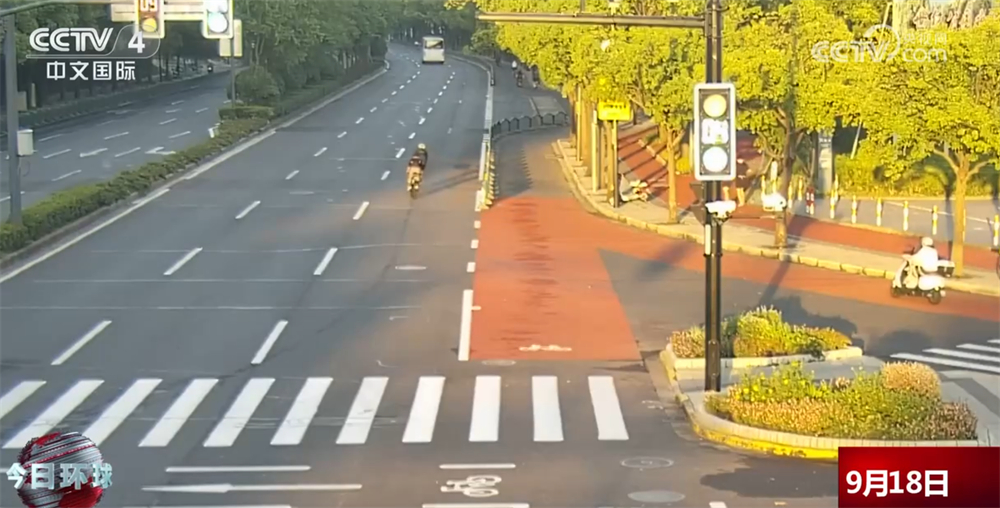
Core Viewpoint - The rise of cycling as a popular mode of green transportation has led to safety concerns due to reckless behavior by some cycling groups, including speeding, running red lights, and occupying motor vehicle lanes, which disrupts traffic order and poses significant safety risks [1][3][9]. Group 1: Traffic Violations and Enforcement - In Shanghai, police used drones to monitor cycling behavior, resulting in fines for cyclists who rode in motor vehicle lanes, highlighting the enforcement of traffic regulations [1][4]. - In Shenzhen, police identified groups of cyclists occupying motor vehicle lanes and engaging in dangerous behaviors such as riding against traffic, leading to legal penalties and safety education efforts [3][9]. - A year of drone enforcement in Shanghai has significantly reduced the number of traffic violations from approximately 100 daily to single digits [4]. Group 2: Safety Risks of High-Speed Cycling - Competitive bicycles can reach speeds of 30 to 40 kilometers per hour, increasing the risk of accidents and injuries [7]. - A braking test showed that a bicycle traveling at 30 kilometers per hour has a stopping distance nearly 8 meters longer than one traveling at 15 kilometers per hour, indicating the heightened danger of high-speed cycling [7]. - The impact force of a high-speed collision with a professional bicycle is considerably greater than that of a regular bicycle, emphasizing the need for caution [7]. Group 3: Recommendations for Safe Cycling - Experts stress the importance of adhering to traffic rules, including not running red lights, not riding against traffic, and avoiding lane changes that could endanger others [9]. - Cyclists are advised to equip their bicycles with front and rear lights, wear appropriate helmets and protective gear, and dress in bright or reflective clothing to enhance visibility [9]. - There is a growing demand for continuous and well-connected bicycle lanes, with many regions actively developing bicycle parks and dedicated cycling paths to promote safe cycling [12].
街头“骑行”变“暴骑” 如何平衡骑行中的锻炼与安全?
Yang Shi Wang· 2025-09-17 17:26
Core Viewpoint - The resurgence of cycling in China is being challenged by the emergence of "violent cycling groups" that disrupt traffic and pose safety risks, prompting authorities to increase enforcement against such behaviors [1][2][7]. Group 1: Cycling Trends and Safety Concerns - Cycling is experiencing a revival in China, transitioning from a common mode of transport to a popular recreational activity [1]. - Some cycling groups engage in dangerous behaviors such as racing, running red lights, and occupying motor vehicle lanes, leading to significant safety hazards [1][2]. - Shenzhen police have intensified efforts to crack down on "violent cycling groups," apprehending 18 members for traffic violations [2]. Group 2: Enforcement Measures - In Shanghai, police are utilizing drones to monitor and enforce traffic laws against "violent cycling," resulting in a notable decrease in violations [3][4]. - The use of drones has proven effective, with reported violations dropping from around 100 daily to single digits in certain areas [4]. Group 3: Risks of Professional Cycling Equipment - Experts indicate that professional road bicycles pose higher risks when used on regular roads compared to mountain bikes, particularly at high speeds [5][6]. - Tests show that professional bicycles can reach speeds of 30-40 km/h, significantly increasing the risk of accidents due to longer braking distances [6]. Group 4: Infrastructure and Community Needs - Experts emphasize the need for dedicated cycling paths and infrastructure to accommodate the growing number of cyclists, advocating for better connectivity to key transport hubs [8]. - There is a call for collaboration with businesses and community organizations to enhance cycling facilities and promote safe riding practices [8].
新华鲜报|约5.8亿辆!世界骑行日“骑”乐无穷
Xin Hua She· 2025-09-17 12:50
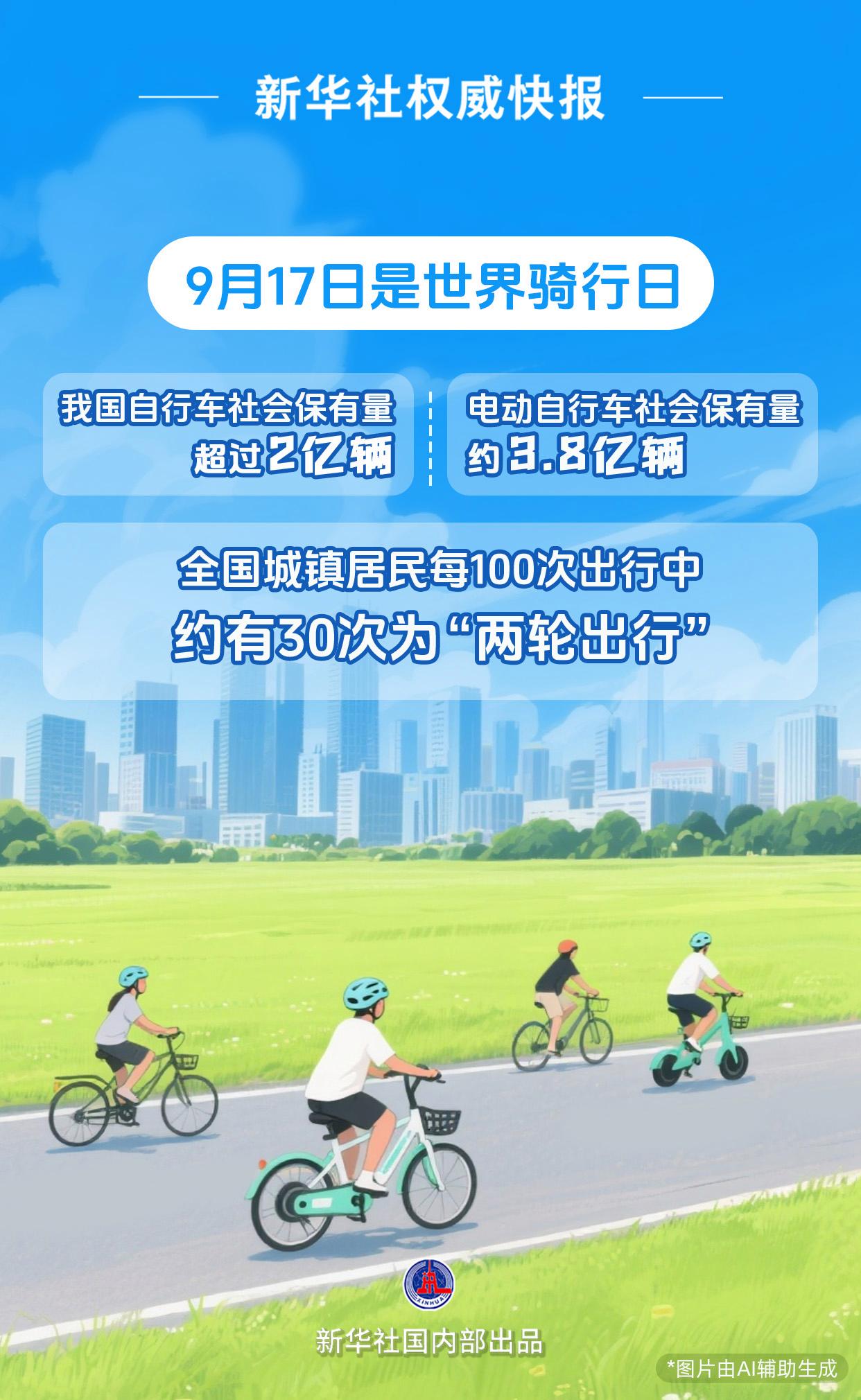
Core Insights - The current social ownership of bicycles and electric bicycles in China is approximately 580 million units, with over 200 million bicycles and about 380 million electric bicycles [1][5] - Approximately 30 out of every 100 trips made by urban residents in China are "two-wheeled trips" [1] Environmental Impact - Daily carbon emissions reduced by "two-wheeled trips" in China amount to about 10,000 tons, equivalent to saving approximately 6.6 million liters of gasoline based on an 8-liter fuel consumption per 100 kilometers [5] - Electric bicycles contribute to reducing harmful pollutants like PM2.5, thereby improving air quality and lowering energy consumption [5] Industry Development - China is a major bicycle manufacturing country, with significant advancements in technology, particularly in the production of gear systems [5] - Previously, 80% of bicycle gear systems were produced by foreign manufacturers, but domestic companies have now broken through technological barriers and established their own brands [5] Innovation and Exports - The industry is seeing innovations such as 3D-printed titanium alloy frames and smart bicycles equipped with navigation and heart rate monitoring features [5] - In the first seven months of this year, China exported 29.863 million bicycles, a year-on-year increase of 10.3%, with an export value of $1.654 billion, up 4.7% [5] - The total export value of bicycle components reached $2.086 billion, reflecting a year-on-year growth of 14.2% [5]
去年北京中心城区私家车年均行驶里程同比下降15.8%
Xin Jing Bao· 2025-09-17 04:32
Group 1: Green Transportation Initiatives - In September, Beijing promotes "green travel month," encouraging citizens to choose sustainable transportation methods [1] - The average annual driving mileage of private cars in Beijing's central urban area decreased by 15.8% compared to the previous year, indicating a shift towards alternative green travel options [1] - By the end of 2024, Beijing's total rail transit mileage will reach 1,279 kilometers, ranking first in the country, with a green travel ratio of 75.6% [1] Group 2: Public Transport Developments - Over 74% of Beijing's public buses are now new energy vehicles, with more than 10,000 being fully electric [2] - All newly purchased buses in Beijing since 2018 are new energy vehicles, with plans to transition the entire fleet to new energy [2] - The Beijing Public Transport Group has opened 14 medical special lines serving 17 hospitals, transporting over 2,500 passengers daily [2] Group 3: Accessibility and Payment Innovations - The Beijing subway has launched an "assistance reservation" feature in its app, allowing passengers to book services in advance [3] - Upgrades to ticketing systems now support foreign card payments, enabling international passengers to use various payment methods for entry [3] - The subway has also added support for JCB and American Express cards for contactless entry and ticket purchasing [3]
滴滴旗下99宣布在巴西加码20亿雷亚尔投资
Xin Hua Cai Jing· 2025-09-16 02:42
Core Insights - Brazilian President Lula met with Didi's founder and CEO Cheng Wei, along with executives from Didi and its subsidiary 99, to discuss a significant investment in the food delivery sector [1] - 99 announced an additional investment of 2 billion Brazilian Reais (approximately 2.6 billion RMB) in its food delivery platform 99Food, which will be fully implemented by June 2026 [1] - The investment aims to expand 99Food's operations from two cities to 15 by the end of the year and to 35 cities by January 2026 [1] Investment Details - The new investment will include 50 million Brazilian Reais (approximately 65 million RMB) allocated for building support points for delivery personnel, providing rest areas, drinking water, and sanitation facilities [1] - Additionally, 99 will launch a welfare support plan valued at 6 billion Brazilian Reais (approximately 7.8 billion RMB), which includes credit support for delivery workers to purchase or lease electric motorcycles and bicycles [1] Strategic Importance - Cheng Wei emphasized Brazil's significant role in Didi's global strategy, highlighting the country's scale, innovation, and opportunities [1] - The meeting and investment plan are seen as a continuation of Chinese enterprises increasing their presence in the digital economy and green transportation sectors in Latin America [1]

中国每天超2亿人次绿色出行
Ren Min Ri Bao Hai Wai Ban· 2025-09-16 00:30
Core Insights - The article highlights the significant shift towards green transportation in China, with over 200 million daily users opting for eco-friendly travel methods [1] - The development of urban public transportation has seen substantial progress, with a notable increase in the number of electric buses and the expansion of public transport networks [1] Group 1: Green Transportation Usage - Over 200 million people choose green travel methods daily, with 100 million using rail transit and another 100 million using buses [1] - 24 million people opt for shared bicycles, indicating a growing preference for sustainable commuting options [1] Group 2: Public Transportation Development - By the end of 2024, China is expected to have 658,000 urban public buses, with 544,000 being new energy buses, accounting for 82.7% of the total [1] - The total length of urban bus routes has reached 1.75 million kilometers, while urban rail transit mileage is approximately 11,000 kilometers, ranking first globally [1] - Key targets from the 14th Five-Year Plan regarding public transport and green travel have been exceeded, with over 70% of cities achieving high rates of public transport usage and new energy vehicles in the bus sector [1]