
区块链

Search documents
福建喜乐全域助农科技有限公司成立,注册资本1000万人民币
Sou Hu Cai Jing· 2026-01-23 16:53
Company Overview - Fujian Xile All-Region Agricultural Technology Co., Ltd. was recently established with a registered capital of 10 million RMB [1][2] - The legal representative is Shangguan Pengwei, and the company is a limited liability company with natural person investment or control [2] Shareholding Structure - The shareholding structure consists of two main shareholders: - Liaoning Xile Life Technology Service Co., Ltd. holds 51% - Xiamen Hengchang Huicai Technology Service Co., Ltd. holds 49% [1] Business Scope - The company’s business scope includes a wide range of services such as: - Technology promotion and application services - Smart agricultural management - Artificial intelligence general application systems - Supply chain management services - Internet data services - Agricultural machinery installation, maintenance, and sales - Data processing and big data services - Blockchain technology-related software and services [1][2]
安徽去年GDP增长5.5%,汽车、新能源汽车产量跃居全国首位
2 1 Shi Ji Jing Ji Bao Dao· 2026-01-23 13:32
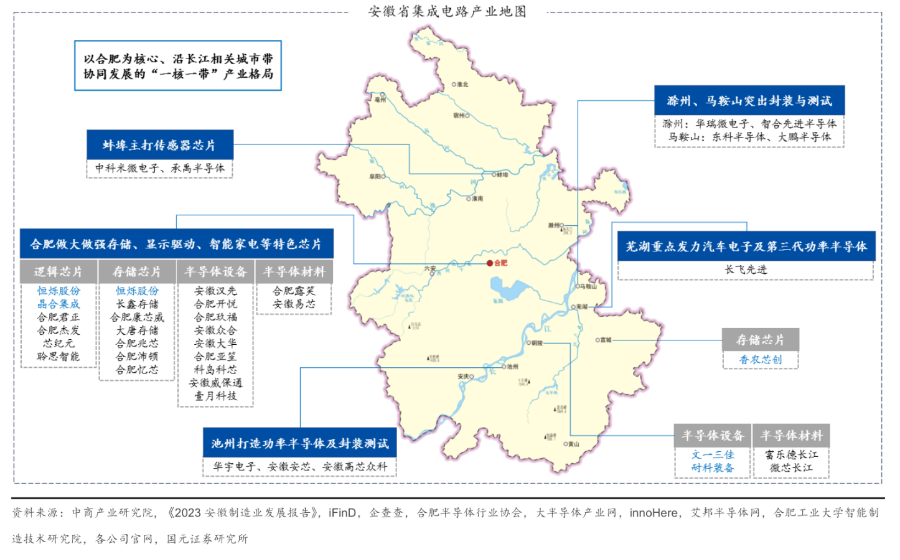
Economic Performance - In 2025, Anhui achieved a GDP of 52,989 billion yuan, growing by 5.5% year-on-year, surpassing the national average growth rate of 5.0% [2] - The first industry added value was 3,552 billion yuan, growing by 3.8%, contributing 5.5% to economic growth; the second industry added value was 20,055 billion yuan, growing by 5.9%, contributing 43.6%; the third industry added value was 29,383 billion yuan, growing by 5.4%, contributing 50.9% [2] Investment Trends - Fixed asset investment in Anhui decreased by 9.2% compared to the previous year, primarily due to a decline in the tertiary industry [4] - Investment in high-tech services grew by 16.4%, significantly outpacing the overall fixed asset investment decline [5] - Investment in information services surged by 70.4%, while R&D and design services investment increased by 50% [5] Trade and Exports - Anhui's total goods import and export volume exceeded 1 trillion yuan for the first time, reaching 10,135.6 billion yuan, a growth of 17.3% [3] - Exports of electromechanical products increased by 21.3%, with the share of these products in total exports rising from 70.4% to 72.4% [3] Industrial Growth - The industrial added value of Anhui's large-scale industries grew by 9.4%, marking the highest growth rate in 11 years [7] - High-tech manufacturing added value increased by 30.4%, and equipment manufacturing added value grew by 18.1%, significantly higher than the overall industrial growth [8] - Notable production increases included 3.686 million automobiles and 1.794 million new energy vehicles, both ranking first in the nation [8] Future Industry Development - Investment growth in cutting-edge fields such as blockchain, general artificial intelligence, and the metaverse exceeded 40% in 2025 [6] - The integrated circuit industry in Anhui is developing a "one core, one belt" industrial pattern centered around Hefei, with various cities focusing on different aspects of the semiconductor industry [9]

瑞银(UBS.US)态度转向:拟向私人银行客户开放比特币与以太坊投资
Zhi Tong Cai Jing· 2026-01-23 13:29
Core Viewpoint - UBS Group plans to open cryptocurrency investments to select private banking clients, marking a significant move into the digital asset space for the world's largest wealth management institution [1] Group 1: UBS's Strategy and Market Position - UBS is currently evaluating partners for its cryptocurrency business, having discussions for several months without a final decision on how to proceed [1] - Initially, UBS will allow specific clients in its Swiss private banking division to trade Bitcoin and Ethereum, with potential expansion to markets in Asia-Pacific and the U.S. [1] - This shift represents a major change in UBS's stance, as the bank has historically been cautious about virtual currencies [1] - The move is partly in response to increasing demand for digital assets from wealthy clients [1] Group 2: Industry Context and Competitors - Other major banks, including JPMorgan and Morgan Stanley, are expanding their digital asset offerings, creating competitive pressure on UBS [1] - UBS's exploration of cryptocurrency aligns with broader industry trends, as institutional participation in the crypto space is deepening [2] - The Basel Committee is reviewing capital rules related to banks holding crypto assets, which may facilitate new initiatives from lending institutions [2] - The U.S. cryptocurrency ETF market has seen significant growth, with assets under management reaching nearly $140 billion since the approval of the first Bitcoin ETF [2] Group 3: Recent Developments - In November 2024, UBS will begin offering cryptocurrency-linked ETF trading services to affluent clients in Hong Kong, joining competitors like HSBC [3] - The former chairman of UBS, Axel Weber, had previously expressed skepticism about Bitcoin, indicating a notable shift in the bank's approach to digital currencies [3]

2025年安徽地区生产总值近5.3万亿元
Zhong Guo Xin Wen Wang· 2026-01-23 10:24
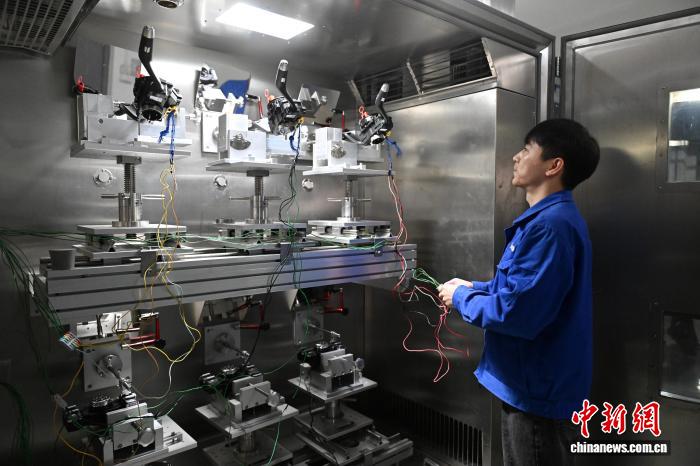
同期,安徽积极布局未来产业,区块链、通用人工智能、元宇宙等前沿领域投资增速超四成。 2025年安徽地区生产总值近5.3万亿元 中新社合肥1月23日电 (记者 张强)安徽省政府新闻办23日举行新闻发布会披露,2025年安徽省地区生产 总值为52989亿元人民币,按不变价格计算,比上年增长5.5%。 2025年,安徽货物进出口总额首次突破1万亿元,达到10135.6亿元,比上年增长17.3%。 在出口商品中,机电产品出口额增长21.3%。在农业生产方面,2025年安徽粮食播种面积超1.1亿亩,粮 食产量838.6亿斤,连续9年稳定在800亿斤以上。 2025年11月17日,安徽省休宁县昌辉汽车电器(黄山)股份公司生产车间内,工人对汽车零部件进行 测试。中新社记者 韩苏原 摄 2025年,安徽高技术制造业增加值增长30.4%,装备制造业增加值增长18.1%。存储芯片、工业机器 人、高温合金产量增长明显。 安徽省统计局局长许光友说,安徽经济展现出"向新而行"的鲜明特征,高技术制造业增加值连续24个月 保持两位数增长;新业态新场景持续涌现,"超级皖"美食争霸赛、"广德三件套"等火爆出圈。(完) 来源:中国新闻网 编辑: ...
科技赋能实体经济,银联商务连续六年荣登毕马威金融科技企业双50榜单
Sou Hu Cai Jing· 2026-01-23 04:13
Core Insights - KPMG China has officially released the "2025 KPMG Financial Technology Double 50" list, recognizing UnionPay Business for its outstanding performance in payment technology innovation and industry digitalization for the sixth consecutive year [1][3] Group 1: KPMG Financial Technology Double 50 - The KPMG Financial Technology Double 50 selection has been held for ten years, known for its rigorous standards and professional industry insights, making it a key window for understanding financial technology trends [3] - The current list continues the "Double 50" structure, covering ten core sectors including comprehensive financial technology, inclusive technology, and payment technology, reflecting the latest advancements in China's financial technology industry [3] Group 2: UnionPay Business's Achievements - UnionPay Business has consistently ranked in the payment technology sector for six years, demonstrating its strong competitiveness and resilience in the payment industry [3] - The company plays a leading role in serving the real economy and promoting industrial digital transformation through its technological capabilities [3] Group 3: Technological Innovations - Financial technology is entering a deep transformation phase characterized by "digital intelligence," with the collaborative application of AI, big data, and blockchain becoming mainstream trends [3] - UnionPay Business has focused on payment as its core business for over 23 years, innovating around "payment + technology" and applying cutting-edge technologies to enhance operational management [3] Group 4: AI Integration - In the realm of AI technology innovation, UnionPay Business has integrated AI large model technology into various industry scenarios, creating replicable digital solutions [4] - The company has launched six products, including "TianGong" intelligent Q&A assistant and "TianMa" AI programming platform, which are widely used in contract review, intelligent customer service, and system quality assurance [4] Group 5: Consumer Promotion and Economic Growth - UnionPay Business actively explores the advantages of its various products and platforms to provide unique "old-for-new" comprehensive solutions for local governments, aligning with national policies to promote consumption and stabilize growth [5] - The application of AI and RPA technologies has significantly improved the efficiency of material review and response times during promotional activities, enhancing the overall effectiveness of subsidy material audits [5] Group 6: Future Outlook - Digital finance is a core engine driving technological innovation and empowering high-quality industrial development, serving as a key tool for financial services to the real economy [5] - UnionPay Business aims to continue deepening its focus on digital finance, addressing core needs of merchants and consumers, and providing convenient, secure, and efficient comprehensive payment and information services [5]

香港预计今年发出稳定币牌照
Nan Fang Du Shi Bao· 2026-01-22 23:10
Core Insights - Hong Kong is positioning itself as a global hub for digital finance, artificial intelligence, and blockchain integration, emphasizing its dual role as a "super connector" and "super value creator" in response to changing global economic dynamics [4][5] Group 1: Digital Finance and Technology Integration - Hong Kong is actively developing digital assets under the principle of "same activity, same risk, same regulation," having issued licenses to 11 virtual asset trading platforms and planning to issue stablecoin licenses later this year [5] - The government has issued three batches of tokenized green bonds totaling approximately $2.1 billion and is promoting asset tokenization practices [5] - Hong Kong is leveraging its advantages in the Guangdong-Hong Kong-Macao Greater Bay Area to explore innovations in digital finance and technology [5] Group 2: International Trade and Economic Positioning - Hong Kong is accelerating the establishment of an international gold trading center and plans to sign a memorandum of cooperation with the Shanghai Gold Exchange to enhance its central clearing system [6] - The government is set to unveil a roadmap for CargoX, focusing on optimizing trade financing through digitalization, aiming to strengthen Hong Kong's position as an international trade center [6] Group 3: Support for Free Trade and Multilateralism - Hong Kong's Financial Secretary emphasized the region's commitment to free trade and multilateralism during meetings with officials from various countries, highlighting its role in facilitating investment and financing platforms [7] - The region aims to act as a bridge linking mainland China with global markets, supporting necessary reforms in the World Trade Organization to adapt to new international trade challenges [7] Group 4: Artificial Intelligence and Economic Transformation - The World Economic Forum highlighted the transformative impact of artificial intelligence on industries, with Hong Kong's Financial Secretary stressing the need for economies to embrace these changes for growth and transformation [8][9] - The focus is shifting from the performance of AI models to their profitability and application scenarios, with Hong Kong's financial sector exploring innovations in digital assets driven by AI [9] Group 5: Brand Promotion and Regional Collaboration - Companies are adapting their brand promotion strategies to connect with audiences in the new market environment, utilizing direct communication methods such as video presentations [10] - Hong Kong's development of innovative technology is not isolated but is part of a collaborative effort with other cities in the Greater Bay Area, enhancing the region's technological development [10]

数字人民币升级2.0 开辟全球数字货币新路径
Sou Hu Cai Jing· 2026-01-22 16:36
Core Insights - The digital renminbi is transitioning from a cash-based model (1.0) to a deposit currency model (2.0), expanding its scope from M0 to include M1 and M2 categories, marking a significant evolution in its framework [1][4][12] Group 1: Digital Renminbi Development - The digital renminbi has accumulated a transaction amount of approximately 477.8 billion RMB since the trial operation began in June 2024 until the end of 2025, with digital renminbi accounting for about 96% of the total transaction volume [1] - The People's Bank of China (PBOC) has implemented an action plan to enhance the management and service system of the digital renminbi, establishing a new measurement framework and operational mechanism [1][4] - The digital renminbi's dual-layer operational system, which has been recognized globally, retains the successful elements from its initial pilot phase [2][4] Group 2: Technological Innovations - The upgrade of the digital renminbi includes a new digital solution based on an "account system + currency string + smart contract," enhancing the digitalization and intelligence of issuance, circulation, and payment processes [3][6] - The digital renminbi's architecture allows for full traceability of transactions, with real-time feedback to the central bank regarding deposit data, differing from traditional banking systems [3][6] - The digital renminbi employs a hybrid architecture that combines centralized ledgers with blockchain technology, ensuring high efficiency and regulatory compliance [6][7] Group 3: Cross-Border Applications - The multilateral central bank digital currency bridge (mBridge) has processed 4,868 cross-border payment transactions, with a total transaction amount of approximately 477.8 billion RMB, demonstrating the digital renminbi's significant role in international payments [10][11] - The use of blockchain technology in the mBridge facilitates compliance and enhances trust among participating central banks, addressing traditional centralized system shortcomings [10][11] - Future expansions of the digital renminbi's cross-border use will focus on technological iterations to lower service costs and support offshore financial innovations [12]

Coinbase 宣布成立“量子计算与区块链独立顾问委员会”
Xin Lang Cai Jing· 2026-01-22 14:03
Core Viewpoint - Coinbase has established an "Independent Advisory Committee on Quantum Computing and Blockchain" to assess the potential impact of quantum computing on blockchain security and provide independent guidance to the industry [1] Group 1 - The committee is composed of top global experts in the field, including Scott Aaronson from the University of Texas at Austin, Dan Boneh, a cryptographer from Stanford, Justin Drake from the Ethereum Foundation, and Sreeram Kannan, founder of EigenLayer [1]

数字人民币十年蝶变:升级2.0,混合架构开辟全球数字货币新路径
第一财经· 2026-01-22 14:03
Core Viewpoint - The digital renminbi is transitioning from a cash-based model (M0) to a broader coverage including deposits (M1, M2), marking a significant upgrade from version 1.0 to 2.0, which is expected to be fully realized by 2026 [2][3]. Group 1: System Architecture and Operation Mechanism - The digital renminbi 2.0 retains the successful core elements of its pilot phase, particularly the "central bank-commercial institution" dual-layer operational system, which has gained global recognition as a standard for digital currencies [3]. - The People's Bank of China (PBOC) continues to lead the construction and operation of the digital renminbi system, focusing on three core needs: interconnectivity, standardized system construction, and risk prevention mechanisms [4]. - The central bank's digital renminbi system is responsible for lifecycle management, including issuance, exchange, and circulation, as well as providing essential business functions like wallet management and smart contract template management [5]. Group 2: Technological Innovations - The upgrade includes a digital solution based on "account system + currency string + smart contracts," enhancing the digitalization and intelligence of the renminbi's issuance and circulation processes [5]. - The digital renminbi achieves full traceability throughout its lifecycle, with real-time feedback to the central bank regarding transaction data, differing from traditional bank deposits [5]. - The digital renminbi's architecture is a hybrid model that combines centralized ledgers with blockchain technology, allowing for flexible application based on different transaction scenarios [10][11]. Group 3: Cross-Border Applications - The digital renminbi is exploring blockchain applications in various fields, including the establishment of a cross-border payment network through the mBridge initiative, which has processed 4,868 cross-border payment transactions amounting to approximately 477.8 billion yuan [14][15]. - The use of blockchain technology in cross-border payments addresses traditional system shortcomings, such as data privacy and security risks, by allowing local management of data by each participating central bank [15]. - Future expansions of the digital renminbi's cross-border use will focus on technological iterations to broaden access and reduce service costs, facilitating cross-border trade and investment [16].
数字人民币十年蝶变:升级2.0,混合架构开辟全球数字货币新路径
Di Yi Cai Jing· 2026-01-22 12:44
Core Viewpoint - The digital renminbi is set to undergo a significant transformation in 2026, transitioning from a cash-based digital currency (1.0) to a deposit currency model (2.0), expanding its scope from M0 to include M1 and M2 [1] Group 1: System Architecture and Operation - The digital renminbi 2.0 is not a complete overhaul but an upgrade that retains successful elements from previous trials, utilizing a "central bank-commercial institution" dual-layer operational system [2] - The People's Bank of China (PBOC) will continue to lead the construction and operation of the digital renminbi system, focusing on three core needs: interconnectivity, standardization, and risk management [2][3] - The upgraded system will support the entire lifecycle management of digital renminbi, including issuance, exchange, and circulation [2] Group 2: Technological Innovations - The upgrade emphasizes a new digital framework combining "account system + digital currency string + smart contracts," enhancing the digitalization and intelligence of the renminbi's issuance and circulation [3] - The digital renminbi's architecture allows for full traceability of transactions, providing real-time feedback to the central bank on deposit data [4] - The digital renminbi's smart contracts function as "conditional payment engines," ensuring funds are used as intended while maintaining the integrity of the account system [8][9] Group 3: Historical Development - The development of the digital renminbi has progressed through four phases: early research (2014-2017), pilot testing (2018-2020), comprehensive trials (2021-2022), and functional deepening (2023-present) [4][5] - The introduction of the dual-layer operational framework in 2016 was a pioneering concept with no global precedent [5] Group 4: Cross-Border Applications - The digital renminbi is exploring blockchain technology applications while primarily adhering to an account-based model, facilitating cross-border payments through initiatives like the mBridge project [10][11] - The mBridge project has processed 4,868 cross-border payment transactions, with digital renminbi accounting for approximately 96% of the total transaction value [10] - The digital renminbi's design allows for flexible integration with other central banks' infrastructures, enhancing cross-border payment efficiency and compliance [11][12]