
物理AI

Search documents
李飞飞引领空间智能革命 五一视界(6651.HK)卡位物理AI赛道
Zhong Jin Zai Xian· 2026-01-14 07:33
Core Insights - The core focus of the news is on the advancements in spatial intelligence showcased by Li Fei-Fei at CES, highlighting the transition of AI from understanding text to interacting with the physical world, which has significant commercial implications for companies like 51WORLD [1][2][5] Company Overview - 51WORLD has established a comprehensive physical AI ecosystem that supports the large-scale application of spatial intelligence, leveraging its solid technical foundation and extensive practical experience [1][5] - The company has developed a full-chain closed-loop ecosystem encompassing synthetic data, spatial intelligence models, and simulation training platforms, positioning itself at the forefront of the industry [2][4] Technological Advancements - The quality of synthetic data is crucial for the value of the ecosystem, and 51WORLD has accumulated a vast library of high-quality 3D assets, mastering a comprehensive synthetic data technology path [3] - The synthetic data generated by 51WORLD adheres strictly to real-world physical laws, achieving a realism rate of 90% and ensuring high fidelity in various simulations, which supports the training of spatial intelligence models [3] Innovation in Spatial Intelligence - 51WORLD employs an innovative dual-engine architecture for spatial intelligence model construction, enabling the creation of high-fidelity digital twin environments and enhancing the capabilities of intelligent agents [4] - The Clonova spatial intelligence interaction platform launched by 51WORLD in August 2025 demonstrates advanced contextual awareness and personalized content generation, aligning with the core needs of physical world interaction [4] Industry Impact - The advancements in spatial intelligence are transitioning from conceptual technology to practical industry applications, with 51WORLD's physical AI ecosystem already demonstrating success in sectors such as intelligent driving, smart factories, and energy management [5] - As spatial intelligence emerges as a key area for AI's next chapter, 51WORLD is driving the large-scale application of physical AI, accelerating the realization of a "digital twin physical world" and intelligent interactive spaces [5]
全球首个“飞行街景”亮相——不再是想象抵达,而是所见即所得
Ke Ji Ri Bao· 2026-01-14 07:24
Core Insights - The article highlights the launch of "Flying Street View" by Gaode, which utilizes a self-developed world model to enhance the life service industry globally, marking a significant innovation [1] - Gaode's self-developed world model achieved the highest score in the international benchmark WorldScore [1] Group 1: Product Features - "Flying Street View" offers an immersive and interactive online store exploration experience, allowing users to virtually preview restaurants and attractions before visiting [1][2] - The technology behind "Flying Street View" employs high-fidelity digital restoration techniques to provide continuous and dynamic real-world navigation and exploration [1] - The product aims to bridge the gap between online information and offline experiences, enabling users to feel as if they are physically present before they arrive [1] Group 2: Business Impact - For businesses, "Flying Street View" significantly lowers the barriers to digital presentation, providing an efficient and realistic new way to showcase their offerings [1] - The traditional method of creating digital representations of stores was time-consuming and required specialized equipment; now, businesses can generate realistic store visuals quickly using just a smartphone [1] - Gaode has launched a "Million Fireworks Good Store Support Plan," investing billions in computing resources to offer "Flying Street View" for free to 1 million businesses, with over 350,000 sign-ups within 48 hours [2] Group 3: User Experience - Users can enjoy an immersive experience by viewing the entire store layout, checking seating options, and even assessing parking availability [2] - "Flying Street View" helps users discover hidden gems in less accessible areas, reducing the likelihood of poor choices [2] - The visualization of environments encourages businesses to focus more on cleanliness and detail, fostering a more trustworthy consumer experience [2] Group 4: Industry Application - "Flying Street View" has expanded from the restaurant sector to cultural tourism, allowing users to "cloud travel" to attractions like the Forbidden City without leaving their homes [3]
天亿马:公司数字孪生技术主要围绕实景三维、BIM、CIM等多源数据融合的数字孪生场景展开
Mei Ri Jing Ji Xin Wen· 2026-01-14 05:13
Core Viewpoint - Siemens and NVIDIA's collaboration on digital twin factories can enhance production efficiency by 40%, indicating a significant advancement towards achieving ultimate "physical AI" [1] Company Summary - Tianyi Ma (301178.SZ) has stated that its digital twin technology focuses on integrating multi-source data such as real scene 3D, BIM, and CIM [1] - The company is actively exploring the application of its digital twin technology in complex scenarios, keeping pace with industry developments [1]
凯基:中美AI路径或 “殊途同归” 短期因科技基础导致风格分化 长期都将通往“物理AI”
Xin Lang Cai Jing· 2026-01-14 05:08
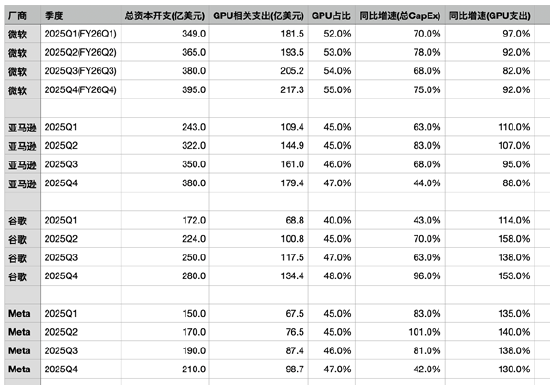
Core Viewpoint - The investment logic in the AI industry between China and the US shows significant divergence, stemming from differences in industrial foundations and development paths, but it is expected that the global AI industry will eventually converge towards Physical AI [1][2][3] Investment Logic Divergence - The current investment paths in AI are clearly differentiated, with US companies focusing on foundational research and core technologies, while China emphasizes application scenarios due to limitations in computing power [2][11] - The US investment is guided by the "Scaling Law," which prioritizes increasing computational power to enhance model quality, particularly in areas leading to Artificial General Intelligence (AGI) [2][11] - China leverages its vast AI talent pool and market space to achieve breakthroughs from the application side, particularly excelling in sectors like autonomous driving and robotics [3][12] Roots of Divergence - The divergence in investment logic is driven by the US's focus on foundational capabilities and model performance, while China's strengths lie in its manufacturing capabilities and industrial technology [3][12] - Historical examples from the internet industry illustrate that companies that effectively apply technology to consumer needs, like Facebook and Google, tend to be the most profitable [3][12] Shift in Market Focus - The previously high interest in AGI is waning, with market attention shifting towards Physical AI, which includes applications like robotics and autonomous vehicles [4][13] - Physical AI aligns well with China's current focus on robotics and autonomous driving, matching its industrial advantages [5][14] Future Trends in AI Investment - The US is expected to maintain significant capital expenditure in the chip sector, with major cloud service providers allocating 40-55% of their server spending to GPUs in 2024 [6][15] - The GPU capital expenditure in the US is projected to grow at a compound annual growth rate of over 50% from 2024 to 2026, with total data center capital spending expected to reach $1 trillion by 2028 [8][16] - The total investment in Physical AI in the US is anticipated to exceed $50 billion between 2025 and 2026, indicating a comprehensive approach from foundational research to commercialization [9][19] Major Investments in Physical AI - Significant investments are being made by US tech giants in Physical AI, with Tesla investing over $4 billion in its humanoid robot project, Nvidia over $10 billion in its AI platforms, and Google’s DeepMind allocating $5 billion for robotics research [9][17]





CES上的“物理AI”拐点:Robotaxi走向规模化,人形机器人供应链悄然形成
Hua Er Jie Jian Wen· 2026-01-14 04:09
Core Insights - The report from Deutsche Bank predicts that 2026 will mark a significant transition for AI in the physical world, particularly in the fields of autonomous vehicles and humanoid robots, moving from testing to scaling [1] Group 1: Humanoid Robots - The supply chain for humanoid robots is forming, with suppliers transitioning to provide integrated solutions and core components [1] - Schaeffler aims to be a key player in humanoid robotics by offering integrated planetary gear actuators, showcasing a compact unit with a torque range of 60–250 Nm [4] - Companies like NEURA and Hyundai Mobis are collaborating to leverage automotive supply chains for humanoid robot manufacturing [4] Group 2: Autonomous Vehicles - The deployment of Robotaxis is gaining momentum, with significant commercial activity expected in 2026, particularly with Tesla's planned launch [10] - Waymo has provided over 10 million paid rides and is expanding its services to international markets, indicating a shift from concept to operational data [15] - Mobileye plans to launch L4 Robotaxi services in Los Angeles this year, showcasing the industry's movement towards real-world applications [15] Group 3: Technology and Innovation - Nvidia remains the dominant player in onboard processors for humanoid robots, with companies like Boston Dynamics utilizing its technology for advanced capabilities [3] - The shift from scripted actions to visual-language-action (VLA) models allows robots to reason and adapt to new environments [3] - The competition in training methods is evolving, focusing on efficient closed-loop systems that integrate real-world data with simulations [7] Group 4: Cost Reduction and Scalability - The cost reduction formula for humanoid robots is driven by increased production volume and improved supplier negotiations [9] - Companies are targeting significant cost reductions, with projections indicating that manufacturing costs could drop from $200,000 to $50,000 as production scales [10] - Visteon is introducing modular solutions to help automakers integrate AI capabilities without overhauling existing architectures, enhancing cost competitiveness [13] Group 5: Market Dynamics - The CES 2026 event highlighted a shift in focus from feasibility to scalability and cost reduction in both autonomous vehicles and humanoid robots [14] - The industry's future will depend on tracking supply chain integration, production capacity, and unit cost curves rather than just innovative demonstrations [14]

前小鹏高管创业,给美国家庭造了台户外陪伴机器人
3 6 Ke· 2026-01-14 03:08
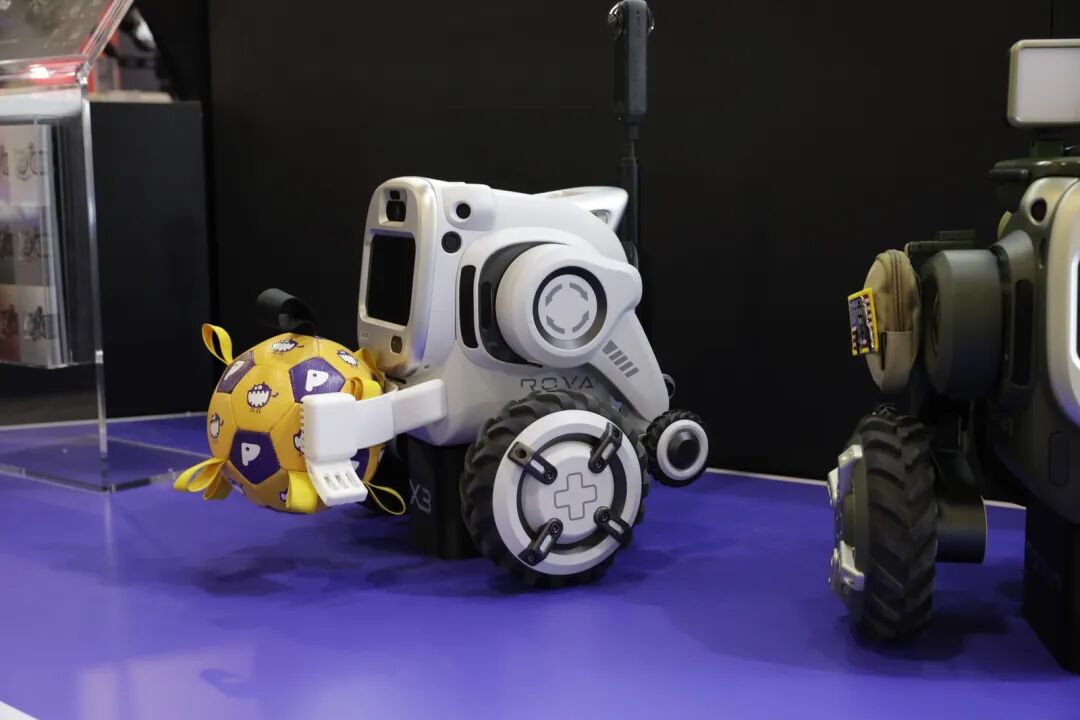
Core Insights - The article discusses the innovative outdoor companion robot Rovar X3 developed by the Chinese company "Deep Garden" and its founder Wang Tao, highlighting its unique design and potential market impact [1][2][4]. Company Overview - "Deep Garden" is a startup focused on creating physical AI products, with Rovar X3 being its flagship offering aimed at outdoor companionship [2][4]. - The company recently completed a funding round of 100 million yuan, led by BlueRun Ventures and Particle Future Fund [14]. Product Features - Rovar X3 is designed to weigh 15 kg and stand 40 cm tall, featuring a dual-wheel design and a display screen for interaction [1][2]. - The robot can perform multiple functions, including following its owner, playing games with children, and serving as a mobile photography stand [7][43][44]. - The anticipated price for Rovar X3 is under $5,000, which is expected to disrupt existing price expectations for robots in the U.S. market [2][58]. Market Positioning - Wang Tao emphasizes the importance of addressing real-world needs, particularly for outdoor activities, as a way to build trust with users before transitioning to home environments [6][30]. - The initial target market includes tech-savvy individuals in Silicon Valley who seek companionship during outdoor activities [29][41]. Development Philosophy - Wang Tao's approach is characterized by a preference for uncertainty and a focus on practical applications, aiming to create products that foster emotional connections through shared activities [4][38]. - The company aims to leverage user data collected in outdoor settings to enhance the robot's capabilities and understanding of the environment [14][33]. Future Outlook - The company plans to explore further applications of Rovar X3 in home settings after establishing a foothold in outdoor environments [30][31]. - Wang Tao believes that the next decade will see significant growth in embodied intelligence, with Rovar X3 positioned as a key player in this emerging market [26][59].
全球首个“飞行街景”亮相
Huan Qiu Wang Zi Xun· 2026-01-14 01:35
Core Insights - The article highlights the launch of "Flying Street View" by Gaode, which utilizes a self-developed world model to provide immersive and interactive online exploration experiences for users [1][2] - Gaode's world model achieved the highest score in the international benchmark WorldScore, indicating its advanced capabilities in the industry [1] Group 1: Product Features - "Flying Street View" allows users to virtually explore restaurants and attractions, providing a realistic navigation experience through high-fidelity digital rendering technology [1] - The product aims to bridge the gap between online information and offline experiences, enabling users to feel as if they are physically present before visiting [1] - The technology significantly lowers the barriers for businesses to showcase their offerings digitally, transitioning from traditional methods to AI-driven industrial production [1] Group 2: Business Impact - Gaode has launched a "Million Fireworks Good Store Support Plan," investing billions in computing resources to offer "Flying Street View" for free to 1 million businesses, with over 350,000 sign-ups within 48 hours [2] - The feature enhances user experience by allowing them to view store layouts, seating options, and parking availability, thereby reducing the likelihood of poor choices [2] - "Flying Street View" encourages businesses to focus on cleanliness and environmental details, fostering a more trustworthy consumer environment and achieving mutual benefits for users and merchants [2] Group 3: Industry Application - The application of "Flying Street View" has expanded from the restaurant sector to cultural tourism, with notable sites like the Forbidden City offering virtual tours, enhancing digital interaction in the tourism industry [3]
英伟达计算的炼金术:一个历史时刻:两场平台变革同时发生
英伟达· 2026-01-14 01:30
Investment Rating - The report does not explicitly state an investment rating for the industry. Core Insights - The computing industry is undergoing two simultaneous platform transformations, marking a historical moment in technology [8][9]. - The shift from traditional computing methods to AI-driven approaches is reshaping the entire technology stack, emphasizing real-time model training over conventional coding [14][21]. - The emergence of Physical AI, which interacts with the physical world by understanding physical laws, is a significant development in the industry [26][123]. - The report highlights the importance of open-source models and collaborative innovation across various sectors, indicating a trend towards democratization of AI technology [30][33]. Summary by Sections Accelerated Computing - The report discusses the transition from CPU to GPU for running applications, emphasizing the need for accelerated computing to reshape every calculation [14][19]. - It mentions the funding shift from traditional research budgets to AI-focused investments, indicating a substantial change in resource allocation [21]. Generative AI - Generative AI is positioned as a transformative force, with capabilities to generate content and interact with users in innovative ways [11][40]. - The report outlines the critical capabilities of generative AI, including real-time generation of images and tokens, which enhances user interaction [18][132]. AI Agents - The concept of AI agents is introduced, which possess reasoning, planning, and tool usage capabilities, marking a shift towards more autonomous AI systems [29][49]. - The future of AI is described as a mixture of expert models rather than relying on a single model, indicating a trend towards specialization [49]. Physical AI - Physical AI is described as a new frontier, with applications in robotics and real-world interactions, highlighting its potential to revolutionize industries [179][198]. - The report emphasizes the importance of simulation in training AI to adapt to various scenarios, which is crucial for effective real-world application [118][141]. Infrastructure and Ecosystem - The report outlines the need for a robust infrastructure to support the growing demands of AI, including advancements in data centers and computing power [288][319]. - It discusses the collaboration between NVIDIA and Siemens to integrate AI across the entire lifecycle of design, production, and operation, indicating a comprehensive approach to industrial AI [217][231].

追觅“豪横”、影石“耀眼”、AI场景“繁荣”,从CES看中国品牌出海的新叙事 | 出海参考
Tai Mei Ti A P P· 2026-01-13 13:27
Group 1 - The core narrative of Chinese brands at CES 2026 has shifted from being "innovation challengers" to "brand leaders," showcasing strategic confidence and a focus on defining the event's highlights [3][4] - Chinese brands are no longer just participants but are transforming CES into amplifiers for their global brand strategies, as exemplified by Insta360's impactful marketing tactics [4][6] - The number of Chinese exhibitors at CES reached 916, making China the second-largest exhibitor group globally, highlighting the increasing global presence of Chinese brands [2] Group 2 - Insta360 reported a revenue of 6.611 billion yuan for the first three quarters of 2025, a year-on-year increase of 67.18%, with an expected annual revenue of 8.808 billion yuan [6] - The company showcased innovative products like the world's first 8K panoramic drone and a new flagship camera, indicating a strategic shift from consumer to professional markets [6] - The brand's success is attributed not only to product innovation but also to superior customer service and brand perception [6] Group 3 - Tracmo Technology, another prominent exhibitor, demonstrated a comprehensive smart home ecosystem at CES, showcasing a wide range of products from cleaning robots to refrigerators [7][10] - The company achieved a revenue of 12.07 billion yuan in the first three quarters of 2025, with a projected annual revenue of 30 billion yuan, reflecting a growth rate of 72.2% [10] - The brand's strategy includes creating a multi-product platform, moving beyond single-category dominance [10] Group 4 - The emergence of "Physical AI" as a global consensus is being leveraged by Chinese innovators, who are transitioning from technology suppliers to scene definers, showcasing their comprehensive innovation capabilities [11][12] - Companies like Orbbec are presenting advanced solutions for industrial applications, such as the Gemini 305 camera, which significantly improves precision and sensitivity in robotic applications [12] - The integration of AI in various sectors, including education and entertainment, is being explored through innovative products like interactive robots and smart pet companions [13][15] Group 5 - The collaboration among Chinese companies at CES reflects a robust ecosystem, with brands forming alliances to enhance user experience and create unique market propositions [18][19] - Companies like Rokid are integrating AI technology with financial services to address overseas payment challenges, showcasing a shift towards ecosystem solutions [18] - The participation of organizations like Shenzhen Innovation Academy highlights a collective approach to international market entry, with numerous companies gaining media attention and potential investment [19][20] Group 6 - The evolution of Chinese brands from product-focused to ecosystem-oriented strategies marks a new era in global competition, emphasizing the importance of brand strength and collaborative efforts [21] - The future of Chinese innovation in global markets will rely on a mature, ambitious, and collaborative approach, capable of creating systemic advantages within the global supply chain [21]

CES 2026观察:软硬协同仍是业界的共同挑战
Mei Ri Jing Ji Xin Wen· 2026-01-13 12:55
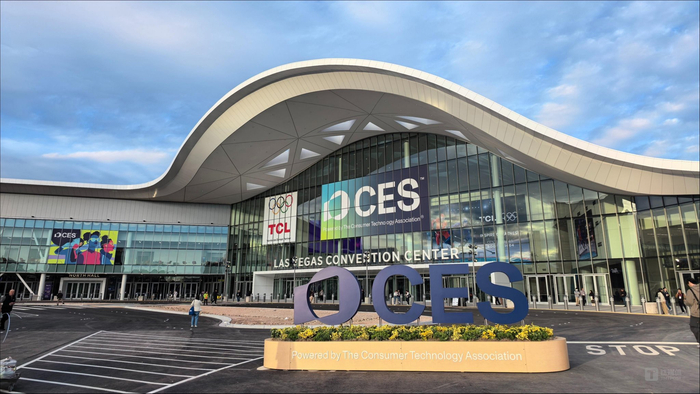
Core Insights - The CES 2026 highlighted a significant focus on physical AI and robotics, showcasing advancements in various applications from home environments to industrial uses, with notable participation from both international and Chinese companies [1][3][7] - The competition in the robotics industry is shifting towards building reliable physical perception systems that can generate real-world data and translate it into scalable intelligent capabilities [2][4] Industry Focus on Robotics - Chinese companies occupied over half of the humanoid robot exhibition space at CES 2026, with both new entrants and established players showcasing their innovations [3] - The event emphasized the market's growing demand for robots capable of autonomously executing complex tasks, reflecting a shift towards practical applications of embodied intelligence [3][4] Technological Advancements - Key advancements in robotics are centered around enhancing the ability of robots to perform tasks autonomously, with a focus on deep interaction between AI and the physical world, particularly through tactile perception [5][6] - The industry is moving from showcasing capabilities to solving real-world problems, with an emphasis on robots operating reliably in complex environments [4][6] Competitive Landscape - Established companies like Boston Dynamics and LG demonstrated their latest robotic technologies, with Boston Dynamics showcasing its Atlas robot capable of various industrial tasks [7] - Chinese firms are gaining confidence, claiming significant advancements in motion control and cognitive decision-making, alongside a competitive edge in manufacturing costs and quality [8][9] Market Trends - The integration of AI with hardware and software is becoming a dominant theme, with a noticeable trend towards the consolidation of functionalities in smart devices [11][12] - Companies are increasingly focusing on creating multi-functional products that can serve various purposes, reflecting a shift in consumer expectations and technological capabilities [13]