
碳减排

Search documents
“惠”过日子 低碳达人领跑绿色生活
Chang Jiang Ri Bao· 2025-08-10 00:33
Core Viewpoint - The article highlights the innovative carbon reduction initiatives in Wuhan, where citizens actively participate in low-carbon behaviors that are quantifiable and can be converted into tangible benefits, thus promoting a culture of sustainability and environmental responsibility. Group 1: Personal Carbon Reduction Initiatives - Citizens in Wuhan, like Gu Yu, have adopted low-carbon habits such as cycling and using public transport, which are tracked through a mobile app called "Wutan Jianghu" [2][3] - The app allows users to accumulate carbon reduction credits for various activities, such as 84 grams for a 5-minute bike ride and 829 grams for a 40-minute subway ride [2][3] - Over 182,000 residents are using the "Wutan Jianghu" app, which has recorded 12.2 million carbon reduction actions, resulting in a total reduction of 34,600 tons of carbon emissions [4] Group 2: Carbon Credit Monetization - Residents can convert their accumulated carbon reduction credits into financial benefits, such as using 118 kilograms of carbon reduction to redeem 236 yuan in bank loan interest [5] - The "carbon credit loan" system, a collaboration between the government, banks, and tech companies, allows users to offset loan interest with their carbon credits [6] - Approximately 39 residents have already benefited from this system, demonstrating a novel approach to integrating low-carbon living with financial incentives [7] Group 3: Community Engagement and Events - The "Wuhan Marathon" has successfully achieved carbon neutrality for three consecutive years by offsetting its carbon emissions through donations of personal carbon credits and corporate contributions [9] - The concept of carbon-neutral weddings is gaining popularity, with couples using carbon credits as gifts to offset the emissions from their ceremonies, exemplified by a wedding that offset 1,340 kilograms of carbon emissions [9] - Increasingly, citizens are engaging in community activities such as planting carbon sink forests and participating in energy-saving initiatives, reflecting a broader cultural shift towards sustainability in urban living [11]
广东联基绿能科技有限公司成立,注册资本1000万人民币
Sou Hu Cai Jing· 2025-08-09 12:10
Core Points - Guangdong Lianji Green Energy Technology Co., Ltd. has been established with a registered capital of 10 million RMB, and its legal representative is Deng Hongfang [1] - The company is jointly owned by Guangdong Haotian Agricultural Development Co., Ltd. (65% stake) and Guangdong Meinian Ecological Technology Co., Ltd. (35% stake) [1] Company Overview - The business scope includes technology services, development, consulting, exchange, transfer, and promotion; research and development of agricultural and forestry waste resource utilization technology; resource recycling technology; biomass energy technology services; research and development of bio-based materials and their polymer technology; carbon reduction, conversion, capture, and storage technology; sales of bio-based materials; sales of biomass liquid fuel production equipment; sales of ecological environment materials; sales of machinery and equipment; and sales of metal-based and ceramic-based composite materials [1] - The company is classified under the national standard industry of scientific research and technical services, specifically in technology promotion and application services [1] - The registered office is located in the Jin Dun Industrial Park, Shigu Town, Gaozhou City, within the office building of Guangdong Haotian Agricultural Development Co., Ltd. [1]
深圳市和光智慧能源管理有限公司成立,注册资本300万人民币
Sou Hu Cai Jing· 2025-08-08 06:39
Core Insights - Shenzhen He Guang Smart Energy Management Co., Ltd. has been established with a registered capital of 3 million RMB, fully owned by Shenzhen He Guang New Energy Investment Co., Ltd. [1] Company Overview - The legal representative of the company is Huang Ziqi [1] - The company operates in the information transmission, software, and information technology services industry, specifically focusing on software development [1] - The registered address is located in Bao'an District, Shenzhen [1] Business Scope - The business scope includes software development, artificial intelligence software development, IoT technology services, information system integration services, data processing services, big data services, and internet data services [1] - Additional services include energy management, energy contract management, energy storage technology services, emerging energy technology research and development, and various technical consulting and service offerings [1] - The company is also involved in carbon reduction technologies, including carbon capture and storage [1] Licensing and Regulatory Compliance - The company has both general and licensed business activities, including power generation, transmission, and distribution services, which require approval from relevant authorities [1] - The operational period is set until August 7, 2025, with no fixed end date thereafter [1]
研判2025!中国热轧镜面铝市场政策、产业链、市场规模、竞争格局及发展趋势分析:行业技术壁垒较高[图]
Chan Ye Xin Xi Wang· 2025-08-07 01:39
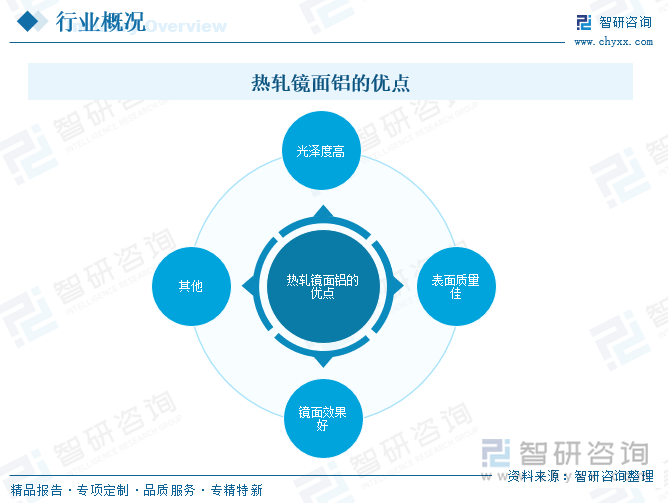
内容概要:随着光学器件、建筑装饰、汽车制造、消费电子、高端化妆品包材等下游市场的飞速发展, 带动热轧镜面铝需求持续增长,市场规模不断扩大,据统计,2024年我国热轧镜面铝行业市场规模达 304.69亿元,同比增长22.69%,未来,在"碳中和""碳减排"目标指引下,铝材因其可回收性强、能耗相 对较低等优势,符合绿色发展理念,热轧镜面铝作为铝材重要组成部分,在生产和使用过程中若能进一 步优化工艺,降低能耗和污染物排放,更契合环保要求,有望获得更大的发展空间。 上市企业:中国铝业(601600)、南山铝业(600219)、常铝股份(002160)、明泰铝业(601677) 相关企业:成都新凯撒铝业有限公司、诺贝丽斯铝业(镇江)有限公司、安美奇铝业(中国)有限公 司、上海厍库实业发展有限公司、河南联合铝业科技有限公司、中铝河南洛阳铝加工有限公司、河南润 鑫新材料股份有限公司、浙江铭岛新材料股份有限公司 关键词:热轧镜面铝市场政策、热轧镜面铝产业链、热轧镜面铝市场规模、热轧镜面铝竞争格局、热轧 镜面铝发展趋势 一、概述 镜面铝是通过轧延、打磨等方法处理,使板材表面具有镜面效果的铝板,根据制造方式不同,镜面铝分 为热轧 ...



新周期来了吗?
Sou Hu Cai Jing· 2025-08-06 02:56
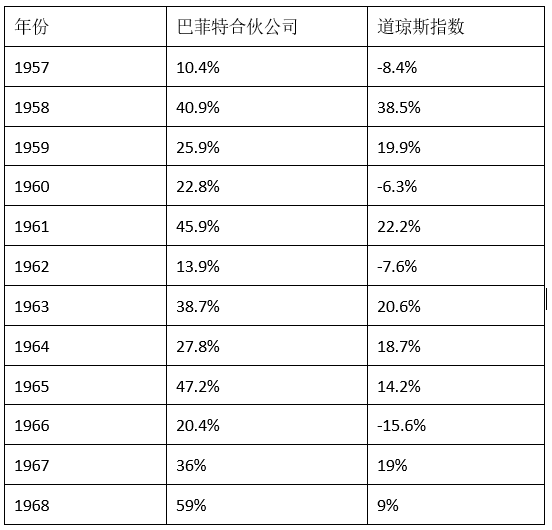
Core Insights - Buffett's early investment returns significantly outperformed the Dow Jones index from 1957 to 1968, showcasing his exceptional investment acumen during a "super cycle" in the stock market [1][2] - The "super cycle" periods are characterized by substantial wealth creation, with the most notable returns concentrated in these phases [2][4] Super Cycle Analysis - The first super cycle (1949-1968) was marked by explosive growth post-World War II, driven by the Marshall Plan and a baby boom that boosted demand [4] - The second super cycle (1982-2000) was fueled by the resolution of inflation issues, leading to a strong economic recovery and significant stock market returns, with the Dow Jones Industrial Average achieving an average annual real return of 15% [4] - The third super cycle (2009-2020) followed the global financial crisis, characterized by quantitative easing and zero interest rate policies, resulting in one of the longest bull markets in history [4] Characteristics of Super Cycles - Super cycles are driven by low or declining funding costs, initial low yields, strong economic growth, and regulatory reforms that lower market risk premiums [5][6] - The current economic environment is shifting towards a "post-modern cycle," influenced by geopolitical changes and new investment paradigms [9][10] Current Economic Cycle - The post-modern cycle is characterized by rising funding costs, slowing economic growth, a shift from globalization to regionalization, and increasing labor and commodity costs [11][12] - Geopolitical tensions and a move towards a multipolar world are expected to increase uncertainty and risk premiums in the market [13] Investment Opportunities and Challenges - The evolving economic landscape presents new investment opportunities and challenges, particularly in sectors related to carbon reduction, regional development, and artificial intelligence [9][10][14]
上海胜励益华科技有限公司成立,注册资本5000万人民币
Sou Hu Cai Jing· 2025-08-05 23:24
Group 1 - Shanghai Shengli Yihua Technology Co., Ltd. has been established with a registered capital of 50 million RMB [1] - The legal representative of the company is Qi Chaoyang, and it is wholly owned by Zhongxiang Haoyue (Changsha) Construction Engineering Management Co., Ltd. [1] - The company is located at 6055 Jinhai Road, Building 11, 5th Floor, Fengxian District, Shanghai [2] Group 2 - The business scope of Shanghai Shengli Yihua Technology Co., Ltd. includes technology services, development, consulting, and promotion, as well as agricultural product sales and smart agriculture management [2] - The company is classified under the national standard industry of scientific research and technical services, specifically in technology promotion and application services [2] - The company has a business duration until August 5, 2025, with no fixed term thereafter [2]
中国机电商会倡议光伏企业抵制不正当竞争;内蒙古建成大型二氧化碳埋存基地|新能源早参
Mei Ri Jing Ji Xin Wen· 2025-08-05 23:04
Group 1 - The China Electromechanical Products Import and Export Chamber advocates for photovoltaic companies to resist unfair competition, emphasizing adherence to fair competition principles and legal operations [1] - The chamber calls for reasonable control of capacity expansion based on global market demand and orderly elimination of outdated capacity [1] - The initiative aims to shift the photovoltaic industry from a focus on "scale advantage" to "quality advantage," promoting sustainable development [1] Group 2 - The Inner Mongolia Bayannur City government reports that the carbon capture, utilization, and storage (CCUS) project has injected over 70,000 tons of carbon dioxide, marking the establishment of a large-scale carbon utilization and storage base [2] - This development is significant for promoting carbon reduction and achieving a green low-carbon transition, providing a demonstration for carbon capture technology application at both regional and national levels [2] Group 3 - Yujing Co., Ltd. announced that its controlling shareholder and chairman, Yang Yuhong, reduced his shareholding by 1.7872 million shares, representing 0.88% of the total share capital after excluding repurchased shares [3] - Following this reduction, Yang Yuhong and his concerted parties' shareholding percentage decreased from 39.39% to 38.51% [3] - This share reduction may impact market confidence in the company's future development, necessitating attention to its effects on stock price and operations [3]
ESG及绿色金融月报:中欧联合声明加强应对气候变化合作,SASB可持续发展报告标准启动修订-20250805
ZHESHANG SECURITIES· 2025-08-05 10:58
Investment Rating - The report does not explicitly provide an investment rating for the industry Core Insights - The introduction of an ESG negative screening mechanism in the ChiNext Composite Index aims to promote high-quality development of the index [2] - The new Green Finance Directory clarifies the support direction for green trade and consumption, while a mandatory national standard for electric bicycles has been released to enhance product quality supervision [2][3] - The EU has simplified the application standards for sustainable finance classification, easing the reporting burden on small and medium-sized enterprises [3] - The ISSB has initiated the revision of the SASB sustainable development reporting standards to enhance compatibility and international applicability [3] Summary by Sections 1. Monthly Research Summary - The ChiNext Composite Index has introduced an ESG and risk dual exclusion mechanism to promote high-quality index development [2] - The latest Green Finance Directory has been released, clarifying the support direction for green trade and consumption [2] - A mandatory national standard for electric bicycles has been published to strengthen product quality supervision and accelerate battery recycling [2] - Various green electricity policies have been intensively introduced by central and local departments, covering multiple areas of development, issuance, and consumption [2] 2. Key Policy Tracking Domestic Policy Tracking - The ChiNext Composite Index has implemented a dual exclusion mechanism for ESG and risk, enhancing the quality and investability of index samples [24] - The People's Bank of China and other ministries have released a new version of the Green Finance Directory, which includes green trade and consumption projects for the first time [26] - A mandatory national standard for electric bicycles has been issued to strengthen product quality supervision and accelerate battery recycling [27] - Various departments have introduced green electricity policies, establishing a rigid constraint system for green electricity consumption [33] International Policy Tracking - The EU has simplified the application standards for sustainable finance classification, reducing the compliance burden for enterprises [3] - The ISSB has started revising the SASB sustainable development reporting standards to improve their applicability [3] 3. Market Data Tracking - In July 2025, the total issuance of ESG bonds in China reached 732.56 billion yuan, a year-on-year increase of 76.22% [4] - The global ESG fund market saw a net inflow of approximately 4.9 billion USD in Q2 2025, rebounding from a net outflow of 11.8 billion USD in the previous quarter [4][22] - The carbon market in China recorded a trading volume of 10.7554 million tons in July 2025, with an average transaction price of 73.24 yuan per ton [4]
七部门:用好用足碳减排支持工具、支小再贷款、再贴现等货币政策工具,支持新型工业化重点领域和中小企业发展
Zheng Quan Shi Bao Wang· 2025-08-05 08:22
Core Viewpoint - The People's Bank of China and six other departments have jointly issued guidelines to enhance financial support for new industrialization, emphasizing policy incentives and constraints [1] Group 1: Policy Measures - Implementation of re-loan and interest subsidy policies for technological innovation and transformation is prioritized [1] - Utilization of carbon reduction support tools, re-loans for small enterprises, and rediscounting as monetary policy instruments to support key areas of new industrialization and the development of small and medium-sized enterprises [1] - Strengthening monitoring of credit in the manufacturing sector and urging banks to adhere to policy requirements [1] Group 2: Financial Market Environment - Continuous enhancement of macro credit policy guidance to create a favorable financial market order [1] - Improvement of green finance evaluation indicators, avoiding the simplistic use of financing scale for "two high and one capital" industries as a standard for evaluation [1]
4.25亿美元全盘接手合资企业! 美国农产品巨头安德森斯(ANDE.US)加码押注生物燃料乙醇
智通财经网· 2025-08-05 00:50
Core Viewpoint - The Andersons, Inc. has acquired the remaining stake in its joint venture with Marathon Petroleum for approximately $425 million, significantly increasing its investment in the biofuel sector and doubling its renewable fuel assets [1][2][3] Group 1: Acquisition Details - The acquisition includes four ethanol plants in the Midwest, allowing The Andersons to achieve vertical integration from corn procurement to ethanol processing and export logistics [2][3] - This move is part of The Andersons' expansion strategy, which also includes plans to build a new large trading port in Houston [1][2] Group 2: Market Context and Implications - The acquisition aligns with the U.S. government's increased biofuel blending quotas under the Trump administration, which aims to enhance domestic biofuel production despite new tariff policies threatening agricultural exports [1][2] - The Andersons is positioned to optimize its supply chain by directly supplying its own grain to the plants, reducing raw material volatility, and enabling one-stop sales of by-products to global customers [2][3] Group 3: Future Growth Opportunities - The company has signed a long-term lease at the Houston port to expand its grain and biofuel shipping capabilities, targeting an export volume exceeding 2 million tons [2] - The acquisition is expected to facilitate The Andersons' entry into the sustainable aviation fuel (SAF) supply network, capitalizing on the growing demand for low-carbon fuels [3]

