
半导体国产化

Search documents
晶盛机电(300316.SZ)发布上半年业绩,归母净利润6.39亿元,下降69.52%
智通财经网· 2025-08-22 13:51
Core Insights - The company reported a significant decline in revenue and net profit for the first half of 2025, with operating income at 5.799 billion yuan, a year-on-year decrease of 42.85% [1] - Net profit attributable to shareholders was 639 million yuan, down 69.52% year-on-year, while the net profit excluding non-recurring gains and losses was 536 million yuan, reflecting a 74.42% decrease [1] - Basic earnings per share stood at 0.49 yuan [1] Industry Impact - The decline in revenue and profitability is attributed to the cyclical adjustment in the photovoltaic industry, leading to a drop in income and earnings from photovoltaic equipment and materials [1] - Conversely, the semiconductor business has shown continuous growth, benefiting from the ongoing development of the semiconductor industry and the acceleration of domestic production processes [1] - As of June 30, 2025, the company had over 3.7 billion yuan (including tax) in unfulfilled contracts for integrated circuits and compound semiconductor equipment [1]
香饽饽“半导体芯片”未来还能涨多高?
Ge Long Hui· 2025-08-22 11:37
Core Viewpoint - The AI chip sector is experiencing significant growth, driven by strong institutional investment and favorable market conditions, despite broader market fluctuations [1][4]. Group 1: Market Performance - The AI chip and semiconductor sector indices have shown remarkable resilience, with stocks like Kede Education and Cambricon Technologies seeing substantial gains, including a doubling in value since July [1][3]. - A technical breakout occurred on August 13, indicating a strong upward trend after a period of adjustment, which is appealing to large institutional investors [3]. Group 2: Demand and Supply Dynamics - Global semiconductor demand is improving, with growth in mobile devices, TWS headphones, and AI servers, despite the impact of tariffs on the industry [4][5]. - The U.S. semiconductor industry is facing challenges due to proposed tariffs, but the long-term trend towards domestic production and self-sufficiency is expected to accelerate [4]. Group 3: Investment Opportunities - The establishment of a new state-backed investment fund with a capital of 344 billion yuan aims to support advanced semiconductor manufacturing, indicating ongoing financial support for the sector [5]. - The rise of domestic alternatives in the semiconductor space is anticipated, particularly as U.S. tech giants like Nvidia pause production on certain chips, creating opportunities for local companies [5].



中微公司(688012):跟踪报告之十:公司25H1业绩持续高增,积极构建平台型公司
EBSCN· 2025-08-22 06:10
Investment Rating - The report maintains a "Buy" rating for the company [5][3]. Core Views - The company is expected to achieve approximately 4.961 billion yuan in revenue for the first half of 2025, representing a year-on-year growth of about 43.88%. The net profit attributable to shareholders is projected to be between 680 million and 730 million yuan, reflecting a year-on-year increase of 31.61% to 41.28% [1]. - The rapid growth in the shipment volume of etching equipment for advanced logic and advanced storage lines is driving the company's revenue growth. The revenue from etching equipment is expected to grow by approximately 40.12% to reach 3.781 billion yuan, while LPCVD film equipment revenue is anticipated to increase by about 608.19% to 199 million yuan [1]. - The company is actively developing over twenty new devices across six categories, significantly accelerating its product development cycle from three to five years to two years or less [1][2]. Summary by Sections Financial Performance - The company's R&D investment for the first half of 2025 is approximately 1.492 billion yuan, a year-on-year increase of 53.70%, accounting for about 30.07% of its revenue, which is significantly higher than the average R&D investment level of 10%-15% for companies listed on the Sci-Tech Innovation Board [2]. - The net profit growth rate for the first half of 2025 is lower than the revenue growth rate primarily due to substantial increases in R&D expenditures [2]. Profit Forecast and Valuation - The net profit forecasts for 2025 and 2026 have been adjusted downwards to 2.107 billion yuan (a 22% decrease) and 3.198 billion yuan (an 8% decrease), respectively. A new forecast for 2027 projects a net profit of 4.193 billion yuan, with corresponding PE ratios of 60x, 40x, and 30x [3][4]. - The company is positioned as a leading domestic semiconductor etching equipment manufacturer and is expected to benefit from the performance increment brought by domestic production [3]. Market Data - The current share price is 202.41 yuan, with a total market capitalization of approximately 126.739 billion yuan [5].

算力股全线爆发!寒武纪市值站上5000亿,科创50狂飙7%,沪指突破3800点
21世纪经济报道· 2025-08-22 05:41
Core Viewpoint - The A-share market is experiencing a strong upward trend, particularly in the computing power and chip sectors, with significant gains in related indices and stocks [1][4][11]. Market Performance - As of August 22, the Shanghai Composite Index surpassed 3800 points, with the ChiNext Index rising by 2.84% and the Sci-Tech 50 Index increasing by over 7% [1][2]. - The total trading volume in the Shanghai and Shenzhen markets reached 1.68 trillion CNY, with a forecasted increase to 2.47 trillion CNY [2]. Sector Highlights - The computing power chip concept stocks have surged, with the Sci-Tech 50 Index showing a rise of over 6% [4][5]. - Notable stock performances include: - Shengmei Shanghai and Haiguang Information hitting the daily limit, with gains of 20% [5][9]. - Cambrian Technology rising over 16%, with its stock price exceeding 1200 CNY and a market capitalization surpassing 500 billion CNY [5][9]. - SMIC's stock price also crossed the 100 CNY mark, increasing by over 10% [5][9]. Index Performance - The GPU Index increased by 8.90%, while the server index rose by 7.31% [6]. - The overall performance of the semiconductor sector is strong, with various indices showing significant gains [6][10]. Investment Sentiment - The release of the DeepSeek-V3.1 model, utilizing UE8M0 FP8 technology, has injected new momentum into the domestic chip development, leading to increased investor interest in the semiconductor industry [11]. - The rare earth and small metal sectors are also showing strength, with several stocks hitting their daily limits [12][14]. Institutional Perspectives - Huafu Securities notes that the global semiconductor materials market is expanding, with an expected increase in the domestic semiconductor materials localization rate [16]. - Tianfeng Securities highlights optimistic growth trends in the semiconductor sector, particularly driven by AI applications [16]. - Overall, the market is characterized by a focus on technology and high-end manufacturing upgrades, with a shift towards new investment themes [16].


早盘直击 | 今日行情关注
申万宏源证券上海北京西路营业部· 2025-08-22 02:27
Core Viewpoint - The Shanghai Composite Index has reached a new high but experienced some fluctuations, indicating market divergence, with over 3000 stocks declining, suggesting caution in the short term [1][3] Market Overview - The Shanghai Composite Index has surpassed its highest point in the past decade, reaching 3731 points, while other major indices like the CSI 300 and ChiNext still have significant distance to cover to reach their 2021 highs [1] - The current market trend shows a clear upward movement, with the potential for other lagging indices to catch up [1] Sector Highlights - The technology sector is expected to gain momentum in August, driven by various catalysts, shifting market focus from defensive stocks to growth-oriented technology stocks [2] - Key events such as the Artificial Intelligence Conference and the World Robot Expo are anticipated to create thematic investment opportunities in AI and robotics [2] - The semiconductor industry is on a path toward domestic production, with attention on semiconductor equipment, wafer manufacturing, materials, and IC design [2] - The military industry is expected to see a rebound in orders by 2025, with signs of recovery already visible in Q1 reports across various military sub-sectors [2] - The innovative drug sector is entering a recovery phase after four years of adjustment, with positive net profit growth expected to continue into 2025 [2]

科创板芯片、人工智能相关ETF领涨市场丨ETF基金日报
Sou Hu Cai Jing· 2025-08-21 03:22
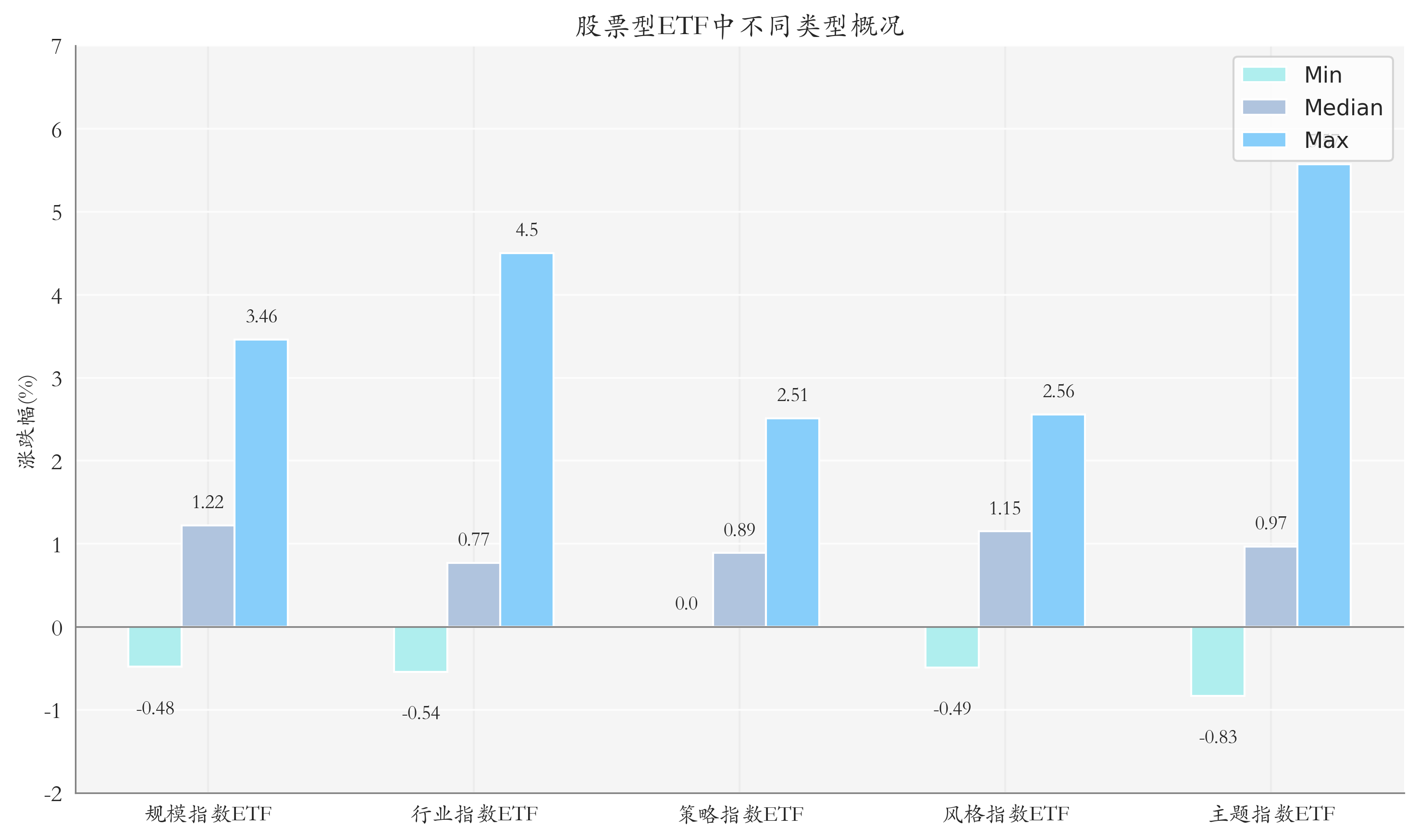
Market Overview - The Shanghai Composite Index rose by 1.04% to close at 3766.21 points, with a daily high of 3767.43 points [1] - The Shenzhen Component Index increased by 0.89% to close at 11926.74 points, reaching a high of 11926.74 points [1] - The ChiNext Index saw a smaller increase of 0.23%, closing at 2607.65 points, with a peak of 2608.0 points [1] ETF Market Performance - The median return for stock ETFs was 1.04% [2] - The highest performing scale index ETF was the Southern Asset Management's STAR Market 50 Enhanced Strategy ETF, with a return of 3.46% [2] - The highest performing industry index ETF was the China Universal STAR Market New Generation Information Technology ETF, yielding 4.5% [2] - The top strategy index ETF was the China Merchants' CSI All Share Dividend Quality ETF, returning 2.51% [2] - The leading thematic index ETF was the China Universal STAR Market Chip Design Theme ETF, achieving a return of 5.57% [2] ETF Performance Rankings - The top three ETFs by return were: 1. Guolian An STAR Market Chip Design Theme ETF (5.57%) [5] 2. Fortune STAR Market Chip ETF (4.97%) [5] 3. Bosera STAR Market Chip ETF (4.96%) [5] - The three ETFs with the largest declines were: 1. Huabao CSI Financial Technology Theme ETF (-0.83%) [6] 2. Yinhua CSI Film and Television Theme ETF (-0.81%) [6] 3. Harvest CSI Vaccine and Biotechnology ETF (-0.77%) [6] ETF Fund Flows - The top three ETFs by fund inflow were: 1. E Fund ChiNext ETF (1.402 billion) [8] 2. Huaan ChiNext 50 ETF (517 million) [8] 3. Guotai CSI All Share Securities Company ETF (504 million) [8] - The three ETFs with the largest outflows were: 1. Huaxia STAR Market 50 Enhanced Strategy ETF (2.186 billion) [10] 2. Huaxia CSI Robot ETF (556 million) [10] 3. Bosera STAR Market Artificial Intelligence ETF (512 million) [10] ETF Margin Trading Overview - The top three ETFs by margin buying were: 1. E Fund ChiNext ETF (1.078 billion) [11] 2. Huaxia STAR Market 50 Enhanced Strategy ETF (890 million) [11] 3. Guotai CSI All Share Securities Company ETF (447 million) [11] - The highest margin selling ETFs were: 1. Southern CSI 500 ETF (93.305 million) [13] 2. Southern CSI 1000 ETF (74.485 million) [13] 3. Huatai-PB CSI 300 ETF (40.787 million) [13] Institutional Insights - Tianfeng Securities suggests focusing on the semiconductor sector during the third quarter, particularly in storage, power, foundry, ASIC, and SoC performance elasticity [11] - The firm anticipates continued optimistic growth in the global semiconductor market through 2025, driven by AI and ongoing domestic innovation [11]
韩国45.8万亿韩元支持计划落地!科创人工智能ETF华宝(589520)涨2.4%!机构:AI与半导体国产化双轮驱动
Xin Lang Ji Jin· 2025-08-21 02:35
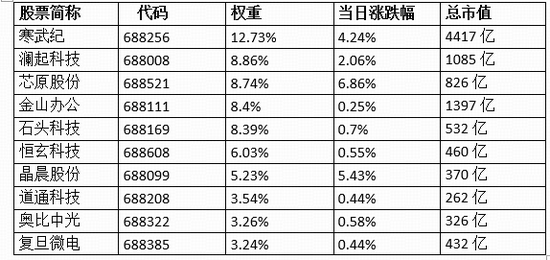
Group 1 - The core viewpoint of the news highlights the active performance of the Huabao Sci-Tech AI ETF (589520), which saw a price increase of 2.4% and a trading volume of 6.4075 million yuan, with a total fund size of 393 million yuan [1] - The top-performing constituent stocks of the ETF include Chipone Technology, Amlogic, and Cambricon, with daily gains of 6.86%, 5.43%, and 4.24% respectively [1] - The ETF passively tracks the Sci-Tech AI Index (950180), which rose by 2.25% on the same day, with the top ten weighted stocks including Cambricon, Lattice Semiconductor, and Kingsoft Office [1] Group 2 - The global smart glasses market is expected to see a 110% year-on-year increase in shipments in the first half of 2025, with a projected compound annual growth rate of over 60% from 2024 to 2029, where AI smart glasses will account for 78% of the market [2] - Domestic semiconductor equipment has made breakthroughs, with the 28nm electron beam measurement equipment achieving mass production and the first commercial electron beam lithography machine "Xizhi" entering the testing phase, filling a domestic technology gap [2] - The semiconductor industry is experiencing a mild recovery, driven by demand in AI servers, AIOT, and automotive electronics, with ongoing domestic production efforts and government support for local semiconductor manufacturing [2]


半导体国产化加速发展势在必行,科创芯片ETF(588200)震荡上扬,近3月新增规模同类居首!
Sou Hu Cai Jing· 2025-08-20 05:56
Group 1 - The Shanghai Stock Exchange Sci-Tech Innovation Board Chip Index increased by 0.56%, with notable gains from Aiwei Electronics (up 13.11%), Chipone Technology (up 10.76%), and others [1] - The Sci-Tech Chip ETF (588200) experienced a trading volume of 15.74 billion yuan, with a turnover rate of 5.08% [1] - Over the past three months, the Sci-Tech Chip ETF's scale grew by 61.29 billion yuan, leading among comparable funds [1] Group 2 - The global semiconductor materials market is projected to reach approximately 70 billion USD in 2025, reflecting a year-on-year growth of about 6% [2] - The semiconductor industry is driven by increased demand in sectors such as automotive electronics, new energy, IoT, big data, and AI [2] - As of July 31, 2025, the top ten weighted stocks in the Sci-Tech Chip Index accounted for 57.59% of the index, with Cambricon, SMIC, and others being the most significant [2][4]

早盘直击 | 今日行情关注
申万宏源证券上海北京西路营业部· 2025-08-20 02:11
Core Viewpoint - The market is experiencing a short-term upward trend despite some fluctuations, with the Shanghai Composite Index breaking through its previous high, indicating a potential end to the sideways movement since Q4 2024 [1][3] Market Overview - The Shanghai Composite Index reached a new high but faced limited fluctuations during the day, closing above the 5-day moving average, with a near 1:1 ratio of advancing to declining stocks, reflecting market divergence [1][3] - The index has officially surpassed the previous high of 3731 points set in 2021, suggesting that the upward movement will be gradual rather than abrupt [1][3] Future Outlook - The recent breakthrough of the index is seen as a normal phenomenon, with various catalysts in different sectors, such as the launch of the Yarlung Tsangpo River downstream power station and potential recovery in H20 chip exports, contributing to increased market risk appetite [1] - The market is expected to remain optimistic due to multiple catalysts across industries, including the World Artificial Intelligence Conference and the World Robot Expo [1] Sector Highlights - The technology sector is anticipated to gain momentum in August, driven by catalysts such as the AI conference showcasing new developments and the World Robot Expo highlighting the trend of robot integration into daily life [2] - The semiconductor industry is expected to continue its domestic growth, focusing on semiconductor equipment, wafer manufacturing, materials, and IC design [2] - The military industry is projected to see a rebound in orders by 2025, with signs of recovery already visible in Q1 reports across various military sub-sectors [2] - The innovative drug sector is entering a recovery phase after nearly four years of adjustment, with positive net profit growth expected to continue into 2025 [2]

胜科纳米(688757.SH):具备对AI芯片、HDI板等进行全方位、高精度的分析检测能力
Ge Long Hui· 2025-08-19 09:10
格隆汇8月19日丨胜科纳米(688757.SH)在互动平台表示,随着AI技术的发展、半导体国产化进程的持续 深化,包括CPU、GPU在内的逻辑芯片以及存储芯片等将实现快速发展,其他类型的模拟芯片、射频芯 片等也将迎来市场需求回升。同时,AI产业将推动半导体技术朝着先进制程、先进封装等领域持续迭 代,半导体企业在制造工艺、材料运用等将持续开展技术创新。此外,AI服务器对于高频高速信号传 输、芯片高集成度、复杂互连结构以及高效散热有着极高要求,促使高端HDI板(高密度互连板)用量 显著增加。公司具备对AI芯片、HDI板等进行全方位、高精度的分析检测能力,未来公司相关失效分 析、材料分析、可靠性分析业务有望迎来更多发展机遇。 ...