通用人工智能

Search documents
刚刚,DeepSeek梁文锋入选Nature年度十大人物,被称为“科技颠覆者”
3 6 Ke· 2025-12-09 02:24
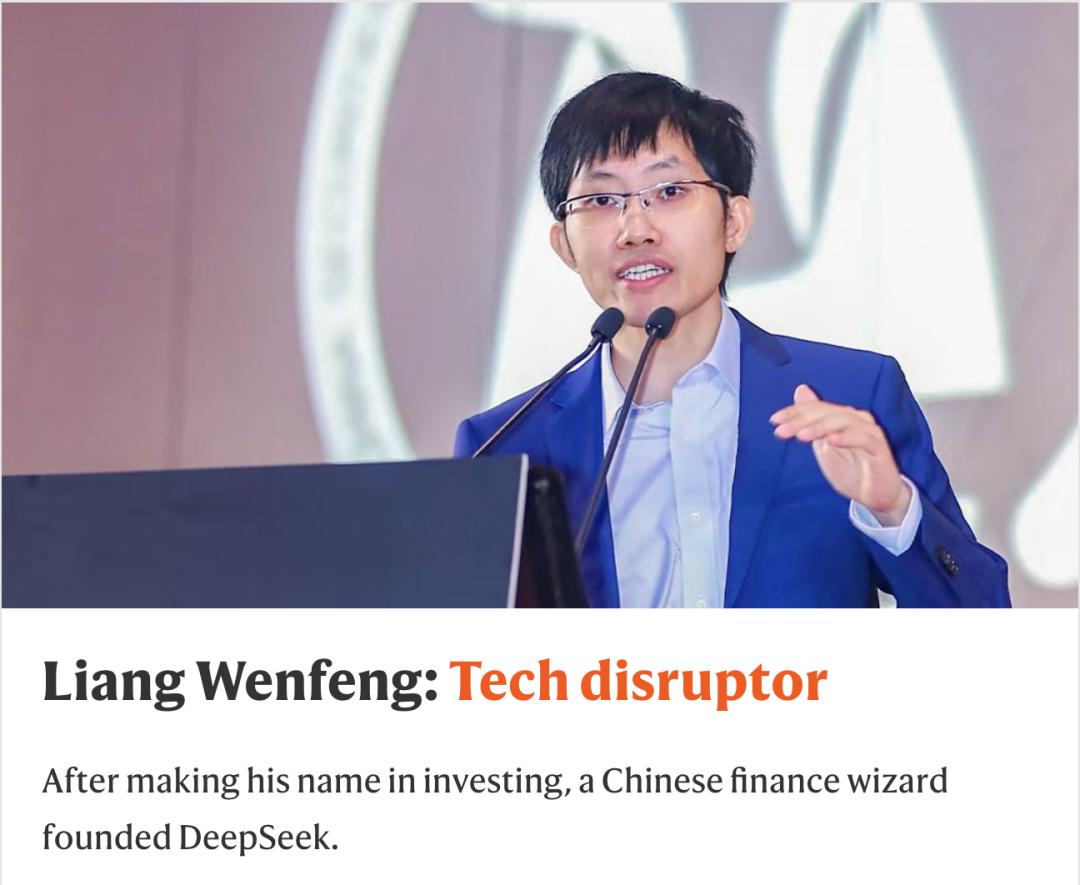
Core Insights - Liang Wenfeng, founder of DeepSeek, has been recognized as one of the top ten scientific figures of 2025 by Nature, being labeled a "technology disruptor" for his contributions to AI [1][24] - DeepSeek's R1 model has demonstrated that the perceived gap in AI capabilities between the US and China may not be as significant as previously thought, challenging existing narratives in the AI landscape [5][7] Company Overview - DeepSeek, founded in 2023 by Liang Wenfeng in Hangzhou, has developed a powerful yet affordable AI model, R1, which excels in solving complex tasks by breaking them down into steps [5][13] - The R1 model is the first of its kind to be released with open weights, allowing researchers to download and adapt it for their own applications, significantly impacting the AI research community [7][8] - DeepSeek's commitment to transparency is evident as it was the first mainstream LLM to undergo peer review, with the company publicly sharing the technical details of R1's construction and training [8] Market Impact - The success of DeepSeek has inspired other companies in both China and the US to release their own open-source models, indicating a shift in the competitive landscape of AI development [7] - Despite R1's capabilities being comparable to leading US models, its training costs are significantly lower, with some estimates suggesting that training costs for models like Meta's Llama 3 are over ten times higher [9][15] Leadership and Vision - Liang Wenfeng's background as a former financial analyst who applied AI algorithms to the stock market has shaped his vision for DeepSeek, focusing on achieving general artificial intelligence [17][20] - The company prioritizes individual potential over experience in its hiring practices, fostering a flat organizational structure that empowers researchers to choose their research directions [20] Societal Integration - DeepSeek's models are becoming integral to daily life in China, with local governments utilizing them for chatbots and assisting citizens, reflecting a broader trend of AI integration into economic development [20] - The company is seen as a symbol of China's transformation from a follower to an innovator in the AI field, with expectations for the upcoming R2 model to further this narrative [21][23]


IBM CEO警告:超大规模云厂商的数据中心投资难以盈利
财富FORTUNE· 2025-12-08 13:05
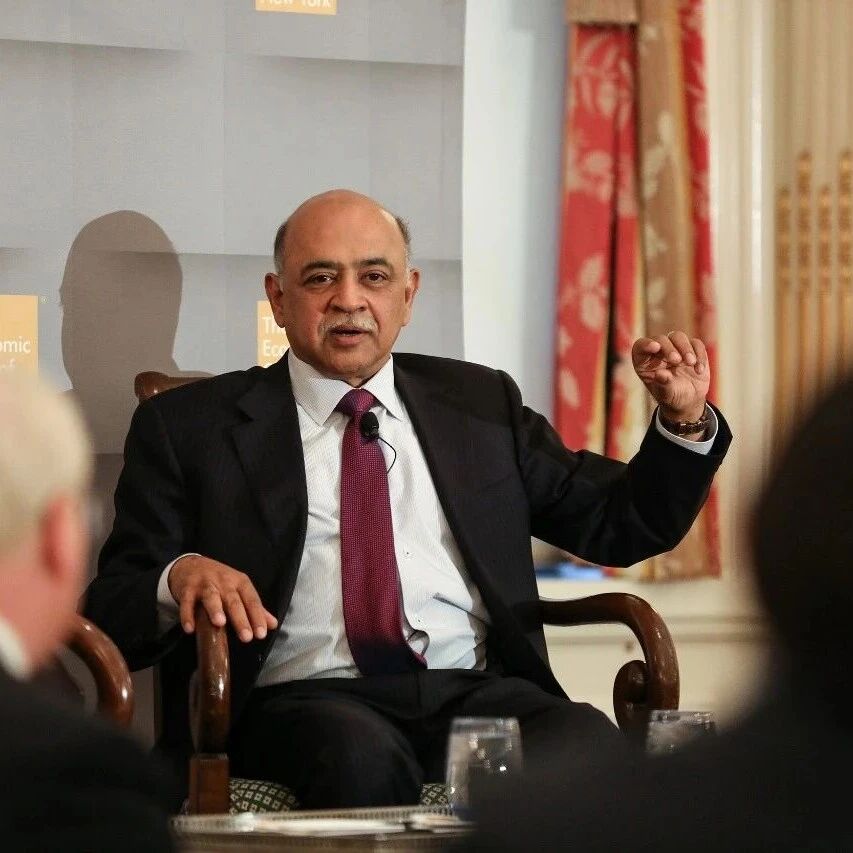
Core Viewpoint - IBM's CEO Arvind Krishna questions the expected returns on the massive investments made by tech giants like Google and Amazon in AI infrastructure, suggesting that such investments are unlikely to yield reasonable returns due to the high costs associated with data centers [2][3]. Investment and Costs - Goldman Sachs estimates that the global data center market currently consumes about 55 gigawatts of power, with only approximately 14% related to AI. This demand is projected to rise to 84 gigawatts by 2027 due to increasing AI needs [2]. - Krishna calculates that building a 1-gigawatt data center requires an investment of about $80 billion. If a company commits to constructing 20 to 30 gigawatts of data centers, the capital expenditure could reach $1.5 trillion, nearly equivalent to Tesla's current market value [2]. - If all major cloud providers expand to around 100 gigawatts of capacity, it would necessitate an investment of approximately $8 trillion, with the required profit scale to cover this expenditure being staggering [2][3]. Profitability Concerns - Krishna emphasizes that $8 trillion in capital expenditure would require around $800 billion in profits just to cover interest payments, making it highly unlikely for such investments to be profitable [3]. - The rapid technological advancements mean that the chips relied upon in data centers quickly become obsolete, further complicating the return on investment [3]. AI Development and Market Trends - Despite the ongoing investment surge, Krishna believes the probability of achieving general artificial intelligence with current technologies is at most 1%. He acknowledges the significant value of this technology, which could unlock trillions of dollars in productivity potential, but asserts that the technological requirements far exceed those of current large language models [5]. - Major cloud providers are accelerating their investments in AI infrastructure, with expected expenditures reaching about $380 billion this year. Alphabet has raised its 2025 capital expenditure forecast from $85 billion to between $91 billion and $93 billion, while Amazon has increased its forecast from $118 billion to $125 billion [5].



刚过完一岁生日的MCP,怎么突然在AI圈过气了
3 6 Ke· 2025-12-08 10:47
Core Insights - The article discusses the rise and fall of the Model Context Protocol (MCP) by Anthropic, which celebrated its first anniversary on November 25, yet has seen a significant decline in interest within the AI community [1][3] - Initially, MCP was hailed as a revolutionary tool for AI integration, but it quickly lost traction due to unrealistic expectations and inherent limitations [3][6] Group 1: MCP Overview - MCP was designed to standardize interfaces for seamless integration between large language models (LLMs) and external data sources and tools, akin to a USB-C interface for AI applications [6][8] - The protocol aimed to address the chaotic landscape of AI products from different vendors, which complicated interactions between AI models and external tools [5][6] Group 2: Initial Hype and Adoption - MCP gained significant attention in early 2023, with claims that it would enable AI to connect everything and serve as a foundational infrastructure for the "Agent era" [3][8] - The protocol was supported by major players in the AI industry, leading to thousands of tools integrating with MCP within just three months [8] Group 3: Challenges and Limitations - Developers soon discovered that MCP lacked context tracking, making it difficult to understand the decision-making process of AI models [10] - The protocol's complexity increased with the need for multi-server architectures to handle high concurrency, raising implementation and maintenance costs [10][12] - MCP's requirement for all tool interactions to pass through the model's context window led to exponential increases in token consumption, diminishing its flexibility and utility [12][14] Group 4: Decline in Interest - As developers encountered various shortcomings, including a rise in "hallucination" rates due to diluted attention from multiple tool calls, interest in MCP waned [14] - The initial perception of MCP as a "universal key" shifted as its limitations became more apparent, leading to a retreat from its adoption [14]

自变量机器人岗位招募来啦!强化学习/世界模型/VLN/物理仿真等方向
具身智能之心· 2025-12-08 10:00
Company Overview - The company, Self-Variable Robotics, was established in December 2023, focusing on developing embodied intelligent general models to achieve universal robotics [5] - The founder and CEO, Wang Qian, is a graduate of Tsinghua University and one of the earliest scholars to introduce attention mechanisms in neural networks [1] - Co-founder and CTO, Wang Hao, holds a PhD in computational physics from Peking University and has led the development of significant multimodal models in China [3] Technology and Development - Self-Variable Robotics has established a technology path that integrates end-to-end unified models for general embodied intelligence, with a simultaneous development of software and hardware [5] - The company has developed the "WALL-A" model, which is claimed to be the largest end-to-end unified embodied intelligence model globally, surpassing existing models in multiple dimensions [8] - The company emphasizes the importance of real data for training algorithms and maintains a high proportion of PhD-level researchers within its teams [8] Commercial Applications - The company has identified commercial applications in various sectors, including hotels, elderly care, logistics, industry, and hospitals [5] - It is actively recruiting talented individuals in the field of embodied intelligence to drive the implementation of general artificial intelligence [5] Job Opportunities - The company is offering various positions, including algorithm engineers focused on reinforcement learning, world model development, and physical simulation [9][20][24] - Candidates are expected to have strong backgrounds in computer vision, artificial intelligence, robotics, and related fields, with proficiency in deep learning frameworks [13][17][23]

任正非最新1.4万字讲话全文,信息量很大,知识量惊人
Xin Lang Cai Jing· 2025-12-08 06:37
Group 1 - The core idea emphasizes the importance of nurturing homegrown talent in China to become a technological powerhouse, rather than solely relying on imported talent [1][2] - The company highlights the significance of education in fostering innovation and the need for collaboration between academia and industry to address educational challenges [1][3] - The discussion points out that many technological advancements originate from industry rather than academia, indicating a shift in how innovation is perceived [1][2] Group 2 - The company acknowledges the potential for original innovations from young talents, citing examples of groundbreaking models and algorithms developed by young individuals [2][3] - It is noted that the education system should adapt to produce skilled workers capable of contributing to advanced manufacturing and technology sectors [4][5] - The company recognizes the growing number of innovative startups in China, driven by young entrepreneurs who are less envious of foreign successes and more focused on their own achievements [5][6] Group 3 - The conversation addresses the role of artificial intelligence (AI) in various sectors, emphasizing the need for practical applications rather than just theoretical advancements [12][23] - The company discusses the importance of re-education programs to help workers transition into new roles as automation and AI reshape the job market [13][14] - The potential for AI to enhance productivity across industries, such as agriculture and manufacturing, is highlighted as a key area for future development [22][23] Group 4 - The company expresses a commitment to fostering international collaboration and learning from global advancements in technology and education [31][32] - It is mentioned that the integration of AI and advanced technologies into existing systems is crucial for enhancing operational efficiency and competitiveness [12][23] - The company emphasizes the importance of maintaining a balance between remote and in-person interactions to foster innovation and collaboration [26][27]
戳破!任正非撕开AI最大骗局:教育和商业混着来,全白干!
Sou Hu Cai Jing· 2025-12-06 17:05
Group 1: Education and Business - Ren Zhengfei emphasizes that "education is education, and business is business," highlighting the need to maintain clear boundaries between the two sectors [3][5] - The current trend of "industry-education integration" often blurs these boundaries, leading to the commercialization of education, which undermines its core purpose of fostering critical thinking and curiosity [3][5] - Huawei's collaboration with ICPC exemplifies a model where education provides a platform for questioning existing norms, while businesses apply innovative ideas to real-world industrial needs [3][5] Group 2: AI Implementation - Huawei focuses on practical applications of AI rather than competing in general intelligence, opting for "deep water innovation" in specific verticals like medical AI [5][10] - The company targets niche areas, such as early lung cancer screening, to enhance diagnostic accuracy through collaboration with grassroots hospitals [5][10] - This approach of addressing significant problems through small, targeted solutions is crucial for AI to transition from theoretical concepts to practical industry applications [5][10] Group 3: Youth Innovation - Ren Zhengfei encourages youth to embrace questioning as a fundamental aspect of innovation, contrasting with the prevailing "worship of standard answers" in education [6][8] - Historical breakthroughs in science often stem from challenging existing theories, and Huawei's internal culture supports this by allowing for a high tolerance of failure in research [6][8] - The company aims to empower young innovators by granting them the right to question rather than providing them with predetermined answers [6][8] Group 4: Female Participation in Technology - Ren Zhengfei highlights the importance of female participation in technology, recognizing it as a vital factor for innovation diversity [9][10] - Women in Huawei's medical AI team, who make up 40% of the workforce, have led projects that integrate user experience considerations into technical solutions, enhancing patient cooperation [9][10] - This dual perspective of combining technology with humanistic elements is essential for evolving AI from a mere tool to a partner in healthcare [9][10] Group 5: Long-term Value of General AI - While emphasizing immediate industrial applications, Ren Zhengfei acknowledges the long-term significance of general artificial intelligence (AGI) [10][11] - He suggests that AGI could reshape industries in the next decade, but only after addressing current industrial pain points [10][11] - Huawei's strategy involves a cautious approach to AGI, focusing on foundational technologies and data accumulation before advancing to broader applications [10][11] Conclusion - Ren Zhengfei's insights redefine the relationships between technology, industry, education, and innovation, advocating for a grounded approach to technological advancement [11] - The emphasis is on solving real problems rather than chasing fleeting trends, highlighting the importance of maintaining clarity in roles and responsibilities across sectors [11]
最新发声:任正非如何看待人工智能发展?
虎嗅APP· 2025-12-06 13:36
Core Viewpoint - The discussion led by Ren Zhengfei emphasizes the importance of focusing on the practical applications of artificial intelligence (AI) in various industries over the next three to five years, while also highlighting the role of education in fostering innovation and collaboration among youth [2][8]. Group 1: AI Applications - AI should concentrate on real-world applications in industries such as manufacturing and healthcare, aiming for tangible improvements [2][8]. - Examples include optimizing iron production efficiency by 1% through AI-driven temperature control in blast furnaces and enhancing coal mining safety with remote operation technologies [8][9]. - AI models are being utilized in medical diagnostics, such as pathology analysis and remote eye examinations, to improve healthcare outcomes [9]. Group 2: Education and Youth Development - Education is viewed as a separate entity from business, with a focus on nurturing talent and innovation rather than solely commercial outcomes [12][15]. - The shift from traditional education models to more decentralized, online learning platforms is seen as beneficial for students in remote areas [10][11]. - The importance of teaching practical skills and fostering self-sufficiency in education is emphasized, particularly in underdeveloped regions [10][12]. Group 3: Collaboration Between Academia and Industry - The need for closer collaboration between educational institutions and industries is highlighted, with a focus on practical training and real-world problem-solving [16][19]. - Companies are encouraged to support educational initiatives that help develop local talent and improve programming skills in various regions [9][12]. - The role of competitions like ICPC in bridging the gap between academic knowledge and industry needs is acknowledged [2][19]. Group 4: Future of Work and AI - The impact of AI on job markets is discussed, with a focus on the need for re-education and adaptation as automation increases [26][27]. - The potential for AI to enhance productivity and create new job opportunities is recognized, despite concerns about job displacement [27][29]. - The importance of preparing the workforce for a future where AI plays a significant role in various sectors is emphasized [26][27].

咸亨国际切入新赛道 智慧巡检机器狗首次亮相
Zheng Quan Shi Bao· 2025-12-05 17:18
Group 1 - The conference focused on the innovative applications of artificial intelligence and robotics in the supply chain sector, aiming to explore the practical paths for technology-driven industrial upgrades [1] - Xianheng International showcased its smart inspection robot dog, which has been developed to enhance operational efficiency in various fields such as nuclear power, electricity generation, and emergency response [1] - The company has accumulated over ten years of data in cable fault handling, having served clients 13,560 times and conducted 3,029 real-site tests, with 1,936 case reports generated [1] Group 2 - Xianheng International is building its core capabilities around a three-layer architecture of "perception-decision-execution," utilizing self-developed technologies for visualizing equipment hazards and AI models to enhance diagnostic efficiency by over 80% [2] - The company aims to create a closed-loop intelligent ecosystem and plans to increase technological investments, targeting the development of approximately 20 application scenarios for special robots or robot dogs next year [2] - The potential market for humanoid robots in manufacturing and domestic services in China and the U.S. is projected to reach 300 billion yuan by 2030, highlighting the significant growth opportunities in the embodied intelligence sector [3]

智创未来背景下的企业价值新标尺:《经济观察报》“年度受尊敬企业”揭晓,科大讯飞上榜
Sou Hu Wang· 2025-12-05 13:07
在数字经济浪潮与新质生产力动能加速释放的当下,中国企业的评价体系正悄然发生变化。单纯的规模 增速与利润指标已不足以全面衡量一家企业的价值,特别是在技术变革的深水区,如何在商业成功与社 会责任之间找到平衡点,成为新的时代课题。 11月26日,在北京举行的由《经济观察报》主办的"2024—2025年度受尊敬企业年会"上,这一课题被置 于聚光灯下。本届年会以"智创未来,向新而行"为主题,试图在充满不确定性的经济周期中,寻找那些 能够穿越迷雾、具备长青之力的企业样本。经过对数千家企业和数十个关键行业的深度调研,备受关注 的"2024—2025年度受尊敬企业"名单正式揭晓。其中,作为人工智能领域的代表性企业,科大讯飞凭借 其在技术突破、产业赋能以及社会责任履行等方面的综合表现成功上榜,引发了业界对于科技企业如何 赢得"尊敬"的深层思考。 重塑标尺:从"高增长"到"受尊敬"的时代转向 观察科大讯飞在2024-2025年度的表现,其核心特征在于围绕"讯飞星火大模型"进行的高频迭代与务实 落地。不同于部分企业盲目追逐参数规模或发布噱头性的概念产品,业界观察到,科大讯飞采取了一条 相对稳健且目标明确的技术路线。 一方面,其坚持 ...

任正非最新讲话,谈AI、教育话题,信息量很大!
Feng Huang Wang Cai Jing· 2025-12-05 10:08
Group 1 - The event highlighted the importance of connecting academia, industry, and young talent in the context of AI and technology challenges [1][2][3] - Huawei's focus is on applying large models and big data in various industries, including agriculture and mining, to enhance efficiency and safety [3][4] - The company emphasizes the role of AI in improving healthcare diagnostics and remote medical assistance [4][5] Group 2 - The discussion included the need for educational reforms to create a strong talent pool in technology, emphasizing the importance of teaching practical skills rather than just theoretical knowledge [8][10] - Huawei recognizes the significance of online education in democratizing access to quality learning resources, especially for remote areas [6][10] - The company aims to support initiatives that help underdeveloped regions improve their IT capabilities through training and resources [5][10] Group 3 - The future of AI is seen as a driving force for productivity improvements across various sectors, with predictions of significant advancements in the next three to five years [7][23] - The company is aware of the potential job displacement due to automation and emphasizes the need for re-education programs to transition workers into new roles [22][23] - Huawei is committed to fostering innovation and collaboration with educational institutions to bridge the gap between theoretical research and practical applications [12][28] Group 4 - The company acknowledges the rapid development of AI and its implications for various industries, including transportation and logistics, where AI can optimize operations [17][20] - Huawei is exploring the integration of AI in enhancing the safety and efficiency of high-speed rail systems [17][18] - The company is also interested in the potential of quantum computing, recognizing its future importance in various technological advancements [33][34]