金融强国

Search documents
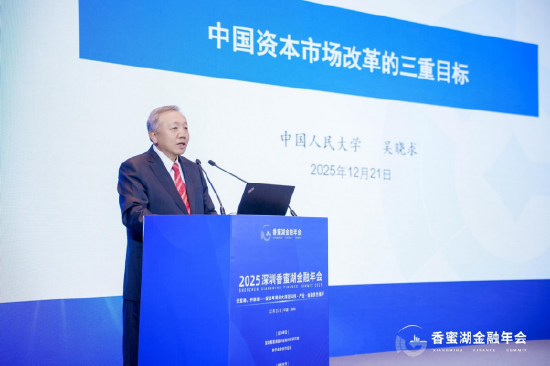
吴晓求:对于资本市场“埋雷”者,仅靠行政处罚力度不够,更需刑事处罚和民事处罚
Xin Lang Cai Jing· 2025-12-21 12:30
Core Insights - The traditional financial system, primarily dominated by commercial banks, is gradually being complemented by the capital market, which is taking on more financial responsibilities that have not been fully recognized [1][8] - The current scale of the capital market, including bonds, has reached 250 trillion yuan, slightly lower than the banking sector's 300 trillion yuan, but the gap is rapidly narrowing [1][8] - In the coming years, the securitized financial market is expected to surpass the banking sector, becoming the main bearer of financial functions [1][8] Financial Reform Goals - To build a "financial powerhouse," it is essential to achieve the internationalization and liberalization of the renminbi, as well as complete the transformation of the capital market [3][10] - The ultimate goal of renminbi internationalization is not limited to cross-border trade settlements but should enable free convertibility in major global financial cities, allowing it to function as a payment and reserve currency [3][10] - The current functions of China's capital market fall short of the requirements for a modern financial powerhouse, necessitating a shift in perception from merely a "financing market" to a platform for sustainable returns for investors [3][10] Reform Strategies - Three areas of reform are identified: 1. **Asset-side Reform**: Focus on high-tech and innovative enterprises as the main constituents of the capital market to guide capital towards key sectors of the real economy [4][11] 2. **Funding-side Reform**: Adjustments are needed to guide funds into the capital market, correcting misconceptions about risk and asset allocation, particularly in the insurance sector [5][11] 3. **Institutional Platform Reform**: Establish a comprehensive legal framework to support the reforms, ensuring investor rights protection is at the core of market transformation [5][11] Risk Management and Market Development - The first goal of capital market reform is to "clear mines," addressing existing risks such as insufficient transparency and hidden risks from past corporate actions that undermine market stability [6][13] - A robust wealth management market must be built on a foundation of risk-free operations and enhanced transparency to gain investor trust [6][13] - The long-term vision is to develop China's capital market into an international financial center, integrating it into the global financial system through market-oriented, legal, and international approaches [6][13]

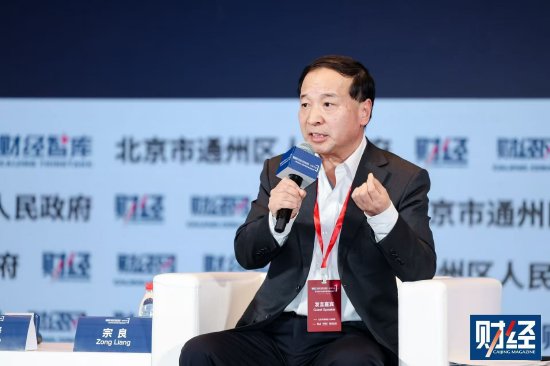
宗良:企业做大做强后,要抓住全球市场的机遇并购
Xin Lang Cai Jing· 2025-12-20 08:07
Core Insights - The 2026 Financial Annual Conference and 2025 Global Wealth Management Forum will be held in Beijing from December 18-20, 2025, focusing on China's strategic positioning in finance, industry cultivation, and technological self-reliance as outlined in the 14th Five-Year Plan [2][5] Group 1: Technological Development - China needs to focus on breakthroughs in original innovation (0 to 1) and the transformation of results (1 to N), with a strong advantage in the latter but requiring enhancement in original innovation through collaboration between universities and large enterprises [2][5][6] Group 2: Industrial Growth - There is a need to cultivate small and medium-sized enterprises (SMEs) into large enterprises, creating a virtuous ecosystem where large enterprises continue to strengthen [6] Group 3: Financial Support System - A comprehensive support system throughout the business cycle is essential, starting with early-stage funding from national R&D and venture capital, transitioning to patent financing and technology financial products in the mid-stage, and utilizing diverse channels like IPOs and mergers for capital exit and enterprise expansion in the mature stage [6] Group 4: Global Market Opportunities - Once enterprises grow stronger, they should seize global market opportunities for mergers and acquisitions, with the potential to develop Chinese companies that can compete with top global tech firms, thereby enhancing Beijing's status as an international innovation center and boosting national competitiveness [3][6]
潮涌东方满江红:东方证券2026年度投资策略会成功举办
新浪财经· 2025-12-19 10:36
东方证券研究所宏观与战略团队表示,在这个全球充满不确定性的时代,中国政策的稳定 性、连续性、务实针对性和规划前瞻性是一条突出的比较优势,这正在成为更多全球投资者 的共识。展望明年,由科技突破、风险下降等叙事力量推动的资金再配置预计仍将延续,关 注"十五五"时期政策新理念推动经济走向再平衡。海外宏观环境将继续有利于中国资产表 现,美国政策宽松未完待续,全球"政策偏松 + 经济不差"的组合为风险资产提供温和"顺 风"。 同时,本次策略会精心设置了十二大分会场,聚焦不同投资主线,覆盖了科技、人工智能、 新能源、消费、多元资产配置等热点话题,深度探讨了行业前沿技术及投资机遇,展现了东 方研究团队的专业锐度。 东方证券表示,未来将继续搭建高质量的思想交流平台,汇聚智慧,致力于"金融报国、金 融为民",持续服务国家战略和实体经济,助力新质生产力和现代化产业体系发展壮大。 12 月 18 日,东方证券 2026 年度投资策略会在上海拉开帷幕。本次策略会以"潮涌东方 满江红"为主题,汇聚了专业学者、行业专家同东方证券核心研究团队共同擘画新一年的投 资蓝图,为千余名各界机构投资者带来了一场思想与远见的盛宴。 东方证券党委副书记 ...


券业“三合一”重组落子,中金公司携手东兴信达剑指一流券商
Xin Jing Bao· 2025-12-19 06:45
Core Viewpoint - The merger of China International Capital Corporation (CICC) with Dongxing Securities and Cinda Securities marks a significant milestone in the industry, entering the operational phase of a rare "three-in-one" restructuring [1][2]. Group 1: Merger Details - The restructuring plan was disclosed on December 17, with share exchange prices set at 36.91 CNY for CICC, 16.14 CNY for Dongxing Securities, and 19.15 CNY for Cinda Securities [2]. - The exchange ratios are 1:0.4373 for Dongxing Securities and 1:0.5188 for Cinda Securities, with CICC expected to issue approximately 3.096 billion new A-shares [3]. Group 2: Strategic Implications - The merger is expected to enhance CICC's total asset scale to over 1 trillion CNY, positioning it among the top in the industry in terms of revenue and capital strength [3]. - The integration aims to create a comprehensive service system covering institutional and retail clients, both domestic and international, significantly improving service capabilities and resilience against market fluctuations [4]. Group 3: Industry Impact - The merger is seen as a model for future financial institution restructuring, accelerating the trend of concentration among leading firms and shifting the industry focus from quantity to quality competition [5]. - The restructuring aligns with national strategies to build a first-class investment bank and reflects the regulatory push for optimizing the structure of the securities industry [6][7]. Group 4: Future Outlook - CICC aims to leverage the scale advantages from the merger to drive high-quality development and contribute to the long-term growth of China's capital markets [8].



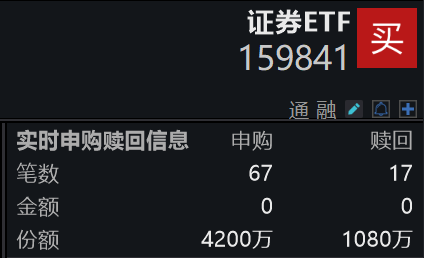
资金逆市抢筹!证券ETF(159841)昨日全天净申购超3000万份,跟踪指数估值性价比凸显
Sou Hu Cai Jing· 2025-12-19 01:29
Group 1 - The Securities ETF (159841) experienced a turnover of 2.07% with a transaction volume of 213 million yuan, while the tracked CSI All Share Securities Index (399975) declined by 0.98% [1] - Notable individual stock performances included Dongxing Securities (601198) rising by 9.98%, China International Capital Corporation (601995) increasing by 3.70%, and Xinda Securities (601059) up by 2.47% [1] - The Securities ETF (159841) has seen active capital inflow, with subscription shares reaching 31.2 million [1] Group 2 - The latest single-day net inflow for the Securities ETF (159841) was 34.2 million yuan, with a total share count of 42 million [2] - The ETF tracks large-cap securities leaders in the A-share market, including traditional and fintech leaders, with a current PE (TTM) of 17.41, which is in the 2.61% percentile over the past three years [2] Group 3 - In the first 11 months of 2025, the revenue from securities transaction stamp duty increased by 70.7% year-on-year, totaling 404.4 billion yuan, with 185.5 billion yuan specifically from securities transactions [4] - The stamp duty for November 2025 was reported at 22.6 billion yuan, reflecting a month-on-month increase of 24.86% compared to October [4] Group 4 - China International Capital Corporation announced a plan to merge with Dongxing Securities and Xinda Securities, leading to a trading halt and subsequent price increases for all three companies, with CICC reaching a daily limit up of 3.70% and Dongxing Securities hitting a daily limit up [5] - The merger is expected to accelerate consolidation in the securities industry, enhancing overall competitiveness and aiming for the establishment of a first-class investment bank [6]
革故鼎新,鉴证不凡!“2025年度资本市场卓越执业英才”盛典在苏州盛大启幕
Quan Jing Wang· 2025-12-19 01:26
Group 1 - The core theme of the "2025 Annual Capital Market Outstanding Practitioners" event is to transition from "scale expansion" to "quality leadership" in the capital market [2] - The event gathered key representatives from major securities firms, accounting firms, and law firms, emphasizing their role as "gatekeepers" in the capital market [2] - The event aims to enhance the quality and effectiveness of services provided to the real economy by showcasing exemplary cases and outstanding representatives in the capital market service sector [2] Group 2 - The event reflects a commitment to "serving the real economy" and emphasizes innovation while maintaining integrity in the development direction of the industry [3] - The scope of the event has expanded to include not only traditional areas like IPOs and mergers but also new focuses such as bond issuance and services for "A+H" listed companies [3] - The successful hosting of the event recognizes the contributions of industry leaders over the past year and signals a positive outlook for future development, highlighting the growth of a more professional and innovative intermediary team in the capital market [3]

横盘震荡,略有走强!东方证券研判2026年A股市场
Zhong Guo Zheng Quan Bao· 2025-12-18 16:30
12月18日,东方证券2026年度投资策略会在上海举行。本次策略会以"潮涌东方满江红"为主题,汇聚专 业学者、行业专家同东方证券核心研究团队,为千余名机构投资者带来一场思想与远见的盛宴。 东方证券党委副书记、副总裁(主持工作)卢大印在致辞中表示,2025年,我国资本市场迎来稳健向好 的重大机遇,本次大会主题"潮涌东方满江红",既是对波澜壮阔一年的深情礼赞,也寄托了大家对国 家、对市场前景朴素、务实的美好期待。 卢大印进一步表示,美好期待的背后,有三个层面的坚实客观基础:一是全球秩序正在经历深刻调整, 更加凸显我国社会安全稳定、经济稳健发展的独特价值,也为我国资本市场的投资与研究创造了更为有 利的环境;二是中国资本市场的制度建设进入收获期,"金融强国"首次被写入五年规划建议,体现了中 国金融业发展目标从大到强的深刻跃迁,为市场上行提供了前所未有的制度土壤;三是全社会对国家的 信心不断提升,这种提升不仅源于中国在纷繁复杂世界里逐渐赢得战略主动,还来源于经济转型、产业 升级和科技突破给民众带来的底气和信心,这种底气和信心,还将在未来继续支撑中国资产的价值。 东方证券研究所所长黄燕铭在本次策略会上表示,2026年股票 ...
横盘震荡 略有走强!东方证券研判2026年A股市场
Zhong Guo Zheng Quan Bao· 2025-12-18 15:30
东方证券研究所所长黄燕铭在本次策略会上表示,2026年股票市场可以简单总结为"横盘震荡,略有走 强",整个市场将呈现横盘震荡逐级抬升的过程,这个过程需要较长时间逐步完成,大家不能有一蹴而 就、"快牛""疯牛"的想法。对于2026年投资机会,他认为,前期在中盘蓝筹股,后期还是在科技创新 股。 东方证券研究所宏观与战略团队表示,在这个全球充满不确定性的时代,中国政策的稳定性、连续性、 务实针对性和规划前瞻性是突出的比较优势,这正在成为更多全球投资者的共识。展望明年,由科技突 破、风险下降等叙事力量推动的资金再配置预计仍将延续,关注"十五五"时期政策新理念推动经济走向 再平衡。海外宏观环境将继续有利于中国资产表现,美国政策宽松未完待续,全球"政策偏松+经济不 差"的组合为风险资产提供温和"顺风"。 东方证券本次策略会精心设置了十二大分会场,聚焦不同投资主线,覆盖了科技、人工智能、新能源、 消费、多元资产配置等热点话题,深度探讨了行业前沿技术及投资机遇,展现了东方研究团队的专业锐 度。 12月18日,东方证券2026年度投资策略会在上海举行。本次策略会以"潮涌东方满江红"为主题,汇聚专 业学者、行业专家同东方证券核心 ...
北京市地方金融管理局局长曾林峰:坚持首善标准,扎实推动首都金融各项工作迈上新台阶
Cai Jing Wang· 2025-12-18 05:40
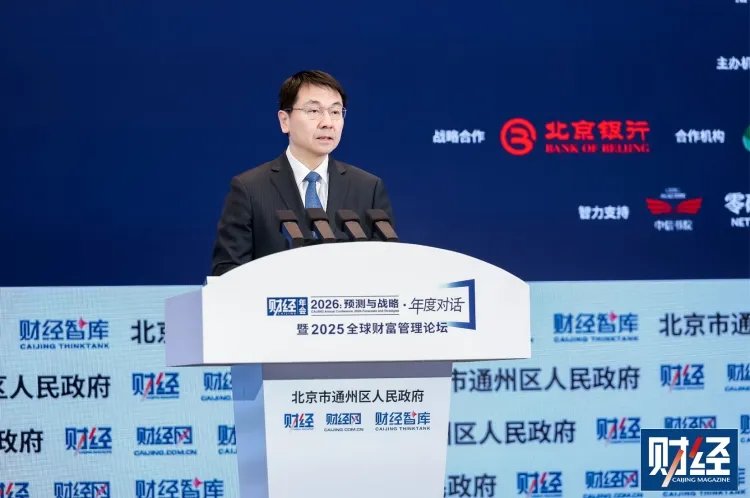
Core Viewpoint - The "2026 Annual Conference: Predictions and Strategies" hosted by Caijing Magazine and supported by the Beijing Municipal Government emphasizes the importance of finance in China's modernization and highlights Beijing's role as the national financial management center, with significant contributions to the national economy [1][6]. Group 1: Financial Development Strategy - Beijing's financial industry accounts for approximately half of the national total assets, with leading indicators in the number of financial institutions, workforce, and insurance metrics [3][7]. - The city aims to enhance the financial sector's stability and quality by developing a high-standard "14th Five-Year Plan" and promoting reforms in key areas, particularly in technology finance services [3][7]. - The focus will be on supporting the development of the Beijing Stock Exchange (BSE) as it marks its fifth anniversary, encouraging participation from professional investors to enhance its role in serving innovative SMEs [3][8]. Group 2: Support for the Real Economy - Financial resources will be directed towards new productive forces and urban governance, with an emphasis on asset allocation across various markets and innovative asset management products [4][8]. - The integration of finance and technology will be prioritized to bolster support for technological and industrial innovation [4][8]. Group 3: International Financial Cooperation - The city will advance financial openness by promoting pilot projects in financial market access and cross-border investment facilitation, while hosting significant events like the Financial Street Forum [4][5]. - There is a call for collaboration with international financial institutions to enhance wealth management services and respond to global market challenges [5][9]. Group 4: Wealth Management Center Development - The urban sub-center is positioned as a global wealth management hub, leveraging its advantages to attract high-quality wealth management institutions and optimize the industry ecosystem [5][9]. - Continuous support will be provided to enhance wealth management products and services, aiming to create a globally influential wealth management center [9].
紧紧抓住AI产业机会!私募展望2026年:看好这些细分板块
券商中国· 2025-12-18 03:47
Core Viewpoint - The article emphasizes the transformation of China's private equity industry from quantity expansion to quality improvement, highlighting the launch of the "Golden Yangtze" private equity empowerment plan by Changjiang Securities, which aims to create a professional and systematic growth platform for private equity [1][5][6]. Group 1: Market Trends and Opportunities - The AI industry is expected to be a major focus in 2025, with significant investment opportunities arising from technological advancements and capital expenditures from global giants, making it one of the standout sectors in the A-share market [3][7]. - The 2026 investment landscape will be shaped by various strategies and core variables, with discussions held at a recent salon event involving over 50 private equity fund managers and industry experts [3][9]. Group 2: Private Equity Development - The private equity industry is experiencing steady growth amid regulatory improvements and economic recovery, with a shift towards long-term investments and a focus on multi-dimensional evaluations rather than just performance [5][6]. - Since its launch in June, the "Golden Yangtze" empowerment plan has attracted over 900 excellent managers and 3,300 products, demonstrating strong industry recognition for a professional and systematic empowerment platform [6]. Group 3: Investment Strategies - In the electronics sector, investment opportunities are identified in AI hardware, AI end-side devices, and semiconductors, with a particular focus on high-tech PCB products driven by the demand for AI servers [7][8]. - The AI smart glasses market is highlighted as a significant opportunity, with expectations for a major sales increase in 2026, potentially leading to a broader market trend similar to the TWS earphones boom in 2019 [8]. - Recommendations for semiconductor investments include focusing on leading platform companies and those achieving breakthroughs in niche markets, while also considering the varying market dynamics across different semiconductor materials [8]. Group 4: Private Equity Ecosystem Empowerment - Changjiang Securities aims to provide comprehensive services to private equity managers, fostering an open and efficient service ecosystem, with strategic partners like Industrial Bank and Industrial Trust contributing to this empowerment [9][10]. - Discussions at the salon included insights on how capital providers can effectively select private equity managers, emphasizing the importance of evaluation systems and collaboration logic from the perspective of capital providers [10]. Group 5: Market Outlook and Strategies - Many private equity institutions maintain a positive outlook on the A-share market, believing that the overall valuation is reasonable and the medium to long-term fundamentals are solid [11][12]. - Investment strategies discussed include a focus on diversified asset allocation to mitigate risks and capture long-term value, with specific attention to sectors like advanced manufacturing and technology innovation [12][14].