具身智能

Search documents
上市首日涨超109%!清华夫妇造出百亿机器人IPO,顺丰赚近14亿
机器人大讲堂· 2026-03-25 09:15
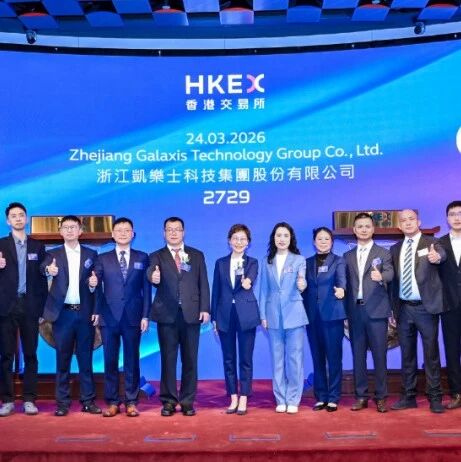
Core Viewpoint - The article discusses the successful IPO of Kales Technology (凯乐士科技), highlighting its position as the first "full-stack intelligent in-warehouse logistics robot" company listed on the Hong Kong Stock Exchange, and its innovative technology that sets it apart in a competitive market [1][3]. Group 1: Company Overview - Kales Technology was listed on March 24, with an initial pricing of HKD 16.66 per share, opening at HKD 32, reflecting a significant increase of approximately 92.17% on the first day [3]. - The company achieved a market capitalization that briefly surpassed HKD 130 billion, with its founders, Gu Chunguang and Yang Yan, both holding prestigious academic backgrounds from Tsinghua University and further studies at MIT and Cornell University [3][4]. - Kales has developed a comprehensive "hardware + software" full-stack technology system, focusing on reshaping supply chain operations through advanced robotics [4]. Group 2: Product Lines and Technology - Kales Technology's core product lines include Multi-directional Shuttle Robots (MSR), Autonomous Mobile Robots (AMR), and Conveying Sorting Robots (CSR), which together cover essential logistics functions such as storage, sorting, and transportation [5][8]. - The MSR can enhance warehouse space utilization from 30%-40% to over 70% and reduce labor costs by 40%, demonstrating its efficiency in high-demand scenarios [7]. - The AMR is highly adaptable, requiring no major site modifications, and includes innovations like the VNA AMR and the globally unique VFR series for narrow aisle operations, capturing a 19.3% market share in its segment [7][8]. - Kales' CSR combines conveyor systems with sorting robots, achieving high throughput and continuous operation, capable of processing thousands of items per hour [8]. Group 3: Market Applications - Kales Technology's products are utilized across various industries, including new energy, pharmaceuticals, automotive, and textiles, with notable clients such as CATL, BYD, and OPPO [10]. - The company has developed specialized solutions for industries with stringent requirements, such as a fireproof stacker for lithium battery production and an automated material handling system for the semiconductor sector [10]. Group 4: Founders' Background - The success of Kales is attributed to its founders, Gu Chunguang and Yang Yan, who possess a blend of top-tier academic credentials and extensive industry experience [11][14]. - Gu's previous role at a private enterprise allowed him to gain practical insights into logistics challenges, which he later applied to Kales' development [13][14]. - The couple's complementary skills in industry insight and engineering have been pivotal in establishing a solid foundation for the company [14]. Group 5: Strategic Partnerships and Growth - Kales' relationship with SF Express began in late 2016, where SF's need for efficient storage solutions aligned with Kales' technology, leading to significant collaboration [15][16]. - SF Express not only invested approximately HKD 1.66 billion but also provided a testing ground for Kales' technology, facilitating rapid development and adaptation to real-world logistics challenges [16]. - Despite facing losses from 2022 to 2024, Kales has shown a trend of narrowing losses, with a significant reduction in adjusted net losses projected for the coming years [18][19]. Group 6: Future Outlook - Kales plans to allocate approximately 45% of its IPO proceeds to R&D, 25% to capacity expansion, and 20% to international market development, indicating a strategic focus on growth and innovation [19]. - The global smart logistics robot market is expected to approach one trillion by 2030, presenting significant opportunities, although competition is intensifying [19].

人形机器人量产提速 倒逼动力电池技术加速迭代
机器人圈· 2026-03-25 09:12
Core Insights - The humanoid robot industry is entering a critical window for mass production and commercialization by 2026, with a focus on overcoming technical bottlenecks in power systems [2] - The current lithium battery systems are inadequate in energy density, safety, and volume efficiency for humanoid robots, leading to a potential breakthrough in solid-state battery technology [2] Group 1: Industry Growth and Challenges - By 2025, over 140 humanoid robot companies in China are expected to release more than 330 products, marking it as the year of mass production [3] - The actual shipment of humanoid robots is projected to exceed 5,500 units, with production surpassing 6,500 units [3] - The industry is still in the early stages of product and technology validation, with supply chains not yet capable of large-scale production [3] - Current humanoid robots have a battery life of less than 4 hours, which is insufficient for continuous industrial operations and all-day household services [3] Group 2: Battery Performance Requirements - The core battery requirements for humanoid robots include long endurance, high safety, and high power output [4] - The compact installation space in indoor environments necessitates improvements in both volumetric and gravimetric energy density [4] - Outdoor and specialized applications impose additional challenges on battery stability, cycle life, and temperature adaptability [4] Group 3: Solid-State Battery Potential - Solid-state batteries are being revalued in the industry, offering 2-3 times the energy density of liquid lithium batteries and enhanced safety features [5] - Demand for solid-state batteries in humanoid robots is expected to exceed 74 GWh by 2035, representing a growth of over 1,000 times from 2026 [5] - Humanoid robots provide a unique commercialization pathway for solid-state batteries, differing from the automotive sector, which faces stringent cost and supply chain challenges [5] Group 4: Industry Dynamics and Customization - Several battery companies are actively developing technologies for humanoid robots, with successful samples of solid-state batteries already delivered to leading clients [6] - The current supply of humanoid robot batteries is still in the early stages and has not reached the scale of automotive batteries, leading to relatively high costs [7] - Different application scenarios for humanoid robots require tailored battery solutions, emphasizing the need for collaboration between battery and robot companies [7] Group 5: Long-term Implications for Battery Technology - The rise of the humanoid robot industry is expected to significantly impact the battery industry, shifting the focus from electric vehicles to new performance metrics [8] - The evolution of battery technology will involve rethinking materials, packaging, and manufacturing processes to meet the new demands of humanoid robots [8] - As power systems become critical to the existence of humanoid robots, the technical focus of the battery industry will undergo a structural shift [8]



营收狂飙17亿,净利率近37%!宇树科技招股书解密:从“机器狗”到“人形顶流”的业绩狂飙之路
机器人圈· 2026-03-25 09:12
Core Viewpoint - Yushu Technology, a leading company in the global high-performance general robotics sector, has successfully transitioned from quadruped robots to humanoid robots, showcasing significant technological advancements and market expansion [4][6][33]. Group 1: Company Overview - Yushu Technology was founded in 2016 and focuses on the research, production, and sales of high-performance general robots, including humanoid and quadruped robots [6]. - The company has established three core advantages: leading market position, strong technical capabilities, and significant brand influence [7]. Group 2: Financial Performance - Yushu Technology's revenue is projected to reach 1.708 billion yuan in 2025, a substantial increase from 392 million yuan in 2024, indicating rapid growth [9]. - The company's net profit after deducting non-recurring items is expected to be 431 million yuan in 2025, with a remarkable net profit margin of 36.88% [9][14]. - The gross profit margin for the main business has increased from 44.94% in 2022 to 59.83% in the first nine months of 2025, significantly higher than competitors [13]. Group 3: Sales and Market Dynamics - The average selling price of humanoid robots decreased from 593,400 yuan in 2023 to 167,600 yuan in the first nine months of 2025, while sales volume surged to 3,551 units [11]. - Sales of quadruped robots increased significantly, with a total of 17,946 units sold in the first nine months of 2025, a 235.31% increase compared to the previous year [13]. Group 4: R&D and Cost Management - R&D expenses increased from 29.98 million yuan to 90.21 million yuan, but the R&D expense ratio decreased from 31.39% to 7.73%, indicating significant scale effects [19]. - The company's management expense ratio is lower than the industry average, reflecting efficient management and cost control [20][21]. Group 5: Fundraising and Future Plans - Yushu Technology plans to raise 4.201 billion yuan for four core projects, focusing on enhancing technical barriers and expanding production capacity [24][27]. - The largest investment will be in the intelligent robot model R&D project, aimed at developing general intelligence capabilities [26]. Group 6: Governance and Control - The company's governance structure features a special voting rights mechanism, allowing the founder to maintain significant control despite holding a minority of shares [31].

重磅!Optimus量产再进一程
Robot猎场备忘录· 2026-03-25 09:05
Core Viewpoint - The article emphasizes the progress in the mass production of Optimus robots, highlighting the expansion of Tesla's factories and the anticipation surrounding the release of Optimus V3 [4][8]. Group 1: Factory Developments - The Texas Gigafactory is undergoing expansion for the production of Optimus V4, while the Fremont factory's production line is being converted to produce Optimus robots, with a long-term goal of achieving an annual production capacity of 1 million units [4][8]. - Elon Musk indicated that the Optimus V4 will be produced at a higher volume in Texas, with previous reports suggesting a target annual capacity of 10 million units [8]. Group 2: Market Conditions - The article notes a potential easing of external market pressures, which could lead to a rebound in the T-chain's performance, following a period of significant downturn since the Lunar New Year [9]. - The anticipated release of Optimus V3 is seen as a critical catalyst for the T-chain, with expectations that its performance will exceed market predictions [9]. Group 3: T-chain Insights - Current revenue from T-chain companies is deemed negligible, with the focus shifting to the production expectations of V3 and the market share they can secure [10]. - The article highlights that the V3 version will feature increased freedom of movement, with specific components like the rotary actuator and harmonic reducer being key areas of interest for potential market share shifts [10]. - Recent developments include T-chain companies signing power purchase agreements (PPAs) and engaging in new rounds of North American inspections, indicating a tightening focus on core suppliers [10][14]. Group 4: Key Suppliers - The article mentions several key suppliers making significant progress, including a core structure component supplier achieving an average selling price (ASP) exceeding $1,000, and a motor supplier entering Tesla's direct supply list [14]. - A new core screw supplier has also hosted discussions regarding their progress and production capacity, indicating a robust supply chain development [14].


刚刚,OpenAI宣布关闭Sora
机器之心· 2026-03-25 07:44
Core Viewpoint - OpenAI has announced the closure of its Sora application, citing the need to focus resources on next-generation models due to Sora's inability to achieve profitability and declining user retention rates [1][4][8]. Group 1: Reasons for Closure - Sora's download numbers have been consistently declining, indicating a lack of sustained user interest [2][4]. - The application had a 30-day retention rate of only 1% and a 60-day retention rate of 0%, suggesting that while users may have been initially interested, they did not continue to engage with the product [7]. - The operational costs for Sora were extremely high, reportedly around $15 million per day, translating to approximately $5.5 billion annually [7][10]. Group 2: Strategic Shift - OpenAI is reallocating resources from Sora to focus on more promising areas such as reasoning capabilities, programming tools, and enterprise-level solutions [8][12]. - The company is prioritizing the development of its next flagship model, codenamed Spud, which is already in the pre-training phase [9][12]. - The closure of Sora is seen as part of a broader strategic shift towards world models and long-term applications in embodied intelligence, particularly in robotics [12]. Group 3: Impact on Partnerships - The closure of Sora has significant implications for OpenAI's partnership with Disney, which had invested $1 billion and signed a three-year agreement to license over 200 IP characters for Sora [4][19]. - Following the announcement, Disney has decided to withdraw from the partnership, indicating potential challenges for OpenAI in securing future collaborations [19].

资讯早间报-20260325
Guan Tong Qi Huo· 2026-03-25 06:46
Report Industry Investment Rating No relevant information provided. Core Viewpoints of the Report The report comprehensively presents the overnight market trends of various commodities, important macro - economic and geopolitical news, financial market performance, and upcoming economic data and events. It reflects the complex and dynamic nature of the global economic and financial situation, with geopolitical factors such as the Iran - related conflict having a significant impact on the markets. Summary by Directory Overnight Night - Market Trends - The main contract of US crude oil rose 0.3% to $88.39 per barrel, and the main contract of Brent crude oil rose 0.02% to $95.94 per barrel [4][46]. - International precious metal futures generally rose. COMEX gold futures rose 1.53% to $4474.90 per ounce, and COMEX silver futures rose 3.01% to $71.44 per ounce [5][46]. - Most London base metals fell. LME aluminum rose 1.45% to $3245.5 per ton, while LME lead, tin, nickel, copper, and zinc declined to varying degrees [5][46]. Important Information Macroeconomic Information - The People's Bank of China will conduct 500 billion yuan of MLF operations on March 25, 2026 [8]. - Iran will not stop the war until it gets all compensation, all economic sanctions are lifted, and it gets international legal guarantees that the US will not interfere in its affairs [8]. - The US and Israel attacked two energy infrastructure facilities in Iran [8]. - The US proposed a 15 - item conflict - ending plan to Iran, and is considering a one - month cease - fire for further negotiations [9]. - US President Trump said Iran "started rational communication" and agreed "never to have nuclear weapons" [10]. - Trump said Iran gave a "very big gift" related to oil and gas and the Strait of Hormuz [12]. - The US and regional mediators are discussing the possibility of high - level peace talks with Iran, pending Iran's response [13][14]. Energy and Chemical Futures - Japan will start releasing its national oil reserves from March 26, and also plans to release the "producer - joint reserves" in March [16]. - The EU has not announced a new schedule for the plan to completely phase out Russian oil, and removed April 15 from the latest schedule [16]. Metal Futures - The Turkish central bank is discussing a "gold - for - foreign exchange" swap transaction through the London market, considering using its $135 billion gold reserves to support the lira [18]. - In February 2026, the installed capacity of new - energy vehicle power batteries was 27.3GWh, a year - on - year decrease of 19.2%. The cumulative year - on - year increase from January to February was 37.4%. The average power per new - energy vehicle from January to February was 62.0kWh, a year - on - year increase of 29.2% [18]. - India extended the tariff quota authorization for gold imports under the India - UAE trade agreement until June 30, 2026 [20]. - In January 2026, the global lead market supply surplus narrowed to 9700 tons, and the global zinc market changed from a shortage of 75100 tons in December 2025 to a surplus of 9200 tons [20]. Black - Series Futures - In February 2026, global crude steel production was 141.8 million tons, a year - on - year decrease of 2.2%. From January to February, it was 298.2 million tons, a year - on - year decrease of 1.5%. China's steel production in February was 76.09 million tons, a year - on - year decrease of 3.6% [22]. Agricultural Product Futures - In February 2026, the slaughter volume of designated pig - slaughtering enterprises was 31.77 million heads, a month - on - month decrease of 27.9% but a year - on - year increase of 40.7%. The cumulative slaughter volume from January to February was 75.81 million heads, a year - on - year increase of 21.9% [24]. - Starting from March 25, 2026, the minimum opening order volume for the apple futures 2605 contract is adjusted to 2 lots [25]. - The Brazilian Ministry of Agriculture is actively solving soybean export quarantine issues. The market's concern about imported soybean supply has subsided. The soybean crushing rate of oil mills has slightly decreased, and the soybean meal inventory is expected to drop to about 550,000 tons at the end of the month, a year - on - year decrease of about 100,000 tons [25]. - The estimated palm oil export volume of Malaysia from March 1 - 20, 2026 was 889,128 tons, a 61.02% increase compared to the same period last month [27]. Financial Market Finance - A - shares rebounded strongly, with over 5100 stocks rising. The Shanghai Composite Index rose 1.78% to 3881.28 points, and the market turnover was 2.1 trillion yuan. Military stocks soared, while the oil and gas sector declined [29]. - Hong Kong stocks rebounded significantly. The Hang Seng Index rose 2.79% to 25063.71 points. Southbound funds net - sold nearly HK$27.4 billion [29]. - As of the end of February, the scale of private equity funds reached 22.6 trillion yuan, a new high. The number of private equity fund managers decreased [29]. - Goldman Sachs maintains an overweight recommendation for Chinese stocks (A - shares and Hong Kong stocks) and believes that the Sharpe ratio from A - shares is higher in the short term [30]. - As of March 24, 224 companies have announced annual dividend plans, with a total cash dividend of 171.068 billion yuan. 27 companies have a dividend scale of over 1 billion yuan [32]. - Xiaomi Group's Q4 2025 revenue reached a record high, and its automotive business achieved annual profitability for the first time. The company plans to invest over 200 billion yuan in R & D in the next five years [32]. Industry - The National Data Bureau will promote the high - quality development of the digital economy in multiple aspects this year [33]. - The National Development and Reform Commission approved two new railway project proposals with a total investment of 68.1 billion yuan and 44.8 billion yuan respectively [34]. - State Grid will start the construction of pumped - storage power plants with a capacity of over 30 million kilowatts during the 15th Five - Year Plan period [34]. - As of March 22, Shanghai's second - hand housing transactions reached 21,443 units, and it is likely that the transaction volume in March will exceed 30,000 units [34]. - Chengdu introduced policies to boost housing consumption, including increasing the housing provident fund loan limit [34]. - The compilation of China's first "Embodied Intelligent Engineering Robot Industry Standard" has started [36]. - A new rare - earth oxide resource with an additional reserve of 9.6656 million tons was discovered in Sichuan [36]. Overseas - US President Trump claimed victory in the action against Iran, and his approval rating dropped to 36% [37]. - The US March S&P Global Composite PMI dropped to 51.4, with manufacturing and service sectors showing different trends [37]. - The eurozone March S&P Global Composite PMI dropped to 50.5, with the service sector PMI falling significantly [37]. - European Central Bank officials said they need to be vigilant against inflation due to the Iran war [38]. - Japan's February core CPI rose 1.6% year - on - year, the smallest increase since March 2022 [40]. - NASA will cancel the plan to deploy a space station in lunar orbit and build a $20 billion base on the lunar surface in the next seven years [40]. - The EU and Australia reached a comprehensive trade agreement, canceling most tariffs [41]. International Stock Markets - US stocks fell across the board. The Dow Jones Industrial Average fell 0.18%, the S&P 500 Index fell 0.37%, and the Nasdaq Composite Index fell 0.84% [42]. - European stocks closed mixed. The German DAX Index fell 0.07%, the French CAC40 Index rose 0.23%, and the UK FTSE 100 Index rose 0.72% [42]. - Most Asia - Pacific stocks rose. The Nikkei 225 Index rose 1.43%, the South Korean Composite Index rose 2.74%, and the Indian SENSEX30 Index rose 1.89% [43]. - Japan's Sumitomo Mitsui Financial Group is formulating a plan to potentially acquire Jefferies Financial Group [45]. Commodities - Oil prices rose slightly, but the increase in US API crude oil inventory put pressure on prices [46]. - Precious metal futures rose due to geopolitical uncertainty and other factors [46]. - Most London base metals fell [46]. - Iran started charging tolls for some merchant ships passing through the Strait of Hormuz, and the number of passing ships decreased significantly [47]. - The EU postponed the proposal to permanently ban the import of Russian oil [47]. Bonds - The bond market was generally strong. The yield of the 30 - year Treasury bond "25 Super - long Special Treasury Bond 06" declined, and the 30 - year Treasury bond futures rose [49]. - The foreign official accounts' US Treasury bond holdings in the New York Fed dropped by $75 billion in the past four weeks [49]. - Moody's downgraded the debt rating of a private credit fund to "junk - grade" [49]. - US Treasury bond yields rose across the board [49]. Foreign Exchange - The on - shore RMB against the US dollar rose on Tuesday, and the central parity rate was adjusted up [50]. - The US dollar index rose slightly, and most non - US currencies fell [50]. - The Turkish central bank is discussing a gold - for - foreign exchange swap to support the lira, and the lira has depreciated against the US dollar this year [52]. Upcoming Economic Data and Events - Economic data such as Australia's February CPI, UK's February CPI, and Germany's March IFO Business Climate Index will be released [54]. - There are important events such as the release of the Japanese central bank's January monetary policy meeting minutes, speeches by central bank officials, and multiple conferences and exhibitions [56].
视源股份发布2025年业绩报告
WitsView睿智显示· 2026-03-25 05:47
Core Viewpoint - The company reported a revenue of 24.35 billion yuan for 2025, marking an 8.72% increase year-on-year, while the net profit attributable to shareholders was 1.01 billion yuan, up 4.38% from the previous year [2][3]. Financial Performance - Revenue for 2025 reached 24.35 billion yuan, an increase of 8.72% compared to 22.40 billion yuan in 2024 and 20.17 billion yuan in 2023 [1]. - Net profit attributable to shareholders was 1.01 billion yuan, reflecting a 4.38% growth from 970.96 million yuan in 2024, but down from 1.37 billion yuan in 2023 [1]. - The net profit after deducting non-recurring gains and losses was 752.39 million yuan, a decrease of 10.07% from 836.65 million yuan in 2024 [1]. - Operating cash flow net amount was 661.55 million yuan, down 47.28% from 1.25 billion yuan in 2024 [1]. - Basic earnings per share were 1.48 yuan, up 4.96% from 1.41 yuan in 2024 [1]. Business Segments - The smart control components sector achieved steady growth, with revenue from LCD display main control board business reaching 7.03 billion yuan, a 6.07% increase, driven by rising raw material prices and increased cooperation with major clients [2]. - The home appliance controller business saw a significant revenue increase of 46.02%, totaling 2.52 billion yuan, due to a surge in domestic and international orders [2]. - The education brand business generated 5.58 billion yuan in revenue, an 8.77% increase, with stable development of core products and ongoing rollout of education AI-related products [3]. - The enterprise service brand business reported revenue of 2.65 billion yuan, an 8.59% increase, although domestic business faced challenges with a 9.47% decline in digital signage revenue [3]. - ODM business revenue was 3.09 billion yuan, down 21.03%, impacted by changes in overseas education market demand and tariff fluctuations [3]. Innovation and R&D - The company focused on key technology research and development, achieving breakthroughs in areas such as multi-modal large models and embodied intelligence [3]. - In 2025, the company added over 800 authorized patents, including more than 330 invention patents and over 150 new software copyrights [3].


申万期货品种策略日报:股指-20260325
Shen Yin Wan Guo Qi Huo· 2026-03-25 05:36
| | 五、宏观信息 | | --- | --- | | | 美国政府通过巴基斯坦向伊朗提出一份包含15项条件的结束冲突方案,涵盖核计划、导弹能力及地区问题。美方主要要求包括:拆除现有核能力、承诺不发展 | | | 核武器、禁止在本土进行铀浓缩、移交约60%高丰度浓缩铀库存、拆除纳坦兹、伊斯法罕及福尔多等核设施,并允许国际原子能机构(IAEA)全面核查等。同 | | | 时,美方还要求伊朗停止支持地区盟友武装,禁止对其提供资金、指挥及武器支持,并限制弹道导弹项目的规模与射程,仅用于防御用途,同时确保霍尔木兹 | | | 海峡保持开放。作为交换条件,伊朗可能获得全面解除国际制裁、美国支持其发展民用核项目,以及取消"快速恢复制裁"机制。据了解,美方正考虑推动为 | | 期一个月的停火,以便就上述条款展开进一步谈判。 | | | | 美国总统特朗普表示,美国正与"正确的人"进行沟通,伊朗方面"希望达成协议"。特朗普同时声称伊朗"已没有领导层",美国在伊朗问题上"取得巨大 成功"。美方正与伊朗进行谈判,美军在德黑兰上空"行动自由";伊朗方面"开始理性沟通",并已同意"永不拥有核武器"。特朗普指出,美方与伊朗的 | | ...
产业研究专题系列报告之二:规划篇:地方层面“十五五”产业规划与布局
CMS· 2026-03-25 05:32
Group 1: Industry Planning and Direction - The "14th Five-Year Plan" emphasizes building a modern industrial system, with a focus on traditional industry transformation, emerging pillar industries cultivation, and future industry foresight[1] - Eastern provinces aim to become global innovation hubs, focusing on AI, integrated circuits, and biomedicine, while also targeting future industries like quantum technology and brain-machine interfaces[4] - Central provinces seek breakthroughs in equipment manufacturing and electronic information, with a goal of having strategic emerging industries account for 30% of industrial output by 2025[17] - Western provinces leverage abundant energy resources to develop green energy and computing power industries, aligning with national strategies like "East Data West Computing"[19] Group 2: Core Participants and Collaboration - State-owned enterprises (SOEs) lead strategic restructuring and resource integration, while private enterprises drive innovation and are the main contributors to high-tech enterprises, accounting for over 92%[4] - The industrial planning involves a multi-faceted collaboration among SOEs, private enterprises, and "chain master" companies, enhancing supply chain resilience and promoting coordinated development[4] - Five major growth poles are identified: Yangtze River Delta, Guangdong-Hong Kong-Macao Greater Bay Area, Beijing-Tianjin-Hebei, Chengdu-Chongqing, and the Central Yangtze River region, each with distinct industrial focuses[5] Group 3: Financial Integration and Support - Financial support for the real economy is shifting towards direct financing, mergers and acquisitions, and specialized fund investments, with innovative financial tools becoming increasingly diverse[4] - By 2025, strategic emerging industries are expected to raise over 1 trillion yuan through IPOs and refinancing, with a significant portion concentrated in eastern provinces[4] - The merger and acquisition market is becoming more active, with A-share listed companies participating in transactions exceeding 1 trillion yuan by 2025[4]
Ψ₀刚刚开源了!迈向通用人形机器人的基座模型
机器之心· 2026-03-25 05:00
Core Insights - The article discusses the advancements in humanoid robots, particularly focusing on the open-source foundation model Ψ₀ developed by a team from the University of Southern California, which significantly outperforms NVIDIA's latest model GR00T N1.6 by over 40% in task success rates [2][4][33]. Group 1: Introduction and Background - Humanoid robot locomotion and manipulation is a challenging area in embodied intelligence, with recent models showing improved generalization capabilities but relying heavily on large-scale remote operation data, which is costly to collect [4]. - The introduction of egocentric human videos as a scalable alternative for training humanoid robots is highlighted, as these videos are rich in information and easier to obtain [5]. Group 2: Model Development - The Ψ₀ model requires only 80 real machine remote operation data points to master long-range locomotion tasks, demonstrating a significant efficiency in data utilization [5][29]. - The model employs a three-phase training paradigm: pre-training on human videos, post-training on real machine data for precise control, and fine-tuning with minimal data for specific tasks [9][10][13][16]. Group 3: Model Architecture - Ψ₀'s architecture is designed with a "decoupled" approach, separating visual understanding, action generation, and low-level motion control into three collaborative modules: a visual language model, an action expert, and a reinforcement learning controller [20][21][24]. - The visual language model serves as the "brain" of the system, while the action expert predicts full-body action sequences based on visual-language features [22]. Group 4: Model Deployment and Performance - The Ψ₀ model incorporates a real-time action chunking mechanism to ensure smooth execution of tasks, addressing the common issue of inference delays in large models [25][27]. - In practical evaluations, Ψ₀ demonstrated superior performance across eight long-duration tasks, achieving an average success rate significantly higher than baseline models, particularly excelling in tasks requiring fine motor skills [28][33]. Group 5: Conclusion and Future Directions - The results emphasize that effective scaling is not merely about accumulating data but rather about using the right data in the correct manner, combining high-quality human operation data with domain-specific real machine trajectories [40]. - The article suggests that future advancements in robot memory, dexterous hands, and multimodal perception will enhance robots' understanding, learning, and adaptability, paving the way for more capable humanoid robots in everyday life [40].