制度创新

Search documents
中国(江苏)自由贸易试验区挂牌以来累计进出口货值超3万亿元
Zheng Quan Shi Bao Wang· 2025-09-03 04:31
Group 1 - The China (Jiangsu) Free Trade Zone has achieved a cumulative import and export value of 3.17 trillion yuan since its establishment in August 2019, with an average annual growth rate of nearly 3%, contributing to one-tenth of Jiangsu's total foreign trade import and export value [1] - The number of customs-registered enterprises in the free trade zone has increased by 122% since its inception, reaching nearly 9,400 [1] - In the first seven months of this year, the import and export value of the Jiangsu Free Trade Zone reached 336.54 billion yuan, representing a year-on-year growth of 17.15% [1] Group 2 - The "Smart Customs" platform in the Suzhou area has been launched to enhance customs declaration efficiency, serving 565 enterprises and resolving over 2,000 issues since its inception on April 25 [2] - The platform offers features such as one-click customs policy queries, system-assisted declarations, and real-time interactions between customs and enterprises, significantly reducing declaration errors [2] - The "Smart Customs" platform is available for free on the Suzhou Industrial Park's "One Network for All" website, providing various functionalities including online issuance of enterprise credit certificates [2] Group 3 - The Lianyungang area has implemented innovative regulatory models to facilitate cross-border logistics, with a China-Europe freight train departing for Kazakhstan, marking a significant trade connection [3] - The Lianyungang logistics cooperation base has utilized its geographical advantages to adopt a "one box to the end" model for the transit of Kazakh wheat, injecting new momentum into regional supply chain stability [3] - The "bonded + export" mixed container model has been introduced, saving clients approximately 73% in logistics costs, and has received positive feedback from enterprises [3]
全国第六、东部第四、浙江第一 杭州综合保税区综合绩效评估创新绩
Mei Ri Shang Bao· 2025-09-02 22:16
Core Insights - Hangzhou Comprehensive Bonded Zone achieved the sixth position nationally, fourth in the eastern region, and first in Zhejiang province in the 2024 national comprehensive bonded zone performance evaluation [1] Group 1: Development and Achievements - The Comprehensive Bonded Zone is recognized as China's highest-level open area with the most favorable policies and comprehensive functions, serving as a frontline platform for high-level opening-up [1] - Hangzhou Comprehensive Bonded Zone is the only one in the city, benefiting from the combined advantages of free trade pilot zone, bonded zone, and cross-border e-commerce pilot zone, forming an industry system led by cross-border e-commerce, smart manufacturing, and "bonded+" economy [1] - The zone has attracted over 800 enterprises, contributing 20% of Qiantang's import and export share, becoming a significant engine for industrial upgrading [1] Group 2: Innovations and Reforms - The zone prioritizes institutional innovation to achieve stable progress and quality improvement, introducing "electronic fences" to replace physical checkpoints, allowing for virtual transfer of goods within the zone, significantly reducing costs by over 14 million yuan and cutting time from approximately 4 hours [1] - The zone has pioneered a dual cross-border e-commerce retail import and export return model, breaking the traditional single customs area return model, making it the only zone in the country to implement this [2] - Hangzhou Comprehensive Bonded Zone has established 50 institutional innovation achievements at the municipal level and above, including national and provincial-level innovation cases [2]
四载向“新” 北交所成科创企业重要孵化场
Shang Hai Zheng Quan Bao· 2025-09-01 19:06
Group 1: North Exchange Market Overview - The rapid development of companies has diversified the industrial layout of the North Exchange, with 274 listed companies and a total market value exceeding 900 billion as of August 2025 [1] - The overall performance of listed companies showed steady growth, with total revenue of 92.04 billion and a year-on-year increase of 5.98% in the first half of 2025 [1] - The North Exchange has become an important platform for cultivating specialized and innovative enterprises, with 54.38% of national-level specialized "little giant" enterprises among new listings [1] Group 2: Innovative Financing Tools - The North Exchange has introduced innovative financing tools, such as the directed convertible bonds, with the first issuance by Youji Co., which marks a breakthrough in serving innovative SMEs [2] - Directed convertible bonds feature a financing cost advantage and a mild impact on the equity structure of listed companies, making them an attractive option for companies [2] - Following Youji Co., other companies like Wantong Hydraulic and Weibao Hydraulic have also announced plans for directed convertible bond issuance, indicating growing interest in this financing tool [2] Group 3: Institutional Innovations and Market Development - The North Exchange has continuously explored new service models for capital markets, including allowing unprofitable companies to list and establishing a "green channel" review mechanism [3] - The North Exchange is advancing its internationalization process, having signed a memorandum of cooperation with the Hong Kong Stock Exchange to explore market connectivity [3] - A multi-level financing service system is being constructed to meet the development needs of innovative SMEs through various institutional innovations and market opening measures [3] Group 4: Market Transition and Code Standardization - The North Exchange is transitioning to a new phase with the first full network test of the batch switching of stock codes, moving towards a unified 920 code segment [4][5] - The introduction of the 920 code segment is expected to enhance the recognition and independence of the North Exchange, reducing price interference from the previous New Third Board period [5] - The market's liquidity has significantly improved, with an average daily trading amount of 29.15 billion and an average first-day increase of new stocks reaching 320.21% in 2025 [5] Group 5: Investment Ecosystem and Product Innovation - The North Exchange has seen an increase in qualified investors, with over 9 million accounts, and public funds heavily investing in North Exchange companies [5] - The launch of the "specialized and innovative" index provides diverse investment targets, with several index products already established and more in preparation [5] - The continuous influx of funds and product innovations is expected to enhance the quality of listed companies and attract institutional investor attention, potentially leading to a "Davis Double Play" effect [5][6]
锻造高质量发展新引擎 专家建言超特大城市创新赋能
Zheng Quan Shi Bao Wang· 2025-09-01 04:50
Group 1: Urban Development and Innovation - The core goal of the modern urban development initiative is innovation, as highlighted in the recent guidelines from the Central Committee and State Council [1] - The guidelines emphasize three supports: promoting institutional innovation in mega cities, enhancing global high-end production factor allocation, and establishing technology innovation platforms [1] - Various Chinese cities are exploring diverse paths to become vibrant, innovative urban centers, with cities like Beijing and Shenzhen focusing on technology innovation, while others like Hangzhou and Chengdu emphasize digital economy and cultural creativity [1] Group 2: Economic Resilience and Industry Development - Key cities are urged to prioritize open economic development to enhance resilience in foreign trade and investment [2] - Mega cities are responsible for guiding industries towards mid-to-high-end development and establishing strategic emerging industry systems, with significant clusters in advanced manufacturing and innovative industries [2] - Statistics indicate that mega cities account for 62.50% of national advanced manufacturing clusters and 53.03% of strategic emerging industry clusters [2] Group 3: Industry Specialization and Competition - Emphasis is placed on precise industrial division and differentiated layout in key cities to foster collaborative innovation and growth [3] - There is a call to eliminate low-level competition and create a healthy market environment, replacing "policy competition" with improved business conditions [3] - Strengthening industry organizations is essential for reshaping competitive models and fostering long-term cooperation between academia and industry [3] Group 4: Future Industry Development - Recommendations include transforming mega cities into core areas for strategic technological innovation and global industry leadership over the next 5-10 years [4] - Focus should be on six future industries: manufacturing, information, materials, energy, space, and health, with eastern cities leading in resource allocation and technology breakthroughs [4] - A tailored approach is suggested for different regions, emphasizing the need for a classification strategy to develop national-level future industry clusters [4] Group 5: Innovation Ecosystem and Technology Transfer - To enhance the alignment between technology and industry, a comprehensive mechanism for R&D, transformation, and industrialization is proposed [5] - Establishing regional technology innovation centers and industry research institutes is crucial for improving local technological supply capabilities [5] - Local governments are encouraged to implement policies that support the on-site transformation of scientific achievements, enhancing the efficiency of knowledge and technology transfer [5] Group 6: Urban Renewal and Investment - Urban renewal is identified as a key focus for future urban development, with the need to revitalize existing resources and assets [6] - The challenge lies in effectively activating existing spaces and resources through urban renewal, exploring sustainable financing models [6]
“速度”“广度”“试验田”“新引擎”……多维视角解码天津看上合
Yang Shi Wang· 2025-08-31 05:25
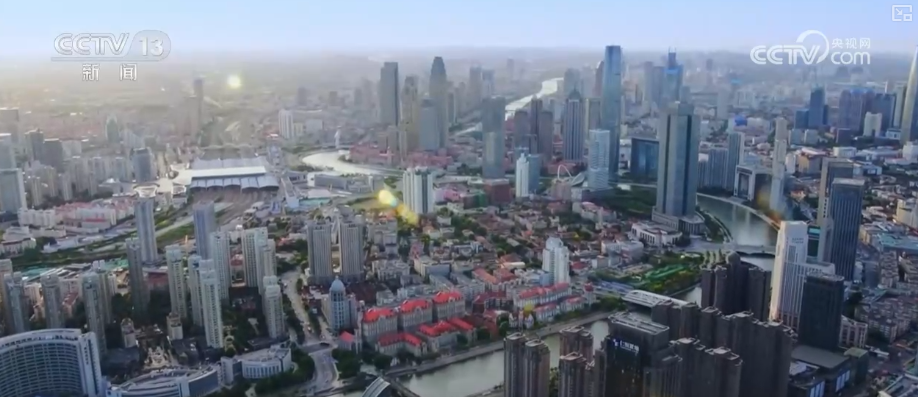
Group 1 - The Shanghai Cooperation Organization (SCO) summit in 2025 is highlighted as a significant event for Tianjin, showcasing its openness and inclusivity [1] - Tianjin Port is described as a major hub with a capacity to accommodate the world's largest container ships, featuring a 200,000-ton container terminal [3][6] - The port maintains trade relations with over 180 countries and regions, ranking among the top ten ports globally for several years [8] Group 2 - In the first seven months of 2025, Tianjin's imports and exports with SCO countries reached 53.37 billion yuan, a year-on-year increase of 5.2%, accounting for 11.3% of Tianjin's total foreign trade [12] - The establishment of the Tianjin Free Trade Zone (FTZ) ten years ago has led to significant institutional innovations, with 686 measures introduced, 49 of which have been replicated nationwide [15] - Tianjin has developed into a "new engine" for open innovation, enhancing its high-level openness and economic dynamism [15] Group 3 - Cultural exchanges are emphasized, with Tianjin being a pioneer in establishing international friendship city relations, having formed 20 pairs of friendly city relationships with SCO countries [23] - The creation of "Luban Workshops" in SCO countries aims to share vocational education achievements and address local skills shortages, benefiting youth development [25] - Advanced technologies from Tianjin, such as smart irrigation systems, are being implemented in SCO countries, significantly improving agricultural efficiency [27]

五年来北京累计设立外资企业超8000家
Yang Shi Xin Wen Ke Hu Duan· 2025-08-27 07:51
Core Viewpoint - Over the past five years, Beijing has made significant advancements in establishing a national service industry expansion demonstration zone and a free trade pilot zone, implementing over 400 innovative tasks [1] Group 1: Policy Innovations - Beijing has developed a gradient-based institutional innovation system focusing on technological innovation and service industry openness [1] - The city was the first in the country to initiate a "reporting is approval" pilot program for high-tech enterprises and released the first scenario-based, field-level negative list for data export in the free trade pilot zone [1] - More than 70 breakthrough policies have been implemented, with over 80 innovative results replicated and promoted nationwide [1] Group 2: Foreign Investment - Beijing has introduced pioneering policies such as cross-border financing facilitation pilots [1] - Over the past five years, more than 8,000 foreign-funded enterprises have been established in Beijing [1]
万倍GDP跃迁奇迹:深圳如何破译中国经济的“三重密码”?
Sou Hu Cai Jing· 2025-08-26 20:29
Core Viewpoint - Global financial institutions have raised their economic growth forecasts for China in 2025, highlighting the resilience of the Chinese economy amidst trade wars and geopolitical uncertainties [1][2]. Group 1: Economic Performance - In the first half of 2025, Shenzhen's GDP reached 18,322.26 billion yuan, showing a year-on-year growth of 5.1% [2]. - Shenzhen's GDP has grown from 270 million yuan in 1980 to 36,801.87 billion yuan in 2024, with an average annual growth rate of 18.8% [3]. Group 2: Industrial Development - Shenzhen has continuously updated its industrial development path, transitioning from labor-intensive industries to high-tech sectors since the 1980s [5][6]. - By 2024, Shenzhen's industrial output value reached 54,000 billion yuan, with a 9.7% increase in industrial added value, and strategic emerging industries contributing over 40% to GDP [7]. Group 3: Innovation and Institutional Reform - Shenzhen has been a leader in institutional innovation, introducing over 1,000 national firsts in various sectors, including the trial of personal bankruptcy systems [9][10]. - The city has become a testing ground for reforms that are later adopted nationwide, such as the marketization of land use and the establishment of a commercial bankruptcy system [10]. Group 4: Cultural Influence - Shenzhen has emerged as a cultural leader, producing impactful media and performances that reflect its innovative spirit and cultural identity [16][17]. - The city symbolizes the spirit of a new generation in China, characterized by continuous self-renewal and a commitment to overcoming challenges [17][18].

新华时评:四十五,正青春!
Xin Hua She· 2025-08-26 03:55
Group 1 - Shenzhen is celebrating its 45th anniversary as an economic special zone, showcasing significant growth and development since its establishment [1] - Over the past 45 years, Shenzhen's GDP has increased by over 10,000 times, producing globally influential companies like Huawei and Tencent [1] - Shenzhen has achieved over 1,000 national firsts and ranks among the top global innovation cities in terms of R&D investment intensity [1] Group 2 - The city has continuously innovated its systems and expanded its openness, serving as a "testbed" for reforms assigned by the central government [1] - Recent reforms include the implementation of a registration system for the Growth Enterprise Market and market-oriented allocation of data elements [1][2] - The central government has issued opinions to further deepen reforms and expand openness in Shenzhen, with a focus on systematic integration and high efficiency [2][3] Group 3 - Shenzhen aims to establish a more competitive international regulatory framework in areas such as cross-border data flow and intellectual property protection [3] - The city is committed to building a modern industrial system and contributing to China's modernization efforts [3]
四十五,正青春!
Xin Hua She· 2025-08-26 03:46
Core Insights - Shenzhen celebrates its 45th anniversary as a Special Economic Zone, showcasing significant economic growth and innovation since its establishment [1] - The city has experienced a GDP increase of over ten thousand times and is home to globally influential companies like Huawei and Tencent, solidifying its role as a key player in China's modernization efforts [1] - Shenzhen's achievements stem from continuous institutional innovation and expanding openness, acting as a "testing ground" for reforms [1] Group 1 - Shenzhen's GDP has grown over ten thousand times in 45 years, with over 1,000 national firsts and a leading position in R&D investment intensity among global innovation cities [1] - The city has implemented various reforms, including the registration system for the Growth Enterprise Market and market-oriented allocation of data elements, to enhance its development [1] - Recent directives from the Central and State Offices emphasize the need for ongoing reforms and innovations, with a focus on establishing a list of authorized matters and implementing new measures [2] Group 2 - Shenzhen aims to deepen reforms and expand openness at higher levels and goals, focusing on creating a competitive rule system in areas like cross-border data flow and intellectual property protection [3] - The city is committed to building a modern industrial system and contributing significantly to China's modernization efforts [3]
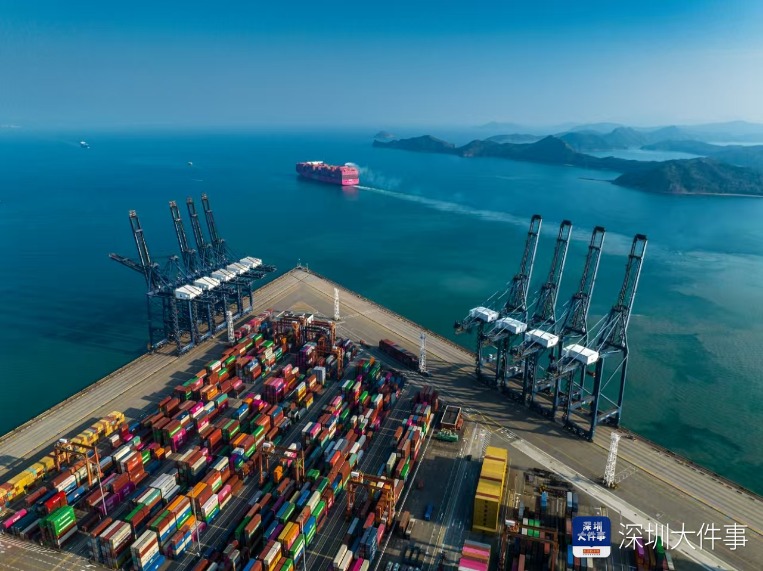
从加工贸易“冠军”到多元业态“齐放”,看深圳外贸枢纽蝶变
Nan Fang Du Shi Bao· 2025-08-25 15:28
Core Insights - Shenzhen has transformed from a small trade player in 1979 with an import-export value of 16.76 million USD to a major economic hub with a projected value of 4.49 trillion RMB in 2024, representing 10.2% of China's total foreign trade [1][5] - The city has evolved its foreign trade structure from a focus on processing trade to a diversified model that includes general trade and bonded logistics, with general trade surpassing processing trade in 2015 and reaching 2.47 trillion RMB in 2024 [4][5] - Shenzhen's high-tech product exports have significantly increased from 9% in 1993 to 41.2% in 2024, indicating a shift towards higher value-added industries [5] Trade Evolution - In the early days, Shenzhen's foreign trade was minimal, accounting for only 0.06% of the national total, and relied heavily on processing trade [3] - The introduction of innovative customs practices, such as centralized customs declaration, helped streamline trade processes and reduce bottlenecks [3] - By the 1990s, Shenzhen established itself as a leader in export supervision and bonded warehousing, with processing trade accounting for a quarter of the national total [3] Port and Logistics Development - Shenzhen has developed a comprehensive port system, transitioning from basic facilities in the 1980s to a sophisticated network that includes sea, land, air, and rail [6][8] - The port's container throughput has ranked first in the Greater Bay Area, with a significant increase of 9.56% in the first seven months of the year compared to the previous year [8] - The city has expanded its trade partnerships from 85 in 1985 to over 250 countries and regions by 2024, reflecting its growing global trade footprint [8] Regulatory and Institutional Innovation - Shenzhen has undergone significant regulatory reforms to enhance trade efficiency, including the introduction of paperless customs processes and streamlined approval systems [10][12] - The establishment of the AEO (Authorized Economic Operator) program has provided businesses with expedited customs processes, reducing inspection rates and improving supply chain efficiency [12] - The city's business environment has improved, with over 400,000 market entities and more than 210,000 registered foreign trade operators, supporting sustainable high-quality development in foreign trade [12]