市场竞争

Search documents
现货比特币ETF能否成为加密投资的新风向标?
伍治坚证据主义· 2025-05-16 01:54
Core Viewpoint - The launch of spot Bitcoin ETFs on January 11, 2024, has quickly become a focal point in the financial market, attracting over $75 billion in inflows within the first year despite regulatory challenges [1][4]. Market Performance - The first ten spot Bitcoin ETFs launched have shown exceptional performance, with IBIT, GBTC, and FBTC capturing the majority of market share. IBIT has accumulated over $60 billion in assets under management (AUM), while FBTC has around $20 billion. GBTC, despite its higher management fee of 1.5%, still holds nearly $20 billion in AUM [4]. - All spot Bitcoin ETFs have recorded approximately 80% annual returns since inception, primarily due to the relatively low Bitcoin price at launch ($42,000) compared to its price in early May 2025 (around $100,000) [8]. Advantages of Spot Bitcoin ETFs - **Liquidity and Convenience**: Spot Bitcoin ETFs provide a convenient investment method for cryptocurrencies, mitigating storage and security risks associated with direct Bitcoin ownership, especially for institutional investors [10]. - **Cost Efficiency**: Spot Bitcoin ETFs generally have lower fees compared to futures ETFs, with HODL offering a 0% fee strategy, enhancing cost-effectiveness [11]. - **Low Correlation with Mainstream Assets**: The correlation of spot Bitcoin ETFs with global stock indices (MSCI ACWI) is around 0.25, providing diversification benefits for stock portfolios [12]. - **High Market Acceptance**: The direct tracking of Bitcoin prices by spot ETFs aligns with market expectations, leading to significant investor interest and trust in products like IBIT and FBTC [13]. Disadvantages of Spot Bitcoin ETFs - **Regulatory Uncertainty**: The SEC's cautious stance on the Bitcoin spot market poses long-term challenges for the development of spot Bitcoin ETFs, as opposed to futures ETFs which are based on regulated futures contracts [15]. - **High Market Volatility**: Bitcoin's inherent price volatility presents risks, with annualized volatility for GBTC reaching 56.9%, similar for IBIT and FBTC [16]. - **Complex Arbitrage Mechanisms**: Spot Bitcoin ETFs may occasionally trade at prices deviating from their net asset value (NAV) due to liquidity and arbitrage constraints, as seen with GBTC's previous significant discount [17]. Future Outlook - The successful launch of spot Bitcoin ETFs marks a significant shift in cryptocurrency investment methods, with IBIT and FBTC emerging as preferred choices due to their lower fees and high market acceptance. However, regulatory changes and increased market competition may introduce new uncertainties [18].


利润骤降70%!传音控股,被小米们送进“非洲ICU”|BUG
Xin Lang Ke Ji· 2025-05-15 22:40
Core Viewpoint - Transsion Holdings, once known as the "king of mobile phones in Africa," is facing a significant decline in profits, with a 69.87% drop in net profit for Q1 2025 compared to the previous year, marking the largest quarterly decline since its listing [2][6]. Financial Performance - In Q1 2025, Transsion reported a revenue of 13.004 billion yuan, a year-on-year decrease of 25.45%, and a net profit of 490 million yuan, down 69.87% [2][6]. - The company has experienced three consecutive quarters of declining performance, with revenues of 16.693 billion yuan, 17.463 billion yuan, and 13.004 billion yuan for the last three quarters, reflecting declines of 7.22%, 9.39%, and 25.45% respectively [6][8]. Market Competition - Transsion's market share in Africa has been eroded by competitors such as Xiaomi and realme, with its market share dropping from 49% in Q4 2024 to 47% in Q1 2025, a decrease of 5% [3][4]. - Xiaomi's market share in Africa has increased by 32%, reaching 13%, while other Chinese brands like OPPO and Honor are also gaining ground [3][4][5]. Supply Chain and Cost Pressures - Rising supply chain costs and increased competition are squeezing Transsion's profit margins, with industry analysts noting that the company lacks independence in systems and chips [2][11]. - The company has faced challenges due to patent lawsuits affecting its supply chain costs, further impacting profitability [5][11]. Strategic Challenges - Transsion is attempting to expand beyond Africa into Southeast Asia, but faces greater competition and operational challenges in these new markets [10][11]. - The company's previous strategy of entering the African market with low-cost devices is becoming less effective as the smartphone market matures and user upgrade cycles slow down [10][11]. Shareholder Actions - Major shareholders have been quietly reducing their stakes, with one significant shareholder decreasing their holding from 1.53% to 0.91%, resulting in a cash-out of approximately 634 million yuan [9][10].

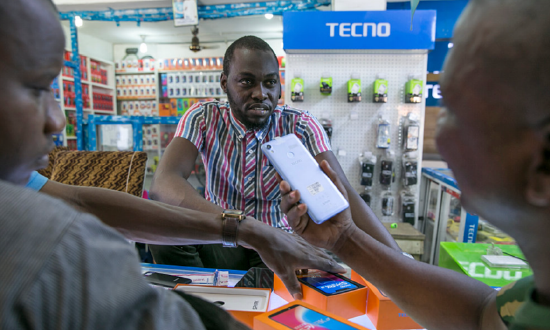
一财社论:市场竞争要有边界和底线,治理“内卷”需多管齐下
Di Yi Cai Jing· 2025-05-15 14:11
Group 1 - The core viewpoint emphasizes the need for healthy competition in the market, moving away from harmful practices like "involution" and excessive price competition [1][2][3] - The recent discussions among various government departments highlight the importance of companies adhering to their social responsibilities and maintaining fair competition to protect consumer rights and promote a healthy market environment [1][3][5] - The call for innovation and improvement in product quality by leading companies is crucial for enhancing competitiveness and resilience in the industry [1][3] Group 2 - The necessity for strengthening legal frameworks related to fair competition is underscored, with ongoing revisions to laws such as the Anti-Unfair Competition Law and the Anti-Monopoly Law [4] - The 2025 legislative plan indicates a focus on enhancing regulations in key and emerging sectors to ensure effective supervision and penalties for unfair competition practices [4] - The emphasis on industry associations to promote self-regulation and compliance among their members is seen as a vital step towards maintaining market order [5][6] Group 3 - Companies are encouraged to adopt ESG reporting practices to demonstrate their progress in environmental, social, and governance areas, fostering accountability and transparency [6] - The current complex international economic landscape necessitates a stronger emphasis on regulating competition to encourage fair and legitimate practices while avoiding detrimental competition [6]
泰和科技(300801) - 2025年5月15日投资者关系活动记录表
2025-05-15 10:44
Group 1: Company Leadership and Strategy - The change in legal representative is aimed at allowing the current leader to focus on core R&D work, ensuring long-term development [2] - The current leader remains committed to strategic planning, technological improvements, and product development [2] Group 2: Market Competition and Financial Performance - Despite increased revenue, the company is experiencing reduced profits due to intensified global market competition and weak demand [3] - The company is adjusting sales strategies by optimizing product mix, expanding sales channels, and enhancing customer service quality [3] - Future efforts will focus on optimizing high-margin product structures, controlling costs, and improving pricing capabilities and operational efficiency [3] Group 3: Production and Asset Management - The leased chlor-alkali production line has been unprofitable, but the company has managed to extend its business scope and reduce production costs through this asset [3] - Chlor-alkali products have started to generate profits, laying a solid foundation for sustainable development [3]
手机市场洗牌加速,魅族会成为“被遗忘的角落”吗?
Xin Lang Cai Jing· 2025-05-15 06:27
Core Insights - The smartphone market has evolved into a "winner-takes-all" competition, with dominant brands squeezing the space for smaller players like Meizu [1] - Meizu is experiencing a decline from a mainstream brand to a marginal player due to pressures from technological advancements and market competition [1] Market Share Decline - Meizu's market share is continuously decreasing, with no presence in the latest rankings, while major competitors like Huawei, Vivo, and Xiaomi dominate with shares of 19.4%, 17%, and 16.6% respectively [2][4] - The overall smartphone sales in China grew by 2.5% year-on-year in Q1 2025, but Meizu's sales are significantly down from its peak of 22 million units, indicating a challenging market environment [2][4] Product Strategy Challenges - Meizu is attempting to optimize its product lineup by launching the Note 16 series, targeting the budget segment with a starting price of 594.15 yuan, emphasizing features like long battery life and durability [5][6] - The new Flyme AIOS 2 operating system aims to enhance user experience with advanced AI features, but faces challenges in processor compatibility and user skepticism regarding AI functionality [6] Strategic Transformation - Following its acquisition by Geely, Meizu is at a critical juncture, needing to balance its traditional consumer electronics business with new ventures in automotive intelligence [7][8] - The integration of branding with Geely and the shift of resources towards automotive systems pose risks to Meizu's core mobile business, necessitating a dual-focus strategy to maintain market relevance [7][8] Brand Positioning Issues - Meizu's brand identity is wavering, moving from a unique design ethos to a more generic positioning, which may lead to a loss of consumer trust [8] - The challenge lies in reconciling the brand's heritage with current market demands, requiring a differentiated strategy to rebuild brand recognition and loyalty [8]

赛默飞25Q1利润稳健增长,经调整EPS指引略有下调
Tai Ping Yang· 2025-05-15 00:50
Investment Rating - The industry rating is neutral, indicating that the overall return is expected to be between -5% and 5% relative to the CSI 300 index over the next six months [9]. Core Insights - In Q1 2025, the company reported revenue of $10.364 billion, a year-on-year increase of 0.18%, and a net profit of $1.507 billion, reflecting a 13.48% growth compared to the previous year [4][8]. - The adjusted EPS for Q1 2025 was $5.15, down from $6.10 in Q4 2024, indicating a cautious outlook due to macroeconomic uncertainties [8]. - The adjusted gross margin was 41.7%, with SG&A expenses accounting for 16.5% of revenue, and total R&D expenditure was $342 million, representing 7.5% of manufacturing revenue [8]. - The company maintains its full-year revenue guidance of $43.3 billion to $44.2 billion, with an internal revenue growth forecast of 1% to 3% [8]. Summary by Sections Financial Performance - The company achieved a revenue of $10.364 billion in Q1 2025, with a year-on-year growth of 0.18% and a quarter-on-quarter decline of 9.12% [4][8]. - The free cash flow was $370 million, and operating cash flow was $720 million, with capital expenditures of $350 million [8]. Earnings Guidance - The adjusted EPS guidance for 2025 is set at $21.76 to $22.84, with a median decrease of $1.00 from previous guidance due to changes in tariffs and policies between China and the U.S. [8]. - The management's outlook has shifted from confident optimism in Q4 2024 to a more cautious stance in Q1 2025, reflecting the impact of macroeconomic uncertainties [8].
朗科智能业绩稳步增长 实控人一致行动人及其他股东连年减持为哪般
Xi Niu Cai Jing· 2025-05-14 11:42
Core Viewpoint - Langke Intelligent has demonstrated robust performance growth in the smart controller and new energy sectors, with both revenue and net profit showing double-digit increases in recent financial reports [2] Financial Performance - In 2024, Langke Intelligent reported total revenue of 1.623 billion yuan, a year-on-year increase of 21.67%, and a net profit attributable to shareholders of 51.7064 million yuan, reflecting a growth rate of 29.2% [2] - For the first quarter of 2025, the company continued this trend with revenue of 393 million yuan, up 12.21% year-on-year, and a net profit of 9.9796 million yuan, which is a 14.22% increase [2] Business Segments - The main business areas of Langke Intelligent include smart controllers, new energy solutions, and smart terminal products, with smart controllers accounting for 58.55% of revenue and new energy business contributing 34.43% [2] Shareholder Activity - Several shareholders, including the actual controllers, have been reducing their stakes, with a total planned reduction of up to 7.937 million shares, representing 2.59% of the total share capital [3] - The reasons for the reductions are uniformly stated as "personal funding needs," and the shares being sold primarily originate from the original shares prior to the IPO in 2016 [3] Market Reaction - Following the announcement of the share reduction, Langke Intelligent's stock price experienced volatility, closing at 10.70 yuan per share on May 9, 2025, down 1.47% from the previous day [4] Research and Development - Langke Intelligent has increased its R&D investment, with 2024 R&D expenses amounting to 92.2146 million yuan, which is 5.68% of its revenue, focusing on upgrading smart controller technology and expanding new energy product lines [4] International Business - The company has a significant international presence, with foreign business accounting for 53.60% of its revenue in 2024, utilizing overseas capacity transfer to mitigate international trade risks [4] Industry Context - The company faces challenges such as macroeconomic fluctuations, intensified market competition, and exchange rate changes, while its technical accumulation and customer resources support its performance growth [5] - The low industry concentration and increasing homogenization of competition present ongoing innovation pressures for the company [5]


Conagra Brands (CAG) Conference Transcript
2025-05-13 13:55
Conagra Brands (CAG) Conference Summary Company Overview - Conagra Brands is one of the largest packaged food companies in the US, with a diverse portfolio including frozen snacks and shelf-stable products, serving retail, food service, and international markets. Notable brands include Marie Callender's, Birds Eye, Healthy Choice, and Slim Jim [2][4]. Key Points and Arguments Portfolio Transformation - Over the past ten years, Conagra has transformed from a diversified global holding company to a branded pure play focused on North America. This involved modernizing existing brands, acquiring new businesses, and divesting underperforming assets [4][5]. - The current portfolio has a significant focus on organic net sales from retail, particularly in frozen and permissible snacking, which now constitutes about two-thirds of retail sales [5][6]. Consumer Trends and Market Environment - The company has observed a shift towards conservatism among consumers due to prolonged inflation and economic uncertainty. This trend affects all income groups, particularly lower-income consumers [9][10]. - The current environment is characterized by cautious spending, with consumers prioritizing value and quality in their purchases [10][11]. Promotional Strategy - Conagra has reduced promotional activities compared to pre-COVID levels, focusing on high-quality merchandising rather than deep discounting. This strategy aims to drive volume growth through quality products [12][14]. - The competitive landscape remains rational, with a collective industry focus on improving volume trends after experiencing declines [16][18]. Input Costs and Inflation - The company faces significant input cost pressures, particularly from tariffs on tinplate and aluminum, with a 25% tariff impacting costs. Mitigation strategies include negotiating with suppliers and exploring alternative sourcing [20][22]. - Inflation is projected at 4% for the fiscal year, up from an initial estimate of 3%. The company is actively managing costs and exploring pricing strategies to offset inflationary pressures [26][27][54]. Frozen and Snacking Segments - The frozen food segment is experiencing a return to volume growth, driven by consumer demand for convenience and quality. The company aims to educate consumers on the benefits of frozen foods, which are perceived as high-quality and cost-effective [33][35][38]. - In the snacking category, Conagra has focused on permissible snacking options, such as meat snacks and popcorn, which have shown strong growth despite broader industry softness. The company has expanded its portfolio to include various meat snack brands [39][41][46]. Future Outlook and Guidance - The company is optimistic about maintaining volume growth and improving margins, despite ongoing supply chain challenges and inflationary pressures. The focus remains on optimizing trade management and promotional investments [49][52][54]. - Conagra plans to provide further guidance for fiscal year 2026 in the upcoming earnings call, with expectations of navigating through current uncertainties [60][62]. Capital Allocation and Debt Management - Conagra emphasizes a balanced approach to capital allocation, prioritizing debt paydown while also considering investments in business modernization and strategic acquisitions. The recent divestiture of Chef Boyardee aligns with this strategy [67][72]. - The company has successfully reduced leverage and aims to continue generating free cash flow to support debt reduction and strategic growth initiatives [64][66]. Additional Important Insights - The company has experienced supply chain disruptions, particularly in its frozen vegetable and chicken businesses, but is on track to recover by the end of the first quarter of fiscal 2026 [75][78]. - Innovations, such as the Banquet Mega Chicken Filet, have driven demand and contributed to supply challenges, highlighting the importance of product development in meeting consumer needs [79][80].

沧州明珠(002108) - 002108沧州明珠投资者关系管理信息20250509
2025-05-09 01:18
Group 1: Financial Performance - The company reported a revenue of 579 million yuan, an increase of 13.63% year-on-year, but the net profit attributable to shareholders was 48.3 million yuan, a decrease of 19.32% [2] - In 2024, the company achieved a net profit of 154.74 million yuan, while in Q1 2025, the net profit was 48.3 million yuan [4] - The company’s revenue growth in 2024 was 4.93%, reaching 2.748 billion yuan [3] Group 2: Production Capacity and Projects - The company has a current production capacity of 66,500 tons for film products, with an additional 38,000 tons from a new BOPA film project that has not yet fully released its capacity [3] - The lithium-ion battery separator project is under construction, with plans for gradual production [4] - The company has 4.9 billion square meters of existing separator capacity, with additional dry and wet separator projects planned [4] Group 3: Market Conditions and Competition - The market for PE gas pipelines has seen a decline in demand due to the economic downturn and real estate market issues, leading to a reduction in sales expectations [5] - The competition in the separator and film markets is intense, with the company maintaining a strong reputation and customer base [6] - The overall industry for separators is experiencing oversupply, although high-end separators are in tight balance [10] Group 4: Strategic Plans and Future Outlook - The company aims to maintain its PE pipeline sales target at 95,000 tons for 2025, with BOPA film sales targeted at 85,600 tons and lithium-ion battery separator sales at 85.08 million square meters [12] - Future growth points include the completion of new projects and effective capacity release [4] - The company plans to enhance brand awareness and market presence through various promotional activities [6] Group 5: Shareholder and Market Confidence - The company has consistently paid dividends since its listing, aiming to enhance shareholder value despite recent stock price declines [10] - There are no current plans for stock buybacks to boost investor confidence [11] - The management acknowledges the need for improved communication and transparency with investors regarding market performance and company strategies [14]

广汽集团2024年扣非净亏损43.51亿元 2025年一季度净亏损7.32亿元
Xi Niu Cai Jing· 2025-05-08 09:48
Core Insights - GAC Group reported a significant decline in net profit for 2024, with a 81.40% year-on-year decrease, while revenue increased by 16.90% [2] - The first quarter of 2025 showed a continued downward trend in both revenue and net profit, with a 7.95% and 159.95% decline respectively [2] Financial Performance - In 2024, GAC Group's total revenue reached 107.78 billion yuan, up 16.90% from the previous year, but net profit fell to 824 million yuan, down 81.40% [2] - For Q1 2025, revenue was 19.65 billion yuan, a decrease of 7.95% year-on-year, with a net loss of 732 million yuan, down 159.95% [3] - The company's non-recurring net profit for Q1 2025 was -893 million yuan, a decline of 229.89% compared to the previous year [3] Sales and Market Performance - GAC Group's total vehicle sales in 2024 were 2.0031 million units, a decrease of 20.04% year-on-year, with its own brand sales dropping by 10.95% to 789,500 units [4] - GAC Trumpchi's sales increased by 1.99% to 414,600 units, while GAC Aion's sales decreased by 21.90% to 374,900 units [4] Cost and Expenses - In 2024, GAC Group's sales and distribution costs increased by 385 million yuan, management expenses rose by 177 million yuan, and financial costs increased by 96 million yuan [4] Challenges and Issues - GAC Group identified several challenges, including the need to enhance product competitiveness, strengthen overseas capabilities, accelerate marketing transformation, and improve cost competitiveness [5]