
职业教育

Search documents
21现场|哈萨克斯坦再添两家鲁班工坊,中国职教助力上合合作
2 1 Shi Ji Jing Ji Bao Dao· 2025-09-01 04:21
Core Viewpoint - The establishment of new Luban Workshops in Kazakhstan aims to provide practical training and professional talent development across various economic sectors, enhancing vocational education and international cooperation in the context of the Belt and Road Initiative [1][2]. Group 1: Luban Workshops Overview - The new Luban Workshops are located at Gumilyov Eurasian National University and Almaty University of Transport and Communications, following the first workshop established in 2023 at Shakarim University [1]. - Since the first Luban Workshop was launched outside China in 2016, a total of 34 workshops have been established in 30 countries and regions, with 24 of them in 23 countries facilitated by Tianjin [1]. - The Luban Workshops serve as a "technical hub" for the Belt and Road Initiative, promoting China's vocational education globally [1]. Group 2: Achievements and Impact - The professional standards, curriculum systems, and teaching materials developed by Luban Workshops have been officially adopted by partner countries, indicating international recognition of China's vocational education [2]. - Over 30,000 individuals have participated in overseas degree education, and more than 110,000 have undergone skills training through these workshops [2]. - The workshops focus on local industry needs, ensuring that training programs are tailored to specific regional demands through collaboration with local institutions and enterprises [2]. Group 3: Student Experiences and Outcomes - Students from the Luban Workshops, such as those from Pakistan, report high employability due to the practical skills acquired, which are highly valued by employers [3][4]. - Graduates often secure jobs with higher salaries compared to peers from similar educational backgrounds, reflecting the effectiveness of the training provided [5]. - The workshops have also facilitated cultural exchange and personal connections, as seen in the experiences of teachers and students involved in the programs [4][5]. Group 4: International Collaborations - The Luban Workshops in Egypt represent a unique model of cooperation, with two workshops established in collaboration with Ain Shams University and Cairo Higher Technical School [5][6]. - These workshops offer various programs, including CNC equipment application and maintenance, and have successfully integrated degree education with vocational training [5][6]. - The innovative teaching methods employed in these workshops, such as practical case studies and hands-on training, have shown significant positive outcomes in student skill development [6].
事关养老金、学前教育、“小电驴”新国标……这些新规即将施行!
Zheng Quan Shi Bao· 2025-08-31 13:43
Group 1 - The State Council has issued an opinion to gradually implement free preschool education, starting from the autumn semester of 2025, exempting public kindergarten fees for children in their final year [4] - Private kindergartens approved by the education department will also have their fees reduced in accordance with the exemption levels of similar public kindergartens [4] Group 2 - The Housing Rental Regulations will take effect on September 15, 2025, prohibiting landlords from deducting deposits without legitimate reasons and requiring clear terms in rental contracts [5] - The regulations also set basic standards for rental properties and prevent the illegal use of non-residential spaces for living [5] Group 3 - A new mandatory national standard for electric bicycles will be implemented on September 1, enhancing fire resistance requirements and limiting the use of plastic materials [6] - The standard also imposes restrictions on motor speed and braking distances, with a transition period for manufacturers [6] Group 4 - The revised Infectious Disease Prevention Law will come into effect on September 1, emphasizing the establishment of a comprehensive prevention system and clarifying responsibilities at various levels [7] Group 5 - The "Artificial Intelligence Generated Synthetic Content Identification Measures" will be enforced from September 1, requiring explicit labeling of AI-generated content across various media [11] - Service providers must ensure that generated content includes both explicit and implicit identifiers [11] Group 6 - The Rural Road Regulations will be effective from September 15, 2025, focusing on improving road network quality and upgrading existing roads to meet technical standards [12] Group 7 - The Administrative Division Code Management Measures will take effect on September 1, establishing rules for determining administrative codes at various levels [13] Group 8 - Beijing will raise its minimum wage from 2420 yuan to 2540 yuan per month, effective September 1 [15] Group 9 - The "Decision on Promoting Collaborative Development of Technological Innovation in the Yangtze River Delta" will be implemented on September 1, focusing on joint development of strategic technology and innovation platforms [17] Group 10 - The Fujian Province Safety Construction Regulations will be effective from September 1, focusing on combating telecom fraud and enhancing public safety [18] Group 11 - The Shandong Province Veterans Protection Regulations will take effect on September 1, prioritizing the hiring of veterans in public and state-owned enterprises [20] Group 12 - The Henan Province Vocational Education Regulations will be implemented on September 1, emphasizing practical skills training in vocational schools [22] Group 13 - The Hainan Province Administrative Inspection Regulations will take effect on September 1, protecting businesses from excessive and irrelevant inspections [24]


事关养老金、学前教育、“小电驴”新国标……这些新规即将施行!
证券时报· 2025-08-31 12:26
Group 1 - The government will fully waive the childcare education fees for children in public kindergartens starting from the autumn semester of 2025 [4] - Private kindergartens will also have their fees reduced in accordance with the waiver levels of local public kindergartens [4] Group 2 - The new housing rental regulations will take effect on September 15, 2025, establishing basic standards for rental properties and prohibiting the separate rental of non-residential spaces [5] - Landlords must specify the amount of the deposit, return time, and conditions for deduction in the rental contract, and cannot deduct deposits without valid reasons [5] Group 3 - A new mandatory national standard for electric bicycles will be implemented on September 1, 2025, enhancing fire resistance requirements and limiting the use of plastic materials [6][8] - The new standard will also impose restrictions on motor speed and braking distances, and will require a transition period for existing products [8] Group 4 - The revised Infectious Disease Prevention Law will come into effect on September 1, emphasizing the establishment of a comprehensive prevention system and clarifying responsibilities at various levels [9] Group 5 - The "Artificial Intelligence Generated Content Identification Measures" will be enforced starting September 1, 2025, requiring explicit labeling of AI-generated content across various media [12][13] Group 6 - The "Rural Road Regulations" will take effect on September 15, 2025, focusing on improving road network quality and upgrading existing rural roads to meet technical standards [14] Group 7 - The "Administrative Division Code Management Measures" will be implemented on September 1, 2025, detailing the determination of administrative codes at various levels [15] Group 8 - Beijing will raise its minimum wage standard from 2,420 yuan to 2,540 yuan per month starting September 1 [18] Group 9 - The "Decision on Promoting Collaborative Development of Technological Innovation in the Yangtze River Delta" will be implemented on September 1, focusing on joint efforts in technology and innovation among the four regions [19] Group 10 - The "Fujian Province Peace Construction Regulations" will take effect on September 1, focusing on addressing issues that affect public safety, including telecommunications fraud [20] Group 11 - The "Shandong Province Veterans Support Regulations" will be enforced on September 1, prioritizing the hiring of veterans in public sector jobs [22] Group 12 - The "Henan Province Vocational Education Regulations" will take effect on September 1, emphasizing practical skills training in vocational schools [24] Group 13 - The "Chongqing Philosophy and Social Science Development Promotion Regulations" will be implemented on September 1, promoting free access to academic resources [27] Group 14 - The "Sichuan Province Maternity Allowance Direct Payment Regulations" will be enforced on September 1, allowing direct payment of maternity allowances to eligible employees [28] Group 15 - The "Guizhou Province Preschool Education Regulations" will take effect on September 1, prohibiting the "elementarization" of preschool activities [29]

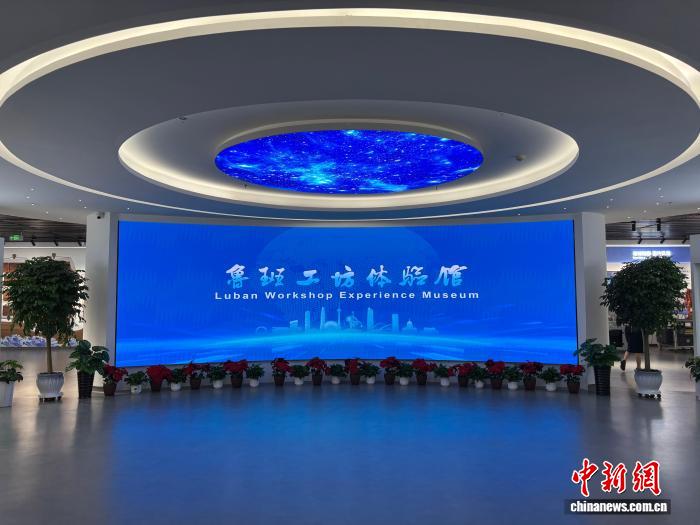
(上合天津峰会)“合”力“授渔” 鲁班工坊为世界培养技能人才
Zhong Guo Xin Wen Wang· 2025-08-31 03:12
Core Insights - The article highlights the role of the Luban Workshop in providing vocational education and training to cultivate skilled talents globally, emphasizing the importance of practical skills over theoretical knowledge [1][3]. Group 1: Overview of Luban Workshop - Since its inception in 2016, the Luban Workshop has established 34 centers in 30 countries and regions, with 24 of these located in 23 countries, primarily focusing on cooperation with Shanghai Cooperation Organization (SCO) member states [3][4]. - The Luban Workshop serves as a platform for international vocational education cooperation, transforming China's vocational education experience into a "skill power" for global development [3][4]. Group 2: Educational Approach and Collaboration - Each Luban Workshop project begins with in-depth research on local industry needs, followed by collaboration with local schools and enterprises to design tailored training programs, ensuring alignment with local development [3][4]. - The integration of practical case studies from enterprises into the curriculum enhances the learning experience, allowing students to gain hands-on skills in real-world settings [4]. Group 3: Impact on International Students - The Luban Workshop has facilitated the arrival of many young people from SCO countries to study in China, promoting a systematic approach to learning professional skills through various educational pathways [4]. - Students, such as those from Pakistan, express their intention to apply the knowledge and skills acquired in China to contribute to their home country's industrial development, particularly in automation [4]. Group 4: Future Prospects - The upcoming SCO summit in Tianjin is expected to provide a new platform for mutual learning and sharing in vocational education, with aspirations for the Luban Workshop to lead global vocational education development [4].
《河南省职业教育条例》9月1日起施行 新法护航 “职”引未来
He Nan Ri Bao· 2025-08-30 23:24
5月29日,省十四届人大常委会第十七次会议表决通过了《河南省职业教育条例》(以下简称《条 例》),《条例》自2025年9月1日起正式实施。 《条例》的实施,为推动我省职业教育高质量发展,提高劳动者素质和技术技能水平,培养高素质技术 技能人才,促进就业创业,建设教育强省、人力资源强省和技能型社会,注入新的法治动能。 对认定为产教融合型企业的,按照规定给予金融、财政、土地等支持,落实教育费附加、地方教育附加 减免以及其他税费优惠。 鼓励和支持有技术技能人才培养能力的企业特别是产教融合型企业与职业学校、职业培训机构开展合 作,对新招用职工、在岗职工和转岗职工进行学徒培训,或者与职业学校联合招收学生,以工学结合的 方式进行学徒培养。有关企业可以按照规定享受补贴。 在推进教师教材教法改革,提升教学质量上,《条例》为职教教师量身定制"成长路径"。 县级以上人民政府应当将职业教育教师的培养培训工作纳入教师队伍建设规划,采取多种措施,提升职 业学校教师理论教学和实践教学能力,培养造就师德高尚、业务精湛、结构合理、充满活力的高素质专 业化教师队伍。 近年来,国家对于职业教育高度重视,不断出台利好政策,但社会认可度不高、上升通道 ...
600分考生,流向“职校小清华”
虎嗅APP· 2025-08-30 03:25
Core Viewpoint - The article discusses the rising importance and acceptance of vocational undergraduate education in China, highlighting its role in addressing employment needs and the evolving perceptions surrounding it [4][5][6]. Group 1: Vocational Education Development - Vocational undergraduate education, officially developed since 2019, aims to fill the gap in higher vocational education and is expected to have an enrollment scale not less than 10% of higher vocational education by 2025 [5][6]. - As of now, there are 87 vocational undergraduate institutions, with 36 having transitioned from specialized to undergraduate status this year [5][6]. - The demand for vocational education is driven by economic development and industrial transformation, emphasizing the need for skilled labor across various sectors [5][6]. Group 2: Student Experiences and Employment - Students from vocational undergraduate programs often have high academic scores, with some reporting scores above 550, which is competitive for traditional universities [6][7]. - Graduates express satisfaction with the practical training and resources provided, which they believe enhance their employability [8][10]. - The article notes that a significant percentage of students in vocational education are unable to enter traditional universities, making vocational education their only option [7][8]. Group 3: Challenges and Perceptions - Despite the high employment rates claimed by vocational institutions, there remains a stigma and misunderstanding about vocational education, with many still equating it to lower-tier education [6][7][24]. - Graduates face challenges in job applications, often encountering skepticism from employers regarding the legitimacy of their degrees [24][26]. - The article highlights the ongoing adjustments in public perception and institutional recognition of vocational degrees, with some regions still lagging in acceptance [26][28]. Group 4: Practical Training and Skills Development - Practical training is emphasized as a crucial component of vocational education, with a high coverage rate of simulation training in vocational institutions [12][13]. - Students report gaining hands-on experience that prepares them for real-world job scenarios, which is seen as a significant advantage over traditional academic paths [10][12]. - The article illustrates how practical skills and experiences can lead to better job security and adaptability in changing job markets [40][44]. Group 5: Future Outlook - The article suggests that the increasing choice of high-scoring students to pursue vocational education reflects a shift in societal values towards practical skills and job readiness over traditional academic prestige [40][45]. - There is optimism that as policies evolve and public perceptions shift, vocational education will gain greater acceptance and recognition in the job market [45].

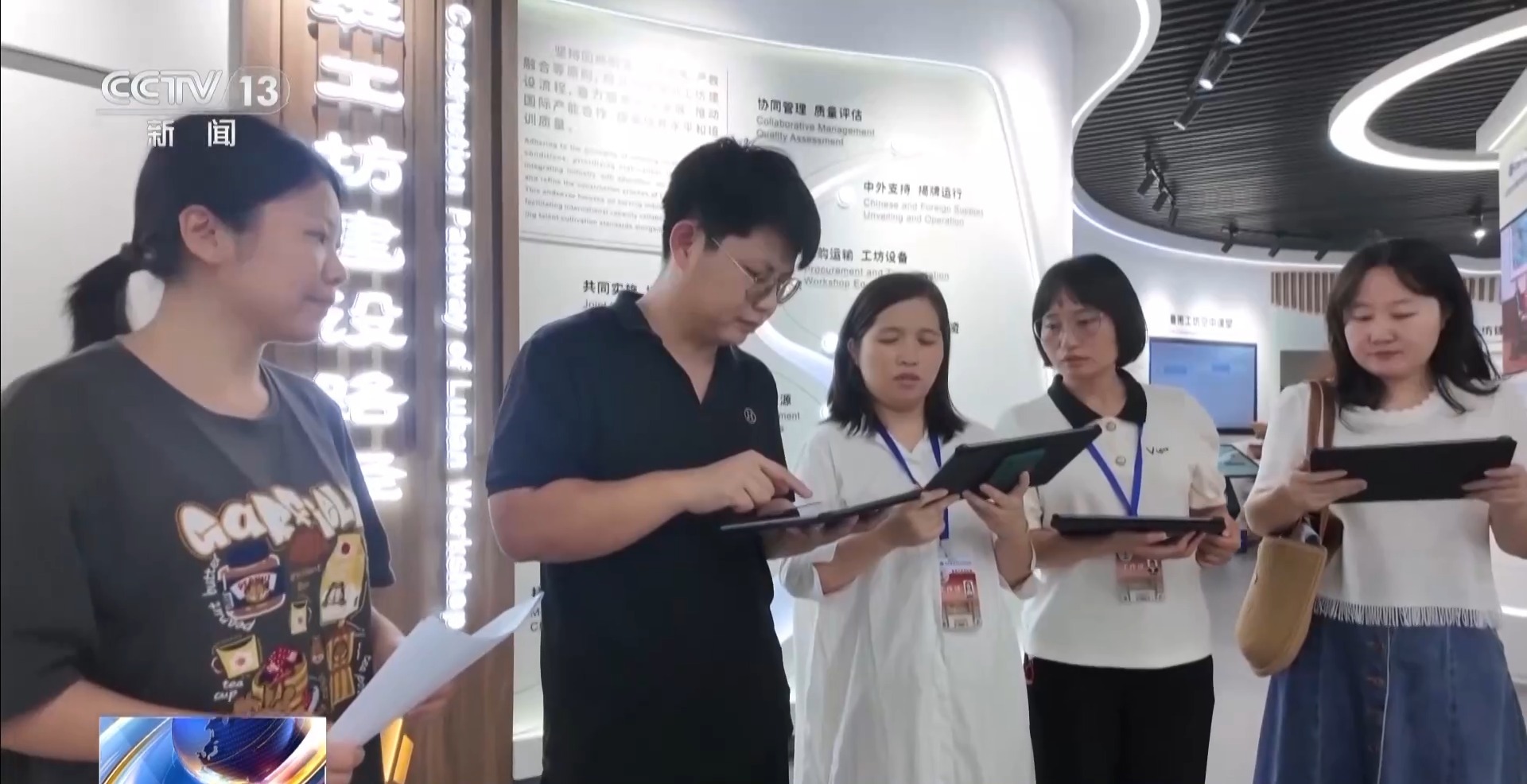
学开高铁、机器人教具、“隔空诊脉” 带你探秘鲁班工坊“技术驿站”
Yang Shi Xin Wen· 2025-08-29 16:04
Group 1 - The upcoming 2025 Shanghai Cooperation Organization (SCO) summit in Tianjin will gather over 20 foreign leaders and 10 international organization heads to discuss development strategies [1] - China, as the rotating chair since July last year, focuses on sustainable development and aims to strengthen cooperation within the SCO to build a closer community with a shared future [1] - The Luban Workshop, representing China's vocational education on the global stage, serves as a bridge for cultural exchange and creates new opportunities [1][20] Group 2 - The Luban Workshop experience center at Tianjin Light Industry Vocational Technical College will open to foreign guests and media during the SCO summit [1][3] - The workshop showcases key achievements in vocational education from around the world, including training in drone operation for agricultural purposes in Pakistan [7] - The workshop features advanced training equipment, such as a high-speed train simulator, which has trained nearly a thousand local talents for projects like the China-Thailand high-speed railway [9][11] Group 3 - The Luban Workshop incorporates AI technology into its training programs, utilizing humanoid and quadruped robots as teaching tools [13][15] - Traditional Chinese medicine is also digitized and shared internationally through tools like a pulse diagnosis device that converts pulse data into graphical representations [17] - Since the establishment of the first Luban Workshop in Thailand in 2016, a total of 34 workshops have been built globally, with 10 located in SCO member countries, offering 400 international courses [20]

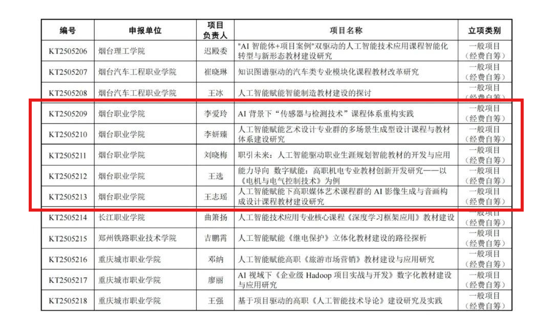
人工智能赋能!烟台职业学院5项课题获全国立项
Qi Lu Wan Bao Wang· 2025-08-29 10:01
"人工智能赋能高等职业教育课程教材体系建设项目"是信息化教指委为贯彻落实国家关于推动人工智能 与教育深度融合战略部署,系统推进高等职业教育数字化、智能化转型的重要举措,旨在为推动人工智 能与高等职业教育的深度融合,提升课程教材体系的科学性、先进性和适应性。学校入选的5项教材建 设项目,覆盖人工智能技术应用、智能制造、智慧服务等多个专业领域,紧密结合行业技术变革与人才 培养现实需求,凸显了学校在人工智能赋能、跨学科整合、产教深度融合等方面的前沿探索,具有较强 的示范性、适应性和前瞻性。 学校将以项目建设为契机,进一步加强顶层设计和资源统筹,依托校企合作平台和数字教学资源中心, 组建高水平教材研发团队,推动人工智能技术在课程设计、教学内容、实践环节和评价体系中的深度融 合与应用创新。同时,建立健全项目过程管理和质量保障机制,扎实推进项目研究与教材开发工作,以 智能化引领职业教育范式变革,为培养更多适应数字经济时代发展的高素质技术技能人才贡献力量。 齐鲁晚报.齐鲁壹点李楠楠通讯员孙梦佳 近日,教育部职业院校信息化教学指导委员会(以下简称"信息化教指委")公布了2025年度"人工智能赋能 高等职业教育课程教材体系建设 ...
凯文教育(002659):2025 年中报点评:扭亏为盈迎经营拐点,升学良好助生源增长
Minsheng Securities· 2025-08-29 05:16
Investment Rating - The report maintains a "Recommended" rating for Kevin Education (002659.SZ) [6] Core Views - The company achieved a revenue of 171 million yuan in the first half of 2025, representing a year-on-year growth of 12.51%, and turned a profit with a net profit of 740,000 yuan [1] - The education service segment grew rapidly, with revenue of 138 million yuan, up 18.13% year-on-year, contributing to the company's turnaround [1][2] - The company has seen continuous profitability for two consecutive quarters in 2025, driven by active enrollment and a steady increase in international students [1] - The company is expected to experience a trend of operational improvement as new student enrollments are anticipated to boost the number of students in the upcoming quarters [1] Financial Performance - The gross profit margin for the reporting period was 29.33%, an increase of 1.58 percentage points year-on-year, and the expense ratio decreased significantly to 23.57%, down 6.2 percentage points year-on-year [2] - As of June 30, 2025, the company's total assets and total liabilities were 3.034 billion yuan and 867 million yuan, respectively, with a debt-to-asset ratio of 28.58%, showing a downward trend [2] - The cash flow situation is overall positive, with a cash collection ratio of 90.56%, up 57.39 percentage points year-on-year [2] Enrollment and Development - The company has a strong track record of student admissions, with 96% of graduates from Haidian Kevin being accepted into top 50 universities in the U.S. [3] - The company is actively developing vocational education and has established partnerships with several institutions to create industry colleges focusing on cutting-edge fields such as AI and big data [3] - The company is expected to maintain growth in student enrollment in September 2025, supported by its strong academic performance [3] Future Projections - Revenue projections for 2025-2027 are estimated at 403 million yuan, 476 million yuan, and 547 million yuan, with corresponding EPS of 0.07 yuan, 0.16 yuan, and 0.20 yuan [3][5] - The dynamic PE ratios for the same periods are projected to be 74 times, 33 times, and 26 times, indicating potential for growth [3][5]

学大教育(000526):教育主业需求稳健 利润持续高增
Xin Lang Cai Jing· 2025-08-28 08:33
Core Viewpoint - The company has demonstrated strong revenue growth and profitability in the first half of 2025, with a focus on personalized education and diversified business expansion [1][2][3][4]. Financial Performance - In H1 2025, the company achieved revenue of 1.92 billion yuan, a year-on-year increase of 18.3%, and a net profit attributable to shareholders of 230 million yuan, up 42.2% [1]. - For Q2 2025, revenue reached 1.05 billion yuan, reflecting a 15% year-on-year growth, while net profit attributable to shareholders was 160 million yuan, an increase of 40% [1]. - The company's gross margin improved to 36.3% in H1 2025 and 39.81% in Q2 2025, with year-on-year increases of 0.26 and 0.98 percentage points, respectively [3]. - The net profit margin for H1 2025 was 11.98%, up 2.01 percentage points year-on-year, and for Q2 2025, it was 14.84%, an increase of 2.72 percentage points [3]. Business Development - The company has over 300 personalized learning centers and has expanded its full-time training bases to over 30, with more than 5,200 dedicated teachers [2]. - The company has made acquisitions in vocational education, including several technical schools, and has established deep collaborations with higher vocational institutions [2]. - The company has opened 14 cultural spaces and launched a healthcare integration business under the "Qianyi Health" brand, indicating a steady advancement in diversified operations [2]. Debt Management and Market Position - The company has cleared historical shareholder loans, significantly improving its financial structure and reducing financial costs [3][4]. - As of July 31, 2025, the company repurchased 2.1713 million shares, representing 1.78% of its total share capital, demonstrating confidence in its long-term development [4]. - The company is positioned to benefit from the ongoing industry recovery, leveraging its brand and scale advantages in the personalized education sector [4]. Profit Forecast and Valuation - The company forecasts net profits attributable to shareholders of 255 million yuan, 311 million yuan, and 369 million yuan for 2025-2027, with corresponding price-to-earnings ratios of 25x, 20x, and 17x [4].
