通用人工智能(AGI)

Search documents
多家互联网大厂集聚“大模型第一股”
第一财经· 2026-01-08 12:21
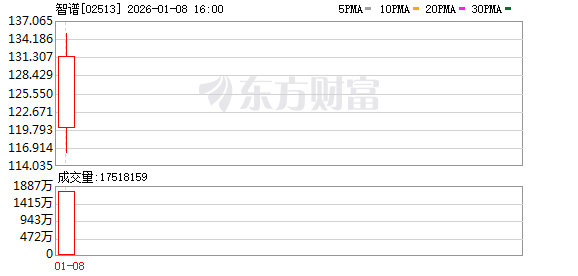
然而,光环之下,挑战犹存。尽管根据第三方统计,智谱2024年以6.6%的市场份额居中国独立大模型 厂商首位,但其收入仍高度依赖面向政府、国企的私有化部署项目,客户集中度高且复购存在不确定 性。与此同时,公司研发开支三年间从千万元级跃升至数十亿元,净亏损同步扩大。 值得注意的是,智谱的上市或许只是开端。在智谱率先跑通上市路径后,AI大模型厂商会否迎来一波 IPO热潮,已成为业界关注的新焦点。 背后的资本版图 1月8日,智谱于港交所主板挂牌,成为全球首家以通用人工智能(AGI)基座模型为核心业务的上市公 司。当日开盘价为120港元,对应市值约528亿港元。根据本次发行价116.20港元计算,共募集资金超 43亿港元。 2026.01. 08 本文字数:3539,阅读时长大约6分钟 作者 | 第一财经 王方然 作为"全球大模型第一股",智谱(02513.HK)于1月8日登陆港交所。上市首日股价低开高走,收报 131.50港元,较发行价上涨13.16%,市值接近580亿港元,为潜伏多年的早期投资机构带来了可观回 报。其背后,浮现出包括互联网大厂、一线创投、国资等多方资本构成的战略版图。 上市首日,智谱股价呈现"低开高 ...


“全球大模型第一股”!智谱华章科技登陆港交所
Jin Shi Shu Ju· 2026-01-08 12:03
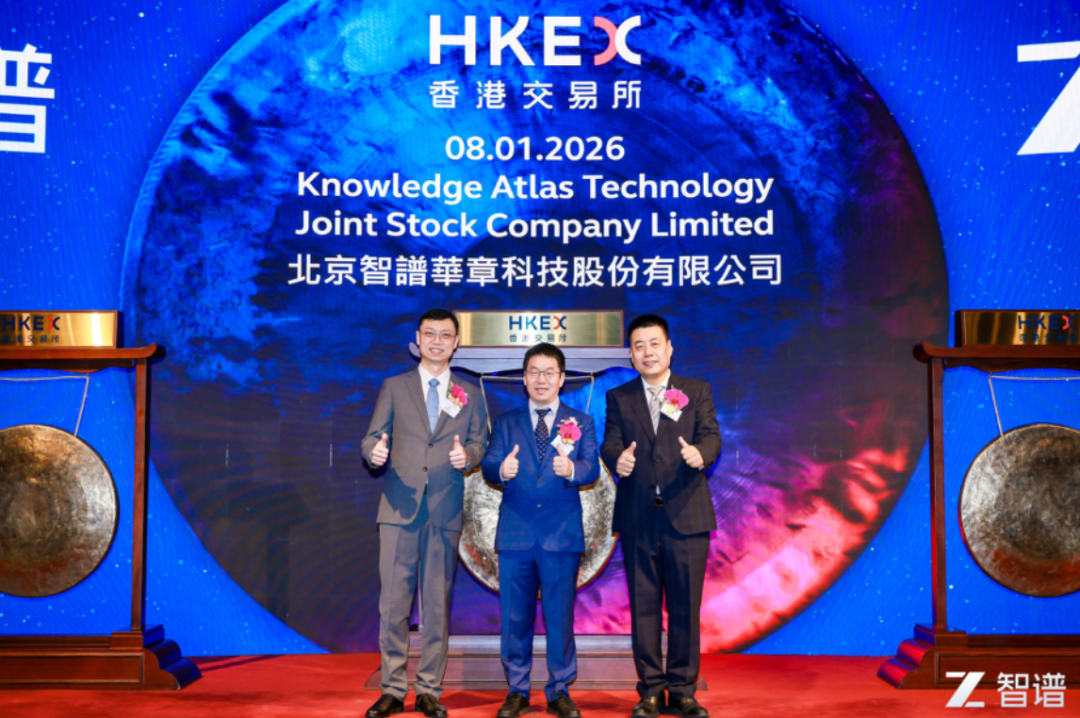
Group 1 - The core viewpoint of the article highlights that Zhiyu Huazhang Technology Co., Ltd. has become the first company globally to go public with a focus on general large models, being referred to as the "first stock of global large models" [1] - Zhiyu's IPO price was set at HKD 116.20 per share, with the stock opening at over 3% higher on its first day, reaching approximately HKD 120 per share, and achieving a market capitalization exceeding HKD 52.8 billion shortly after listing [1] - The company aims to raise approximately HKD 4.3 billion through this IPO, indicating strong market interest in its large model research and business prospects [1] Group 2 - The shareholder structure of Zhiyu shows participation from several well-known domestic institutions, including strategic industry capital and notable funds, with the public offering phase experiencing over a thousand times subscription, reflecting market attention on its business model and technology path [2] - The global AI industry is transitioning from a technological competition phase to a commercialization phase, with significant attention on the capitalization process of large model enterprises [2] - Following the completion of its listing, Zhiyu plans to increase investment in the research and development of general large models and related infrastructure, while also focusing on scaling applications in industry, ecosystem collaboration, and global market expansion [2]
揭开“大模型第一股”的资本版图:美团、蚂蚁、君联潜伏,地方国资扎堆入场
Di Yi Cai Jing Zi Xun· 2026-01-08 11:28
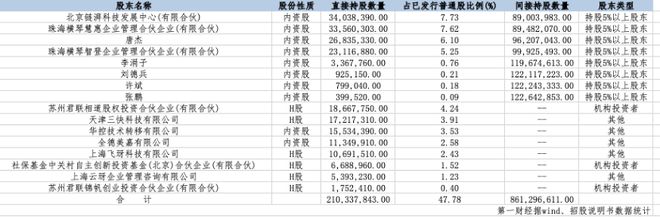
作为"全球大模型第一股",智谱(02513.HK)于1月8日登陆港交所。上市首日股价低开高走,收报 131.50港元,较发行价上涨13.16%,市值接近580亿港元,为潜伏多年的早期投资机构带来了可观回 报。其背后,浮现出包括互联网大厂、一线创投、国资等多方资本构成的战略版图。 然而,光环之下,挑战犹存。尽管根据第三方统计,智谱2024年以6.6%的市场份额居中国独立大模型 厂商首位,但其收入仍高度依赖面向政府、国企的私有化部署项目,客户集中度高且复购存在不确定 性。与此同时,公司研发开支三年间从千万元级跃升至数十亿元,净亏损同步扩大。 值得注意的是,智谱的上市或许只是开端。在智谱率先跑通上市路径后,AI大模型厂商会否迎来一波 IPO热潮,已成为业界关注的新焦点。 背后的资本版图 1月8日,智谱于港交所主板挂牌,成为全球首家以通用人工智能(AGI)基座模型为核心业务的上市公 司。当日开盘价为120港元,对应市值约528亿港元。根据本次发行价116.20港元计算,共募集资金超43 亿港元。 上市首日,智谱股价呈现"低开高走",收盘较发行价上涨超过13%,市值近580亿港元。相比2025年5月 完成B6轮融资时的 ...

马斯克的2026愿景:我们已处于“技术奇点”,AI和机器人不可阻挡,短期是动荡和挑战,长期是丰盛时代
美股研究社· 2026-01-08 11:27
Core Insights - Humanity is currently in the "biological bootloader" phase of digital superintelligence, with a transformative wave of change that cannot be halted [4] - Elon Musk predicts that Artificial General Intelligence (AGI) will be achieved by 2026, with AI's total intelligence surpassing that of all humanity by 2030 [5][6] - The transition period leading to AGI will be tumultuous, particularly affecting white-collar jobs, as AI is capable of performing over half of these roles [9] AGI and Technological Singularity - Musk asserts that we are already experiencing the "technological singularity," characterized by rapid and irreversible changes [6] - The impact of AI will lead to a significant reshaping of the workforce, with white-collar jobs being the first to disappear [9] Economic Predictions - Musk introduces the concept of Universal High Income (UHI), suggesting that a future of abundance will allow people to have whatever they desire, as production costs will drop significantly [11] - He warns that this abundance will coincide with social unrest, as society grapples with the implications of a world where work is no longer a measure of value [11] Energy Competition - Musk praises China's efficiency in solar energy deployment, stating that by 2026, China's electricity output will be three times that of the U.S. [12] - He emphasizes the need for the U.S. to catch up in energy production to remain competitive in AI [12] Space and Computing Infrastructure - Musk plans to establish "orbital data centers" using Starship, which will reduce launch costs to below $100 per kilogram, enabling large-scale computing in space [13] - This shift aims to create a self-evolving "Dyson Swarm" and address energy challenges for AI infrastructure [13] AI Safety Principles - Musk outlines three core principles for AI safety: Truth, Curiosity, and Beauty, to prevent AI from becoming a threat to humanity [15] - He emphasizes the importance of ensuring AI remains curious about humanity and does not resort to deception [15]

暗盘大涨26%!
Zhong Guo Ji Jin Bao· 2026-01-08 11:18
【导读】MINIMAX暗盘大涨26%! 1月8日,港股三大指数齐跌。截至收盘,恒生指数跌1.17%,恒生科技指数跌1.05%,恒生国企指数跌1.09%。全日大市成交额为2683亿港元,南向资金净 卖出49.01亿港元。 | 序号 | 代码 | 名称 | 现价 | 涨跌 | 涨跌幅 | 成交额 | 年初至今 | | --- | --- | --- | --- | --- | --- | --- | --- | | 1 | HSI | 恒生指数 | 26149.31c | -309.64 | -1.17% | 2683亿 | 2.02% | | 2 | HSTECH | 恒生科技 | 5678.34c | -60.18 | -1.05% | 754亿 | 2.94% | | 3 | HSBIO | 恒生生物科技 | 15879.59c | -13.66 | -0.09% | 127亿 | 12.00% | | 4 | HSCEI | 恒生中国企业指数 | 9039.34c | -99.41 | -1.09% | 941亿 | 1.41% | | 5 | HSCI | 恒生综合指数 | 4004.72c | -43 ...


全球大模型第一股今日上市,市值突破570亿港元
2 1 Shi Ji Jing Ji Bao Dao· 2026-01-08 10:59
Core Viewpoint - Beijing Zhiyu Huazhang Technology Co., Ltd. (referred to as "Zhiyu") officially listed on the Hong Kong Stock Exchange on January 8, becoming the "first global large model stock" with a closing price increase of 13.17%, reaching HKD 131.5 per share and a market capitalization exceeding HKD 57 billion [1]. Group 1: Listing Performance - The public offering of Zhiyu was oversubscribed by 1,159.46 times, with the international offering recording a subscription rate of 15.28 times, indicating strong market enthusiasm [3]. - Despite a volatile first trading day, where the stock price initially dropped below the issue price of HKD 116.2, it rebounded strongly to stabilize by the end of the day [3][5]. Group 2: Financials and Business Model - Zhiyu's revenue is projected to grow from RMB 57.4 million in 2022 to RMB 312.4 million in 2024, but the company is also facing increasing losses, with a cumulative net loss of approximately RMB 6.2 billion expected by mid-2025 [5]. - The company plans to use about 70% of the net proceeds from its IPO, approximately HKD 29 billion, for further research and development of general AI large models to strengthen its technological moat [5]. - Zhiyu's business model primarily relies on providing localized deployment of large model services to enterprise clients, which accounts for about 70% of its total revenue [6]. Group 3: Market Position and Industry Outlook - Founded in 2019, Zhiyu has a strong technical foundation, emerging from Tsinghua University's Knowledge Engineering Laboratory, and aims to enable machines to think like humans [6]. - According to Frost & Sullivan, Zhiyu holds a 6.6% market share, ranking second among Chinese large model vendors based on projected 2024 revenue [6]. - The industry is experiencing rapid growth, with domestic companies leading in global competition, although no single company has established a dominant technological or market advantage yet [7].
智谱、MiniMax港股IPO,熬过孤独的人和500亿奖赏丨深氪lite
36氪· 2026-01-08 10:22
Core Viewpoint - The article discusses the emergence of AI companies, particularly focusing on the successful IPOs of Zhiyuan and MiniMax, highlighting the transformative impact of AI in various industries and the changing landscape of the Hong Kong stock market [2][5][15]. Group 1: Investment Background - In 2021, early investors like Qiming Venture Partners recognized the potential of large models, investing in Zhiyuan and MiniMax despite the prevailing focus on carbon neutrality and the metaverse [6][9]. - The founders of Zhiyuan and MiniMax, Tang Jie and Yan Junjie, respectively, were pivotal in attracting early investments due to their ambitious visions and innovative methodologies [10][11][39]. Group 2: IPO Success - Both Zhiyuan and MiniMax went public in January 2026, with Zhiyuan's market value exceeding HKD 57 billion and MiniMax projected to surpass HKD 50 billion [15][16]. - The IPOs generated significant market interest, with Zhiyuan's public offering being oversubscribed by 1,159.46 times and MiniMax attracting over HKD 2.5 trillion in subscription funds [16][17]. Group 3: Market Dynamics - The Hong Kong stock market has seen a resurgence, with 119 new listings in 2025, the highest in five years, driven by a favorable environment for tech companies [24][30]. - The introduction of supportive regulations, such as the "18C" chapter for tech companies, has facilitated the listing of unprofitable firms, enhancing the attractiveness of the Hong Kong market for AI companies [29][30]. Group 4: Future Outlook - The rapid evolution of AI technology necessitates significant funding, with many companies transitioning from unicorns to valuations exceeding RMB 20 billion within a year [32][34]. - The IPOs of Zhiyuan and MiniMax are expected to encourage further investments in innovative tech companies, fostering a more vibrant startup ecosystem in China [66][68].

超1160倍认购!“全球大模型第一股”诞生,智谱港股上市
新浪财经· 2026-01-08 10:08
Core Viewpoint - Zhiyuan Technology Co., Ltd. (referred to as "Zhiyuan") has become the world's first publicly listed company focused on AGI (Artificial General Intelligence) foundational models, with a market capitalization of nearly HKD 60 billion on its first trading day, reflecting strong market interest and a subscription rate of approximately 1160 times for its IPO [2][3]. Group 1: Company Overview - Founded in 2019, Zhiyuan is dedicated to the research and industrial application of AGI, having launched its algorithm architecture GLM in 2021, with the latest model GLM-4.7 released this year, positioning it alongside top international models [2][3]. - The company has attracted a diverse group of cornerstone investors, including major state-owned enterprises and leading private equity funds, with a total subscription of HKD 2.98 billion from 11 cornerstone investors [2]. Group 2: Financial Performance - Zhiyuan's revenue projections show significant growth, with estimated revenues of CNY 57.4 million, CNY 124.5 million, and CNY 312.4 million for 2022, 2023, and 2024 respectively, reflecting a compound annual growth rate (CAGR) of 130% [3][4]. - The company maintains a high gross margin, with rates of 54.6%, 64.6%, 56.3%, and 50% from 2022 to 2025, indicating a strong competitive advantage in its business model and product technology [3][4]. Group 3: Research and Development - Zhiyuan has invested approximately CNY 4.4 billion in R&D from 2022 to the first half of 2025, with annual investments increasing significantly, demonstrating a commitment to maintaining technological leadership [5]. - The GLM series models undergo iterations every 2 to 3 months, ensuring rapid technological advancement and performance improvements [5]. Group 4: Market Position and Business Model - According to Frost & Sullivan, Zhiyuan ranks first among independent AGI developers in China and second globally, having empowered over 12,000 enterprise clients and 80 million end-user devices [5]. - The company operates three main revenue models: cloud API services (MaaS), localized deployment services, and developer subscription packages, with a goal to increase the API revenue share to 50% [11]. Group 5: Growth Potential - Following the release of GLM-4.7, Zhiyuan's annual recurring revenue (ARR) from its MaaS model surged from CNY 20 million to over CNY 500 million, indicating a growth rate exceeding 900% year-on-year for 2025 [12]. - The company is positioned to become a leader in the MaaS commercialization model in China, similar to international counterparts like OpenAI and Anthropic [10][12]. Group 6: International Expansion - Zhiyuan is actively promoting the internationalization of Chinese AGI models, having established the "International Alliance for Autonomous Large Models" with ten countries along the Belt and Road, showcasing its commitment to building AI infrastructure globally [14]. - The company has achieved over CNY 100 million in annual recurring revenue from its global developer model business, highlighting its competitive pricing and performance advantages [15].
“大模型第一股”智谱上市首日涨13%,公司即将推出新一代模型
Guan Cha Zhe Wang· 2026-01-08 10:08
Core Viewpoint - Beijing Zhiyu Huazhang Technology Co., Ltd. (智谱) officially listed on the Hong Kong Stock Exchange on January 8, marking the first global public listing of a company focused on general artificial intelligence (AGI) based on foundational models [1][3]. Group 1: IPO Details - The IPO price was set at HKD 116.2, with a subscription rate of 1159.46 times for public offerings and 15.28 times for international offerings, raising over HKD 4.3 billion [3]. - On the first trading day, the opening price was HKD 120, closing at HKD 131.5, reflecting a 13.17% increase and a total market capitalization of HKD 57.89 billion [3]. - Zhiyu is the largest independent developer of general foundational models in China and the first to face market pricing challenges [3]. Group 2: Business Model and Revenue - Zhiyu's business model features a "dual-drive" approach, relying on high-margin localized deployments for stable cash flow and cloud API services for future growth [8]. - Localized deployment, which caters to data-sensitive government and enterprise clients, is expected to have a gross margin of 59% by mid-2025, contributing approximately 85% of current revenue [8]. - Cloud revenue share has rapidly increased from a low base in 2022 to 15.2% by mid-2025, with daily token consumption reaching 4.2 trillion by November 2025 [9]. Group 3: Model Development and Market Position - Zhiyu's flagship model, GLM-4.7, achieved the top position on the Hugging Face global trends list and ranked first in both open-source and domestic models on the Artificial Analysis Intelligence Index [5]. - The model GLM-4.7 surpassed GPT-5.2 in a global coding evaluation system, demonstrating its competitive edge [7]. - Zhiyu's ARR from its model business exceeded RMB 100 million (approximately USD 14 million) within three months, attracting over 150,000 paid developer users [10]. Group 4: Future Prospects and Innovations - The company plans to launch the next-generation model GLM-5 soon, which is expected to bring significant improvements and new experiences [13]. - Zhiyu aims to differentiate itself in the capital market by focusing on long-term foundational model research and development, rather than short-term application benefits [14]. - Analysts predict that Zhiyu's revenue structure will shift from localized to cloud-based services, with cloud revenue expected to account for 56% by 2027 [12].

“全球大模型第一股”登陆港交所 上市首日股价跌宕
2 1 Shi Ji Jing Ji Bao Dao· 2026-01-08 09:49
Core Viewpoint - Beijing Zhiyu Huazhang Technology Co., Ltd. (Zhiyu) officially listed on the Hong Kong Stock Exchange on January 8, becoming the "first global large model stock" with a closing price increase of 8.06%, reaching a market capitalization of over HKD 55 billion [1] Group 1: Company Performance - Zhiyu's public offering was oversubscribed by 1,159.46 times, indicating strong market interest, with cornerstone investors committing a total of HKD 2.98 billion [1] - Despite a volatile first trading day, the stock price fluctuated but ultimately stabilized above the issue price [1] - The company reported a significant revenue increase from CNY 57.4 million in 2022 to CNY 312.4 million in 2024, but also faced a cumulative net loss of approximately CNY 6.2 billion from 2022 to mid-2025 [2] Group 2: Business Model and Strategy - Zhiyu, founded in 2019, has a strong technical foundation stemming from Tsinghua University's Computer Science Department, focusing on making machines think like humans [3] - The company primarily generates revenue by providing localized deployment of large model services, accounting for about 70% of total revenue [4] - Zhiyu plans to allocate approximately 70% of the net proceeds from its IPO (around HKD 2.9 billion) to further develop general AI large models, aiming to strengthen its technological moat [2] Group 3: Industry Outlook - The large model industry is experiencing rapid growth, with domestic companies in China leading in global competition, although no single company has established a dominant market position yet [4] - The industry faces challenges such as high research and development costs and increasing losses, which are common among AI large model companies [2]