
全国统一大市场

Search documents
一系列举措将出台 推动“十五五”实现良好开局
Jing Ji Wang· 2026-01-22 02:48
Group 1 - The core viewpoint emphasizes the importance of expanding domestic demand and optimizing supply to achieve a dynamic balance and virtuous cycle in the economy, with a focus on a new development model driven by domestic demand and consumption [2][3] - The National Development and Reform Commission (NDRC) plans to develop a strategic implementation plan for expanding domestic demand from 2026 to 2030, aligning with the trends of demand upgrading and the new technological revolution [2] - The NDRC aims to strengthen the real economy by fostering innovation, creating new supply, and generating new employment opportunities, while promoting a modern industrial system focused on intelligence, greenness, and integration [3] Group 2 - The construction of a unified national market is a significant strategic deployment by the central government, with positive progress already made and a commitment to deepen this initiative [4][5] - Key metrics indicate improvements in inter-provincial trade and reduced logistics costs, reflecting a favorable trend in resource allocation and market transaction costs [4] - Future efforts will focus on institutional development, high-quality growth, and addressing persistent issues that hinder market efficiency, such as low-price competition and local protectionism [5][6] Group 3 - The NDRC forecasts that by 2026, China's economic structure will continue to improve, with new growth drivers emerging from sectors like renewable energy, aerospace, and artificial intelligence [7][8] - The digital economy is expected to contribute significantly to GDP, with projections indicating it could reach 49 trillion yuan, accounting for approximately 35% of GDP by 2025 [8] - Regional innovation hubs, particularly in areas like the Greater Bay Area and the Yangtze River Delta, are set to enhance their roles in driving economic development and technological innovation [9]
中泰国际每日晨讯-20260122
ZHONGTAI INTERNATIONAL SECURITIES· 2026-01-22 02:33
Market Overview - On January 21, Hong Kong stocks experienced a slight adjustment in the morning but rebounded in the afternoon, with the Hang Seng Index rising by 97 points (0.4%) to close at 26,857 points[1] - The Hang Seng Tech Index increased by 62 points (1.1%), closing at 5,746 points, with total market turnover reaching HKD 250.5 billion[1] - Southbound capital inflow expanded to HKD 13.89 billion[1] Sector Performance - The semiconductor sector remained strong, driven by Micron's announcement of a potential memory shortage lasting until 2028, with Hua Hong Semiconductor and SMIC rising by 4%-6%[1] - TCL Electronics surged by 14.8% after announcing a joint venture with Sony, holding a 51% stake[1] - Skyworth Group's stock jumped by 37.5% following its announcement of a spin-off and share buyback[1] Geopolitical Impact - Gold stocks generally rose due to heightened geopolitical tensions, with Lingbao Gold and Zhaojin Mining increasing by 5%-8%[1] - The report suggests a short-term focus on strong sectors such as semiconductors and gold[1] U.S. Market Reaction - In the U.S., the Dow Jones Index rebounded by 588 points (1.5%) to 49,077 points, while the Nasdaq and S&P 500 indices rose by 270 points (1.2%) and 78 points respectively[2] - Gold prices remained strong, peaking at USD 4,888.4 per ounce[2] Macroeconomic Policy - The National Development and Reform Commission outlined policy directions for 2026, focusing on strengthening domestic circulation and expanding domestic demand strategies[3] Automotive Sector - China National Heavy Duty Truck Group saw a 7.5% increase in stock price after a major shareholder reduced their stake by 2%[4] - The company is expected to maintain strong export growth and a high dividend yield of approximately 7%[4] Energy and Utilities - Defensive sectors like environmental protection and gas utilities received support amid rising geopolitical risks, with stocks like Hong Kong and China Gas and CLP Holdings rising by 1.1%-3.2%[4] - Alibaba and China National Nuclear Corporation formed a joint venture for nuclear energy, potentially benefiting related companies[4] Healthcare Sector - The Hang Seng Healthcare Index rose by 0.7%, with WuXi Biologics increasing by 3.5%[5] - The CXO sector is expected to see a rebound in demand, with a projected 20.6% increase in clinical trial projects per company by 2025[5]
临空产业“鲜”行直达“飞”出百亿级大市场 中国经济空中“新动能”引擎足
Yang Shi Wang· 2026-01-22 02:17
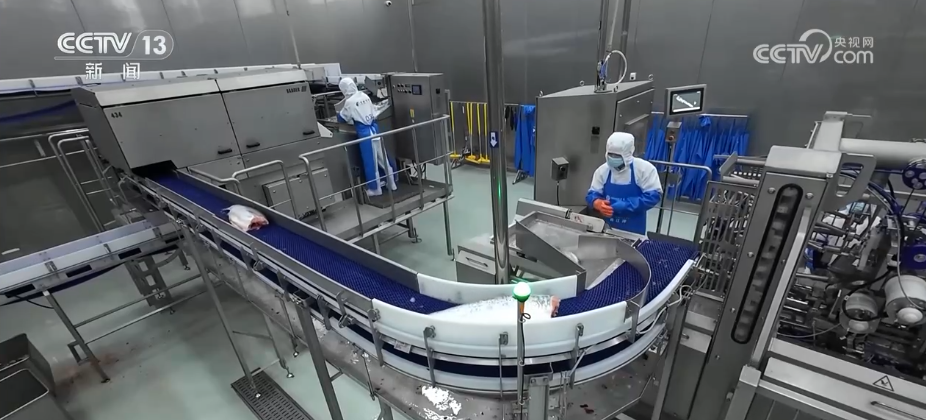
央视网消息:现如今,百姓餐桌上的食物种类越来越丰富,这离不开物流行业的快速发展。物流基础设施的连通,对于全国统一大 市场建设至关重要。就在最近,湖北鄂州建起了中部地区最大的一条三文鱼加工智能产线,三文鱼从地处中部地区的鄂州出发,48 小时通达全国大多数地区。 统一的生产品质其实也还不够,怎么让这份新鲜的美味快速送达全国,答案就是这家工厂旁边的机场。距离工厂不到100米,就是 亚洲最大的专业货运机场——花湖国际机场。 经过这一系列标准化的处理之后,成品就是这一盒一盒的三文鱼片。这些鱼片规格大小都很一致,这样标准化的品质也可以让它们 在全国市场内更加高效、无障碍地流通。 截至目前,机场已经开通了112条货运航线,其中51条都是国际航线。来自北欧、澳大利亚等地的三文鱼飞抵鄂州之后,经过快速 的清关、加工,两小时左右就可以再次装机销往全国。依托花湖机场密集的航线网络,目前可以实现北上广深等核心城市次日达, 48小时之内就能覆盖全国80%的消费市场。 这里是位于湖北鄂州临空经济区内的三文鱼智能加工基地。这条生产线是通过激光定位和机械臂的协同作业,实现三文鱼的高效加 工。它每分钟可以加工处理25条三文鱼,每个小时可以处理 ...

中原观察丨“5.6%”标记着河南经济的高位进阶
He Nan Ri Bao· 2026-01-21 23:37
Economic Performance - The GDP of Henan province reached 66,632.79 billion yuan, with a year-on-year growth of 5.6% at constant prices, marking a successful completion of the annual target for 2025 [1] - The 5.6% economic growth serves as a motivational call for continued efforts towards high-quality development, emphasizing the importance of stability as a foundation for progress [1] Agricultural and Industrial Growth - Grain production in 2025 is projected to reach 1,350.97 billion jin, maintaining stability above 1,300 billion jin for nine consecutive years, highlighting the province's commitment to food security [2] - Among 41 major industries, 32 reported year-on-year growth in added value, resulting in a growth coverage of 78.0%, indicating a positive trajectory for the industrial sector [2] - The revenue of large-scale service enterprises increased by 8.4% year-on-year from January to November 2025, reflecting a favorable development in the service industry [2] Policy and Market Dynamics - The integration and service of the national unified market have been strategic initiatives for promoting high-quality development, focusing on breaking bottlenecks, enhancing connectivity, and building hubs [3] - The combination of effective market mechanisms and proactive government policies has fostered a thriving economic environment, with a focus on maintaining employment and consumer market growth [3] - Despite challenges, the province's economic performance has laid a solid foundation for future growth, with a commitment to leveraging advantages and striving for new heights [3]
2026 凝心聚力绘新卷 砥砺奋进开新局
Xin Lang Cai Jing· 2026-01-21 22:36
Core Viewpoint - Harbin aims to achieve a balanced economic growth with a GDP increase of 5% and a focus on enhancing production capacity and quality across various sectors, while ensuring social stability and environmental sustainability [11]. Economic Development Goals - The expected economic growth targets for Harbin include: - GDP growth of 5% - Agricultural output growth of 3.5% - Industrial value-added growth of 5.5% - Fixed asset investment growth of 7% - Retail sales growth of approximately 4.5% - Public budget revenue growth of 6% - Synchronization of urban and rural residents' income growth with economic growth - A reduction of carbon emissions per unit GDP by about 3.8% [11]. Consumer and Investment Expansion - Strategies to boost consumption include: - Developing new consumption formats and enhancing service supply - Implementing policies for replacing old consumer goods to stimulate urban and rural consumption - Expanding service consumption and promoting traditional brands [12]. - Investment strategies focus on: - Targeting key sectors for long-term investment support - Attracting foreign strategic investors and expanding industrial investments with over 700 projects and investments exceeding 60 billion yuan [12]. Industry Development - Emphasis on fostering new and future industries such as: - Digital economy and biotechnology - High-end equipment, aerospace, and renewable energy sectors - Upgrading traditional industries like manufacturing and food production through technological improvements [13]. - The goal is to create competitive advantages by strengthening supply chains in emerging sectors [13]. Tourism and Cultural Development - Plans to enhance tourism include: - Upgrading key scenic areas and promoting winter sports tourism - Integrating cultural, sports, and commercial activities to boost tourism appeal [14]. - Development of high-quality tourist attractions and services to improve visitor experience [14]. Agricultural and Rural Development - Agricultural initiatives aim to: - Enhance production capacity and quality through technology and sustainable practices - Maintain grain planting areas above 30 million mu and grain production above 25 billion jin [15]. - Focus on rural revitalization and improving living conditions through infrastructure development [16]. Reform and Open Economy - Efforts to improve the business environment include: - Streamlining administrative processes and enhancing digital government services - Strengthening legal protections for market participants [17]. - Expansion of high-level open cooperation, particularly in cross-border trade and logistics [17]. Urban Development and Infrastructure - Urban planning will focus on: - High-standard implementation of urban construction projects, including heating and transportation infrastructure [18]. - Initiatives for urban renewal and environmental improvements, including waste management and pollution control [19]. Social Welfare and Employment - Employment strategies include: - Expanding job opportunities for youth and vulnerable groups, targeting over 87,000 new urban jobs [20]. - Enhancements in social security and healthcare services to improve overall community well-being [20].

依法严惩严重经济犯罪
Xin Lang Cai Jing· 2026-01-21 18:31
Group 1 - The Supreme People's Procuratorate emphasizes the need to use legal power to support high-quality development and maintain economic and financial security [1] - Strict punishment for serious economic crimes, including smuggling of strategic minerals and illegal fundraising, is mandated to protect national strategic interests and ensure a stable financial environment [1] - Collaboration with financial regulatory authorities to combat illegal intermediaries and financial fraud is highlighted, with a focus on safeguarding public property [1] Group 2 - The Supreme People's Procuratorate calls for a focus on strengthening domestic circulation and building a robust domestic market, while ensuring equal legal protection for various business entities [1] - Emphasis on enhancing the legal framework for capital markets, including strict measures against financial fraud and market manipulation to maintain market safety [1] - The need for judicial protection of new productive forces and the legal rights of technology innovation entities is also underscored [2]
变发展潜能为经济动能,变科技流量为创新增量
Xin Lang Cai Jing· 2026-01-21 13:24
(来源:中华工商时报) 转自:中华工商时报 2026年是"十五五"开局之年,今年国内经济核心潜力主要体现在哪些方面?将如何实施宏观政策?如何 通过完善实施机制,让"两新"政策更好惠民利民?1月20日,国新办举行新闻发布会介绍落实中央经济 工作会议精神,推动"十五五"实现良好开局有关情况。 持续向优、向新、向好 推动供需动态平衡和良性循环 当前,我国经济运行存在供强需弱的问题,经济发展中需求不足的问题较为突出,同时也存在供给不充 分的问题。国家发展改革委副主任王昌林表示,针对这些问题,要扩大内需、优化供给,推动供需在更 高水平上实现动态平衡和良性循环,促进形成更多由内需主导、消费拉动、内生增长的经济发展模式。 坚持把宏观政策的发力点放在做强国内大循环上,全方位扩大国内需求。王昌林表示,重点是要适应需 求升级的趋势,结合新一轮科技革命和产业变革的需要,研究制定出台2026-2030年扩大内需战略实施 方案,为以新需求引领新供给、以新供给创造新需求提供强有力的创新举措和要素保障,努力实现供需 互促、循环升级。 坚持把发展经济的着力点放在实体经济上,加快构建现代化产业体系。实体经济是我国经济发展的根 基,要适应产业转 ...
充分挖掘中国经济潜能 2026—2030年扩大内需战略实施方案将出台
Jing Ji Ri Bao· 2026-01-21 08:14
Group 1 - The core viewpoint of the articles emphasizes that the expansion of domestic demand is a strategic initiative rather than a temporary measure, requiring both strong policies and reforms to achieve a dynamic balance between supply and demand [1][3] - The National Development and Reform Commission (NDRC) plans to implement a strategic plan for expanding domestic demand from 2026 to 2030, focusing on strengthening the domestic circulation and enhancing overall domestic demand [1] - The "Two New" policies have shown significant effects in stabilizing investment and expanding consumption, with over 840 billion yuan allocated for long-term special bonds supporting approximately 8,400 equipment upgrade projects, leading to a total investment exceeding 1 trillion yuan [1][2] Group 2 - The NDRC is working on plans to increase consumer income as a crucial aspect of boosting domestic demand, including actions to stabilize jobs and enhance income for urban and rural residents [2] - The government aims to optimize the structure of public investment, increasing the proportion of investments in livelihood projects to promote demand enhancement [2] - A recent package of policies has been deployed to promote domestic demand through financial and fiscal collaboration, including loan interest subsidies and guarantees to create a synergistic effect [3]
权威发布|一批“十五五”时期高技术产业标志性引领性重大工程正谋划推进
Ren Min Ri Bao· 2026-01-21 07:21
人民日报记者 刘志强 1月20日,国务院新闻办举行新闻发布会,邀请国家发展改革委有关负责同志围绕"落实中央经济工 作会议精神,推动'十五五'实现良好开局"介绍有关情况。 加快打造形成全球科技创新高地和新兴产业重要策源地 1月19日,2025年中国经济成绩单发布。"成绩来之不易,彰显我国经济基础稳、优势多、韧性强、 潜能大的特征。"国家发展改革委国民经济综合司司长周陈认为,展望2026年,经济结构将持续向优、 发展动能持续向新、整体发展态势持续向好。 新技术新产品新场景蔚然成势。新能源、新材料、航空航天、量子科技、生物制造、具身智能等新 的经济增长点蓄势待发,新型储能装机规模超1亿千瓦、占全球比重超40%。人工智能加速从数字世界 走向物理世界,将带动高端制造、新兴消费、新业态新模式爆发式增长。2025年,高技术制造业增加值 占规模以上工业增加值比重超17%。一批"十五五"时期的高技术产业标志性引领性重大工程正在谋划推 进。 创新链产业链人才链加速融合。我国有完整的产业体系,有14亿多人口的超大规模市场,也有全球 规模最宏大、门类最齐全的人才资源,科学、技术、工程和数学专业毕业生每年超500万人,具备将创 新成果 ...
研究制定出台2026—2030年扩大内需战略实施方案
Jin Rong Shi Bao· 2026-01-21 03:17
王昌林表示,要坚持把宏观政策的发力点放在做强国内大循环上,全方位扩大国内需求。重点是要适应 需求升级的趋势,结合新一轮科技革命和产业变革的需要,将研究制定出台2026—2030年扩大内需战略 实施方案,为以新需求引领新供给、以新供给创造新需求提供强有力的创新举措和要素保障,努力实现 供需互促、循环升级。 本报讯 记者马玲报道 "当前,我国经济发展中需求不足的问题较为突出,同时也存在供给不充分的问 题。"1月20日,国家发展改革委副主任王昌林在国新办新闻发布会上表示,当前,供给到了从"有没 有"到"好不好"的阶段,有的需求很大,但供给不能满足。针对这些问题,必须坚决贯彻落实中央经济 工作会议精神,扩大内需、优化供给,推动供需在更高水平上实现动态平衡和良性循环,促进形成更多 由内需主导、消费拉动、内生增长的经济发展模式。 实体经济是我国经济发展的根基,王昌林表示,要发挥好国家创业投资基金行业标杆作用,研究设立国 家级并购基金,加强政府投资基金布局规划和投向指导,促进创新创业创造,加快培育和发展新质生产 力。 "坚持把市场运行的调控点放在纵深推进全国统一大市场建设上,充分激发市场活力。"王昌林表示,重 点是要综合整 ...