
开源模型

Search documents
“国产芯片必须咬牙坚持用!”周鸿祎:360近期采购全是华为产品
Di Yi Cai Jing· 2025-07-23 06:28
Group 1 - The core viewpoint emphasizes the rapid development of domestic chips in China, particularly in the context of AI, as highlighted by Zhou Hongyi's comments on the recent visit of NVIDIA CEO Jensen Huang [1] - Zhou Hongyi stated that 360 Group is shifting its chip procurement towards domestic products, specifically Huawei's chips, despite acknowledging the performance gap with NVIDIA's offerings [1] - The discussion also pointed out that while NVIDIA's H20 chip is more suitable for inference tasks, domestic chips offer better cost-performance ratios for similar applications [1] Group 2 - Zhou Hongyi addressed the recent decline in traffic for DeepSeek, clarifying that the platform's value should not be judged solely on surface-level metrics, as many large models and industry agents continue to rely on DeepSeek [2] - He mentioned that DeepSeek has set a positive precedent for the Chinese large model industry by eliminating redundant efforts and promoting an open-source approach to enhance international competitiveness [2] - The anticipated release of DeepSeek-R2 remains uncertain, with Zhou suggesting that the company may be preparing significant updates amidst competitive pressures [2] Group 3 - Zhou Hongyi highlighted new security challenges posed by AI agents, noting that the accessibility of large models allows individuals without programming skills to execute potentially harmful operations [3] - The emergence of "hacker agents" utilizing AI to enhance attack methods was discussed, indicating a shift in the cybersecurity landscape where traditional defenses are increasingly challenged by algorithmic adversaries [3] - The transformation of cybersecurity from human-to-human confrontations to algorithmic and machine-based conflicts necessitates a shift in strategy for security companies to develop their own intelligent security agents [3] Group 4 - Zhou Hongyi revealed that 360 is planning to enter the AI glasses market, acknowledging the challenges associated with creating functional and appealing eyewear [4] - He emphasized the importance of display functionality in AI glasses, suggesting that without it, the product may not offer significant advantages over existing smart devices [4]

阿里,最新发布!
证券时报· 2025-07-23 03:59
Core Viewpoint - Alibaba has officially released and open-sourced its new AI programming model Qwen3-Coder, which is claimed to be the most capable coding model in the global open-source arena, surpassing models like GPT-4.1 and competing with Claude 4 [1][3]. Group 1: Model Specifications and Performance - Qwen3-Coder features a total of 480 billion parameters, with 35 billion active parameters, and supports a context length of 256K, expandable to 1M [2][3]. - The model was pre-trained on 7.5 trillion data points, with 70% of the data being code, and underwent reinforcement learning for programming and agent tasks [2][4]. - In benchmark tests, Qwen3-Coder achieved state-of-the-art performance in Agentic Coding, Agentic Browser Use, and Agentic Tool Use, outperforming Claude in tool invocation capabilities [3][4]. Group 2: Market Impact and Adoption - Qwen3-Coder is designed to significantly enhance programming efficiency, allowing novice programmers to accomplish tasks that would typically take experienced programmers much longer [4][6]. - The model has been downloaded over 20 million times globally, making it the most popular open-source programming model [6]. - Major companies across various industries, including FAW Group, China Petroleum, and Ping An Group, have begun integrating Qwen AI programming models into their operations [6]. Group 3: Competitive Landscape - The AI programming sector is becoming a battleground for tech giants, with significant investments from companies like Microsoft and Google, highlighting the competitive nature of AI-assisted development [5][6]. - The increasing interest in AI programming tools is reflected in user requests, with nearly 29% of ChatGPT requests related to programming, indicating a strong demand for AI-assisted coding solutions [5].


马斯克拟推儿童版AI应用;工信部或推“新车登记半年内禁转让”
2 1 Shi Ji Jing Ji Bao Dao· 2025-07-21 02:40
Group 1: AI and Technology Developments - Elon Musk announced the development of a child-friendly AI application called "Baby Grok" by his company xAI, which will feature friendly content and virtual companions [2] - NVIDIA CEO Jensen Huang expressed confidence in China's innovation capabilities, particularly praising the DeepSeek company's R1 model for its creative redesign of AI model operations [3] - The global open-source model rankings show three Chinese models, Kimi K2, DeepSeek R1, and Qwen3, leading the competition, with Kimi K2 being recognized as the strongest open-source model [5] Group 2: Corporate Partnerships and Financial Activities - Microsoft entered a significant partnership with Vaulted Deep, valued at over $1.7 billion, to process 4.9 million tons of organic waste over the next 12 years, aiming to offset carbon emissions from data centers [8] - Chuan Hydrogen Technology completed a third round of financing exceeding $200 million, with funds allocated for product technology development and ecosystem construction [13] - Hanbo Semiconductor initiated its listing guidance with CITIC Securities, with key stakeholders controlling 42.15% of voting rights [12] Group 3: Product Launches and Innovations - UBTECH Robotics secured the largest procurement order in the humanoid robot sector, amounting to 90.51 million yuan, for its Walker S2 robot, which can autonomously change batteries [3] - Huawei announced the upcoming upgrade of its HarmonyOS 5.1 system for various smartphone models starting in July [9] - Faraday Future's new MPV model, FX Super One, faced allegations of design plagiarism from Great Wall Motors, leading to the removal of certain descriptions from its website [11]

OpenAI推出全新智能体产品,Grok发布智能伴侣功能
GOLDEN SUN SECURITIES· 2025-07-20 09:39
Investment Rating - The report maintains an "Increase" rating for the media sector [6]. Core Viewpoints - The media sector experienced a decline of 1.58% during the week of July 14-18, 2025, with a focus on investment opportunities in companies with favorable mid-year report expectations [1][11]. - The report highlights optimism for the gaming sector and AI applications, particularly in AI companionship, education, and toys, as well as the monetization of intellectual property (IP) [1][2]. - The report emphasizes the importance of tracking new AI applications and mature applications for investment opportunities [1]. Summary by Sections 1. Market Overview - The media sector's performance was negative, with a decline of 1.58%, while other sectors like telecommunications and pharmaceuticals showed positive growth [11]. - The top five gainers in the media sector included Century Tianhong (17.1%), Focus Technology (13.8%), and Youzu Network (11.9%) [14]. 2. Sub-sector Insights - **Gaming**: Key companies to watch include ST Huatuo, Jibite, and Giant Network, with additional attention on Perfect World and Iceberg Network [2][19]. - **AI**: Focus on companies like Dou Shen Education, Sheng Tian Network, and Shanghai Film, among others [2][19]. - **Education**: Companies such as Xueda Education and Fenbi are highlighted for their growth potential [2][19]. 3. Key Events Recap - OpenAI launched the "ChatGPT Agent," marking a significant advancement in automated AI agents capable of performing complex tasks [21]. - Chinese models dominated the global open-source model rankings, with Kimi K2 leading [21]. - Grok introduced an interactive digital companion feature, enhancing user engagement with AI [21]. 4. Sub-sector Data Tracking - The report notes the popularity of upcoming games and highlights the performance of key titles in the gaming market [22]. - The domestic film market's box office for the week was approximately 631 million yuan, with "Jurassic World: Rebirth" leading the rankings [25]. - The report also tracks viewership data for popular series and variety shows, indicating trends in audience preferences [26][27].
DeepSeek终于丢了开源第一王座。。。
自动驾驶之心· 2025-07-19 10:19
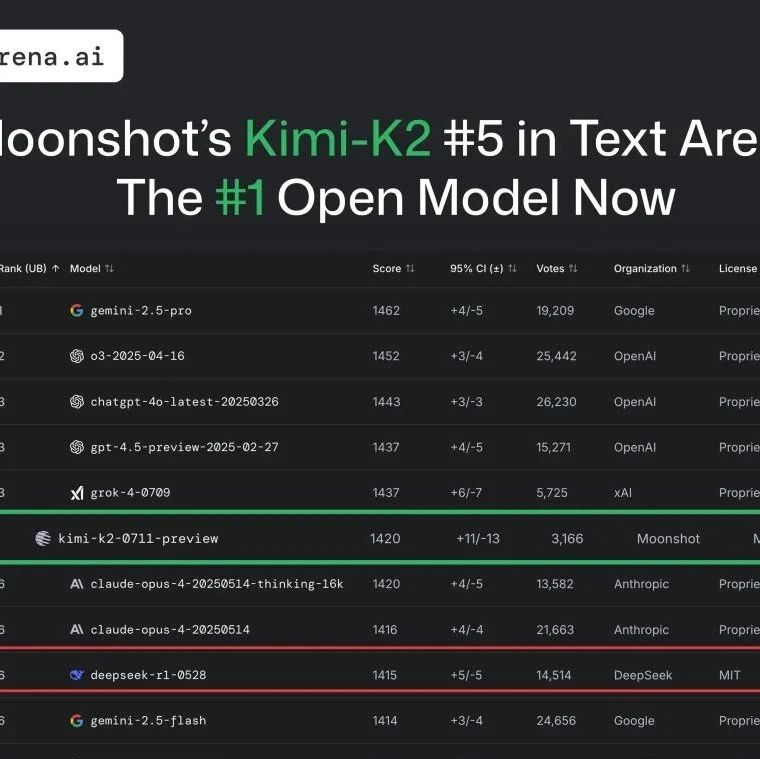
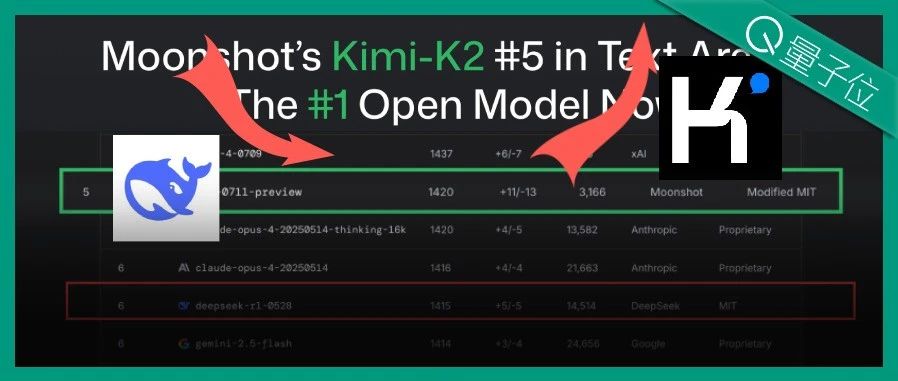
Core Viewpoint - Kimi K2 has surpassed DeepSeek to become the top open-source model globally, ranking fifth overall and closely following top proprietary models like Musk's Grok 4 [3][4]. Group 1: Ranking and Performance - Kimi K2 achieved a score of 1420, placing it fifth in the overall ranking, with a notable performance in various capabilities, including being tied for first in multi-turn dialogue and second in programming ability [4][7]. - The top ten models now all have scores above 1400, indicating that the performance gap between open-source and proprietary models is narrowing [22][24]. Group 2: Community Engagement and Adoption - Kimi K2 has gained significant attention in the open-source community, with 5.6K stars on GitHub and nearly 100,000 downloads on Hugging Face within a week of its release [6][5]. - The CEO of Perplexity has publicly endorsed Kimi K2, indicating plans to utilize the model for further training, showcasing its potential in practical applications [8]. Group 3: Architectural Decisions - Kimi K2 inherits the architecture of DeepSeek V3, with specific parameter adjustments made to optimize performance while managing costs effectively [10][14]. - The adjustments include increasing the number of experts while reducing the number of attention heads, which helps maintain efficiency without significantly impacting performance [15][18]. Group 4: Industry Trends - The perception that open-source models are inferior is being challenged, with industry experts predicting that open-source will increasingly rival proprietary models in performance [22][27]. - Tim Dettmers from the Allen Institute for AI suggests that open-source models defeating proprietary ones will become more common, highlighting a shift in the AI landscape [28].
AI大家说 | Kimi K2:全球首个完全开源的Agentic模型
红杉汇· 2025-07-18 12:24
Core Viewpoint - Moonshot AI has officially released the Kimi K2 model, which is designed for Agentic workflows, showcasing advanced capabilities in understanding complex instructions and autonomously executing multi-step tasks [2][3][26] Group 1: Model Architecture and Capabilities - Kimi K2 is built on a sparse MoE (Mixture-of-Experts) architecture, featuring a total of 1 trillion parameters and 32 billion active parameters, with 384 experts [4][5] - The model can dynamically activate relevant experts based on task requirements, allowing for efficient parameter utilization [4][5] - Kimi K2 has a maximum context length of 128K, enhancing its ability to handle long documents and complex retrieval tasks [8] Group 2: Training and Optimization - The model underwent pre-training on 15.5 trillion tokens using the MuonClip optimizer, which effectively addressed gradient instability and convergence issues [7][10] - Kimi K2 incorporates a self-judging mechanism to improve performance on non-verifiable tasks, continuously optimizing its capabilities [7] Group 3: Performance Metrics - Kimi K2 achieved state-of-the-art (SOTA) results in various benchmark tests, including SWE Bench Verified, Tau2, and AceBench, demonstrating superior performance in coding, agent tasks, and mathematical reasoning [8][25] - In programming tasks, Kimi K2 scored 53.7% accuracy in LiveCodeBench, surpassing GPT-4.1 [19] - The model's tool-calling ability reached an accuracy of 65.8% in SWE-bench Verified tests, indicating its proficiency in parsing complex instructions [21] Group 4: Industry Impact and Recognition - Kimi K2 has generated significant discussion within the global AI community, with notable endorsements from industry leaders, including NVIDIA's founder Jensen Huang [9][12] - The model's open-source nature has led to rapid adoption by major platforms such as OpenRouter and Microsoft's Visual Studio Code [12] - Kimi K2 has been recognized as one of the best open-source models globally, with academic and industry consensus on its capabilities [14][16] Group 5: Future Implications - The release of Kimi K2 is expected to enhance the developer ecosystem and expand its applications in various fields, transitioning AI from a mere conversational tool to a productivity engine [26]

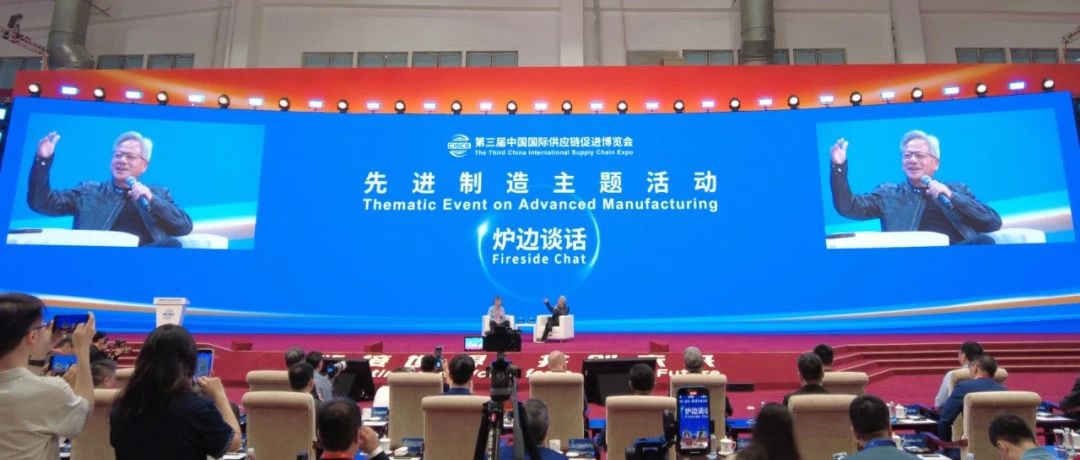
黄仁勋对话王坚:AI演进路径明确,硅基时代延续20年,开源模型成中国突围支点
Haitong Securities International· 2025-07-18 08:49
Investment Rating - The report does not explicitly provide an investment rating for the industry or specific companies discussed Core Insights - The evolution of AI is driven by computing power, transitioning from rule-based software to predictive intelligence systems powered by large-scale data and parameter training [2][8] - NVIDIA is advancing next-generation AI acceleration platforms through innovations in 3D transistor structures, advanced packaging, and silicon photonics interconnects, with a roadmap extending 10-20 years [2][8] Summary by Sections AI Development Waves - Perception AI (2012–2017): Surpassing human capabilities in vision, speech, and language recognition [5] - Generative AI (2018–): Cross-modal generation reshaping content production [5] - Reasoning AI (2023–): Human-like logic and problem-solving abilities [5] - Physical AI (future): Embodied intelligence in robotic systems [5] Strategic Implications - A 20-Year Window for Silicon-Based AI Compute: Huang positions CoWoS and CPO as mainline technologies, affirming the viability of current architecture-compatible paths for Chinese chipmakers [3][11] - Global Recognition of Chinese Open Models: Huang praises Chinese open-source models, marking a significant endorsement of China's AI capabilities and opening pathways for algorithm export [3][11] - Open-Source as the Future Engine of AI Innovation: Transitioning to ecosystem-driven engineering collaboration around multimodal model sharing and co-development [3][11] - AI for Science as a New Accelerator: AI's role in complex interdisciplinary fields, with opportunities for Chinese institutions in drug discovery and climate prediction [3][11]
DeepSeek终于丢了开源第一王座,但继任者依然来自中国
量子位· 2025-07-18 08:36
Core Viewpoint - Kimi K2 has surpassed DeepSeek to become the number one open-source model globally, ranking fifth overall, closely following top proprietary models like Musk's Grok 4 [1][19]. Group 1: Ranking and Performance - Kimi K2 achieved a score of 1420, placing it fifth in the overall ranking, with only a slight gap from leading proprietary models [2][22]. - The top ten models now all have scores above 1400, indicating that open-source models are increasingly competitive with proprietary ones [20][21]. Group 2: Community Engagement and Adoption - Kimi K2 has gained significant attention in the open-source community, with 5.6K stars on GitHub and nearly 100,000 downloads on Hugging Face [5][4]. - The CEO of AI search engine startup Perplexity has publicly endorsed Kimi K2, indicating its strong internal evaluation and future plans for further training based on this model [5][27]. Group 3: Model Architecture and Development - Kimi K2 inherits the DeepSeek V3 architecture but includes several parameter adjustments to optimize performance [9][12]. - Key modifications in Kimi K2's structure include increasing the number of experts, halving the number of attention heads, retaining only the first layer as dense, and implementing flexible expert routing [13][15]. Group 4: Industry Trends and Future Outlook - The stereotype that open-source models are inferior is being challenged, with industry experts predicting that open-source will increasingly outperform proprietary models [19][24]. - Tim Dettmers from the Allen Institute for AI suggests that open-source models defeating proprietary ones will become more common, highlighting their importance in localizing AI experiences [25][27].
速速收藏!黄仁勋给了年轻人这些实用建议
天天基金网· 2025-07-18 06:17
Core Viewpoint - The future of AI is transitioning towards physical applications, with significant advancements expected in silicon technology and open-source models, particularly in China [1][4][5]. Group 1: AI Development Stages - AI has experienced rapid development over the past twelve years, with major breakthroughs occurring approximately every three to five years [4]. - The current wave of AI, termed reasoning AI, is characterized by its ability to understand and solve previously unencountered problems [4]. - The next phase of AI is expected to be physical AI, where capabilities will be applied to physical machines such as robots [4]. Group 2: China's Role in Open Source - China has excelled in open-source initiatives, with models like DeepSeek, Qwen, and Kimi being among the best in the world [6][7]. - The number of research papers published by Chinese researchers on arXiv is the highest globally, indicating a strong contribution to the open-source ecosystem [7]. - Open-source research enhances the quality and safety of AI development by inviting global scrutiny [7]. Group 3: Advancements in Silicon Technology - Future advancements in silicon technology are expected to include three-dimensional transistors, larger panel-level packaging, and high-density integrated modules [8][9]. - The transition to three-dimensional structures, such as Gate-All-Around (GAA) transistors, will significantly enhance performance [8]. - Innovations in packaging technology, such as CoWoS, allow for the stacking of multiple chips, leading to greater integration and efficiency [8]. Group 4: Recommendations for Young People - Young individuals should develop the ability to interact effectively with AI and start using it as soon as possible [10][12]. - It is crucial for the younger generation to continue learning foundational skills such as mathematics, logic, and programming, even as AI evolves [12]. - The integration of AI into daily life presents a unique opportunity for young people to grow alongside this technology [12].
一场关于AI能力与人类智慧的对话
Ke Ji Ri Bao· 2025-07-18 01:20
Core Insights - The dialogue between Wang Jian and Jensen Huang highlights the rapid advancements in AI capabilities and its potential to surpass human intelligence in problem-solving [1][2] - Both leaders agree that AI will enhance human creativity and intelligence rather than replace it, similar to how airplanes extend human reach [2] - The importance of open-source models in advancing AI technology is emphasized, with examples of transformative models like DeepSeek and Kimi [3] Group 1: AI Development and Capabilities - Jensen Huang predicts that the next wave of AI development will focus on physical AI, which will integrate more deeply with the human physical world [1] - AI has evolved from being taught by humans to being able to think, reason, and independently complete tasks through reinforcement learning [1][2] - The leaders believe that AI will enrich human wisdom in scientific endeavors [2] Group 2: Open Source and Innovation - Open-source models are seen as crucial for the advancement of AI, benefiting both the Chinese and global AI landscapes [3] - The leaders note that open-source innovations can drive efficiency across various industries, including healthcare and finance [3] - Huang emphasizes that open-source models can ensure the safety of AI through global review mechanisms [3] Group 3: Future of Chip Technology - Huang discusses the future of chip innovation, indicating a shift from traditional methods of distributing computing power across different silicon materials [4] - The development of composite chips and advanced packaging technologies like Co-Packaged Optics (CPO) is underway to achieve higher functionality [4] - Both leaders express optimism about the potential for AI technology innovation and development over the next 20 years [4]