
电动化

Search documents
Stellantis恢复V8动力皮卡生产,背后隐藏着哪些秘密?
Zhong Guo Qi Che Bao Wang· 2026-01-05 07:04
Core Viewpoint - Stellantis has decided to resume production of the V8-powered Ram TRX pickup truck, with the 2027 model set to launch at the end of 2026, driven by relaxed U.S. federal emissions regulations and a sales turnaround plan for the U.S. market [2][3] Group 1: Strategic Reasons Behind the Decision - The decision to revive the V8 Ram TRX is part of a deeper strategic recalibration by Stellantis, reflecting a response to market trends, brand value, and technological pathways [3] - The adjustment in U.S. federal emissions regulations has created a temporary "safe harbor" for large displacement V8 engines, allowing Stellantis to capitalize on the opportunity to continue producing high-performance fuel vehicles [3] - Stellantis is facing declining sales in the U.S., projected to drop from 2 million units in 2020 to approximately 1.25 million by 2025, making the revival of the Ram TRX a critical move to boost brand image and sales [3] Group 2: Market Position and Competition - The Ram TRX, with a starting price of $100,000 and a title of "world's fastest production gasoline pickup," is expected to enhance Stellantis's high-end brand image and attract consumer attention across its entire model range [3][5] - The return of the Ram TRX is a strategic response to the competitive landscape in the North American pickup market, where Stellantis's market share in the high-end segment has declined by 3 percentage points since 2021 [5] - The Ram TRX's performance capabilities, including a 0-60 mph time of 3.5 seconds, position it as a strong competitor against rivals like the GMC Sierra AT4X, appealing to consumers seeking extreme speed and performance [5] Group 3: Retaining Internal Combustion Engine Options - Stellantis is not abandoning internal combustion engines in favor of electric vehicles but is instead retaining the V8 engine as a key component of its product lineup, ensuring competitiveness during the transition period [4] - The decision to resume V8 production targets niche but high-value consumer segments, such as off-road enthusiasts and modification fans, thereby solidifying the brand's position in specific market segments [4] - Future developments may include exploring larger displacement versions of the new Hemi series, indicating a long-term commitment to the high-performance vehicle market [4] Group 4: Global Market Dynamics - The revival of the Ram TRX aligns with the cultural significance of pickups in North America, where competition is fierce, and consumer demand for large displacement engines remains strong [5][7] - In regions like Australia and the Middle East, there is a high acceptance of large displacement engines, suggesting that Stellantis's decision could trigger a ripple effect in these markets [6] - The approach taken by Stellantis reflects an understanding of regional cultural differences, as the U.S. market continues to embrace traditional fuel vehicles despite the global shift towards electrification [7] Group 5: Challenges and Future Considerations - The high price point of the Ram TRX raises questions about its profitability, as the previous model faced challenges due to high production costs and a low profit margin of only 5% [8] - The uncertainty surrounding future emissions regulations post-2027 could pose risks to the viability of V8 engines, highlighting the need for Stellantis to navigate these challenges carefully [8] - The revival of the V8-powered pickup is seen as a calculated move to capture specific market segments while preparing for a future that balances fuel and electric vehicle development [9]


北交所科技成长产业跟踪第五十八期(20260104):电动化浪潮驱动汽车产业链升级,关注机器人业务延伸、智能驾驶订单落地等公司
Hua Yuan Zheng Quan· 2026-01-05 05:59
Investment Rating - The report suggests a focus on the automotive industry, particularly in areas such as robotics, solid-state batteries, and intelligent driving for 2026 [2][32]. Core Insights - The total market capitalization of automotive stocks on the Beijing Stock Exchange increased by 70% in 2025, with notable stock price increases for companies like Kaiter Co., which saw a rise of 178% [2][21]. - In 2025, China's automotive production and sales reached 31.23 million and 31.12 million units respectively, reflecting year-on-year growth of 11.9% and 11.4% [7][10]. - The report highlights five key trends for 2026 in the automotive sector: (1) localization of core components for robotics, (2) technological breakthroughs in battery segments, (3) transformation and upgrading of electric vehicle components, (4) intelligent driving sensors and electronic systems, and (5) innovative applications of lightweight materials [32][34]. Summary by Sections Automotive Industry Overview - In the first eleven months of 2025, China's automotive production and sales maintained double-digit year-on-year growth, with significant contributions from the collaboration across the supply chain [7][8]. - The report notes that the sales of new energy vehicles accounted for 47.5% of total new car sales during the same period, with production and sales of 14.91 million and 14.78 million units respectively, marking growth rates of 31.4% and 31.2% [8][11]. Market Performance - The median price-to-earnings (P/E) ratio for automotive stocks on the Beijing Stock Exchange increased from 22.07X to 35.26X, a growth rate of 60% [21][23]. - The report indicates that the median market capitalization of automotive stocks rose from 34.134 billion yuan to 58.024 billion yuan [21][23]. Key Companies and Trends - Companies such as Sanxie Electric and JunChuang Technology are highlighted for their potential in the robotics sector, particularly in humanoid robots [32][33]. - The report emphasizes the importance of solid-state batteries as a core direction for future battery technology, with companies like YuanHang Precision and NaKonoer being noted for their advancements [32][34]. - The shift towards lightweight materials in the automotive industry is also discussed, with companies like HeChang Polymer and JiYuan Precision being recognized for their innovative approaches [34].
全球大公司要闻 | 宇树科技:未涉及申请“绿色通道”相关事宜,上市工作正常推进
Wind万得· 2026-01-04 22:34
Group 1 - TSMC has received an annual license from the US government to export chip manufacturing equipment to its factory in Nanjing, ensuring uninterrupted operations and product delivery. The 2nm process mass production plan is on schedule, with risk trial production expected to start in 2027 [2] - Guizhou Moutai has spent 120 million yuan to repurchase approximately 87,100 shares of its stock. Additionally, the maximum purchase limit for its Feitian 53% vol 500ml Moutai liquor has been adjusted from 12 bottles to 6 bottles per person per day from January 4 until before the Spring Festival [2] - Xiaomi's CEO Lei Jun revealed that the company aims to deliver over 410,000 vehicles in 2025 and 550,000 in 2026, addressing concerns about the materials used in their vehicles and refuting rumors about the company's marketing practices [3] Group 2 - Baidu's AI chip subsidiary Kunlun has officially submitted its main board listing application to the Hong Kong Stock Exchange, with its valuation increasing from approximately 13 billion yuan in 2021 to 21 billion yuan by July 2025 [5] - BYD's pure electric vehicle sales are projected to reach 2.2567 million units by 2025, surpassing Tesla's expected delivery of 1.636 million units, marking the first time BYD has outperformed Tesla in annual sales [5] - SK Hynix's target price has been raised to 840,000 KRW by Morgan Stanley, indicating a significant improvement in the company's profitability trajectory [11]

我们该怎样记住2025年的中国汽车?
Xin Lang Cai Jing· 2026-01-04 11:30
Core Insights - The Chinese automotive industry has undergone a significant transition in 2025, moving towards the popularization of electrification and the acceptance of safety and responsibility in intelligent driving, while the focus has shifted from expansion to efficiency, governance, and organizational capability [2][69]. Group 1: Industry Competition and Regulation - The Chinese automotive sector has seen a comprehensive intervention from the government to restore competitive order, addressing issues like price wars and production consistency [4][70]. - The intervention marks a shift from merely addressing price control to tackling the root cause of competition, which is the high degree of product and capability homogeneity among companies [6][73]. - The need for differentiation in competition is emphasized, suggesting that true market differentiation must be established to eliminate the cycle of homogeneous competition [9][75]. Group 2: State-Owned Enterprise Reform - The establishment of a new state-owned enterprise, Changan Automobile, marks a significant reform in the state-owned automotive sector, indicating a shift from scale and form to mechanisms and efficiency [10][14]. - The reform aims to enhance the capabilities of state-owned enterprises, focusing on creating irreplaceable advantages in key areas [12][14]. - The changes in state-owned enterprises reflect a broader trend towards efficiency and capability building in the face of new industry challenges [15][64]. Group 3: Intelligent Driving and Safety - The rapid adoption of intelligent driving technologies has led to a shift in focus from technical capabilities to safety and responsibility, with companies facing increased scrutiny over their marketing practices [16][18]. - A significant traffic accident in March 2025 highlighted the urgent need for clear definitions of responsibility and safety standards in intelligent driving [18][21]. - Companies like Geely are taking proactive steps to enhance safety standards, indicating a broader industry trend towards building safety as a core competency [21][23]. Group 4: Globalization and Market Dynamics - The Chinese automotive industry is increasingly viewed as a key player in global market dynamics, with companies recognizing the need for localized manufacturing and long-term partnerships abroad [44][46]. - The shift from merely exporting products to establishing a presence in foreign markets reflects a deeper understanding of the complexities of global trade [44][46]. - The evolving landscape of international relations, particularly between China and the West, is reshaping how Chinese automotive companies approach global expansion [43][48]. Group 5: Capital Market Engagement - The surge of Chinese automotive companies seeking IPOs in Hong Kong indicates a strategic reassessment of capital and risk in light of global market changes [56][58]. - The focus on stable cash flow and clear profit models is becoming essential as the industry transitions into a phase of stock competition and technological differentiation [56][58]. - The choice of Hong Kong for IPOs reflects a desire for regulatory stability and alignment with global standards, enhancing transparency and governance [58][61]. Group 6: Industry Consolidation and Efficiency - A trend of strategic consolidation is emerging, with companies prioritizing resource concentration and efficiency over brand proliferation [66][66]. - Major global automakers are also reducing operations and focusing on core competencies, indicating a broader industry recognition that scale alone may not ensure safety in a volatile market [66][66]. - The end of the expansion phase in the automotive industry signals the beginning of a more competitive environment that tests endurance, efficiency, and organizational capabilities [66][66].



一汽丰田2025总销量805518,马不停蹄奔新年
Di Yi Cai Jing· 2026-01-01 01:58
Core Insights - In 2025, FAW Toyota achieved a total annual sales volume of 805,518 units, marking three consecutive years of positive growth for mainstream joint venture brands [1] - The new Prado model continues to demonstrate strong appeal in the off-road segment, contributing significantly to sales figures [1] Group 1: Technological Advancements - By the end of 2025, FAW Toyota has established a technology system and product matrix centered around electrification and intelligence, covering various powertrain forms including fuel, hybrid, and pure electric [1] - At the 2025 Guangzhou Auto Show, FAW Toyota launched the IT'S TiME 3.0 technology brand and refreshed products, focusing on advancements in intelligent driving assistance, smart cockpits, and power technology [1] Group 2: Future Outlook - Looking ahead to 2026, FAW Toyota aims to solidify its value benchmark position while embarking on a new chapter of high-quality development amidst transformation [1]
中国车企欧洲市场逆势扩张 电动化领域份额创新高
Huan Qiu Wang· 2026-01-01 00:47
Group 1 - Chinese automakers, led by MG, BYD, and Chery, are expected to surpass 200,000 new car sales in the UK by 2025, potentially capturing 10% of the local market share [2] - In Spain and Norway, 10% of new car sales come from Chinese brands, while the average in Western Europe is 6% [2] - China's leading position in the global electric vehicle industry is attributed to its dominance in the lithium-ion battery supply chain, which has driven the growth of Chinese car sales [2] Group 2 - Despite facing EU tariff pressures, Chinese automakers are expected to maintain strong expansion momentum in the European market by 2025, with a projected market share of 12.8% in the electric vehicle sector [2] - In the rapidly growing hybrid vehicle segment, Chinese brands have surpassed a 13% market share across the EU, EFTA countries, and the UK [2] - Chinese car manufacturers are adopting flexible strategies to counter the impact of additional tariffs, absorbing some costs while shifting focus to unaffected areas like hybrid models and non-EU markets [2] Group 3 - Brands such as BYD and SAIC, along with new entrants like Chery and Leap Motor, are intensifying their efforts in the European market by 2025 [3] - Leap Motor's electric vehicle sales in Europe have surged over 4000% by October 2025, supported by a joint venture with Stellantis NV [3] - Chery's Omoda brand has seen a 1100% increase in electric vehicle sales during the same period [3]



出口景气度持续,开工率环比回升
GUOTAI HAITONG SECURITIES· 2025-12-31 09:26
Investment Rating - The industry investment rating is "Increase Holding" [4][10]. Core Insights - The industry is experiencing a domestic cyclical recovery, with structural improvements in export conditions. As counter-cyclical policies gradually take effect, the industry's prosperity is expected to continue improving [2]. - Domestic sales of excavators are projected to rebound, supported by counter-cyclical fiscal policies and an upward industry cycle. Although exports face some trade friction risks, major machinery manufacturers have limited exposure to the U.S. market, keeping risks manageable. Leading companies are well-positioned overseas and are entering a harvest phase [4]. - In November 2025, a total of 20,027 excavators were sold, representing a year-on-year increase of 13.9%. Domestic sales accounted for 9,842 units, up 9.11% year-on-year, while exports reached 10,185 units, up 18.8% year-on-year. From January to November 2025, total excavator sales were 212,162 units, a 16.7% increase year-on-year [4]. - The average working hours for major construction machinery products in November 2025 were 84.2 hours, a year-on-year decrease of 13%, but a month-on-month increase of 4.08% [4]. Summary by Sections Sales Performance - In November 2025, excavator sales were 20,027 units, with domestic sales at 9,842 units and exports at 10,185 units. Year-to-date sales from January to November reached 212,162 units, with domestic sales of 108,187 units and exports of 103,975 units [4]. - The proportion of domestic sales in November was approximately 49%, while exports accounted for about 51%. For the year-to-date period, domestic sales made up about 51%, and exports were around 49% [4]. Working Hours and Utilization Rates - The average working hours for major machinery in November 2025 were 84.2 hours, with excavators averaging 76.5 hours. The month-on-month improvement indicates a recovery trend despite a year-on-year decline [4]. - The utilization rate for major machinery products was 56.5% in November 2025, down 12.1 percentage points year-on-year but up 1.5 percentage points month-on-month [4]. Company Recommendations - Recommended companies include Sany Heavy Industry, Zoomlion, XCMG, Liugong, and Hengli Hydraulic, all rated as "Increase Holding" [4][5]. - Earnings per share (EPS) forecasts for these companies show a positive trend, with Sany Heavy Industry projected to have an EPS of 1.02 in 2025, while XCMG is expected to reach 0.69 [5].
12款新车展望2026:中国汽车市场开启“耐力赛” | 界面预言家⑧
Xin Lang Cai Jing· 2025-12-31 09:15
Group 1 - The automotive market is transitioning from a high-intensity "sprint" to a "marathon" mode by 2026, with electric vehicle (EV) growth slowing and consumers becoming more cautious about value and reliability [1] - Consumers are increasingly embracing hybrid and plug-in hybrid vehicles as a "bridge solution" to reduce range anxiety and stabilize purchasing decisions [1] - The supply side is experiencing compressed model development cycles, with a shift towards rapid iteration similar to the Chinese model, making "annual updates" and "mid-cycle facelifts" essential [1] Group 2 - The focus for 2026 is shifting towards addressing "problems" rather than just introducing "new cars," including questions about brand coherence and the ability to maintain consumer trust [2] - The success of the SU7 indicates that a clear product positioning and ongoing conversation can mitigate the disadvantages of late market entry, but the YU9 faces a crowded high-end SUV segment [3][7] Group 3 - The YU9 is expected to target the family flagship market with a three-row layout and reduced range anxiety, but it must adapt its sporty narrative to emphasize comfort and long-distance experience [7] - The Z model from Tengshi aims to rebrand the company by packaging its technological capabilities into a more appealing product narrative, enhancing its market presence [35] Group 4 - The iX3 from BMW is positioned to address how joint venture electric vehicles can differentiate themselves in the Chinese market, focusing on comfort and local adaptations while retaining driving characteristics [47][49] - The second-generation Roadster from Tesla, delayed for nearly nine years, needs to redefine its narrative to maintain its market allure amidst increasing competition in the high-performance electric vehicle segment [51][54] Group 5 - The introduction of large GT and convertible models by Genesis is seen as a brand investment rather than a sales strategy, aiming to elevate brand perception and value in the luxury market [56][59]



大众ID.ERA、日产E7X、奥迪A6L……2026年重点新车前瞻
Zhong Guo Zhi Liang Xin Wen Wang· 2025-12-31 07:24
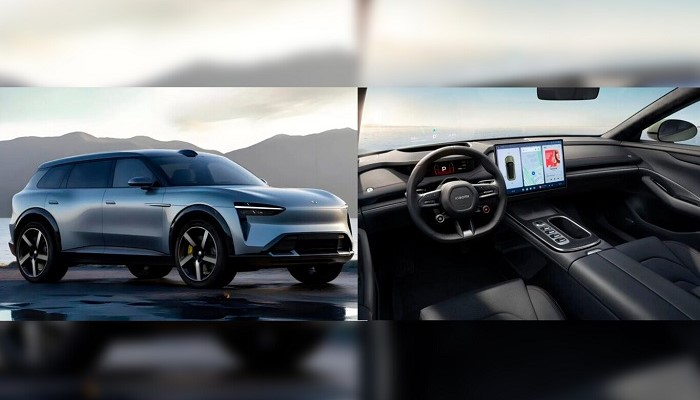
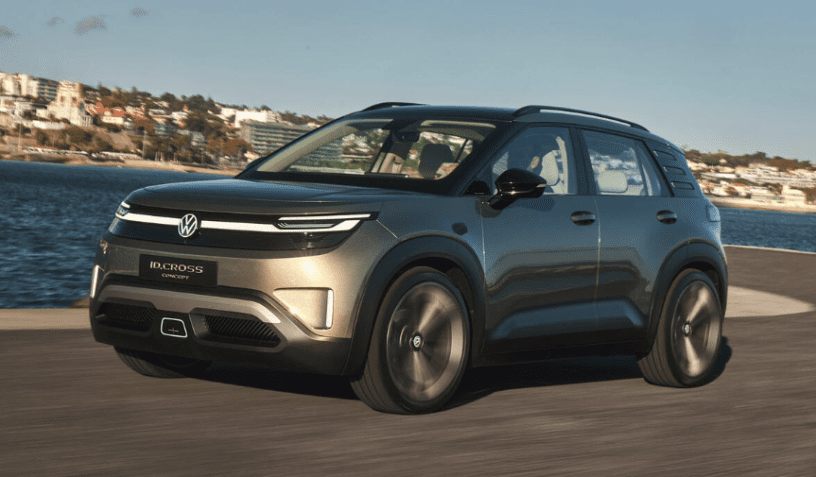
Group 1 - Volkswagen is set to launch the ID.Cross, a compact electric crossover SUV, in 2026, featuring a unique design and a focus on simplicity and stability [1][3] - The ID.Cross will have a powertrain with a 155 kW motor, an expected WLTP range of 420 km, and a top speed of 175 km/h [3] - The ID.ERA, a full-size SUV from SAIC Volkswagen, will also debut in 2026, emphasizing a new design language and innovative technology [5][7] Group 2 - Dongfeng Nissan's NX8, a mid-large SUV based on the Tianyan architecture, will offer both pure electric and range-extended versions, with a planned launch in the first half of 2026 [8][10] - The NX8 will feature a 2.4-meter wide light strip and two electric motor configurations with power outputs of 215 kW and 250 kW [10] Group 3 - SAIC-GM-Wuling's Huajing S, developed in collaboration with Huawei, will be a six-seat SUV equipped with advanced driving and smart cabin technologies, expected to launch in the first half of 2026 [11][13] - The Huajing S will feature a hybrid system with a 1.5T engine and two battery options of 31 kWh and 41.9 kWh [13] Group 4 - SAIC Audi's AUID E7X, a large SUV, will be unveiled at the 2026 Beijing International Auto Show, featuring a power output of up to 500 kW and a top speed of 205 km/h [14][16] - The AUID E7X will have a distinctive design with circular light frames and advanced LED technology [16] Group 5 - Leap Motor's D19, a large SUV, will offer both pure electric and range-extended versions, with a pure electric range of 720 km and a power output of 540 kW [22] - The D19 will feature a luxurious interior with advanced comfort features and a focus on user experience [22] Group 6 - The new generation A6L (C9) from FAW Audi will be launched in 2026, featuring a modern design and multiple engine options, including a 3.0T engine with 270 kW [20][35] - The A6L will have a larger wheelbase compared to its predecessor, enhancing interior space [20] Group 7 - Xpeng Motors will introduce the G7 and P7+ models with range-extended versions in 2026, featuring a 1.5T engine and a maximum power output of 218 kW [37] - The P7+ will offer a pure electric range of up to 725 km and support for fast charging technology [37]
创新高 现代汽车计划在韩国投资862亿美元
Cai Jing Wang· 2025-12-31 02:44
Core Viewpoint - Hyundai Motor Group plans to invest 125 trillion KRW (approximately 86.2 billion USD) in South Korea from 2026 to 2030, significantly exceeding its previous investment of 89.1 trillion KRW from 2021 to 2025, marking a historical high [1] Investment Areas - The investment will focus on future new project areas including artificial intelligence, software-defined vehicles (SDV), electrification, robotics, and hydrogen energy, amounting to 50.5 trillion KRW [1] - Research and development for future mobility will receive 38.5 trillion KRW [1] - Construction and maintenance of facilities will be allocated 36.2 trillion KRW [1] Export Goals - By 2030, the company aims to double the export volume of electric and hybrid vehicles [1] Strategic Objectives - Through this mid-to-long-term investment, Hyundai Motor Group seeks to secure future growth momentum, foster the artificial intelligence and robotics industries, and develop a green energy ecosystem [1]