AI医疗

Search documents
脑机接口、AI医疗接力助攻,港股通医疗ETF华宝(159137)上市首周跑赢大市!机构:2026年看好医疗硬科技
Xin Lang Cai Jing· 2026-01-16 11:17
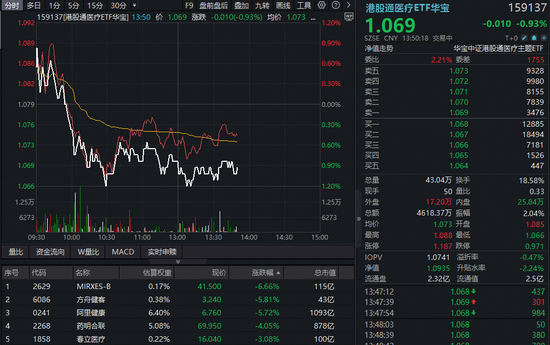
Core Viewpoint - The Hong Kong stock market continues to adjust, with the pharmaceutical sector declining alongside the market, particularly affected by a short-term cooling of AI medical concepts [1][12]. Group 1: Market Performance - The Hong Kong Medical ETF Huabao (159137) fell by 0.93%, marking two consecutive days of decline, while the Hong Kong Innovation Drug ETF (520880) dropped by 1.08% [1][12]. - The medical sector saw 13 stocks rise and 37 fall, with Ark Health, a hot stock in AI medical concepts, leading the decline at 6.98%, and Alibaba Health also falling by 5.16% [2][13]. - The Hong Kong Medical Theme Index achieved a record nine consecutive days of gains before experiencing a pullback, with the Medical ETF Huabao having a cumulative increase of 6.9% in its first week, outperforming the Hang Seng Index [3][14]. Group 2: Sector Analysis - The Hong Kong Medical ETF Huabao covers 50 leading stocks across various medical fields, including CXO, AI medical, medical devices, and innovative drugs, indicating a comprehensive approach to capturing market trends [5][16]. - The medical sector has shown significant recovery since 2026, driven by hot themes like brain-computer interfaces and AI medical, with increasing investment value [6][17]. - The CXO sector is expected to see a "Davis Double Play" with both profit and valuation improvements, as demand gradually recovers and supply has been cleared over the past three years [18]. Group 3: Future Outlook - Analysts predict that by 2026, key areas of growth will include innovative overseas expansion and hard technology sectors such as AI medical and brain-computer interfaces, with a focus on monitoring the expansion of medical insurance and essential drug directories [18]. - The Medical ETF Huabao is positioned as a high-elasticity tool for capturing new opportunities in the medical field, particularly in AI medical, brain-computer interfaces, and innovative drug supply chains [18]. - The total scale of the medical ETF fund reached 27 billion yuan, making it the largest in the market for medical-related ETFs [19].


「AI新世代」百川智能再“问医”,王小川放不下的AI梦
Hua Xia Shi Bao· 2026-01-16 11:15
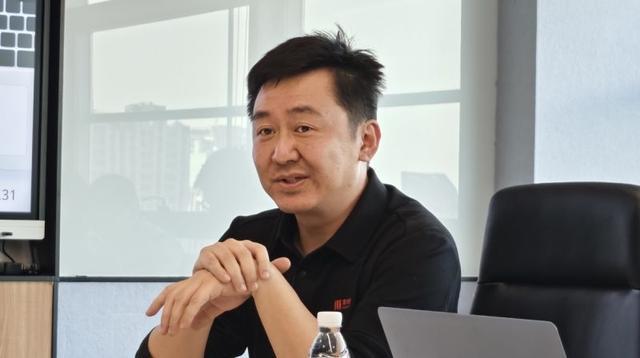
Core Viewpoint - Baichuan Intelligent, led by founder Wang Xiaochuan, is re-entering the spotlight with the launch of its new medical model Baichuan-M3, amidst growing competition in the AI healthcare sector, particularly from Ant Group's AI health assistant, Aifu [2][4]. Company Developments - Baichuan Intelligent has officially open-sourced its new medical model, Baichuan-M3, and Wang Xiaochuan has outlined the company's development roadmap and plans for an IPO, potentially in 2027 [2][3]. - The company claims to have 3 billion yuan in cash reserves, but has not disclosed recent revenue figures since its last funding round in July 2024 [3][6]. Market Context - The AI healthcare market in China is projected to grow from 8.8 billion yuan in 2023 to 315.7 billion yuan by 2033, with a compound annual growth rate (CAGR) of 43.1% [5]. - Globally, the AI healthcare market is expected to increase from approximately 26.65 billion USD in 2024 to about 505.59 billion USD by 2033, with a CAGR of 38.8% [5]. Competitive Landscape - Baichuan Intelligent is facing significant competition from major players like OpenAI and Google, which have launched their own healthcare AI models [4][5]. - Wang Xiaochuan emphasizes that Baichuan Intelligent's focus is on serious medical applications, differentiating it from competitors like Ant Group, which targets a broader health concept [6]. Product Capabilities - Baichuan-M3 has achieved a score of 65.1 in the HealthBench evaluation, ranking it first globally, and surpassing GPT-5.2 in medical decision-making capabilities [6]. - The model is designed to facilitate in-depth medical reasoning and has demonstrated superior questioning abilities compared to average human doctors [6]. Future Plans - Baichuan Intelligent plans to enter the consumer market in the first half of this year with two new products, initially offering them for free before implementing a paid model [7]. - The company aims to bridge the gap between doctors and patients, advocating for patient empowerment in health decisions while adhering to regulatory requirements [7]. Challenges and Considerations - There are concerns regarding the company's ability to generate sufficient revenue to support its IPO ambitions, as it has not provided recent financial updates [3][8]. - The company recognizes the need for significant advertising and physician endorsement to build consumer trust in the C-end market [7][8].
康冠科技:在医疗领域,子公司康冠医疗推出医用一体机
Mei Ri Jing Ji Xin Wen· 2026-01-16 09:49
Group 1 - The company has made advancements in AI healthcare through its subsidiary, Kangguan Medical, which has launched a medical integrated machine [1] - The company is open to strengthening collaborations with Alibaba in the AI healthcare sector, as indicated in responses to investor inquiries [1]
AI医疗:火热表象之下的平衡与隐忧
Zhong Guo Jing Ji Wang· 2026-01-16 09:30
Group 1 - Major tech companies are increasingly active in the AI healthcare sector, with OpenAI launching OpenAI Health and Anthropic introducing Claude for Healthcare [1] - Ant Group's AI health application AQ has been rebranded to "Antifufu" and has seen its monthly active users double to 30 million within a month of its upgrade [1] - The AI+Healthcare market in China is projected to grow from 8.8 billion yuan in 2023 to 315.7 billion yuan by 2033, with a compound annual growth rate of 43.1% over the next decade [1] Group 2 - There is a shift in focus from professional medical services, which are low-frequency, to health management services that meet high-frequency user demands, such as chronic disease management and lifestyle interventions [2] - Concerns have been raised about the reliance on AI in medical settings, particularly regarding the potential loss of independent diagnostic skills among doctors, which could undermine the value of AI healthcare products [2] - The transition from a "disease-centered" to a "health-centered" paradigm reflects a significant change in the healthcare value system, raising questions about balancing high-frequency health management needs with maintaining professional medical service standards [2]
港股收评:市场低迷!恒指跌0.5% 半导体股逆市上涨
Ge Long Hui· 2026-01-16 08:44
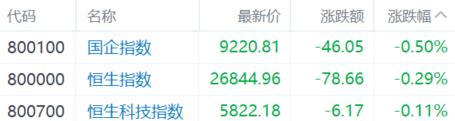
1月16日,港股三大指数呈现高开低走行情,市场情绪表现疲弱,但总体跌幅不大。截止收盘,恒生指 数跌0.29%,国企指数跌0.5%,恒生科技指数跌0.11%。 | 代码 : 名称 | 最新价 涨跌额 涨跌幅 > | | --- | --- | | 800100 国企指数 | 9220.81 -46.05 -0.50% | | 800000 恒生指数 | 26844.96 -78.66 -0.29% | | 800700 恒生科技指数 | 5822.18 -6.17 -0.11% | 盘面上,继续表现相对强势;波罗的海干散货运价指数连跌第9日,港口及海运股走低,昨日尾盘冲高 的内房股再度呈现跌势,影视娱乐股、濠赌股等多数下跌。另一方面,AI应用概念股午后部分回升, 半导体行业逆势上涨,芯片半导体全天活跃且午后涨幅加大,龙头中芯国际涨2.39%;国家电网披露4 万亿计划,电网迎景气周期,电力设备股继续涨势。 大型科技股多数表现低迷,小米跌2%,京东、美团、腾讯、百度均有跌幅,阿里巴巴逆势收涨近1%。 | 代码 | 名称 | 最新价 | 涨跌额 | 涨跌幅 ^ | | --- | --- | --- | --- | ...
2.3 亿人在用 ChatGPT「看病」,张文宏为什么反对年轻医生用AI
3 6 Ke· 2026-01-16 08:39
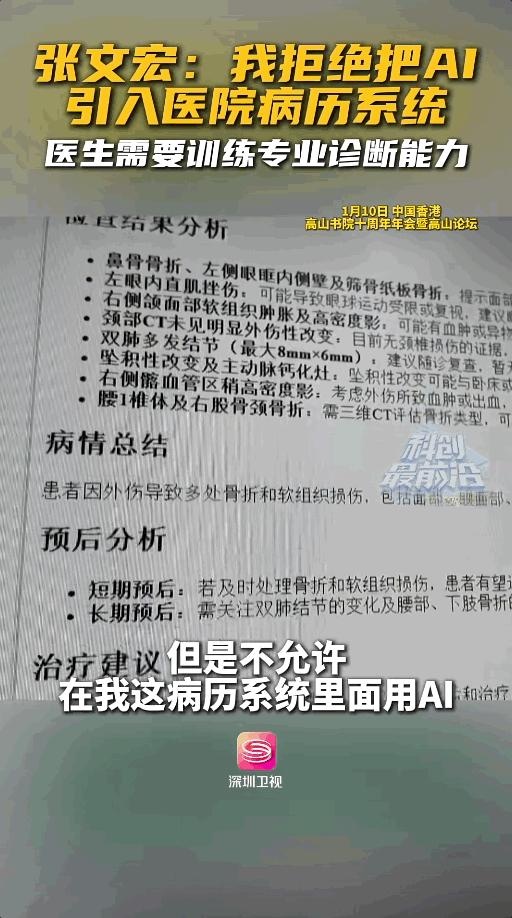
2023 年,当 GPT-4 在美国执业医师资格考试(USMLE)中取得了惊人的高分时,不只是 OpenAI,硅谷都为此喝彩,AI 在医疗上的前景仿佛一片光明。 三年之后的今天,却有顶尖专家明确表示:反对 AI 接入医院病历系统。 有人反对AI,有人反对反对AI 提出反对声音的,是复旦大学附属华山医院感染科主任张文宏。近期在出席论坛中,作为在临床一线摸爬滚打多年的专家,他的担忧直指核心:年轻医生 需要专业的训练,才能判断 AI 的对错。 图片来自:深圳卫视 他并不是反对使用 AI,事实上,他提到自己也用,短期内处理大量病历时他也会让 AI 过一遍。但是他可以做到「一眼看出」哪里有问题。而年轻医生跳 过训练和积累,依靠 AI 就得出和资深专家一致的诊断,并不能真正理解到 AI 结果中的对和错。 这话有人不爱听了。正在医疗赛道上蓄势待发的百川智能,其创始人王小川就「反对张文宏的反对」。 图片来自:凤凰V现场 在他看来,AI 碰到的是医生的「蛋糕」,和医生的利益是相悖的。医生出于升职称的考虑,把教学和研究放在前面。相比之下,AI 才是服务于患者。 话里话外,隐隐约约在暗示:医生都是要赚你的钱,才不考虑病人的死活。但 ...
1亿美元买入“处方权”:OpenAI与阿里的医疗抢滩战
Tai Mei Ti A P P· 2026-01-16 08:14
Core Insights - The narrative of the large model industry has shifted dramatically towards the healthcare sector, with significant developments in AI medical applications [1][6] - OpenAI's launch of ChatGPT Health and its acquisition of Torch for $100 million signifies a strategic move to integrate fragmented healthcare data and enhance AI's decision-making capabilities [1][2] - Anthropic's Claude for Healthcare focuses on streamlining the B2B side of healthcare, aiming to alleviate administrative burdens on doctors by integrating with reimbursement and diagnostic coding systems [2] Group 1: Industry Developments - The healthcare AI sector is evolving from a search engine alternative to a decision-making "personal doctor," with over 230 million users seeking health answers weekly on ChatGPT [1][2] - The integration of fragmented data sources, such as Apple Health and hospital records, is crucial for AI's effectiveness in providing personalized medical advice [2] - Chinese tech giants are adopting a unique approach by prioritizing service delivery and user experience, exemplified by Ant Group's "Afu," which extends services into daily health management [3][4] Group 2: Competitive Landscape - The competition in AI healthcare is marked by a shift from technical prowess to practical applications, with a focus on service delivery and real-world impact [4][6] - The emergence of domestic models like Baichuan-M3 indicates that local players are catching up with global leaders in core capabilities [4] - The healthcare AI landscape is entering a "deep water" phase, characterized by a focus on existing medical payment data and the integration of real doctors into AI systems for decision-making [5][6] Group 3: Challenges and Future Outlook - Concerns remain regarding the integration of AI in clinical settings, with some experts warning against the potential loss of critical diagnostic skills among young doctors [5] - The future of AI in healthcare is seen as a catalyst for the intelligent transformation of the entire medical system, emphasizing the importance of high-quality clinical data [6][7] - The shift towards AI in healthcare is not just a commercial competition but also a societal effort to address resource allocation challenges through technological leverage [6][7]
ETF盘中资讯 AI医疗继续降温,阿里健康再挫5%,港股通医疗ETF(159137)续跌1%!A股最大医疗ETF下探2%,美年健康跌停
Jin Rong Jie· 2026-01-16 06:23
Group 1 - Alibaba Health experienced a decline of over 5% following a nearly 8% drop the previous day, with other AI healthcare stocks like Ark Health and Yimaitong also facing losses [1] - In the A-share market, Weining Health fell more than 12%, while Meinian Health hit a three-year high before facing a trading halt [3] - Market analysts suggest that the AI healthcare sector has seen significant short-term gains, leading to profit-taking behavior, and the overall performance of the AH market has weakened recently [5] Group 2 - The global AI healthcare market is projected to reach approximately $26.65 billion in 2024 and grow to about $505.59 billion by 2033, with a compound annual growth rate of 38.8% [6] - The Chinese AI healthcare industry was valued at 97.3 billion yuan in 2023, with expectations to increase to 159.8 billion yuan by 2028 [6] - The largest healthcare ETF in the market, with a scale of 27 billion yuan, covers 12 AI healthcare and brain-computer interface concept stocks, accounting for over 36% of its total weight [8]

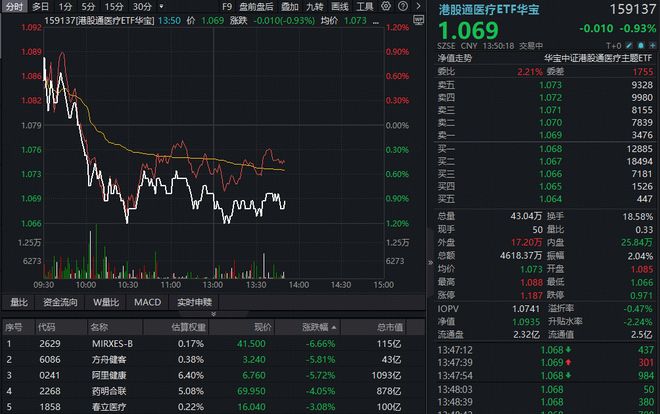
ETF盘中资讯|AI医疗继续降温,阿里健康再挫5%,港股通医疗ETF(159137)续跌1%!A股最大医疗ETF下探2%,美年健康跌停
Sou Hu Cai Jing· 2026-01-16 06:14
Group 1 - The AI healthcare concept in the A-share and Hong Kong markets is experiencing a "cooling" phase, with significant declines in stocks such as Alibaba Health and Weining Health [1][3] - The overall performance of the AH market has weakened, leading to a decrease in short-term sentiment and risk appetite among investors [3] - Despite short-term volatility, the long-term investment logic for AI healthcare remains intact, with the industry entering a critical phase of commercialization driven by national strategy and market demand [3] Group 2 - The global AI healthcare market is projected to grow from approximately $26.65 billion in 2024 to about $505.59 billion by 2033, with a compound annual growth rate (CAGR) of 38.8% [4] - In China, the AI healthcare industry is expected to increase from 97.3 billion yuan in 2023 to 159.8 billion yuan by 2028 [4] - The largest medical ETF in the market, with a scale of 27 billion yuan, covers 12 AI healthcare and brain-computer interface concept stocks, accounting for over 36% of its total weight [4]
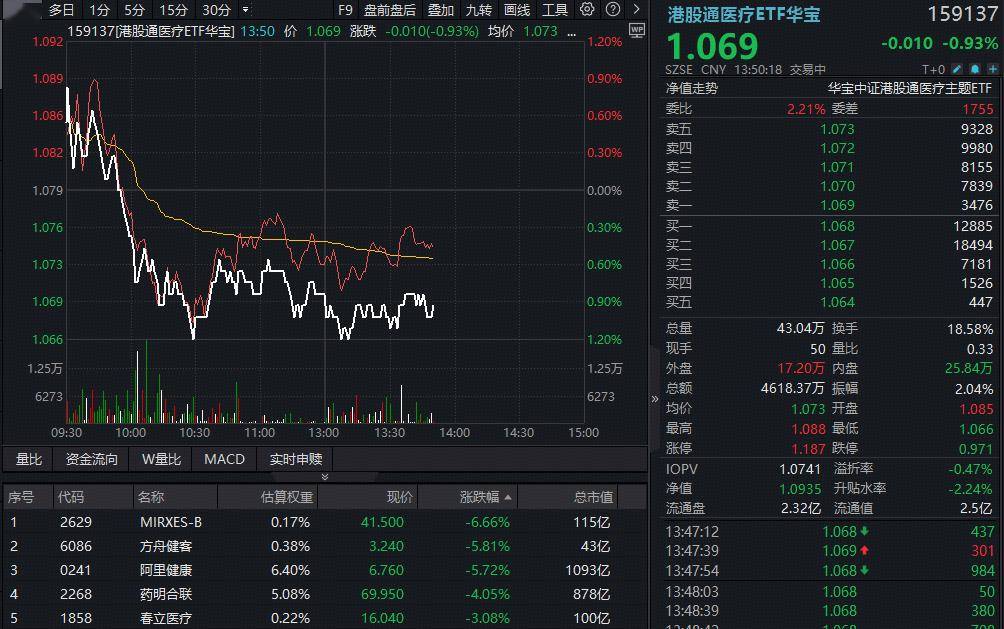
AI医疗继续降温,阿里健康再挫5%,港股通医疗ETF(159137)续跌1%!A股最大医疗ETF下探2%,美年健康跌停
Xin Lang Cai Jing· 2026-01-16 06:11
Market Performance - Alibaba Health experienced a decline of over 5% following a nearly 8% drop the previous day, with other AI healthcare stocks like Ark Health and Yidu Tech also falling [1][8] - In the A-share market, Weining Health dropped over 12%, while Meinian Health hit a three-year high before facing a trading halt [3][11] - The largest healthcare ETF in the market (512170) saw a decline of 2%, with real-time transactions exceeding 700 million yuan [3][11] Market Sentiment - Analysts noted that the AI healthcare sector had seen significant gains at the beginning of the year, leading to profit-taking behavior in the market [10] - The overall performance of the AH market has been weak in recent days, indicating a cooling of short-term sentiment and risk appetite [10] Long-term Outlook - Despite short-term volatility, the long-term investment logic for AI healthcare remains intact, with the industry entering a critical phase of commercialization driven by policy, hospital engagement, and product development [5][10] - The global AI healthcare market is projected to grow from approximately $26.65 billion in 2024 to about $505.59 billion by 2033, with a compound annual growth rate (CAGR) of 38.8% [5][10] - In China, the AI healthcare industry is expected to grow from 97.3 billion yuan in 2023 to 159.8 billion yuan by 2028 [6][10] Investment Tools - The Hong Kong Stock Connect Medical ETF (159137) is highlighted as a high-elasticity investment tool, focusing on core leaders in the healthcare sector, including AI healthcare and brain-computer interface innovations [12] - The A-share market's largest healthcare ETF (512170) and its associated funds cover 12 AI healthcare and brain-computer interface concept stocks, with a combined weight exceeding 36% [12]