
制度创新

Search documents
为国家“试制度、探新路、测压力”,临港打造上海国际金融中心“第三极”
证券时报· 2025-08-20 00:33
Core Viewpoint - The China (Shanghai) Pilot Free Trade Zone Lingang New Area has achieved significant progress in institutional innovation and industrial development over the past six years, aiming to enhance China's integration into the global economy through unique economic functions and open innovation [1][3]. Institutional Innovation - The Lingang New Area has established a "five freedoms and one convenience" institutional open system, with 166 institutional innovation cases formed, including 79 national firsts, covering investment, trade, finance, transportation, and personnel [3][4]. - The Yangshan Special Comprehensive Bonded Zone has restructured customs supervision processes, significantly improving customs clearance efficiency, with a 50% increase in vehicle import and export efficiency [4][3]. Industrial Development - The Lingang New Area focuses on building a competitive open industrial system, attracting world-class enterprises and enhancing industrial capabilities, particularly in key sectors like semiconductors and advanced manufacturing [6][8]. - Companies like Lenz Group and Panshi Group have established significant operations in Lingang, contributing to local industrial upgrades and innovation in high-performance materials and automation solutions [6][8][7]. Financial Innovation - The Lingang New Area aims to become the "third pole" of Shanghai's international financial center, focusing on cross-border finance, fintech, and offshore trade [9][10]. - A pilot program for offshore trade financial services has been launched, allowing for rapid fund transfers and significantly reducing settlement times from days to seconds, aligning with international standards [10][11].


为国家“试制度、探新路、测压力” 临港打造上海国际金融中心“第三极”
Zheng Quan Shi Bao· 2025-08-19 22:20
Core Insights - The China (Shanghai) Pilot Free Trade Zone Lingang New Area has been established for six years, focusing on open innovation and accelerating the formation of special economic functions [1] - The area has implemented a series of innovative institutional reforms and has developed a competitive open industrial system, attracting key projects and leading enterprises [1][4] - Lingang aims to become a "third pole" in Shanghai's international financial center, emphasizing offshore finance, international reinsurance, and cross-border financing leasing [1][7] Institutional Innovation - The Yangshan Special Comprehensive Bonded Zone in Lingang is the only one of its kind in China, where customs have restructured regulatory processes to enhance trade facilitation [2] - A new regulatory system has been established, significantly reducing the customs clearance time for vehicles, leading to a 50% increase in import and export efficiency [2] - The "Five Freedoms and One Convenience" system has been developed to align with high-standard international trade agreements, allowing for effective risk pressure testing [2][3] Industry Development - Lingang is focused on building a competitive open industrial system, supporting multinational companies in establishing offshore R&D and manufacturing centers [4] - The area has attracted world-class enterprises, enhancing its industrial capabilities, with companies like Lenz Group and Panshi Group establishing significant operations [5][6] - Lenz Group has localized its supply chain, achieving over 80% localization in key components, while Panshi Group is investing in semiconductor-related projects to strengthen the local industry [6] Financial Center Development - The Dwater Lake Financial Bay is a key landmark in Lingang, aiming to develop into a "third pole" of Shanghai's international financial center, focusing on cross-border finance and fintech [7] - The area has attracted over 600 enterprises and is testing innovative financial reforms, such as rapid settlement processes for offshore trade [7][8] - Recommendations for further enhancing the financial environment include expanding the enterprise whitelist and optimizing tax policies to improve competitiveness [8]

大城善治重在“绣花功夫”
Jing Ji Ri Bao· 2025-08-19 22:04
Core Viewpoint - China's urbanization is transitioning from rapid growth to stable development, focusing on improving existing urban quality rather than expanding new areas [1] Group 1: Urbanization and Governance - The urbanization rate in China is projected to reach 67% by the end of 2024, reflecting significant achievements in urban development [1] - Challenges such as traffic congestion, housing imbalance, and urban flooding have emerged due to rapid urban growth, alongside issues like aging population and diverse public demands [1] Group 2: Technological Integration in Urban Governance - The digital era requires robust technological support for smart city construction, enhancing digital governance applications and establishing intelligent urban management systems [2] - Utilizing big data and cloud computing can improve governance efficiency by enabling data sharing and early detection of urban risks [2] Group 3: Community-Centric Governance - Modernizing urban governance should prioritize the concerns of the public, focusing on enhancing their sense of gain, happiness, and security [3] - Innovative local measures have been implemented to improve urban living conditions, such as renovating old neighborhoods and optimizing public transport [3] Group 4: Collaborative Governance - Effective urban management cannot rely solely on government efforts; it requires collaboration among government, market, society, and citizens to address complex urban challenges [3]
六载临港:开放之门,世界之港
Shang Hai Zheng Quan Bao· 2025-08-19 19:25
Core Insights - The Lingang New Area in Shanghai has transformed from a blueprint into a hub of institutional innovation and industrial aggregation over the past six years [2] - The region has achieved an average annual GDP growth of 17.6%, with nearly 100,000 new market entities established, totaling 156,000 [2] - A total of 166 innovative cases have emerged, including 79 nationally pioneering cases [2] - The number of listed companies in the area increased from 9 in 2020 to 17 in 2024 [2] Financial and Industrial Development - Over 700 financial institutions and investment firms have established operations in the Lingang New Area [2] - The average annual growth rate of both foreign and domestic currency deposits and loans is 20% [2] - Cross-border finance, technology finance, and offshore finance are rapidly developing, with national-level financial infrastructures such as the Shanghai International Reinsurance Center and International Asset Trading Platform being established [2]
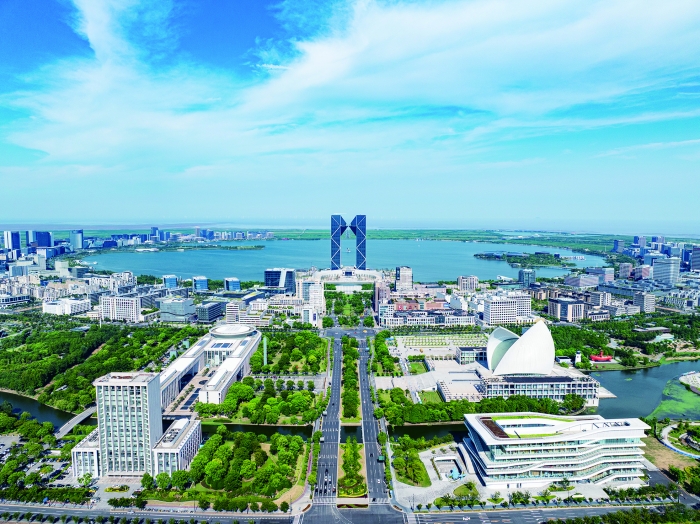
为国家“试制度、探新路、测压力”临港打造上海国际金融中心“第三极”
Zheng Quan Shi Bao· 2025-08-19 18:57
Core Insights - The China (Shanghai) Pilot Free Trade Zone Lingang New Area has achieved significant milestones in its six years of operation, focusing on open innovation and establishing a competitive open industry system [1][2] - The area aims to become a "third pole" in Shanghai's international financial center, emphasizing offshore finance, international reinsurance, and cross-border financing leasing [1][7] Institutional Innovation - The Yangshan Special Comprehensive Bonded Zone has introduced a new customs supervision system, significantly improving the efficiency of vehicle import and export processes, with a 50% increase in efficiency [2] - The establishment of a "five freedoms and one convenience" open system has allowed for innovative customs practices, facilitating high-standard international trade agreements [2][3] Industry Development - The Lingang New Area is focused on building a competitive open industry system, attracting multinational companies to establish offshore R&D and manufacturing centers, particularly in key sectors like semiconductors and advanced materials [4][6] - Companies like Lenz Group and Panshi Group have established significant operations in the area, contributing to the local economy and enhancing the competitiveness of the semiconductor industry [5][6] Financial Center Development - The Dwater Lake Financial Bay is being developed as a new financial hub, attracting over 600 companies and focusing on cross-border finance and financial technology [7][8] - Recent initiatives in offshore trade finance have streamlined processes, reducing transaction times from days to seconds, aligning with international standards [7][8]
专家:激活社区内生动力 多元协同破题“中国式养老”
Zheng Quan Shi Bao Wang· 2025-08-18 14:41
Core Viewpoint - The high-quality development of elderly care services is crucial for advancing Chinese-style modernization, with a significant transformation in the elderly care model occurring in China, driven by the unique challenges faced by the "70s," "80s," and "90s" generations [1][2] Group 1: Current State of Elderly Care - China is experiencing the largest and fastest transformation in elderly care in human history, with a shift from family-based care to socialized care since the reform and opening up [1] - The proportion of the population aged 60 and above has reached 18.7% according to the seventh national census, with expectations of entering a phase of severe aging by 2035 [1] Group 2: Proposed Solutions - To enhance the sense of security for the "70s," "80s," and "90s" generations, a stable pension expectation and a multi-layered policy system from central to local levels are recommended [2] - A community-based service model is suggested, integrating elderly dining facilities and day care into a one-stop complex, creating a "service circle" within a 15-minute walking distance [2] - The use of IoT and big data to establish health monitoring platforms for the elderly is proposed, enabling real-time tracking of chronic disease indicators and AI risk warnings [2] Group 3: Role of Insurance Industry - The insurance industry is seen as having the potential to alleviate consumer anxiety by providing traditional financial services alongside related services, contributing to the "security code" for a longevity society [3] - The silver economy in China is rapidly developing, characterized by accelerated integration with related industries and the emergence of new industries [3] - The insurance sector is encouraged to offer diversified, personalized products and services that cover the entire life cycle, promoting innovative models [3]
“头雁”临港新片区以制度创新答题
Sou Hu Cai Jing· 2025-08-18 00:54
Core Insights - The establishment of the Lingang New Area in Shanghai Free Trade Zone marks six years of significant institutional innovation, with 166 breakthrough cases, including 79 national firsts, aimed at enhancing China's reform and opening-up efforts [2][3] Group 1: Data Cross-Border Flow - The Lingang New Area has successfully implemented a data cross-border flow mechanism, allowing companies to legally and efficiently process data across countries, thus overcoming previous regulatory barriers [1][5] - Over 20 companies are now engaged in similar data processing businesses, supported by the establishment of an international data processing hub [1][5] Group 2: Foreign Investment and Telecommunications - The approval of foreign companies to engage in value-added telecommunications services in Lingang represents a significant step in aligning with international standards and enhancing digital solutions for global trade [3][6] - The establishment of a service platform for foreign telecommunications enterprises has facilitated the entry of three foreign companies into the pilot program, enhancing their market access [3] Group 3: Trade Facilitation - The "direct release" policy in the Yangshan Special Comprehensive Bonded Zone has significantly reduced customs clearance time from 2 days to 2 hours, cutting costs by 50% for enterprises [4] - The total import and export volume in the Yangshan Special Comprehensive Bonded Zone has grown at an annual rate of 26.9% since the start of the 14th Five-Year Plan [4] Group 4: Offshore Trade Growth - The offshore trade scale in Lingang has surpassed $15.04 billion in the first half of the year, marking a 23.6% increase and accounting for 48.2% of the city's total [7] - The introduction of tax exemptions for offshore trade until 2027 is expected to further stimulate growth in this sector [6] Group 5: Innovation and Entrepreneurship - The Lingang New Area emphasizes the importance of nurturing innovation and entrepreneurship, launching initiatives to support tech startups and attract talent [8][9] - The establishment of the "Maker Home" and funding programs aims to alleviate financial pressures on early-stage teams, fostering a conducive environment for innovation [9][10] Group 6: Long-term Vision - Lingang aims to create a high-quality institutional environment that attracts talent and enterprises, positioning itself as a key area for technology transfer and youth entrepreneurship [10]
集聚多个世界500强企业研发中心!国家战略落子,深圳这区域有新变化
Nan Fang Du Shi Bao· 2025-08-15 03:52
Core Viewpoint - The He Tao Shenzhen-Hong Kong Science and Technology Innovation Cooperation Zone, covering an area of 3.89 square kilometers, is a key national strategic area aimed at fostering technological innovation and collaboration between Shenzhen and Hong Kong, showcasing significant development and vitality in just two years [1][2][3]. Group 1: Strategic Importance - The He Tao Cooperation Zone is designated as a pilot area for open cooperation in technological innovation, an experimental zone for international advanced technology innovation rules, and a hub for technology transformation in the Guangdong-Hong Kong-Macao Greater Bay Area [3]. - The development plan for the Shenzhen Park was issued by the State Council, highlighting the strategic value of the He Tao Cooperation Zone [2]. Group 2: Technological Innovation - The Shenzhen Park has attracted over 200 high-end research projects, 447 technology companies, and more than 15,000 research talents, indicating a strong accumulation of technological innovation resources [4]. - Significant research achievements include the "Boson Coding Error Correction to Extend Quantum Bit Lifetime," a desktop electron microscope with complete independent intellectual property rights, and the first hardware encryption product SPU [5]. Group 3: Infrastructure and Development - The construction of the new Huanggang Port is underway, which will enhance cross-border access for researchers and facilitate international technology services [20]. - The park has established 13 specialized parks and is optimizing industrial space layout to support technological innovation and industrial development [21]. Group 4: Cross-Border Collaboration - The cooperation between Shenzhen and Hong Kong is deepening, with a joint policy package released to support collaboration in human resources, finance, and material aspects [15]. - The establishment of the Guangdong-Hong Kong-Macao Greater Bay Area International Clinical Trial Collaboration Platform is a key initiative to enhance cooperation in the life sciences sector [17]. Group 5: Policy Innovation - The "Kehui Tong" pilot program has been launched to facilitate cross-border funding flows for scientific research, addressing challenges faced by foreign-funded research institutions [11]. - New policies are being implemented to streamline the entry of research personnel and enhance the flow of innovative elements across borders [10].
【发展之道】 新质引擎驱动经济稳航
Zheng Quan Shi Bao· 2025-08-14 18:39
Group 1 - China's economy demonstrated resilience with a GDP growth rate of 5.3% in the first half of 2025, providing a boost to the global economy [1] - The transition from traditional growth drivers to new productive forces is highlighted by the significant increase in production efficiency through technological advancements, such as the use of intelligent furnaces and industrial internet platforms [1] - The production of new energy vehicles and industrial robots surged by over 35%, reflecting the dedication of researchers and the impact of institutional innovation [1] Group 2 - The consumer market in China is thriving, with 400 million people benefiting from trade-in subsidies and a sales volume of 2.9 trillion yuan, indicating a strong internal demand despite external fluctuations [2] - Policy reforms are effectively addressing developmental challenges, with initiatives like the Hangzhou-Taipei high-speed rail and low-altitude economy regulations facilitating innovation [2] - The transformation of production relations through reforms is enabling the free flow of production factors, akin to the revitalization of an oasis along the ancient Silk Road [2] Group 3 - The continuous release of policy effectiveness is likened to nurturing rain, with long-term special government bonds and technological innovation loans supporting the real economy [3] - The collaboration of fiscal, monetary, and industrial policies is crucial for both immediate relief for enterprises and long-term strategic development [3] - China's economy is evolving from a follower to a leader in the global landscape, driven by new productive forces, ongoing reforms, and supportive policies [3]
擦亮商圈小店“门面” 黄浦通过制度创新与精准服务 让户外招牌更亮丽
Jie Fang Ri Bao· 2025-08-13 01:35
Core Viewpoint - The article highlights the efforts of Huangpu District in Shanghai to enhance the urban commercial atmosphere through innovative outdoor advertising and signage, exemplified by the installation of the "Haggis New World Ferris Wheel Light and Shadow Installation" and the promotion of projection-based outdoor advertisements on historical buildings [1] Group 1: Urban Development Initiatives - The Huangpu District has implemented institutional innovations and precise services to create safe, standardized, and aesthetically pleasing outdoor advertising and signage [1] - The "Haggis New World Ferris Wheel" serves as a key attraction for the "Shanghai Light and Shadow Festival," contributing to the vibrancy of the commercial area [1] Group 2: Outdoor Advertising Management - The district's lighting landscape management office provides standardized approval processes and custom service plans based on the specific needs of applicants [1] - Professional guidance has led to the successful implementation of projection-based outdoor advertisements on many historical buildings without damaging their exterior [1] Group 3: Support for Merchants - Huangpu District offers various assistance channels for merchants unfamiliar with the application process, including in-person, remote, and on-site support [1] - This year, the district has assisted 221 business owners in completing the standardized setup and optimization of outdoor advertising and signage through professional guidance and refined services [1]