
未来产业

Search documents
深圳国资基金矩阵三年行动计划发布
Zhong Zheng Wang· 2026-01-23 11:47
深圳市国资委党委书记、主任杨军在致辞中表示,深圳国资国企主动从"资源持有者"向"生态共建者"转 型,与民营企业共同构建良性循环的创新生态。此次发布的国资基金矩阵,以近期印发的《深圳市属国 有企业基金业务管理办法(试行)》为基础,聚焦深圳"20+8"战略性新兴产业和未来产业,构建覆盖种子 期、初创期、成长期到成熟期的国资基金矩阵,形成层次清晰、功能互补、协同联动的全链条基金体 系,在现有基础上持续扩大对科技创新的资本供给能力,更好发挥国有资本的长期引导和放大效应。 中证报中证网讯(记者张兴旺)1月22日,深圳国资基金矩阵三年行动计划发布仪式暨粤港澳大湾区创业 投资引导基金入驻仪式举行。 在启动仪式后,深圳市国资委详细解读了深圳国资基金矩阵三年行动计划重要内容,明确重点支持半导 体和集成电路、人工智能、生物医药等硬科技领域。 ...
民间投资何以重要
Xin Lang Cai Jing· 2026-01-23 06:32
Group 1 - The central government emphasizes the importance of stimulating private investment and increasing its proportion in the economy, as highlighted in the 20th Central Committee's Fourth Plenary Session and subsequent policy measures [1][3] - Private investment serves as a crucial indicator of economic activity, playing a significant role in stabilizing growth, employment, and expectations [3][4] - Since the reform and opening-up, private investment in China has grown from less than 15% of total investment in 1980 to over 50% in recent years, becoming a vital force in driving economic development [3][4] Group 2 - Private investment is characterized by flexibility, high risk tolerance, and strong innovation awareness, making it a key support for building a modern industrial system [4] - In 2025, private investment in high-tech industries, such as information services and professional technical services, saw year-on-year growth of 26.7% and 17.6% respectively, indicating a shift towards strategic emerging industries [4] - The manufacturing sector accounts for about 40% of total private investment, with significant growth in traditional industries driven by policies promoting intelligent, green, and integrated development [4] Group 3 - Private investment plays a crucial role in job creation, contributing to over 80% of urban employment in China, thus becoming a primary channel for employment [5] - The rise of new economic formats, such as online sales and logistics, has further amplified the employment effects of private investment [5] - In the public management and social security sectors, private investment grew by 31.9% year-on-year in 2025, highlighting its increasing role in meeting the growing needs of the population [5]

中国第二个5万亿城市来了,北京多项部署
2 1 Shi Ji Jing Ji Bao Dao· 2026-01-23 06:06
Core Insights - Beijing is projected to achieve a regional GDP of 52,073.4 billion yuan by 2025, marking it as the second "5 trillion city" after Shanghai, indicating a significant shift towards quality growth under strict constraints of "reduction development" [1][3] - The city plans to invest over 1.5 billion yuan in 2026 to support high-precision industries and small and medium-sized enterprises, focusing on over 25 policy support directions across key sectors such as integrated circuits, biomedicine, and digital economy [3][4] Economic Growth and Sector Contributions - In 2025, the information transmission, software, and IT services sectors, along with the financial industry, contributed over 70% to Beijing's economic growth, with the software industry alone achieving a value-added of 12,192.4 billion yuan, growing by 11.0% [2][9] - The manufacturing sector, particularly in computer and electronic equipment, saw a significant increase, with a 20.2% growth in value-added for the computer and communication equipment manufacturing industry [3] Policy Initiatives and Support Measures - The Beijing Municipal Economic and Information Bureau announced a "Create the Future" growth plan for 2026, focusing on six future industries: future information, health, manufacturing, energy, materials, and space [5][6] - The plan includes measures to support innovation in robotics, integrated circuits, and new materials, with specific funding support of up to 50% of project costs for qualifying initiatives [4] Digital Economy and Consumption Trends - The city aims to stimulate digital consumption and support the development of 2-3 leading AIGC digital content companies with revenues exceeding 10 billion yuan [2][10] - There is a strategic focus on integrating ultra-high-definition audio-visual technology with cultural tourism, promoting smart retail, and replicating metaverse business models to enhance service consumption [10][11] Infrastructure and Resource Development - Beijing plans to enhance its computing power resources, targeting a cumulative capacity of approximately 200,000 P by 2027, with initiatives to build super nodes and industry nodes in strategic locations [7][8] - The city has already allocated over 700 million yuan in computing power subsidies in 2023, supporting nearly 100 enterprises to reduce computing costs by over 15% [8]
中国第二个5万亿城市来了,北京多项部署
21世纪经济报道· 2026-01-23 06:04
Core Viewpoint - Beijing is set to achieve a regional GDP of 52,073.4 billion yuan by 2025, marking its transition to a "5 trillion city" alongside Shanghai, under strict constraints of "reduction development" and focusing on innovation-driven growth [1][4]. Group 1: Economic Growth and Industry Contribution - In 2025, the information transmission, software, and IT services industry, along with the financial sector, contributed over 70% to Beijing's economic growth [2][11]. - The GDP growth rate for Beijing in 2025 is projected at 5.4% year-on-year, with the industrial added value for large-scale industries increasing by 6.5% [4]. Group 2: Policy Support and Investment - Beijing plans to invest over 1.5 billion yuan in the first batch of high-precision industry development projects and support for small and medium-sized enterprises, covering over 25 policy support directions [3][4]. - The focus areas for investment include integrated circuits, biomedicine, material energy, information software, and the digital economy [4][5]. Group 3: Future Industry Development - The "Create Winning Future" growth plan will focus on six future industries: future information, future health, future manufacturing, future energy, future materials, and future space [7]. - The plan aims to support innovative products in robotics, integrated circuits, and new materials, addressing challenges in R&D and market validation [5][7]. Group 4: Digital Economy and Consumption - Beijing aims to stimulate digital consumption and cultivate 2-3 leading AIGC digital content companies with revenues exceeding 10 billion yuan [2][12]. - The city will promote the integration of ultra-high-definition audio-visual technology with cultural tourism, expanding smart retail and reverse customization applications [12][13]. Group 5: Computing Power and Infrastructure - By 2027, Beijing plans to build a computing power scale of approximately 200,000 P, enhancing its computing resource supply [8][9]. - The city will optimize the "Galaxy Computing Corridor" project to establish a collaborative computing power supply system, supporting the development of the AI industry [9].

事关6G、人工智能等, “十五五”开局这么干
Yang Guang Wang· 2026-01-23 05:49
Group 1 - The core achievements in communication technology include a 42% global share of standard essential patent declarations in 5G, showcasing China's leadership in 5G technology development and standard-setting [1] - In the 6G domain, China has completed the first phase of technical testing, accumulating over 300 key technology reserves, and has officially launched the second phase of 6G technical testing [1] - The Ministry of Industry and Information Technology (MIIT) aims to convert technological advantages into practical services, focusing on enhancing the quality of life for citizens through technology [1] Group 2 - The MIIT plans to deepen the upgrade of digital services for the elderly and disabled, promoting better digital products and services to enhance their experience with smart technology [2] - The initiative to expand the coverage of "second number renewal" aims to simplify the process for users when changing phone numbers, ensuring personal information security while improving service convenience [2] - The MIIT acknowledges concerns about AI and robotics potentially displacing jobs, emphasizing the need to enhance workers' AI literacy and cultivate talent that understands both AI and manufacturing [2][3] Group 3 - Historical patterns indicate that major technological revolutions, such as the Industrial Revolution and the Information Technology Revolution, have ultimately led to productivity improvements and job creation despite initial employment concerns [3] - The MIIT will focus on emerging and future industries during the 14th Five-Year Plan, implementing strategic technology projects and supporting the establishment of future industry pilot zones [3]
多地布局新一轮未来产业发展 加大金融支持成重要抓手
Zheng Quan Ri Bao· 2026-01-22 16:13
Group 1 - The core viewpoint emphasizes the importance of future industries in driving high-quality economic development and optimizing industrial structure, with various regions actively promoting innovation and application of future industries [1][4] - Multiple local governments are focusing on supporting enterprise growth and increasing financial support as key measures to foster innovation in future industries, recognizing that enterprises are the core carriers for technology exploration and commercialization [2][3] - The future industries are characterized by high investment, high risk, long cycles, and multiple technology iterations, necessitating a balanced mechanism between encouraging bold investments and ensuring accurate investments to avoid resource misallocation [3] Group 2 - The Ministry of Industry and Information Technology has outlined nine key future industries, including metaverse, brain-computer interfaces, quantum information, humanoid robots, generative artificial intelligence, biomanufacturing, future displays, future networks, and new energy storage, indicating a structured approach to future industry development [4] - Significant progress has been made in future industries, such as continuous upgrades in brain-computer interface technology and the expansion of humanoid robot industry scale, while challenges remain in the collaborative development of innovation chains, industrial chains, and ecological chains [4][5] - The government is committed to implementing strategic technology projects and establishing future industry pilot zones, aiming to create a competitive environment for future industries across the country [5][6]
投资超15亿元 北京多维扶持高精尖产业
Bei Jing Shang Bao· 2026-01-22 15:48
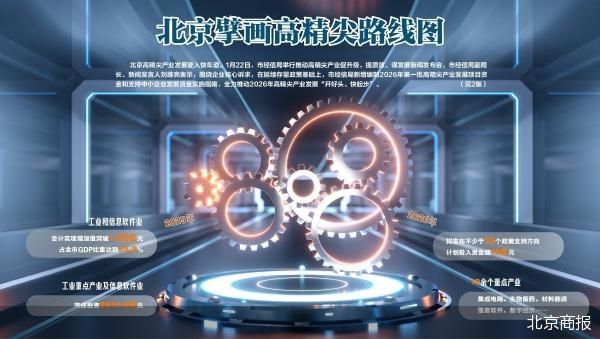
Core Viewpoint - The Beijing Municipal Economic and Information Technology Bureau is set to launch a funding implementation guide aimed at supporting high-precision and cutting-edge industries, with a planned investment of over 1.5 billion yuan to cover more than 25 policy support directions by 2026 [1][3]. Group 1: Funding and Support Directions - The implementation guide focuses on addressing challenges in enterprise innovation and research and development, with nine key support areas designed to facilitate market validation for innovative products in fields such as robotics and integrated circuits [3]. - The guide includes support for the first demonstration applications of advanced materials and encourages commercial space enterprises to purchase insurance to mitigate innovation risks, providing up to 50% support of the enterprise's investment costs for qualifying projects [3][4]. Group 2: Growth and Development Initiatives - A "Win the Future" growth plan is introduced to support promising future industry projects with up to 10 million yuan in initial funding, alongside market institution co-investment and entrepreneurial guidance [4]. - The guide aims to enhance the growth of small and medium-sized enterprises (SMEs) by issuing service vouchers to reduce procurement costs for professional services and providing rewards for equity financing through the Beijing "Specialized, Refined, Characteristic, and Innovative" board [4]. Group 3: Strategic Implications - The implementation guide is designed to create a comprehensive policy framework that addresses core contradictions in industrial upgrading, thereby strengthening the ecosystem and sustainable development mechanisms for high-precision industries [5]. - The dual approach of policy content upgrading and efficiency enhancement is expected to solidify the technological foundation and ecological advantages of high-precision industries, supporting Beijing's goal of becoming a global benchmark city for the digital economy during the 14th Five-Year Plan period [5].
广州白云区筹备一季度开工产业项目总投资达214亿元
Zhong Guo Xin Wen Wang· 2026-01-22 15:47
Core Insights - The Baiyun District government announced the preparation of 19 industrial projects for the first quarter of the year, with a total investment of 21.4 billion yuan and a land area of nearly 730 acres, expected to generate an annual output value of 20.3 billion yuan upon completion [1][2] Group 1: Project Details - The Guangsheng Automotive Industry Base project, which is the first of the 19 projects, has commenced with a total investment of 1.2 billion yuan and covers an area of approximately 93.5 acres, focusing on high-end automotive modification, core component manufacturing, and intelligent production equipment research and development [1] - Once fully operational, the Guangsheng project is projected to achieve an annual output value of about 2 billion yuan and create over 1,000 jobs, serving as a core engine for industrial upgrading in Taihe Town [1] Group 2: Strategic Focus - The projects reflect Baiyun District's commitment to "entity economy as the foundation and manufacturing industry as the core," with a diverse range of sectors including advanced manufacturing, biomanufacturing, new generation information technology, high-end equipment, modern cultural tourism, and new energy materials [2] - The remaining 18 key projects are set to commence in succession within the first quarter, aiming to create a continuous wave of industrial activity characterized by "starting a batch, constructing a batch, and putting into production a batch" [2]
成为第二个“5万亿之城”后,北京2026年将有这些新动作
2 1 Shi Ji Jing Ji Bao Dao· 2026-01-22 13:37
Core Insights - Beijing is projected to achieve a GDP of 52,073.4 billion yuan by 2025, becoming the second "5 trillion yuan city" after Shanghai, marking a significant transition towards innovation-driven growth and regional collaboration [1][3] Economic Growth and Industry Contribution - In 2025, the information transmission, software, and IT services sector, along with the financial industry, will contribute over 70% to Beijing's economic growth [2][10] - The GDP growth rate for 2025 is estimated at 5.4% year-on-year, with the industrial output value increasing by 6.5% [3] Policy Initiatives and Funding - Beijing plans to invest over 1.5 billion yuan in the first batch of high-precision industry development projects and support for small and medium enterprises in 2026, focusing on over 25 policy support directions [3][6] - The initiatives will target key industries such as integrated circuits, biomedicine, materials energy, information software, and the digital economy [3][6] Future Industry Development - The "Create the Future" growth plan will focus on six future industries: future information, future health, future manufacturing, future energy, future materials, and future space [7] - The plan aims to cultivate high-risk, long-cycle industries, with government support to mitigate early-stage risks and attract private investment [8] Digital Economy and Consumption - The digital consumption potential will be stimulated, with plans to nurture 2-3 leading AIGC digital content companies with revenues exceeding 10 billion yuan [10][11] - The strategy emphasizes the integration of technology breakthroughs with industry foundations to enhance consumption potential and establish Beijing as a global digital economy benchmark [11] Computing Power Infrastructure - Beijing aims to build a computing power scale of approximately 200,000 P by 2027, enhancing the supply of computing resources [8][9] - The "Galaxy Computing Corridor" project will create a collaborative computing power supply system, with significant investments in infrastructure across various regions [9]
北京助力中小企业部署应用大模型,单个企业最高补贴20万元
Xin Lang Cai Jing· 2026-01-22 13:00
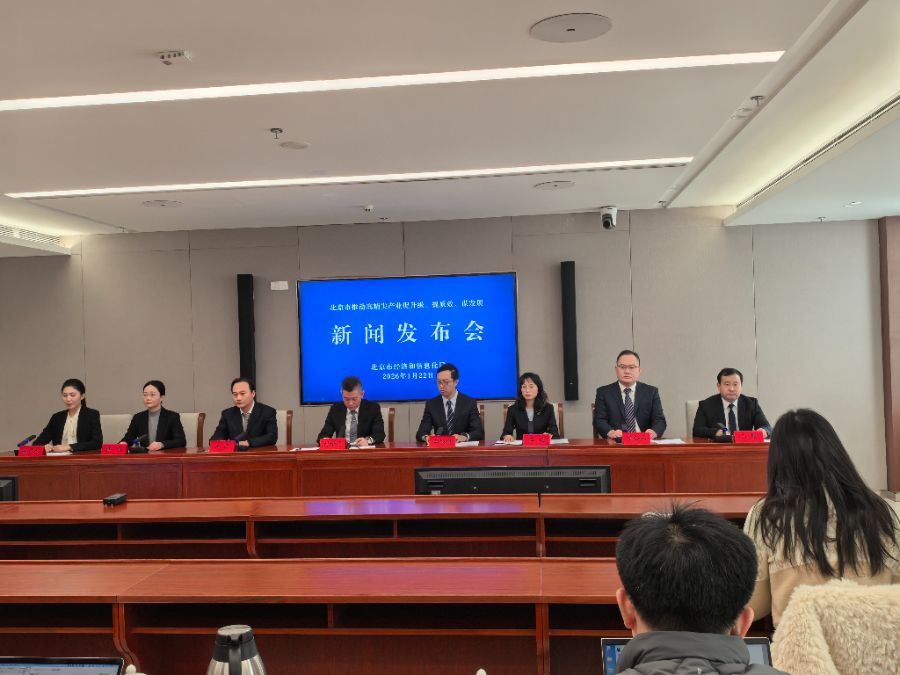
依托人工智能伙伴计划,2026年还将征集一批"干得好、用得上"的人工智能赋能中小企业创新发展的典 型案例,让中小企业"看样学样"。为帮助中小企业以较低成本引入AI技术,市经信局还将遴选一批人工 智能领域优质服务商和服务产品,对中小企业部署、调用、精调大模型以及数据治理等需求服务给予补 贴,单个中小企业最高可补贴20万元。 服务保障方面,市经信局将整合各方资源,为中小企业打造专属"集成服务包",提供针对性帮扶和系统 性减负。例如发挥市清欠专班作用,防范化解拖欠中小企业账款工作;综合运用多元调解机制,支持中 小企业依法依规理性维权;推动各项惠企减负政策落地见效,切实解决好企业的急难愁盼问题。 来源:北京日报客户端 "中小企业贡献了全市在营企业超五成的授权专利数,超八成的就业吸纳数和超五成的纳税额。"市经信 局中小企业处处长王媛表示,"十五五"期间,伴随新技术的爆发式迭代和Z世代创业浪潮的蓬勃兴起, 中小企业发展迎来新机遇,有望成为新兴产业、未来产业发展的主力军。 2025年,市经信局组织开展了6期专精特新企业家赋能特训营活动,帮助企业家拓展视野、提升能力、 链接资源,破解难题。2026年计划再举办10期,覆盖10 ...