
经济增长

Search documents
印媒:印度已超日本成世界第四大经济体
Huan Qiu Shi Bao· 2025-12-30 12:48
但印媒称,官方确认将取决于在2026年公布的最终GDP数据。 据国际货币基金组织预测,印度GDP预计将在2026年达到4.51万亿美元,略高于日本的4.46万亿美元。 另据法新社报道,尽管华盛顿在8月份对印度购买俄罗斯石油征收巨额关税,引发了人们对于印度经济 的担忧,但新德里仍对其经济前景持乐观态度。 环球时报消息,据印度《经济时报》30日报道,印度政府年终经济评估报告显示,印度已超越日本,成 为世界第四大经济体。 印度政府29日晚间发布的经济评估报告称,"印度国内生产总值(GDP)已达4.18万亿美元,超越日本 成为世界第四大经济体,并有望在未来两到三年内取代德国,成为全球第三大经济体,预计到2030年 GDP将达到7.3万亿美元。" 印度表示,经济持续增长反映了其"在全球贸易持续不确定性下的韧性"。 原标题:印度宣布:成功超过日本! 编辑:王乙竹 责编:王光建 审核:杨四海 ...
ATFX:本周热点分析FOMC会议纪要来袭 黄金站在历史高位的关键抉择点
Xin Lang Cai Jing· 2025-12-30 10:37
Core Viewpoint - The global financial market's focus is shifting back to the Federal Reserve's policy signals as the FOMC meeting minutes are set to be released, particularly after gold prices have reached historical highs, which will influence short-term sentiment and trend continuity [1] Economic Environment - The U.S. economy is showing clear signs of a post-cycle phase, with inflation significantly cooling compared to mid-year but still not reaching the Fed's 2% target. Core PCE remains around 2.8%, and November CPI year-on-year is approximately 2.7%, indicating progress in the disinflation process, although service sector inflation remains sticky [2] - The job market is showing signs of cooling, with the unemployment rate rising to 4.6% in November, the highest in four years, and non-farm payrolls adding only about 64,000 jobs, reflecting a continued slowdown in hiring. Despite a high GDP growth rate of 4.3% in Q3, the market expects Q4 growth to normalize as cost of living increases and fiscal disturbances fade [2] Federal Reserve Policy - The Federal Reserve has lowered the federal funds rate range to 3.50%–3.75% after three consecutive rate cuts in the second half of 2025. However, during the December meeting, despite a 25 basis point cut, the Fed signaled a cautious approach to further easing [3] - The December meeting minutes are crucial in revealing whether the Fed's pause is a cautious response to inflation risks or a strategy to retain policy flexibility in light of further data weakness. Notably, three officials expressed dissent, which is rare, indicating a split on whether inflation is stable enough to warrant further easing or if larger cuts are needed to mitigate employment downturns [3] Gold Market Analysis - Technically, gold is in a clear medium-term uptrend, having steadily risen since November along an upward trend line. Recent price corrections have not broken this trend line, suggesting that selling pressure is primarily from profit-taking rather than a trend reversal [6] - Key support levels for gold are identified at the 4,328–4,305 range, which overlaps with previous consolidation and the upward trend line. If this area is breached, gold may test the second support zone around 4,230. Conversely, resistance is noted at 4,460–4,480, where if gold can stabilize, it may challenge previous highs and continue its upward trend [6] Market Sentiment Ahead of FOMC Minutes - Ahead of the FOMC minutes release, gold is in a state of "trend unbroken but entering a digestion phase." If the minutes lean hawkish, emphasizing inflation risks and maintaining a stable rate stance, gold prices may test support levels for a technical correction. However, as long as the correction remains within the upward structure, it could be seen as a setup for the next upward movement [7] - Conversely, if the minutes are dovish, the market may refocus on future rate cuts, allowing gold to stabilize near trend lines and potentially push upward again, with historical high regions becoming a focal point [7]


中国经济这一年:货币政策发力见成效
Zhong Guo Xin Wen Wang· 2025-12-30 05:17
2025年年底,多家国际机构上调了对中国经济的增长预期。中国经济向好离不开适宜的货币金融环境。 适度宽松的货币政策以及多种货币政策工具的合理使用,为金融市场稳定运行创造了条件。 多地也密集出台科技金融相关政策。例如,深圳明确积极发挥债券市场"科技板"作用,引导金融机构加 大对科创债券的投资力度、完善担保增信和风险分担;陕西要求畅通私募基金准入退出渠道,引导资金 投早、投小、投长期、投硬科技…… 展望2026年,中国明确经济工作要继续实施适度宽松的货币政策,加大逆周期和跨周期调节力度。 不少专家认为,降准降息仍是2026年货币政策工具箱中的重要选项,促进经济稳定增长、推动物价合理 回升仍是政策发力点。汇丰银行环球投资研究大中华区首席经济学家刘晶预测,2026年,中国或仍有继 续降息20个基点的空间,并可能降准50个基点。 "货币政策通过降低融资成本、改善信用条件、提升银行投放意愿,将进一步放大财政支持扩大内需的 政策效果,使金融资源能够更直接、更有效地抵达实体经济。"工银国际首席经济学家程实说。 聚焦实体经济重点领域的结构性货币政策工具也是市场关注点。东方金诚首席宏观分析师王青认为, 2026年结构性货币政策工 ...
(年终特稿)中国经济这一年:货币政策发力见成效
Zhong Guo Xin Wen Wang· 2025-12-30 04:11
(年终特稿)中国经济这一年:货币政策发力见成效 中新社北京12月30日电 (陶思阅)2025年年底,多家国际机构上调了对中国经济的增长预期。中国经济向 好离不开适宜的货币金融环境。适度宽松的货币政策以及多种货币政策工具的合理使用,为金融市场稳 定运行创造了条件。 中国央行利用公开市场操作、中期借贷便利、再贷款再贴现等措施,为金融总量合理增长注入动力。 5月,中国央行宣布降准降息,政策利率下调0.1个百分点;10月,二级市场国债买卖操作重启,当月净 投放200亿元(人民币,下同),11月净投放500亿元。一系列举措巩固了流动性充裕的格局,实体经济综 合融资成本进一步下降。 数据印证了政策效果。11月,企业新发放贷款(本外币)加权平均利率比上年同期低约30个基点,社会融 资规模存量为440.07万亿元,同比增长8.5%。其中,对实体经济发放的人民币贷款余额为267.42万亿 元,同比增长6.3%。 多地也密集出台科技金融相关政策。例如,深圳明确积极发挥债券市场"科技板"作用,引导金融机构加 大对科创债券的投资力度、完善担保增信和风险分担;陕西要求畅通私募基金准入退出渠道,引导资金 投早、投小、投长期、投硬科技…… ...
特朗普预告2026年中期选举主题:“定价”问题将成焦点
Jin Rong Jie· 2025-12-29 06:26
Group 1 - The core focus of the upcoming 2026 midterm elections will revolve around "pricing" issues, as stated by Trump, who believes that the American public will support his economic claims regarding the management of inflation inherited from the previous administration [1] - Recent favorable economic reports indicate a cooling of inflation and better-than-expected economic performance, which the White House is eager to promote amidst concerns over living costs reflected in recent polling data [1][2] - A significant GDP growth rate of 4.3% for the third quarter has provided Trump with positive talking points, reinforcing his narrative that the Democratic Party is struggling with public perception [2] Group 2 - Trump has repeatedly attempted to redefine the affordability issue, attributing rising prices to the Biden administration while claiming that his policies are leading to price reductions [2] - The latest consumer price index report shows a slowdown in inflation to an annual rate of 2.7% in November, marking the smallest year-on-year increase since July [2] - Trump is advocating for the elimination of the "filibuster" rule, arguing that it hampers the Republican Party's ability to govern effectively and pursue key legislative priorities [3]
2026年的平衡之道:通货膨胀与增长报告(英文版)-William Blair
Sou Hu Cai Jing· 2025-12-27 05:03
Economic Growth Outlook - The core viewpoint of the report is that opportunities outweigh challenges, with economic growth expected to broaden and accelerate in 2026, despite persistent inflation and policy uncertainties [1] - Economic growth will be driven by a robust consumer sector, with real wage growth above historical averages and tax benefits from the One Big Beautiful Bill Act (OBBB) enhancing consumer spending [2] - Investment in AI-related capital expenditures is projected to continue expanding, with data center spending reaching nearly $40 billion annually and a forecasted global investment need of $5-7 trillion over the next five years [2][58] Inflation and Policy Risks - Inflation remains a significant vulnerability, with the current Consumer Price Index (CPI) stable at 3.0%, driven by demand-side factors and structural changes in supply chains [3][67] - The Federal Reserve's ability to adjust monetary policy is limited, with expectations of a potential rate cut to around 3% by 2026, although actual cuts may be less than anticipated due to ongoing inflationary pressures [3][79] - The report highlights the risk of sticky inflation due to labor market tightness and demographic shifts, which may limit the Fed's capacity for further easing [3][74] Market and Policy Outlook - Domestic policy uncertainty is expected to decrease, while foreign policy risks remain elevated, particularly regarding competition with China and global trade dynamics [4][24] - The S&P 500's current price-to-earnings ratio is at 26, indicating that future returns will rely more on earnings growth (estimated at 11.5%) rather than valuation expansion [4] - A balanced market structure is anticipated, with small-cap and quality stocks likely to gain more attention as economic growth broadens [4] Consumer and Labor Market Dynamics - The consumer sector is projected to remain solid, supported by real wage growth and potential tax refunds from the OBBB, with an average payout of around $700 per household [32][36] - The labor market is characterized by structural tightness, with a high labor force participation rate among prime-age workers, which is expected to drive productivity improvements [42][43] - Households are in a strong financial position, with income growth outpacing debt growth, enhancing their resilience against economic downturns [39][41]

2025世界经济回顾|撒哈拉以南非洲经济展现韧性
Xin Lang Cai Jing· 2025-12-27 04:16
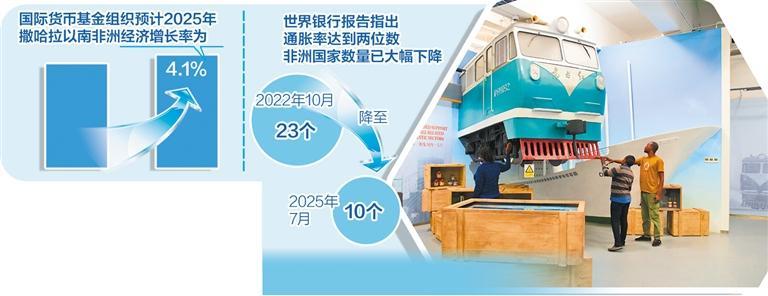
Group 1 - The core viewpoint is that Sub-Saharan Africa is increasingly recognized as a global growth engine and investment hotspot, with stable economic growth projected for 2025 despite various challenges [2][3][4] - Multiple international financial organizations forecast a growth rate of approximately 4.1% for Sub-Saharan Africa in 2025, indicating resilience in the region's economy [3] - The African Development Bank predicts economic growth rates of 4.2% and 4.3% for 2025 and 2026 respectively, with an average inflation rate expected to be 13.7% in 2025 [3] Group 2 - The World Bank anticipates a growth rate of 3.8% for Sub-Saharan Africa in 2025, an increase from 3.5% in 2024, with a significant reduction in the number of countries experiencing double-digit inflation [4] - Despite positive growth, the region faces high macroeconomic vulnerabilities, with many resource-dependent countries struggling due to geopolitical conflicts and financial weaknesses [5] - The number of countries in debt distress has increased significantly, from 8 in 2014 to 23 in 2025, indicating a growing debt crisis in the region [5][6] Group 3 - The International Monetary Fund emphasizes the need for reforms to enhance macroeconomic stability, including improved fiscal management and debt transparency [8] - The G20 summit report calls for coordinated debt relief and increased investment to unlock Africa's development potential, advocating for a shift from aid dependency to investment-driven growth [8] - The African Development Bank highlights the urgency of job creation in the context of a rapidly changing demographic landscape, urging countries to accelerate economic growth and create quality employment opportunities [9]
撒哈拉以南非洲经济展现韧性
Xin Lang Cai Jing· 2025-12-26 23:08
Core Insights - Sub-Saharan Africa is increasingly recognized as a global growth engine and investment hotspot, with a projected economic growth rate of approximately 4.1% in 2025, maintaining stability despite external challenges [2][3] Economic Growth Projections - Multiple international financial organizations forecast a stable economic growth rate for Sub-Saharan Africa, with the International Monetary Fund (IMF) predicting a growth rate of 4.1% for 2025, consistent with 2024, and a slight increase in 2026 [2] - The African Development Bank anticipates growth rates of 4.2% in 2025 and 4.3% in 2026, alongside a decrease in public debt to below 65% of GDP by 2025 [3] - The World Bank projects a growth rate of 3.8% for Sub-Saharan Africa in 2025, up from 3.5% in 2024, indicating resilience in the region's economy [3] Inflation and Debt Trends - The average inflation rate in Africa is expected to be 13.7% in 2025, with some countries experiencing rates below 5% due to currency strengthening and improved climate conditions [3] - The number of African countries with double-digit inflation has significantly decreased from 23 in October 2022 to 10 by July 2025, reflecting progress in price stability [3] - The debt situation is improving, with the proportion of public debt to GDP declining, although the number of countries facing high debt risks has increased from 8 in 2014 to 23 in 2025 [5] Challenges and Risks - Despite positive growth projections, Sub-Saharan Africa faces significant challenges, including high macroeconomic vulnerability and external uncertainties affecting economic performance [4] - The region's economies are hindered by financial and fiscal weaknesses, with rising debt servicing costs impacting development spending [4][5] - Global trade policy uncertainties, declining investor interest, and reduced external financing are additional challenges facing the region [4] Recommendations for Reform - To enhance macroeconomic stability and resilience, countries in Sub-Saharan Africa need to implement reforms focused on improving fiscal management and debt transparency [6] - The G20 summit report emphasizes the need for coordinated debt relief and increased investment to unlock Africa's development potential [6] - The World Bank highlights the urgency of job creation in Africa, advocating for accelerated economic growth and the creation of quality employment opportunities [6][7] Strategic Priorities - The African Development Bank suggests prioritizing resilience-building measures that support inclusive and sustainable growth, including effective fiscal and monetary policies [7] - Recommendations include improving the business environment, enhancing infrastructure, and establishing transparent debt resolution mechanisms [7] - Emphasis is placed on diversifying markets, enhancing financial institutions' capabilities, and combating illicit financial flows to foster economic transformation [7]
圣诞节假期过后,美债收益率基本持平
Xin Lang Cai Jing· 2025-12-26 13:10
周五,交易员结束圣诞节假期返市,为包含强劲美国经济数据的一周画上句号,美债收益率基本持平。 基准10年期美国国债收益率下跌不到1个基点,报4.132%。2年期国债收益率下跌1个基点,报3.497%。 1个基点等于0.01%。收益率与价格呈反向变动。 交易员继续评估最新经济数据。 美国劳工部周三报告称,截至12月20日当周的初请失业金人数为21.4万人,低于预期,并较前一周减少 1万人。 美国商务部周二还报告称,美国经济在第一季度增长了4.3%,为该国两年来最快的扩张速度。 AmeriVet Securities美国利率策略主管格雷戈里·法拉内洛(Gregory Faranello)本周早些时候写道:"经 济状况良好。在通胀和增长以这种速度运行的情况下,不可能指望10年期收益率大幅走低。" 责任编辑:张俊 SF065 周五,交易员结束圣诞节假期返市,为包含强劲美国经济数据的一周画上句号,美债收益率基本持平。 美国商务部周二还报告称,美国经济在第一季度增长了4.3%,为该国两年来最快的扩张速度。 AmeriVet Securities美国利率策略主管格雷戈里·法拉内洛(Gregory Faranello)本周早些 ...
【环球财经】吉尔吉斯斯坦总统:吉经济已进入稳定高质增长轨道
Xin Hua Cai Jing· 2025-12-25 14:10
Core Insights - Kyrgyzstan's economy has experienced unprecedented growth over the past four years, entering a phase of stable and high-quality growth [1] Economic Performance - The average GDP growth rate for Kyrgyzstan over the past three years is 9.8%, with a record actual GDP growth of 10.2% in the first eleven months of 2025 [1] - The comprehensive budget of Kyrgyzstan increased from 247.7 billion som (approximately 2.83 billion USD) in 2020 to 1,093 billion som this year [1] - The per capita GDP for Kyrgyzstan in 2024 is projected to be 2,513 USD, with the unemployment rate decreasing to 3.7% and the poverty rate dropping from 29.8% in 2023 to 25.7% [1] Development Plans - Kyrgyzstan's national development strategy until 2030 focuses on four key areas: industrialization, establishing a regional transportation and logistics hub, developing agriculture and tourism, and activating green energy [1] - The plan aims to double industrial output and increase the share of fixed capital investment to 50% by 2030 [1]