
网红经济

Search documents
好想你涨2.03%,成交额1.61亿元,主力资金净流出6.42万元
Xin Lang Zheng Quan· 2025-08-25 03:48
Core Viewpoint - The stock of Haoxiangni has shown significant growth this year, with a 44.50% increase, and the company is actively engaging in the market with notable trading activity and institutional investments [2][3]. Group 1: Stock Performance - As of August 25, Haoxiangni's stock price increased by 2.03%, reaching 10.57 CNY per share, with a trading volume of 1.61 billion CNY and a market capitalization of 47.32 billion CNY [1]. - Year-to-date, Haoxiangni's stock has risen by 44.50%, with a 7.97% increase over the last five trading days, 8.74% over the last 20 days, and 2.42% over the last 60 days [2]. Group 2: Financial Performance - For the first half of 2025, Haoxiangni reported a revenue of 689 million CNY, a year-on-year decrease of 15.64%, while the net profit attributable to shareholders was -19.84 million CNY, an increase of 45.25% year-on-year [2]. - The company has distributed a total of 1.638 billion CNY in dividends since its A-share listing, with 921 million CNY distributed in the last three years [3]. Group 3: Shareholder and Institutional Holdings - As of June 30, 2025, Haoxiangni had 58,600 shareholders, a decrease of 28.76% from the previous period, with an average of 5,875 circulating shares per shareholder, an increase of 40.45% [2]. - Notable institutional shareholders include Xingquan Commercial Model Mixed Fund (LOF) A, which holds 22.32 million shares, and several other new institutional investors [3].

百年大集→新晋“顶流”,青岛浮山所市集焕新后年交易额3亿元
Sou Hu Cai Jing· 2025-08-23 07:14
Core Viewpoint - The Fushan Market in Qingdao, which has a history of over 600 years, has undergone a significant transformation, becoming a trendy destination that attracts a younger demographic while maintaining its traditional charm [7][9]. Group 1: Market Transformation - The Fushan Market was renovated in 2021 and officially renamed Fushan Market, evolving from a traditional farmers' market to a modern marketplace [7]. - The market has incorporated trendy elements to appeal to younger visitors, resulting in a daily average foot traffic increase from approximately 6,000 to 15,000 [9][15]. - The market's annual transaction volume has risen to 300 million yuan (approximately 43 million USD) following the upgrades [15]. Group 2: Seafood Processing Model - The market has capitalized on the popular seafood processing model, allowing customers to select seafood and have it cooked on-site in the adjacent dining area [9][11]. - Vendors in the dining area offer various food options, including barbecue and hot pot, while also providing seafood processing services [13]. - A vendor reported processing over 200 orders daily, with sales from seafood processing reaching approximately 34,000 to 35,000 yuan (around 5,000 to 5,100 USD) per day [16].

桂发祥股价震荡下行 盘中一度快速反弹超2%
Jin Rong Jie· 2025-08-18 20:07
Group 1 - The stock price of Gui Faxiang as of August 18, 2025, is reported at 14.42 yuan, down 0.96% from the previous trading day [1] - The opening price on the same day was 14.10 yuan, with a high of 15.00 yuan and a low of 13.81 yuan, indicating volatility in trading [1] - The trading volume reached 422,491 hands, with a total transaction value of 605 million yuan [1] Group 2 - Gui Faxiang's main business involves the research, production, and sales of traditional specialty foods, including snacks like fried dough twists and pastries [1] - The company operates within the food and beverage sector, characterized by its local enterprise features in Tianjin, and is involved in trending markets such as prepared dishes and internet-famous products [1] Group 3 - On August 18, the net inflow of main funds was 575,400 yuan, although there has been an overall net outflow of 63.46 million yuan over the past five trading days [1] - The market showed high trading activity, with a turnover rate of 21.03% on that day [1]

红豆股份股价微跌0.9% 纺织服装企业成交额近亿元
Jin Rong Jie· 2025-08-15 21:17
Group 1 - The stock price of Hongdou Co., Ltd. closed at 2.21 yuan on August 15, 2025, down by 0.02 yuan, representing a decline of 0.90% from the previous trading day [1] - The trading volume on that day was 443,700 hands, with a transaction amount of 98 million yuan [1] - Hongdou Co., Ltd. is a textile and apparel company primarily engaged in the production and sales of clothing, including men's, women's, and professional attire, and is also involved in internet celebrity economy-related businesses [1] Group 2 - On August 15, the net inflow of main funds was 6.2393 million yuan, with a cumulative net inflow of 5.0487 million yuan over the past five days [1]

「东北雨姐」们扎堆复出,但规则变了
投中网· 2025-08-15 06:10
Core Viewpoint - The article discusses the challenges faced by internet celebrities, particularly "Northeast Rain Sister," in attempting to make a comeback after being banned for selling fake products, highlighting a broader trust crisis in the influencer economy [6][19]. Group 1: Northeast Rain Sister's Comeback Attempts - Northeast Rain Sister is trying to re-enter the public eye after being banned for selling fake sweet potato noodles, with subtle actions indicating a potential comeback [7][10]. - Despite her attempts to engage with followers through social media, public sentiment remains largely negative, with many users expressing resistance to her return [8][10]. - The backlash against her is rooted in past incidents where her team failed to adequately compensate affected consumers, leading to a significant loss of trust [10][12]. Group 2: Impact on Business and Influence - Following the scandal, Northeast Rain Sister's business empire has shrunk, with two of the five companies she was associated with being dissolved [12][13]. - Her follower count has dropped from over 24 million to approximately 17.84 million, indicating a loss of over 6 million followers, which directly impacts her monetization capabilities [13][14]. - The article notes that her previous revenue streams, including high advertising rates, have been completely halted due to the ban [13]. Group 3: Broader Trends in the Influencer Economy - The challenges faced by Northeast Rain Sister reflect a larger trend in the influencer economy, where even previously successful influencers are struggling with declining trust and engagement [17][19]. - The article highlights that consumers are becoming more discerning, leading to a shift from a traffic-driven model to a value-driven approach in the influencer economy [19]. - Platforms are adjusting their strategies to support mid-tier content creators and diversify content offerings, indicating a potential shift in the influencer landscape [18][19].

稳健医疗股价下跌1.97% 主力资金连续五日净流出
Sou Hu Cai Jing· 2025-08-14 14:55
Group 1 - The stock price of the company, Steady Medical, closed at 40.27 yuan on August 14, 2025, down 1.97% from the previous trading day [1] - The trading volume on that day was 269 million yuan, with a turnover rate of 3.78%, and the total market capitalization reached 23.45 billion yuan [1] - The company's main business includes medical dressings and health consumer products, with products such as masks, protective clothing, and cotton soft towels [1] Group 2 - On August 14, the net outflow of main funds was 25.07 million yuan, accounting for 0.35% of the circulating market value [1] - Over the past five trading days, the cumulative net outflow reached 54.97 million yuan, representing 0.78% of the circulating market value [1] - The company operates in the beauty care industry while also being involved in cross-border e-commerce and influencer economy concepts [1]

电声股份股价下跌1.01% 控股股东一致行动人减持550万股
Jin Rong Jie· 2025-08-13 18:32
Group 1 - The stock price of the company, DianSheng Co., is reported at 11.74 yuan, down by 0.12 yuan or 1.01% from the previous trading day [1] - The company achieved a revenue of 638 million yuan and a net profit attributable to shareholders of 4.34 million yuan in the first quarter of 2025 [1] - The main business of the company includes the research, production, and sales of electroacoustic products, primarily speakers and receivers [1] Group 2 - The controlling shareholder's concerted actions led to a reduction of 5.5 million shares, accounting for 1.2964% of the total share capital, between August 11 and 12 [1] - On August 13, the net outflow of main funds was 11.6979 million yuan, with a cumulative net outflow of 26.8045 million yuan over the past five days [1]

新迅达股价下跌4.66% 股东被动减持176万股
Jin Rong Jie· 2025-08-12 19:35
Core Viewpoint - The stock price of Xunxinda reported at 13.49 yuan, down 0.66 yuan or 4.66% from the previous trading day, indicating a decline in market performance [1] Company Performance - Xunxinda operates in the internet services sector, with business involvement in lithium mining and influencer economy concepts [1] - In Q1 2025, the company achieved revenue of 50.48 million yuan, but reported a net loss attributable to shareholders of 10.38 million yuan [1] Shareholder Activity - Shareholder Chen Yongrui passively reduced his holdings by 1.76 million shares due to forced liquidation, representing 0.8813% of the company's total share capital [1] - Following the reduction, his shareholding percentage decreased to 0.0293% [1] - The announcement stated that this reduction would not significantly impact the company's governance or operations [1] Capital Flow - On August 12, Xunxinda experienced a net outflow of main funds amounting to 9.82 million yuan, with a cumulative net outflow of 22.45 million yuan over the past five days [1]

2025年中国阿胶行业销售渠道及销售现状 近年来零售终端销售额波动较大【组图】
Qian Zhan Wang· 2025-08-08 08:12
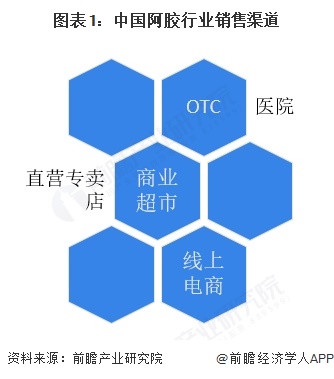
Core Insights - The Chinese ejiao industry has experienced significant fluctuations in retail terminal sales, with a notable increase in 2023 followed by a projected decline in 2024 [3][5] - Major ejiao manufacturers are rapidly expanding their online sales channels to adapt to the growing e-commerce landscape and changing consumer behaviors [6][9] Sales Performance - In 2023, the retail terminal sales of ejiao reached approximately 6.5 billion yuan, marking an 11.8% year-on-year increase, the highest growth rate in six years [3] - The retail terminal sales of compound ejiao paste in 2023 were 2.017 billion yuan, reflecting a 41.3% year-on-year growth, but are expected to decline to 1.7 billion yuan in 2024 [5] Sales Channels - The primary sales channels for ejiao products include hospitals, supermarkets, retail pharmacies, direct specialty stores, and online e-commerce platforms [1] - East Ejiao has focused on building and maintaining online sales channels, achieving over 30% year-on-year growth in sales GMV for its products in the first half of 2024 [1][9] - Other manufacturers, such as Fupai Ejiao, are also leveraging online sales strategies, including live streaming and community marketing, to enhance their market presence [9] Manufacturer Strategies - East Ejiao emphasizes a multi-channel approach, integrating online and offline sales to reach a broader consumer base, particularly younger demographics [9] - Fupai Ejiao has developed a comprehensive online and offline strategy, including partnerships with live streaming influencers and community marketing initiatives [9] - Tongrentang has expanded its offline presence with 1,270 stores across 190 cities and is actively engaging in online platforms like Tmall and JD Health [10] Market Outlook - The overall outlook for the ejiao market indicates a challenging environment in 2024, with expected declines in sales due to weaker consumer demand and a sluggish retail pharmacy sector [3][5]

直播电商助“辽宁好物”跨越山海
Liao Ning Ri Bao· 2025-08-06 01:03
"俺们辽宁庄河的小草莓又甜又水灵,一根苗就结两三个果,味道老好了。"短视频平台上,王铎臻 将排列有序的草莓大棚、绿莹莹的草莓秧以及红彤彤的草莓,鲜活呈现在网友们的眼前。 数据体现着电商直播等新型消费的强劲动力。今年上半年,全省电子商务规模实现跨越式增长,全 省网络零售额1416.2亿元,同比增长13.1%,高于全国4.6个百分点。其中,实物商品网络零售额1098.3 亿元,同比增长11.5%,高于全国5.5个百分点,占全省社零额比重为21.4%。全省限额以上单位网上零 售额增长39%,推动消费市场持续升温。 新业态蓬勃发展离不开政策的保驾护航。作为全国较早发力电商直播的省份,我省在全国率先出台 《关于推动电商直播提质网红经济促进网络消费的指导意见》《推动全省网红经济发展工作方案(2024 —2026)》等一系列政策文件,明确了电商直播产业的发展目标、主要任务和保障措施,积极培育经营 主体,指导电商直播赋能传统产业,构建优质发展生态,为电商直播发展提供政策保障。"我省力争在 探索中形成可复制推广的'辽宁经验',为全国电商发展提供鲜活样本。"省商务厅相关负责人说。 一批电商直播基地成为发展电商直播产业的重要抓手。 ...