股权激励

Search documents
OpenAI重大调整!新员工入职即享股权,应对AI人才争夺战
Sou Hu Cai Jing· 2025-12-15 03:49
Core Viewpoint - OpenAI has made significant changes to its employee equity incentive policy by eliminating the "vesting cliff" requirement, allowing new employees to start vesting equity from their first day of employment [1][3]. Group 1: Policy Changes - The new policy allows new employees to have their granted equity vest monthly from day one, removing the previous six-month waiting period [3]. - Earlier in April, OpenAI had already reduced the initial waiting period for equity grants from one year to six months [3]. Group 2: Competitive Landscape - This adjustment is seen as a response to the intense competition for talent in the artificial intelligence sector, with other tech companies also moving away from traditional vesting cliffs to retain talent [3]. - Competitors like xAI have implemented similar measures by shortening the equity vesting waiting period [3]. Group 3: Compensation Trends - Leading AI companies are offering substantial compensation packages to attract and retain top talent, with reports indicating that firms like Meta, Google, and Anthropic are offering packages worth up to $100 million for top researchers [3]. - OpenAI is expected to spend $6 billion on equity compensation by 2025, which will account for approximately half of its projected annual revenue [3].


无锡祥生医疗科技股份有限公司关于变更公司注册资本、修订《公司章程》并办理工商变更登记的公告
Shang Hai Zheng Quan Bao· 2025-12-14 20:29
证券代码:688358 证券简称:祥生医疗 公告编号:2025-048 无锡祥生医疗科技股份有限公司 关于变更公司注册资本、修订《公司章程》 并办理工商变更登记的公告 本公司董事会及全体董事保证公告内容不存在任何虚假记载、误导性陈述或者重大遗漏,并对其内容的 真实性、准确性和完整性依法承担法律责任。 无锡祥生医疗科技股份有限公司(以下简称"公司")于2025年12月12日召开第三届董事会第十七次会 议,审议通过了《关于变更公司注册资本、修订〈公司章程〉并办理工商变更登记的议案》。具体情况 如下: 一、公司注册资本变更相关情况 根据公司2025年第二次临时股东会授权,公司于2025年10月23日召开了第三届董事会第十六次会议、第 三届董事会薪酬与考核委员会第六次会议,审议通过了《关于向2025年限制性股票激励计划激励对象授 予限制性股票的议案》,确定2025年10月23日为授予日,以16.50元/股的授予价格向17名激励对象授予 160,000股限制性股票。具体内容参见公司于2025年10月24日刊登于上海证券交易所网站 (www.sse.com.cn)的《无锡祥生医疗科技股份有限公司关于向2025年限制性股票 ...

民爆光电股权激励草案出台,积极向精细化治理发展
Cai Fu Zai Xian· 2025-12-14 04:18
Core Viewpoint - The announcement of the restricted stock incentive plan by Minbao Optoelectronics (301362.SZ) reflects the company's confidence in its future development and recognition of its value amidst intensified global competition and rapid technological iteration in the LED lighting industry [1] Group 1: Industry Necessity - The design of the incentive plan demonstrates the maturity of corporate governance, with a grant price of 20.91 yuan per share set at 50% of the average price over the previous 20 trading days, complying with regulatory requirements [2] - The selection of incentive recipients focuses on core technical personnel, business backbones, and middle management, covering critical areas such as R&D, overseas market expansion, production, and supply chain management, which are essential for the company's competitiveness [2] - Minbao Optoelectronics is expanding from commercial lighting into four specialized lighting sectors: plant lighting, emergency lighting, medical beauty lighting, and explosion-proof lighting, with each segment aiming for revenues of over 100-150 million yuan in the next 2-3 years [2] Group 2: Growth Anchors - The core value of the stock incentive lies in promoting growth through a dual assessment system of "company + individual," with revenue growth rate as the key performance indicator, reflecting the company's strategic focus on overseas market share [3] - The performance assessment system links incentive rewards directly to individual contributions, creating a positive cycle between company growth and personal income enhancement [3] - The financial impact of the incentive plan is expected to be limited in terms of profit dilution, while the positive effects on management efficiency and talent stability are anticipated to outweigh short-term costs [3] Group 3: Overall Assessment - The stock incentive plan represents an active exploration of market mechanisms to stimulate internal motivation, with the underlying governance upgrade logic being significant for investors [4] - The ultimate value judgment will depend on the successful implementation of the plan and performance realization, which is a necessary path for the company's growth and requires patience from investors [4]

防止AI人才外流,OpenAI调整薪酬政策:取消股权“归属悬崖”
Feng Huang Wang· 2025-12-14 00:20
知情人士称,今年夏末,OpenAI对手、埃隆.马斯克(Elon Musk)旗下xAI已做出了类似的调整。 人才争夺战 OpenAI CEO奥特曼 凤凰网科技讯北京时间12月14日,据《华尔街日报》报道,OpenAI在刚刚过去的一周告诉员工,该公 司将取消一项薪酬政策。该政策规定员工在公司工作至少六个月后才能获得股权归属。 这六个月就是所谓的"归属悬崖"。如果OpenAI员工在六个月内离职,任何股票都拿不到。 据知情人士透露,OpenAI应用主管菲吉.西莫(Fidji Simo)宣布了对于"归属悬崖"的调整,旨在鼓励新员 工大胆冒险,而不必担心在获得第一批股权之前被解雇。今年4月,OpenAI将新员工的股权归属期限从 行业标准的一年缩短至六个月。 一些科技投资者私下对高速增长的AI创业公司不断膨胀的股权激励成本表示不满,认为这正在侵蚀股 东回报。 AI头部公司决定放宽或取消旨在确保新员工长期留任的种种限制,反映出AI行业对顶级技术人才的激 烈争夺。科技公司通常对新员工设有一年的"归属悬崖",以防止将股权授予那些迅速离职或未能通过试 用期的员工。 然而,随着Meta、谷歌及Anthropic等AI公司以高达1亿美 ...

三峡旅游(002627) - 2025年12月12日投资者关系活动记录表
2025-12-12 09:48
Group 1: Company Overview and Operations - The company has established Yichang Transportation Yangtze River Cruise Company as the investment and operation entity for the inter-provincial cruise project, with a management and marketing system already in place [2][3] - The pricing for the cruise products is projected to be between 2800-3000 RMB per person, with final pricing based on market rates for similar vessels [3] Group 2: Competitive Advantages - The first two inter-provincial cruise ships will feature five significant characteristics: advanced hardware with smart home systems, exceptional service experience through an integrated "shore service" model, unique immersive cultural experiences, optimized itineraries for a comfortable journey, and comprehensive views of the Three Gorges [4] Group 3: Future Expansion Plans - The company aims to become a leader in the Yangtze River Three Gorges tourism and a pioneer in China's inland cruise tourism, with plans to accelerate the self-construction of inter-provincial cruise ships and expand into the luxury cruise market [5] Group 4: Depreciation and Incentives - The depreciation period for both existing and upcoming inter-provincial cruise ships is set at 20 years [6] - The company has established a comprehensive incentive system for core management personnel, including dynamic annual salary incentives based on historical profit performance and additional rewards for exceeding profit targets [7][8]

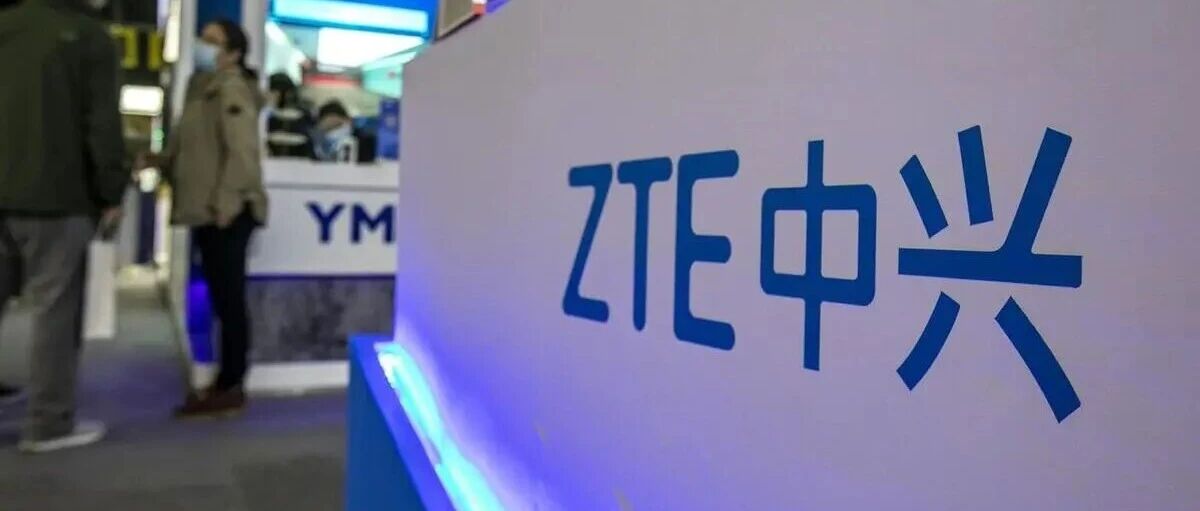
中兴通讯拟斥资10亿至12亿回购A股!股价大跌后公司如何提振市场信心
Sou Hu Cai Jing· 2025-12-12 07:12
Group 1 - The company announced a plan to repurchase its A-shares using its own funds, with a total repurchase amount between RMB 1 billion and RMB 1.2 billion [1][3] - The repurchase price is capped at RMB 63.09 per share, which would result in approximately 19.02 million shares being repurchased, accounting for about 0.40% of the company's total share capital [3] - The repurchase period is set for 12 months from the date the board of directors approves the plan, aimed at ensuring the company's operational development and maximizing shareholder value [3] Group 2 - The company clarified that it is in communication with the U.S. Department of Justice regarding reports of a potential investigation related to the U.S. Foreign Corrupt Practices Act, emphasizing its commitment to compliance and anti-corruption [3] - The company reported a revenue of RMB 100.52 billion for the first three quarters of 2025, representing a year-on-year growth of 11.63% [4] - As of September 30, 2025, the company's total assets amounted to RMB 214.66 billion, with equity attributable to shareholders of the listed company at RMB 75.09 billion [4]


重磅!刚刚,中兴通讯宣布回购
是说芯语· 2025-12-12 05:03
Core Viewpoint - ZTE Corporation plans to repurchase its A-shares using its own funds, with a total repurchase amount not less than 1 billion yuan and not exceeding 1.2 billion yuan, aimed at implementing an employee stock ownership plan or equity incentive [1][3]. Group 1: Repurchase Details - The maximum repurchase amount is set at 1.2 billion yuan, with a maximum share price of 63.09 yuan per share, estimating the repurchase of approximately 19.02 million shares, which accounts for about 0.40% of the company's total share capital [3]. - The repurchase period will last for 12 months from the date the board of directors approves the repurchase plan [3]. Group 2: Share Structure Post-Repurchase - After the expected repurchase, the number of restricted A-shares will increase to approximately 16.26 million, representing 0.34% of the total shares, and could rise to about 19.43 million, representing 0.41% [4]. - The proportion of unrestricted circulating A-shares will slightly decrease from 84.20% to 83.80% post-repurchase [4]. Group 3: Market Reaction and Compliance Issues - As of the latest trading session, ZTE's A-shares experienced a slight decline of 0.32%, while its Hong Kong shares rose by 2.11%. The previous day saw a significant drop in both A-shares and Hong Kong shares [5]. - ZTE has acknowledged media reports regarding compliance investigations related to the U.S. Foreign Corrupt Practices Act and is in communication with the U.S. Department of Justice, emphasizing its commitment to a robust compliance system [5].
超捷股份20251211
2025-12-12 02:19
超捷股份 20251211 摘要 超杰股份商业航天配套产品单发火箭价值量约为 1,500 万元,未来有望 随产品线增加而提升。公司已拥有一条年产 18 发火箭结构电气结构件 的生产线,第二条生产线预计 2026 年二季度初完工,产能将提升至 28 发。 公司积极拓展商业航天市场,2025 年下半年以来与多家火箭公司深度 交流,已签订一家新客户订单,共 58 个订单,其中 38 个将于 2026 年 交付,预计 2026 年一季度起将陆续与更多新客户签订合同。 商业航天火箭舰体及零部件制造环节目前供不应求,竞争相对紧缺,人 才壁垒短期内难以改善。超杰股份凭借经验、技术和上市公司资源优势, 可随时扩充产能,应对市场需求。 火箭一级回收主要回收发动机,对整流罩无影响,二级可断装置和注箱 目前技术尚不能实现回收。可回收技术促进发射频率,维修成本客观存 在,不会显著影响超杰股份业务。 公司计划在上市公司层面实施新一期股权激励,将成都星越商业航天核 心团队纳入范围,并适时在子公司层面实施股权激励,加强团队绑定。 Q&A 超杰股份在商业航天领域的配套产品和客户情况如何? 超杰股份在商业航天领域的产能和扩展规划是什么? 目前 ...
广州酒家集团股份有限公司第四届董事会第三十九次会议决议公告
Shang Hai Zheng Quan Bao· 2025-12-11 20:14
Group 1 - The company held its 39th meeting of the fourth board of directors on December 11, 2025, where all resolutions were passed unanimously [2][7] - The board approved adjustments to the 2025 stock option and restricted stock incentive plan, including changes to the exercise price and grant price [3][48] - The number of initial grant recipients was reduced from 227 to 209, and the total number of shares granted was adjusted from 8.28 million to 7.68 million [4][49] Group 2 - The exercise price for stock options was adjusted from 16.05 yuan to 15.47 yuan per share, and the grant price for restricted stock was adjusted from 8.83 yuan to 8.25 yuan per share [48][53] - The board confirmed that the conditions for granting the incentives had been met, and the initial grant date was set for December 11, 2025 [8][22] - The company plans to grant 3.072 million stock options and 4.608 million restricted shares to eligible recipients [66] Group 3 - The board's compensation and assessment committee reviewed and approved the adjustments and the list of recipients for the incentive plan [6][60] - The company has complied with all necessary legal and regulatory requirements regarding the incentive plan adjustments [45][62] - The financial impact of the incentive plan on the company's performance is expected to be minimal, with potential positive effects on management motivation and operational efficiency [41][44]

中重科技推核心股权激励计划 锚定三年增长目标
Zheng Quan Shi Bao Wang· 2025-12-11 08:53
据激励计划披露,公司为2026年至2028年设定了双重业绩考核指标,净利润与外销营业收入增长目标双 双大幅提升,且激励对象需满足其中任一条件方可解锁对应股份。在净利润方面,以2024年为基数, 2026年、2027年、2028年净利润增长率分别需不低于77%、130%、166%;在海外市场维度,以外销营 业收入为核心考核指标,同期增长率更是设定了300%、400%、500%的阶段性目标。 12月11日,中重科技(603135)发布2025年限制性股票激励计划(草案),拟向126名核心骨干授予696.77 万股限制性股票,以长效激励机制绑定核心团队与公司发展。此次计划设定了三年高业绩目标,尤其将 海外市场拓展作为关键增长引擎,彰显公司加速全球化布局的战略决心。 中重科技表示,此次限制性股票激励计划的实施,旨在通过建立健全长效激励约束机制,吸引和留住优 秀人才,将股东、公司与核心团队三方利益深度绑定。高业绩目标的设定不仅为核心团队提供了明确的 奋斗方向,更将驱动公司聚焦海外市场开拓,加速国际化订单落地与收入转化。公开信息显示,2024年 末公司在手订单达18亿元,其中海外订单金额占比超60%,为业绩目标达成奠定坚 ...