
超级智能

Search documents
Meta“钞能力”有效果了?挖走OpenAI三名研究员
3 6 Ke· 2025-06-27 00:44
Group 1 - Meta's CEO Mark Zuckerberg has recruited three researchers from OpenAI to strengthen the company's position in the superintelligence field, addressing the current talent shortage in AI [2] - The new hires, Lucas Beyer, Alexander Kolesnikov, and Xiaohua Zhai, previously worked at OpenAI's Zurich office and were part of the Google DeepMind team before that [2] - To attract top talent, Zuckerberg has offered compensation packages as high as $100 million and is forming a dedicated team for superintelligence development [2] Group 2 - Meta has also acquired AI startup Scale for $14 billion and appointed its CEO Alexandr Wang to lead the new team [3] - Despite attempts to recruit OpenAI co-founders Ilya Sutskever and John Schulman, both declined the offers [3] - OpenAI's CEO Sam Altman expressed no concern over Zuckerberg's recruitment efforts, noting that core researchers at OpenAI have not left for Meta [3] Group 3 - The competition for advanced AI technology among tech giants like Meta and Google against startups like OpenAI and Anthropic has intensified, driving innovation in Silicon Valley [4] - Meta plans to invest up to $65 billion in capital expenditures this year, focusing on AI technology development [4] - Zuckerberg envisions a future where people interact with AI friends, create ads from scratch using AI, and engage with brands through AI agents [4]


李志飞:1 个人、2 天做出 AI 时代的「飞书」,真正的 Founder Mode
Founder Park· 2025-06-26 11:03
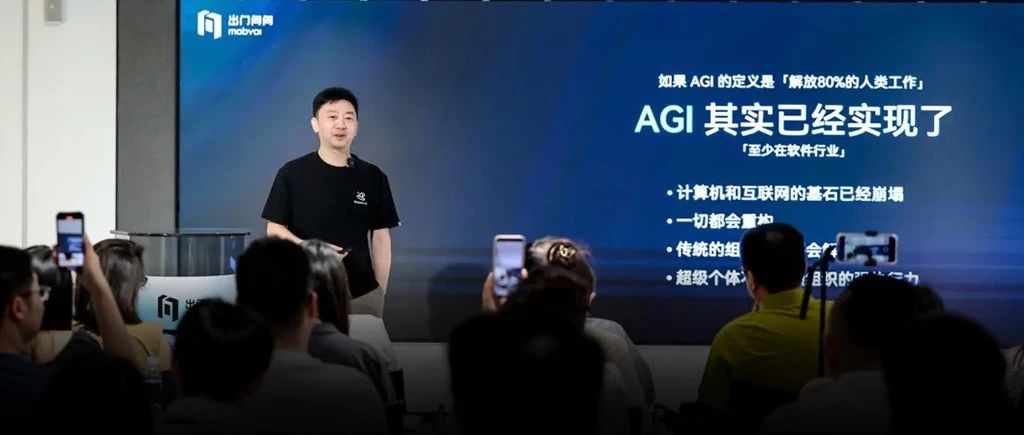
Core Viewpoint - The article discusses the launch of "TicNote," a product combining AI software and hardware by the company "出门问问" (DuerOS). The founder, Li Zhifei, shares his personal journey and insights on the evolution of AI and its implications for software development and organizational collaboration [1][6][11]. Group 1: Product Development and Innovation - Li Zhifei set an ambitious goal to develop a new collaboration platform for AI-native organizations within a short timeframe, highlighting the limitations of traditional tools in an AI-dominated environment [11][12]. - The development process was significantly expedited by leveraging AI tools, allowing a single individual to create a complex system in just two days, which traditionally would require a large team over several months [17][18][22]. - The resulting prototype included essential features such as private messaging, group chats, and file uploads, demonstrating the potential of AI to enhance productivity and streamline workflows [17][18]. Group 2: AI's Impact on Software Development - The article introduces a new paradigm for software development, encapsulated in the phrase "Use AI's AI to make AI," emphasizing the role of AI in automating coding and project management tasks [7][8]. - Li Zhifei's experience illustrates how AI can drastically reduce the time and resources needed for software development, enabling rapid prototyping and deployment of applications [19][20][23]. - The ability to generate complex code and automate tasks traditionally performed by multiple team members showcases the transformative potential of AI in the tech industry [22][23]. Group 3: The Future of AI and AGI - The discussion touches on the concept of self-evolving AI systems, where agents can learn from their experiences and adapt their strategies without human intervention, marking a significant step towards achieving AGI [24][45]. - Li Zhifei emphasizes the importance of recursive structures in AI agents, allowing them to break down complex tasks into manageable sub-tasks, thereby enhancing their problem-solving capabilities [41][42]. - The article concludes with a renewed belief in the potential of AI and AGI, suggesting that innovative thinking and technological capability can enable smaller companies to participate in the AGI development process [46][52].
据华尔街日报:Meta Platforms(META.O)已聘请Lucas Beyer、Alexander Kolesnikov和翟晓华加入其超级智能项目。
news flash· 2025-06-26 02:31
据华尔街日报:Meta Platforms(META.O)已聘请Lucas Beyer、Alexander Kolesnikov和翟晓华加入其超级 智能项目。 ...
苹果Meta狂抓AI,抢人并购
Hu Xiu· 2025-06-23 23:27
Core Insights - Apple and Meta are intensifying their efforts in AI, realizing its potential to disrupt device experiences and advertising models [1][2] - Both companies face challenges in talent acquisition and strategic direction, risking marginalization in the AI landscape [3][12] Group 1: AI Competition and Acquisitions - Apple and Meta are competing against AI giants like Microsoft, Amazon, Google, and OpenAI, with significant valuations for potential acquisition targets such as Perplexity at $14 billion and Thinking Machines Lab at $10 billion [2][23] - Meta has acquired nearly half of Scale AI for $14.3 billion and is considering other acquisitions like SSI, valued at $32 billion, and several other AI companies with valuations ranging from $4.5 billion to $62 billion [2][21] Group 2: Strategic Challenges - Both companies are struggling with a lack of direction and talent, leading to confusion in strategic execution [3][12] - Apple has not delivered substantial AI innovations at its recent developer conference, raising concerns about its future in the AI ecosystem [6][13] Group 3: Market Position and Threats - Apple is losing its dominance in the smartphone market, with competitors like Huawei and Xiaomi advancing rapidly in AI capabilities [8][22] - Google is solidifying its position in AI search and video, posing a direct threat to Meta's advertising market, particularly in short videos [7][10] Group 4: Talent Acquisition Efforts - Zuckerberg is actively recruiting top talent in AI, emphasizing the importance of building a strong team to drive Meta's AI initiatives [15][18] - Apple is also seeking to enhance its AI capabilities by potentially acquiring or collaborating with companies like Mistral and Thinking Machines Lab [19][21] Group 5: Future Outlook - The competition for AI talent and technology is intensifying, with both Apple and Meta needing to adapt quickly to avoid being left behind [12][23] - The ongoing mergers and acquisitions in Silicon Valley signal a new wave of consolidation in the AI sector, with both companies needing to act decisively [23]

印裔1号位删 Karpathy 团队90%代码、算力暴涨 50 倍!马斯克 Robotaxi 10年终上线,30 元乘车体验刷屏
AI前线· 2025-06-23 07:09
Core Viewpoint - Tesla has officially launched its Robotaxi pilot service in Austin, Texas, with a fixed fare of $4.20 for passengers, marking a significant step in its autonomous driving ambitions [1][2]. Group 1: Robotaxi Launch and Operations - The Robotaxi service operates daily from 6 AM to midnight, primarily in the southern part of Austin, avoiding complex intersections for safety [2]. - Each Robotaxi is equipped with a safety driver, despite lacking a steering wheel or brake pedal, who can take control in emergencies [2]. - The service is currently limited to invited users, including Tesla employees and Powerwall users, who can book rides through a dedicated app [2][28]. Group 2: Technical Aspects and Team - The Robotaxi vehicles are modified Model Y models, featuring Tesla's proprietary vision perception system and Full Self-Driving (FSD) software [2]. - Tesla's approach to autonomous driving relies on camera-based solutions rather than expensive radar systems, aiming for cost-effectiveness and scalability [6]. - The AI and software team behind Robotaxi has been built from scratch within Tesla, with key figures like Ashok Elluswamy leading the project [12][17]. Group 3: Competitive Landscape - Tesla faces significant competition from Waymo, which has already achieved commercial operations in multiple cities and reached a milestone of 10 million paid rides [5]. - The current limited deployment of Tesla's Robotaxi, with only 10 to 20 vehicles, contrasts sharply with the more extensive operations of competitors in the market [28][36]. Group 4: Future Developments and Technology - The upcoming FSD 14.0 version is expected to significantly enhance the system's capabilities, with a parameter increase from 1 billion to 4.5 billion, akin to the leap from ChatGPT 3.5 to 4.0 [19]. - Tesla's strategy includes optimizing models for local conditions, which raises questions about managing numerous regional versions of the software [20][22]. - The company has streamlined its codebase by nearly 90%, moving from heuristic-based logic to a more efficient neural network approach [23]. Group 5: User Experience and Feedback - Initial user feedback indicates a smooth riding experience, with the Robotaxi interface providing entertainment options during rides [30][31]. - Tesla has humorously integrated a feature that rejects tips, indicating a unique approach to customer interaction [32]. Group 6: Comparison with Domestic Players - In contrast to Tesla's fixed pricing model, domestic competitors in China have adopted a more traditional fare structure, combining base fares with distance and time charges [36]. - Companies like Baidu and Xiaoma Zhixing have established extensive Robotaxi services across multiple cities in China, highlighting the competitive landscape Tesla is entering [35].


OpenAI路线遭质疑,Meta研究员:根本无法构建超级智能
3 6 Ke· 2025-06-20 12:00
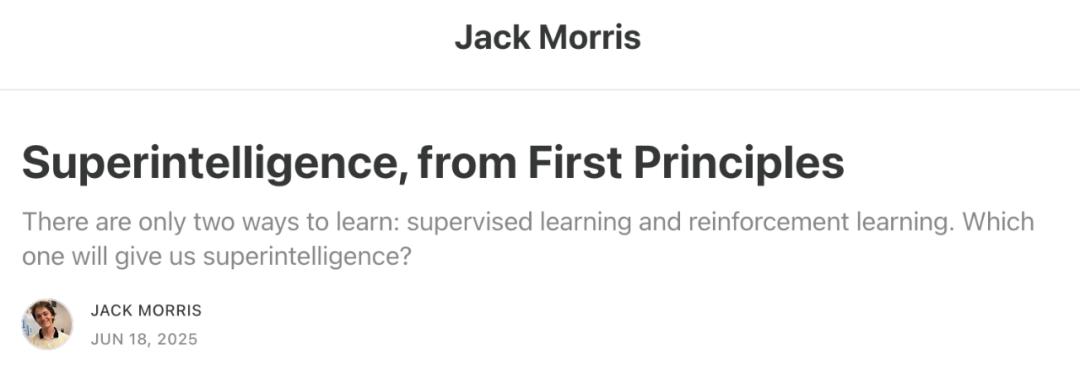
Core Insights - The pursuit of "superintelligence" represents a significant ambition among leading AI companies like Meta, OpenAI, and Google DeepMind, with substantial investments being made in this direction [1][3][4] - Sam Altman of OpenAI suggests that building superintelligence is primarily an engineering challenge, indicating a belief in a feasible path to achieve it [3][4] - Meta AI researcher Jack Morris argues that the current approach of using large language models (LLMs) and reinforcement learning (RL) may not be sufficient to construct superintelligence [1][2] Group 1: Current Approaches and Challenges - Morris outlines three potential methods for building superintelligence: purely supervised learning (SL), RL from human validators, and RL from automated validators [2] - The integration of non-text data into models is believed not to enhance overall performance, as human-written text carries intrinsic value that sensory inputs do not [2][6] - The concept of a "data wall" or "token crisis" is emerging, where the availability of text data for training LLMs is becoming a concern, leading to extensive efforts to scrape and transcribe data from various sources [8][19] Group 2: Learning Algorithms and Their Implications - The two primary learning methods identified for potential superintelligence are SL and RL, with SL being more stable and efficient for initial training [10][22] - The hypothesis that superintelligence could emerge from SL alone is challenged by the limitations of current models, which may not exhibit human-level general intelligence despite excelling in specific tasks [15][16] - The combination of SL and RL is proposed as a more viable path, leveraging human feedback or automated systems to refine model outputs [20][22][28] Group 3: Future Directions and Speculations - The potential for RL to effectively transfer learning across various tasks remains uncertain, raising questions about the scalability of this approach to achieve superintelligence [34] - The competitive landscape among AI companies is likely to intensify as they seek to develop the most effective training environments for LLMs, potentially leading to breakthroughs in superintelligence [34]
梅剑华:思考理想之未来的意义
Hu Xiu· 2025-06-20 08:02
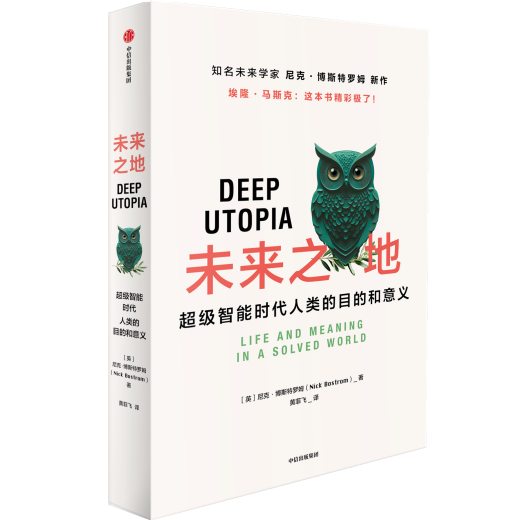
Group 1 - The article reflects on the significant changes and aspirations of life from the early 1990s to the present, highlighting the evolution of societal expectations and personal experiences [1][2][3] - It discusses the impact of major historical events on individual lives, emphasizing how these events shape perceptions and realities [3][4] - The narrative illustrates the transition from basic living conditions to a more affluent lifestyle, showcasing the gradual improvement in quality of life and the accompanying existential questions [2][3][4] Group 2 - The text explores the concept of "deep utopia," questioning the meaning and purpose of life in a technologically advanced society where basic needs are met [10][11][12] - It raises philosophical inquiries about human existence and the pursuit of meaning in a world where traditional struggles are alleviated by technology [10][11][12] - The discussion includes references to significant philosophical works and theories, suggesting that even in a utopian setting, the quest for meaning remains relevant [12][13][14] Group 3 - The article critiques the notion of a perfect society, suggesting that fulfillment of all desires may lead to a lack of motivation and existential ennui [11][12][13] - It emphasizes the importance of ongoing philosophical inquiry and the human condition, regardless of technological advancements [12][13][14] - The narrative concludes with a call for continued exploration of meaning and purpose, even in an idealized future [15][16][17]
曝扎克伯格要收购Ilya创企!遭拒,反手挖走其公司CEO
Sou Hu Cai Jing· 2025-06-20 05:26
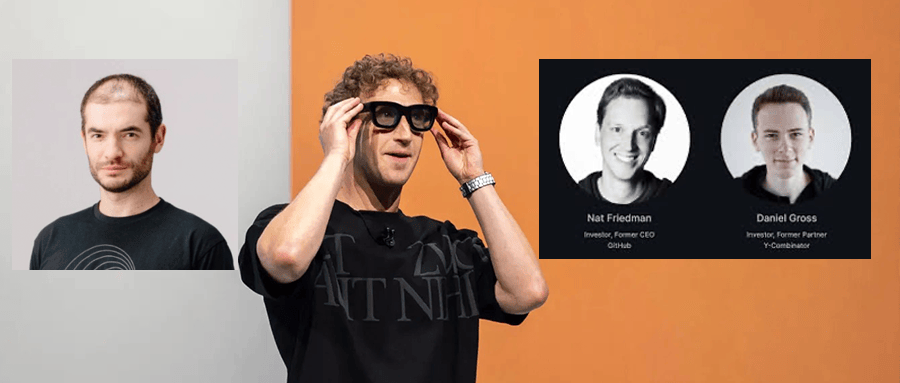
智东西 编译 | 李水青 编辑 | 心缘 智东西6月20日消息,据外媒CNBC报道,Meta今年初试图收购由OpenAI联合创始人伊利亚・苏茨克弗(Ilya Sutskever)的初创公司Safe Superintelligence。 但伊利亚拒绝了这一提议。最近,Meta创始人马克·扎克伯格(Mark Zuckerberg)转而招募这家初创公司的CEO兼联合创始人丹尼尔·格罗斯(Daniel Gross),以及前GitHub CEO纳特·弗里德曼 (Nat Friedman)。 ▲Safe Superintelligence的联合创始人丹尼尔·格罗斯(左1)和伊利亚・苏茨克弗(左2)、丹尼尔・利维(右1) 格罗斯、弗里德曼和伊利亚没有回应CNBC的置评请求。Meta发言人向CNBC回应,公司"将在未来几周内分享更多有关超级智能工作以及加入该团队的优秀 人才的信息。" ▲丹尼尔·格罗斯 弗里德曼更是硅谷重量级人物。他曾与他人共同创立了两家初创公司,后在公司被微软收购后担任微软开发者服务副总裁。2018年微软以75亿美元收购 GitHub,弗里德曼担任GitHub的CEO,而后将GitHub估值从75亿提升至1 ...
不只是Scale AI,Meta还想过收购前OpenAI首席科学家Ilya的公司
Hua Er Jie Jian Wen· 2025-06-20 03:54
Core Insights - Meta has made a significant investment of $14.3 billion in Scale AI, marking it as the second-largest deal in its history after the $19 billion acquisition of WhatsApp in 2014 [1] - Initially, Meta attempted to acquire Safe Superintelligence, founded by former OpenAI chief scientist Ilya Sutskever, which was valued at $32 billion during its funding round in April [1] - After the acquisition attempt failed, Meta shifted its strategy to recruit key personnel from Safe Superintelligence, specifically CEO Daniel Gross and former GitHub CEO Nat Friedman [2] Company Strategy - Meta's recruitment of Gross and Friedman is part of a "curved rescue" strategy to access core talent and technology resources without direct acquisition [3] - Gross has a notable background, having founded Cue, which was acquired by Apple, and later worked on machine learning and Siri development [2] - Friedman also has a strong profile, having served as CEO of GitHub post-acquisition by Microsoft and co-founding two startups [2] Industry Trends - The trend of high-value talent acquisition is not unique to Meta; OpenAI has also invested approximately $6.5 billion to recruit top talent, including iPhone designer Jony Ive [4] - The competition for AI talent is intense, with reports of Meta offering up to $100 million in signing bonuses to attract OpenAI employees [4][5] - OpenAI's CEO Sam Altman acknowledged the fierce competition, indicating that Meta views OpenAI as its primary competitor [5]
OpenAI面临人才保卫战?奥特曼:Meta曾开价1亿美元挖人
Zhong Guo Xin Wen Wang· 2025-06-19 02:18
Group 1 - OpenAI's CEO Sam Altman stated that Meta is attempting to poach OpenAI employees by offering signing bonuses up to $100 million and higher annual salaries [1] - Altman mentioned that despite Meta's efforts to recruit many individuals from OpenAI, their top talent has not yet decided to accept Meta's offers [1] - Meta's CEO Mark Zuckerberg is personally involved in building a top AI team for their "superintelligence" AI lab and has invested heavily in their AI research department, which oversees the Llama series of open-source large language models [1] Group 2 - Scale AI's founder Alexandr Wang announced his departure to join Meta as part of a deal where Meta acquired 49% of Scale AI for $14.3 billion, and he will lead a research lab focused on "superintelligence" [2] - Meta has recently recruited other top talents, including Jack Rae, a chief researcher from Google DeepMind, with Zuckerberg directly participating in the hiring process [2] - OpenAI's new recruitment head Joaquín Quionero Candela indicated that the pace of innovation in the AI field has intensified competition for top talent, making recruitment more critical than ever for OpenAI [2]