供应链金融

Search documents
恒丰银行创新供应链金融服务模式 助力产业链强链稳链固链
Qi Lu Wan Bao· 2025-07-22 09:30
Group 1 - Core viewpoint: Hengfeng Bank is actively transforming its business development approach by issuing domestic order financing of 4.4 million yuan to support the orderly production and operation of a new materials technology company, reflecting its response to policy requirements and market conditions [1] - Hengfeng Bank is focusing on domestic order financing, emphasizing the payment capacity of core enterprises and historical cooperation with upstream suppliers, providing financing based on a certain percentage of contracts to facilitate procurement and production operations [1] - This supply chain finance model addresses the financing difficulties faced by small and medium-sized suppliers, enhancing capital turnover efficiency and supporting the stable development of the supply chain [1] Group 2 - Hengfeng Bank has developed a digital supply chain finance brand "Hengrong E," creating a comprehensive service system that includes various financial products tailored to different industries [2] - The bank utilizes technology to break down "information silos," integrating multidimensional data for precise enterprise profiling, accelerating online product development, and improving financial service efficiency [2] - The loan and customer scale of the "Hengrong E" series products has seen a growth rate exceeding 50% for two consecutive years [2]
创新文旅消费金融服务
Jin Rong Shi Bao· 2025-07-22 02:39
Core Insights - The People's Bank of China in Zhangzhou is actively responding to national strategies by optimizing and innovating consumer finance products and services to stimulate the local consumption market [1][2][3] Group 1: Consumer Loan Growth - As of April 2025, the total consumer loan balance in Zhangzhou reached 174.205 billion yuan, with auto loans increasing by 61.96% year-on-year and other loans growing by 12.92% [1] - The bank has implemented various consumer loan products, including "Housing Easy Loan," "Nursing Easy Loan," and "Teacher Loan," to cater to different consumer segments [2] Group 2: Financial Support for Consumption - The bank has collaborated with local departments to compile a guide on financial support for consumer goods replacement, covering policies and 24 unique consumer finance products from 16 financial institutions [2] - A total of 1.875 billion yuan has been allocated through specialized credit products to support the upgrade of key consumption scenarios such as shopping malls and restaurants [3] Group 3: Cultural and Tourism Industry Support - The bank has signed a strategic cooperation agreement with Xiamen Bank to provide 3 billion yuan in financial support for key cultural and tourism projects in Zhangzhou [4] - Financing of 2.543 billion yuan has been provided to well-known tourist attractions in Zhangzhou to enhance infrastructure and boost surrounding consumption [4] Group 4: Food Industry Development - Zhangzhou's food export value reached 29.29 billion yuan in 2024, with the Longhai District being a key driver of this growth [5] - The bank has facilitated 1.282 billion yuan in loans to 338 enterprises within the Longhai food industry chain, promoting the development of supply chain financing solutions [5]
破解中小企业融资难!产业数字金融提供的不止于“钱”
Bei Jing Shang Bao· 2025-07-21 13:08
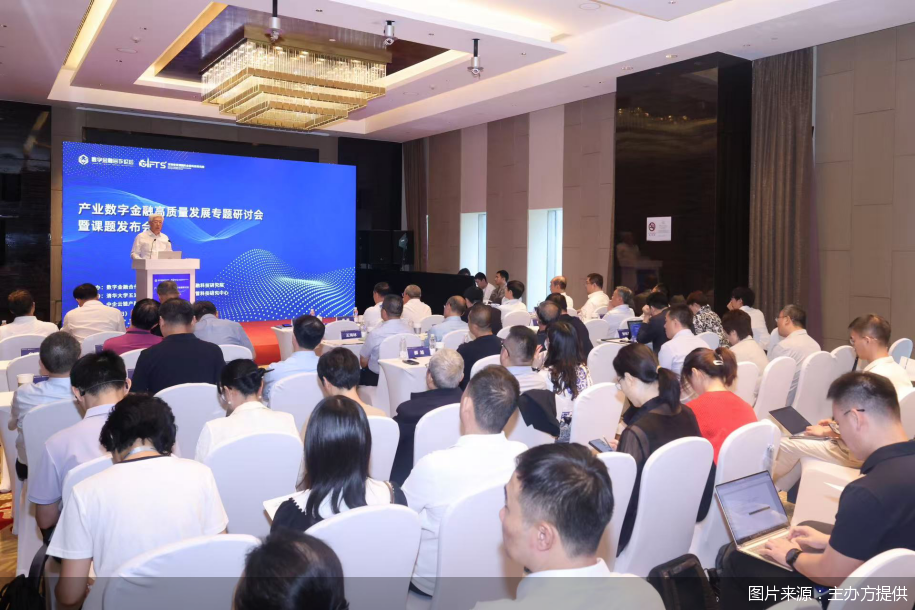
Core Viewpoint - The core of China's economy lies in the industrial economy, which is heavily reliant on financial support and digital technology, particularly for small and medium-sized enterprises (SMEs) [1] Group 1: Development of Industrial Digital Finance - The development of industrial digital finance is seen as a solution to the financing difficulties faced by SMEs, with a consensus on using digitalization to address these challenges [1][3] - Industrial digital finance is characterized by the integration of data, technology, innovation, and an ecosystem that supports its growth [1][3] - The concept of industrial digital finance emerged in 2022, evolving from previous models like supply chain finance and scenario finance [3][5] Group 2: Technological Integration and Financial Services - The integration of technologies such as IoT, blockchain, AI, and big data is crucial for breaking down information barriers between finance and industry, enabling better tracking and evaluation of assets and transactions [4] - Financial services are becoming deeply embedded in the entire industrial ecosystem, allowing for a holistic risk assessment based on the entire supply chain rather than individual enterprises [4][5] - The shift from traditional company finance to industrial digital finance reflects a transition from point-based to network-based financial services [5] Group 3: Case Studies and Innovations - Successful case studies in various regions demonstrate the effectiveness of industrial digital finance, with platforms like "泉融通" in Jinan facilitating over 30 billion yuan in financing by aggregating data from multiple sources [6][7] - Innovations such as AI-driven risk verification and the use of digital RMB for secure transactions highlight the advancements in financial technology applications [6][8] Group 4: Challenges and Recommendations - Despite positive developments, challenges remain in areas such as platform construction, service innovation, and collaboration between industry and finance [7] - Recommendations for future development include accelerating the digital transformation of SMEs, establishing risk-sharing mechanisms, and ensuring that financial institutions play a leading role in providing tailored services [7][8]

打造“同盟链”生态,做好“管家式”服务
Xin Hua Ri Bao· 2025-07-21 07:29
Core Viewpoint - The "Alliance Chain" initiative by Suzhou Rural Commercial Bank aims to enhance collaboration in supply chain finance by integrating logistics, information flow, and capital flow to provide precise services for small and micro enterprises, transitioning from "single-point breakthroughs" to "chain-wide win-win" scenarios [1] Group 1: Mechanism and Strategy - Suzhou Rural Commercial Bank has established a "full-chain collaborative business ecosystem" to activate financial service dynamics within the industry chain, creating a distinctive supply chain finance model [2] - The bank has set hard targets such as "100% chain master visit rate" and "≥30% chain subordinate conversion rate," linking performance rewards to the number of visits and referrals to stimulate grassroots business development [2] - The bank redefined "chain masters" to include high-quality small and medium enterprises with stable transaction networks, aiming to convert "unfinanced chain subordinates" through comprehensive financial services [2] Group 2: Technology Empowerment - The bank utilizes financial technology to integrate internal and external data, generating real-time panoramic maps of the "Alliance Chain" to provide clear operational insights for branches [3] - External big data is employed to create multidimensional credit evaluation models for chain subordinate enterprises, facilitating precise identification of target customer groups and tailored marketing strategies [3] - The bank's unique "Su Nong E Loan" product, along with other financial offerings, addresses the core issues of "difficult and slow financing" for small and micro enterprises, becoming a key tool for market penetration [3] Group 3: Ecological Integration - The bank is building an ecological comprehensive service system, transitioning from "one-way service" to "symbiotic win-win" relationships [4] - A "1+2" visit mechanism is implemented to promote collaborative marketing, offering a combination of services including "Su Nong E Loan," business loans, and employee consumer loans [4] - The approach has evolved from a linear referral system to an ecological closed loop that enhances service efficiency and customer value throughout their lifecycle [4]

【2025链博会】前海粤十史伟琦:以科技赋能冷链,构建农产品冷链供应链新生态
Huan Qiu Wang· 2025-07-21 01:44
Core Insights - The article discusses the transformation in the food consumption market, particularly the "shelf life revolution," driven by advancements in cold chain logistics [1][3] - The cold chain logistics sector in China is entering a new development phase, as highlighted by the government's focus on enhancing agricultural cold chain infrastructure [3][4] Industry Developments - The core value of cold chain supply chain data lies in its role as a strategic asset for industrial digitization, emphasizing the importance of data standardization and transparency [3][4] - The company, Qianhai Yueshi, is positioning itself as a leading comprehensive platform for agricultural cold chain supply chains, differentiating itself from traditional logistics companies [6][7] Technological Innovations - Qianhai Yueshi employs a triad of technologies: IoT, blockchain, and AI, to ensure seamless data flow across the logistics chain, facilitating access to financial resources for small agricultural enterprises [4][6] - The introduction of specialized robots, such as the "Penguin MAX," addresses labor shortages and operational cost increases in the cold chain industry, enhancing efficiency and safety [7][8] Market Positioning - Qianhai Yueshi has developed a digital operation system that integrates information, transactions, logistics, finance, and robotics, serving over 4,000 cold chain parks globally and connecting with more than 370,000 B-end customers [6][7] - The company has achieved significant financial milestones, with projected revenues exceeding 34.1 billion yuan in the first half of 2025 [6] Strategic Collaborations - During the recent Supply Chain Promotion Expo, Qianhai Yueshi announced strategic partnerships aimed at enhancing cold chain logistics capabilities, including a collaboration with Dongjiu Xinyi for a major logistics project [8]


乐享课堂:应收账款、存货、预付款融资,企业该如何抉择?
Sou Hu Cai Jing· 2025-07-21 01:22
Core Viewpoint - Supply chain finance provides diverse funding solutions such as accounts receivable financing, inventory financing, and prepayment financing, allowing companies to optimize cash flow and enhance competitiveness based on their specific circumstances and industry needs [1] Group 1: Financing Modes Based on Supply Chain Stages - In the sales stage, accounts receivable financing can quickly recover funds due to long collection cycles [2] - In the production stage, inventory financing helps convert excess inventory into cash, facilitating normal operations [2] - In the procurement stage, prepayment financing addresses funding gaps to ensure the supply of raw materials or goods [2] Group 2: Industry-Specific Financing Applications - Accounts receivable financing is suitable for industries with long payment cycles, such as manufacturing, construction, IT services, and apparel [6] - Inventory financing is applicable in industries facing seasonal sales fluctuations, such as apparel and electronics, where excess inventory can be converted into cash [6] - Prepayment financing is essential in industries like raw material procurement and electronics, where large upfront payments are necessary to secure supplies [5][10] Group 3: Addressing Company Pain Points - Companies facing slow accounts receivable recovery can utilize accounts receivable financing to maintain operations [9] - Businesses with inventory buildup due to market demand fluctuations can opt for inventory financing to alleviate cash pressure [9] - Firms under pressure to make large prepayments can leverage prepayment financing to ensure supply continuity [9] - Companies experiencing short-term cash flow issues can consider a combination of the three financing modes based on their asset status and business characteristics [9]
链博会观察|科创背后的金融力量:金融助力企业全周期发展
Xin Jing Bao· 2025-07-20 15:41
Core Insights - The article highlights the increasing financial support for technology enterprises, emphasizing the need for comprehensive resources beyond mere funding to facilitate their growth across various stages of development [1][5]. Group 1: Financial Institutions' Role - Financial institutions are focusing on supporting the entire lifecycle of technology enterprises, from seed stage to maturity, to drive economic growth [1][5]. - Major banks, including Industrial and Commercial Bank of China (ICBC), China Life Insurance, and others, participated in the Chain Expo, showcasing their commitment to providing comprehensive financial services for supply chain development [1][2]. Group 2: Supply Chain Financing - ICBC introduced a range of integrated supply chain financial services, addressing pain points in settlement, financing, and risk control for supply chain enterprises [3]. - The Bank of Communications (BoCom) has developed specialized financing products for technology innovation enterprises, utilizing a multi-dimensional evaluation system based on various data sources [3][4]. Group 3: Collaborative Ecosystems - BoCom is fostering a collaborative ecosystem involving banks, investment institutions, and technology enterprises to enhance resource aggregation and support innovation [4]. - CITIC Group has established a diversified financial support system to nurture technology enterprises from their seed stage to maturity, leveraging its internal advantages [5][6]. Group 4: International Expansion - Financial institutions are increasingly focusing on supporting technology enterprises in their internationalization efforts, recognizing the need for financial services that cater to the entire supply chain's global expansion [7]. - Standard Chartered Bank launched the "Standard Chartered Global Chain" solution to address the cross-border financial needs of Chinese enterprises, emphasizing efficiency, security, and resilience in global supply chains [7][8]. Group 5: Digital Transformation - The article notes the growing expectations for payment systems' efficiency, transparency, and intelligence as enterprises undergo digital transformation [8]. - Visa announced a strategic partnership with Yeewallex to optimize payment processes and enhance operational efficiency for supply chain enterprises [8].
山东莱阳农商银行加大资金供给 赋能莱阳制造
Zheng Quan Ri Bao· 2025-07-20 11:07
Core Viewpoint - Shandong Laiyang Rural Commercial Bank is actively supporting the county economy by increasing credit supply to promote high-quality local economic development, focusing on serving agriculture and the real economy [1] Group 1: Financial Support for Enterprises - Laiyang Rural Commercial Bank launched the "Upgrade Loan," which not only provides financial support but also serves as a key to enterprise transformation and upgrading, enabling high-quality development [2] - The bank has tailored a "Manufacturing Industry Transformation and Upgrade Special Loan" for Laiyang Kaitai Machinery Manufacturing Co., providing a credit loan of 1 million yuan to help the company upgrade its equipment [2][3] - The timely provision of credit has allowed the company to introduce advanced CNC machining centers and automated assembly lines, resulting in a 20% increase in production efficiency and entry into the high-end equipment manufacturing sector [3] Group 2: Innovative Financing Models - Laiyang Rural Commercial Bank has implemented a combination credit model to facilitate funding circulation, addressing the challenges faced by light asset enterprises in securing financing [4][5] - The bank's innovative credit model includes "order financing + accounts receivable guarantee + core enterprise credit enhancement," which effectively transforms the company's intangible assets into financing capital [5][6] - The bank's efficient approval process enabled the disbursement of a 1.3 million yuan working capital loan within two days, showcasing its commitment to supporting small and micro enterprises [6]
云南交投集团与建设银行总行举行座谈
news flash· 2025-07-19 08:14
Core Viewpoint - The meeting between Yunnan Transportation Investment Group and China Construction Bank aims to deepen cooperation, leveraging the strengths of both parties in infrastructure and financial support [1] Group 1: Company Collaboration - Yunnan Transportation Investment Group's Vice Secretary and General Manager Pan Zhengjun expressed the desire to integrate the company's industrial chain advantages with China Construction Bank's financial support capabilities [1] - The focus areas for collaboration include green economic corridors, supply chain finance, and modern logistics, indicating a strategic approach to expand cooperation [1] Group 2: Financial Support - China Construction Bank has designated Yunnan Transportation Investment Group as a "key marketing client for infrastructure enhancement," highlighting the importance of this partnership [1] - The bank plans to increase support in areas such as credit limit enhancement and optimization of existing debt, which will provide significant financial backing for Yunnan Transportation Investment Group's projects [1]

武汉贷款公司实战融资速成指南
Sou Hu Cai Jing· 2025-07-18 13:24
Group 1 - The article emphasizes the importance of improving credit records as a foundational step for successful financing [2] - It suggests regularly checking credit reports for errors and prioritizing the repayment of high-interest debts to lower debt ratios, which can significantly enhance loan approval rates [2] - The article highlights the necessity of diversifying financing channels beyond traditional bank loans, including government subsidies and online financing platforms [4] Group 2 - Common pitfalls in loan applications, such as high interest rates and hidden fees, can increase repayment pressure and damage credit records, which can be avoided by carefully reading contracts and comparing loan offers [6] - Consulting experts can help identify risks and prevent falling into traps, enabling efficient access to funds for business operations [6] - Applying the learned strategies can increase the success rate of obtaining financial loans in Wuhan by 23.6%, emphasizing the need to avoid common traps like high-interest pitfalls [7]