
创新药出海

Search documents
信达生物惊天BD,创新药出海热潮重启?资金火速进场,港股通创新药ETF(520880)单日吸金超7500万元!
Xin Lang Ji Jin· 2025-10-23 01:31
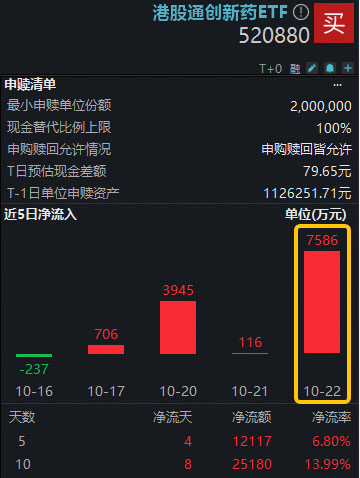
Core Viewpoint - The surge in innovative drug transactions, highlighted by a significant $10 billion business development deal by Innovent Biologics, has ignited interest in the innovative drug sector, despite a downturn in the secondary market [1]. Group 1: Market Activity - On October 22, Innovent Biologics recorded a trading volume of 6.288 billion HKD, marking a historical high [1]. - The Hong Kong Stock Connect Innovative Drug ETF (520880) attracted a net inflow of 75.86 million HKD on the same day, continuing a trend of four consecutive days of net inflows totaling over 123 million HKD [1][2]. Group 2: Investment Sentiment - Analysts suggest that while the innovative drug sector has been affected by market risk aversion, the current valuation presents a compelling investment opportunity [1]. - The concentration of business development (BD) transactions in Q4 historically alleviates market concerns, indicating a potential for sustained activity in the sector as the year-end approaches [2]. Group 3: Fund Performance - The Hong Kong Stock Connect Innovative Drug ETF (520880) is designed to track the Hang Seng Hong Kong Stock Connect Innovative Drug Select Index, which exclusively includes innovative drug R&D companies, with over 70% of its holdings in large-cap leaders [3][4]. - As of the end of September, the index has shown a year-to-date increase of 108.14%, outperforming other innovative drug indices [4][5]. - The ETF has a total fund size of 1.806 billion HKD and has recorded an average daily trading volume of 493 million HKD since its inception, making it the largest and most liquid ETF in its category [5].

重磅利好!信达生物BD首付款12亿美元却高开低走!港股通创新药ETF(159570)回调超2%再迎布局良机!机构:四季度BD集中,创新药出海节奏恢复
Sou Hu Cai Jing· 2025-10-22 06:01
Market Overview - The market opened lower and experienced low-volume fluctuations, with Hong Kong pharmaceutical stocks declining due to market sentiment despite positive news regarding overseas expansion [1] - The Hong Kong Stock Connect Innovation Drug ETF (159570) fell over 2%, with a trading volume exceeding 1.6 billion yuan during the session [1] - As of October 21, the latest scale of the Hong Kong Stock Connect Innovation Drug ETF (159570) exceeded 20.9 billion yuan, maintaining a leading position in scale and liquidity among peers [1] Strategic Collaborations - Innovent Biologics announced a global strategic partnership with Takeda Pharmaceutical to accelerate the development of its next-generation IO and ADC therapies, including two late-stage candidates and one early-stage project [3] - The collaboration includes an upfront payment of 1.2 billion USD, with potential milestone payments totaling up to 10.2 billion USD, bringing the total deal value to a maximum of 11.4 billion USD [3] Business Development (BD) Trends - A surge in business development activities was noted, with five BD announcements totaling 4.266 billion USD made on October 16 and 17 alone [4] - Major companies involved include Hansoh Pharmaceutical, Prigen, and others, with upfront payments ranging from 0.07 billion to 1.2 billion USD [4] - The Hong Kong Stock Connect Innovation Drug ETF (159570) saw mixed performance among its constituent stocks, with notable declines in several companies despite positive news for Innovent Biologics [4] Industry Insights - According to Huaxin Securities, the pace of outbound licensing for innovative drugs has resumed, with 93 transactions recorded by August 2025, accounting for 32% of global transactions [6] - The total upfront payments for these transactions reached 4.3 billion USD, exceeding the total for the previous year and expected to set a new high in nearly a decade [6] - The report indicates that multinational corporations (MNCs) continue to favor early-stage assets from China, particularly in hot areas like bispecific antibodies and ADCs [7] Future Outlook - The fourth quarter is expected to see concentrated BD activities, particularly with the ESMO conference and upcoming quarterly reports [7] - The trend of BD transactions is anticipated to continue as MNCs seek to fill revenue gaps from patent expirations of blockbuster products [7] - The performance of the Hong Kong Stock Connect Innovation Drug ETF (159570) has shown significant growth, with a year-to-date increase of over 109% [9]
多股直线涨停!刚刚,重磅利好来袭!
天天基金网· 2025-10-22 05:21
Core Viewpoint - The article highlights a significant surge in the innovative drug sector, driven by a strategic collaboration between Innovent Biologics and Takeda Pharmaceutical, which could lead to a total transaction value of up to $11.4 billion (approximately 81.2 billion RMB) [3][5]. Group 1: Market Performance - On October 22, A-shares and Hong Kong stocks related to innovative drugs experienced a strong rally, with several stocks like Innovent Biologics and Haisco Pharmaceutical hitting the daily limit [4]. - The global oncology drug market has surpassed $200 billion, with the expiration of PD-1 patents creating new competitive opportunities [6]. Group 2: Strategic Collaboration - Innovent Biologics announced a global strategic partnership with Takeda to accelerate the development of next-generation immuno-oncology (IO) and antibody-drug conjugate (ADC) therapies [4][6]. - The collaboration includes two late-stage therapies, IBI363 and IBI343, and an early-stage project, IBI3001, with Takeda leading the global development and commercialization efforts outside of Greater China and the U.S. [4][5]. Group 3: Financial Implications - Innovent Biologics will receive an upfront payment of $1.2 billion, including a strategic equity investment of $100 million, and could earn up to $10.2 billion in potential milestone payments [5]. - The partnership is expected to significantly enhance Takeda's oncology pipeline, which has faced challenges in recent years [6]. Group 4: Industry Trends - The trend of Chinese innovative drugs entering international markets continues, with contract values exceeding $100 billion in the first three quarters of the year, marking a 170% year-on-year increase [7]. - The fourth quarter is anticipated to see an acceleration in business development (BD) activities, with major pharmaceutical companies likely to allocate their annual budgets during this period [8].




盘中,直线涨停!刚刚,重磅利好来袭!
Zheng Quan Shi Bao· 2025-10-22 05:06
Core Viewpoint - The innovative drug sector is experiencing a significant surge, driven by a strategic collaboration between Innovent Biologics and Takeda Pharmaceutical, with a total deal value potentially reaching $11.4 billion (approximately 81.2 billion RMB) [1][2][3] Group 1: Market Reaction - On October 22, A-shares and Hong Kong stocks related to innovative drugs saw a strong rally, with several stocks like Angli Kang and Ha Sanlian hitting the daily limit [1][2] - The biopharmaceutical sector in Hong Kong also experienced substantial gains, with Yaoke Ankang rising over 25% and Xuan Zhu Biotech increasing by over 23% [2] Group 2: Strategic Collaboration Details - The collaboration between Innovent Biologics and Takeda aims to accelerate the development of next-generation immuno-oncology (IO) and antibody-drug conjugate (ADC) therapies [2][3] - Innovent will receive an upfront payment of $1.2 billion, including a strategic equity investment of $100 million, and has the potential to earn up to $10.2 billion in milestone payments [3] Group 3: Market Context and Trends - The global oncology drug market has surpassed $200 billion, with the expiration of PD-1 patents creating new competitive opportunities [3] - The trend of Chinese innovative drugs entering international markets continues, with contract values exceeding $100 billion in the first three quarters of this year, marking a 170% year-on-year increase [4][5] - The fourth quarter is expected to see an acceleration in business development (BD) activities, as large pharmaceutical companies typically allocate their annual budgets during this period [4][5] Group 4: Future Outlook - Analysts suggest that the unique characteristics of Chinese innovative drug assets, which are perceived as high quality and low cost, are driving their international expansion [5] - There is an optimistic outlook for the innovative drug sector, with expectations of continued high demand and improved financial performance for companies in the long term [4][5]
盘中,直线涨停!刚刚,重磅利好来袭!
券商中国· 2025-10-22 03:50
Core Viewpoint - The innovative drug sector is experiencing a significant boost, driven by a strategic collaboration between Innovent Biologics and Takeda Pharmaceutical, with a total deal value potentially reaching $11.4 billion (approximately 81.2 billion RMB) [1][3]. Group 1: Market Reaction - On October 22, A-shares and Hong Kong stocks related to innovative drugs surged, with companies like Angli康, 哈三联, and 亚太药业 hitting the daily limit, while药捷安康 saw an increase of over 25% [1][2]. - The biopharmaceutical sector in Hong Kong also experienced substantial gains, with notable increases in stocks such as 轩竹生物 and 信达生物 [2]. Group 2: Strategic Collaboration Details - The collaboration between 信达生物 and 武田制药 aims to accelerate the development of next-generation immuno-oncology (IO) and antibody-drug conjugate (ADC) therapies, including late-stage candidates IBI363 and IBI343, as well as an early-stage project IBI3001 [2][3]. - 信达生物 will receive an upfront payment of $1.2 billion, including a strategic equity investment of $100 million, and has the potential to earn up to $10.2 billion in milestone payments [3]. Group 3: Market Trends and Future Outlook - The global oncology drug market has surpassed $200 billion, with the expiration of PD-1 patents creating new competitive opportunities [4]. - The trend of Chinese innovative drugs entering international markets continues, with contract values exceeding $100 billion in the first three quarters of the year, marking a 170% year-on-year increase [5][6]. - The fourth quarter is expected to see an acceleration in business development (BD) activities, as large international pharmaceutical companies typically allocate their annual budgets during this period [6]. Group 4: Investment Sentiment - Analysts suggest that the current environment is favorable for innovative biotech companies, with increased liquidity and risk appetite in the Hong Kong market [7]. - The focus on innovative drug companies is expected to grow as their core pipelines are validated, while second-tier pipelines are approaching proof-of-concept data [7].

中国药企集体亮相欧洲肿瘤内科学会年会 行业看好“出海”持续发生
Zheng Quan Ri Bao Wang· 2025-10-22 02:49
Group 1 - The 2025 European Society for Medical Oncology (ESMO) annual meeting held in Berlin is recognized as one of the most influential oncology conferences globally, showcasing significant breakthroughs in research data from Chinese pharmaceutical companies [1] - The event is seen as a key catalyst for the international expansion of Chinese innovative drugs, with high-quality data disclosure being crucial for international collaboration [1][3] - A total of 2,929 abstracts were presented at the conference, with 448 from Chinese companies, indicating a strong presence and recognition of China's innovation capabilities [2] Group 2 - Chinese pharmaceutical companies showcased their innovative capabilities through clinical data presentations, with 23 studies selected for the latest breakthrough abstracts (LBA), a significant increase from 7 in 2024 [2] - Notable companies like Jiangsu Hengrui Medicine Co., Ltd. presented multiple LBA studies, highlighting their commitment to international research and development strategies [2] - The conference served as a foundation for further international market expansion, with positive clinical data acting as a catalyst for business development (BD) collaborations with major international pharmaceutical companies [3] Group 3 - The total value of overseas BD transactions for Chinese innovative drugs reached $387 billion in the first nine months of the year, nearing the total for the entire previous year [3] - Recent BD agreements, such as the one between Hansoh Pharmaceutical Group and Roche, indicate ongoing interest and activity in the sector [4] - Industry experts predict that while the total transaction value may not reach new highs, the overall number of BD transactions will remain substantial, driven by ongoing innovation and supportive policies [4][5]



信达生物达成百亿美元合作,20cm标的科创创新药 ETF(589720)盘中领涨
Mei Ri Jing Ji Xin Wen· 2025-10-22 01:52
Group 1: Core Insights - Xinda Biopharma announced a global strategic collaboration with Takeda Pharmaceutical, with a total deal value of up to $11.4 billion, including an upfront payment of $1.2 billion [1][3][4] - The collaboration aims to accelerate the global development and commercialization of Xinda's next-generation immuno-oncology and antibody-drug conjugate therapies, covering three products: IBI363, IBI343, and IBI3001 [3][4] - Xinda will receive a total of up to $10.2 billion in potential development and sales milestone payments, in addition to sales revenue sharing for the candidates outside Greater China [3][4] Group 2: Market Impact - Following the announcement, the innovative drug ETF (589720) surged, reflecting a 20% increase in a single day, indicating strong market sentiment towards the collaboration [1][6] - The innovative drug sector has seen significant growth, with contract values exceeding $100 billion in the first nine months of the year, marking a 170% year-on-year increase [5] - The sector is expected to continue benefiting from favorable macroeconomic conditions, including potential interest rate cuts, which are seen as supportive for innovation-driven companies [5][7] Group 3: Future Outlook - The innovative drug industry is poised for substantial growth driven by international expansion, policy support, and the strengthening of R&D capabilities among Chinese companies [7] - Investors are encouraged to focus on the innovative drug ETF (589720), which tracks a representative index of high-growth biotech companies, as it has outperformed the Hang Seng Hong Kong Stock Connect Innovative Drug Index since the "924 market" [6][7] - The upcoming ESMO conference is expected to showcase a significant number of Chinese research projects, further highlighting the robust development of the innovative drug sector [5][7]

创新药两日5项BD落地,产业趋势延续!港股通创新药ETF(159570)涨近2%,资金近20日净流入超17亿元!
Xin Lang Cai Jing· 2025-10-21 06:35
Core Viewpoint - The A-share and Hong Kong stock markets have experienced significant gains, with the Hong Kong Stock Connect Innovative Drug ETF (159570) seeing a nearly 2% increase and a trading volume approaching 2 billion yuan, indicating strong investor interest and liquidity in the innovative drug sector [1][3]. Group 1: Market Performance - The Hong Kong Stock Connect Innovative Drug ETF (159570) has a current scale exceeding 21 billion yuan, leading its peers in both scale and liquidity [1]. - As of October 20, the ETF has seen a net inflow of over 1.7 billion yuan in the past 20 days [1]. - Major stocks within the ETF, such as Innovent Biologics, CanSino Biologics, and 3SBio, have shown positive performance, with increases exceeding 2% [3]. Group 2: Business Development (BD) Trends - The innovative drug sector continues to thrive, with five business development (BD) deals totaling $4.266 billion reported over two days [3]. - Notable transactions include Hansoh Pharmaceutical with a total deal amount of $1.53 billion and Prigen with $1.64 billion [3]. - The total number of license-out transactions in China from January 1 to October 17, 2025, reached 135, with upfront payments totaling $4.976 billion and total deal amounts reaching $102.996 billion, reflecting strong international interest in Chinese innovative drug assets [5]. Group 3: Upcoming Catalysts - The fourth quarter is expected to see an acceleration in BD activities, with a focus on data from the ESMO conference [5]. - Chinese scholars are leading 23 LBA studies at the 2025 ESMO, showcasing various innovative drugs and highlighting China's growing influence in the global pharmaceutical landscape [7]. - The anticipated release of clinical data from the ESMO conference may lead to a revaluation of Chinese innovative drug pipelines and their corresponding stocks [7]. Group 4: Global Pricing Dynamics - Recent agreements between Pfizer and AstraZeneca with the U.S. government on Most Favored Nation (MFN) pricing have exceeded expectations, potentially impacting global sales forecasts for innovative drugs [8][9]. - Pfizer's agreements cover aspects such as pricing for existing and new drugs, direct sales, and tariff exemptions, which could enhance the market potential for innovative drugs [9][10]. - If MFN pricing trends continue, the peak global sales forecast for innovative drugs, including those licensed out from China, may significantly increase [10].
20cm速递|科创创业ETF(588360)涨超3%,科技成长板块迎戴维斯双击
Mei Ri Jing Ji Xin Wen· 2025-10-21 03:11
Core Viewpoint - The Sci-Tech Innovation and Entrepreneurship ETF (588360) has risen over 3% in early trading on October 21, indicating a positive market sentiment towards the technology growth sector, particularly in hard technology fields such as overseas computing power and chip manufacturing [1] Group 1: Market Performance - The Sci-Tech Innovation and Entrepreneurship ETF (588360) tracks the Sci-Tech Innovation 50 Index (931643), which has a daily fluctuation limit of 20% [1] - The index selects 50 emerging industry stocks with large market capitalization and good liquidity from the Sci-Tech Board and the Entrepreneurship Board, covering key areas such as semiconductors, new energy, and biomedicine [1] - The index's performance in the third quarter exceeded 65%, significantly outperforming the Sci-Tech 50 (49.02%) and the Entrepreneurship Board 50 (59.45%) [1] Group 2: Industry Insights - Dongwu Securities highlights a "Davis Double Play" in the technology growth sector, where performance and valuation are both improving, particularly in hard technology areas [1] - There is an expectation that the narrative of technological prosperity will transmit from upstream hardware to downstream application scenarios [1] - The trend of corporate earnings recovery is established, with the credit cycle turning approximately 9 months ahead of the earnings cycle, supported by a weak dollar narrative [1] - The technology sector remains backed by a narrative logic and is recommended for focus on areas such as AI empowerment and the internationalization of innovative pharmaceuticals [1]

医药生物行业报告(2025.10.13-2025.10.17):医疗器械集采逐步体现“稳临床、保质量、防围标、反内卷”的原则
China Post Securities· 2025-10-20 06:49
Investment Rating - The industry investment rating is "Outperform the Market" and is maintained [2][47]. Core Insights - The report highlights that the medical device procurement is gradually reflecting principles of "stabilizing clinical needs, ensuring quality, preventing collusion, and countering price wars" [6][30]. - The report suggests that the recent adjustments in procurement rules indicate a shift towards a more moderate approach, focusing on clinical needs and product quality rather than solely on low prices [6][30]. - The report emphasizes the potential for long-term development in the domestic medical device industry as procurement becomes more reasonable [6][30]. Summary by Sections Industry Overview - The closing index for the medical and biological sector is 8583.87, with a 52-week high of 9323.49 and a low of 6764.34 [2]. Market Performance - During the week of October 13-17, 2025, the A-share medical and biological sector fell by 2.48%, underperforming the CSI 300 index by 0.26 percentage points but outperforming the ChiNext index by 3.23 percentage points [7][36]. - The Hang Seng Healthcare Index decreased by 5.85%, underperforming the Hang Seng Index by 1.88 percentage points [7][36]. Industry Opinions and Investment Recommendations 1. **Innovative Drugs**: The innovative drug sector is experiencing adjustments, with a recommendation to maintain or increase positions based on long-term industry development logic. Key companies to watch include Innovent Biologics, 3SBio, and others [8][21]. 2. **Medical Devices**: The report notes that the National Medical Insurance Administration's recent procurement documents aim to optimize price differences and control "anchor points," indicating a move away from simply selecting the lowest bid [8][29]. 3. **Research Services**: The report expresses optimism about investment opportunities in the research services sector, particularly for companies with strong competitive advantages [26]. Sector Valuation - As of October 17, 2025, the overall valuation of the medical sector (TTM) is 30.03, a decrease of 0.84 from the previous week. The sector's valuation premium over the CSI 300 index is 123.96%, down by 4.90 percentage points [43].