
民间投资

Search documents
瑞达期货沪锌产业日报-20251111
Rui Da Qi Huo· 2025-11-11 09:00
Report Summary 1. Report Industry Investment Rating No industry investment rating is provided in the report. 2. Core View of the Report - Macroeconomic factors include the potential end of the US government shutdown by the weekend, 13 measures proposed by the State Council to boost private investment, and a slowdown in US consumer - price inflation in October. - On the supply side, zinc ore imports are rising due to long - term contract ores arriving at ports and refineries' raw material reserves for winter. However, domestic zinc ore processing fees are down, sulfuric acid prices are falling, squeezing smelter profits and limiting refined zinc output growth. Overseas zinc supply is tight, the SHFE - LME ratio has dropped significantly, and the export window has opened, with a shift towards net exports expected. - On the demand side, the traditional peak seasons of "Golden September and Silver October" were lackluster. The real - estate sector is a drag, while the automotive and home - appliance sectors show some policy - supported bright spots. Downstream demand recovery is weak, with spot premiums low and domestic inventories increasing. LME zinc de - stocking is slowing, and spot premiums are high. - Technically, positions are decreasing, prices are adjusting, and the bullish sentiment has weakened slightly. Attention should be paid to the MA10 support. It is recommended to wait and see for now [3]. 3. Summary by Relevant Catalogs 3.1 Futures Market - The closing price of the SHFE zinc main contract is 22,675 yuan/ton, up 5 yuan; the spread between the 12 - 01 contracts of SHFE zinc is - 30 yuan/ton, up 10 yuan. - The LME three - month zinc quote is 3,085.5 dollars/ton, up 19 dollars. - The total SHFE zinc open interest is 226,896 lots, down 1,204 lots; the net position of the top 20 in SHFE zinc is 15,406 lots, down 421 lots. - SHFE zinc warehouse receipts are 70,518 tons, up 649 tons; SHFE inventory (weekly) is 100,208 tons, down 3,208 tons; LME inventory is 34,900 tons, unchanged [3]. 3.2现货市场 - The spot price of 0 zinc on the Shanghai Non - ferrous Metals Network is 22,660 yuan/ton, up 90 yuan; the spot price of 1 zinc in the Yangtze River Non - ferrous Metals Market is 22,660 yuan/ton, up 240 yuan. - The basis of the ZN main contract is - 15 yuan/ton, up 85 yuan; the LME zinc cash - 3 months spread is 176.55 dollars/ton, up 24.29 dollars. - The arrival price of 50% zinc concentrate in Kunming is 18,310 yuan/ton, down 20 yuan; the price of 85% - 86% crushed zinc in Shanghai is 16,050 yuan/ton, up 50 yuan [3]. 3.3 Upstream Situation - The WBMS zinc supply - demand balance is - 27,800 tons, down 5,700 tons; the ILZSG zinc supply - demand balance is 47,900 tons, up 17,700 tons. - The global zinc mine production by ILZSG is 1.0976 million tons, up 21,400 tons; domestic refined zinc production is 651,000 tons, up 34,000 tons. - Zinc ore imports are 505,400 tons, up 38,100 tons [3]. 3.4 Industry Situation - Refined zinc imports are 22,677.51 tons, down 2,979.32 tons; refined zinc exports are 2,477.83 tons, up 2,166.92 tons. - Zinc social inventory is 161,700 tons, down 100 tons [3]. 3.5 Downstream Situation - The production of galvanized sheets is 2.32 million tons, up 10,000 tons; the sales of galvanized sheets are 2.28 million tons, down 90,000 tons. - The new housing construction area is 453.99 million square meters, up 55.9799 million square meters; the housing completion area is 311.2888 million square meters, up 34.3534 million square meters. - Automobile production is 3.227 million vehicles, up 474,600 vehicles; air - conditioner production is 18.0948 million units, up 1.276 million units [3]. 3.6 Option Market - The implied volatility of at - the - money zinc call options is 12.23%, up 0.04%; the implied volatility of at - the - money zinc put options is 12.23%, up 0.03%. - The 20 - day historical volatility of at - the - money zinc options is 8.51%, down 0.86%; the 60 - day historical volatility of at - the - money zinc options is 8.98%, down 0.03% [3]. 3.7 Industry News - The State Council's General Office proposed 13 measures to further promote private investment. - The US government shutdown may end before this weekend. The Senate plans to resume deliberation on Monday morning, and bipartisan cooperation is needed to speed up the process. - US consumer - price inflation slowed for the first time in three months in October. - Trump - endorsed Fed nominee Milan believes the government shutdown won't affect his view of the US economy and that a 50 - basis - point rate cut is needed in December [3].

国家发展改革委谈基础设施REITs:支持更多符合条件的民间投资项目发行上市
Xin Hua Cai Jing· 2025-11-11 08:59
Group 1 - The National Development and Reform Commission (NDRC) will enhance collaboration with the China Securities Regulatory Commission (CSRC) to support the issuance of more qualified private investment infrastructure REITs projects, aiming to broaden financing channels for private enterprises and promote a virtuous cycle of investment and financing [1][2] - As of now, the NDRC has recommended 18 private investment infrastructure REITs projects to the CSRC, with 14 projects successfully issued and listed, raising a total of nearly 30 billion yuan [1] - The first community commercial and agricultural market REITs projects, both private investment initiatives, have demonstrated a positive effect on upgrading consumption infrastructure [1] Group 2 - The NDRC has cumulatively recommended 105 projects to the CSRC, with 83 projects listed, covering 10 industries and 18 asset types, raising a total of 207 billion yuan, which is expected to drive over 1 trillion yuan in new project investments [2] - The NDRC plans to establish a special coordination service mechanism for private investment projects to address challenges in project cultivation and improve the efficiency of project recommendation and issuance [2]
国家发展改革委:民间资本参与重点领域项目持股比例可在10%以上
Xin Hua Cai Jing· 2025-11-11 08:44
Core Viewpoint - The National Development and Reform Commission (NDRC) has introduced measures to encourage private investment in key sectors, allowing private capital to hold more than 10% in specific projects, signaling a strong push for private sector involvement in infrastructure development [1][2]. Summary by Relevant Sections Key Areas of Focus - The policy emphasizes participation in key sectors such as railways, nuclear power, hydropower, and oil and gas pipelines, which require national approval [1][2]. Profitability Considerations - The targeted projects are primarily foundational, public welfare, and long-term in nature, with some expected to yield returns, thus attracting private investment [2]. Special Feasibility Studies - There is a requirement for special feasibility studies to assess the viability of private capital participation in these key projects, which must be detailed in feasibility reports or project applications [2]. Practical Considerations - The policy acknowledges the diversity of projects and the varying willingness and capability of private enterprises, suggesting that the specific shareholding ratio should be determined based on actual project conditions and private sector interest [2]. Increased Shareholding Support - For projects that meet certain conditions, the shareholding ratio for private capital can exceed 10%, with examples indicating that some nuclear power projects have seen private participation rates as high as 20% [2]. Inclusive Support for Various Economic Entities - The NDRC aims to support all types of economic entities in project construction, promoting complementary advantages among different ownership structures for mutual development [3].
民间资本参与重点领域项目持股比例可超10%,释放何种信号
Nan Fang Du Shi Bao· 2025-11-11 08:38
Core Points - The National Development and Reform Commission (NDRC) introduced measures to promote private investment, allowing private capital to hold over 10% in key projects requiring national approval [1][2] - The measures emphasize the importance of private capital participation in sectors like railways, nuclear power, and hydropower, which are characterized by their foundational, public, and long-term nature [2] Summary by Categories Policy Overview - The first measure allows private capital to participate in key projects with a holding ratio of over 10%, specifically in sectors that require national approval [1] - The NDRC aims to encourage private investment by providing clear guidelines and support for participation in these critical areas [1] Key Focus Areas - The policy targets specific sectors such as railways, nuclear power, and hydropower, which are essential for infrastructure development and have potential returns [2] - Emphasis is placed on projects that are both foundational and have a certain level of profitability, aligning with private investors' interests [2] Implementation Guidelines - A requirement for specialized feasibility studies to assess the viability of private capital participation in these projects is established [2] - The policy encourages consideration of the actual conditions of each project, including the willingness and capability of private enterprises to participate [2] Investment Potential - For projects that meet specific conditions, the holding ratio for private capital can exceed 10%, with examples indicating that some nuclear projects have reached a participation rate of 20% [2]
国家发改委:民间投资有所放缓,13项举措激发民间投资活力
Nan Fang Du Shi Bao· 2025-11-11 08:33
Core Viewpoint - The National Development and Reform Commission (NDRC) has introduced measures to stimulate private investment amid a slowdown influenced by international conditions and real estate market adjustments [3][4]. Group 1: Current Investment Trends - Private investment has slowed this year, but excluding real estate development, private project investment grew by 2.1% year-on-year in the first three quarters, indicating stable growth [3]. - Infrastructure private investment increased by 7% year-on-year, while manufacturing private investment rose by 3.2%, showing a positive development trend [3]. Group 2: New Measures for Private Investment - The newly released "Several Measures to Further Promote Private Investment" includes 13 policy initiatives categorized into three areas: expanding access, addressing bottlenecks, and strengthening support [4][5]. - To expand access, the measures encourage private capital participation in key sectors like railways and nuclear power, and promote involvement in urban infrastructure projects with profit potential [4]. - The measures also aim to facilitate private capital's participation in low-altitude economy and commercial space sectors, and support private enterprises in undertaking major national technological tasks [4]. Group 3: Addressing Bottlenecks - The measures address issues faced by private enterprises, such as rights protection and insufficient innovation support, by enhancing regulatory oversight of network infrastructure and ensuring legal rights in resource allocation [5]. - Support for private enterprises includes the establishment of major pilot platforms and the provision of market-oriented trial services from state-owned enterprises and research institutions [5]. Group 4: Strengthening Financial Support - The measures propose increasing central budget investments for qualifying private investment projects and utilizing new policy financial tools to support key industries and sectors [5]. - Initiatives also focus on meeting the reasonable credit needs of private enterprises and facilitating financing for technology-driven companies through streamlined processes [5].

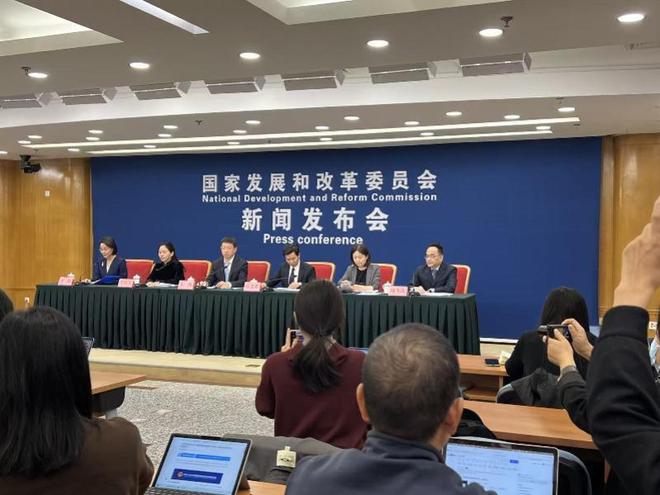
国家发改委:将推动细化民间资本参与项目建设的具体要求
Zhong Guo Xin Wen Wang· 2025-11-11 08:28
Core Viewpoint - The National Development and Reform Commission (NDRC) has introduced measures to encourage private capital participation in key sectors, allowing for a shareholding ratio of over 10% in certain projects [1][2]. Group 1: Key Areas of Focus - The policy specifically targets projects requiring national approval in sectors such as railways, nuclear power, hydropower, and oil and gas pipelines, emphasizing the importance of these areas [1]. - Projects in these sectors are primarily foundational, public welfare-oriented, and long-term, with some expected to yield certain returns, making them attractive for private investment [2]. Group 2: Implementation Requirements - There is a requirement for specialized feasibility studies to assess the viability of private capital participation in these key projects, which must be detailed in feasibility reports or project applications [2]. - The determination of specific shareholding ratios should consider the actual circumstances of each project, the willingness and capability of private enterprises, and relevant policy requirements [2]. Group 3: Future Directions - The NDRC plans to work with industry authorities and local governments to refine the specific requirements for private capital participation in project construction, ensuring effective policy implementation [3].
国家发改委答证券时报:鼓励地方按照中试特点 探索简化项目建设前置要件审批程序
Zheng Quan Shi Bao Wang· 2025-11-11 08:15
Core Viewpoint - The National Development and Reform Commission (NDRC) has introduced measures to promote private investment, particularly in the establishment of major pilot testing platforms for private enterprises, aligning with market needs and technological advancements [1][2]. Group 1: Policy Support for Private Enterprises - The NDRC emphasizes the importance of pilot testing as a crucial step before mass production, encouraging local governments to simplify project approval processes for pilot testing [1]. - The new measures advocate for the opening of pilot testing services to private enterprises, leveraging resources from state-owned enterprises, universities, and research institutions [1]. Group 2: Successful Practices in Various Regions - Regions like Sichuan have implemented a "1+N" model, integrating various pilot testing resources from universities and enterprises to provide collaborative services [2]. - Cities such as Shanghai, Jiangsu, Zhejiang, and Chongqing are exploring a "first investment, then subsidy" approach, where government funding supports pilot testing and converts to equity after market financing is achieved [2].
国家发改委介绍《关于进一步促进民间投资发展的若干措施》有关情况
Zhong Guo Xin Wen Wang· 2025-11-11 08:09
国家发改委介绍《关于进一步促进民间投资发展的若干措施》有关情况 中新网11月11日电 国家发展改革委11日召开专题新闻发布会。国家发展改革委固定资产投资司副司长 关鹏在会上介绍了《关于进一步促进民间投资发展的若干措施》(以下简称为《若干措施》)出台背景和 有关情况。 关鹏表示,民间投资是反映经济活跃程度的重要风向标,对稳增长、稳就业、稳预期具有重要作用。今 年以来,按照党中央和国务院决策部署,国家发展改革委加强与有关方面的协同配合,推动出台民营经 济促进法,滚动接续向民间资本推介项目,加大对重点民间投资项目要素和融资支持,加强与民营企业 常态化沟通交流,不断优化民间投资发展环境,多措并举推动民间投资发展。受国际环境变化、房地产 市场调整等因素影响,今年以来民间投资有所放缓,但前三季度扣除房地产开发民间投资的民间项目投 资同比增长2.1%,保持稳定增长,其中,基础设施民间投资同比增长7%,制造业民间投资同比增长 3.2%,仍保持良好发展势头。 关鹏指出,《若干措施》提出了13项政策举措,可归纳为扩大准入、打通堵点、强化保障三个方面。 来源:中国新闻网 编辑:张澍楠 广告等商务合作,请点击这里 本文为转载内容,授 ...
国办印发《若干措施》进一步促进民间投资发展
Ren Min Ri Bao· 2025-11-11 07:57
Core Viewpoint - The State Council has issued measures to stimulate private investment and promote its development, outlining 13 targeted policy initiatives aimed at enhancing private sector participation in various industries [1][2]. Group 1: Expanding Access - Encouragement for private capital participation in key sectors like railways and nuclear power, with specified shareholding requirements [1]. - Support for private investment in smaller-scale urban infrastructure projects with profit potential [1]. - Guidance for private capital involvement in low-altitude economy and commercial space sectors [1]. - Removal of unreasonable entry restrictions for service industry operators [1]. - Revision of the list of concession projects to facilitate private enterprise participation [1]. - Elimination of unreasonable requirements for private enterprises in bidding processes [1]. - Increased government procurement support for small and medium-sized enterprises [1]. Group 2: Addressing Bottlenecks - Protection of private enterprises' legal rights in electricity grid operations, oil and gas pipeline usage, and transportation resource allocation [2]. - Encouragement for private enterprises to establish major pilot platforms with strong industry influence [2]. - Support for digital empowerment platforms for leading private enterprises and third-party service providers [2]. - Implementation of digital transformation initiatives for more private small and medium-sized enterprises [2]. Group 3: Strengthening Support - Increased central budget investment and new policy financial tools for qualifying private investment projects [2]. - Financial institutions to set annual service goals for private enterprises to meet their reasonable credit needs [2]. - Continuation of policies facilitating technology-driven enterprises' access to public financing and mergers [2]. - Support for eligible private investment projects to issue real estate investment trusts (REITs) in infrastructure [2]. - Emphasis on local and departmental support for private investment, guiding enterprises to operate legally and responsibly [2].
国家发展改革委:打造国家投融资综合服务平台 更加精准向民企投放信贷资源
Zheng Quan Shi Bao· 2025-11-11 07:53
Core Insights - The National Development and Reform Commission (NDRC) has introduced measures to enhance private investment through improved coordination of investment, fiscal, and financial policies [1] - The NDRC aims to create a national investment and financing comprehensive service platform to facilitate efficient connections between investment and financing, particularly targeting private enterprises [1] Investment Policy - The recent measures emphasize the importance of aligning various funding channels and financial services to boost the effectiveness of private investment policies [1] - The NDRC will strengthen the cooperation mechanism of investment and loan linkage, enhancing the precision of credit resource allocation to private enterprises [1] Financial Services - The NDRC plans to improve interconnectivity with national financing credit service platforms to ensure better access to financial resources for private sector investments [1] - The focus is on implementing credit and direct financing policies to support the growth of private investments [1]