
育儿补贴

Search documents
育儿补贴落地,婴童概念股“几家欢喜几家愁”
Guan Cha Zhe Wang· 2025-07-29 10:46
(文/解红娟 编辑/张广凯) 7月29日,即育儿补贴政策落地的第一个工作日,A股及港股婴童概念股整体上涨。 截至当日收盘,婴童概念股中,乳制品板块表现亮眼,阳光乳业股价大幅上扬9.98%、骑士乳业股价攀 升5.05%、贝因美股价上浮3.54%、西部牧业股价抬升1.41%、中国飞鹤股价微涨0.43%;母婴连锁与用 品板块中,爱婴室股价上浮2.62%、孩子王股价上涨2.24%。 值得一提的是,今日盘中不少婴童概念股大幅走高,但收盘时涨幅显著收窄。 以骑士乳业为例,早间开盘股价大幅上涨至13.88元/股,涨幅高达25.27%,但随着大笔买进卖出,股价 迅速下跌,截至收盘报11.64元/股,涨幅仅5.05%。 贝因美亦是如此,早间开盘即涨停,涨幅达10.02%,但不久后股价出现回调,截至收盘报6.72元/股, 涨幅仅3.54%。 当然也有例外。阳光乳业也是开盘即涨停,虽然股价在早间经历了一段短时间的下滑,但很快回升至涨 停板,并维持至收盘。截至收盘报14.99元/股,涨幅达9.98%。 不过,也不是所有婴童概念股能抓住这波红利,比如好孩子国际。 在育儿补贴政策的加持下,好孩子国际股价低开低走,开盘报1.16元/股,跌 ...


国泰海通|育儿补贴落地,规模或达年均千亿
国泰海通证券研究· 2025-07-29 10:07
Core Viewpoint - The implementation of the national childcare subsidy policy is expected to significantly boost demand in related industries, particularly in dairy products, with an estimated annual subsidy of around 100 billion yuan, which may have multiplier effects on consumption [1][2][3]. Summary by Sections National Childcare Subsidy Implementation - The national childcare subsidy plan was officially announced on July 28, with subsidies starting from January 1, 2025, for children under three years old, providing 3,600 yuan per child annually [1]. - The funding will come from a new transfer payment project established by the central government, with local governments responsible for any additional funding [1]. Key Aspects of the Subsidy - The policy emphasizes fairness, ensuring equal access to subsidies for eligible children [1]. - It aims to improve the efficiency of subsidy distribution, with clear channels for payment [1]. - The subsidy is exempt from personal income tax, which is expected to lower the cost of child-rearing [1]. Financial Implications - The estimated annual subsidy of around 100 billion yuan is substantial, especially when compared to the 2024 sales total of 510.5 billion yuan for large-scale dairy enterprises [2]. - The policy is expected to have a significant impact on various consumer sectors, with potential for additional local subsidies [2]. Demand Boost and Market Outlook - The national childcare subsidy is anticipated to increase consumption in the dairy sector, particularly in milk powder, thereby enhancing the industry's overall performance [3]. - The introduction of this subsidy, along with other related policies, is seen as a crucial step in addressing population decline and boosting market confidence [3].

国泰海通 · 晨报0730|食饮、军工
国泰海通证券研究· 2025-07-29 10:07
Group 1 - The core viewpoint of the article is that the newly implemented national childcare subsidy policy is expected to significantly boost demand, with an estimated annual subsidy of around 100 billion yuan [3][4] - The childcare subsidy will be issued starting January 1, 2025, providing 3,600 yuan per child per year for infants under three years old, which is aimed at reducing the cost of raising children and reflects the government's emphasis on population issues [3][4] - The policy emphasizes fairness, efficiency in distribution, and tax exemption for the subsidies, ensuring that eligible infants receive equal benefits [3][4] Group 2 - The estimated annual subsidy of approximately 100 billion yuan is based on different assumptions regarding the number of newborns in 2025, indicating a substantial fiscal expenditure despite a potential decline in annual subsidy amounts due to decreasing birth rates [4] - The subsidy is expected to positively impact various sectors, particularly the dairy industry, by increasing consumption of related products such as milk powder, thereby enhancing the overall market sentiment [5] - The national push for childcare subsidies, alongside other related policies, is seen as a crucial step in mitigating the declining population trend and boosting consumer confidence [5]

刘煜辉:育儿补贴年度投入超千亿,规模已逼近雅下水电年均投资水平
Xin Lang Zheng Quan· 2025-07-29 09:04
Core Viewpoint - The Chinese government has introduced a new childcare subsidy policy aimed at supporting families with children under three years old, which is expected to have significant fiscal implications and stimulate domestic consumption [1]. Group 1: Policy Details - The new childcare subsidy will be implemented starting January 1, 2025, providing annual subsidies of 3,600 yuan per child for families with children under three years old [1]. - The subsidy will be calculated based on the number of months eligible for those children born before January 1, 2025, who are not yet three years old [1]. Group 2: Financial Implications - The estimated fiscal investment for this subsidy program exceeds 1 trillion yuan annually, highlighting the government's commitment to supporting families [1]. - For context, the total investment for the Yaxi Water Conservancy Project is approximately 12 trillion yuan, with an average annual investment of around 1,200 billion yuan over a 10-year period [1]. Group 3: Target Demographics - The policy is particularly aimed at young families and urban middle-class groups, who are seen as key drivers of domestic consumption due to their high consumption elasticity and strong demand for upgrades [1]. - There is an expectation for further comprehensive measures to stimulate consumption in the future [1].

育儿补贴制度实施方案公布 每孩每年3600元 A股婴童概念股大涨
Jin Tou Wang· 2025-07-29 06:06
Group 1 - The implementation plan for the childcare subsidy system was announced, providing cash subsidies for infants under three years old, starting from January 1, 2025, with a basic standard of 3,600 yuan per child per year [1][2] - The subsidy amount varies based on the month of birth, with a detailed table showing the subsidy amounts for children born from January 2022 to September 2024 [1][2] - Parents or guardians can apply for the subsidy through an online management system or in person, with local governments expected to open applications by late August 2023 [2] Group 2 - Following the announcement, A-share infant and child concept stocks surged, with companies like Nobon Co., Sunshine Dairy, Beingmate, and Aiyingshi hitting the daily limit [2] - The Shanghai Composite Index and CSI 300 Index showed slight increases, indicating a positive market reaction to the subsidy announcement [2]
育儿补贴 “炸场”!母婴链全沸腾,个股狂飙136%
Ge Long Hui· 2025-07-29 03:55
Group 1 - The implementation of the childcare subsidy policy has led to a significant rise in the mother and baby industry, particularly in the dairy sector, with companies like Sunshine Dairy reaching the daily limit increase [1][11] - The national childcare subsidy is set at 3600 yuan per child per year, which, while not fully covering the average annual cost of raising a child (approximately 25,000 yuan), sends a strong policy signal and is expected to expand the maternal and infant consumption market by 5%-8% [7][10] - Local governments have already initiated their own subsidy programs, with notable examples including Hohhot and Hangzhou, which have implemented substantial financial support for families based on the number of children [10][12] Group 2 - The dairy industry is anticipated to be one of the first beneficiaries of the subsidy, particularly in the consumption of milk powder, which could enhance the sector's overall performance [11][13] - Analysts believe that the subsidy will not only reduce the cost of childbirth for families but also boost birth rates, especially benefiting the lower-tier markets and various maternal and infant consumer goods [14] - Companies such as Kidswant, Saint Bella, and Aiyingshi are expected to benefit from the ongoing changes in the childcare subsidy landscape, with potential growth in early education and training institutions as well [14]


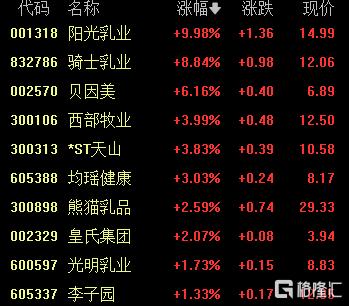
受利好政策刺激,这几个板块在开盘后大涨
Guan Cha Zhe Wang· 2025-07-29 03:22
(原标题:受利好政策刺激,这几个板块在开盘后大涨) 7月29日,沪指低开0.06%,报3595.81点;深成指低开0.16%,报11199.63点;创业板指高开0.01%,报 2362.77点。然而受前一天《育儿补贴制度实施方案》(以下简称《方案》)公布消息影响,7月29日开 盘后,乳业、托育、辅助生殖等相关板块大涨。 开盘后不久,作为代表的乳业板块涨幅一度超过4.5%,包括骑士乳业、贝因美、西部牧业等股票均有 大涨。不过随着交易进行,相关涨幅有所回调。 截至发稿前,部分乳业股票的股价上涨情况 与A股类似,部分育儿产业相关股票在港股市场也经历了开盘后涨幅极高,但随着交易进行涨幅逐渐下 滑,甚至略有下跌的变化。如澳优,开盘后涨幅一度接近14%,但截至发稿前,该股涨幅减少至3%。 锦欣生殖股价涨幅也从开盘后的10%一路调整至开盘时的原点。 不过值得注意的是,与大多数开盘后涨幅有所回调的股票不同,中国育儿网络在港股的股价一路强势走 高。截至发稿前,已经上涨92.73%。 据《每日经济新闻》报道,中泰证券研究所政策组首席分析师杨畅在接受采访时表示,育儿补贴在缓解 养育压力的同时,将会发挥出带动消费的作用。据他估算,2 ...
地方可根据财力适当提高育儿补贴标准
第一财经· 2025-07-29 03:04
Core Viewpoint - The newly announced national childcare subsidy policy aims to provide financial support to families with children, offering an annual subsidy of 3,600 yuan per child until the child reaches three years old, starting from January 1, 2025 [1][9]. Summary by Sections Policy Implementation - The subsidy is applicable to families with one, two, or three children, and it is designed to strengthen the foundation for one-child families [2]. - The subsidy will be distributed annually, with the central government providing financial support to eastern, central, and western regions based on a proportional system [3][12]. Financial Implications - Based on data from the National Bureau of Statistics, approximately 28.12 million births are expected from 2022 to 2024, leading to an estimated annual financial requirement of about 101.2 billion yuan for the subsidy [4]. - The policy allows local governments to adjust the subsidy amount based on their financial capabilities, with the additional funding being the responsibility of local finances [4][13]. Societal Impact - The implementation of the childcare subsidy is expected to reduce the financial burden of raising children, thereby improving living standards and fostering a pro-natalist environment [5][9]. - The policy is projected to benefit over 20 million families annually [9]. Application Process - Families with children born before January 1, 2025, who are under three years old, can also receive a prorated subsidy based on the number of months since birth [8]. - The application for the subsidy can be made online or offline, with specific timelines determined by local governments [11][23]. Regional Financial Responsibility - The central and local governments will share the financial burden of the subsidy, with the distribution of responsibilities varying by region [15][16]. - The policy aims to ensure fairness and uniformity in subsidy standards across different administrative levels, preventing discrepancies that could lead to inequities [14]. Broader Support Measures - Experts suggest that encouraging childbirth requires a comprehensive approach, including economic support and improvements in education, childcare, healthcare, and housing [18]. - Recent government initiatives, such as promoting free preschool education and including assisted reproductive services in health insurance, align with the broader goal of creating a supportive environment for families [19]. Future Considerations - The policy is expected to evolve with economic and social advancements, necessitating a mechanism to adjust subsidy standards in line with development levels [21]. - Continuous evaluation and feedback from various stakeholders will be essential for refining the implementation of the childcare subsidy [22].
育儿补贴落地,母婴股大涨,机构点出四大受益方向
2 1 Shi Ji Jing Ji Bao Dao· 2025-07-29 02:39
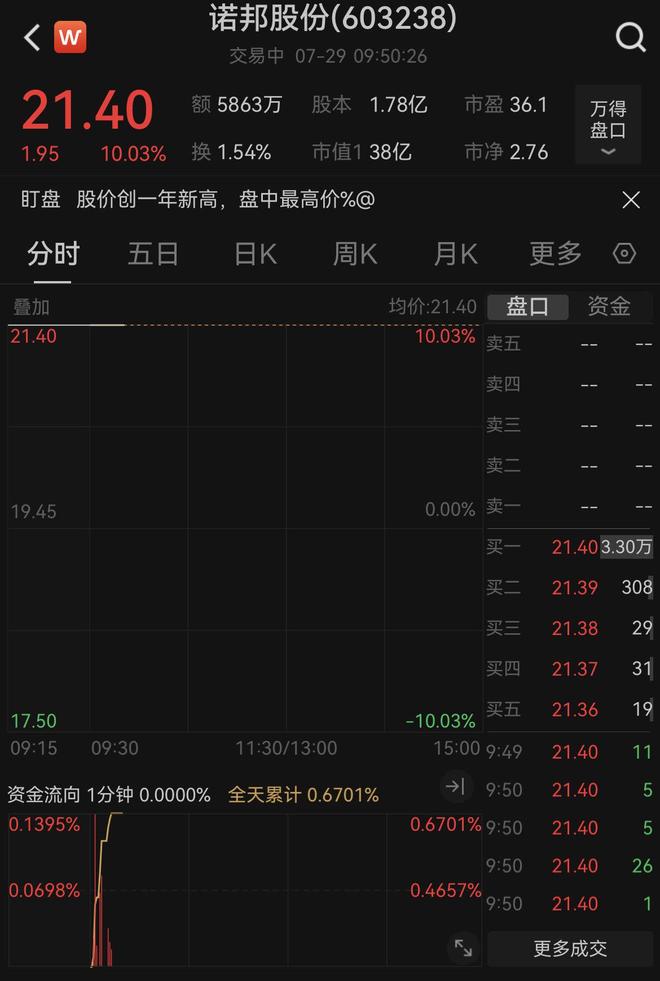
Group 1 - The A-share market saw a collective surge in maternal and infant concept stocks on July 29, with companies like Beiyinmei, Aiyingshi, and Nuobang shares hitting the daily limit, while others like Qishi Dairy and Xibu Muye rose over 10% [1] - The newly announced national childcare subsidy policy, effective from January 1, 2025, will provide annual subsidies of 3,600 yuan per child for families with children under three years old [2] Group 2 - The Chinese baby and child market is in a "golden period" of simultaneous quantity and quality growth, projected to reach 4.2 trillion yuan in 2024 and exceed 5 trillion yuan by 2025, with a potential of 10 trillion yuan by 2030 [3] - The policy environment is expected to benefit four key areas: dairy products, maternal and infant chain sectors, baby products, and postpartum care services, with a notable increase in demand for infant formula and related products [3] - Local childcare subsidy policies are anticipated to continue emerging under national guidance, which will lower family costs and boost birth rates, particularly benefiting the maternal and infant consumer goods sector [3]


永安期货股指日报-20250729
Xin Yong An Guo Ji Zheng Quan· 2025-07-29 02:33
Market Performance - A-shares experienced fluctuations, with the Shanghai Composite Index rising by 0.12% to 3597.94 points, the Shenzhen Component increasing by 0.44%, and the ChiNext Index up by 0.96%[1] - The Hong Kong Hang Seng Index rose by 0.68% to 25562.13 points, while the Hang Seng Tech Index fell by 0.24%[1] Economic Developments - The U.S.-China trade talks focused on extending the tariff truce and issues like fentanyl, with reports indicating the U.S. has frozen technology export restrictions to China[1] - China announced a nationwide childcare subsidy program, providing 3600 yuan (approximately $502) per child per year for families with children under three years old, expected to benefit over 20 million families annually[1][12] Industry Insights - The pharmaceutical sector saw significant gains, particularly in innovative drugs, contributing to market momentum[1] - China’s budget deficit reached a record high in the first half of the year, with increased fiscal spending aimed at mitigating the impact of tariffs[12]




