
AGI

Search documents
“全球大模型第一股”花落智谱,CEO张鹏回应没实现AGI就上市
Sou Hu Cai Jing· 2026-01-12 03:47
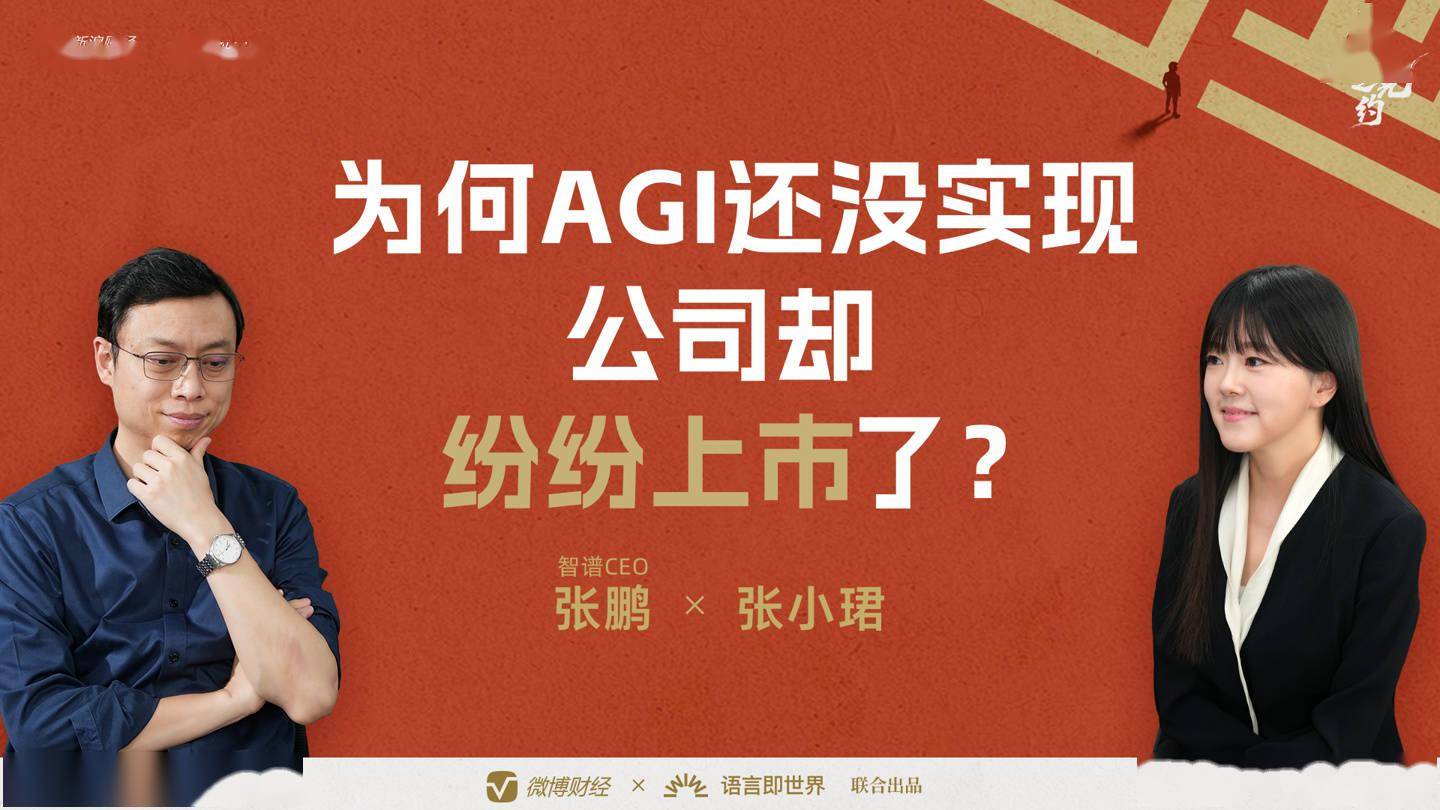
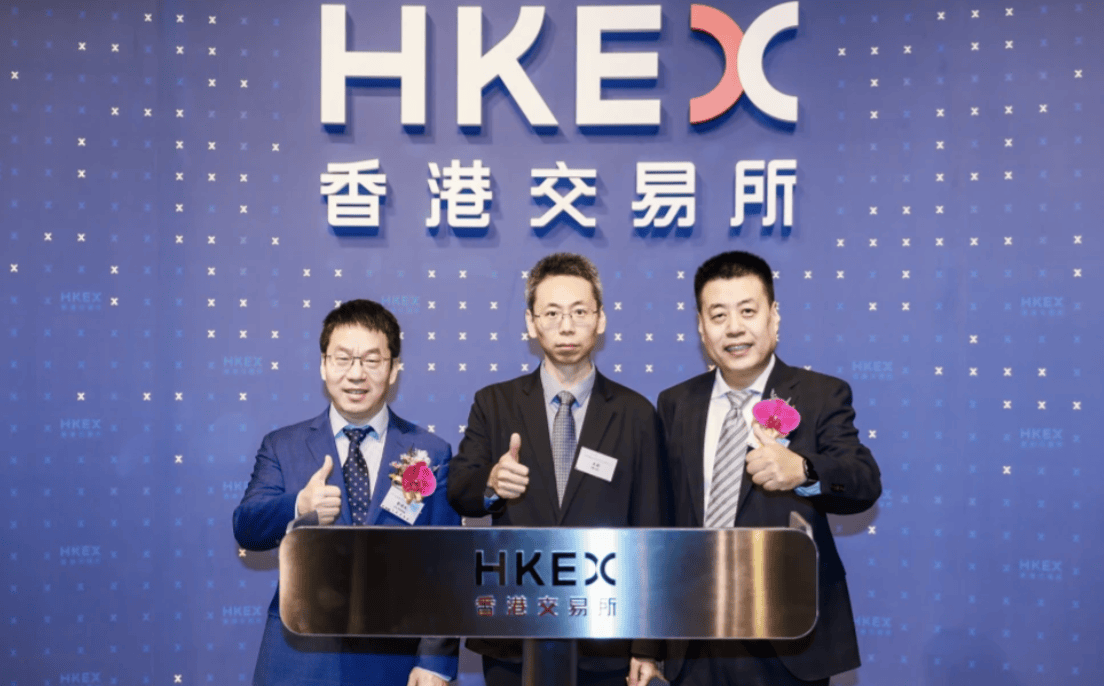
IT之家 1 月 12 日消息,"全球大模型第一股"智谱于 1 月 8 日上午在港交所主板挂牌上市,发行价为每股 116.20 港元。 据新浪财经报道,在《未竟之约》栏目中,智谱 CEO 张鹏回应为何 AGI 还没实现公司却纷纷上市,表示实现 AGI 不是一件非常简单的事情,它也不是一 个非常短期就能实现的目标。它可能是一个马拉松,是一个长跑,非常长的一个距离。 张鹏称:"大家都坚持不住的时候,你会去补给站拿一些补给,然后把自己的体力保持住,不断平衡自己的消耗和摄入能量。在不同的阶段你会有不同的方 式去运转你整个体系,所以上市这个事情对我们来讲就自然而然的。" | HK 02513智谱 | | | | | | | | --- | --- | --- | --- | --- | --- | --- | | 205.000 港元 +46.400 +29.26% | | | | | | | | ○ 交易中 01-12 11:34:00 北京时间 | | | | | | | | 今开 182.300 | | 最高 | 214.000 | | | 成交量 412.98万股 | | 昨收 158.600 | | 最低 | ...

同类最低费率云计算ETF华夏(516630)涨超3%,连续两日净流入超7000万元,易点天下再度涨停
Mei Ri Jing Ji Xin Wen· 2026-01-12 03:40
Group 1 - The media and computer industries continue to show strength, with applications like Kimi, DeepSeek, and AIGC gaining traction [1] - The cloud computing ETF Huaxia (516630) has risen over 3% and has seen a net inflow of over 70 million yuan in the past two days [1] - The AGI-Next summit initiated by Tsinghua University highlights a shift in large model competition from "Chat" to "Agent" phase, with a focus on executing complex tasks in real environments [1] Group 2 - The strategy team at Industrial Securities notes that global giants are significantly increasing capital expenditures, shifting market focus towards the commercialization of AI applications [2] - Domestic AI commercialization is supported by a large market scale and diverse application scenarios, positioning China for potential "curve overtaking" in AI application development [2] - The Huaxia cloud computing ETF tracks the cloud computing index, which focuses on domestic AI hardware and software capabilities, with DeepSeek and AI applications comprising over 40% of its content [2]
东方证券:CES展中国人形机器人占主导地位 看好具备构建大脑能力的领跑公司及产业链
智通财经网· 2026-01-12 02:23
智通财经APP获悉,东方证券发布研报称,人形机器人在近期CES展中大放异彩,我国产业链快速发 展,具有极强的竞争力。向前看,该行认为简单机器人的量产对投资的影响会边际变弱,但AGI的叙事 有望边际变强,看好具备构建大脑能力的领跑公司及产业链,包括特斯拉(TSLA.US)核心产业链和具有 垂直场景的本体公司。 东方证券主要观点如下: 看好具备构建大脑能力的领跑公司及产业链 相比于快速上量,该行认为国家也在引导大脑能力的建设。近期国家发改委提到要着力防范重复度高的 产品"扎堆"上市、研发空间被压缩等风险;支持企业、高校、科研机构等围绕"大小脑"模型协同、云侧 与端侧算力适配、仿真与真机数据融合等技术进行攻关,解决产业卡点堵点问题。该行认为两类领跑型 公司具有投资机会,第一类是特斯拉核心产业链,特斯拉官宣在自研世界模型中训练Optimus,第二类 是具有垂直场景的本体公司,场景应用有利于数据和模型的积累。 CES展人形机器人瞩目,中国人形机器人占主导地位 相关标的:拓普集团、三花智控、五洲新春、恒立液压、震裕科技、杭叉集团、安徽合力、杰克科技、 永创智能、优必选。 在近期的CES展中,机器人获得重点关注,特别是中国 ...

多模态大模型输给三岁宝宝?xbench x UniPat联合发布新评测集BabyVision
红杉汇· 2026-01-12 01:04
Core Insights - The article discusses the advancements in large models in language and text reasoning, highlighting the need for models to understand visual information without relying on language. The introduction of the BabyVision evaluation set aims to assess this capability [1][2]. Group 1: Evaluation of Visual Understanding - BabyVision conducted a direct comparison between children of various ages (3, 6, 10, 12 years) and top multimodal models on 20 vision-centric tasks, revealing that most models scored below the average of 3-year-old children [2][4]. - The only model that consistently exceeded the 3-year-old baseline was Gemini3-Pro-Preview, which still lagged approximately 20 percentage points behind 6-year-old children [4]. Group 2: Breakdown of Visual Abilities - The research team categorized visual abilities into four core categories: Visual Pattern Recognition, Fine-grained Discrimination, Visual Tracking, and Spatial Perception, with a total of 22 sub-tasks designed to quantify foundational visual skills [9][11]. - BabyVision was developed using a rigorous data collection process, referencing children's cognitive materials and visual development tests, resulting in 388 high-quality visual questions [10][11]. Group 3: Performance Results - In the BabyVision-Full evaluation, human participants achieved an accuracy rate of 94.1%, while the best-performing model, Gemini3-Pro-Preview, scored only 49.7%, with most models falling in the 12-19% range [13]. - The performance gap was consistent across all four categories, indicating a systemic lack of foundational visual capabilities in the models [13]. Group 4: Challenges Identified - The article identifies several challenges faced by models, including the inability to process visual information without losing details, leading to errors in tasks that require spatial imagination and visual pattern induction [15][23][26]. - Many tasks in BabyVision are described as "unspeakable," meaning they cannot be fully captured in language without losing critical visual information [15]. Group 5: Future Directions - BabyVision-Gen was introduced to explore whether models can perform visual tasks like children by generating images or videos as answers, showing some improvement in human-like behavior but still lacking consistent accuracy [27][28]. - The importance of BabyVision lies in its ability to break down visual understanding into measurable components, guiding the development of multimodal models towards achieving true general intelligence and embodied intelligence [31].

700亿“全球大模型第一股”,IPO破局
Sou Hu Cai Jing· 2026-01-12 00:37
Core Viewpoint - The AI industry has entered a realization phase, with the competition among large model companies intensifying as they shift focus from scale to profitability [1] Company Overview - Zhiyu, established in 2019, specializes in foundational model development and has created a comprehensive model matrix covering language, code, multimodal, and intelligent agents, adapting to over 40 domestic chip types [3] - Zhiyu aims for AGI from its inception, distinguishing itself from competitors, and ranks first among independent general-purpose large model developers in China and second among all general-purpose large model developers globally based on projected 2024 revenue [4] Financial Performance - Zhiyu has begun to focus on profitability, launching a MaaS strategy in 2021, with nine of the top ten internet companies in China using its GLM model, making it the only startup with significant revenue from MaaS [5] - Revenue projections show significant growth, with expected revenues of 57.4 million yuan, 124.5 million yuan, and 312.4 million yuan from 2022 to 2024, reflecting a compound annual growth rate of 130%. In the first half of 2025, revenue reached 190 million yuan, a year-on-year increase of 325% [5] Losses and Margins - Despite rapid growth, Zhiyu's losses have also increased, with net losses of 143 million yuan, 788 million yuan, and 2.956 billion yuan from 2022 to 2024, and a net loss of 2.351 billion yuan in the first half of 2025 [7] - Gross margins have shown a declining trend, with rates of 54.6%, 64.6%, and 56.3% from 2022 to 2024, and a gross margin of 50% in the first half of 2025 [7] Investment and Market Outlook - Prior to its IPO, Zhiyu completed eight funding rounds, raising over 8.3 billion yuan from notable investors including Meituan, Ant Group, Alibaba, Tencent, Sequoia China, and Hillhouse [7] - According to CITIC Securities, Zhiyu's revenue has consistently doubled over the past two years, with expectations to exceed 1 billion USD in 2025. The domestic large language model market is projected to grow 20-fold over the next six years, with enterprise demand driving a trillion yuan opportunity [7] - The IPO of Zhiyu is seen as a valuation anchor for the industry, indicating a shift from explosive growth to stability, with capital focusing more on revenue than scale [8]
马化腾把 AI交给了 27 岁的姚顺雨
Sou Hu Cai Jing· 2026-01-11 23:46
Core Viewpoint - Tencent is undergoing a significant transformation in its AI strategy, appointing 27-year-old Yao Shunyu, a former core researcher at OpenAI, to lead its AI initiatives, signaling a serious commitment to revitalizing its struggling AI business [2][4]. Group 1: AI Business Challenges - Tencent's AI division has been characterized by inefficiencies, with each business unit independently investing over 2 billion yuan annually in R&D without effective collaboration, leading to resource wastage [4][5]. - The company has faced difficulties in monetizing its AI products, with the AI product "Yuanbao" struggling to retain users, as it primarily showcases technical capabilities rather than solving real problems [7][14]. - Despite having a large user base and numerous business scenarios, Tencent's AI efforts have been hindered by internal coordination issues and a lack of unified standards for AI agents [9][10]. Group 2: Strategic Changes and Innovations - Yao Shunyu's appointment is seen as a strategic move to break down departmental silos and establish a cohesive AI framework, creating new departments to enhance collaboration and efficiency [5][16]. - The new AI model architecture led by Yao has shown early signs of success, with the "Hunyuan" model being integrated into over 900 business scenarios, significantly improving operational efficiency [5][8]. - Tencent's focus has shifted from merely achieving high rankings in AI benchmarks to developing commercially viable solutions, as evidenced by improvements in product design and user engagement metrics [8][15]. Group 3: Financial Performance and Investment - Tencent's third-quarter financial report indicates a strong emphasis on AI, with R&D expenditures rising to approximately 22.82 billion yuan, reflecting a 27.57% year-over-year increase [15]. - The company's revenue from marketing services grew by 21% year-over-year, highlighting the potential for AI to contribute to revenue growth despite current challenges [13]. - By the end of 2025, Tencent aims to increase the revenue share from its AI-related businesses from 3% to 5%, transitioning from a cost center to a revenue-generating engine [8][14].


五分钟掌握AGI Next峰会干货:中国AI大佬们的2026共识与交锋
3 6 Ke· 2026-01-11 23:41
Core Insights - The AGI Next Summit, held on January 10, 2026, focused on academic discussions and technical insights, featuring prominent figures from academia and industry, setting a clear direction for AI development in 2026 [1] - The summit is seen as a "wake-up call" for the industry, moving away from hype and towards concrete challenges and pathways for AGI implementation [1] Group 1: Academic Perspectives - Zhang Bo, a pioneer in AI research, highlighted five fundamental deficiencies in current large models, emphasizing that AGI should have executable and verifiable definitions, including key capabilities like multimodal understanding and online learning [2] - Yang Qiang used the metaphor of "coffee addiction" to stress the need for long-term commitment in AGI research, aligning with the belief that true breakthroughs require sustained effort rather than quick wins [2] - The summit underscored the importance of focusing on core technical issues such as causal reasoning and autonomous learning, marking a shift from mere parameter scaling to deeper technological understanding [13] Group 2: Industry Insights - Tang Jie, CEO of Zhipu AI, argued that the competition has shifted from model scaling to enabling machines to think like humans, proposing "autonomous scaling" as a key future direction [3] - Lin Junyang from Alibaba emphasized the need for "general intelligent agents" and cautioned against homogeneous competition, suggesting that true innovation is essential for global competitiveness [5] - Yao Shunyu from Tencent discussed the clear division in the AI industry, advocating for a layered approach where different models serve distinct roles, aligning with the distributed AI ecosystem [7] Group 3: AI Ecosystem and Future Directions - The roundtable discussion revealed a consensus on the future of AI models, moving towards a structure where top models meet core needs while lightweight models address broader applications [9] - The panel agreed that the next generation of AI should focus on reducing dependency on human data, aiming for autonomous learning and decision-making capabilities [10] - The challenges of commercializing AI agents were acknowledged, with a focus on adapting to specific scenarios to enhance reliability and effectiveness [12] Group 4: Market Positioning and Opportunities - The summit highlighted the importance of recognizing the differences in AI development paths between China and the U.S., with China excelling in application innovation and rapid iteration [17] - Companies are encouraged to focus on niche markets and specific applications rather than competing directly with large models, fostering unique advantages in specialized areas [14] - The development of distributed intelligence is seen as a pathway for China to leverage its vast user base and application scenarios to drive AI innovation [17] Group 5: Conclusion and Future Outlook - The AGI Next Summit did not provide a definitive answer to AGI but clarified the industry's direction towards core technology competition and application depth [18] - The emphasis on distributed intelligence is expected to facilitate the transition of AGI from research to practical applications, enhancing everyday life and work efficiency [16] - The summit reinforced the notion that long-term commitment to AGI development is essential for success, with a focus on foundational innovations [18]
陆家嘴财经早餐2026年1月12日星期一
Wind万得· 2026-01-11 22:42
Group 1 - The China Securities Regulatory Commission (CSRC) aims to improve the institutional environment for long-term investments and enhance the precision and effectiveness of services for technology innovation enterprises [3] - The AGI-Next summit highlighted a shift in large model competition from "Chat" to "Agent" phase, predicting 2026 as the year for commercial value realization [3] - The upcoming global market events include the release of China's foreign trade data for December 2025 and the U.S. CPI and PPI data [4] Group 2 - The National Business Work Conference emphasized eight key areas for the business system in 2026, including boosting consumption and promoting trade innovation [5] - The National Healthcare Security Administration is piloting the "Personal Medical Insurance Cloud" project to create a smart healthcare management model [5] - Hainan Province is implementing a joint approval system for land, forestry, and marine use to improve efficiency and reduce costs for enterprises [5] Group 3 - The Hong Kong government anticipates a return to surplus in its financial accounts due to increased revenue from a thriving financial market [6] - A-shares continued to show a trend of oscillating upward, with a focus on structural investment opportunities as the market enters the earnings forecast disclosure period [7] - Public funds are expected to exceed 45 billion yuan entering the market in 2026, driven by new stock ETFs and actively managed funds [8] Group 4 - The internationalization of Chinese securities firms is accelerating, with a target of forming 2 to 3 internationally competitive investment banks by 2035 [9] - The non-ferrous metals sector has seen significant inflows, with many ETFs performing well, although caution is advised regarding high valuations [9] - The first A-share stock to double in value this year was ZhiTe New Materials, which saw a 170% increase in just six trading days [9] Group 5 - The North Exchange has seen a rapid pace of approvals for new listings, with two electrical companies recently passing the review process [10] - The public REITs market in China is optimistic for 2026, with expectations for high-quality development driven by policy benefits [13] - The photovoltaic industry is facing a significant policy shift with the cancellation of export tax rebates, indicating a historical turning point for the sector [14] Group 6 - The semiconductor industry is experiencing a surge in demand, with Micron Technology announcing a $100 billion investment in a new wafer fab in New York [20] - The bond market is seeing a slowdown in inflows, with nearly 50% of bond funds failing to achieve positive returns due to rising long-term interest rates [21] - The precious metals market continues to show bullish trends, with both gold and silver prices rising despite increased volatility [22]


顶级AI专家海淀“论道”:下一个范式是什么?
Zhong Guo Ji Jin Bao· 2026-01-11 12:57
校对:乔伊 "后来,2025年初我们在想一个问题,也许在DeepSeek范式下,Chat时代的问题基本上已经解决,我们 做得再好,在Chat的问题上可能最后跟DeepSeek差不多,或许会再个性化一点,变成有情感的Chat,或 者再复杂一点。但总体来讲,该范式可能基本上快到头了,剩下更多的是工程和技术问题。" 唐杰称,"我们面临选择,AI下一步将朝哪个方向发展?当时的想法是,也许下一个范式是让每个人能 够用AI做一件事情,原来是Chat,现在是真的做事了,所以,新的范式开启了。" 唐杰还表示,多模态感统是今年的一个热点和重点,它是完成人机GUI交互+AI进入物理世界的关 键,"有了这个能力,AI才可以完成更复杂的长时任务,形成一个AI工种,变成和人一样;通过AI Robotics(机器人),AI才能实现具身智能,进入物理世界。" 【导读】唐杰:多模态感统将是今年的研究热点 中国基金报记者 卢鸰 1月10日下午,由清华大学基础模型北京市重点实验室发起的AGI-Next前沿峰会在北京海淀召开,智谱 创始人、清华大学教授唐杰,月之暗面创始人杨植麟、Qwen技术负责人林俊旸、腾讯"CEO/总裁办公 室"首席AI科学家 ...
唐杰、姚顺雨、杨植麟、林俊旸同台对话背后:5个2026年最重要的AI趋势观察
Xin Lang Cai Jing· 2026-01-11 06:47
Core Insights - A high-profile dialogue on AI took place in Beijing, featuring leading figures in China's large model sector, indicating a significant moment for the industry [1][2][15] - The discussion focused on the evolution of AGI, with a consensus that the future lies in autonomous learning and problem-solving capabilities [3][4][17] Group 1: Key Figures and Their Contributions - Tang Jie, a professor at Tsinghua University and founder of Zhipu AI, recently led the company to become "China's first stock in foundational models" [1][15] - Yao Shunyu, a former OpenAI researcher and now Tencent's chief scientist, emphasized the importance of autonomous learning in AGI's future [4][18] - Lin Junyang, head of Alibaba's Tongyi Qianwen model, discussed the need for models to evolve beyond general-purpose tools to specialized applications [7][21] Group 2: Future Directions in AGI - The next "singularity" in large models is expected to focus on autonomous learning, moving beyond passive responses to proactive decision-making [3][17] - Yao Shunyu highlighted that autonomous learning is a gradual process driven by data and task evolution, with current models already showing signs of self-optimization [4][18] - Concerns about the risks of autonomous AI were raised, emphasizing the need for proper guidance in AI development [3][17] Group 3: Scaling Law and Efficiency - The Scaling Law, which posits that increasing data and computational power leads to better model performance, is facing diminishing returns, prompting a shift towards "Intelligence Efficiency" [5][19] - Tang Jie proposed that future advancements should focus on achieving higher intelligence with less computational investment [5][19] - Yao Shunyu noted that improvements in model architecture and optimization are crucial for enhancing model performance beyond mere scaling [6][20] Group 4: Model Differentiation - The conference highlighted the trend of model differentiation, where models are tailored to specific scenarios rather than being one-size-fits-all solutions [7][21] - Yao Shunyu pointed out that in B2B contexts, strong models can significantly reduce operational costs, while in B2C, the focus should be on contextual understanding [8][22] - Lin Junyang emphasized the importance of integrating models with real-time user environments for better performance in consumer applications [8][22] Group 5: The Future of AI Agents - There is widespread optimism about the potential of AI agents to automate tasks, particularly in B2B settings, though challenges remain in B2C applications [11][25] - The development of agents is seen as a multi-stage process, with current models still reliant on human-defined goals [12][26] - The future of agents may involve more interaction with the physical world, enhancing their utility and effectiveness [11][25] Group 6: Competitive Landscape and Innovation - The dialogue acknowledged the existing gap between Chinese and American AI capabilities, with a consensus on the need for innovation to bridge this divide [12][26][28] - Yao Shunyu emphasized the importance of breakthroughs in computational power and market maturity for China's AI future [13][27] - Tang Jie identified opportunities for China to excel in AI through a culture of risk-taking and innovation among younger generations [14][28]
