
精细化运营

Search documents
尚德机构上半年实现营收10.27亿元
Zheng Quan Ri Bao Wang· 2025-08-14 12:14
Core Insights - The company, Shangde Online Education Technology Co., Ltd., reported a revenue of 1.027 billion yuan and a net profit of 202 million yuan for the first half of 2025, with Q2 revenue reaching 539 million yuan, a year-on-year increase of 9.5%, and net profit of 127 million yuan, a year-on-year increase of 54% [1] - The improvement in profitability is attributed to continuous optimization of the operational system, focusing on three core areas: market investment, teaching research, and organizational management [1][2] - AI technology has played a significant role in enhancing operational efficiency and profit metrics, with applications in various scenarios such as AI recommendation chat, intelligent voice interaction, and automatic assignment grading [2] Financial Performance - In the first half of 2025, Shangde achieved a revenue of 1.027 billion yuan and a net profit of 202 million yuan [1] - Q2 revenue was 539 million yuan, reflecting a 9.5% year-on-year growth, while net profit increased by 54% to 127 million yuan [1] Operational Strategy - The company has implemented a refined operational strategy that includes focusing on high retention and high conversion customer acquisition channels, introducing a dynamic budget allocation mechanism to reduce customer acquisition costs [1] - The teaching research aspect has seen a shift towards modular and standardized course content, leveraging automation tools to enhance output efficiency [1] - Organizationally, the company has deepened its flat reform to improve management execution [1] Market Trends - The adult education industry in China is undergoing a significant transformation driven by upgraded demand, with the market expected to reach 1.04 trillion yuan by 2027, growing at a compound annual growth rate (CAGR) of 12.6% [2] - The personal interest learning market is projected to grow at a CAGR of 14.1%, reaching 296.4 billion yuan by 2027, driven by an increase in self-improvement awareness among adults [2] Strategic Transformation - Since 2020, the company has shifted its course structure from "demand-driven" to "diversified-driven," restructuring its business into three main modules: academic education, vocational skills, and interest cultivation [3] - This diversified approach has mitigated risks associated with single-category fluctuations and expanded the long-term growth potential by covering a user demographic from ages 20 to 75 [3] - By Q2 2025, non-academic business revenue accounted for 78% of total revenue, with interest education emerging as a significant growth driver [3] User Engagement - The company has developed a service model for the elderly demographic that includes a "content + social + companionship" approach, achieving a course completion rate of 80%, a repurchase rate exceeding 60%, and a satisfaction rate above 90%, significantly higher than industry averages [3] - Future plans include not only providing quality educational content but also creating a learning environment that fosters intrinsic motivation and enhances social belonging [3]

商业企业运营面临现实挑战,不少轻资产项目面临退出困境
Sou Hu Cai Jing· 2025-08-14 10:41
Core Insights - The current market for retail commercial real estate is undergoing rational adjustments, with companies facing numerous challenges, yet some leading firms demonstrate resilience [2] - The enhancement of commercial operational capabilities will be crucial for companies to stand out in a competitive environment [2] Group 1: Market Trends - Retail commercial real estate companies are experiencing performance pressure, with light asset expansion becoming the mainstream trend, although project exit challenges persist [2][5] - The importance of stock renovation and refined operations is increasingly recognized, with companies possessing strong commercial management capabilities more likely to succeed [2] Group 2: Company Performance - Hong Kong-funded enterprises show slight growth or decline, with long-term operators exhibiting resilience due to strong market competitiveness and risk resistance [4] - In 2024, Swire Properties recorded retail rental income of 4.787 billion yuan, a slight increase of about 2%, while other firms like New World Development and Wharf Holdings saw declines of 2% and 4% respectively [4] - Domestic leading commercial management company China Resources Vientiane Life reported a retail revenue increase of approximately 30%, with managed project retail sales growing by 18.7% [4] Group 3: Light Asset Expansion - Companies like China Resources Vientiane Life, Wanda Commercial Management, and Xuhui Commercial are rapidly expanding through light asset models, reducing cost pressures [5] - However, challenges remain, as many companies relying on light asset models face project exits due to unmet operational expectations or contract expirations [6] Group 4: Renovation and Innovation - Significant renovation projects are planned for 2025, focusing on enhancing customer experience and maintaining competitiveness [7] - Differentiated projects are emerging, such as the cultural integration at Wuhan Ocean Lane CITYLANE and the tech-driven JD MALL in Wuhan, aimed at addressing homogenization in the commercial market [8]

解码市场脉搏,洞见产业趋势!——全景网集体接待日互动问答高频热词报告
Quan Jing Wang· 2025-08-13 05:51
Core Insights - The 2025 online collective reception day for listed companies saw participation from 1,072 companies and 3,669 executives, with a total of 20,530 investor questions and a response rate of 87.56% [1] Group 1: Strategy and Development - Development was mentioned 3,967 times, with future plans referenced 1,930 times and strategic discussions 1,905 times, indicating a strong commitment to high-quality growth by Chinese enterprises [1] - Growth commitments were noted 1,744 times and layout planning 1,317 times, reflecting the proactive approach of companies towards capital market engagement [1] Group 2: Operations and Management - Discussions on operations occurred 3,158 times, with management optimization mentioned 2,891 times and quality pursuits 1,584 times, showcasing the focus on refined operational practices [2] - Performance was referenced 1,560 times, and construction efforts 1,442 times, highlighting tangible value creation in the capital market [2] Group 3: Products and Technology - Product focus was emphasized 4,105 times, with technological breakthroughs noted 2,289 times and R&D investments 1,835 times, illustrating the innovation drive within Chinese companies [3] - Production discussions occurred 2,411 times and service-related topics 1,528 times, indicating a comprehensive approach to industry upgrades [3] Group 4: Market and Customers - Market attention was noted 4,498 times, with shareholder communications at 2,264 times and customer needs at 1,786 times, painting a vivid picture of market engagement [4] - Industry trends were discussed 2,254 times and project progress 2,215 times, demonstrating the effective value discovery function of the capital market [4] Conclusion - The data from the collective reception day reflects a comprehensive engagement across various dimensions, from strategic development to market dialogue, underscoring the commitment of companies to create value through communication and innovation [5]
网格仓盈利案例:从月亏5万到20万,社区团购融合3个月见效
Sou Hu Cai Jing· 2025-08-12 04:57
Core Insights - The article highlights the successful transformation of a grid warehouse from a loss of 50,000 to a profit of 200,000 within three months by integrating traditional logistics with community group buying [1] Group 1: Operational Strategies - The initial operational bottleneck was identified in the sorting process, which could not handle the surge in community group orders, leading to delays [3] - The owner optimized labor allocation by implementing a two-shift system, increasing the sorting team to 16 members, which reduced sorting cycles by 50% [3] - Night shift wages were raised to 18 yuan/hour to enhance team efficiency, addressing the labor shortage and stabilizing service [3] Group 2: Cost Management - The owner established a "granular cost management system" for group buying, improving vehicle loading rates from 60% to 92% and reducing fuel costs by nearly 3,000 yuan per month [5] - Agreements with suppliers for exclusive pricing and return policies on unsold items led to an 8% reduction in packaging costs [5] - The implementation of a data-driven operational model allowed the warehouse's sorting and vehicle efficiency metrics to surpass the industry average [5] Group 3: Service Enhancement - The warehouse transitioned from a logistics node to a community group buying hub by analyzing customer feedback and adjusting product offerings to meet rising demand for baby products, which grew by 20% monthly [6] - A new pricing strategy was introduced, offering discounts for group purchases, resulting in a 50% year-over-year increase in order volume [6] Group 4: Sustainable Profit Model - The integration of logistics and group buying created a closed-loop profit model, allowing the warehouse to charge suppliers a 3% fee for group buying operations, generating an additional monthly income of nearly 10,000 yuan [7] - This case exemplifies how traditional logistics can thrive by deeply engaging with the group buying ecosystem, providing a replicable model for similar warehouses [7] Group 5: Conclusion - The success story of the grid warehouse illustrates the victory of traditional logistics embracing new business models, emphasizing the importance of strategic labor management, cost control, and service enhancement [9]
跳出价格混战 零食龙头创新求变 量贩零食以精细化运营重塑竞争力|反内卷进行时
Xin Lang Cai Jing· 2025-08-09 07:36
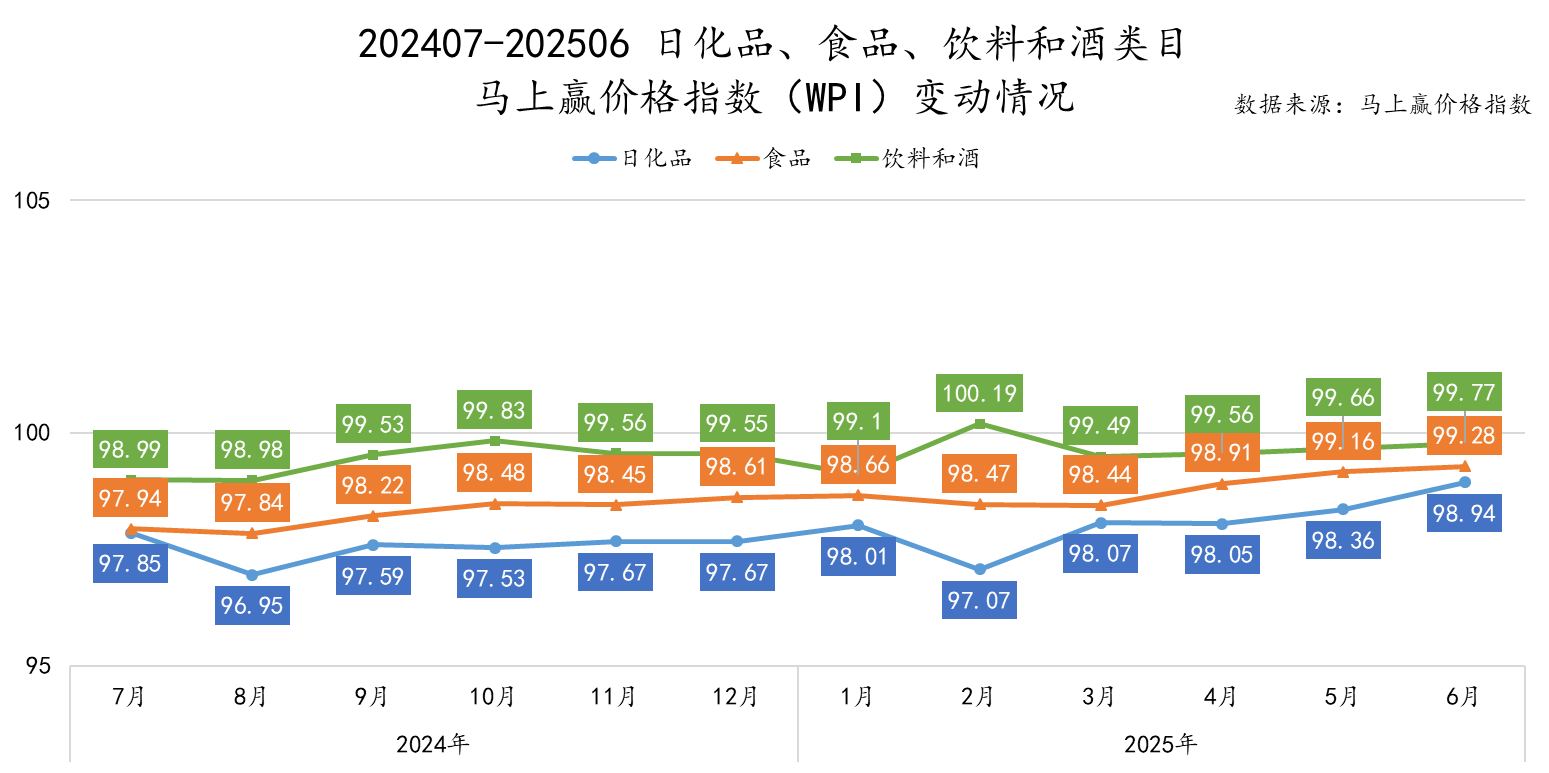
Group 1: Industry Overview - The leisure snack industry is undergoing significant changes, with a focus on price competition leading to a decline in overall category prices [1][2] - The price index for food categories has remained below the baseline of 100 since July 2024, indicating a year-on-year decline in food prices [2] - Companies are responding to price wars by innovating products, enhancing supply chain efficiency, and strengthening brand marketing to create a competitive edge [6] Group 2: Company Strategies - Leading brands are focusing on product innovation and cost leadership to build a competitive moat, with examples like Jinzhai Food launching antibiotic-free, ready-to-eat quail eggs [6] - Salted Fish Shop has introduced new sunflower seed snacks emphasizing quality raw materials and healthy production processes [6] - Brand building and international expansion are seen as effective strategies to overcome price competition, with over 10 snack companies from Hunan province exploring overseas markets [7] Group 3: Retail Dynamics - The bulk snack sector is shifting from price wars to value-based management, moving away from discount battles that characterized previous years [8][9] - The focus has shifted to high-quality products and refined consumer experiences, with brands updating hundreds of SKUs monthly to maintain freshness and appeal [9] - Wanchen Group reported a revenue of 10.688 billion yuan in Q1, with a net profit of 412 million yuan, reflecting a net profit margin increase of 1.36 percentage points year-on-year [9][10] Group 4: Future Outlook - Companies are expected to continue investing in supply chain advantages, brand building, and digital capabilities to balance scale and efficiency for long-term growth [10] - The emphasis on product quality is becoming increasingly important, with reliable quality control being a fundamental requirement for manufacturers [10]
Temu美区流量终于回来了,还是有搞头的
Sou Hu Cai Jing· 2025-08-08 07:26
Group 1 - Temu's market in the US is experiencing a significant turnaround in August, with a noticeable increase in traffic and sales for sellers [1][3] - Sellers reported that sales increased from 280 orders to 400 orders within a week, indicating renewed optimism among cross-border e-commerce sellers focused on Temu [1][3] - The traffic recovery is attributed to Temu's strategic adjustments, including the resumption of advertising on platforms like Meta and Google, and the release of traffic from Amazon's paused ads [3] Group 2 - Temu has adjusted its traffic distribution rules to favor products with stable sales records over merely low-priced items, indicating a shift towards prioritizing product quality and sales stability [3] - Full-service sellers are benefiting more from the traffic increase compared to semi-managed sellers, highlighting a disparity in traffic distribution based on product performance [3] - Despite the positive trends, Temu faces challenges with the upcoming tariff policy changes and difficulties in attracting local US sellers due to concerns over their Amazon sales qualifications [5] Group 3 - Cross-border e-commerce sellers need to adopt more refined operational management to capitalize on the traffic recovery, with tools like 易仓ERP providing features to enhance inventory and logistics management [5][7] - The ability to synchronize inventory data and manage orders efficiently is crucial for sellers to avoid penalties and reduce shipping costs [7] - Sellers who can quickly adapt to platform policy changes and optimize their operations are more likely to achieve sustained growth in Temu's US market [7]
爱奇艺回应拟赴港上市消息;盒马今年计划再开100家新店丨消费早参
Mei Ri Jing Ji Xin Wen· 2025-08-07 23:20
Group 1: iQIYI's Potential Hong Kong Listing - iQIYI is reportedly considering a secondary listing in Hong Kong this year, aiming to raise $300 million [1] - The company has begun discussions with international investment banks regarding the listing, although negotiations are not yet finalized [1] - If successful, this move could enhance iQIYI's financing structure and prompt a reevaluation of valuation logic for internet content platforms [1] Group 2: Hema's Expansion Plans - Hema plans to open 100 new stores this year and expand into 50 additional cities, demonstrating its commitment to growth in the new retail sector [2] - The recent integration with "Taobao 88VIP" has led to a 100% increase in membership within a few days [2] - This strategy may trigger a new round of expansion competition in the supermarket retail industry, with potential for further industry concentration [2] Group 3: Zara's Advertising Controversy - Zara faced regulatory action for using models deemed "unhealthily thin" in advertisements, leading to the removal of certain images [3] - The incident highlights a conflict between fashion industry standards and health considerations, prompting brands to reassess their marketing strategies [3] - Increased consumer health awareness may shift industry dynamics, with brands balancing commercial value and social responsibility for sustainable growth [3] Group 4: Hongqi Chain's Financial Performance - Hongqi Chain reported a 7.30% decline in revenue to 4.808 billion yuan for the first half of 2025, while net profit increased by 5.33% to 281 million yuan [4] - This performance indicates effective cost control and improved operational efficiency, potentially leading to a reassessment of regional chain supermarkets [4] - The valuation logic for convenience stores may shift from scale expansion to profitability quality, with a focus on single-store performance and supply chain optimization [4]


乐信发布第二季度财报:营收35.9亿元 环比增15.6%
Zheng Quan Ri Bao Wang· 2025-08-07 07:48
Group 1 - The core viewpoint of the articles highlights that Lexin, a new consumer digital technology service provider, reported strong financial performance for Q2 2025, with revenue of 3.59 billion yuan, a 15.6% increase quarter-over-quarter, and a Non-GAAP EBIT of 670 million yuan, up 15.2% from the previous quarter [1][2] - The company achieved a transaction volume of 52.86 billion yuan in Q2, with a managed loan balance of 105.78 billion yuan and a user base of 236 million [1] - Asset quality indicators showed continuous improvement, with new asset FPD7 decreasing by approximately 5% quarter-over-quarter, overall asset collection rate down by about 2%, and the 90+ delinquency rate down by about 6% [1] Group 2 - Financial metrics indicate that the profit margin (annualized net profit/loan balance) improved by 34 basis points compared to Q1, with multiple quarters of growth exceeding 20 basis points [1] - In July, Lexin initiated a share repurchase plan worth 60 million USD, and starting in the second half of the year, the dividend payout ratio will increase from 25% to 30% of net profit, enhancing shareholder returns [1] - The CEO emphasized the company's commitment to risk-driven and data-driven strategies, leading to steady growth in ecological business and improved asset quality, while maintaining a positive outlook for significant year-over-year net profit growth [2]
乐信二季度财报:营收35.9亿元,环比增15.6% 利润连续5个季度环比上升
Jing Ji Guan Cha Bao· 2025-08-07 07:27
Core Viewpoint - Lexin reported strong financial performance in Q2 2025, with revenue of 3.59 billion yuan, a 15.6% increase quarter-over-quarter, and a profit of 670 million yuan, marking a 15.2% quarter-over-quarter increase and a 116.4% year-over-year increase, achieving the highest profit in 14 quarters [1][2] Financial Performance - Revenue for Q2 2025 reached 3.59 billion yuan, reflecting a 15.6% increase from the previous quarter [1] - Non-GAAP EBIT was 670 million yuan, up 15.2% quarter-over-quarter and 116.4% year-over-year [1] - The profit margin (annualized net profit/loan balance) improved by 34 basis points compared to Q1, with multiple quarters of over 20 basis points increase [2] Scale and User Metrics - The transaction volume in Q2 was 52.86 billion yuan, with a managed loan balance of 105.78 billion yuan and a user base of 236 million [2] - The number of users significantly increased, contributing to the overall growth in transaction volume [4] Asset Quality - Key risk indicators showed improvement for four consecutive quarters, with the new asset FPD7 decreasing by approximately 5% quarter-over-quarter, and the overall asset delinquency rate dropping by about 2% [2] - The overall asset non-performing loan rate over 90 days decreased by approximately 6% quarter-over-quarter, indicating a steady improvement in asset quality [2] Shareholder Returns - In July, the company initiated a share repurchase plan worth 60 million USD, and starting in the second half of the year, the dividend payout ratio will increase from 25% to 30% of net profit, enhancing shareholder returns [2] Strategic Initiatives - The CEO emphasized a strategic transformation driven by risk and data, leading to a high-quality growth quarter, with a focus on prudent management and steady growth in ecological business [3] - The company is responding to government policies aimed at boosting consumption by enhancing product offerings and optimizing service experiences [3] Business Development - The company upgraded its supply chain in the installment shopping mall, introducing well-known brands and enhancing operational models to meet diverse user needs, resulting in a 139% year-over-year increase in GMV during the "6.18" shopping festival [4] - Lexin's inclusive finance initiatives have supported small and micro enterprises, with a total loan amount of 4.69 billion yuan linked during the quarter [4] R&D Investment - In Q2, Lexin invested 160 million yuan in R&D, a 10% year-over-year increase, maintaining industry leadership in technological investment [6]

乐信2025年Q2财报营收35.9亿,利润6.7亿元创14个季度新高
Jin Rong Jie· 2025-08-07 05:32
Core Insights - The company reported Q2 2025 unaudited financial results, showing a revenue of 3.59 billion yuan, a quarter-on-quarter increase of 15.6%, and a profit (Non-GAAP EBIT) of 670 million yuan, up 15.2% quarter-on-quarter and 116.4% year-on-year [1] - The company achieved its highest profit in 14 quarters, marking five consecutive quarters of quarter-on-quarter growth, with multiple core business indicators improving [1] Financial Performance - Q2 transaction volume reached 52.86 billion yuan, with a managed loan balance of 105.78 billion yuan and a user base of 236 million [1] - Risk indicators have improved for four consecutive quarters, with a 5% decrease in new asset FPD in Q2, a 2% decrease in overall asset collection rate, and a 6% decrease in overall assets with over 90 days overdue [1] - The profit margin (annualized net profit/loan balance) increased by 34 basis points compared to Q1, with a consistent quarter-on-quarter growth of over 20 basis points [1] - R&D investment in Q2 was 160 million yuan, a year-on-year increase of 10%, maintaining industry leadership [1] Strategic Outlook - The CEO emphasized a strategic transformation focused on risk and data-driven operations, leading to high-quality growth despite macroeconomic uncertainties [2] - The company plans to maintain a cautious operational strategy, with steady growth in ecological business, improved asset quality, and recovering profitability [2] - A share repurchase plan of 60 million USD was initiated in July, and the dividend payout ratio will increase from 25% to 30% of net profit starting in the second half of the year, potentially enhancing shareholder returns [2]