
货币政策宽松

Search documents
中央汇金,大举增持!
Sou Hu Cai Jing· 2025-09-01 00:31
Group 1 - Central Huijin Investment and its subsidiaries hold a total of 1.28 trillion yuan in stock ETFs as of June 30, 2025, representing an increase of nearly 23% compared to the end of last year [2][4] - The number of stock ETFs held by Central Huijin has increased to 1.58 times that of the end of last year, with multiple broad-based ETFs receiving over 1 billion shares in additional purchases [2][4] Group 2 - In the first half of 2025, the total operating revenue of listed companies in the market reached 35.01 trillion yuan, a year-on-year increase of 0.16% [4] - The net profit for the first half of the year was 3.00 trillion yuan, reflecting a year-on-year growth of 2.54%, with an increase of 4.76 percentage points compared to the previous year's overall growth rate [4] Group 3 - BYD reported a net profit of 15.51 billion yuan for the first half of the year, marking a year-on-year increase of 13.79% [9] - Huawei announced a revenue of 427 billion yuan for the first half of the year, a year-on-year growth of 3.94%, while net profit decreased by 32% to 37.1 billion yuan [10] - Tianshan Lithium Industry reported a net profit of 84.41 million yuan for the first half of the year, achieving a turnaround from losses [10]







中央汇金,大举增持!
证券时报· 2025-09-01 00:22
Core Viewpoint - The article highlights significant developments in the investment landscape, particularly focusing on the actions of central financial institutions and key companies in various sectors, including semiconductor, electric vehicles, and financial markets. Group 1: Central Financial Institutions - As of the end of June, the Central Huijin Investment Co. and its subsidiaries held stock ETFs worth 1.28 trillion yuan, an increase of nearly 23% compared to the end of last year [2][3] - The number of stock ETFs held by Central Huijin at the end of June is 1.58 times that of the end of last year, with several broad-based ETFs receiving over 10 billion shares in increases [3] Group 2: Semiconductor Industry - On August 30, the Ministry of Commerce spokesperson commented on the U.S. revoking the "validated end-user" authorization for three semiconductor companies in China, stating that this action would negatively impact the global semiconductor supply chain [5] Group 3: Company Earnings and Announcements - In the first half of 2025, the total revenue of listed companies reached 35.01 trillion yuan, a year-on-year increase of 0.16%, with a second-quarter revenue of 18.11 trillion yuan, up 0.43% year-on-year and 7.15% quarter-on-quarter [5] - Net profit for the first half of the year was 3.00 trillion yuan, reflecting a year-on-year growth of 2.54%, with an acceleration of 4.76 percentage points compared to the previous year's full-year growth [5] - BYD reported a net profit of 15.51 billion yuan for the first half of the year, a year-on-year increase of 13.79% [12] - Huawei announced a revenue of 427 billion yuan for the first half of the year, a year-on-year increase of 3.94%, while net profit decreased by 32% to 37.1 billion yuan [13] - Guizhou Moutai's controlling shareholder plans to increase its stake in the company by 3 to 3.3 billion yuan [11] Group 4: Regulatory and Market Developments - The new national standard for electric bicycles will be implemented, allowing a maximum weight of 55 kg for lithium battery models and increasing the weight limit for lead-acid battery models from 55 kg to 63 kg [5] - WeChat's "Coral Security" announced measures against accounts providing illegal stock recommendation services, indicating a crackdown on misleading financial information [6]




降息525基点
Ge Long Hui· 2025-08-30 16:32
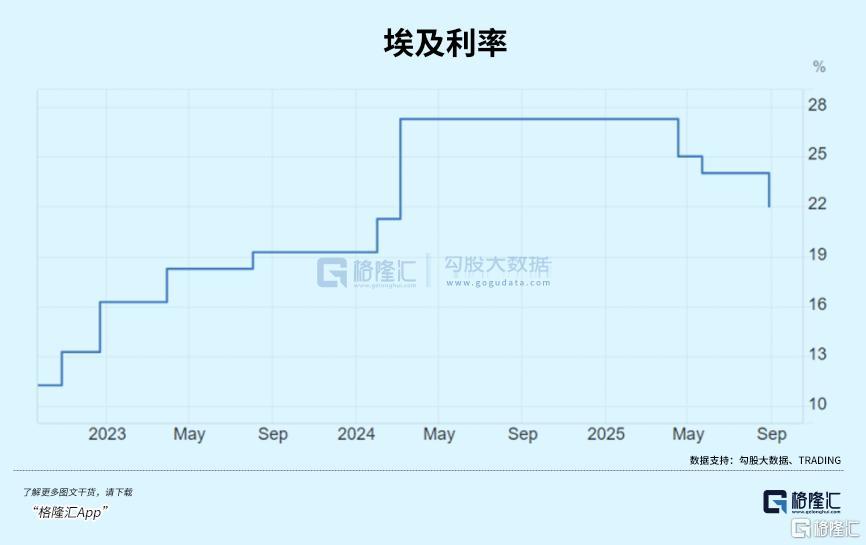
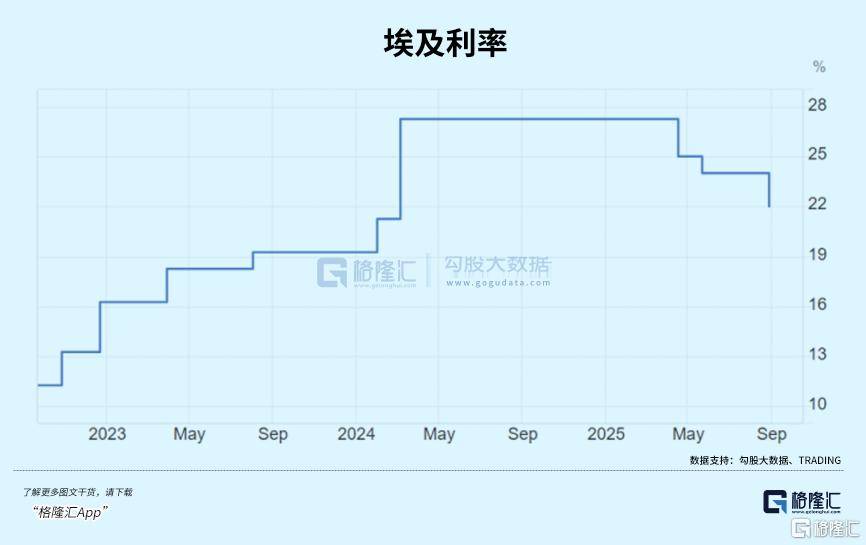
Group 1 - The global trend is shifting towards monetary easing, with Egypt being a significant participant, recently announcing a 200 basis point interest rate cut [1][2] - This marks Egypt's third consecutive rate cut this year, following reductions of 225 and 100 basis points in April and May respectively [2] - The Central Bank of Egypt attributes this easing to the stabilization of the Egyptian pound after a 50% depreciation against the dollar and an economic growth forecast of 5.4% by Q2 2025 [4] Group 2 - Egypt's inflation rate has decreased from a peak of 38.2% in 2023 to 9.4%, the lowest in three years, indicating a potential for continued monetary easing [4][56] - The country faces significant challenges, including a reliance on food imports, with over 60% of its grain sourced from Russia and Ukraine, which has been disrupted by geopolitical tensions [39][40] - Egypt's external debt obligations are substantial, with $75.6 billion due between 2024 and 2026, while government revenues are projected at only $40 billion in 2024 [48][49] Group 3 - The economic model of heavy subsidies for basic food items has led to a distorted agricultural market, with farmers losing incentive to produce due to artificially low prices [20][22] - The government spends over 90% of the cost of subsidized bread, which has been a critical measure to prevent widespread hunger [21][22] - The current economic situation is precarious, with a high poverty rate affecting 60% of the population, leading to social instability [33][36] Group 4 - The Suez Canal remains a vital economic asset, contributing 10% to Egypt's GDP, but recent geopolitical issues have reduced shipping traffic and revenue by 40% [35][45] - The government is attempting to balance debt repayment with social welfare spending, which is critical to maintaining public order [51][52] - Recent monetary policy changes aim to attract foreign investment and create a synergistic effect between monetary easing and fiscal reform [56][59]
降息525基点!
Sou Hu Cai Jing· 2025-08-30 12:50
Group 1 - The core viewpoint is that Egypt is entering a monetary easing phase, with the central bank recently cutting interest rates significantly due to improved economic conditions and declining inflation [3][9][66] - Egypt's central bank has lowered interest rates by 200 basis points, marking the third consecutive rate cut this year, following reductions of 225 and 100 basis points in April and May respectively [4][66] - The economic backdrop includes a stabilization of the Egyptian pound after a 50% depreciation against the dollar, with projected GDP growth of 5.4% by Q2 2025 [8][66] Group 2 - Inflation peaked at 38.2% in 2023 but has since decreased to 9.4%, the lowest in three years, creating room for monetary policy easing [9][66] - The government is facing a significant debt burden, with $75.6 billion in external debt due between 2024 and 2026, while projected government revenue for 2024 is only around $40 billion [58][59] - The reliance on food imports exceeds 60%, with major sources being Russia and Ukraine, leading to a food crisis exacerbated by geopolitical tensions [50][51][55] Group 3 - The economic model of heavy subsidies for basic food items has led to a distortion in supply and demand, discouraging agricultural production and contributing to a high poverty rate, with 60% of the population living below the poverty line [27][30][41] - The government has been forced to borrow heavily to maintain these subsidies, with over 90% of the cost of subsidized bread being covered by the state [28][30] - The recent monetary easing measures aim to attract foreign investment and create a synergistic effect between monetary and fiscal reforms, albeit at the cost of selling state assets [66][70]
降息200个基点!这国央行宣布
Zheng Quan Shi Bao· 2025-08-29 08:36
Group 1 - The Central Bank of Egypt has significantly cut interest rates by 200 basis points, marking the third rate cut this year, following reductions of 225 and 100 basis points in April and May respectively [1][3] - The overnight deposit rate is now 22.00%, down from 24.00%, and the overnight lending rate is reduced to 23.00% from 25.00% [3] - The Central Bank attributes the rate cut to falling inflation and improving employment conditions, creating space for a gradual easing of monetary policy [1][3] Group 2 - The Egyptian economy is showing signs of recovery, with a real GDP growth rate of 5.4% in Q2 2025, compared to just 2.4% in the previous fiscal year [4] - Inflation has also decreased, with the Q2 inflation rate dropping to 15.2% from 16.5% in the previous quarter, and negative monthly growth rates in July for both overall and core inflation [4] - The Central Bank forecasts an average inflation rate of 14% to 15% for the entire year of 2025, indicating a positive outlook for inflation trends [3][4] Group 3 - The non-oil manufacturing sector grew by 16.03% in Q2, contributing 1.9 percentage points to GDP growth, while the tourism sector saw a 23% increase [7] - Exports have performed exceptionally well, with a 54.4% year-on-year increase in goods and services exports in Q2, significantly outpacing the 18.7% growth in imports [7] - The garment export sector demonstrated strong resilience with a year-on-year growth of 23.7%, highlighting the sector's responsiveness to global demand [7]
刚宣布,降息200个基点
Sou Hu Cai Jing· 2025-08-29 07:39
Core Viewpoint - The Central Bank of Egypt has lowered its key policy interest rate by 200 basis points, marking the third rate cut since April 2025, aimed at anchoring inflation expectations and supporting economic growth [1][2]. Economic Growth - The Central Bank forecasts a real GDP growth of 5.4% for Q2 2025, up from previous expectations, with an average growth rate of 4.5% for the fiscal year 2024/2025, compared to just 2.4% for 2023/2024 [1][2]. - The unemployment rate decreased from 6.3% in Q1 2025 to 6.1% in Q2 2025, indicating improvements in the job market [1]. Inflation Data - The inflation rate for Q2 2025 has dropped to 15.2% from 16.5% in the previous quarter, with monthly deflation observed in July 2025 [2]. - The Central Bank predicts an average inflation rate of 14% to 15% for the entire year of 2025, suggesting a downward trend in inflation expectations [2]. Monetary Policy - The Central Bank's monetary policy committee will reassess the pace and extent of monetary easing based on inflation forecasts and economic data at each meeting [2]. - The target average inflation rates are set at 7% for Q4 2026 and 5% for Q4 2028, indicating a long-term strategy for inflation control [2]. Recent Rate Cuts - The Central Bank has previously cut rates by 225 basis points in April 2025 and 100 basis points in May 2025, marking a shift to a more accommodative monetary policy following a period of tightening [4][5]. - The tightening cycle began in March 2022, with rates raised from 8.25% to 27.25% to combat rising inflation and currency depreciation [4].
两国央行,同日降息
Zheng Quan Shi Bao· 2025-08-29 06:42
Group 1: Egypt Central Bank Rate Cut - The Central Bank of Egypt announced a 200 basis points cut in key policy rates, reducing overnight deposit and loan rates to 22% and 23% respectively, marking the third rate cut of the year [1][2] - The decision reflects the Central Bank's assessment of inflation dynamics and economic growth, with a focus on stabilizing inflation expectations [2][4] - The Central Bank's forecast for economic growth in Q2 2025 is 5.4%, driven by non-oil manufacturing and tourism, with an average growth rate of 4.5% for the fiscal year 2024/2025 [3] Group 2: Inflation and Economic Outlook in Egypt - The annual inflation rate in Egypt decreased from 14.9% in June to 13.9% in July 2025, indicating a downward trend in inflation expectations [3] - The Central Bank predicts an average inflation rate of 14% to 15% for the year 2025, with a target to achieve a 7% inflation rate by Q4 2026 [4] - The unemployment rate is projected to decline from 6.3% in Q1 to 6.1% in Q2 2025, suggesting improvements in the labor market [3] Group 3: Philippines Central Bank Rate Cut - The Central Bank of the Philippines lowered its key policy rate by 25 basis points to 5.0%, marking the third consecutive rate cut this year [5][6] - The overnight deposit and loan rates were also reduced to 4.50% and 5.50% respectively, with a total reduction of 150 basis points since last year [5] - The Central Bank maintains a stable inflation outlook, with a forecasted inflation rate of 1.7% for 2025, slightly up from the previous estimate of 1.6% [5][6] Group 4: Economic Challenges in the Philippines - Potential adjustments in electricity prices and changes in rice tariff policies may increase inflationary pressures in the Philippines [6] - The Central Bank remains optimistic about the economic stimulus effects of the rate cuts, indicating the possibility of further rate reductions within the year [6]
降息!200点!多国央行,出手!
券商中国· 2025-08-29 06:14
Core Viewpoint - Both Egypt and the Philippines central banks announced interest rate cuts on the same day, reflecting a trend of monetary easing in response to economic conditions and inflation expectations [1][6]. Group 1: Egypt Central Bank Actions - The Central Bank of Egypt cut its key policy rate by 200 basis points, bringing the overnight deposit and loan rates down to 22% and 23%, respectively [3][5]. - This marks the third rate cut in 2023, following reductions of 225 basis points in April and 100 basis points in May [3][4]. - The bank's decision is based on a reassessment of inflation dynamics and economic growth prospects, with a forecasted economic growth rate of 5.4% for Q2 2025, up from previous expectations [4][5]. - The annual inflation rate in Egypt decreased from 14.9% in June to 13.9% in July, indicating a downward trend in inflation expectations [4][5]. Group 2: Philippines Central Bank Actions - The Central Bank of the Philippines lowered its key policy rate by 25 basis points to 5.0%, marking the third consecutive cut this year [7][8]. - The overnight deposit and loan rates were adjusted to 4.50% and 5.50%, respectively, with a total reduction of 150 basis points since last year [7][8]. - The central bank maintains a stable inflation outlook, with projected inflation rates of 1.7% for 2025, while acknowledging potential upward pressures from electricity price adjustments and changes in rice tariff policies [8]. - Despite external risks, the central bank remains optimistic about the economic stimulus effects of the rate cuts and does not rule out further reductions [8].

降息200个基点,这国央行宣布
Zheng Quan Shi Bao· 2025-08-29 05:14
Core Viewpoint - The Central Bank of Egypt has significantly cut interest rates by 200 basis points, marking the third rate cut of the year, driven by declining inflation and improving employment conditions [1][3]. Monetary Policy - The overnight deposit rate has been reduced from 24.00% to 22.00%, and the overnight lending rate from 25.00% to 23.00% [3]. - The Central Bank aims to anchor inflation expectations and maintain a downward trajectory of inflation through this rate cut [3]. - The unemployment rate decreased from 6.3% in Q1 2025 to 6.1% in Q2 2025, indicating a positive trend in the job market [3]. Inflation Outlook - The Central Bank forecasts that the average inflation rate for 2025 will be between 14% and 15%, with a target of 7% by Q4 2026 and 5% by Q4 2028 [3][5]. - Despite the positive outlook, inflation remains above the target level, indicating ongoing challenges [5]. Economic Growth - Egypt's economy is showing signs of recovery, with a real GDP growth rate of 5.4% in Q2 2025, compared to 2.4% in the previous fiscal year [4]. - The non-oil manufacturing sector grew by 16.03%, contributing 1.9 percentage points to GDP growth [7]. - The tourism sector, particularly restaurants and hotels, experienced a growth of 23% [7]. - Exports of goods and services surged by 54.4% in Q2, significantly outpacing the 18.7% increase in imports, contributing approximately 2.7 percentage points to GDP growth [7]. Sectoral Performance - The communication and information technology sector grew by 14.7% [7]. - However, the Suez Canal's transport volume has decreased due to geopolitical tensions, leading to a 23.1% decline in related revenues [7]. - The oil and gas sector is facing challenges but is expected to recover with new development projects [7].
降息200个基点!这国央行宣布→
Zheng Quan Shi Bao· 2025-08-29 04:38
Core Viewpoint - The Central Bank of Egypt has significantly cut interest rates by 200 basis points, marking the third rate cut of the year, driven by declining inflation and improving employment conditions [1][2]. Monetary Policy - The overnight deposit rate has been reduced from 24.00% to 22.00%, and the overnight lending rate from 25.00% to 23.00% [2]. - The Central Bank aims to anchor inflation expectations and maintain a downward trajectory of inflation through this rate cut [2]. - The unemployment rate decreased from 6.3% in Q1 2025 to 6.1% in Q2 2025, indicating a positive trend in the job market [2]. - The Central Bank forecasts an average inflation rate of 14% to 15% for the entire year of 2025, with a target of 7% by Q4 2026 and 5% by Q4 2028 [2][4]. Economic Performance - Egypt's economy is showing signs of recovery, with a real GDP growth rate of 5.4% in Q2 2025, compared to just 2.4% in the previous fiscal year [3]. - Inflation has decreased from 16.5% in the previous quarter to 15.2% in Q2 2025, with negative monthly growth rates in July 2025 for both overall and core inflation [3]. - The non-oil manufacturing sector grew by 16.03% in Q2, contributing 1.9 percentage points to GDP growth, while the tourism sector saw a 23% increase [5]. - Exports of goods and services surged by 54.4% in Q2, significantly outpacing the 18.7% increase in imports, contributing approximately 2.7 percentage points to real GDP growth [5].