Agentic AI

Search documents
1 Reason Amazon Stock Could Outperform in 2026
Yahoo Finance· 2026-01-12 14:23
Core Viewpoint - Amazon's stock underperformed in 2025 with a total return of 5.2%, significantly lower than the S&P 500's 17.9% return. However, growth in Amazon's cloud computing business is expected to drive better performance in 2026 [1][7]. Group 1: Cloud Computing Growth - Amazon Web Services (AWS) experienced a year-over-year growth of 17% in the first half of 2025, which accelerated to 20% in the third quarter [3]. - AWS's revenue growth has been limited by insufficient compute capacity to meet demand, but Amazon plans to double its capacity by the end of 2027, potentially leading to higher revenue growth [3][4]. - The management anticipates that Amazon Bedrock will become a significant revenue driver for AWS, positioning the company to capitalize on the growing demand for agentic AI [4]. Group 2: Stock Valuation and Market Position - Amazon's stock is currently trading at its lowest operating cash flow multiple in over a decade, suggesting potential for outperformance relative to the S&P 500 in 2026 [4]. - Despite the optimism surrounding Amazon's growth prospects, it was noted that the Motley Fool Stock Advisor identified 10 stocks they believe are better investment opportunities than Amazon at this time [5][7].

Torq hits $1.2bn valuation for agentic AI-driven security platform
Yahoo Finance· 2026-01-12 10:20
Core Insights - Torq, an Israeli company specializing in AI-driven security operations, has raised $140 million in Series D funding, increasing its valuation to $1.2 billion [1] - The funding round was led by Merlin Ventures, with participation from existing investors including Evolution Equity Partners and Bessemer Venture Partners [1] - Total funding for Torq has now reached $332 million [1] Funding History - In September 2024, Torq closed a $70 million Series C round, also led by Evolution Equity Partners, bringing total funding in 2024 to $112 million [2] - The company has raised a total of $192 million since its inception [2] Use of Proceeds - Proceeds from the Series D funding will be utilized to expand the capabilities of Torq's AI Security Operations Centre (SOC) Platform, focusing on hyperautomation and operational autonomy [3] Clientele and Technology - Torq's technology is employed by major companies such as PepsiCo, Marriott, and Uber for autonomous security operations management [4] - The platform represents a shift from traditional security tools that require extensive tuning and professional services [4] Strategic Vision - Torq's CEO emphasized the goal to dominate the AI SOC market, moving beyond legacy security orchestration and automation [5] - The company has experienced significant revenue growth, with Fortune 100 clients adopting its AI agents for various security operations [6] Partnership and Market Focus - The partnership with Merlin Ventures aims to support Torq's growth in the US federal and public sector markets, assisting with compliance requirements [6] - Merlin Ventures highlighted Torq's innovative approach to security operations, focusing on speed and market expansion [7]
AI赋能资产配置(三十四):首发:AI+多资产泛量化系列指数
Guoxin Securities· 2026-01-12 09:25
Core Insights - The report emphasizes the transformative role of Agentic AI in enhancing the asset allocation process through a fully automated "pan-quantitative" strategy development, allowing non-programmers to engage in data collection, signal generation, strategy construction, and backtesting [4][6]. - The introduction of AI-driven Black-Litterman asset allocation strategies has significantly outperformed equal-weight benchmarks, with annualized returns of 18.29% and 20.37% for DeepSeek-V3 and Qwen2.5-72B models, respectively, compared to the benchmark's 11.85% [6][57]. - AI-enhanced risk parity models have shown improved risk control without increasing volatility, achieving an annualized return of 4.71% with a Sharpe ratio increase from 1.39 to 1.46 [6][68]. Group 1: Agentic AI and Quantitative Empowerment - Agentic AI facilitates a complete quantitative strategy development process, enabling researchers and investors to automate the investment research workflow through natural language interactions [4][5]. - The AI-driven process begins with knowledge decomposition and cross-domain mapping, followed by task clarification and execution, resulting in standardized and reproducible quantitative outcomes [5][20]. - The shift from traditional methods to AI tools allows for a more structured approach in investment research, focusing on clear objectives and constraints rather than just prompt engineering [16][20]. Group 2: AI-Driven Black-Litterman Asset Allocation - The Black-Litterman model integrates market equilibrium expectations with investor views, utilizing AI to automatically generate asset perspectives based on macroeconomic data and market trends [52][53]. - The model's performance is significantly enhanced by AI-generated views, with the DeepSeek-V3 and Qwen2.5-72B models achieving annualized returns of 18.29% and 20.37%, respectively, compared to the equal-weight benchmark's 11.85% [55][57]. - The AI-enhanced strategy captures short-term market opportunities effectively, leading to superior risk-adjusted returns and reduced maximum drawdowns [57]. Group 3: AI-Enhanced Risk Parity Models - The risk parity strategy aims to allocate weights such that each asset contributes equally to the portfolio's risk, with AI dynamically determining the covariance estimation window based on market conditions [63][64]. - AI models adaptively select optimal window lengths for risk assessment, enhancing the robustness and interpretability of the portfolio [64][68]. - The Qwen-72B model demonstrated improved monthly win rates and risk-adjusted returns without increasing volatility, outperforming traditional fixed-window strategies [68][69].
英伟达吸收Groq定义AI下半场
HTSC· 2026-01-12 08:37
Investment Rating - The report maintains a "Buy" rating for NVIDIA with a target price of $280.00 [7]. Core Insights - The acquisition of Groq by NVIDIA, valued at approximately $20 billion, is seen as a strategic move to enhance NVIDIA's capabilities in low-latency inference technology, which is crucial for the evolving landscape of Agentic AI [2][3]. - The report emphasizes that the integration of Groq's deterministic technology into NVIDIA's existing CUDA and GPU frameworks will help define the technical standards for the "second half" of AI, focusing on real-time applications that require low latency [3][4]. - The shift from a throughput-oriented training phase to a latency-sensitive execution phase is highlighted as a significant trend, with 2026 expected to mark the emergence of Agentic AI as a mainstream technology [3][4]. Summary by Sections Section 1: Groq's Strategic Importance - Groq's core product, the Language Processing Unit (LPU), is designed specifically for inference computing, addressing the latency-throughput tradeoff inherent in general GPU architectures [9][10]. - The report posits that Groq's architecture is tailored for real-time, interactive inference scenarios, making it a complementary technology to NVIDIA's GPU offerings [11]. Section 2: Architectural Differences - Groq's architecture prioritizes deterministic execution through a compiler-driven design, contrasting with NVIDIA's reliance on runtime scheduling mechanisms [12][15]. - The LPU's integration of high-speed SRAM allows for significantly lower memory access latency compared to traditional GPUs, which rely on external HBM [22][23]. Section 3: Market Segmentation and Economic Viability - The report identifies a growing market for latency-sensitive inference, transitioning from niche applications to foundational infrastructure needs, thereby justifying Groq's higher initial capital investments [39][40]. - It highlights that in scenarios where response speed is critical, Groq's architecture can provide a competitive edge in terms of operational costs per token processed [37][41]. Section 4: Competitive Landscape - The report discusses the competitive dynamics between Groq and NVIDIA, noting that while Groq focuses on low-latency inference, NVIDIA continues to dominate in high-throughput training and batch processing [11][38]. - The potential for a hybrid deployment strategy is suggested, where Groq's speed advantages complement NVIDIA's capacity strengths in AI infrastructure [38].

「AI 100」榜单启动招募,AI产品“年会”不能停丨量子位智库
量子位· 2026-01-12 04:13
Core Insights - The article discusses the emergence of numerous keywords in the AI product sector by 2025, highlighting transformative AI products that are leading the market [4] - The "AI 100" list by Quantum Bit Think Tank aims to evaluate and recognize the top AI products in China, reflecting the industry's evolution and future trends [4][12] Group 1: AI 100 List Overview - The "AI 100" list is divided into three main categories: "Flagship AI 100," "Innovative AI 100," and the top three products in ten popular sub-sectors [6] - The "Flagship AI 100" will focus on the strongest AI products of 2025, showcasing those that have achieved significant technological breakthroughs and practical application value [7] - The "Innovative AI 100" aims to identify products that are expected to emerge in 2026, representing cutting-edge AI technology and potential industry disruptors [8] Group 2: Sub-sector Focus - The ten sub-sectors for the top three products include AI Browser, AI Agent, AI Smart Assistant, AI Workbench, AI Creation, AI Education, AI Healthcare, AI Entertainment, Vibe Coding, and AI Consumer Hardware [9] - This categorization is designed to provide a more precise reflection of development trends within each specific field [9] Group 3: Application and Evaluation Process - The application period for the "AI 100" list runs from now until January 15, 2026, with the results to be published in mid to late January 2026 [10] - The evaluation system combines quantitative and qualitative assessments, focusing on user data and expert evaluations to ensure objectivity and accuracy [13]


3 Millionaire-Maker Technology Stocks Worth a Look
Yahoo Finance· 2026-01-11 15:10
Group 1: D-Wave Quantum - D-Wave Quantum is positioned to be a significant player in the quantum computing sector, utilizing a two-pronged approach that includes both specialized annealing technology and a more common gate-based system [3][4][5] - The company has developed a commercial-grade quantum device and has over 100 paying customers, indicating strong market interest and demand [4] - With over $830 million in cash, D-Wave is well-equipped to invest in its gate-based architecture, enhancing its potential to mainstream quantum computing [5][6] Group 2: UiPath - UiPath is focusing on the emerging field of agentic AI, which extends beyond simple query responses to task completion using AI agents [7][8] - The company's Maestro platform enables customers to create and manage AI agents, leveraging its expertise in robotic process automation (RPA) for compliance and governance [8][9] - By managing both AI agents and software bots, UiPath helps customers optimize task assignments and reduce costs, particularly for repetitive tasks [9][10] Group 3: Industry Outlook - The quantum computing industry is anticipated to undergo significant advancements, with D-Wave potentially leading the charge [10] - The AI sector is evolving towards agentic AI, with multiple companies, including UiPath, vying to establish themselves as key players in managing AI agents [7][10]
Kroger Scales Generative AI Strategy with Google Cloud to Drive Digital Growth and Personalization
Prnewswire· 2026-01-11 15:00
Core Insights - Kroger is expanding its partnership with Google Cloud to implement the Gemini Enterprise for Customer Experience (CX) platform, aiming to enhance customer shopping experiences through advanced technology [1][2] Group 1: Customer Experience Transformation - The rollout of Gemini Enterprise for CX will include an integrated Meal assistant and Shopping assistant, designed to simplify grocery planning and shopping while catering to individual customer preferences [2] - The Customer Experience Agent Studio will be utilized to analyze customer interactions, allowing Kroger to proactively address issues and improve associate productivity, thereby delivering a more seamless shopping experience [3] Group 2: Features of the Shopping Assistant - The Shopping assistant will streamline complex tasks, enabling customers to complete their shopping with minimal input, incorporating AI-enabled features for enhanced efficiency [6] - It will provide an "inspiration-to-cart" flow, allowing customers to convert requests into guided recipes with a single click, thus simplifying the shopping process [7] - Recommendations will be based on Kroger's proprietary data, ensuring that suggestions are relevant and actionable, enhancing the overall shopping experience for families [7]


The Home Depot and Google Cloud Launch Agentic AI Tools to Help Customers and Associates Bring Projects from 'How-to' to 'Done'
Prnewswire· 2026-01-11 14:59
Core Insights - The Home Depot and Google Cloud have expanded their partnership to enhance the retail experience through AI tools that provide real-time assistance to both homeowners and professional customers [1][2][4] AI Tools and Features - The Home Depot is deploying Google Cloud's AI to extend its home improvement expertise, introducing capabilities such as the Magic Apron assistant and AI-powered product list builders for professionals [2][5] - The Magic Apron has evolved into a conversational AI tool that offers personalized project recommendations and expert advice, allowing customers to describe their projects in plain language [5][6] - A new store experience integrates real-time local inventory and product locations, providing aisle-level precision and technical guidance to customers [6] Professional Customer Support - The Home Depot is launching an AI-powered materials list feature for professional customers, enabling them to quickly generate comprehensive lists based on project descriptions [7][8] - This feature aims to significantly accelerate the estimating and planning process, allowing professionals to generate accurate quotes more efficiently [8] Delivery and Customer Service Enhancements - The Home Depot has implemented AI-powered route intelligence to improve last-mile delivery, predicting potential delivery failures by analyzing customer-specific data and external factors [9] - A new conversational AI platform is redefining customer service by allowing natural language interactions across SMS, chat, and phone, enhancing engagement and resolution outcomes [10][11] Associate Empowerment - The Home Depot is equipping associates with Google Cloud's Gemini Enterprise to automate business processes, enabling them to focus on strategic tasks rather than routine execution [12]



券商首席带你看“科技界春晚”
中国基金报· 2026-01-11 13:07
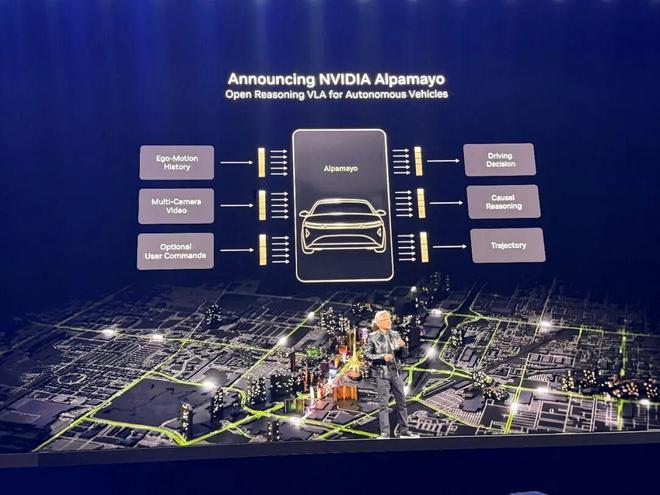
Core Insights - The article highlights "Physical AI" as a significant trend at the 2026 CES, with a focus on robotics applications, indicating a consensus on the global development of robotics despite early-stage product challenges [2][3] - NVIDIA's CEO emphasized "Physical AI" during his keynote, shifting the company's focus towards building global AI infrastructure to integrate intelligent agents into the real world [2] - The article suggests that 2026 may mark the year for the realization of Agentic AI, supported by acquisitions and technological advancements in both software and hardware [4] Summary by Sections Physical AI Concept - "Physical AI" is defined as models that use motion skills to understand and interact with the real world, typically encapsulated in robots and autonomous vehicles [3] - A fundamental challenge in training such AI is enabling it to comprehend physical world commonalities, such as object permanence and causal relationships [3] - NVIDIA's solution includes a new computing architecture and open-source models to accelerate the development of autonomous driving and Physical AI [3] Future Trends and Opportunities - The article predicts that 2026 will be a pivotal year for consumer technology, driven by AI-enabled product innovations and potential valuation re-evaluations in the tech consumption sector [4] - AI applications in consumer scenarios, from indoor cleaning to smart wearables, are highlighted as key trends observed at CES [4] - Companies with comprehensive product portfolios and ecosystem integration capabilities are expected to gain market share rapidly, while some tech consumption firms may experience systematic valuation re-evaluations due to AI catalysts and performance confirmations [6]

券商首席带你看“科技界春晚”
Zhong Guo Ji Jin Bao· 2026-01-11 12:57
Core Insights - The main highlight of CES 2026 is "Physical AI," particularly applications involving robotics, which is seen as a potential turning point similar to the early days of autonomous driving [1][3] - NVIDIA's CEO emphasized "Physical AI" during his keynote, indicating a shift towards building global AI infrastructure that integrates intelligent agents into the physical world [1][3] Group 1: Definition and Challenges of Physical AI - "Physical AI" refers to models that use motion skills to understand and interact with the real world, typically encapsulated in autonomous machines like robots and self-driving cars [3][4] - A fundamental challenge in training such AI is enabling it to comprehend common physical world concepts, such as object permanence and causality, which are intuitive for humans but not for AI [4] Group 2: Technological Developments and Future Trends - NVIDIA's new computing architecture, Rubin, and the release of the open-source model Alpamayo aim to accelerate advancements in autonomous driving and Physical AI [4] - The year 2026 is anticipated to mark the emergence of Agentic AI, supported by acquisitions and deployments from companies like Meta and NVIDIA, which are enhancing AI training and large-scale reasoning capabilities [4] Group 3: Consumer Applications and Market Opportunities - The application of AI in consumer scenarios is a key focus of CES, with innovations in products ranging from indoor cleaning to smart wearables, indicating a significant acceleration in product development [4] - AI glasses are expected to enter a phase of widespread adoption, with notable products from Chinese companies like Alibaba and Rokid showcasing advanced features and ecosystem integration [5] - The technology consumer sector is projected to experience a new growth cycle driven by technological innovation and valuation reassessment, particularly for companies with strong ecosystem capabilities [5]