碳达峰

Search documents
核电势头稳健,4年核准41台机组投资超8000亿|解读“十五五”
Di Yi Cai Jing· 2025-10-30 08:45
Group 1: Nuclear Power Development Outlook - The core viewpoint is that China's nuclear power development will continue to maintain a steady momentum over the next five years, as indicated by the recent guidelines from the Central Committee [1] - The expected annual approval of new nuclear units may decrease to around 8 from the previous 10, but the overall development scale will remain stable and continuous [1] - As of now, China has 59 operational nuclear units with a total installed capacity of 62.48 million kilowatts, and 53 units under construction with a capacity of 62.93 million kilowatts, leading to a total installed capacity exceeding 125 million kilowatts, maintaining the world's largest scale [1] Group 2: Advantages of Nuclear Power - Nuclear power is crucial for optimizing China's energy structure, providing a clean and efficient energy source that reduces reliance on traditional fossil fuels [2] - It plays a significant role in stabilizing energy supply, as it is not affected by weather or seasonal changes, ensuring a consistent power supply, especially during peak demand [2] - China has developed a complete nuclear power industrial system, accumulating rich experience in technology research, equipment manufacturing, construction, and operation management [2] Group 3: Challenges in Nuclear Power Sector - A major challenge facing the third-generation nuclear power plants is the issue of electricity pricing, which is closely linked to reducing construction costs [3] - Continuous efforts to lower construction costs are seen as key to enhancing the competitiveness of nuclear power [3] - The nuclear giant China General Nuclear Power Group has implemented comprehensive cost control from the design phase through to construction and management [3] Group 4: Safety and Sustainability Concerns - The positive outlook for nuclear energy development is fragile and can be reversed by a new nuclear accident, emphasizing the need for high-level nuclear safety [4] - China faces significant challenges in ensuring the safe operation of numerous nuclear units and maintaining construction quality during peak development periods [5]

通威广元光伏硅材料制造项目机电设备安装工程顺利通过竣工验收
Xin Hua Cai Jing· 2025-10-30 08:29
Core Insights - The completion and acceptance of the photovoltaic silicon material manufacturing project by Tongwei Green Materials (Guangyuan) Co., Ltd. marks a significant advancement for the largest industrial project in Cangxi County, laying a solid foundation for subsequent full-scale production [1][3] - The project is expected to generate an annual output value of approximately 8 billion yuan once fully operational, contributing significantly to the local economy [1] Project Details - The project underwent a rigorous acceptance process involving multiple parties, including construction, supervision, design, and construction units, which formed specialized inspection teams to ensure compliance with design and regulatory standards [1] - The project team adhered to principles of compliance and quality, integrating craftsmanship into every aspect of the installation and commissioning processes, ensuring reliability and safety [1] Industry Impact - Industrial silicon, a core raw material in the photovoltaic industry chain, is considered a cornerstone for the new energy and electronic information sectors [1] - The project will not only drive breakthrough development in the local industrial economy but also support national energy security strategies and contribute to China's goals of carbon neutrality and peak carbon emissions [3]


40万吨世界一流矿码头比翼双飞,山东港口青岛港码头建设纪实
Qi Lu Wan Bao· 2025-10-30 07:48
Core Viewpoint - The successful completion of the second 400,000-ton ore terminal at Qingdao Port marks a significant milestone in the development of the world's largest ore terminal project, showcasing high-quality construction and advanced engineering capabilities [1][3][6]. Group 1: Project Overview - The second 400,000-ton ore terminal project at Dongjiakou Port, Qingdao, has been completed and passed inspection, featuring advanced construction techniques and significant engineering achievements [1][3]. - The project involved the installation of 662 beam panels, 462 meters of approach bridges, and extensive cable and structural work, highlighting the scale and complexity of the construction [1][3][6]. Group 2: Challenges and Solutions - The construction faced numerous challenges, including tight timelines, complex engineering requirements, and the need for precise measurements, with structural components needing to be within 5 millimeters of specified tolerances [3][4][8]. - The project team worked long hours, averaging 15 to 16 hours a day, to meet deadlines and ensure quality, demonstrating a strong commitment to overcoming obstacles [4][6][15]. Group 3: Government and Organizational Support - Strong support from local government and the Qingdao Port Group was crucial in facilitating the project's progress, providing necessary resources and policy backing [4][6]. - The project was characterized by a collaborative spirit among team members, with a focus on high standards and quality, aiming to create a "century-old quality project" [7][8][12]. Group 4: Technological Innovations - The terminal incorporates innovative technologies, including a smart control platform for dry bulk cargo operations, enhancing efficiency and reducing costs [9][11][12]. - The project has set new standards in the industry, with achievements such as the first comprehensive smart collaborative operation model for dry bulk terminals, showcasing Qingdao Port's leadership in port technology [11][12][13]. Group 5: Future Prospects - The successful completion of this terminal sets the stage for future projects at Qingdao Port, including upgrades and new constructions, reflecting the ongoing commitment to development and innovation in the port industry [20].

新能源板块Q3业绩改善,隆基绿能涨超5%,规模最大的新能源ETF(516160)上涨1%,冲击两连阳
Ge Long Hui A P P· 2025-10-30 02:17
Group 1 - The new energy sector continues its upward trend, with notable stock increases: Aters rises over 10%, Goodway up 8%, and both Goldwind Technology and Longi Green Energy up over 5%, contributing to a 1% increase in the New Energy ETF (516160), which has expanded its year-to-date gain to 49% [1] - Tianqi Lithium's Q3 report shows a significant reduction in losses, recording a net profit of 95.4855 million yuan, compared to a loss of 496 million yuan in the same period last year, indicating a recovery trend among leading lithium miners [1] - Tongwei Co. reported a substantial narrowing of losses by 62.69% in Q3, with an 86.68% reduction compared to Q2, achieving the lowest quarterly loss level since Q4 2023, suggesting the photovoltaic industry is entering a critical bottom phase [1] - Xianlead Intelligent's Q3 net profit reached 446 million yuan, reflecting a year-on-year increase of 198.92% and a quarter-on-quarter increase of 18.95%, indicating sustained growth in the demand for power and energy storage batteries [1] - Nvidia's market capitalization surpassed 5 trillion yuan, driven by massive investments in computing hardware as AI transitions from training to inference, leading to increased electricity demand in data centers [1] - Pacific Securities highlights that the 14th Five-Year Plan emphasizes accelerating the construction of a new energy system, which will benefit leading new energy companies such as CATL and Sungrow Power [1] Group 2 - The New Energy ETF (516160) closely tracks the CSI New Energy Index, covering four major segments: photovoltaic, lithium battery, wind power, and nuclear power, providing comprehensive coverage of the new energy industry [2] - The latest scale of the ETF is 6.275 billion yuan, ranking first among similar products, with a management and custody fee of only 0.2% per year, lower than the 0.6% fee level of comparable funds [2] - The ETF has corresponding off-market funds, including Link A (012831) and Link C (012832) [2]

中经评论:新型能源体系如何点亮万家灯火
Jing Ji Ri Bao· 2025-10-30 00:08
Core Viewpoint - The construction of a new energy system is essential for achieving carbon neutrality and ensuring energy security, with a focus on developing non-fossil energy sources and transitioning to a clean, low-carbon energy system [1][5]. Group 1: New Energy System Development - The new energy system aims to establish a modern energy system dominated by non-fossil energy, addressing national energy security and low-carbon transition needs [1][2]. - By the end of the "14th Five-Year Plan" period, most of the new electricity demand will be met by newly added clean energy generation [1]. - The release of the "Energy Law of the People's Republic of China" in 2024 provides legal support for the construction of the new energy system and new power system [1]. Group 2: Technological and Industrial Leadership - The new energy system is becoming a core area of global technological revolution and industrial competition, with China transitioning from a follower to a leader in clean energy technology [2]. - Mastery of clean energy technologies and standards will allow China to secure a strategic position in future global industrial divisions [2]. Group 3: Strategies for Accelerating Construction - There is a need to significantly develop non-fossil energy sources, enhancing the clean energy sector through various regional energy sources such as wind, solar, hydro, and nuclear power [3]. - The role of fossil energy must be adjusted to ensure cleaner and more flexible utilization, transforming coal power into a stabilizing support for renewable energy [3]. Group 4: Infrastructure and System Integration - The construction of a new power system requires the development of high-capacity transmission lines and smart grid technologies to ensure efficient distribution and utilization of clean energy [4]. - The integration of distributed energy resources will enable households and businesses to participate actively in energy production and consumption, promoting a green lifestyle [4]. Group 5: Broader Implications - Accelerating the construction of the new energy system is crucial for achieving dual carbon goals and responding to aspirations for high-quality development and energy security in China [5]. - Continuous efforts from the government in policy design, innovation from enterprises in technology, and lifestyle changes from individuals are necessary for the successful implementation of the new energy system [5].
新型能源体系如何点亮万家灯火
Jing Ji Ri Bao· 2025-10-29 22:00
Core Viewpoint - The construction of a new energy system is essential for achieving carbon neutrality and ensuring energy security, with a focus on developing non-fossil energy sources and enhancing clean energy technologies [1][2][5] Group 1: New Energy System Development - The new energy system aims to create a modern energy system dominated by non-fossil energy, ensuring safety and efficiency while addressing national energy security and low-carbon transition needs [1][2] - The introduction of the Energy Law in 2024 provides a legal framework for the construction of the new energy system, marking a significant upgrade in China's energy strategy [1] Group 2: Clean Energy Expansion - There is a need to significantly increase the share of non-fossil energy in the energy mix, focusing on wind, solar, hydro, and nuclear power as the main sources of clean energy [3] - The transition period requires the clean and efficient use of fossil fuels, with coal power being transformed into a flexible and stable backup to support renewable energy fluctuations [3] Group 3: Infrastructure and Technology - The establishment of a new power system necessitates the construction of high-capacity transmission lines and smart grid technologies to ensure efficient distribution and utilization of clean energy [4] - The integration of distributed energy resources will enable households and businesses to participate actively in energy production and consumption, fostering a green lifestyle [4] Group 4: Broader Implications - The new energy system is positioned as a key driver for high-quality economic development, providing competitive advantages in international trade and improving the quality of life for citizens [4][5] - Continuous efforts from the government, enterprises, and individuals are required to achieve the dual carbon goals and promote sustainable development [5]
氢能、核能、新型储能写入规划,“十五五”能源产业要怎么干?
2 1 Shi Ji Jing Ji Bao Dao· 2025-10-29 12:30
Core Insights - The "15th Five-Year Plan" aims to enhance China's energy sector, focusing on achieving carbon peak targets and establishing a clean, low-carbon, safe, and efficient energy system [1][7] Group 1: Energy Sector Development Goals - The overall goal for the energy sector during the "15th Five-Year Plan" is to achieve carbon peak targets and establish a new energy system [1] - The plan emphasizes the importance of energy transition, with a focus on enhancing energy supply capacity and accelerating green transformation [1][7] Group 2: Emerging Industries and Future Technologies - The plan highlights the need to cultivate emerging industries, particularly in new energy, new materials, aerospace, and low-altitude economy [2] - Hydrogen energy and nuclear fusion are specifically mentioned as future industries to explore diverse technological routes and business models [2][3] Group 3: Infrastructure Development - The plan calls for the construction of modern infrastructure to support energy transition, including optimizing energy transmission channels and building new energy facilities [3][4] - The development of charging stations and energy storage systems is deemed essential for the new energy infrastructure [5] Group 4: Market Regulation and Competition - The plan aims to eliminate barriers to building a unified national market and address "involution" in competition within the energy sector [5][6] - Establishing a unified electricity market is crucial for optimizing resource allocation and supporting energy transition [5] Group 5: Achievements and Future Directions - As of mid-2025, China's renewable energy installed capacity reached 2.159 billion kilowatts, accounting for 59.2% of total installed capacity [7] - The plan emphasizes the need for further acceleration of low-carbon and clean transformation in the energy sector to support economic development [7]
加快建设新型能源体系 能源转型有了新要求|“十五五”产业前瞻
Di Yi Cai Jing· 2025-10-29 11:42
Core Insights - The Chinese renewable energy industry has achieved significant development during the "14th Five-Year Plan" and is entering a new phase of comprehensive market-oriented development in the "15th Five-Year Plan" [1] - The recent release of the "Suggestions" by the Central Committee outlines a clear direction for the development of the new energy system, emphasizing the need to increase the proportion of renewable energy supply and replace fossil energy in a safe and orderly manner [1][2] Group 1: New Energy System Development - The "Suggestions" highlight the need for a new energy system, with a focus on increasing non-fossil energy development, including wind, solar, hydro, and nuclear energy [1][2] - The National Development and Reform Commission has set a quantitative goal that most of the new electricity demand by the end of the "15th Five-Year Plan" will be met by newly added clean energy generation [1] Group 2: Infrastructure and Storage - The development of new energy infrastructure, particularly large-scale energy storage on the grid side, is crucial for supporting the stable operation of the grid and the significant increase in renewable energy [2] - The emphasis on energy storage is expected to have a substantial spillover effect on the development of renewable energy and the country's low-carbon transition [2] Group 3: Wind Power Industry - The wind power sector aims for an annual new installed capacity of no less than 120 million kilowatts during the "15th Five-Year Plan," which represents a doubling of the annual installation target compared to 2020 [2] - The shift in the wind power industry from "scale-driven" to "value-driven" thinking will influence product development, business models, and global operations over the next 5 to 10 years [3] Group 4: Carbon Neutrality and Green Economy - The "Suggestions" also emphasize the importance of achieving carbon peak and implementing a dual control system for total carbon emissions and intensity [3] - The green low-carbon industry in China is currently valued at approximately 11 trillion yuan, with potential for significant growth in the next five years, aiming to establish around 100 national-level zero-carbon parks [3]
加快建设新型能源体系,能源转型有了新要求|“十五五”产业前瞻
Di Yi Cai Jing· 2025-10-29 11:20
Core Insights - The article emphasizes the acceleration of the new energy system construction in China, aiming to increase the proportion of renewable energy supply and transition from fossil energy to a more sustainable energy framework [1][2] Group 1: New Energy Development - The "14th Five-Year Plan" has seen significant advancements in China's new energy sector, exceeding planned targets, and the "15th Five-Year Plan" marks a new phase of market-oriented development for renewable energy [1] - The National Development and Reform Commission has set a quantitative goal to meet most of the new electricity demand through clean energy generation by the end of the "15th Five-Year Plan" [1] Group 2: Key Focus Areas for Energy Transition - Three main tasks have been identified for accelerating the new energy system: 1. Develop non-fossil energy sources with a focus on wind, solar, hydro, and nuclear energy [2] 2. Promote the clean and efficient use of fossil energy, transitioning coal power from a basic support role to a regulatory support role [2] 3. Build a new power system to ensure the effective integration of renewable energy into the grid [2] Group 3: Wind Power Industry Insights - The wind power sector aims for an annual new installed capacity of no less than 120 million kilowatts during the "15th Five-Year Plan," doubling the previous target set in 2020 [3] - The industry is shifting from a "scale-driven" approach to a "value-driven" mindset, influencing product development and business models [3] Group 4: Green and Low-Carbon Industry Growth - The current scale of China's green low-carbon industry is approximately 11 trillion yuan, with potential for significant growth in the next five years, targeting the establishment of around 100 national-level zero-carbon parks [4] - Key industries such as steel, non-ferrous metals, and petrochemicals will implement energy-saving and carbon reduction initiatives, aiming for energy savings of over 15 million tons of standard coal, which could reduce carbon dioxide emissions by about 400 million tons [4]

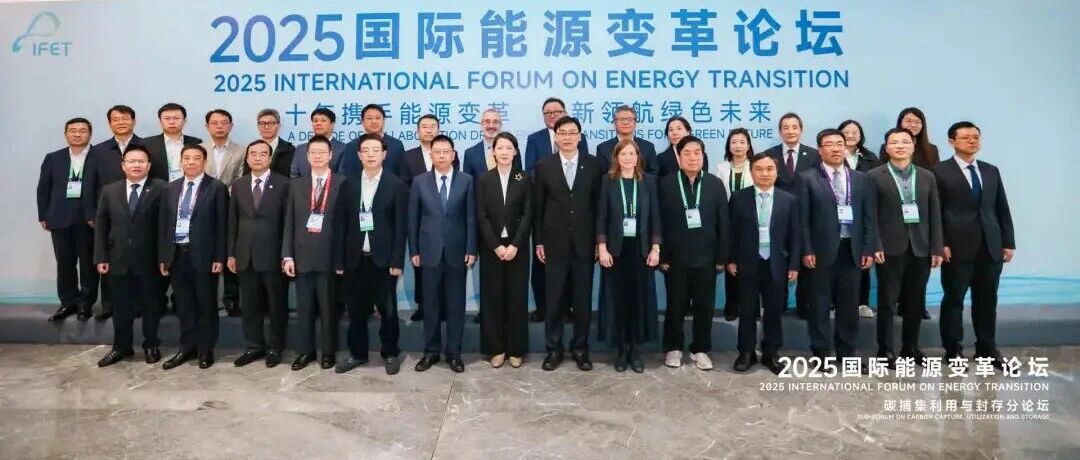
媒体报道︱CCUS分论坛 技术创新与规模应用引领全球碳中和实践
国家能源局· 2025-10-29 09:24
Core Viewpoint - The forum emphasized that achieving carbon peak and carbon neutrality is a profound systemic transformation, with CCUS technology being a strategic underpinning for deep decarbonization of fossil energy and ensuring national energy security [2][3] Group 1: CCUS Technology and Policy - CCUS technology is transitioning from demonstration exploration to large-scale application, highlighting the need for governments to strengthen policy guidance and provide stable, transparent, and predictable incentives [2] - The forum featured discussions on China's CCUS policy framework, opportunities and challenges in CCUS technology innovation, and the strategic role of CCUS in global carbon neutrality goals [3] Group 2: International Collaboration and Development - Experts shared insights on CCUS technology innovation and talent cultivation in the oil and gas sector, as well as progress in CCUS clusters and industrialization in Germany and the United States [3] - A roundtable dialogue focused on key issues such as technological bottlenecks, policy and business models, and international cooperation, aiming to inject new momentum into practical collaboration in the international CCUS field [3] Group 3: Reports and Future Directions - The forum released several reports, including the "China Carbon Capture, Utilization and Storage Technology Development Roadmap (2025)" and the "China Carbon Dioxide Capture, Utilization and Storage Annual Report (2025)," showcasing CCUS construction progress and planning [3] - These reports aim to deepen international exchanges and cooperation in the CCUS field, serving as a knowledge-sharing bridge [3]