AGI

Search documents
入职腾讯后姚顺雨首度公开发声
Di Yi Cai Jing· 2026-01-10 08:54
Group 1 - The core viewpoint of the article highlights Tencent's focus on AI development, particularly in the context of its dual market approach, emphasizing the challenges and advantages in both B2B and B2C sectors [1] - Tencent's new Chief AI Scientist, Yao Shunyu, is currently engaged in developing models and products related to AI, indicating the company's commitment to advancing its AI capabilities [1] - The article notes that Tencent, being a company with a strong B2C gene, recognizes the need for robust model capabilities and longer context in the consumer market, which is essential for effective AI applications [1] Group 2 - The article discusses the difficulties of operating in the B2B market in China, suggesting that larger companies like Tencent have inherent advantages over startups due to their established service capabilities [1] - Tencent's team is focused on ensuring that their services are well-optimized before expanding into the B2B market, reflecting a strategic approach to market entry [1]

OpenAI要么封神,要么倒闭
投资界· 2026-01-10 07:34
Core Viewpoint - OpenAI is facing a critical financial situation with projected cash burn reaching $17 billion in 2026, up from $9 billion in 2025, indicating a concerning trend of increasing losses over the next few years [1][2]. Group 1: Financial Projections and Funding - OpenAI has raised over $60 billion since the launch of ChatGPT, setting a record for private companies [2]. - The company plans to raise an additional $100 billion in 2026, potentially increasing its valuation to $830 billion, compared to $500 billion in October 2025 [2]. - OpenAI's revenue is projected to reach $130 billion in 2025, with an annualized rate of $200 billion by year-end [2]. Group 2: Cost and Operational Challenges - OpenAI's computing power demand has surged from 200 megawatts in 2023 to 1.9 gigawatts in 2025 [3]. - The company plans to increase its computing capacity by 30 gigawatts over the next few years, with an estimated cost of $1.4 trillion [4]. - By 2029, OpenAI may accumulate losses of $115 billion, raising concerns about its financial sustainability [4]. Group 3: Competitive Landscape - OpenAI faces increasing competition, with Google's Gemini 3 model surpassing OpenAI's GPT-5.1 in several performance metrics [5]. - The growth of open-source models is intensifying competition, impacting user data and engagement [5]. - ChatGPT's monthly active users reached 910 million, but growth appears to be stagnating, with concerns about subscription numbers in major European markets [5][6]. Group 4: Strategic Shifts - OpenAI is shifting towards monetization strategies, including plans to integrate advertising into ChatGPT by 2026 [7]. - Collaborations with Etsy and Walmart aim to transform the chat interface into a point of sale [8]. - OpenAI is also pursuing vertical integration by developing custom chips and consumer hardware, while expanding its consulting services to capture enterprise clients [8]. Group 5: Market Sentiment and Future Outlook - There are concerns that OpenAI may be overextending itself, drawing comparisons to WeWork's unsustainable growth model [9]. - If enterprise sales do not meet expectations and ChatGPT fails to find efficient monetization paths, the company's valuation could rapidly decline [9]. - Despite market skepticism, OpenAI's leadership remains optimistic about its future, with plans for an IPO to counter short-sellers [9][10].


离开马斯克后,他把人形机器人做成了这样
Sou Hu Cai Jing· 2026-01-10 07:13
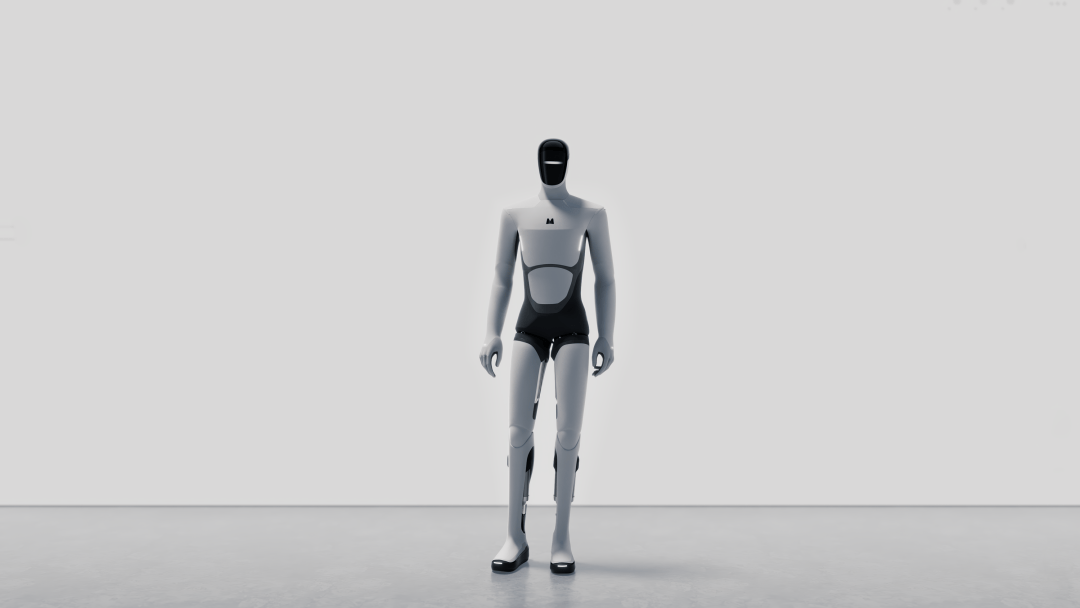
允中 发自 凹非寺 量子位 | 公众号 QbitAI 如果你对人形机器人的印象,还停留在——走两步就摔、抓东西像戴着拳击手套、干活前得先写一堆脚本…… 显然想通过从底层算法到顶层应用的系统性重构,让机器人走得更远: 进工厂,飞入寻常百姓家。 那么MATRIX-3的出现,可能要强行带你"翻篇"了。 作为一款主打安全、自主、可泛化的物理智能机器人,它更敢跟人待在同一个空间,更能自己做判断,也更不怕换任务、换环境。 能干的活更像人,目标也不止于专业场景"打工",而是开始往日常生活里迈。 做出这台机器人的,是一家去年才正式走到台前的公司——矩阵超智。 但底子不轻、来头不算低调:公司团队背景横跨特斯拉、英伟达、OpenAI等顶级技术体系,目标也非常直给: AGI路线上的通用人形机器人。 可以说,一年前,MATRIX-1亮相时,外界更关注两点:全身复合材料带来的"观感完成度",以及实时语音对话的交互感。 但这次,创始人张海星——这位有着30年消费电子实战经验的"老极客",2021年加入特斯拉,参与Optimus人形机器人开发,并主导特斯拉中国设计中心 相关项目—— △矩阵超智创始人兼CEO张海星走向可泛化的人形 MATR ...

离开马斯克后,他把人形机器人做成了这样
量子位· 2026-01-10 06:36
允中 发自 凹非寺 量子位 | 公众号 QbitAI 如果你对人形机器人的印象,还停留在——走两步就摔、抓东西像戴着拳击手套、干活前得先写一堆脚本…… 那么 MATRIX-3 的出现,可能要强行带你"翻篇"了。 显然想通过从底层算法到顶层应用的系统性重构,让机器人走得更远: 进工厂,飞入寻常百姓家。 作为一款主打 安全、自主、可泛化 的物理智能机器人,它更敢跟人待在同一个空间,更能自己做判断,也更不怕换任务、换环境。 做出这台机器人的,是一家去年才正式走到台前的公司—— 矩阵超智 。 能干的活更像人,目标也不止于专业场景"打工",而是开始往日常生活里迈。 但底子不轻、来头不算低调:公司团队背景横跨 特斯拉、英伟达、OpenAI 等顶级技术体系,目标也非常直给: AGI路线上的通用人形机器人。 可以说,一年前,MATRIX-1亮相时,外界更关注两点:全身复合材料带来的"观感完成度",以及实时语音对话的交互感。 但这次,创始人 张海星 ——这位有着30年消费电子实战经验的"老极客",2021年加入特斯拉, 参与Optimus人形机器人开发,并主导特斯 拉中国设计中心相关项目 —— △ 矩阵超智创始人兼CEO张海星 ...

吴恩达:图灵测试不够用了,我会设计一个AGI专用版
量子位· 2026-01-10 03:07
Core Viewpoint - The article discusses Andrew Ng's announcement of a new Turing test, termed the Turing-AGI test, aimed at evaluating Artificial General Intelligence (AGI) capabilities in a more practical and economically relevant manner [1][8][30]. Group 1: Turing-AGI Test Concept - The Turing-AGI test is designed specifically for AGI, addressing the inadequacies of the traditional Turing test which primarily focused on human-machine dialogue [2][10]. - The new test aims to measure AI's ability to perform knowledge-based work tasks, reflecting a more comprehensive definition of intelligence [14][19]. - Participants in the test will include AI systems or professionals, who will be tasked with real-world scenarios, such as customer service, requiring them to provide ongoing feedback [15][17]. Group 2: Industry Context and Trends - 2025 is anticipated to mark the beginning of the AI industrial era, with significant advancements in model performance and AI-driven applications becoming essential [4][5]. - The competition for top talent in the AI sector is intensifying, driven by the rapid development of AGI concepts in both academia and industry [6][5]. - Current benchmark tests often mislead the public by overestimating AI capabilities, as they are based on predetermined test sets that do not reflect real-world performance [7][20][21]. Group 3: Implications of the Turing-AGI Test - The Turing-AGI test will allow judges to create arbitrary tasks, enhancing the assessment of AI's general capabilities compared to fixed benchmark tests [28]. - Ng suggests that hosting a Turing-AGI test could help calibrate societal expectations of AI, potentially reducing hype around AGI while focusing on practical advancements [29][30]. - The test could set clear goals for AI teams, moving away from vague aspirations of achieving human-level intelligence [31].

马斯克断言:全球AI胜负关键,并非算法,而是电力!
Sou Hu Cai Jing· 2026-01-09 17:22
Core Insights - Musk predicts that AGI will emerge by 2026, leading to significant job displacement in professions such as white-collar jobs and surgery, but he believes this will usher in an era of "universal high income" with abundant goods and services at minimal costs [1][3][20] Group 1: Predictions on AGI and Economic Impact - Musk forecasts that AGI may appear in 2026, potentially displacing jobs in various sectors, yet he reassures that society will transition to a prosperous era with low prices [3][20][39] - The abundance of goods and services will lead to prices that only account for materials and electricity costs [3][20][39] Group 2: China's Position in AI - Musk emphasizes that China is likely to lead the world in AI computing power, potentially possessing more chips than any other country [3][21][39] - He attributes China's advantage to its projected electricity generation capacity, estimating that by 2026, China's power generation could reach approximately three times that of the U.S. [3][21][39] Group 3: Energy as a Critical Factor - Current U.S. efforts to restrict China's access to advanced semiconductor chips may ultimately be ineffective, as China is expected to resolve its chip issues [5][23][49] - The primary challenge in AI development is not computing power or algorithms, but rather electricity supply [5][23][49] - A report from Goldman Sachs indicates that electricity shortages could hinder the U.S. AI race, while China is steadily increasing its energy production [5][23][49] Group 4: Future Energy Capacity - Goldman Sachs estimates that by 2030, China's backup power capacity could reach 400 gigawatts, which is three times the total demand of global data centers [5][11][61] - OpenAI has called for the U.S. to accelerate its power grid development to avoid falling behind in the AI competition, highlighting electricity as a strategic asset [5][11][61] - Morgan Stanley has revised its forecast for the electricity shortfall in U.S. data centers, equating it to the power consumption of several large cities [5][11][61]
MiniMax对决智谱,谁才算“六小虎”领军者?
3 6 Ke· 2026-01-09 12:27
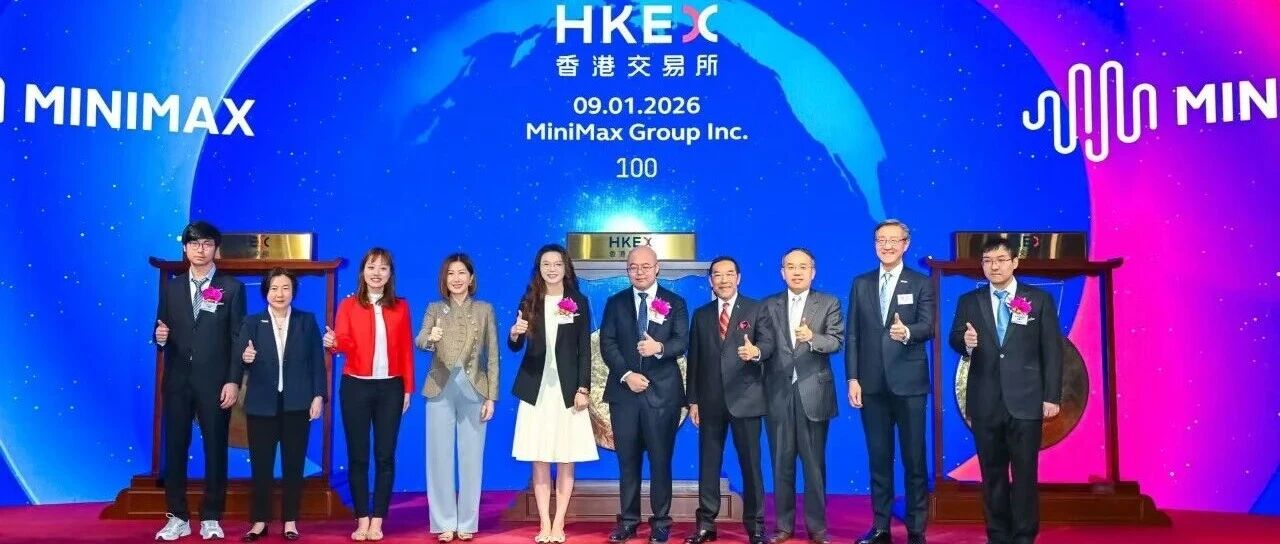
Core Insights - The large model market is experiencing significant activity with the IPOs of Zhipu and MiniMax, highlighting a shift in market dynamics towards consumer-oriented models [1][3] - MiniMax's stock surged by 109.09% on its first trading day, outperforming Zhipu, which indicates a market preference for consumer-facing applications [1][3] - The current competitive landscape shows a divergence from previous AI companies focused on B2B, with MiniMax representing a new wave of consumer engagement [1][3] Company Performance - MiniMax's revenue for the first nine months of the previous year exceeded $50 million, indicating a willingness among overseas consumers to pay for its services [10] - The company has a small team of over 400 employees, with only about 20 working overseas, yet it has managed to innovate and reach international markets [6][7] - MiniMax's business model includes enterprise services and consumer applications, with a focus on balancing profitability across its offerings [20] Market Trends - The shift towards consumer applications is evident as MiniMax embraces new market opportunities, contrasting with previous AI companies that primarily targeted B2B [5][15] - The competitive environment is intensifying, with rising costs leading to potential price increases for AI services, as seen with ChatGPT's Pro version pricing [13] - The market is witnessing a bifurcation where companies are either focusing on B2B or C2D models, with MiniMax preparing to target Southeast Asian enterprise clients [15][19] Legal and Regulatory Challenges - MiniMax faces legal challenges, including lawsuits from major entertainment companies over copyright issues, which could impact its financial stability [23][25] - The company must navigate a complex landscape of content regulation and copyright enforcement, which poses risks to its business model [25] Financial Outlook - The financial performance of MiniMax and Zhipu is under scrutiny, with concerns about their ability to sustain growth amidst rising operational costs and competitive pressures [19][27] - The IPOs of both companies have attracted significant investment, but there are questions about whether their stock performance will mirror that of previous AI companies like SenseTime [27]
最"佛系"的创始人,最"凶猛"的上市: MiniMax为何被资本市场选中?
3 6 Ke· 2026-01-09 11:20
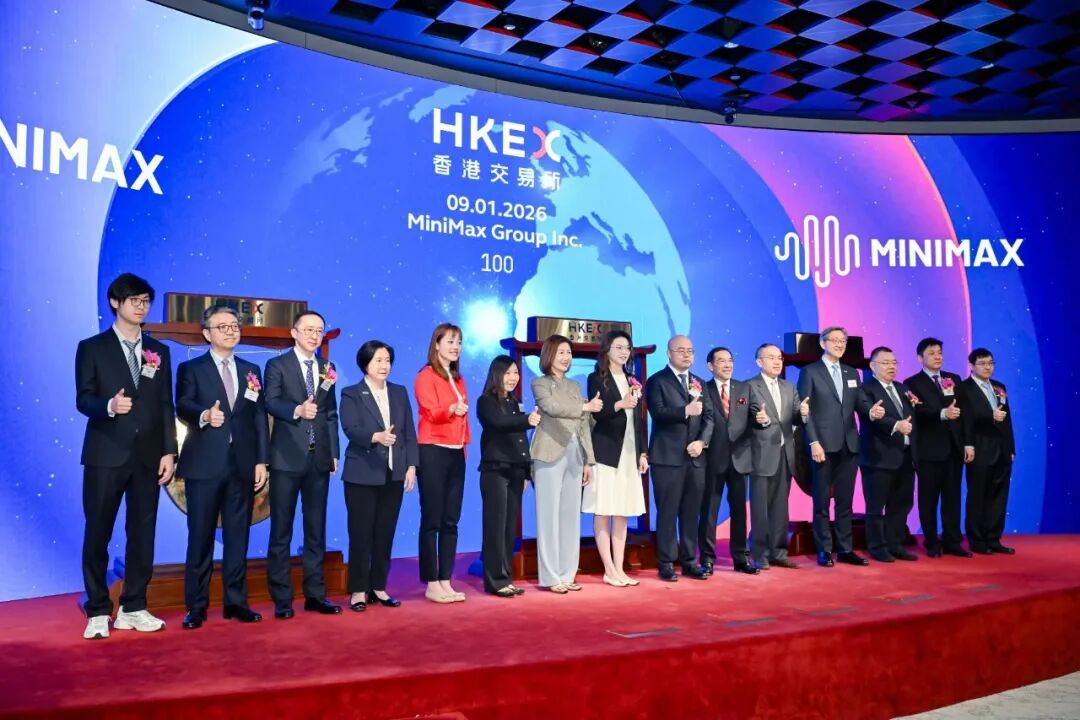
Core Insights - The article discusses the rise of MiniMax, an AI company led by Yan Junjie, who has a unique blend of calmness and decisiveness, which has significantly influenced the company's rapid growth and successful IPO [3][5][24] Group 1: Company Overview - MiniMax became the largest AI model company to go public, with its shares closing at 345 HKD, a 109% increase from the issue price of 165 HKD, and a market capitalization exceeding 100 billion HKD [3] - The company attracted around 420,000 subscriptions for its public offering, achieving an oversubscription rate of 1838 times [3] - MiniMax's revenue has seen significant growth, with projections showing a jump from 346 million USD in 2023 to 3,052 million USD in 2024, representing a year-on-year increase of 782.2% [13][15] Group 2: Leadership and Strategy - Yan Junjie is characterized as a leader who balances a "Buddhist" empathy with "ferocious" execution, navigating the challenges of the AI industry while maintaining a focus on sustainable growth [5][20] - The company has adopted a dual strategy of advancing both product and technology, with a focus on model performance and algorithm capabilities as the core value drivers [12][22] - MiniMax has established a flat organizational structure to promote open communication and rapid decision-making, which has been crucial for its agile response to market demands [18][20] Group 3: Market Position and Product Development - MiniMax has diversified its product offerings, including the launch of the MINIMAX open platform and AI applications like Talkie and Hailuo AI, which have contributed to its rapid market penetration [15][18] - The company has strategically focused on international markets, with 70% of its revenue coming from overseas by 2025, compared to 80.8% from mainland China in 2023 [15][16] - MiniMax's approach to AI emphasizes serving a broad user base, aligning with its slogan "Intelligence for Everyone," which reflects its commitment to making advanced AI accessible [22][24]
最"佛系"的创始人,最"凶猛"的上市: MiniMax为何被资本市场选中?
凤凰网财经· 2026-01-09 10:15
Core Viewpoint - The article highlights the journey of Yan Junjie, the CEO of MiniMax, emphasizing his unique blend of calmness and decisiveness, which has significantly influenced the company's rapid growth and successful IPO in the AI sector [1][3][4]. Group 1: Company Overview - MiniMax became the largest AI model company to go public, with its stock price rising 109% on the first day of trading, reaching a market capitalization of over 100 billion HKD [3]. - The company attracted around 420,000 subscriptions during its public offering, achieving an oversubscription rate of 1838 times [3]. - MiniMax's revenue is projected to grow significantly, with 2023 revenue at 3.46 million USD, expected to surge to 30.52 million USD in 2024, reflecting a year-on-year growth of 782.2% [13][14]. Group 2: Leadership and Strategy - Yan Junjie is characterized as a leader who balances empathy with fierce execution, navigating the challenges of the AI industry while maintaining a focus on sustainable growth [5][20]. - The company employs a dual strategy of product and technology development, with a focus on achieving high model performance and algorithm capabilities [9][12]. - MiniMax's organizational structure is flat, promoting open communication and collaboration among team members, which is crucial in the competitive AI landscape [18][19]. Group 3: Market Position and Product Development - MiniMax has diversified its product offerings, including a developer platform and AI applications, with a significant shift towards consumer products contributing over 70% of revenue by 2025 [14][15]. - The company has successfully expanded its market reach, with 80.8% of its revenue in 2023 coming from mainland China, which is expected to decrease to around 30.2% by 2025 as international sales grow [14][15]. - The company has invested heavily in a multi-modal approach, ensuring that it can serve a wide range of users and applications, which is seen as a strategic advantage in the evolving AI market [21][22].

全球资本加注盛宴中的MiniMax:长期被低估的模型 “多面手”
21世纪经济报道· 2026-01-09 09:51
Core Viewpoint - The article highlights the significant market response to the launch of the AI company MiniMax on the Hong Kong Stock Exchange, indicating a strong interest in the AI sector and the potential for investment opportunities in this field [1][3]. Market Performance - MiniMax's stock debuted at HKD 345, rising 109% from its issue price, with a total market capitalization of HKD 106.7 billion, igniting a rally in both Hong Kong and A-share AI sectors [1]. - The A-share market saw a strong performance, with the Shanghai Composite Index breaking 4100 points and over 3900 stocks rising, reflecting a collective surge in AI application concepts [1]. Valuation Logic - The article discusses a shift in valuation logic within the AI sector, where revenue quality, profit realization, and cash flow security are becoming more critical than mere technological vision [3]. - MiniMax is positioned as a key player in the global AI landscape, with its ability to produce cutting-edge models being a significant factor in its valuation [3]. Financial Performance - MiniMax's revenue trajectory shows rapid growth, with revenues increasing from USD 346,000 in 2023 to USD 5.344 million in the first nine months of 2025, indicating an acceleration beyond early-stage growth [9]. - The company has diversified its revenue streams, with a "B+C dual-wheel drive" structure, where To C revenue grew by 181% and contributed over 71% of total revenue, while To B business maintained a high growth rate of 160% with a gross margin of 69.4% [10]. Global Market Reach - By the first nine months of 2025, MiniMax's overseas revenue accounted for 73% of its total, demonstrating its global market acceptance and ability to generate revenue internationally [11]. Cost Management and Profitability - MiniMax has maintained a relatively controlled cost structure, with R&D expenses increasing at a manageable pace compared to revenue growth, leading to a significant improvement in gross margin from -24.7% in 2023 to 23.3% in 2025 [12]. - The company has accumulated over USD 1.5 billion in financing, with more than USD 1.1 billion in cash on hand, supporting over 53 months of operational sustainability [12]. Technological Leadership - MiniMax has achieved notable technological advancements, ranking among the top five globally in text models and demonstrating rapid iteration in video generation capabilities [12][13]. - The company has developed a unique organizational structure that emphasizes efficiency, with a high proportion of R&D personnel and a young workforce, fostering innovation and rapid decision-making [17]. Strategic Positioning - MiniMax is positioned as a standout in the domestic market, offering a comprehensive multi-modal model and product matrix, which contrasts with the more conservative valuation approaches seen in China compared to overseas markets [18]. - The company is transitioning from a phase of technological accumulation to one of sustainable commercial returns, with a clear path to profitability and operational efficiency [19].