
不正当竞争

Search documents
咪咕视讯道歉!历时两年《恋与制作人》诉咪咕不正当竞争案终审胜诉
Xi Niu Cai Jing· 2025-12-25 03:55
Group 1 - Migu Video Technology Co., Ltd. issued an apology on December 21, acknowledging that its May 2023 promotional video for the TV series "Warm and Sweet" constituted unfair competition by using content from the game "Love and Producer" without permission [1][4] - The official account of "Love and Producer" confirmed the victory in the intellectual property rights case, emphasizing the importance of protecting original works and their value through legal means [3] - The dispute originated from Migu's marketing strategy, which misled the public into believing there was a collaboration between "Love and Producer" and the TV series, leading to strong backlash from the gaming community [4] Group 2 - Migu Video clarified that there was no collaboration between "Love and Producer" and "Warm and Sweet," and that the characters from the game do not correspond to those in the TV series [4] - Migu committed to improving its content release review mechanisms and adhering strictly to intellectual property laws to maintain compliance and protect industry standards [4] - Migu Video is a wholly-owned subsidiary of China Mobile's Migu Culture Technology Co., Ltd., and serves as the sole copyright operation entity in the video sector, managing popular products like "Migu Video" and "Migu Movie" [5]


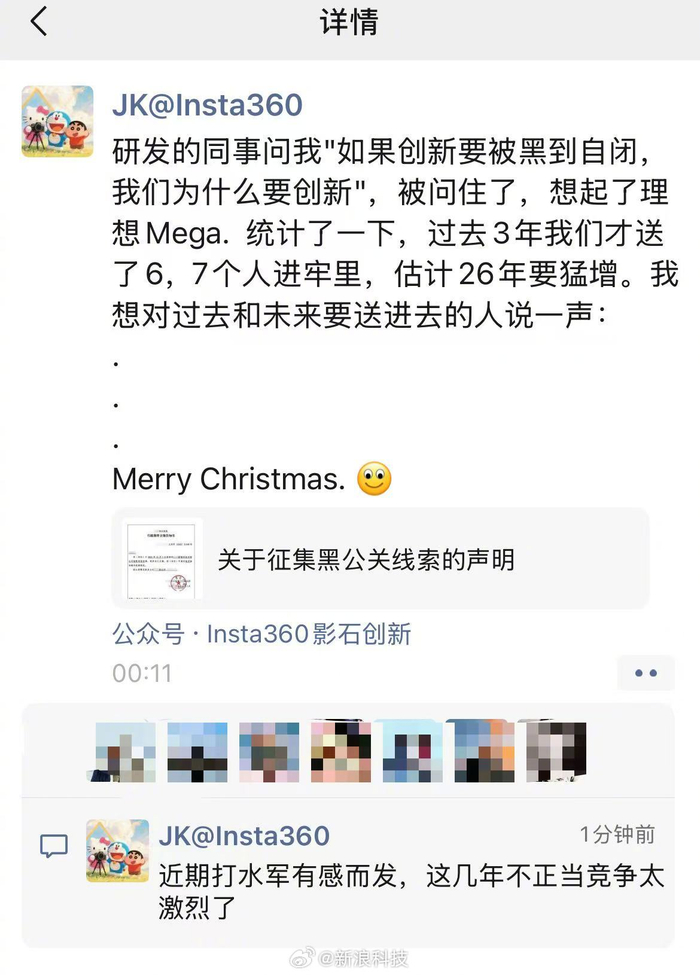
影石CEO谈黑公关称想起理想Mega,悬赏征集线索
Xin Lang Ke Ji· 2025-12-25 03:53
Core Viewpoint - The CEO of Insta360 expressed concerns about malicious competition and black public relations targeting the company, particularly in light of recent negative information about their new product, the Antigravity drone [1][2]. Group 1: Company Actions - Insta360 has initiated a campaign to collect leads on black public relations activities, offering rewards ranging from 1,000 to 10,000 yuan for information on malicious rumors and defamation against the brand [2]. - The company reported that over 2,500 instances of false malicious content appeared online within two weeks of the Antigravity drone's launch, and evidence of these activities has been documented [2]. Group 2: CEO's Statements - The CEO, Liu Jingkang, reflected on the intense competition and the impact of black public relations, mentioning that only 6 to 7 individuals have been imprisoned for such activities in the past three years, with an expectation of a significant increase in the coming years [1][4]. - Liu also highlighted the emotional toll of these challenges on innovation, questioning the motivation to innovate if the company faces such aggressive attacks [1][4].

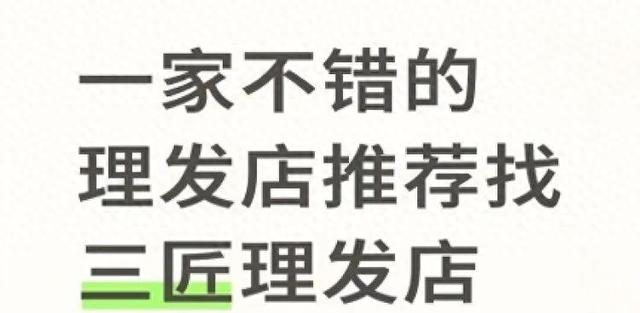
细思极恐!女大学生打开手机惊了:“图中的人根本不是我!”受害者还有很多……
Huan Qiu Wang· 2025-12-24 10:34
Core Viewpoint - The incident highlights the risks associated with allowing strangers to handle personal devices, leading to unauthorized access and manipulation of social media accounts, resulting in the spread of false information and potential reputational damage for consumers [1][2][3] Group 1: Incident Overview - Two university students in Shanghai were manipulated by a hairdresser into allowing him to use their phones to post fake reviews and comments on social media [1][2] - The hairdresser, Moli, requested the students to help him complete a "platform task" by making a large purchase, which was later revealed to be a fraudulent scheme [9][11] - The students discovered unauthorized posts and comments on their social media accounts, including fake reviews for a different salon, Umi Salon, which was linked to the same staff as the original salon [11][13] Group 2: Industry Implications - The incident reflects a broader issue within the hairdressing and beauty industry, where businesses may resort to unethical practices such as soliciting fake reviews to enhance their reputation [22][24] - Legal experts indicate that the practice of soliciting positive reviews can lead to unfair competition and misrepresentation, undermining consumer trust and market integrity [23][24] - The case has prompted regulatory attention, with local market supervision authorities getting involved to address the unethical practices in the industry [22][23]
影石创新:公安机关已就网上恶意造谣、组织诋毁公司品牌行为立案 公司法务部全网征集相关线索
Zhong Zheng Wang· 2025-12-24 01:26
12月22日,影石创新发布声明表示,公司旗下首款全景无人机"影翎Antigravity A1" 上市两周内,网络 上集中涌现超过2500条恶意不实攻击信息。公司已完成相关证据固定,向公安机关报案后已获正式立 案,已查实有相关主体存在发布虚假信息、误导公众的行为。声明提及,网上不实信息涵盖伪造消费者 负评、诋毁产品质量及品牌声誉、编造不实销量信息等,影石欢迎客观监督,但将依法追究牟利性造谣 传谣、实施不正当竞争类违法违规行为的责任。 此前,影石创新CEO刘靖康曾通过公司内部信对"销量遇冷"等市场不实传言作出回应。他表示公司在全 景无人机领域的首款产品"影翎Antigravity A1"中国区发售48小时内销售额突破3000万元,并提及公司在 供应链端曾遭遇"排他"压力,但已通过预案保障生产。 中证报中证网讯(记者 王婧涵)12月23日,影石创新法务部表示,近期网上集中涌现针对公司的虚假 恶意内容,针对此类恶意造谣、组织诋毁品牌的违法违规行为,法务部已发起全网悬赏,公开征集相关 线索,若线索被公安机关采纳,最高将给予10万元奖励。 ...

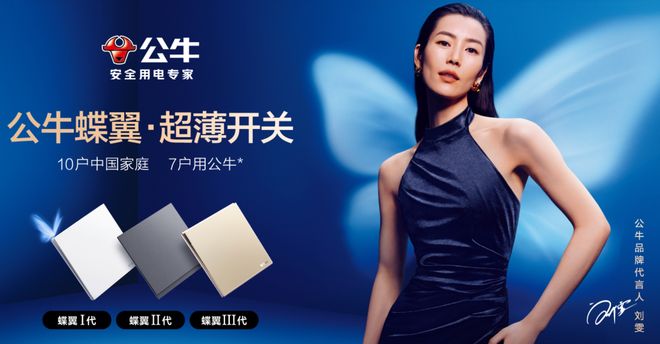
广告宣传被疑“大字吹牛、小字免责” 公牛集团独家回应:起诉索赔420万元
Zhong Guo Jing Ying Bao· 2025-12-22 11:08
Core Viewpoint - The controversy surrounding Bull Group's advertising slogan "7 out of 10 Chinese households use Bull" has escalated into a legal battle with Jia's Electric, which claims the slogan is misleading and constitutes false advertising [2][3][4]. Group 1: Legal Dispute - Bull Group has filed a lawsuit against Jia's Electric, seeking compensation of 4.2 million yuan due to alleged misleading advertising practices [2][4]. - Jia's Electric has publicly stated its intention to fight the lawsuit and not compromise [2][4]. - The legal conflict arose after Bull Group accused Jia's Electric of using social media to disparage its products and misrepresent the advertising slogan [3][4]. Group 2: Advertising Claims - Bull Group's slogan is intended to highlight its leading position in the domestic socket market, but it has faced scrutiny for potentially misleading consumers regarding market share [2][5]. - The slogan's claim is supported by a third-party survey conducted by Shanghai Shanjun Consulting Group, which states that over 70% of Chinese households have used Bull products [7][9]. - Critics argue that the broad interpretation of the data could mislead consumers into thinking Bull has a 70% market share in specific product categories, which may violate advertising laws [7][9]. Group 3: Financial Performance - Bull Group's financial performance has been declining, with a reported revenue of 12.198 billion yuan for the first three quarters of 2025, a decrease of 3.22% year-on-year, and a net profit of 2.979 billion yuan, down 8.72% [9]. - The company's core business segments, including electrical connections and smart electrical lighting, are also experiencing revenue declines [9]. Group 4: Industry Context - The ongoing legal and advertising disputes occur against a backdrop of increasing challenges in the industry, including shifts in international trade rules and domestic consumption patterns [10]. - Bull Group emphasizes its commitment to maintaining operational resilience and optimizing its industrial layout for sustainable long-term development [10].

碰瓷东方树叶东方爽茶被下架东方爽茶仿冒东方树叶属典型混淆行为
Xin Lang Cai Jing· 2025-12-19 14:23
Core Viewpoint - The article discusses the legal implications of the counterfeit product "Dongfang Shuangcha," which closely resembles the well-known brand "Dongfang Shuye," leading to consumer confusion and subsequent legal actions against the infringing company [1] Group 1: Legal Implications - The product "Dongfang Shuangcha" is considered a typical case of "confusion behavior," as its name and packaging are highly similar to "Dongfang Shuye," which is a registered trademark [1] - The involved company has been fined 180,000 yuan for unfair competition, indicating the seriousness of trademark infringement and the legal consequences that can arise from such actions [1] - Market supervision authorities have the power to confiscate illegal gains, infringing products, impose fines, and even revoke business licenses in cases of trademark infringement [1] Group 2: Consumer Rights - Consumers who purchase counterfeit products have the right to seek compensation and protect their rights, especially when misled by similar branding [1] - If sellers can prove they were unaware of the infringement and that the products were legally obtained, they may avoid administrative penalties but must cease sales of the infringing items [1]
剑指券商IT服务市场乱象中证协建立不正当竞争线索收集机制
Zheng Quan Shi Bao· 2025-12-16 18:09
针对券商信息技术(IT)系统服务商的不正当竞争行为,监管部门出台了全新治理举措。 近日,证券时报记者获悉,中国证券业协会(下称"中证协")已向券商下发《关于建立信息技术系统服 务机构不正当竞争投诉、举报线索收集机制的通知》(下称《通知》),明确针对信息技术系统服务机 构在证券行业内的不正当竞争行为,建立投诉与举报线索收集机制。 剑指多种不当竞争行为 《通知》明确,在证监会备案的向证券行业提供信息技术系统服务的机构如存在以下行为,且证券公司 拟向市场监管部门投诉、举报的,证券公司可向中证协提交有关线索材料: 一是商业贿赂类行为。服务机构采用给予财物等手段,贿赂证券公司的工作人员或其他办理相关事务的 人员,以谋求交易机会或竞争优势的行为。 二是虚假或引人误解的商业宣传行为。服务机构对其产品的性能、功能、质量、销售情况、用户评价、 曾获荣誉等作虚假或者引人误解的商业宣传,欺骗、诱导证券公司或交易者的行为。 三是利用技术手段实施不正当竞争行为。服务机构利用数据、算法、技术等,影响证券公司选择或实施 妨碍、破坏其他服务机构合法提供产品或服务的行为。包括但不限于诱导、欺骗、强迫证券公司修改、 关闭、卸载其他服务机构合法提 ...
东方爽茶,全部下架!
新华网财经· 2025-12-16 14:08
Core Viewpoint - The article discusses the issue of counterfeit products resembling the well-known brand "Oriental Leaf," highlighting consumer confusion and regulatory actions taken against the infringing products [2][5][6]. Group 1: Consumer Confusion - Multiple consumers reported purchasing products like "Oriental Refreshing Tea" and "Oriental Yuan Zhen," mistakenly believing they were buying "Oriental Leaf," leading to complaints about misleading branding [2][5]. - A specific case involved a consumer who bought "Oriental Refreshing Tea" for 17.9 yuan, while the official "Oriental Leaf" product was priced at 63 yuan for a larger pack, indicating a significant price difference [5]. Group 2: Regulatory Actions - In July 2024, the company behind "Oriental Leaf" reported the counterfeit products to local market supervision authorities, leading to administrative penalties against the manufacturers for unfair competition [6]. - The involved manufacturer, Heze Youjia Food Factory, has a history of legal issues related to trademark infringement, with a total of 750,000 yuan in claims against it [6]. Group 3: Product Composition and Quality - The counterfeit "Oriental Refreshing Tea" contains eight additives and does not use tea extraction methods, raising concerns about product quality compared to the original brand [5].


中证协出手 剑指不正当竞争!
Zhong Guo Ji Jin Bao· 2025-12-16 11:47
近日,记者从业内获悉,为落实证监会有关工作要求,中国证券业协会(以下简称中证协)对信息技术 系统服务机构(以下简称服务机构)在证券行业开展或参与不正当竞争建立投诉、举报线索收集机制。 二、虚假或引人误解的商业宣传行为:服务机构对其产品的性能、功能、质量、销售情况、用户评价、 曾获荣誉等作虚假或者引人误解的商业宣传,欺骗、诱导证券公司或交易者的行为。 【导读】信息技术系统服务机构参与不正当竞争,券商可向中证协举报 当前,信息技术系统已成为支撑证券公司运营与创新的核心基础设施。伴随市场快速发展,部分服务机 构在竞争中采取不正当手段,扰乱行业秩序。 中证协在通知中明确指出,在证监会备案的向证券行业提供信息技术系统服务的机构如存在以下四类行 为,证券公司可向协会提交有关线索材料: 一、商业贿赂行为:服务机构采用给予财物等手段,贿赂证券公司的工作人员或其他办理相关事务的人 员,以谋求交易机会或竞争优势的行为。 据悉,中证协建立线索信息台账并动态更新,将证券公司报送的线索材料情况定期、不定期上报证监会 科技监管司。对于个性问题,中证协指导证券公司按照合同约定与被投诉、举报方协商解决,或向市场 监管部门投诉、举报;对于行业 ...
中证协出手,剑指不正当竞争!
Zhong Guo Ji Jin Bao· 2025-12-16 09:41
中证协在通知中明确指出,在证监会备案的向证券行业提供信息技术系统服务的机构如存在以下四类行 为,证券公司可向协会提交有关线索材料: 一、商业贿赂行为:服务机构采用给予财物等手段,贿赂证券公司的工作人员或其他办理相关事务的人 员,以谋求交易机会或竞争优势的行为。 二、虚假或引人误解的商业宣传行为:服务机构对其产品的性能、功能、质量、销售情况、用户评价、 曾获荣誉等作虚假或者引人误解的商业宣传,欺骗、诱导证券公司或交易者的行为。 【导读】信息技术系统服务机构参与不正当竞争,券商可向中证协举报 三、利用技术手段实施不正当竞争行为:服务机构利用数据、算法、技术等,影响证券公司选择或实施 妨碍、破坏其他服务机构合法提供产品或服务的行为,包括但不限于诱导、欺骗、强迫证券公司修改、 关闭、卸载其他服务机构合法提供的产品或服务;恶意不兼容其他服务机构合法提供的产品或服务等。 近日,记者从业内获悉,为落实证监会有关工作要求,中国证券业协会(以下简称中证协)对信息技术系 统服务机构(以下简称服务机构)在证券行业开展或参与不正当竞争建立投诉、举报线索收集机制。 四、扰乱市场秩序的定价行为:服务机构利用市场支配地位,实施价格歧视、恶 ...