业绩对赌

Search documents
A 股最大收购案官宣,88 份公告深夜连发
Xin Lang Cai Jing· 2025-12-22 04:33
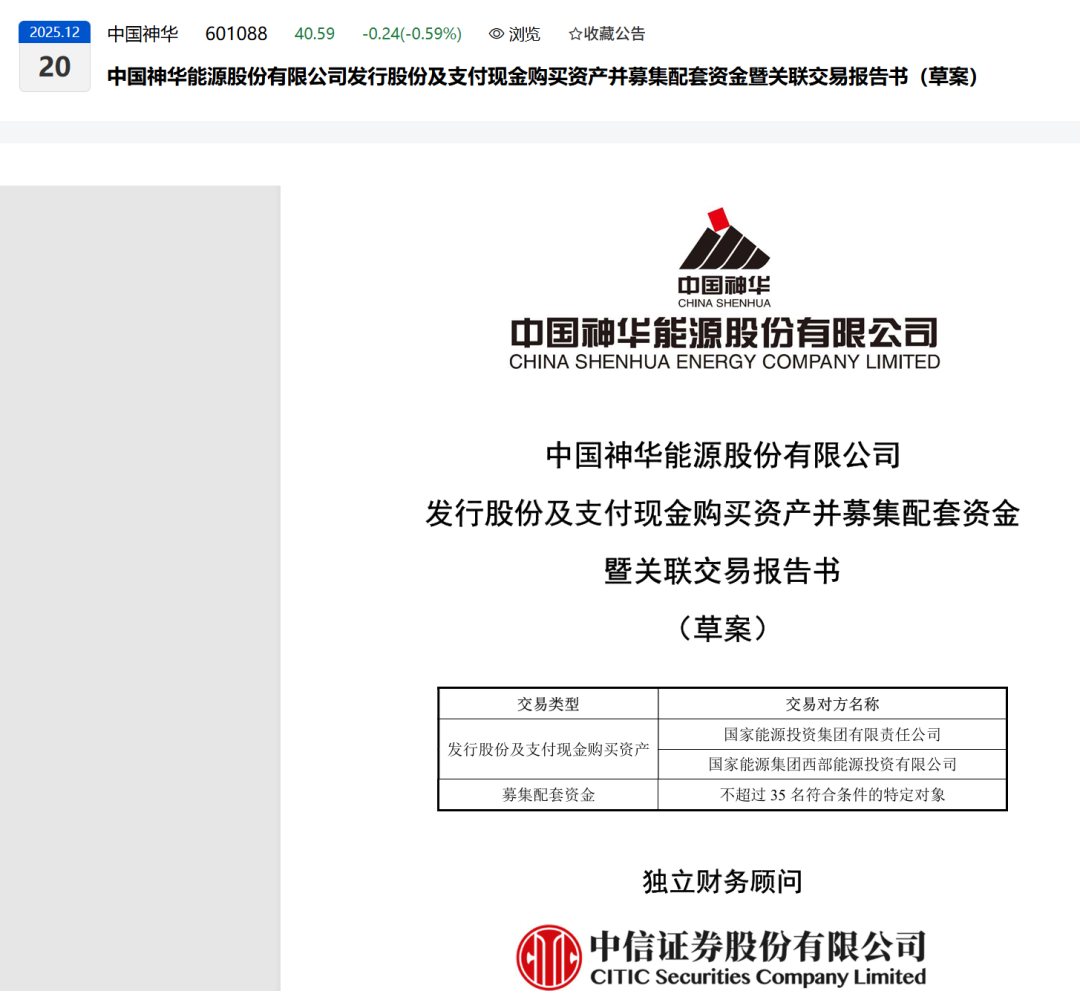
Core Viewpoint - China Shenhua is set to acquire 12 companies from its controlling shareholder, China Energy Group, for a total of 133.598 billion RMB, marking the largest acquisition in A-share history. The payment will be made with 30% in newly issued shares and 70% in cash [1][5][53]. Group 1: Acquisition Details - The acquisition aims to resolve internal competition issues by consolidating companies with similar operations, thus streamlining management [1][48]. - The total coal resource will increase from 41.6 billion tons to 68.5 billion tons, a growth of 65% [2][49]. - The recoverable coal reserves will nearly double from 17.5 billion tons to 34.5 billion tons, representing a 98% increase [2][50]. - Annual coal production is expected to rise from 327 million tons to 512 million tons, a 57% increase [3][51]. Group 2: Financial Impact - The expected earnings per share for 2024 will increase from 2.97 RMB to 3.15 RMB, a growth of 6.1% [4][52]. - The acquisition will significantly enhance the company's asset quality and profitability, benefiting all shareholders [11][59]. Group 3: Transaction Significance - The transaction amount of 133.598 billion RMB surpasses previous notable A-share mergers, establishing a new record [5][53]. - The deal is part of a broader strategy to strengthen national energy security and optimize resource allocation within the industry [9][60]. Group 4: Next Steps - The acquisition proposal requires approval from the shareholders' meeting and regulatory bodies, including the Shanghai Stock Exchange and the China Securities Regulatory Commission, before implementation [5][54].


从泽宝到有棵树,跨境大卖们为何掉入资本“大坑”?
3 6 Ke· 2025-12-17 12:16
Core Viewpoint - The article discusses the turmoil faced by the cross-border e-commerce company "有棵树" (Youkeshu), highlighting its dramatic revenue drop and internal power struggles following a significant shift in ownership and management control [1][2]. Group 1: Company Overview - "有棵树" was once a leading cross-border e-commerce company with annual sales exceeding 5 billion yuan, but it is now experiencing an 81.33% decline in revenue, with a reported revenue of only 42.57 million yuan [2]. - The company underwent a major restructuring in September 2024, leading to the dilution of founder Xiao Siqing's shares to 3.28%, while new investor Wang Wei became the largest shareholder with 18% [2]. - The internal conflict has resulted in operational disruptions, including the failure to timely disclose the Q3 2025 earnings report [2]. Group 2: Industry Context - The rise and fall of "有棵树" reflect the broader fate of many cross-border e-commerce giants, which often experience rapid growth fueled by capital but face significant risks due to unsustainable business practices [3][11]. - The initial success of cross-border e-commerce companies was largely due to low-cost domestic supply chains, but the influx of capital shifted focus from sustainable growth to rapid expansion, leading to operational inefficiencies [11][12]. - The article notes a shift in the industry where sellers are now prioritizing profitability and efficient capital use over mere sales volume, indicating a maturation of the market [13]. Group 3: Financial Performance and Challenges - "有棵树" has struggled to meet performance targets set during its merger with Tianze Information, with a commitment to achieve net profits of 2.6 billion, 3.3 billion, and 4.1 billion yuan from 2018 to 2020, but only reported 1.08 billion yuan in 2017 [6]. - Other companies like 环球易购 (Global Easy Buy) faced similar challenges, ultimately leading to bankruptcy despite meeting profit targets, highlighting the risks associated with aggressive expansion strategies [7][10]. - The article emphasizes that many companies failed to complete their profit commitments, resulting in severe financial penalties and operational failures, as seen with 价之链 (Price Chain) [10]. Group 4: Future Outlook - The article suggests that the end of the "big seller" era is not the conclusion of the industry but rather a new beginning, as companies are now focusing on brand building, supply chain depth, compliance, and long-term value creation [12][13]. - The market is witnessing a transition where sellers are moving away from the unsustainable growth model driven by capital to a more stable and value-oriented approach [13].


1.9亿元!成都郫都企业被广东上市公司收购51%股权,三年对赌5600万净利润→
Sou Hu Cai Jing· 2025-12-17 11:13
Core Viewpoint - Guangdong Yangshan United Precision Manufacturing Co., Ltd. plans to acquire 51% equity of Chengdu Mite Aviation Manufacturing Co., Ltd. for 193.8 million yuan, making Mite Aviation a subsidiary after the transaction [1][2]. Group 1: Acquisition Details - The valuation of Mite Aviation's total equity as of August 31 was 384 million yuan, showing an increase of 191 million yuan (98.61%) compared to the book value of 193 million yuan [2]. - The acquisition price for the 51% stake in Mite Aviation is set at 193.8 million yuan [2]. - Mite Aviation's legal representative and chairman, Qiu Tinggui, will retain 43.62% of the shares post-transaction, having cashed out approximately 104 million yuan from the sale of 25.62% of his shares [5]. Group 2: Company Profile - Mite Aviation, established in 2010, is a national high-tech enterprise and a "little giant" recognized for its specialization and innovation, focusing on the R&D, manufacturing, and testing of aviation and aerospace standard parts [4]. - The company has a registered capital of 14.9759 million yuan and is located in Chengdu, Sichuan Province [4]. - Mite Aviation's main products include various standard parts and structural components, with certifications from CNAS and Nadcap for its testing center and special processes [4]. Group 3: Financial Performance - In 2024, Mite Aviation reported revenues of 161 million yuan, with a total profit of 24.77 million yuan and a net profit of 22.68 million yuan [5]. - However, in the first eight months of 2025, Mite Aviation's revenue dropped to 83.72 million yuan, with a total profit of -852,700 yuan and a net profit of only 30,940 yuan, indicating significant operational fluctuations [5]. - The company’s cash flow from operating activities was negative at -1.99 million yuan during the same period [5]. Group 4: Performance Commitment - Qiu Tinggui and other shareholders have committed to achieving a minimum net profit of 5.6 million yuan over three years, with specific annual targets of 500,000 yuan for 2025, 1.8 million yuan for 2026, and 3.3 million yuan for 2027 [9]. - If the actual net profit falls short of the commitments, the shareholders are obligated to compensate the difference in cash [9]. Group 5: Strategic Rationale - The acquisition is expected to enhance the company's participation in the aerospace defense sector, leveraging Mite Aviation's capabilities in aviation component R&D and manufacturing, which align with the company's precision manufacturing strengths [13].
康华生物控制权变更三重考:股东减持、业绩滑坡、对赌压顶
凤凰网财经· 2025-12-14 12:51
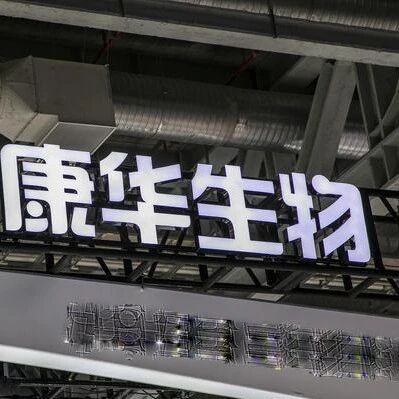
Core Viewpoint - The article discusses the significant changes in the governance and operational challenges faced by Kanghua Biological (300841.SZ) following its change of control, highlighting a sharp decline in its core product's market performance and the pressures from performance commitments [2][4][10]. Group 1: Change of Control and Shareholder Actions - Kanghua Biological has undergone a change of control with major shareholders reducing their stakes during the transition period, leading to the company entering a state without a controlling shareholder [3][4]. - The fourth largest shareholder, Sichuan Development Securities Investment Fund Management Co., Ltd., reduced its stake from 6.22% to 5.91%, cashing out approximately 32.66 million yuan [3]. - The transfer of control involved the original controlling shareholder, Wang Zhentao, transferring 21.91% of shares to Wanke Xin Biological for a total consideration of 1.851 billion yuan [4]. Group 2: Board Restructuring and Management Changes - Following the change of control, Kanghua Biological completed a full overhaul of its board and executive team, with the new board consisting of 11 members, including 7 non-independent and 4 independent directors [5][7]. - Liu Dawei was elected as the new chairman, while Wang Zhentao became the vice chairman and legal representative [5][6]. Group 3: Financial Performance and Challenges - Kanghua Biological reported a significant decline in financial performance for the first three quarters of 2025, with revenue dropping by 20.78% to 840 million yuan and net profit decreasing by 53.41% to 189 million yuan [8]. - The company's core product, the freeze-dried human rabies vaccine, saw a drastic reduction in batch issuance by over 40%, primarily due to increased competition in the market [9]. - The company faces a performance commitment to achieve a net profit of at least 728 million yuan over 2025 and 2026, alongside a minimum of 260 million yuan in R&D expenses, which poses a significant challenge given its current performance pressures [10][11].
实探中金重庆两江REIT: 受益两江新区新规划 致力园区运营管理精细化
Zhong Guo Zheng Quan Bao· 2025-12-10 22:48
Core Viewpoint - The article discusses the operational strategies and competitive positioning of the CICC Chongqing Liangjiang REIT, highlighting its focus on refined management and tenant quality to maintain stability in a challenging market environment [1][4]. Group 1: Asset Overview - CICC Chongqing Liangjiang REIT consists of four industrial parks located in the Liangjiang New Area, with a total building area of approximately 243,700 square meters and a leasable area of 187,700 square meters [2]. - As of September 30, 2025, the occupancy rate of the parks was 87.81%, with an average remaining lease term of 1,229 days (approximately 3 years and 4 months) [2]. Group 2: Tenant Quality - The project has 51 tenants across various sectors, including information technology, professional services, finance, and retail supply chains, with a mix of state-owned enterprises, central enterprises, foreign investments, and quality private enterprises [3]. - The largest tenant, China Mobile's subsidiary, has been a stable income source since its entry in 2018 and renewal in 2023, contributing to a stable lease structure characterized by "large tenants supporting smaller ones" [3]. Group 3: Operational Strategy - The management emphasizes "refined operation" as a core strategy, focusing on enhancing the overall attractiveness of the parks through investments in renovations, smart building technologies, landscaping, and elevator upgrades [4]. - A regular tenant visitation mechanism has been established to maintain tenant stability, with monthly visits to major tenants to understand their operational needs [4]. Group 4: Market Context and Support - The REIT operates in a challenging rental market, with major cities experiencing declining office rents, prompting owners to adopt "price-for-volume" strategies [2]. - The Chongqing Liangjiang New Area has introduced a development plan focusing on eight industrial chains, which is expected to support the growth of the industrial parks by creating an ecosystem rather than focusing solely on individual enterprises [4][5]. Group 5: Future Prospects - A five-year performance guarantee mechanism has been established, ensuring that if annual dividends do not meet expectations, the original rights holder will compensate investors by waiving management fees and dividends [6]. - The original rights holder, Liangjiang Industrial Group, currently holds 7.64 million square meters of industrial park assets, with approximately 4.83 million square meters being mature assets, providing room for future fundraising [6].
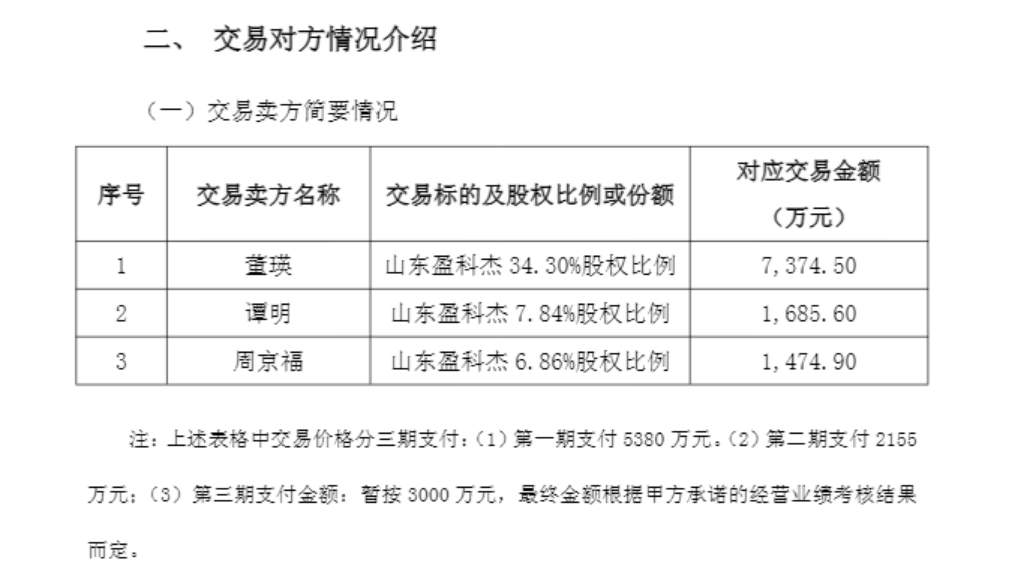
济南这家企业被杭州上市公司“盯上”!49%股权卖价超1亿,估值增近139%
Sou Hu Cai Jing· 2025-12-10 04:26
Core Insights - The article discusses the acquisition of a stake in Yingkejie, a company specializing in industrial inkjet technology, highlighting its valuation increase and strategic importance for Honghua Digital Science [2][5]. Group 1: Company Overview - Yingkejie was established in 2018 in Jinan, with a registered capital of 10 million yuan, focusing on R&D, manufacturing, and after-sales service of industrial inkjet technology [2]. - The company offers various high-speed inkjet printing equipment, targeting on-demand printing and commercial quick printing markets, with applications in books, advertisements, and educational materials [2]. - Yingkejie has received multiple recognitions, including being designated as a national high-tech enterprise and a "specialized, refined, distinctive, and innovative" enterprise in 2023 [2][4]. Group 2: Financial Performance - In 2024, Yingkejie reported revenues of 135 million yuan and a net profit of 29.72 million yuan; for the first eight months of 2025, revenues were 101 million yuan with a net profit of 27.36 million yuan [5]. - As of August 2025, Yingkejie had total assets of 170 million yuan and net assets of 90.79 million yuan [5]. Group 3: Valuation and Investment - According to Kunyu Asset Appraisal Co., Yingkejie's total equity was valued at 217 million yuan, representing an increase of 126 million yuan from its book value, with a growth rate of 138.51% [2]. - The acquisition involves performance-based payment terms, with a total payment of 10.53 million yuan linked to a profit commitment of at least 100 million yuan over three years [5]. Group 4: Strategic Importance - The acquisition is expected to enhance Honghua Digital Science's market share and position in the book printing sector, aligning with its strategic development plans [5]. - Yingkejie has established a 20,000 square meter R&D and production center in Hangzhou, along with a nationwide after-sales service network, serving over 300 well-known printing companies globally [4].

收购孚悦科技估值参数与业绩对赌合理性遭问询,国晟科技回复
2 1 Shi Ji Jing Ji Bao Dao· 2025-12-09 01:52
Core Viewpoint - Guosheng Technology (603778.SH) recently responded to the Shanghai Stock Exchange's inquiry regarding the acquisition of Fuyue Technology's equity, focusing on three main issues related to the fairness of the transaction [1] Group 1: Financial Projections - The assessment assumes that Fuyue Technology will operate perpetually, with a clear forecast period extending to 2029 [1] - Projected financial data includes a forecasted revenue of 99.8982 million yuan and a net profit of 15.0525 million yuan for the year 2025, with revenue expected to decline to 78.6724 million yuan in 2026 due to business adjustments, before growing to 162 million yuan by 2029 [1] Group 2: Parameter Justification - The target company's products benefit from the new energy battery market, which has a compound annual growth rate exceeding 15%, with a core client planning to expand production to 50GWh by 2026 and having signed procurement agreements [1] - The company holds a 25% market share in its niche, with significant technical barriers such as cold stamping processes and a well-established patent layout [1] Group 3: Performance Commitment - The counterparty has committed to a cumulative net profit of 90 million yuan from 2026 to 2028, exceeding the assessed forecast value, with provisions for compensation if targets are not met [1] - Independent directors believe that the valuation is commercially reasonable and that the performance commitment arrangement can protect shareholder interests [1]

“分板块业绩承诺”充电芯片业务利润承压?
Nan Fang Du Shi Bao· 2025-12-02 23:15
Core Viewpoint - Sichuan Yichong Technology Co., Ltd. is a well-known company in the semiconductor industry, primarily engaged in charging chips and other power management chips, and is currently being acquired by Crystal Mingyuan [2] Group 1: Acquisition Details - The acquisition price for all shares of Yichong Technology by Crystal Mingyuan is set at 3.282 billion yuan [3] - Yichong Technology's net assets are audited at 984 million yuan, with identifiable intangible assets valued at an increase of 849 million yuan, leading to an additional goodwill of 1.661 billion yuan for Crystal Mingyuan post-acquisition [3] - The goodwill will require annual impairment testing, posing a risk to Crystal Mingyuan's profits if Yichong Technology's operational performance deteriorates [3] Group 2: Performance Guarantees - Crystal Mingyuan has signed a performance compensation agreement with several shareholders of Yichong Technology, stipulating profit guarantees for the charging chip business and revenue guarantees for the other power management chip business for the years 2025 to 2027 [4] - The profit guarantees for the charging chip business are set at 92 million yuan, 120 million yuan, and 160 million yuan for the respective years, while the revenue guarantees for the other power management chip business are set at 190 million yuan, 230 million yuan, and 280 million yuan [4] - If the performance targets are met at 90%, no compensation will be triggered, providing a buffer against potential fluctuations in operational performance [5] Group 3: Market Conditions - Yichong Technology's performance has been underwhelming, with revenues of 650 million yuan and 956 million yuan for 2023 and 2024, respectively, but net losses of 502 million yuan and 512 million yuan [6] - In the first five months of 2025, the company reported revenues of 476 million yuan, indicating a significant slowdown in growth, although it appears to have turned a profit with a net income of 42 million yuan [6] - The charging chip business achieved revenues of 391 million yuan with a gross margin of 40.61% in early 2025, but projections suggest a significant decline in net profit for the latter half of the year [6][7] Group 4: Pricing and Cost Dynamics - The unit price of charging chips decreased by 18.54% from 5.34 yuan to 4.35 yuan, while unit costs fell by 20.36%, indicating that the increase in gross margin is primarily due to reduced costs rather than improved pricing power [7] - The overall market dynamics suggest increased competition rather than a genuine recovery, as evidenced by the significant price drops [7] Group 5: Other Business Performance - The other power management chip segment also reported a gross margin of 21.07% in early 2025, a substantial increase, yet it still incurred a loss of 33 million yuan [10] - Despite a decrease in various expense ratios, the limited reduction in losses raises questions about the operational efficiency and financial health of this segment [10] - The potential overlap in operational resources between the two business segments could complicate the accurate assessment of performance metrics, impacting the reliability of the performance guarantees [10]


标的业绩大幅下滑,光明乳业“含泪”吞下
Shen Zhen Shang Bao· 2025-12-01 01:59
Core Viewpoint - On November 28, Guangming Dairy announced plans to acquire 40% of the shares of Xiaoxiniu from Huzhou Fuxin for 500 million RMB, despite Xiaoxiniu's significant performance decline this year, with its net profit for the first eight months falling below half of the performance commitment average [1][3]. Group 1: Acquisition Details - Guangming Dairy will purchase 40% of Xiaoxiniu's shares for 500 million RMB, a reduction from the originally agreed price of 622 million RMB based on performance metrics [3]. - The acquisition follows a previous purchase of 60% of Xiaoxiniu's shares for 612 million RMB in 2021, which included performance-based clauses [2][3]. - Xiaoxiniu's performance commitment period is from 2022 to 2024, with an average net profit commitment of over 72.19 million RMB [3]. Group 2: Financial Performance - Xiaoxiniu's net profit for the first eight months of this year was approximately 30% of last year's total, indicating a significant decline [4]. - For 2024 and the first eight months of 2025, Xiaoxiniu's net profits are projected to be 104 million RMB and 34.58 million RMB, respectively [4]. - Guangming Dairy's liquid milk revenue has been under pressure, with a reported decline in revenue of 0.99% year-on-year for the first three quarters of this year [6][9]. Group 3: Market Position and Strategy - Xiaoxiniu specializes in dairy product development, production, and sales, focusing on highland characteristics, with products including ambient milk and yogurt [3][5]. - Guangming Dairy has leveraged its distribution channels in East and South China to enhance Xiaoxiniu's sales performance [5]. - The company has established a mature channel system in Qinghai and surrounding cities, with potential for high-end product sales [6]. Group 4: Financial Health of Guangming Dairy - As of the third quarter, Guangming Dairy reported total liabilities of 11.39 billion RMB and an asset-liability ratio of 50.90% [11]. - The company's core product, liquid milk, saw a revenue decrease of 8.57% year-on-year, totaling 10.15 billion RMB for the first nine months of 2025 [10]. - Guangming Dairy's stock price has remained relatively stable, closing at 8.23 RMB per share on November 28, with a market capitalization of approximately 11.35 billion RMB [11].


15亿收购“埋雷”!跨境大卖星徽股份追讨原股东六千万欠税
Nan Fang Du Shi Bao· 2025-11-30 13:17
Core Viewpoint - Xinghui Co., Ltd. is pursuing legal action against nine former shareholders of Zebao Technology for a tax dispute arising from its 2018 acquisition, seeking compensation of 68.52 million yuan, with the case accepted by the court but not yet heard [2][5]. Group 1: Acquisition Background - Zebao Technology, once a leading player in cross-border e-commerce, was acquired by Xinghui in 2018 for 1.53 billion yuan, with a payment structure of 891 million yuan in shares and 639 million yuan in cash, resulting in approximately 1.14 billion yuan in goodwill [3][4]. - At its peak in 2020, Zebao Technology contributed 86.43% of Xinghui's cross-border e-commerce revenue, becoming a core growth driver for the company [3]. Group 2: Legal Disputes - The ongoing legal disputes between Xinghui and the former shareholders of Zebao Technology have escalated, with previous accusations of operational manipulation and tax evasion leading to significant financial losses for Zebao [4][5]. - In 2024, Zebao Technology filed a lawsuit against former executives for 242.5 million yuan due to alleged misconduct, indicating a deteriorating relationship between former partners [4]. Group 3: Tax Issues - The current lawsuit for 68.52 million yuan is rooted in undisclosed cross-border tax liabilities, with the total principal amount owed reaching 48.7752 million yuan, which was not revealed during the acquisition process [5][6]. - The former shareholders are being held accountable for compliance and financial accuracy as per the acquisition agreement, with Xinghui seeking joint liability for the tax claims [6]. Group 4: Financial Performance - Xinghui's financial performance shows a revenue decline of 6.23% year-on-year for the first three quarters of 2025, totaling 1.112 billion yuan, while net profit for the same period was 2.692 million yuan, reflecting a significant increase of 106.21% [7][8]. - The outcome of the ongoing lawsuit could significantly impact Xinghui's profitability, as a successful claim would alleviate financial pressure [7]. Group 5: Industry Implications - The ongoing disputes serve as a warning for the cross-border e-commerce industry regarding compliance risks, emphasizing the need for thorough due diligence in tax and operational compliance before acquisitions [9]. - The reliance on a single platform, as seen with Zebao's previous dependence on Amazon, poses risks, highlighting the importance of diversifying sales channels and enhancing compliance to avoid operational pitfalls [9].