
业财融合

Search documents
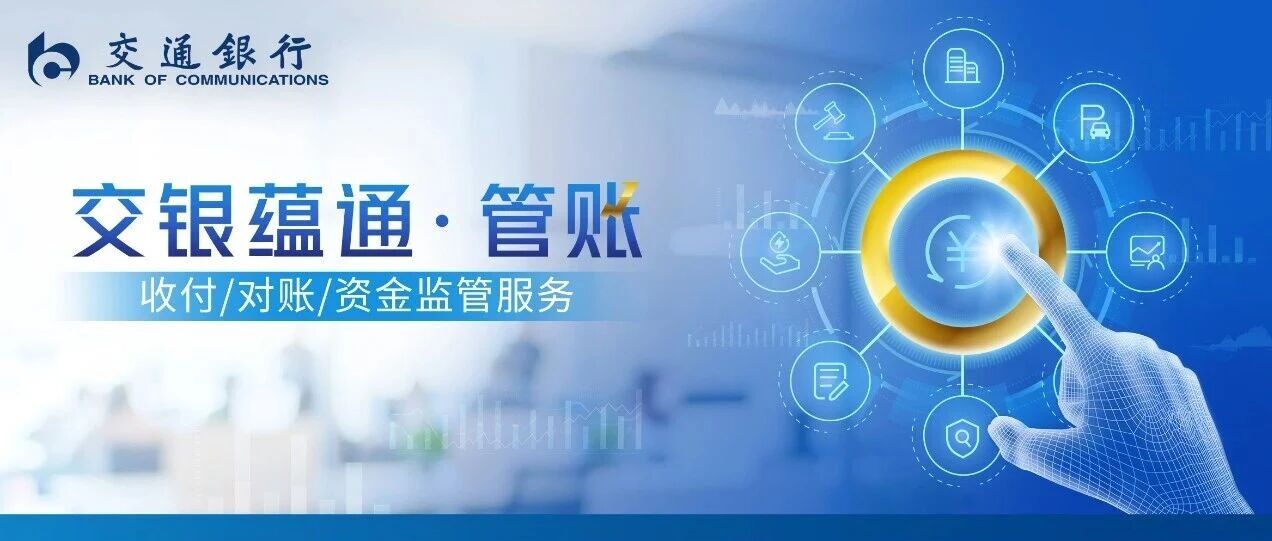
交通银行推出“蕴通管账”服务,以高效支付结算赋能企业业财融合
21世纪经济报道· 2025-10-27 23:10
Core Viewpoint - The article discusses the launch of the "Jiao Yin Yun Tong · Guan Zhang" brand service by Bank of Communications, focusing on enhancing corporate payment and settlement services to address pain points such as diverse settlement tools, low reconciliation efficiency, and challenging fund supervision, thereby transitioning from a traditional service provider to a scene ecosystem enabler [1][4]. Group 1: Conceptual Innovation - The service aims to drive integrated management upgrades through the concept of business-finance integration, responding to the evolving demands of enterprises in the digital economy [3][4]. - It establishes a data-driven management system that integrates "scene, customer, account, and funds," forming a unique "3+4" service model [4]. Group 2: Product Empowerment - The "Yun Tong Guan Zhang" service offers a one-stop solution that highly coordinates funds, settlement, and operational management [6]. - It enhances core business scenarios by providing multi-channel, intelligent services for efficient fund processing, including seamless integration of online and offline transaction systems [7]. - The service includes comprehensive account management, automatic reconciliation, and fund supervision, ensuring clear transaction tracking and accurate fund allocation [8]. Group 3: Ecological Interconnection - The service introduces "scene+" financial solutions tailored to four key economic scenarios: real economy, livelihood economy, platform economy, and park economy [9][10]. - It supports the real economy by facilitating supply chain collaboration and operational efficiency across procurement, production, and sales [9]. - For the livelihood economy, it streamlines payment processes for public utilities and daily consumption, enhancing user convenience [9]. - In the platform economy, it provides flexible account management and efficient fund distribution solutions to meet the needs of various stakeholders [9]. - The park economy is addressed through unified payment and intelligent management, promoting digital financial services within modern park ecosystems [10]. Group 4: Market Reach - Bank of Communications has developed customized solutions for over 30 industries, serving nearly 160,000 government and enterprise clients, leveraging its extensive experience in the corporate payment and settlement sector [10].


交通银行推出“蕴通管账”服务,以高效支付结算赋能企业业财融合
2 1 Shi Ji Jing Ji Bao Dao· 2025-10-26 16:18
Core Insights - The core viewpoint of the news is that Bank of Communications has launched the "Yun Tong Guan Zhang" brand service plan, focusing on corporate payment and settlement scenarios to address pain points such as complex settlement tools, low reconciliation efficiency, and difficult fund supervision, thereby upgrading from a traditional service provider to a scene ecosystem enabler [1][2]. Group 1: Conceptual Innovation - The integration of business and finance is positioned as a new engine driving integrated management upgrades, responding to the higher demands for financial services in the digital economy [2]. - The "Yun Tong" financial brand system introduces the "Yun Tong Guan Zhang" sub-brand, emphasizing data-driven management across "scene, customer, account, and funds" [2]. - The unique "3+4" service model leverages core capabilities in payment settlement, reconciliation, and fund supervision to create service advantages [2]. Group 2: Product Empowerment - "Yun Tong Guan Zhang" offers a one-stop solution for funds, settlement, and operational management, enhancing efficiency across various business scenarios [3]. - In payment settlement, it provides multi-channel, intelligent services that streamline fund processing, enhancing procurement efficiency through automated payment processes [3][4]. - The reconciliation service includes account management, automatic write-offs, and clear transaction tracking, addressing the challenges of matching transaction flows with receivables [3][4]. Group 3: Ecological Interconnection - The service targets four core economic scenarios, providing tailored financial solutions that inject digital vitality into various sectors [5][6]. - For the real economy, it focuses on the entire operational chain of manufacturing enterprises, facilitating data flow across procurement, production, and sales [5]. - In the platform economy, it develops flexible account management systems to meet the complex fund clearing needs of e-commerce and internet finance platforms [6]. Group 4: Market Reach - The Bank of Communications has customized solutions for over 30 industries, serving nearly 160,000 government and enterprise clients, indicating a strong market presence [6]. - The "Yun Tong Guan Zhang" service aims to support enterprises in achieving business-finance integration and digital transformation, contributing to high-quality development [6].
对话优蓝国际(YOUL)CFO朱立东:操盘四次港美股上市的“危机拆弹专家”
Ge Long Hui· 2025-10-22 08:07
Core Insights - Youlan International, China's largest blue-collar lifelong service platform, successfully listed on NASDAQ through a De-SPAC merger with Distoken Acquisition Corporation, bypassing traditional IPO challenges and addressing valuation discrepancies [1][2][14][16] - CFO Zhu Lidong played a pivotal role in navigating the complexities of capital markets, leveraging his extensive experience from previous IPOs and capital operations [1][17] Company Overview - Youlan International's listing marks a significant milestone in its growth trajectory, reflecting the increasing demand for blue-collar services and the favorable policy environment for vocational education [1][2] - The decision to pursue a De-SPAC merger was influenced by the unfavorable conditions in the Hong Kong IPO market, prompting a strategic shift to the more flexible U.S. capital market [14][15] Leadership and Experience - Zhu Lidong, with a decade of experience in investment banking, has been instrumental in multiple successful IPOs, including those of China Rundong Auto Group and China New Higher Education Group [1][3][9] - His expertise in navigating complex financial structures and regulatory environments has been a key asset in executing successful capital market strategies [6][17] Strategic Decisions - The transition from a planned Hong Kong IPO to a U.S. listing via De-SPAC was a calculated move to optimize market conditions and shareholder interests [15][16] - Zhu's innovative approach to financial structuring, including the "dual Cayman" solution during previous IPOs, showcases his ability to creatively solve complex financial challenges [5][6] Market Context - The successful listing of Youlan International comes at a time when the blue-collar economy is gaining traction, supported by favorable government policies aimed at enhancing vocational training and employment opportunities [2][17] - The De-SPAC route is increasingly seen as a viable alternative to traditional IPOs, particularly for companies seeking to expedite their entry into public markets [14][16]
协同、提质、跃升 高质量发展结硕果
Jin Rong Shi Bao· 2025-10-22 02:32
Core Insights - The article emphasizes the significant progress made by financial companies over the past five years, highlighting three key themes: "synergy," "quality enhancement," and "leapfrogging" in technology capabilities [2][3]. Group 1: Industry Overview - As of the second quarter of 2025, there are 234 operational corporate financial companies in China, with total assets amounting to 8.76 trillion yuan, an increase of 118.5 billion yuan or 1.37% year-on-year [3]. - Total deposits reached 7.26 trillion yuan, reflecting a year-on-year growth of 1.5%, while the capital adequacy ratio improved to 21.3%, up by 0.69 percentage points from the previous year [3]. Group 2: Company Performance - Several financial companies reported their mid-year results for 2025, with Huabei Mining Financial Company showing total assets of 12.11 billion yuan and a profit of 1.1 billion yuan for the first half of the year [4]. - China Nuclear Financial Company reported total assets of 105.58 billion yuan and a net profit of 472 million yuan for the same period [4]. - The defense industry financial company disclosed that it has provided over 350 billion yuan in credit over the past five years, saving the group nearly 2 billion yuan in costs through various financial strategies [4]. Group 3: Treasury Management - The construction of treasury systems has become crucial for financial companies to enhance fund utilization and risk management, with a focus on creating a comprehensive financial resource management platform [5][6]. - Companies like the defense industry financial company have developed advanced treasury systems that provide real-time visibility and risk alerts across all business domains [6]. Group 4: Future Outlook - The transition from the "14th Five-Year Plan" to the "15th Five-Year Plan" highlights the importance of strategic planning, with a focus on technological innovation and digital transformation as key priorities for financial companies [7][8]. - Financial companies are expected to undergo significant changes in service models over the next five to ten years, driven by rapid advancements in financial technology [7].

河北证监局强化公司治理监管 推动辖区上市公司加强内部控制筑牢合规底线
Zheng Quan Ri Bao Wang· 2025-10-09 10:43
Core Viewpoint - The effectiveness of corporate governance has become a cornerstone for high-quality development of enterprises amid ongoing reforms and stricter regulatory requirements in the capital market [1][2]. Group 1: Corporate Governance Challenges - Current core challenges in corporate governance include inadequate implementation of systems and imbalanced governance structures, particularly in state-owned enterprises and private enterprises [2]. - State-owned enterprises face issues with weak execution and insufficient process penetration, necessitating comprehensive integration of compliance management into business processes [2]. - Private enterprises are often constrained by dominant shareholders, highlighting the need to enhance the independence of independent directors and secretaries to protect minority shareholder rights [2]. Group 2: Internal Control and Financial Management - The integration of business and finance ("业财融合") and "system control" emerged as focal points during discussions among financial executives [2]. - Effective internal control must be based on an integrated and traceable information system, such as an ERP system, which can enhance operational efficiency and prevent false transactions and financial fraud [2]. - The audit committee must operate substantively, possessing the authority and responsibility to supervise financial reporting, internal controls, and related party transactions [2]. Group 3: Regulatory Guidance and Implementation - The activities provided systematic, practical, and actionable governance enhancement solutions through professional policy guidance, risk case analysis, and experience sharing among listed companies [3]. - Participants expressed that the content directly addressed current challenges and blind spots in corporate governance, offering both regulatory warnings and practical guidance, exceeding their expectations [3]. - Companies committed to transforming learning outcomes into concrete actions for internal governance upgrades, continuously improving systems and processes, and enhancing execution supervision [3].
新会计准则落地在即 险企关注应对实施前“最后一公里”
Zhong Guo Jing Ying Bao· 2025-09-26 04:44
Core Insights - The insurance industry is facing multiple challenges including low interest rates, accounting standard changes, and stringent regulatory requirements, necessitating urgent transformation [1] - The 2025 timeline is identified as a critical period for reshaping the insurance landscape, emphasizing the need for strategic alignment and tactical execution [1][4] Group 1: Industry Challenges and Transformation - Insurance companies must navigate low interest rate impacts and adapt to new accounting standards while enhancing their service capabilities to the real economy [1] - The implementation of new insurance contract accounting standards is set to begin on January 1, 2023, for certain companies, with others following in 2026, requiring firms to balance short-term financial performance with long-term strategic goals [2] Group 2: Strategic Directions - The industry is encouraged to adopt a dual approach of "long-termism" and "lean management" to ensure sustainable growth and effective execution of strategies [4] - Companies are advised to refine their implementation strategies for new accounting standards, focusing on areas such as internal controls and asset-liability management [3] Group 3: Risk Management Insights - A survey of over 150 insurance companies revealed ongoing challenges in risk management, including weak data governance and insufficient quantitative modeling tools, despite some improvements compared to the previous year [3] - The integration of risk management into core business planning and budgeting processes remains lagging, with early-stage applications of emerging technologies and artificial intelligence [3]
交通银行“交银蕴通万里行”走进湖北,发布“蕴通管账”支付结算服务方案
21世纪经济报道· 2025-09-24 12:13
Core Viewpoint - The article discusses the launch of the "Yun Tong Guan Zhang" payment settlement service by the Bank of Communications, aimed at enhancing financial support for the real economy and facilitating the digital transformation of enterprises in Hubei province [1][3]. Group 1: Service Overview - "Yun Tong Guan Zhang" integrates various financial services to address enterprise pain points such as complex settlement tools, low reconciliation efficiency, and difficult fund supervision [4]. - The service offers three core capabilities: smart and convenient payment settlement, precise and efficient reconciliation, and secure and visible fund supervision [4]. - It focuses on four major ecological scenarios: real economy, livelihood services, platform economy, and park economy, responding to the customized and agile financial needs of enterprises [4]. Group 2: Technological Integration - The service emphasizes the integration of financial services into various production and life scenarios, moving from consumer retail to corporate operations [3]. - It highlights three trends: scenario-based solutions, open banking technologies for collaborative ecosystems, and intelligent automation driven by AI and big data [3]. Group 3: Strategic Partnerships - During the event, the Bank of Communications awarded titles to 15 enterprises as "Technology Navigation Strategic Partners" and 12 as "Yun Tong Treasury Strategic Partners" [6]. - The collaboration with enterprises like Zhongjin Data Group showcases the bank's role in supporting financial resource management and digital upgrades for corporate clients [6]. Group 4: Comprehensive Financial Services - The bank provides a full lifecycle of financial services, including equity, debt, leasing, and trust, tailored to the needs of technology enterprises [7]. - Innovative products like "Knowledge Value Credit Loan" have been launched to convert intangible assets into quantifiable credit, with 3.3 billion yuan allocated to support nearly 1,000 technology enterprises [7].

浦发银行上海分行召开企业司库创新工作会议
Guo Ji Jin Rong Bao· 2025-09-17 12:27
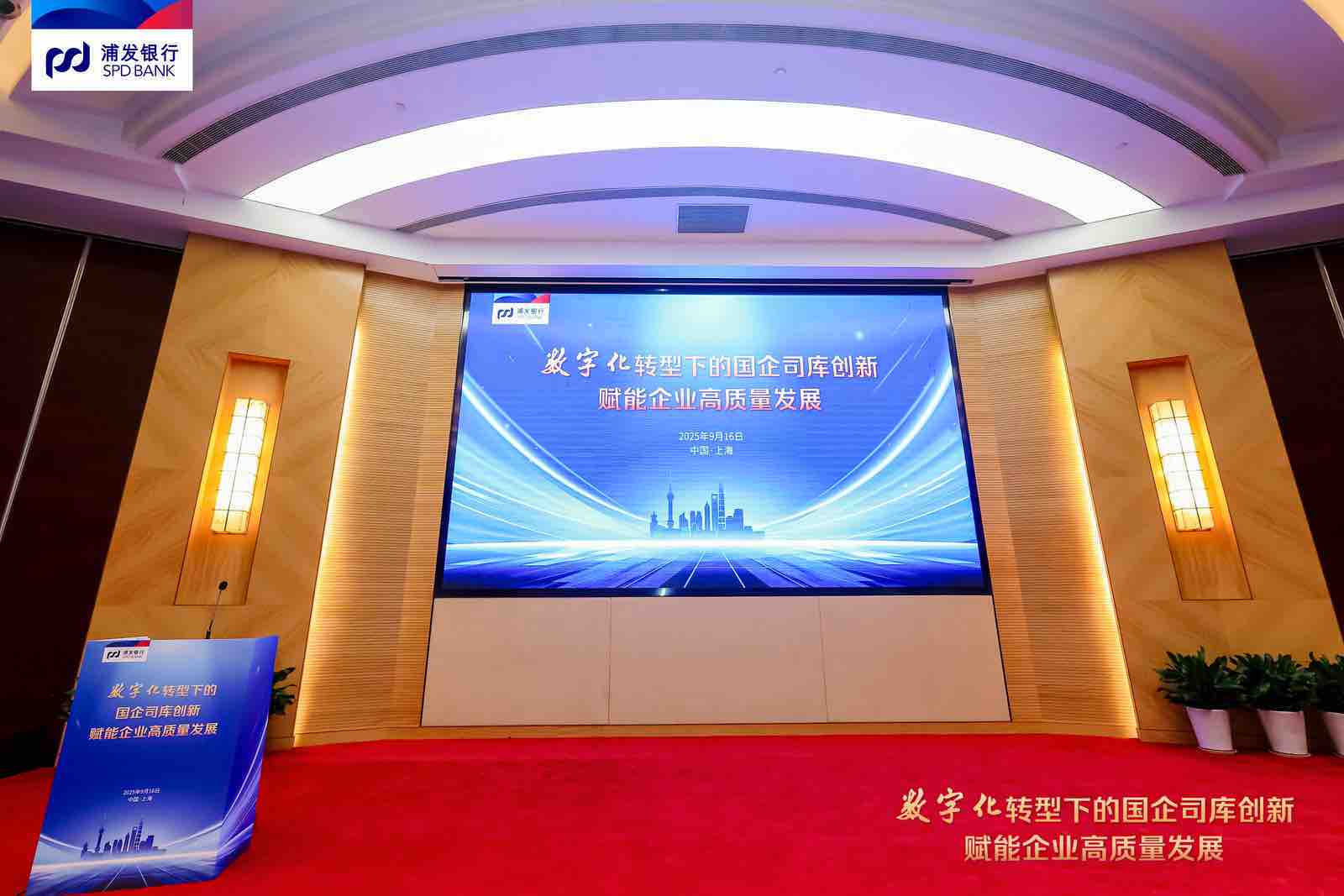
Core Insights - The construction of a treasury system has become a crucial initiative for enterprises to drive management transformation, enhance core competitiveness, and strengthen capital risk prevention in the context of the digital economy reshaping global industrial patterns [1] Group 1: Conference Overview - A work conference titled "Innovation of State-owned Enterprise Treasury under Digital Transformation, Empowering High-Quality Development" was held on September 16, 2025, at the Shanghai branch of Pudong Development Bank, focusing on treasury system construction, business-finance integration, and digital capital management [1] - Representatives from 21 state-owned enterprises under the supervision of the municipal state-owned assets supervision and administration commission, along with 8 district state-owned assets commissions and related service providers, participated in discussions [1] Group 2: Case Studies and Discussions - Jinjiang International Group and Shanghai Real Estate Group shared their practices and innovations in treasury system construction, covering aspects such as unified account management, centralized fund scheduling, and business-finance integration [3] - A roundtable discussion involved representatives from Pudong Development Bank, Shanghai Urban Investment Group, Tunnel Shares, Inspur Group, and ZTE New Cloud, focusing on topics like "Treasury System Construction Path," "Business-Finance Integration Collaboration," and "Intelligent Risk Control and Early Warning Mechanisms" [3] - Solutions proposed for common concerns such as data integration, phased implementation, and supply chain finance included modular services, API embedding, and joint risk control modeling, aimed at providing enterprises with comprehensive, lightweight, and highly compatible treasury service support [3] Group 3: Bank's Commitment - Pudong Development Bank's Vice President Kang Jie stated that the bank will continue to enhance its treasury financial service capabilities, collaborating with the government and enterprises to build a "government-enterprise-bank" digital ecosystem, thereby assisting enterprises in improving capital operation efficiency and modern management levels [5]

驰宏锌锗(600497)2025年中报简析:营收净利润同比双双增长
Zheng Quan Zhi Xing· 2025-08-28 14:14
Core Viewpoint - Chihong Zn & Ge Co., Ltd. reported a year-on-year increase in both revenue and net profit for the first half of 2025, indicating positive financial performance and operational efficiency improvements [1] Financial Performance Summary - Total revenue reached 10.581 billion yuan, up 7.67% year-on-year [1] - Net profit attributable to shareholders was 932 million yuan, an increase of 3.27% year-on-year [1] - In Q2 2025, total revenue was 5.437 billion yuan, reflecting a 5.47% year-on-year growth [1] - Q2 net profit attributable to shareholders was 438 million yuan, up 5.45% year-on-year [1] Key Financial Ratios - Gross margin improved to 19.77%, an increase of 11.41% year-on-year [1] - Net margin decreased to 8.75%, down 4.24% year-on-year [1] - Total expenses (selling, administrative, and financial) amounted to 627 million yuan, accounting for 5.92% of revenue, up 11.57% year-on-year [1] Cash Flow and Assets - Operating cash flow per share increased by 34.73% to 0.42 yuan [1] - Cash and cash equivalents decreased by 36.09% to 802 million yuan [1] - Accounts receivable decreased by 32.67% to 224 million yuan [1] Cost and Expense Analysis - Sales expenses rose by 44.1% due to increased compensation for marketing personnel and higher transportation costs [2] - Management expenses increased by 23.91% due to higher compensation accruals [5] - Financial expenses decreased by 21.71% as interest-bearing debt levels declined [5] Investment and Future Outlook - The company expects a slight increase in the complete cost of lead and zinc concentrate in 2025 due to operational changes, but overall costs are projected to remain competitive within the industry [4] - Analysts predict a performance of 1.938 billion yuan for 2025, with an average earnings per share of 0.38 yuan [3]


内蒙古电投能源股份有限公司2025年半年度报告摘要
Shang Hai Zheng Quan Bao· 2025-08-27 19:12
Core Viewpoint - The company, Inner Mongolia Electric Power Investment Co., Ltd. (referred to as "the company"), is focused on enhancing its operational quality and expanding its energy matrix while maintaining a commitment to investor returns through stable dividend policies [6][9]. Group 1: Company Overview - The company reported total assets of 54.979 billion yuan, an increase of 6.48% year-on-year, and net assets attributable to shareholders of 35.807 billion yuan, up 3.48% year-on-year [6]. - The company achieved operating revenue of 14.463 billion yuan, reflecting a year-on-year growth of 2.38%, and a net profit attributable to shareholders of 2.786 billion yuan, with earnings per share of 1.24 yuan [6][7]. Group 2: Strategic Developments - The company is accelerating its green transition with approximately 5 million kilowatts of new energy installed capacity, including key projects such as 445,000 kilowatts of wind power in Tucheng and 110,000 kilowatts of wind-storage in Chifeng [7]. - The company produced 22.6308 million tons of raw coal and sold 21.7745 million tons during the first half of 2025, alongside generating 241,595.25 million kilowatt-hours of thermal power [7]. Group 3: Governance and Compliance - The company has implemented a governance framework to enhance information disclosure quality, ensuring compliance with legal and regulatory requirements [8]. - In the first half of 2025, the company disclosed 91 pieces of information through designated media, maintaining transparency and accuracy in its reporting [8]. Group 4: Investor Returns - The company has a consistent profit distribution policy, having distributed cash dividends totaling approximately 1.905 billion yuan in 2024 and 2025, with a plan to continue focusing on investor returns [9].
