产业振兴

Search documents
乡村振兴 法治先行 天水市2026年立法计划出台
Xin Lang Cai Jing· 2026-01-16 09:52
Core Viewpoint - The legislative plan for 2026 in Tianshui City aims to enhance the development of local agricultural industries, specifically focusing on the Huaniu apple and Gangu chili, by introducing legal frameworks to support high-quality growth [1][2]. Group 1: Legislative Framework - The 2026 legislative plan includes the drafting of two local regulations: the "Tianshui City Huaniu Apple Industry Development Promotion Regulations" and the "Tianshui City Gangu Chili Protection and Development Regulations" [1]. - The plan emphasizes scientific, democratic, and lawful legislation principles, with extensive public consultation and multiple rounds of evaluation before approval by the municipal government [1]. Group 2: Huaniu Apple Industry - The Huaniu apple has established a large-scale and industrialized development model, with increasing brand value and market influence [1]. - The regulations for the Huaniu apple will focus on key areas such as geographical indication protection, production standards, brand maintenance, and market supervision to create a comprehensive legal support system [1]. Group 3: Gangu Chili Industry - Gangu chili is recognized as a significant member of the "Belt and Road" geographical indication brand promotion list and is essential for local cuisine, particularly in Tianshui's spicy dishes [2]. - The "Tianshui City Gangu Chili Protection and Development Regulations" will address critical aspects such as variety cultivation, standardized planting, and quality safety traceability to support the industry's upgrade and revitalization [2].
“产业+消费+金融”全链条帮扶 “陇上菜都”焕新生
Di Yi Cai Jing· 2026-01-14 06:54
Core Insights - The article highlights the successful integration of modern agricultural practices and financial support in Wushan County, Gansu, leading to enhanced agricultural productivity and economic development [1][2] Group 1: Financial Support and Agricultural Development - Postal Savings Bank has invested 4 million yuan in building smart greenhouses, enabling farmers to adopt advanced agricultural techniques and significantly improve their yields [1] - The bank's "Shan Shang You Dai" initiative, along with other financial products, provides essential funding and support to farmers, addressing their challenges in cultivation [1][2] - The bank collaborates with government agencies to offer technical guidance, helping farmers overcome barriers related to knowledge and confidence in farming [1] Group 2: Technological Integration in Agriculture - Modern greenhouses in Wushan County utilize technology such as remote control via mobile apps and IoT sensors for real-time monitoring of environmental conditions [2] - Farmers are shifting from traditional experience-based methods to data-driven approaches, enhancing their ability to manage crops effectively [2] - The introduction of high-tech solutions is expected to double the market price of certain crops, such as the net melon, by the time they are harvested [2] Group 3: Broader Economic Impact - The Postal Savings Bank has implemented 18 support projects focusing on the "Five Major Revitalizations," which include infrastructure improvements and educational support [2] - The initiative aims to create a regional brand, "Shan Shang You Li," which has already generated over 20 million yuan in consumption assistance over two years [2] - The overarching strategy emphasizes a comprehensive approach to rural development, integrating industry, consumption, and finance [1][2]

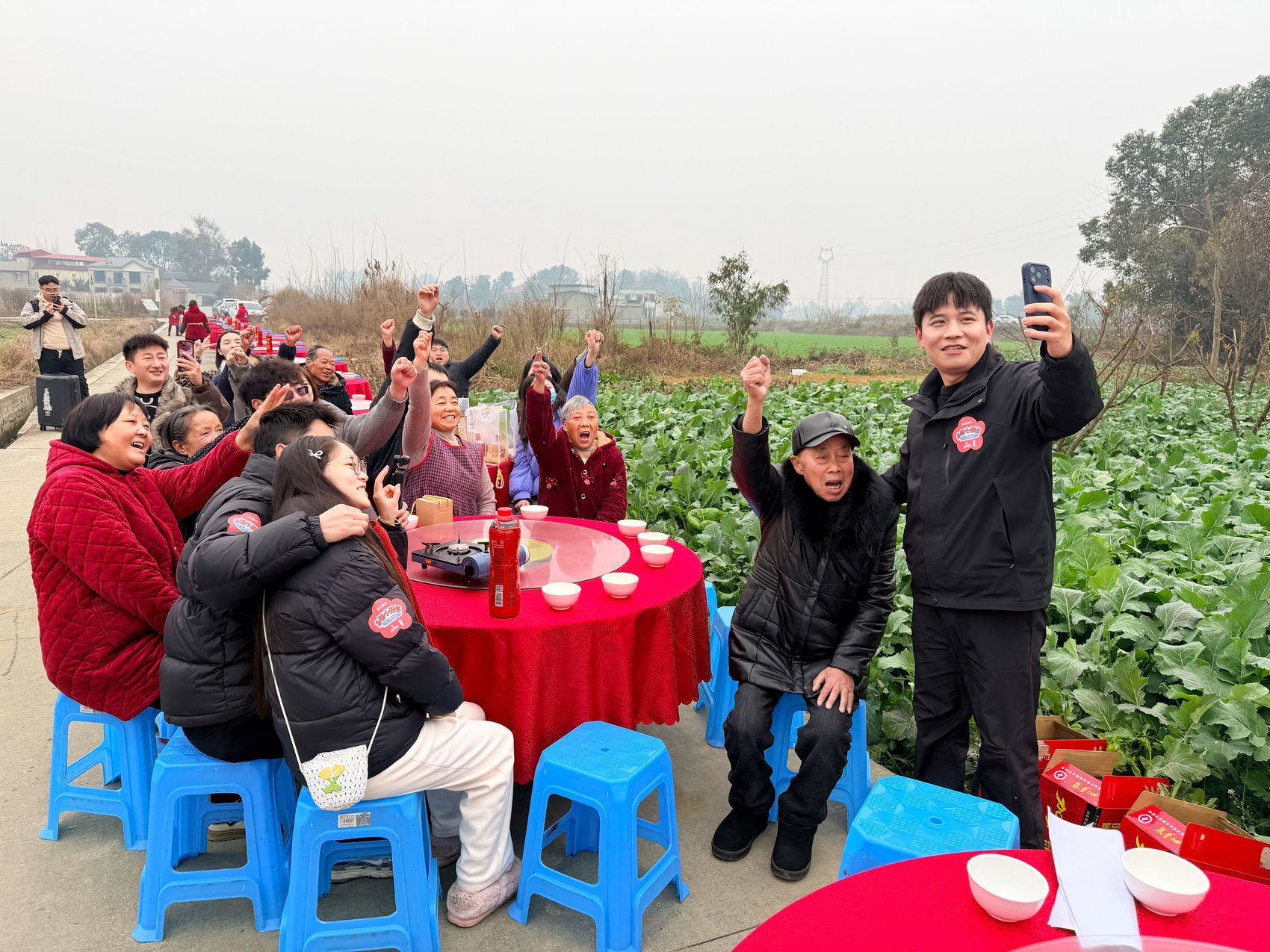
乡村博主摆下百人坝坝宴,今年想为家乡找一条产业振兴的路
Xin Lang Cai Jing· 2026-01-11 16:14
Core Insights - The article highlights the initiative of a rural content creator, Lin Zhipeng, who has successfully engaged both young internet users and elderly villagers through his platform "Da Sen Zi," fostering community interaction and support [1][2]. Group 1: Community Engagement - Lin Zhipeng organized a special banquet in Shuili Village, bringing together over 200 participants, including young internet users and elderly villagers, to celebrate the New Year [1]. - The event featured interactive elements such as human-shaped posters and a photo wall, enhancing the festive atmosphere and encouraging community participation [1]. Group 2: Social Impact - Over the past two years, Lin has built a following of over 4 million across social media platforms, focusing on humorous interactions with elderly villagers, which has positively impacted their social well-being [1][2]. - Lin and his volunteers have been actively caring for elderly residents, providing assistance with daily needs and companionship, thereby improving their quality of life [1]. Group 3: Future Aspirations - Lin aims to establish a sustainable economic model for Shuili Village by collaborating with over 100 brand merchants to convert online traffic into sales [4]. - He envisions developing local industries, such as leisure activities combined with live streaming sales, tourism, and handicrafts, to create opportunities for elderly villagers [4].

(走进中国乡村)产业引回“离乡雁” 广西百年古村“朝夕”皆暖
Xin Lang Cai Jing· 2026-01-11 04:50
Core Insights - The article highlights the successful return of population to Jinpo Village in Guangxi, China, driven by local industrial development, which addresses the issues of rural depopulation and the challenges of "empty nests" and "left-behind" children [1][2]. Group 1: Industrial Development - Jinpo Village has transformed from a once quiet area, primarily due to the migration of young adults to Guangdong for work, to a thriving community by attracting 13 enterprises in sectors such as leather, wood, and electronics [2]. - The village has established various agricultural bases, including a dragon fruit demonstration garden and a vegetable base, contributing to local employment opportunities [2]. Group 2: Employment and Community Impact - The local initiatives have created over 300 stable job positions, allowing families to work close to home, which enhances their quality of life and family time [2][3]. - The return of former migrant workers, such as Deng Qinglong and his wife, who plan to open an electronics processing factory, signifies a growing trend of entrepreneurship among returning residents, bringing back not only capital but also confidence in the village's future [2]. Group 3: Social Benefits - The employment opportunities in Jinpo Village have led to a significant "accompaniment effect," where local workers can spend more time with their families, contributing to a sense of happiness and community well-being [3]. - The integration of industrial revitalization with social care has effectively addressed the dual challenges of "industrial hollowing" and "family disintegration," providing a valuable reference for similar communities globally [3].
北京市朝阳区为通辽市留下一座“草银行”
Xin Lang Cai Jing· 2026-01-08 20:05
Core Viewpoint - The article highlights the successful implementation of a sustainable agricultural model in the Saihan District of Inner Mongolia, focusing on the introduction of "Zhongke grass" to combat land degradation and improve local livestock farming [2][3][4]. Group 1: Ecological and Economic Challenges - The region faces severe land degradation, with over 5,000 acres of grassland suffering from salinization and desertification, impacting local livestock farming and leading to high feed costs for farmers [2][3]. - The local economy, particularly in livestock farming, is heavily reliant on external feed sources, which increases operational costs for farmers [2][3]. Group 2: Introduction of Zhongke Grass - In 2022, a pilot project was initiated to cultivate Zhongke grass on 1,000 acres, utilizing a collaborative model involving research institutions, local government, and farmers [3]. - The grass has a long lifespan of nearly 30 years and is effective in improving saline-alkali land, while also serving as high-quality feed for livestock [2][3]. Group 3: Economic Impact and Job Creation - By 2025, the project aims to cover 40,000 acres with Zhongke grass, creating over 300 local jobs and stabilizing annual income at over 500 yuan per acre [4]. - The initiative has led to significant cost savings for farmers, reducing feed expenses from approximately 5,000 yuan to just 7 yuan per bundle for mechanical costs [3][4]. Group 4: Ecotourism Development - The restored grasslands have become a tourist attraction, with over 50,000 visitors in the summer of 2024, generating over 8 million yuan in local economic activity [4]. - The project serves as a model for integrating ecological restoration with economic development, showcasing the potential for replicable rural revitalization strategies [4][5].
让风、水和茶叶的簌簌声,化作龙坞“听觉山水”
Hang Zhou Ri Bao· 2026-01-07 03:19
Core Perspective - The article highlights the innovative project by Ye Zeshao'en, a graduate student from Zhejiang Conservatory of Music, who captures the sounds of Longwu Tea Town to create a unique musical piece titled "Longwu: Listening to Tea" [2][5]. Group 1: Sound Collection Process - Ye Zeshao'en undertook a month-long journey to collect sounds from the Longwu region, utilizing professional equipment to record the natural ambiance and daily life sounds [2][3]. - The sound collection included various elements such as the rustling of tea leaves, the boiling of water for tea, and the chatter of visitors, which together represent the authentic auditory landscape of Longwu [4][5]. Group 2: Artistic Transformation - From over a hundred recorded sound segments, Ye selected 15 distinct sounds to transform into an artistic composition, aiming to encapsulate the cultural essence of Longwu [5][6]. - The composition employs a blend of traditional and modern musical elements, using techniques to ensure clarity and depth in the soundscape, creating an immersive experience that reflects the beauty of the region [6]. Group 3: Cultural Significance - The project exemplifies the integration of tea culture with art, promoting the idea of "Tea + Art" and "Nature + Humanity" as a pathway for cultural empowerment and rural revitalization in Longwu Tea Town [6]. - The initiative aims to enhance the visibility of Longwu's cultural heritage through innovative artistic expressions, thereby attracting more visitors and fostering community engagement [6].
中国东北持续优化政务服务便利外商投资
Xin Hua Wang· 2026-01-06 02:34
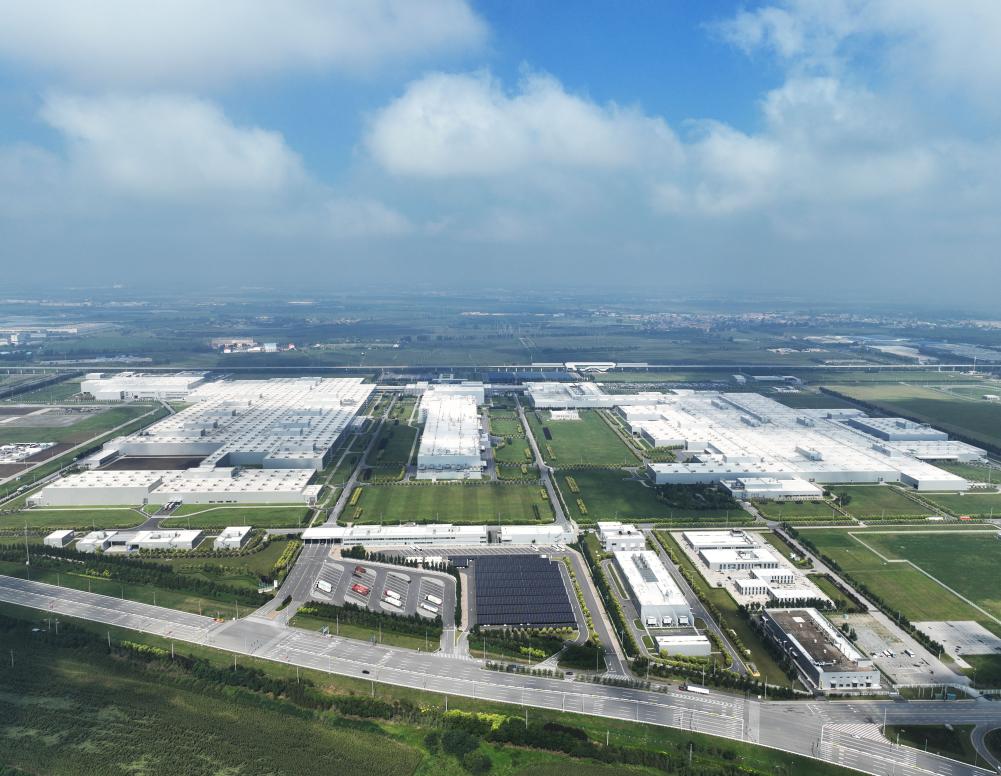
Group 1 - The Huajin Aramco petrochemical project in Panjin, Liaoning, is the largest investment project by Saudi Aramco in China, with a total investment of 83.7 billion yuan, and has recently entered the production preparation phase after completing the mechanical construction of 32 main production units [2] - The Chinese government has been actively supporting the project since its commencement in March 2023, facilitating problem-solving and accelerating construction progress [2] - The revitalization of Northeast China is being driven by policy incentives, leading to an optimized industrial structure and improved infrastructure, which boosts confidence for multinational companies to invest in the region [2] Group 2 - Dalian, the largest port city in Northeast China, has introduced 15 specific measures to encourage foreign investment in R&D centers, including improving R&D convenience and strengthening intellectual property protection [3] - The Tai Xing Energy pure electric vehicle battery project in Dalian, with a total investment of 3.7 billion yuan, is under construction, showcasing the efficiency of local government services that have bolstered investor confidence [3] - Michelin has invested over 12.5 billion yuan in its Shenyang factory since 2010, benefiting from a large consumer base and an increasingly optimized business environment [3] Group 3 - The improvement of the business environment in Northeast China includes not only rapid approvals and land guarantees but also the cultivation of innovation ecosystems and livable work environments [4] - The Sino-German (Shenyang) high-end equipment manufacturing industrial park provides clean energy heating to the Huachen BMW powertrain factory, aligning with BMW's sustainable development goals [4] - The industrial park has introduced international services for foreign employees, including visa processing and international schools, enhancing the living conditions for expatriates [5] Group 4 - Michelin's Shenyang factory has become the largest and most advanced high-end passenger car tire manufacturing base globally, playing a core role in Michelin's global supply chain [5] - The outlook for the Chinese market indicates a continued shift towards high-quality, innovation-driven, and sustainable development, presenting broad opportunities for global enterprises [5]
农业大省的乡村富民产业图景
He Nan Ri Bao· 2026-01-02 23:22
Core Insights - The conference on rural revitalization highlighted the integration of traditional agriculture with modern industry in Henan, aiming to increase farmers' income and reshape rural landscapes through diversified development [1] Group 1: Agricultural Production - Henan has maintained a stable grain production of over 130 billion jin for nine consecutive years, leading the nation in oilseed, edible fungi production, and live pig stock [1] - The province is actively developing specialty agriculture, with products like Lingbao apples and Huanchuan's "rice-shrimp-turtle" model gaining national recognition and market access [1] Group 2: Agricultural Processing Industry - Henan has developed a robust agricultural processing sector with over 6,103 enterprises, including 119 national-level agricultural industrialization leading enterprises, ranking second in the country [2] - The province is focusing on deep processing of agricultural products, enhancing value through products like frozen dumplings and trending items such as spicy sour noodles and tea beverages [2] Group 3: Labor and Market Expansion - The labor force and large market in Henan have fostered the growth of labor-intensive industries like rural garment processing and handicrafts, creating local employment opportunities [3] - The improvement of rural logistics networks and cold chain systems has facilitated the movement of agricultural products from villages to cities, enhancing market access [3] Group 4: Cultural and Ecological Integration - Henan is promoting rural tourism by integrating agricultural culture and scenic landscapes, creating new income channels for villagers through dining, accommodation, and direct sales of agricultural products [4] - The average disposable income for rural residents is projected to reach 21,330 yuan by 2024, with a reduction in the urban-rural income gap from 2.16 in 2020 to 1.97 [4] - By 2027, Henan aims to establish a well-structured rural industry framework with 18 industrial chains generating a total output value of 2.5 trillion yuan, benefiting over 12 million farmers [4]
近70载匠心,河南小城偃师闯出布鞋“大产业”
Xin Lang Cai Jing· 2025-12-30 10:49
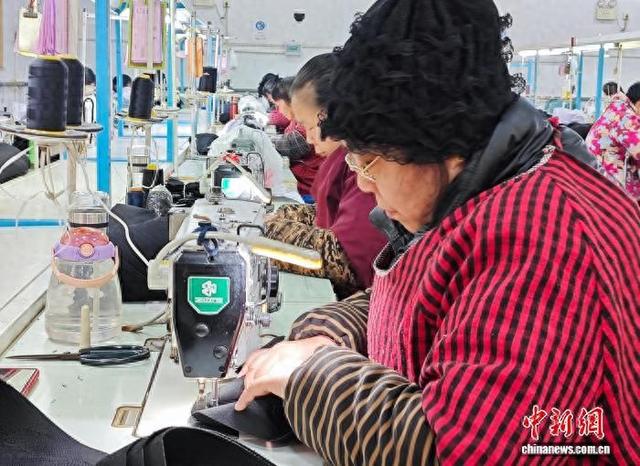
Core Viewpoint - The shoe manufacturing industry in Yanshi District, Luoyang, Henan Province, has evolved significantly over nearly 70 years, with local companies like Guanghui Shoe Factory leading the way in production and export of comfortable cloth shoes, meeting high international demand [1][3]. Industry Overview - The Guanghui Shoe Factory, established in 1995, occupies over 30 acres and produces 3.5 million pairs of cloth shoes annually, distributing products to over 20 provinces in China and international markets including South Korea, Germany, Russia, and the Middle East [3]. - The shoe industry in Yanshi began in 1956 with the establishment of the Yanshi Leather Shoe Society, which initially produced handmade leather and cloth shoes. By 1994, the number of shoe enterprises in Yanshi exceeded 1,000, with a total output value surpassing 1 billion RMB [3]. Technological Advancements - The introduction of advanced equipment, such as polyurethane shoe production lines in 2002, marked a turning point for the industry, enhancing product quality and profitability, and attracting well-known shoe brands for OEM production [5]. - The Yanshi Shoe Industry Association reports over 670 finished shoe production enterprises, more than 700 supporting enterprises, 40 design and research units, and over 10,000 employees in the sector [5]. Market Dynamics - The local shoe industry has developed a robust online and offline sales network over the past 30 years, with companies like Luoyang Tanyue Footwear Co., Ltd. operating over 100 online stores and achieving annual sales of 80 million pairs of shoes [7]. - Projections indicate that in 2024, online sales of footwear in Yanshi District will exceed 2.5 billion RMB, with direct and indirect exports of cloth shoes accounting for over 40% of total production, reaching markets across Southeast Asia, Central Asia, Eastern Europe, Africa, South America, and Japan and South Korea [7]. Industry Cluster Effect - The Yanshi District has established a shoe industry park covering 1,770 acres, housing hundreds of manufacturing and trading companies, serving as a new pivot for the local cloth shoe industry to transition from "manufacturing shoes" to "creating brands" [7].
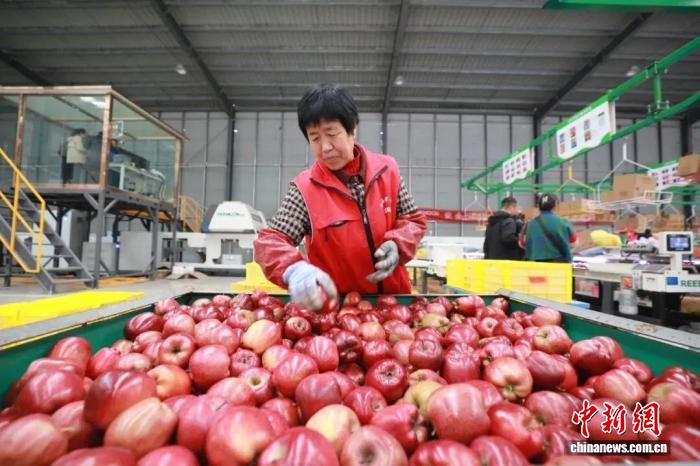
从提篮叫卖到“链”动四海:礼县苹果成富民“多棱镜”
Zhong Guo Xin Wen Wang· 2025-12-30 08:55
Core Viewpoint - The apple industry in Lixian County, Gansu, has transformed into a vital economic driver, leveraging technology and modern logistics to enhance production and sales, ultimately benefiting local farmers and contributing to rural revitalization [1][7]. Group 1: Industry Development - Lixian County has established apples as its leading industry since 2015, with significant government support leading to the construction of new cold storage facilities [3]. - The annual sales of apples from local cooperatives have reached millions of pounds, with products being sold both locally and internationally [3]. - The introduction of advanced agricultural techniques has significantly improved fruit quality and farmer incomes [4][6]. Group 2: Technological Integration - The apple production process has evolved with the adoption of technology, including precision grading systems in smart sorting workshops that assess apples based on size, color, sugar content, and internal defects [5][8]. - The use of e-commerce and a robust logistics network has allowed farmers to sell directly from their farms, eliminating traditional market challenges [4]. Group 3: Economic Impact - The cooperative model has fostered collaboration among farmers, enhancing product quality and market access, with projected sales for some cooperatives expected to exceed 2 million yuan [4]. - The apple industry has created a comprehensive value chain, transforming small-scale farming into a recognized industry, thus redefining the role of traditional farmers into modern agricultural entrepreneurs [7].