产业集群效应

Search documents
一群浙江人,撑起了餐饮包装的“全球生意”
3 6 Ke· 2026-02-26 01:36
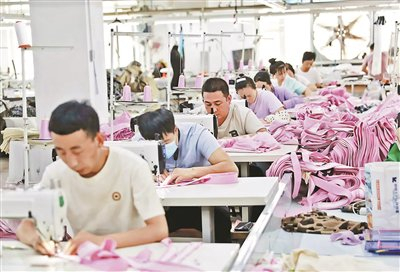
Core Insights - The article highlights the significant role of Zhejiang in the food packaging materials industry, emphasizing the success of local companies in this sector and their connections to well-known food brands [1][2]. Group 1: Industry Overview - The food packaging materials industry is a hidden yet substantial capital sector, with companies like Fuling Co., Ltd. and Xintianli making strides towards IPOs in 2025 [1]. - Xintianli supplies brands such as Mixue Ice City and Xiangpiaopiao, while Fuling Co., Ltd. serves brands like Bawang Tea and Chabaidao [1]. - Other listed companies like Jialian Technology and Zhongxin Co., Ltd. are also deeply integrated with major fast-food chains [1]. Group 2: Key Players - Xintianli, founded by He Linjun, has grown to an annual revenue of 1.1 billion yuan by focusing on disposable plastic food containers [2]. - Fuling Co., Ltd., established by Jiang Guilan, has evolved from producing local plastic products to becoming a supplier for KFC and other brands, with a revenue of 2.269 billion yuan in 2024 [3]. - Jialian Technology, founded by Wang Xiong, has seen its revenue grow from 1.234 billion yuan in 2021 to 2.326 billion yuan in 2024 [5]. Group 3: Regional Strengths - Zhejiang, particularly Taizhou, is recognized for its robust private economy and strong manufacturing base, which supports the packaging materials industry [2][7]. - The region's light industrial system, which includes food and consumer goods, drives demand for packaging materials, fostering specialization and refinement in the industry [7]. - The geographical advantage of Zhejiang, with its coastal cities, provides natural export channels, allowing companies to tap into global markets effectively [7]. Group 4: Collaborative Ecosystem - The clustering of companies in Zhejiang creates a strong collective effect, enabling new entrants to access all necessary production elements within a short distance [9]. - Leading companies like Jialian Technology and Fuling Co., Ltd. leverage capital to expand, merge, and invest in R&D, setting a precedent for the industry [9]. - The development of the packaging industry in Zhejiang illustrates a symbiotic relationship between solid industrial foundations and entrepreneurial innovation [9].

让外籍患者来苏就医更便捷
Xin Hua Ri Bao· 2026-02-06 21:49
Core Viewpoint - The expansion of China's visa-free policy has led to an increase in foreign patients seeking medical treatment in China, particularly in Jiangsu province, highlighting the efficiency, quality, and cost-effectiveness of the Chinese healthcare system [1][2]. Group 1: Medical Efficiency and Cost-Effectiveness - Foreign patients are attracted to China's medical services due to significantly shorter waiting times for procedures, such as MRI scans, which are 25 weeks shorter than in the UK, and cosmetic surgery costs that are 30%-50% lower than in Europe and the US [1]. - The Chinese healthcare system has achieved substantial progress during the 14th Five-Year Plan, as noted by officials, indicating a high level of service efficiency compared to other countries where patients may wait months for surgeries [2][3]. Group 2: Traditional Chinese Medicine (TCM) Appeal - TCM, including acupuncture and herbal medicine, is becoming a key attraction for foreign patients, often referred to as part of the "new three-piece set" of medical services in China [2]. - The World Health Organization's recognition of acupuncture's efficacy supports the growing acceptance of TCM globally, particularly in managing chronic diseases [2]. Group 3: International Medical Services Development - Jiangsu province is enhancing international medical exchanges and building convenient bridges for foreign patients seeking cross-border medical care [3]. - The establishment of international medical departments in high-level public hospitals is encouraged to connect with commercial insurance and broaden revenue channels, which will also stimulate the biopharmaceutical industry and integrate various healthcare-related sectors [3].
软实力也是竞争力
Jing Ji Ri Bao· 2026-01-27 22:15
Core Insights - Tianjin has become a significant player in the chocolate industry, achieving a cumulative export growth of 169.4% by 2025, despite not producing any cocoa beans [1] - The city has shifted its competitive advantage from resource dependency to resource allocation and market cultivation, leveraging its port's natural hub advantages to source global chocolate raw materials [1] - The development of the chocolate industry in Tianjin illustrates that a lack of inherent resource advantages does not preclude a region from thriving in related industries [1] Industry Development Strategies - Tianjin's approach emphasizes breaking free from resource dependency and reshaping competitive perceptions, focusing on optimizing the business environment and building an industrial ecosystem [2] - The local government supports enterprises in supply chain improvement, financing, market expansion, and project planning, fostering a conducive environment for innovation and collaboration among businesses [2] - The chocolate industry in Tianjin highlights the importance of cultural integration, product innovation, and understanding local consumer preferences to strengthen brand development and market presence [2]
澳门告别卫星场 近10万人迎来加薪
2 1 Shi Ji Jing Ji Bao Dao· 2026-01-20 23:10
Core Insights - The Macau gaming industry is undergoing a significant transformation, marked by the closure of satellite casinos by the end of 2025 and a widespread salary increase for nearly 100,000 employees in early 2026, reflecting the industry's shift from decentralization to concentration [1][3][4] Salary Increase and Employee Impact - Six major integrated tourism and leisure companies in Macau announced bonus and salary increase plans, with a uniform raise of 500 MOP for employees earning 16,000 MOP or less, and approximately a 2% increase for those earning above that threshold, benefiting about 99% of frontline employees [2][3] - The total number of employees affected by this salary increase is close to 100,000, emphasizing the industry's commitment to team contributions and shared success [2][3] Closure of Satellite Casinos - The last satellite casino, the Landmarks Casino, will close on December 31, 2025, marking the end of an era for this model that has been part of Macau's gaming landscape for nearly 50 years [4][5] - The closure of satellite casinos, which involved around 5,600 local employees, is seen as a pivotal moment in the industry's transition towards a more concentrated operational model [4][5] Industry Transformation and Regulatory Changes - The new gaming regulations have reinforced the legal status of satellite casinos and provided a framework for their phased exit, indicating a shift towards a more regulated and concentrated gaming environment [5][6] - The closure of satellite casinos is viewed as a necessary step for the growth of integrated resorts, which have become the preferred model for tourism in Macau [5][6] Tourism Growth and Non-Gaming Investments - Macau's tourism sector achieved a record-breaking 40 million visitors in 2025, a 14.7% increase year-on-year, contributing to the overall recovery of the gaming industry [7][8] - Non-gaming investments and activities have increased significantly, with major companies hosting nearly 600 events in 2025, indicating a strategic shift towards diversifying revenue sources beyond gaming [9] Future Outlook and Key Performance Indicators - The upcoming three-year assessment period starting in 2026 will evaluate the performance of gaming companies in terms of their non-gaming investments, which are crucial for the industry's structural transformation [9] - The growth of international visitors and the focus on non-gaming elements are expected to be key indicators of the industry's success in adapting to new market demands [9]

襄阳牛肉面入选2025年度中国消费名品名单
Xin Lang Cai Jing· 2026-01-08 08:42
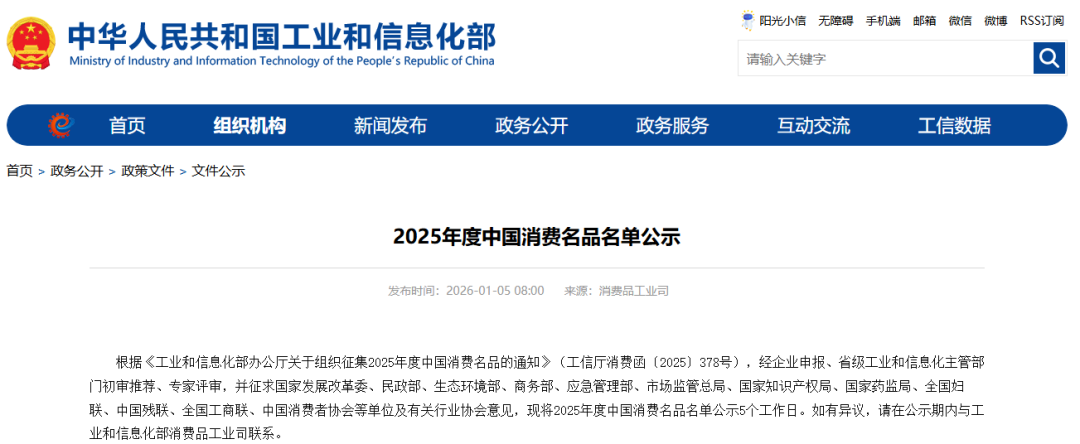
Core Viewpoint - The Ministry of Industry and Information Technology of China has announced the inclusion of Xiangyang Beef Noodle in the 2025 National Consumer Brand List, highlighting its significance as a regional brand and its potential for industry development [1][7]. Group 1: Industry Development - Xiangyang Beef Noodle has integrated into the new development pattern, forming a complete industrial chain that includes high-quality raw material supply, standardized processing, cold chain logistics, brand marketing, and cultural experience [5]. - The local government plans to leverage this recognition to upgrade the Xiangyang Beef Noodle industry, enhance industry guidance, and utilize support funds to promote digital and intelligent transformation of local enterprises [6]. Group 2: Strategic Initiatives - The government aims to cultivate large-scale, competitive leading enterprises and attract well-known domestic food processing companies to share in the industry development benefits [6]. - Xiangyang Beef Noodle industrial parks will be included in the city's high-standard industrial park construction, encouraging the entry of upstream and downstream enterprises to foster cooperation, resource sharing, and the formation of an industrial cluster effect [6].
近70载匠心,河南小城偃师闯出布鞋“大产业”
Xin Lang Cai Jing· 2025-12-30 10:49
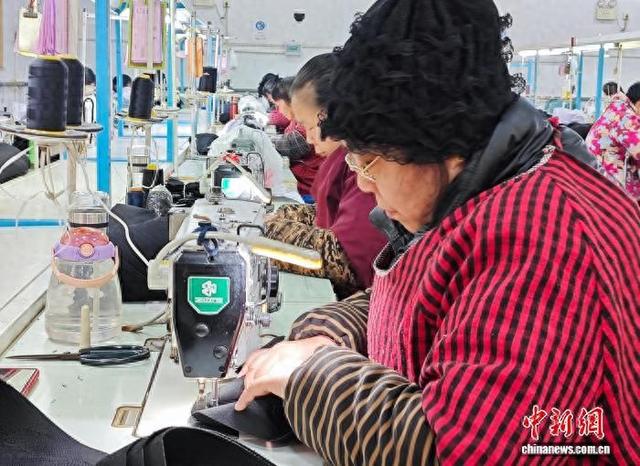
Core Viewpoint - The shoe manufacturing industry in Yanshi District, Luoyang, Henan Province, has evolved significantly over nearly 70 years, with local companies like Guanghui Shoe Factory leading the way in production and export of comfortable cloth shoes, meeting high international demand [1][3]. Industry Overview - The Guanghui Shoe Factory, established in 1995, occupies over 30 acres and produces 3.5 million pairs of cloth shoes annually, distributing products to over 20 provinces in China and international markets including South Korea, Germany, Russia, and the Middle East [3]. - The shoe industry in Yanshi began in 1956 with the establishment of the Yanshi Leather Shoe Society, which initially produced handmade leather and cloth shoes. By 1994, the number of shoe enterprises in Yanshi exceeded 1,000, with a total output value surpassing 1 billion RMB [3]. Technological Advancements - The introduction of advanced equipment, such as polyurethane shoe production lines in 2002, marked a turning point for the industry, enhancing product quality and profitability, and attracting well-known shoe brands for OEM production [5]. - The Yanshi Shoe Industry Association reports over 670 finished shoe production enterprises, more than 700 supporting enterprises, 40 design and research units, and over 10,000 employees in the sector [5]. Market Dynamics - The local shoe industry has developed a robust online and offline sales network over the past 30 years, with companies like Luoyang Tanyue Footwear Co., Ltd. operating over 100 online stores and achieving annual sales of 80 million pairs of shoes [7]. - Projections indicate that in 2024, online sales of footwear in Yanshi District will exceed 2.5 billion RMB, with direct and indirect exports of cloth shoes accounting for over 40% of total production, reaching markets across Southeast Asia, Central Asia, Eastern Europe, Africa, South America, and Japan and South Korea [7]. Industry Cluster Effect - The Yanshi District has established a shoe industry park covering 1,770 acres, housing hundreds of manufacturing and trading companies, serving as a new pivot for the local cloth shoe industry to transition from "manufacturing shoes" to "creating brands" [7].
美国无人机禁令正在反噬自身
Guan Cha Zhe Wang· 2025-12-25 00:30
Core Viewpoint - The FCC's decision to blacklist all foreign-made drones and components is a significant escalation in the U.S. strategy to decouple technology from China, particularly in the drone sector, which may hinder future innovation in the U.S. [1] Group 1: Regulatory Actions and Historical Context - The FCC's ban on foreign drones is rooted in a long-standing political struggle, beginning with the U.S. Army's 2017 order to stop using DJI drones due to alleged cybersecurity vulnerabilities [2][3] - The narrative of a "Chinese drone threat" has proliferated in U.S. government circles, leading to increased scrutiny and restrictions on Chinese drone manufacturers [4][5] Group 2: Market Impact and Industry Response - DJI holds over 50% of the commercial drone market in the U.S., with estimates suggesting its share could be as high as 90% in certain applications [6][4] - The ban is expected to have severe repercussions for approximately 500,000 commercial drone pilots in the U.S., with many indicating that it could lead to business termination without viable alternatives [6][7] Group 3: Competitive Landscape and Technological Implications - The U.S. drone industry is significantly lagging behind China, with a lack of competitive products and a fragmented supply chain that hampers innovation [10][11] - The ban may accelerate the "de-Americanization" of the Chinese drone industry, allowing it to strengthen its supply chain and enhance its global market position [13][14] Group 4: Future of Innovation and Global Standards - The decision to cut ties with DJI could hinder the U.S.'s ability to participate in the evolving global drone technology landscape, which is increasingly reliant on international collaboration [12][14] - As the drone industry moves towards standardization, China's growing influence in setting these standards could reshape the future of the industry, while the U.S. risks isolating itself from key developments [13][14]

多家上市公司披露11月份经营数据 展现相关行业态势
Zheng Quan Ri Bao· 2025-12-18 15:41
Group 1: Aviation Industry - The international air transport market has shown significant growth, with Hainan Airlines reporting a 40.3% year-on-year increase in passenger numbers for the first 11 months, and China Southern Airlines reporting a 19.62% increase [1] - The recovery and growth of international routes indicate an increase in global trade and tourism activities, prompting airlines and airports to optimize route layouts and improve service quality to attract more passengers [1] - The combination of policy benefits and peak consumption seasons is expected to further enhance growth expectations for the aviation industry, with holiday travel driving strong demand for air transport [1] Group 2: Pig Farming Industry - The pig farming industry is facing challenges due to declining sales prices, with Jiangsu Lihua Food Group reporting a sales revenue of 261 million yuan from 172,500 pigs sold in November, reflecting a 27.09% year-on-year decrease in sales price [2] - Both self-breeding and purchased pig fattening models are experiencing losses, with self-breeding entering a comprehensive loss phase for over three months and purchased fattening showing an average loss of 240 yuan per head [2] - Despite the current challenges, there is still potential for pig farming enterprises to achieve some profit for the full year 2025 due to higher sales prices earlier in the year [2]
俄罗斯、日本、印度都不够格!为何唯有中国, 让美国真正坐立不安?
Sou Hu Cai Jing· 2025-12-10 12:46
Core Viewpoint - The article suggests that a century belonging to China may be emerging, highlighting the clear trajectory of the US-China rivalry and warning that the US risks missing its last opportunity to compete with China, potentially leading to a decline similar to Detroit's [1][3]. Group 1: US-China Rivalry - The US has employed various strategies against China, including tariffs, chip restrictions, and financial sanctions, indicating a comprehensive blockade rather than ordinary competition [3][5]. - The underlying logic of this rivalry extends beyond trade tariffs and sanctions, focusing on the US's "invisible tax" on global supply chains [5][7]. Group 2: China's Industrial Growth - China's manufacturing output reached 35% of the global total in 2023, surpassing the combined output of the G7 countries, driven by an extreme level of supply chain collaboration [13][33]. - The US's imports from China decreased by 8.7% in the first three quarters, but this led to a 12% increase in domestic production costs, illustrating the economic interdependence that complicates the notion of complete decoupling [13][33]. Group 3: Competitive Advantages - China possesses a complete industrial system with capabilities across all categories, allowing for a self-sufficient production loop from basic goods to advanced technologies [21][20]. - The cost of electricity in China is significantly lower than in the US and Europe, with an average price of 0.5 yuan per kilowatt-hour compared to 1.25 yuan and 2.48 yuan respectively, creating a substantial competitive edge [23][25]. Group 4: Future Projections - By 2030, China's manufacturing share of the global market is expected to reach 40%, while the combined share of the US, Japan, and Germany will be less than half of China's [33]. - The article emphasizes that external pressures cannot hinder China's inherent growth potential, given its complete industrial chain, low energy costs, and vast consumer market [33].

京企服装产业在冀“织”就新锦衣
Bei Jing Qing Nian Bao· 2025-11-23 18:36
Core Insights - The article highlights the development of the Cangdong Economic Development Zone in Cangzhou, Hebei Province, as a new hub for high-end garment manufacturing, showcasing a complete industrial chain from design to logistics [8][10] - The zone has attracted over 200 garment enterprises from Beijing, achieving an annual output value exceeding 13 billion yuan [8][10] - The establishment of a large-scale e-commerce live streaming base is enabling traditional manufacturers to expand their sales channels and reach end consumers more effectively [8][9] Industrial Development - Cangdong Economic Development Zone has built a comprehensive industrial chain that includes garment design, raw material supply, production, wholesale, retail, and logistics, positioning itself as an economic engine for the Beijing-Tianjin-Hebei region [8][10] - The zone has seen a significant increase in production efficiency due to the adoption of automated equipment and streamlined processes, with companies like Minglang Garments reporting a production capacity of over 200,000 high-end women's garments annually [8][9] - The local supply chain is enhanced by the proximity of supporting enterprises, such as the Hongnaida zipper company, which provides essential components like zippers tailored to specific environmental conditions [8][9] Sales and Marketing Innovations - The introduction of a live streaming e-commerce base is transforming sales strategies for garment manufacturers, allowing them to engage directly with consumers and expand their market reach [8][9] - Companies are leveraging social media platforms to reconnect with old customers and attract new ones, significantly changing their sales dynamics [8][9] Quality Assurance and Testing - The establishment of a high-end testing center by Hongnaida ensures that garment manufacturers can access quality assurance services locally, reducing the risk of product returns due to component failures [9][10] - The testing center provides tailored advice to manufacturers on selecting appropriate materials based on environmental conditions, enhancing product reliability [9][10] Strategic Development and Future Outlook - The Cangdong Economic Development Zone is focusing on attracting high-end material suppliers and design studios to strengthen its industrial chain, addressing current weaknesses in upstream supply [10] - The zone aims to enhance its competitive edge by integrating design, production, and sales processes, thereby creating a more resilient and efficient garment manufacturing ecosystem [10]