
布鞋

Search documents
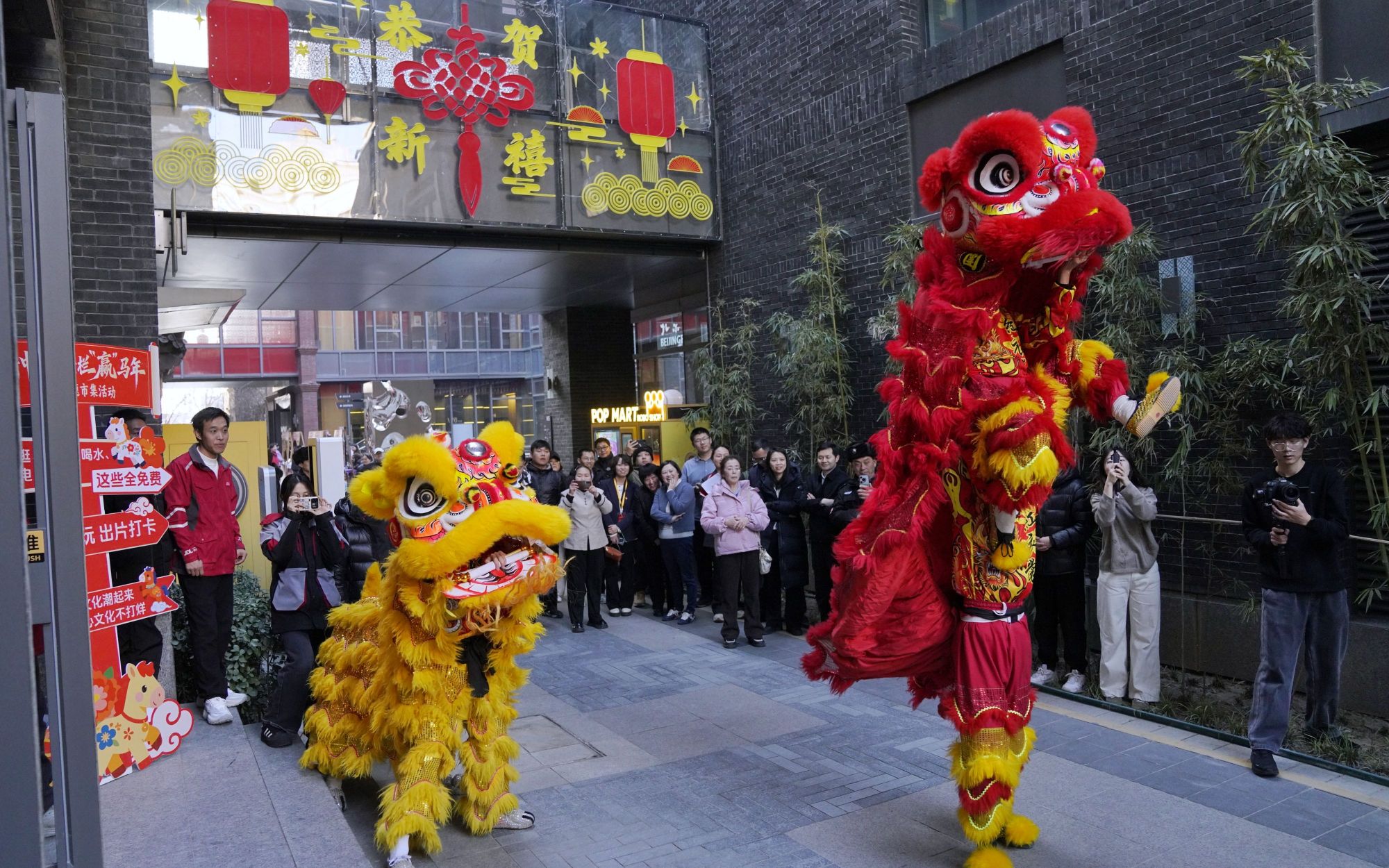
北京市西城区举行“小哥”新春游园会
Xin Lang Cai Jing· 2026-02-14 01:56
Group 1 - The event "I Celebrate the New Year in Beijing" was held on February 12, 2026, in the Dashilar business district, gathering nearly 100 delivery workers, ride-hailing drivers, and other new employment groups to celebrate the Spring Festival [1] - This marks the second consecutive year that the Xicheng District has organized a Spring Festival gala for new employment groups in the Dashilar area, featuring performances by local workers alongside intangible cultural heritage inheritors [1] - A "New Year Goods Market" was set up with 20 time-honored brands, offering discounts through postal savings bank vouchers and digital red envelopes to provide benefits to the participants [1] Group 2 - Xicheng District has been promoting the "Friendly City" initiative, enhancing the working and living conditions for delivery workers through various programs, including urban service stations and health support [2] - The "Little Brother Medical Station" and "Three New Academy" initiatives are part of the efforts to empower and support these workers, making their work experience more comfortable and secure [2] - Delivery workers are actively participating in community governance, contributing to public safety, emergency response, and civil guidance, thus becoming an important force in community defense and management [2]

学习新语丨一篮年货 情暖万家
Xin Hua She· 2026-02-12 13:44
Core Viewpoint - The article highlights the importance of traditional Chinese New Year preparations, emphasizing the role of local governments in ensuring the supply of goods and services for the holiday season, as well as the cultural significance of these practices [2][6][11]. Group 1: Government Actions and Responsibilities - Local governments are urged to ensure the supply of essential goods during the festive season, focusing on quantity, variety, and quality to guarantee consumer confidence [11][47]. - The government is committed to supporting rural development and improving the living standards of farmers as part of the rural revitalization strategy [20][21]. Group 2: Cultural Significance and Community Engagement - The article illustrates the personal engagement of the General Secretary with the community during New Year preparations, showcasing the purchase of local specialties and cultural products [4][9][12]. - Emphasis is placed on the importance of preserving traditional culture and promoting local cultural industries to a global audience [15]. Group 3: Market Supply and Consumer Confidence - The General Secretary's visits to various markets highlight the focus on ensuring sufficient supply and safety of food products during the New Year [41][46]. - The operational model of certain supermarkets is noted for its effectiveness in connecting farmers with consumers, ensuring mutual benefits [43].
豫西小城偃师年关产业忙 “一镇一业”绘出乡村新图景
Zhong Guo Xin Wen Wang· 2026-01-09 07:22
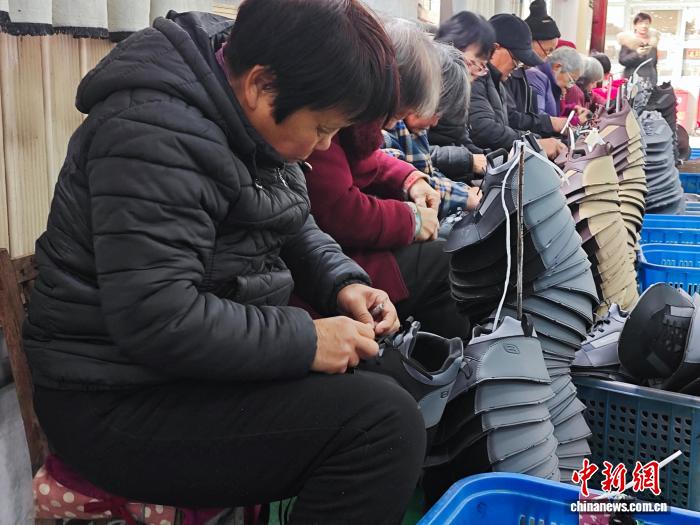
Core Insights - The article highlights the economic development in Yanshi District, Luoyang, where the "One Town, One Industry" model has led to significant job creation and local economic stability, particularly through traditional industries like shoe manufacturing and knitting [1][2]. Group 1: Industry Overview - Yanshi District has over 1,500 shoe and related enterprises, employing approximately 100,000 people and producing over 400 million pairs of cloth shoes annually, with online sales exceeding 2.6 billion yuan [2]. - The district is recognized as "China's Capital of Cloth Shoes," with a strong local workforce contributing to the stability of many families [2]. - The knitting industry in Zhaizhen Town employs around 20,000 people, producing over 300 million hats annually, with a thriving e-commerce market [4]. Group 2: Employment and Community Impact - Local factories, such as the Luoyang Guanghui Shoe Factory, provide employment opportunities close to home, allowing workers to care for family and maintain community ties [2]. - The "One Town, One Industry" model has transformed rural areas into hubs of specialized economic activity, fostering a sense of community and stability [6]. - The emergence of new industries, such as aluminum-based materials, offers higher-level job opportunities for younger generations, enhancing the quality of employment [6]. Group 3: Economic Transformation - The industrial landscape in Yanshi has evolved from small township enterprises to a distinctive block economy, deeply integrating industries with local communities [2]. - The rise of specialized industries has attracted younger individuals back to their hometowns, contributing to local economic growth and innovation [6]. - The clustering of industries has created a unique competitive advantage for the region, reshaping its economic landscape [6].
洛阳偃师多举措擦亮“中国布鞋之都”品牌
Xin Lang Cai Jing· 2025-12-31 09:37
Group 1 - The "Xiao Cheng Da Ye" online theme promotion event is ongoing in Yanshi District, Luoyang City, highlighting the local shoe manufacturing industry [1][3] - Yanshi District is recognized as the largest textile shoe production base in China, with nearly 70 years of shoemaking history [3] - The district has over 1,500 shoe enterprises and employs more than 100,000 people, producing 450 million pairs of shoes annually with a total output value of 12 billion yuan [3] - Yanshi has been awarded the title of "China's Cloth Shoe Capital" twice, in 2018 and 2023 [3] Group 2 - The Yanshi Shoe Industry Association, established in 1996, aims to promote the development of the shoe industry and serves as a bridge between the government and enterprises [3] - The association currently has 549 member units, including 1 president unit, 11 vice president units, 32 executive director units, and 58 director units [3] - With the growth of the internet, Yanshi's shoe sales have diversified, with online sales exceeding 15 million pairs, accounting for 45% of the total annual production [3] Group 3 - The association's representative expressed the goal of enhancing the quality, channels, and innovation to further promote the "China's Cloth Shoe Capital" brand and increase the presence of Yanshi cloth shoes in people's lives [3]
近70载匠心,河南小城偃师闯出布鞋“大产业”
Xin Lang Cai Jing· 2025-12-30 10:49
Core Viewpoint - The shoe manufacturing industry in Yanshi District, Luoyang, Henan Province, has evolved significantly over nearly 70 years, with local companies like Guanghui Shoe Factory leading the way in production and export of comfortable cloth shoes, meeting high international demand [1][3]. Industry Overview - The Guanghui Shoe Factory, established in 1995, occupies over 30 acres and produces 3.5 million pairs of cloth shoes annually, distributing products to over 20 provinces in China and international markets including South Korea, Germany, Russia, and the Middle East [3]. - The shoe industry in Yanshi began in 1956 with the establishment of the Yanshi Leather Shoe Society, which initially produced handmade leather and cloth shoes. By 1994, the number of shoe enterprises in Yanshi exceeded 1,000, with a total output value surpassing 1 billion RMB [3]. Technological Advancements - The introduction of advanced equipment, such as polyurethane shoe production lines in 2002, marked a turning point for the industry, enhancing product quality and profitability, and attracting well-known shoe brands for OEM production [5]. - The Yanshi Shoe Industry Association reports over 670 finished shoe production enterprises, more than 700 supporting enterprises, 40 design and research units, and over 10,000 employees in the sector [5]. Market Dynamics - The local shoe industry has developed a robust online and offline sales network over the past 30 years, with companies like Luoyang Tanyue Footwear Co., Ltd. operating over 100 online stores and achieving annual sales of 80 million pairs of shoes [7]. - Projections indicate that in 2024, online sales of footwear in Yanshi District will exceed 2.5 billion RMB, with direct and indirect exports of cloth shoes accounting for over 40% of total production, reaching markets across Southeast Asia, Central Asia, Eastern Europe, Africa, South America, and Japan and South Korea [7]. Industry Cluster Effect - The Yanshi District has established a shoe industry park covering 1,770 acres, housing hundreds of manufacturing and trading companies, serving as a new pivot for the local cloth shoe industry to transition from "manufacturing shoes" to "creating brands" [7].
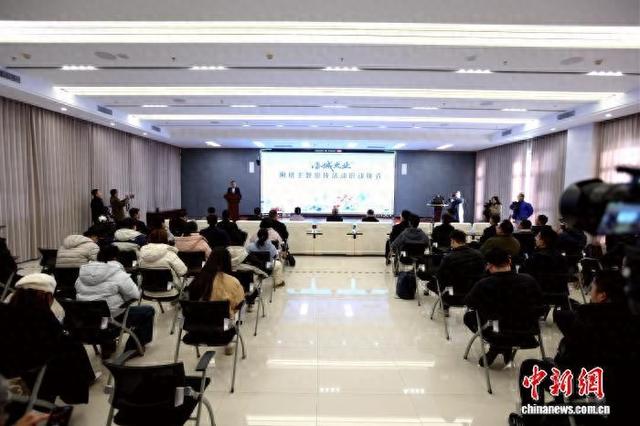
“小城大业” 网络主题宣传活动在河南洛阳启动
Xin Lang Cai Jing· 2025-12-29 11:01
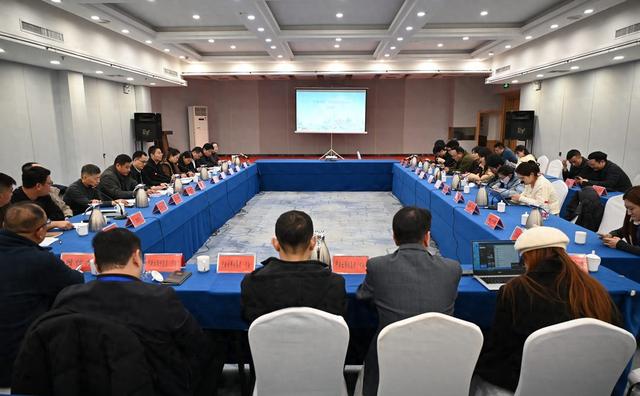
Core Viewpoint - The "Small Town, Big Business" online theme promotion event was launched in Yanshi District, Luoyang, Henan Province, focusing on the development of county-level economies and showcasing the achievements of local industries [1][3]. Group 1: Event Overview - The event is co-hosted by the Henan Branch of China News Service and the Luoyang Municipal Internet Information Office, with guidance from the Henan Provincial Internet Information Office [3]. - The event aims to highlight the strengths of county-level economies in Henan and promote positive energy for the construction of a "strong province" [3]. Group 2: Economic Development Focus - Yanshi District has implemented a strategy of "industrial strength and industrial prosperity," resulting in the cultivation of 93 high-tech enterprises and 283 nationally recognized small and medium-sized technology enterprises [3]. - The district has established an import and export trade association to enhance foreign trade, focusing on industries such as three-wheeled motorcycles, footwear, and knitting [3][4]. Group 3: Industry Highlights - Yanshi's three-wheeled motorcycle industry accounts for one-third of the national production capacity, with products exported to Central Asia and Africa [4]. - The district's footwear industry, known as the "Capital of Chinese Cloth Shoes," has a 60-year history and employs nearly 100,000 people [4]. Group 4: Media Coverage - A media delegation consisting of over 20 central and provincial media outlets will report on the development and innovation of county-level industries through various formats [5].
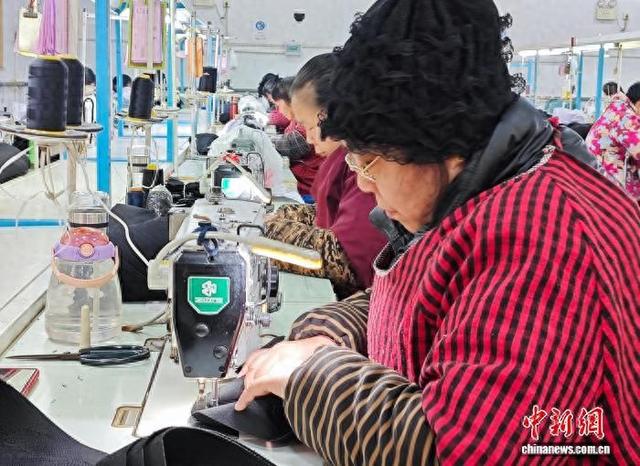
“家门口的务工车间”破解山区务工难题
Xin Lang Cai Jing· 2025-12-25 19:23
Group 1 - The core idea of the article highlights the establishment of a local shoe factory in Yunnan's Zhenxiong County, which provides employment opportunities for villagers, allowing them to earn income while managing family responsibilities [1] - The shoe factory, built on over 2000 acres of land, was initiated through the "workshop at the doorstep" pilot program, revitalizing abandoned tobacco stations and attracting local entrepreneurs [1] - Since its production began in June, the factory has employed 41 villagers, producing over 500 pairs of shoes daily and generating nearly 600,000 yuan in output value [1] Group 2 - The local government is exploring an "online + offline" sales model to adapt to the current e-commerce and live-streaming trends, aiming to cultivate live-streaming sales teams and open online stores to expand the factory's sales reach [2]
从布鞋、灰T到皮夹克,大佬们为何都需要自己的独特衣着?
创业邦· 2025-07-25 09:42
Core Viewpoint - The article discusses how prominent business leaders use signature clothing to simplify decision-making and enhance their public image, reflecting their personal and corporate identities [3][4][8]. Group 1: Decision Fatigue and Simplification - Decision fatigue theory suggests that making numerous decisions depletes mental resources, leading to poorer decision quality over time [6][7]. - High-profile individuals often simplify their clothing and dietary choices to conserve energy for more significant decisions, as exemplified by figures like Barack Obama and Mark Zuckerberg [7][8]. - Surveys indicate that individuals spend considerable time daily choosing outfits, with women averaging 17 minutes and men 16 minutes, highlighting the impact of clothing choices on mood and efficiency [7][8]. Group 2: Symbolism and Identity - Business leaders utilize standardized clothing to reinforce their unique identities and create social symbols, with minimalist styles representing values like innovation and efficiency [8][10]. - Huang Renxun's choice of a leather jacket contrasts with the minimalist styles of others, creating a strong visual identity that aligns with Nvidia's culture of technological innovation [10][12]. - The clothing choices of entrepreneurs like Zong Qinghou and Huang Renxun serve as symbols of their personal and corporate philosophies, fostering emotional connections with consumers [12][14]. Group 3: Marketing and Recognition - Uniform clothing helps establish visual recognition and memory points, making it easier for the public to identify and remember these leaders [13][14]. - The article emphasizes that modern entrepreneurs often prefer "anti-authority" symbols, such as casual attire, to reshape power dynamics and promote a sense of equality and innovation [14][16]. - The significance of clothing extends beyond mere appearance; it reflects deeper social psychology and cultural expressions related to identity and belonging [14][16]. Group 4: Implications for Ordinary Individuals - While ordinary individuals can benefit from adopting a simplified wardrobe to enhance focus and personal branding, direct imitation of leaders' styles may not be appropriate due to differing contexts and meanings [16][17]. - The essence of emulating these leaders lies in understanding the underlying principles of decision simplification and authenticity rather than merely copying their external appearance [17].

4.78亿元 北京双枢纽机场离境退税额创新高
Bei Jing Qing Nian Bao· 2025-06-05 18:18
Core Insights - The optimization of Beijing's departure tax refund policy has significantly enhanced the convenience for foreign travelers, stimulating inbound consumption activity [1][2][3] Group 1: Departure Tax Refund Data - From January to May 2025, Beijing Customs verified a total of 12,180 departure tax refund applications, amounting to approximately 478 million yuan, representing year-on-year increases of 147.01% and 91.61% respectively [3] - At Capital Airport, 8,972 applications were verified, showing a year-on-year growth of 114.13%, with a total amount of approximately 405.56 million yuan, up 80.19% [3] - At Daxing Airport, 3,208 applications were verified, with a staggering year-on-year increase of 332.93%, totaling approximately 72.38 million yuan, which is a 197.21% increase [3] Group 2: Policy Enhancements - The departure tax refund policy has been continuously upgraded since its nationwide implementation in 2015, including measures such as immediate refunds, increased refund stores, and simplified refund processes [2][4] - In April 2025, a new policy was introduced to enhance the departure tax refund service, resulting in a 90% increase in sales of tax refund goods and a 225% increase in the number of applications in the first month [4] - The establishment of 176 new tax refund stores was reported in the first month following the new policy, further expanding the availability of tax refund services [4] Group 3: Impact on Consumer Behavior - The departure tax refund policy not only benefits foreign travelers but also serves as a vital channel for promoting Chinese goods and culture abroad [5] - The policy has attracted a diverse range of foreign tourists, with the number of countries represented by tax refund travelers increasing from 84 in Q1 2024 to 116 in 2025 [6] - The implementation of a 240-hour visa-free transit policy has significantly boosted the number of foreign visitors, with a 22.3% year-on-year increase in traveler numbers at Beijing Customs [6]
北京“双枢纽”机场离境退税金额创新高 China travel带火“入境购”
Zhong Guo Chan Ye Jing Ji Xin Xi Wang· 2025-06-04 00:40
Core Insights - The article highlights the increasing trend of inbound tourism in China, driven by the optimized departure tax refund policy and the growing popularity of "China travel" transforming into "China shopping" [1][2] Group 1: Departure Tax Refund Policy - The departure tax refund policy allows foreign travelers to reclaim VAT on purchases made in designated stores when leaving China, with a refund rate of 11% [1] - In the first four months, the Beijing Customs verified 8,075 departure tax refund applications, totaling approximately 369 million yuan, marking a year-on-year increase of 114.82% and 79.41% respectively [1][2] - The Ministry of Commerce and other departments announced measures to optimize the departure tax refund policy, including lowering the minimum purchase amount for refunds to 200 yuan [2] Group 2: Inbound Tourism Growth - The implementation of a 240-hour visa-free transit policy significantly boosted the number of foreign travelers to China, with 7.07 million travelers recorded in the first four months, a year-on-year increase of 22.3% [2] - The number of flights at Beijing's two major airports reached 40,622, reflecting a year-on-year growth of 23.9% [2] Group 3: Enhanced Traveler Experience - Beijing Customs introduced measures to streamline the departure tax refund verification process, enhancing the convenience for travelers [3] - During the recent "May Day" holiday, the number of departure tax refund applications at the two major airports increased by 105.14%, with the total amount growing by 155.81% year-on-year [3] - Customs officials reported a significant increase in the volume of departure tax refund applications, necessitating the establishment of multiple verification points at the airports [3][4]