
传统消费

Search documents
“出圈” 求生!消费主题基金“跨界”寻超额收益
券商中国· 2025-10-13 10:12
Group 1 - The core viewpoint of the article highlights the disparity in performance among consumer-themed funds, with some achieving significant returns while others lag behind, particularly in the context of a strong technology sector [1][3][10] - In the third quarter, both traditional and new consumer sectors showed poor performance, with many stocks experiencing limited gains or slight declines, while certain thematic funds managed to outperform, achieving returns comparable to technology stocks [1][7][11] - The article emphasizes the importance of how "consumption" is defined, which influences the investment strategies of various funds, with some adopting a broad view that includes multiple sectors beyond traditional consumer goods [9][10] Group 2 - The article provides specific performance data for consumer-themed funds, noting that the Hai Fu Tong Consumer Preferred Fund led with a return of 82.25%, while others like Yongying New Consumption Smart Selection also performed well with over 55% returns [3][4][8] - The performance of traditional consumer stocks, such as liquor brands, has been lackluster, with the China Securities Liquor Index down approximately 8% year-to-date, indicating ongoing challenges in this sector [5][6][10] - The article discusses the potential for new consumption sectors, which focus on meeting the needs of younger consumers, to continue thriving due to favorable macroeconomic conditions, including policy support and liquidity [11][12]


消费基金首尾业绩差超80%!传统消费股“春天”何时来?
Guo Ji Jin Rong Bao· 2025-09-06 07:04
Core Viewpoint - The traditional consumer sector, particularly food and beverage stocks, has underperformed in 2023 compared to other sectors, with the food and beverage index showing a year-to-date decline of -1.92%, significantly lagging behind the top-performing communication index by over 60 percentage points [1]. Group 1: Performance of Consumer Funds - There is a significant performance divergence among consumer funds, with a difference of over 80 percentage points between the best and worst performing funds. The top-performing fund has achieved over 70% returns, while the lowest has seen losses exceeding 8% [3]. - As of early September, 71 consumer funds have reported net value increases of over 20%, while 90 funds have seen increases of less than 10% [3]. Group 2: Investment Strategies and Trends - To generate excess returns, funds heavily invested in consumer stocks need to align with new trends. For instance, the Hai Fu Tong Consumer Select Fund has increased its allocation to new consumption sub-sectors while enhancing research on both traditional and tech-driven consumer sectors [4]. - Some funds are capitalizing on overseas consumption growth opportunities, such as the Yongying Emerging Consumer Fund, which has invested in Hong Kong-listed companies in trendy toys and innovative pharmaceuticals, benefiting from "going abroad" dividends [4]. Group 3: Challenges for Traditional Consumer Stocks - Funds that have maintained a focus on traditional consumer stocks have struggled, with some experiencing significant losses. For example, the Guorong Rongxin Consumer Fund has heavily invested in liquor, beverages, and other traditional sectors but has reported a loss of over 8% [5]. - The Pu Yin An Sheng Consumer Upgrade Fund, which also focuses on traditional consumer stocks, has seen a decline of over 5% in net value, reflecting the challenges faced by traditional sectors [5]. Group 4: Future Outlook - The consumer sector is experiencing extreme differentiation, with traditional consumer stocks, particularly those linked to economic cycles like liquor, facing downward pressure, while new consumption companies are thriving [6]. - Fund managers believe that traditional consumption is nearing a bottom, while new consumption continues to present significant growth opportunities. For instance, the Yin Hua Consumer Theme Fund manager noted that traditional industries are giving rise to new development opportunities, such as supply chain integration and the rise of domestic brands [7]. - The manager of the Yongying Emerging Consumer Fund highlighted that leading companies in the trendy toy sector are in the early stages of explosive growth in the European and American markets, indicating high growth potential and certainty [7].
四川大决策投顾 :不惧扰动逢低做多 但需注意高低切换
Sou Hu Cai Jing· 2025-08-21 01:14
Market Overview - The U.S. Federal Reserve's minutes highlighted inflation risks, leading to mixed performance in the stock market, with the Dow Jones up 0.04%, Nasdaq down 0.67%, and S&P 500 down 0.24% [1] - In the A-share market, major indices rebounded in the afternoon, with the Shanghai Composite Index and Shenzhen Component Index rising by 1.04% and 0.89% respectively, while the ChiNext Index saw a slight increase of 0.23% [1] - The total trading volume in the A-share market was 2.41 trillion yuan, a decrease of 180.1 billion yuan from the previous trading day [1] Sector Performance - The white liquor sector attracted significant capital flow, driven by government emphasis on enhancing macro policy effectiveness and stimulating domestic consumption [2] - The semiconductor, optical electronics, and automotive sectors saw the highest net inflows, while the chemical pharmaceuticals, software development, and IT services sectors experienced the largest net outflows [10][6] Investment Strategy - The market sentiment remains strong, with a recommendation to buy on dips while being cautious about high-low switching strategies [8] - Focus areas for investment include non-bank financial sectors such as securities, multi-financial, and internet finance, as well as technology sectors like AI, robotics, and traditional consumption [9][11] Technical Analysis - The Shanghai Composite Index is on an upward trend, supported by the 5-day moving average, with MACD indicators showing a bullish trend [13] - The ChiNext Index also shows signs of recovery, supported by the 5-day moving average, indicating potential for continued upward movement [13]
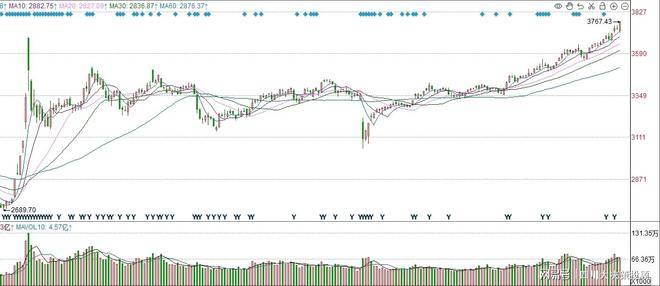
中信证券:建议关注“新消费”结构性机会及“传统消费”基本面触底回升机会
Zheng Quan Shi Bao Wang· 2025-08-18 01:09
Core Viewpoint - The report from CITIC Securities indicates a certain recovery trend in domestic demand during the first half of the year, with significant potential for improvement in consumer spending, especially in the context of uncertainties in exports for the second half of the year [1] Group 1: Domestic Demand and Consumer Spending - Domestic demand has shown signs of recovery in the first half of the year [1] - There remains considerable room for improvement in resident consumption [1] - The government is expected to continue implementing policies aimed at boosting domestic demand [1] Group 2: Policy and Consumption Opportunities - Incremental consumption policies are anticipated to positively impact consumer behavior [1] - There is a recommendation to focus on structural opportunities in "new consumption" [1] - Traditional consumption is expected to see a bottoming out and gradual recovery in fundamentals [1]

机构“消费观”分歧加大,是选择价值洼地还是布局新兴市场?
Xin Lang Cai Jing· 2025-08-15 07:53
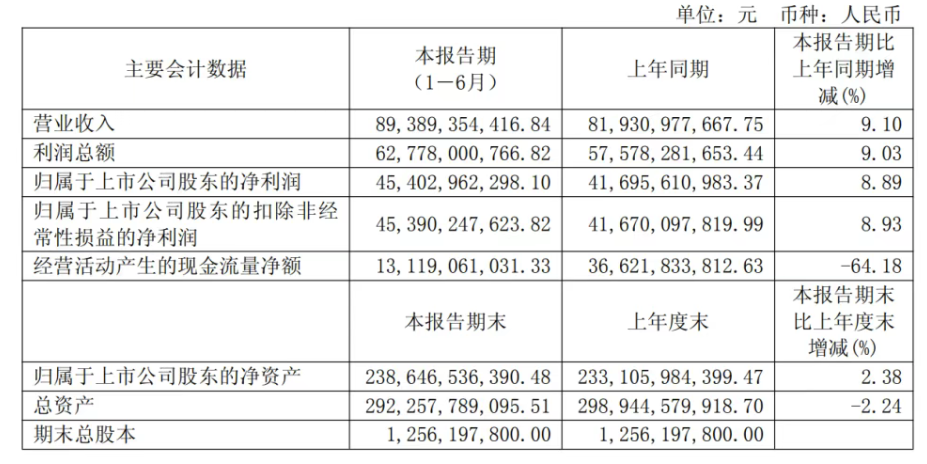
Group 1: Company Performance - Guizhou Moutai reported a revenue of 89.39 billion yuan for the first half of 2025, representing a year-on-year growth of 9.10% [1][2] - The net profit attributable to shareholders was 45.40 billion yuan, with an increase of 8.89% compared to the previous year [1][2] - The company set a target for total revenue growth of approximately 9% for 2025, slightly exceeding this target in the first half [1] Group 2: Market Trends - New consumption brands like Pop Mart, Laopu Gold, and Mixue Group have shown significant growth, with Laopu Gold's stock rising by 278.04% in the first half of the year [3] - The total market capitalization of these new consumption brands approaches 700 billion HKD [3] Group 3: Institutional Investment - Institutional investors continue to favor traditional consumer stocks, with Guizhou Moutai being a key holding for major funds [4] - Central Huijin and China Securities Finance are among the top shareholders of Guizhou Moutai, maintaining their positions without changes in shareholding [4] Group 4: Fund Manager Sentiment - Fund managers are shifting focus from traditional consumer stocks to new consumption stocks, indicating a decline in enthusiasm for traditional white liquor investments [5] - Some fund managers have significantly reduced their holdings in Guizhou Moutai, reflecting a broader trend towards new consumption sectors [5] Group 5: Fund Performance Comparison - The Silverhua CSI Hong Kong Stock Connect Consumption ETF has outperformed traditional consumption ETFs, achieving a return of 62.00% compared to 8.66% for the traditional consumption ETF [6][7] - The Silverhua ETF also shows a higher Sharpe ratio, indicating better risk-adjusted returns [6][7] Group 6: Valuation Insights - Traditional consumption indices exhibit lower valuations compared to new consumption stocks, with the CSI Major Consumption Index at a 1.11% percentile [8] - There are indications of structural opportunities in traditional consumption due to favorable policies and potential recovery in fundamentals [8]

消费主题基金业绩分化!传统赛道陷入低迷,“掘新”选手表现亮眼
Huan Qiu Wang· 2025-08-13 05:11
Group 1 - Some consumer-themed funds have performed poorly this year, with notable negative returns, such as Guorong Rongxin Consumer Select C and A, which reported returns of -15.06% and -14.97% respectively as of August 12 [1] - The top holdings of these underperforming funds included major liquor stocks like Wuliangye and Moutai, indicating a reliance on traditional consumer sectors [1] - In contrast, several consumer-themed funds have achieved impressive returns, such as Haifutong Consumer Select A, which reported a return of 60.48% year-to-date [3] Group 2 - The performance disparity among consumer-themed funds highlights the strong demand for new consumption sectors, while traditional consumption remains sluggish without clear signs of recovery [4] - Fund managers have noted a shift in capital towards new consumption, particularly in the Hong Kong market, which focuses on service and experiential consumption, aligning with the preferences of the "Z generation" [4] - The A-share market primarily consists of traditional essential consumption stocks like liquor and white goods, while the Hong Kong market's new consumption sector has a non-essential consumption ratio of 68.6%, indicating a more balanced approach [4]

消费主题基金 首尾相差超70个百分点
Zhong Guo Zheng Quan Bao· 2025-08-13 00:58
在A股市场结构性行情持续演绎,主动偏股型基金今年以来超95%实现正收益的背景下,消费主题基金 却呈现两极分化。 Wind数据显示,今年以来,截至8月11日,近8000只(不同份额分开计算)主动偏股型基金中,95%以上 的基金取得正收益。部分消费主题基金业绩垫底。 截至8月11日,国融融信消费严选C和国融融信消费严选A今年以来的收益率分别为-15.20%和-15.10%。 翻看国融融信消费严选的二季报,二季度末,这只基金的前五大重仓股中,有两只白酒股,分别为第一 大重仓股五粮液和第四大重仓股贵州茅台,这两只白酒股占基金资产净值的比例分别为4.66%和 4.42%。一季报,这两只白酒股也在该基金的前十大重仓股之中,分别位列第四和第六位。此外,二季 度末,在这只基金的前十大重仓股中,还出现了北大荒、孩子王、伊利股份等消费股。这只基金明显重 仓传统消费股。 绩优基金挖掘港股新消费股 但并非所有的消费主题基金都业绩不佳,不少基金凭借对港股新消费股的挖掘,取得亮眼的业绩。 截至8月11日,海富通消费优选A今年以来的收益率为60.13%。基金二季报显示,截至二季度末,该基 金的前十大重仓股分别为:今世缘、万辰集团、潮宏基、 ...
破解消费投资密码:向“新”而行 主题基金“同路不同命”
Zhong Guo Zheng Quan Bao· 2025-08-12 23:22
Core Viewpoint - The A-share market has shown a structural trend this year, with over 95% of actively managed equity funds achieving positive returns, while consumer-themed funds have experienced significant performance divergence [1][2]. Fund Performance - A significant number of consumer-themed funds have underperformed, with some funds showing negative returns due to heavy investments in traditional consumer stocks like liquor [2][3]. - For instance, the Guorong Rongxin Consumer Select C and A funds reported returns of -15.20% and -15.10% respectively, ranking them among the bottom in their category [2]. - Conversely, the Hai Fudong Consumer Preferred A fund achieved a return of 60.13%, indicating a successful strategy focused on new consumer sectors [4]. Investment Strategy - Fund managers emphasize the importance of adapting to new consumer trends and categories, especially in the context of unclear recovery signals in traditional consumption [1][6]. - The Hai Fudong fund's strategy involved a significant rotation of its holdings, focusing on new consumer stocks and maintaining a high allocation to the new consumption sector [4]. New Consumer Trends - The new consumer sector has shown strong performance, with funds like Xinyuan Consumer Selection investing in popular new consumer stocks such as Pop Mart, which saw a price increase of over 200% this year [3][5]. - The market is witnessing a shift towards new consumption opportunities, particularly in the Hong Kong market, which is attracting investment due to its lower volatility and potential for growth [6]. Market Dynamics - The competition between domestic brands and international giants is intensifying, requiring local brands to enhance their product offerings [6]. - The consumer landscape is evolving, with service-oriented consumption, such as dining and travel, showing signs of recovery, while changes in retail channels are creating new opportunities in various sectors [6][7].
破解消费投资密码:向“新”而行
Zhong Guo Zheng Quan Bao· 2025-08-12 21:06
Core Insights - The A-share market has shown a structural trend this year, with over 95% of actively managed equity funds achieving positive returns, while consumer-themed funds have experienced significant performance divergence [1][2][5] - Some consumer-themed funds have struggled due to heavy investments in traditional consumer stocks like liquor, while others have thrived by identifying new consumption trends [1][5] Fund Performance - As of August 11, 2023, among nearly 8000 actively managed equity funds, over 95% reported positive returns, but several consumer-themed funds were among the 300+ funds with negative returns [2] - Specific funds like Guorong Rongxin Consumer Select C and A reported returns of -15.20% and -15.10%, respectively, ranking them poorly among 4521 similar funds [2] - In contrast, Hai Fu Tong Consumer Preferred A achieved a return of 60.13%, indicating a successful strategy focused on new consumption sectors [4] Investment Strategies - Fund managers emphasize the importance of adapting to new consumption trends, with a focus on new categories and directions in the consumer sector [1][6] - The Hai Fu Tong fund demonstrated a flexible investment strategy, frequently rotating its holdings to capture emerging opportunities [4] - Funds that have performed well often focus on new consumption stocks or have significant exposure to the Hong Kong market, which has shown resilience [4][6] Market Trends - The new consumption sector is gaining traction, while traditional consumption remains uncertain, highlighting a shift in investor focus [5][6] - The competition between domestic brands and international giants is intensifying, necessitating improvements in product quality and market strategies for local brands [6] - The shift towards service-oriented consumption is becoming evident, with sectors like dining and travel showing recovery [6]

消费主题基金,首尾相差超70个百分点
Zhong Guo Zheng Quan Bao· 2025-08-12 14:33
Group 1 - The A-share market is experiencing a structural market trend, with over 95% of actively managed equity funds achieving positive returns this year, while consumer-themed funds show a significant performance divergence [1][2] - Some consumer-themed funds have underperformed, with notable examples being Guorong Rongxin Consumer Select C and A, which reported returns of -15.20% and -15.10% respectively, largely due to heavy investments in traditional consumer stocks like liquor [2][3] - Conversely, funds like Haitong Consumer Select A have excelled, achieving a return of 60.13% this year by focusing on new consumer stocks in the Hong Kong market [3][4] Group 2 - The performance disparity among consumer funds highlights the growing popularity of new consumer sectors, while traditional consumption remains sluggish without clear signs of recovery [4][5] - Fund managers emphasize the need to adapt to new trends and categories in consumer investment, suggesting that success will depend on capturing these changes effectively [4][5] - The competitive landscape for domestic brands against international ones is intensifying, necessitating improvements in product quality, particularly in sectors like personal care, jewelry, and daily chemicals [4]