
全球南方

Search documents
全球南方这一年:非洲撤军、拉美突围、金砖金融互联|907编辑部
Xin Lang Cai Jing· 2025-12-29 13:04
Group 1 - The core theme of the podcast is the emergence of the "Global South" as a significant player in reshaping the world order, moving away from being mere background figures [1] - The discussion includes the military changes in West Africa, economic breakthroughs in Latin America, and financial innovations among BRICS nations [1] - The podcast highlights the concept of "second independence" in Africa, emphasizing security and autonomy [1] Group 2 - Latin America is portrayed as rejecting exploitation and seeking to redefine its connections on the global stage [1] - The podcast explores the sovereignty logic behind mobile payments, indicating a shift in financial dynamics [1] - Historical references are made from Bandung to Johannesburg, illustrating the evolution of these regions' roles in global affairs [1]
年终特稿丨2025年,世界经济“五色”交织
Xin Hua Wang· 2025-12-28 06:39
Group 1: Global Economic Challenges - The U.S. tariff war is a major risk factor for the global economy in 2025, negatively impacting international trade and growth dynamics [2][3] - High tariffs have not improved U.S. industrial competitiveness but have instead increased inflation and weakened investment and consumption [2] - The OECD forecasts a decline in U.S. economic growth from 2.8% in 2024 to 2.0% in 2025, further slowing to 1.7% in 2026 due to tariff impacts [2] Group 2: Gold Market Dynamics - International gold prices are expected to rise significantly in 2025, reflecting structural risks in the global economy and concerns over the U.S. dollar's creditworthiness [4] - The U.S. government's increasing debt and concerns about its sustainability are driving investors towards gold, leading to a decrease in the dollar's share in global reserves from over 70% to around 58% [4][5] Group 3: AI Investment Trends - The AI sector is a major theme in global industries and capital markets, with U.S. tech giants investing trillions in AI projects, raising concerns about potential asset bubbles [6][7] - The total debt of major global tech companies has reached $1.35 trillion, quadrupling over the past decade, with many AI-focused firms struggling to achieve profitability [6] - Long-term, AI is expected to enhance productivity and create new business models, despite current volatility in AI company stock prices [6][7] Group 4: China's Economic Role - In 2025, China is projected to be the largest engine of global economic growth, with multiple international organizations raising their growth forecasts for China [8] - China's domestic market, characterized by its size and structural upgrades, is seen as a significant opportunity for global economic recovery [8][9] - China's strategic policies and stable economic growth provide a rare certainty in a turbulent global environment, positioning it as a "stabilizing anchor" for the world economy [8] Group 5: Emerging Markets Influence - Global South countries are increasingly playing a crucial role in reshaping the world economic landscape, contributing 80% to global economic growth [9][10] - These countries are transitioning from passive participants to active players in global governance, enhancing their influence in international economic discussions [10] - The future economic landscape is expected to be more diversified, with the Global South driving sustainable and balanced development through multilateral cooperation [10]
非洲在变局中发出更响亮声音
Xin Hua Wang· 2025-12-27 10:51
Group 1 - Africa is increasingly becoming a focal point in international affairs, with significant events such as coups and conflicts highlighting its challenges and potential [1][4] - The G20 summit in Johannesburg emphasized multilateral cooperation and support for developing countries, marking a pivotal moment for Africa's role in global governance [2][3] - The African Continental Free Trade Area is making substantial progress, with 48 countries having ratified the agreement, which is expected to boost intra-African trade significantly by 2045 [3] Group 2 - African nations face severe challenges including armed conflicts, political instability, and external pressures, which hinder their development [4][5] - There is a growing recognition among African countries that strategic autonomy and regional integration are essential for overcoming governance challenges and achieving sustainable development [5] - The recent initiatives, such as the first African summit in Ghana, aim to unify African voices and enhance their influence in global affairs [5] Group 3 - China continues to strengthen its trade relations with Africa, with trade volume surpassing $300 billion in 2025, maintaining its position as Africa's largest trading partner [7][8] - Infrastructure projects like the TAZARA railway are being revitalized to enhance regional connectivity and trade, which are crucial for economic growth [6][7] - The ongoing collaboration between China and African nations is seen as a model for global South cooperation, promoting mutual development and cultural exchange [7][8]
年终报道丨非洲在变局中发出更响亮声音
Xin Hua Wang· 2025-12-27 07:36
Group 1: Core Insights - Africa is increasingly becoming a focal point in international affairs, with significant events such as coups and conflicts highlighting its challenges and resilience [1][4] - The G20 summit in Johannesburg marked a pivotal moment for Africa, showcasing its growing influence and the collective voice of the Global South in global governance [2][3] - Economic forecasts indicate that Sub-Saharan Africa's growth rate will reach 4.1% by 2025, surpassing the global average, driven by initiatives like the African Continental Free Trade Area [3][6] Group 2: Challenges and Solutions - African nations face severe challenges including ongoing conflicts, political instability, and the legacy of colonialism, which hinder development and peace [4][5] - The African Union emphasizes the need for strategic autonomy and regional integration as essential solutions to overcome governance issues and historical injustices [5][6] - The recent establishment of the African Continental Free Trade Area aims to enhance intra-African trade, projected to increase internal exports by 45% and cross-border trade by $275.7 billion by 2045 [3][5] Group 3: International Cooperation - China has been a significant partner for Africa, facilitating trade and infrastructure projects, with bilateral trade exceeding $300 billion in 2025 [7][8] - The establishment of a "green channel" for African agricultural products in China reflects a commitment to enhancing trade relations and supporting African economies [6][7] - The upcoming 70th anniversary of diplomatic relations between China and Africa is expected to further strengthen cooperation and mutual support in addressing global challenges [8]
2025,全球南方展现韧性与活力的一年
Huan Qiu Shi Bao· 2025-12-26 22:54
Core Insights - In 2025, the Global South is expected to emerge as a significant driver of global economic growth, achieving a 4.2% economic growth rate compared to the global average of 3.2% [3] - The Global South is increasingly forming a new cooperation pattern through trade, investment, and technology, with South-South trade growing by approximately 8% in the past year [4] - China is playing a pivotal role in supporting the Global South through market openness, cooperation platforms, and financial assistance, including a $4 billion increase in the South-South cooperation fund [13] Economic Growth - The Global South is projected to contribute about 80% of global economic growth in 2025, with a continued growth rate of around 4.0% expected in 2026 [3] - The shift in supply chains towards the Global South is evident, with significant investments from Chinese companies in manufacturing bases in Thailand [3] Trade and Cooperation - The Global South is accelerating the formation of a new cooperation framework, highlighted by events such as the Global South Financial Forum and the ASEAN-China-GCC Summit [4] - The share of South-South trade in global trade has surpassed one-third, with a tenfold increase over the past 30 years [4] Global Governance - The Global South is actively working towards a more equitable global governance system, with initiatives like the global governance proposal presented by China at the Shanghai Cooperation Organization meeting [6] - The G20 summit in South Africa marked a significant moment for the Global South, placing their development needs at the forefront of the agenda [7] Security and Stability - Amidst global security challenges, the Global South is taking proactive steps to improve international security dynamics, including condemning attacks in conflict zones and advocating for multilateralism [9] - The Global South is transitioning from a passive role in international security to becoming a proactive advocate for peace and security solutions [10] China's Role - China is enhancing its support for the Global South through various initiatives, including zero-tariff policies for least developed countries and hosting international trade expos [11][13] - China's defense modernization efforts are also contributing to the collective security of the Global South, reinforcing their ability to maintain independent development [14]

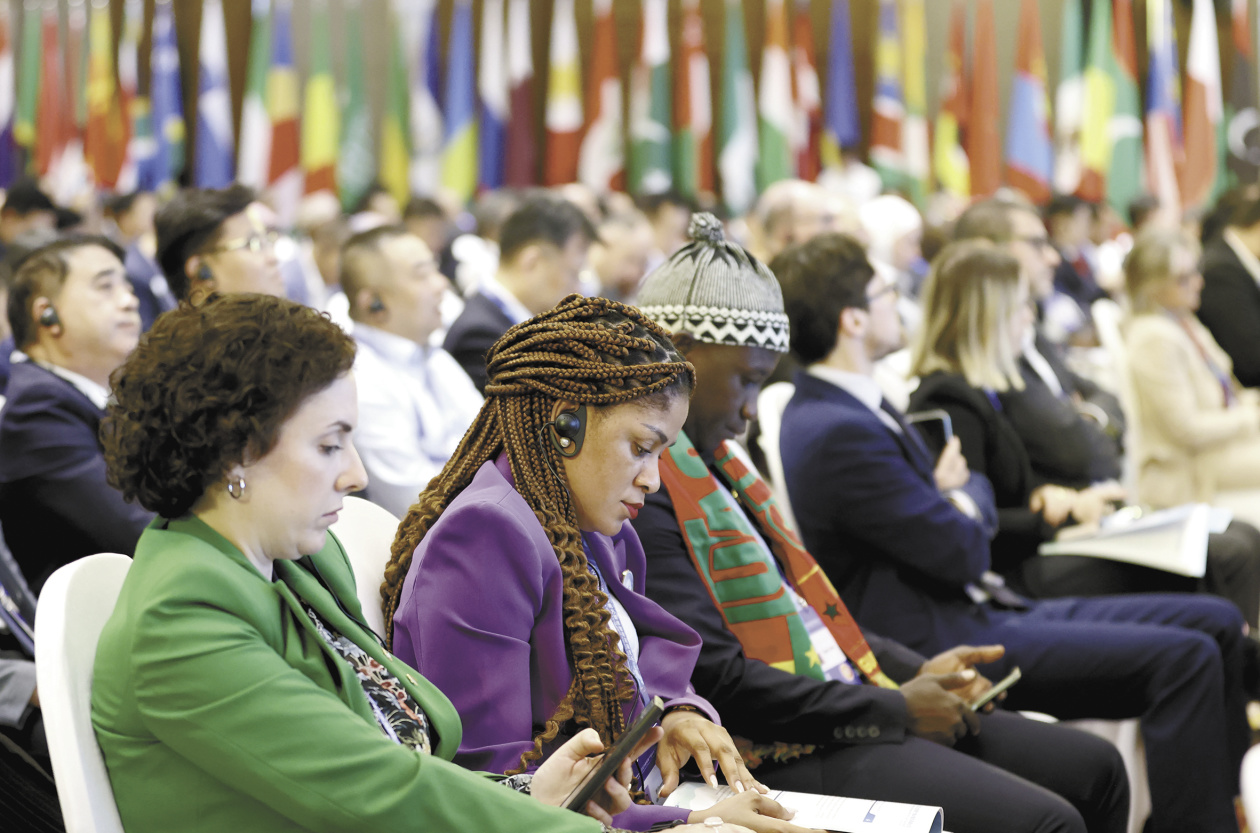
年终特稿丨世界眼中的全球南方这一年
Xin Hua Wang· 2025-12-26 07:44
Core Viewpoint - The rise of Global South countries is becoming a key force in maintaining international peace, driving global development, and improving global governance amidst a backdrop of geopolitical conflicts, unilateralism, and protectionism [1] Group 1: Independent Pursuit - The keyword for the Global South in 2025 is "independence," with countries increasingly pursuing their own development paths rather than following Western models [2] - In Africa, there is a growing movement to expel Western military presence, highlighted by France's withdrawal from military bases in West and Central Africa [2] - Latin American countries are vocal against U.S. interventions, with protests against U.S. actions in Venezuela and a call for regional autonomy and unity [2] Group 2: Strengthening Voices in Global Governance - Global South countries are actively advocating for justice and fairness on platforms like the United Nations, opposing hegemonic and unilateral actions [3] - The collective voice of the Global South is pushing for a more just stance on issues like the Israel-Palestine conflict, contrasting sharply with some Western positions [3] - The concept of the Global South has evolved beyond geography to symbolize shared historical experiences and the pursuit of independence and international discourse [3] Group 3: Economic Cooperation and Growth - The economic contribution of the Global South has surpassed 40% of the global economy, accounting for 80% of world economic growth, reshaping the global economic landscape [4] - Cooperation among developing countries is deepening across various sectors, creating a more complementary network for diversified growth [4] Group 4: China's Role in Global South Cooperation - China is committed to South-South cooperation, launching initiatives to ensure equitable development benefits for all nations [5] - Amidst complex international economic conditions, China is seen as a stabilizing force, providing reliability and predictability for cooperation among Global South countries [5] - China's actions are viewed as foundational for establishing a fairer and more inclusive global growth model [5] Group 5: Global Governance Reform - The Global South is becoming an active participant in shaping global governance, advocating for a more balanced and representative system [6] - Major summits hosted by Global South countries have led to significant agreements on climate change and development financing, reflecting a shift from rule acceptance to rule reshaping [6] - The narrative of the Global South is transitioning from seeking aid to offering solutions, particularly in the realm of global governance [6] Group 6: China's Global Governance Initiative - China is focused on enhancing the representation and voice of Global South countries in international affairs, proposing a global governance initiative that has garnered widespread support [7] - This initiative is seen as a timely response to the demands of the Global South, aiming for a fairer future world [7]
年终特稿|世界眼中的全球南方这一年
Xin Hua She· 2025-12-26 06:46
新华社北京12月26日电 题:世界眼中的全球南方这一年 新华社记者 2025年,百年变局加速演进。地缘冲突多地爆发,单边主义、保护主义逆流涌动,政治极化、全球 治理失序等多重风险交织叠加。在动荡变革世界中,全球南方国家群体性崛起,成为维护国际和平、带 动世界发展、完善全球治理的关键力量。 多国受访人士认为,全球南方国家坚持团结自强、共谋发展,在全球治理体系中的角色正从被动参 与转向主动作为,推动世界政治经济格局深刻演变。中国作为全球南方的当然一员,正同其他全球南方 国家一道,谱写人类发展的历史新篇。 独立自主的坚定追求 2025年,追求独立自主的全球南方声音在世界各地激荡。 2025年伊始,印度尼西亚正式加入金砖合作机制,9个伙伴国加入金砖大家庭,"大金砖合作"不断 深化;上海合作组织、中国-中亚机制、中非合作论坛、中阿合作论坛、中拉论坛等平台机制稳步前 行……如今的全球南方,经济总量全球占比超过40%,对世界经济增长的贡献率达到80%,已深刻改写 世界经济的版图。 在非洲大陆,对西方驻军下"逐客令"的浪潮持续,追求公平正义的呼声不断高涨。今年7月,法国 正式向塞内加尔移交最后两处军事基地,宣告结束在西非和中 ...
哪些海南故事让你念念不忘?(艺文观察)
Ren Min Ri Bao· 2025-12-24 22:32
铺展光影的史诗长卷,哪些海南故事让你念念不忘?是经典电影《红色娘子军》《南岛风云》,还是于 海南取景的故事《消失的她》《孤注一掷》? 前不久举办的第七届海南岛国际电影节上,"海生万象 光影无垠"的主题贯穿始终。从论坛上的思想碰 撞到大师班的经验共享,从"泰国馆"里的文化共鸣到"全球南方"的影像对话,电影节上的众多声音描绘 出新的海南故事。 这里是展示中国风范的开放窗口。 立足本土文化的"海南叙事",拓展蓝色疆域的"海洋电影",连接全球的"海港产业",本届电影节提 出"三海"主题。中国电影艺术研究中心研究员皇甫宜川认为,自贸港建设和跨文化交融赋予海南叙事浓 郁的当代感。 本届电影节期间,"海纳计划"正式签约落地陵水黎族自治县海归小镇,海外青年导演拥有了新的梦想孵 化地。从海口的长影奇幻乐园到三亚的数字经济产业园,从儋州海花岛的摄影棚集群到陵水的海归小 镇,"拍海南"的场景不断丰富,"海南拍"的产业生态也愈加成熟。 这里还是辐射"全球南方"的重要枢纽。 戛纳、威尼斯等国际影展的佳作汇聚三亚,9部泰国影片集中展映,跨媒介的流动、跨文化的对话…… 翻阅展映片单,不同文化背景下的叙事在这里交汇,电影节不仅是世界电影成果 ...
万喆:全球南方,造就世界经济的新引擎
Sou Hu Cai Jing· 2025-12-24 15:07
2025年,地缘冲突的硝烟还未散去,世界变乱交织的形势依旧,保护主义与"逆全球化"的寒流时而加 剧,世界经济大船行进在风高浪急之中。然而,正是在这片晦明交织的图景中,一股源自历史深处、勃 兴于时代潮头的磅礴力量成为这一年最显著的印记。在前所未有的群体性崛起中,全球南方成长为世界 经济稳定增长的"新引擎",中国则是全球南方当之无愧的"稳定器"。 大道不孤,众行致远。回顾2025年,全球南方并非被动应对困境,而是以团结铸就力量。中国作为全球 南方的天然一员,不仅提供了物质支撑,更传递了新发展理念,推动全球南方从"跟随者"转向"引领 者"。展望2026年,全球南方经济将在逆势、向新与团结的交汇中,书写崭新篇章。我们共同期待,一 个更加均衡、包容的世界经济格局,就此徐徐展开。 全球挑战中的南方韧性 2025年的世界经济笼罩在多重阴影之下。地缘政治博弈白热化,乌克兰危机延宕、其他地区冲突热点不 断,与气候变化、粮食能源安全危机相互叠加,制造了罕见的复合型压力。世界银行数据显示,全球仍 有8.17亿人处于极端贫困,其中60%集中在撒哈拉以南非洲。与此同时,全球治理的"西方支柱"出现动 摇。特朗普再次上台后,关闭了主导战后 ...
2025年新民环球专家论坛举行
Xin Lang Cai Jing· 2025-12-20 06:42
本报讯(记者 王佳烨)新民晚报社2025年新民环球专家论坛昨天在上海报业大厦举行,主题为"变革与 挑战:动荡中的世界秩序"。围绕"中国与全球南方:汇聚团结合作的'南方力量'""地缘冲突延宕:如何 应对大变局挑战""构建更加公正合理的全球治理体系"三大议题,来自京沪近20位知名专家学者开展深 入研讨。 一年一度的新民环球专家论坛是新民晚报社持续30多年的品牌活动。近年来,新民晚报社高度重视专家 智库建设,充分发挥专家智库作用,不断提升传播影响力。 2025年,国际局势总体更趋紧张。世界经济复苏乏力,大国博弈尖锐复杂,局部冲突和动荡频发,多边 主义的未来面临新的巨大挑战。与会专家认为,在这样的背景下,世界比以往更加渴望稳定性、领导力 和方向感。在元首外交引领下,中国在这一年继续书写同世界双向奔赴、相互成就的新篇章,彰显了大 国担当。专家指出,全球南方正日益成为全球治理方案的提供者,是构建更加公正合理的世界秩序的重 要推动力量。中国始终心系全球南方、扎根全球南方,不断汇聚发展中国家团结合作的"南方力量"。 ...