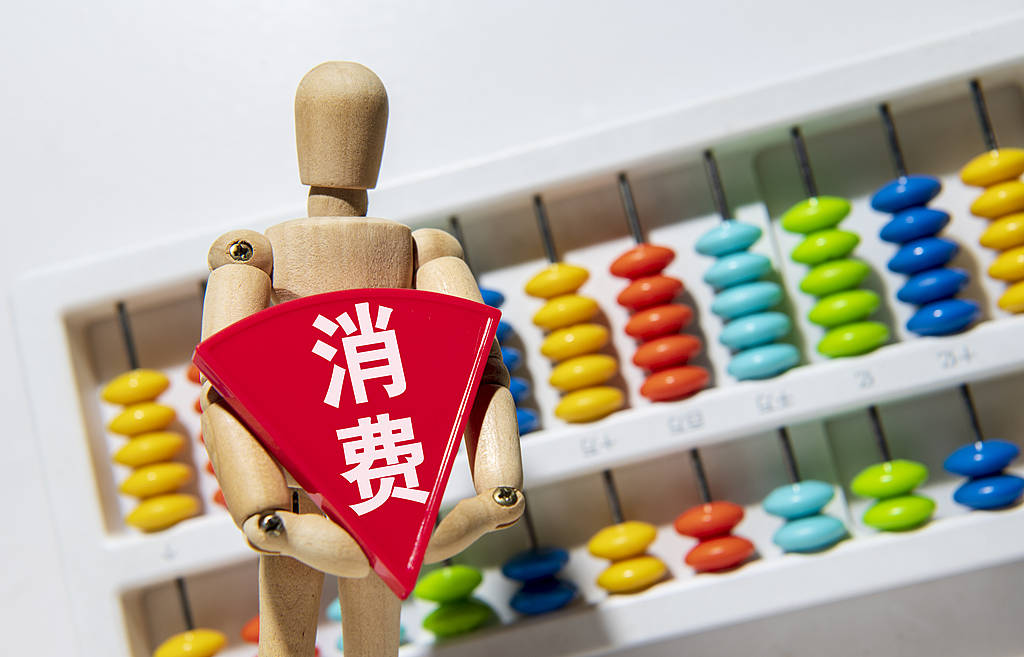
刺激消费

Search documents
为何清空美股?对话投资家罗杰斯:预感危机即将来临
Sou Hu Cai Jing· 2025-08-04 14:35
Group 1 - Jim Rogers has liquidated all his U.S. stocks, currently holding stocks only in China and one other country, expressing concerns about an impending severe economic crisis in the U.S. [1][4] - The U.S. stock market has been in a bull run since 2009, which Rogers believes indicates that a crisis is approaching, as prolonged prosperity often leads to problems [3][4] - Rogers criticizes President Trump's erratic decision-making, suggesting it will exacerbate economic instability and that Trump lacks the capability to manage an upcoming crisis [4][6] Group 2 - Rogers remains optimistic about China's future, stating it will be the most important country in the 21st century and emphasizing the need for future generations to learn Mandarin [6][7] - He advocates for policies that stimulate domestic demand and consumption in China, such as tax cuts and infrastructure investments, to foster economic growth [6][7] - Rogers highlights the potential in emerging sectors in China, including artificial intelligence, renewable energy, and electric vehicles, indicating a strong growth outlook across various industries [7] Group 3 - In addition to Chinese stocks, Rogers holds stocks in Uzbekistan, noting the country's economic reforms and potential due to its natural and human resources [7] - He advises young people in China to learn foreign languages and travel to better understand the world and themselves, viewing travel as a valuable educational experience [7]


开始发钱了,背后是什么信号?
大胡子说房· 2025-07-29 11:28
Core Viewpoint - The newly introduced childcare subsidy aims to stimulate birth rates and consumer spending, but its actual impact may be limited due to the relatively small amount of financial support compared to the overall costs of raising a child [2][3][4]. Summary by Sections Childcare Subsidy Details - Starting from January 1, 2025, a subsidy of 3,600 yuan per child per year will be provided for children under three years old, amounting to a total of 10,800 yuan for three years [1]. - Approximately 28.12 million births from 2022 to 2024 will receive varying levels of subsidies, totaling around 854 billion yuan, while the expected 9.6 million births in 2025 will incur an additional 347 billion yuan in subsidies, leading to a total subsidy scale of about 1.2 trillion yuan for this year [1]. Financial Implications - If the birth rate remains stable over the next decade, the total subsidy expenditure could reach approximately 3.47 trillion yuan [2]. - The subsidy amount is relatively small compared to the non-tax revenue increase of 369.8 billion yuan from state-owned financial institutions in a single month, suggesting that funding the subsidy is feasible without significant fiscal strain [2]. Effectiveness of the Subsidy - The subsidy is unlikely to significantly stimulate birth rates, as the financial support does not outweigh the substantial costs associated with raising a child [3]. - Historical data from countries with similar subsidy programs indicate that financial incentives alone have not effectively reversed declining birth rates [3]. Consumer Spending Impact - The subsidy may not substantially boost consumer spending, as the funds are likely to be allocated to essential expenses for young children, such as formula and diapers, rather than discretionary spending [4]. - The economic conditions in lower-tier cities may further limit the impact of the subsidy on consumer behavior, as families face high living costs relative to their incomes [4][5]. Symbolic Significance - The nationwide implementation of the subsidy represents a shift towards universal welfare, as it includes all children rather than just those from families with multiple children [5]. - The introduction of a long-term subsidy program suggests a potential for future increases in the subsidy amount, indicating a change in government policy towards more robust financial support for families [5][6]. Comparison with Other Countries - Compared to other countries, such as Japan and Singapore, China's subsidy is relatively modest, indicating room for enhancement in future policies [6]. Broader Fiscal Strategies - The government may explore additional fiscal measures, such as direct cash transfers to social security accounts, to stimulate the economy and address demographic challenges [7][8]. - The potential for increased asset prices due to fiscal stimulus suggests that sectors related to financial support and subsidies may experience growth opportunities in the future [8].

刘煜辉:育儿补贴年度投入超千亿,规模已逼近雅下水电年均投资水平
Xin Lang Zheng Quan· 2025-07-29 09:04
Core Viewpoint - The Chinese government has introduced a new childcare subsidy policy aimed at supporting families with children under three years old, which is expected to have significant fiscal implications and stimulate domestic consumption [1]. Group 1: Policy Details - The new childcare subsidy will be implemented starting January 1, 2025, providing annual subsidies of 3,600 yuan per child for families with children under three years old [1]. - The subsidy will be calculated based on the number of months eligible for those children born before January 1, 2025, who are not yet three years old [1]. Group 2: Financial Implications - The estimated fiscal investment for this subsidy program exceeds 1 trillion yuan annually, highlighting the government's commitment to supporting families [1]. - For context, the total investment for the Yaxi Water Conservancy Project is approximately 12 trillion yuan, with an average annual investment of around 1,200 billion yuan over a 10-year period [1]. Group 3: Target Demographics - The policy is particularly aimed at young families and urban middle-class groups, who are seen as key drivers of domestic consumption due to their high consumption elasticity and strong demand for upgrades [1]. - There is an expectation for further comprehensive measures to stimulate consumption in the future [1].

X @外汇交易员
外汇交易员· 2025-07-29 08:30
Policy Overview - China's childcare subsidy plan will provide RMB 3,600 per child per year for infants under 3 years old, starting January 1, 2025 [1] - The subsidy will be distributed annually until the child reaches 3 years old [1] Potential Economic Impact - Citi estimates the total one-time subsidy could reach RMB 117 billion by the second half of 2025 [1] - This is equivalent to approximately 0.23% of the total social consumer goods retail sales during the same period [1] - Assuming the policy remains unchanged, the total subsidy amount may decrease to around RMB 90 billion by 2030 due to a decline in the eligible population [1] Considerations - It is uncertain whether the policy can effectively increase China's birth rate, as the subsidy amount needs to be substantial enough to influence people's decisions to have children [1]
刺激老百姓买房,湖北多地接连放大招
Sou Hu Cai Jing· 2025-07-07 01:05
Group 1 - Recent policies in Hubei province include lowering mortgage down payments to 15%, direct housing subsidies, and flexible use of public housing funds [2][3] - The city of Tianmen serves as a model, having implemented substantial housing subsidies and birth incentives, resulting in a significant increase in birth rates [3][4][8] - Tianmen's success demonstrates that financial incentives can effectively stimulate consumption and birth rates, prompting other cities in Hubei to adopt similar strategies [4][8][17] Group 2 - Hubei's financial capacity supports these initiatives, with a public budget revenue of 393.7 billion yuan in 2023, ranking 11th nationally [7] - The province's population structure is relatively healthy, with over 58 million residents, allowing for effective policy implementation [7][8] - The policies aim to reduce living costs and enhance consumer spending power, addressing the economic challenges posed by declining population dividends and consumption downgrades [11][16] Group 3 - The approach taken by Hubei is seen as a shift towards prioritizing citizen welfare over mere GDP growth, indicating a change in governance philosophy [21][22] - The success of Tianmen's policies, including a birth rate increase to 6.77‰ and a rise in housing sales, serves as evidence that direct financial support can revitalize the economy [14][17] - Hubei's actions provide a template for other regions, emphasizing the importance of substantial financial incentives to stimulate economic activity [22][23]


距离我们成为发达国家,其实并不远
Sou Hu Cai Jing· 2025-07-04 09:56
Group 1 - The core idea is that China's economic growth has the potential to elevate the living standards of its 1.4 billion citizens to levels comparable to those in developed countries like the United States, driven by market economy reforms and increasing GDP [1][4][14] - Since the introduction of market economy reforms in the 1980s, over 800 million people have escaped poverty, and the middle class has expanded to approximately 400 million [2][4] - China's per capita GDP has risen from under $200 to $13,400 today, with projections suggesting it could reach $20,000 by 2035, marking a significant economic transformation [4][5][19] Group 2 - Economic growth is expected to continue at an annual rate of 4%-5%, with optimistic scenarios suggesting per capita GDP could reach $21,200 by 2028 if the currency appreciates and economic growth accelerates [5][6] - The current economic landscape shows that while growth has slowed, there are still opportunities for improvement, particularly in the real estate sector, which is viewed as a potential driver for economic advancement [7][10][11] - The middle class is identified as the primary engine of consumption, with a need for income growth to stimulate further economic activity and support the transition to a developed economy [15][19] Group 3 - The definition of the middle class in China differs significantly from that in the U.S., with the Chinese middle-income group having a much lower income threshold, which highlights the potential for growth in consumer spending [17][18] - The current middle-income group in China is approximately 400 million people, with an average annual income of 30,598 yuan, which is significantly lower than the U.S. middle-class income range [18][19] - Stimulating consumption is deemed essential for achieving developed nation status, as increased consumer spending leads to higher corporate earnings, job creation, and ultimately, wage growth [19]
韩国总统呼吁尽快准备追加预算
news flash· 2025-06-09 07:14
Core Viewpoint - The South Korean President Lee Jae-myung has called for the rapid preparation of a supplementary budget to support economic recovery and stimulate consumption [1] Group 1: Economic Context - The newly appointed President Lee Jae-myung has prioritized economic recovery and established an emergency economic task force composed of government officials [1] - Concerns over the impact of U.S. tariffs have led to stagnation in exports and consumption, resulting in expectations for interest rate cuts and an economic contraction in South Korea [1] Group 2: Budget Details - If the additional budget is finalized under President Lee's leadership, it will increase the previously approved supplementary budget of 13.8 trillion Korean won (approximately 9.7 billion USD) from May 1 [1] - During his campaign, President Lee emphasized the necessity of an additional budget to provide short-term economic stimulus [1]
新一轮的城市更新,跟过去的逻辑完全不同,将如何影响楼市?
Sou Hu Cai Jing· 2025-05-25 10:32
Core Viewpoint - The new round of urban renewal is set to significantly impact the real estate market, with a focus on improving living conditions and stimulating domestic demand rather than creating wealth through demolition and reconstruction [2][19]. Group 1: Urban Renewal vs. Previous Housing Renovation - The current urban renewal differs fundamentally from the previous "shelter improvement" initiatives, which allowed individuals to gain wealth through direct financial compensation [4][5]. - Urban renewal is likened to repairing an old car instead of replacing it, focusing on maintaining and upgrading existing structures rather than large-scale demolition [8][10]. - The government aims to stimulate consumption and boost employment through urban renewal, which is seen as a crucial strategy for expanding domestic demand [12][16]. Group 2: Economic Implications - Urban renewal is expected to create more jobs due to the labor-intensive nature of repair work compared to large construction projects, thus driving employment [12][17]. - The initiative will also consume significant amounts of construction materials, benefiting related industries that have been struggling in recent years [12][13]. - Although the scale of urban renewal may seem small compared to previous housing renovations, its cumulative effect on the economy should not be underestimated as it can lead to substantial economic stimulation over time [14][19]. Group 3: Long-term Benefits - Urban renewal is positioned as a new driver for economic growth, replacing the traditional reliance on real estate for GDP contribution, especially as the real estate sector contracts [17][19]. - The initiative is expected to facilitate the reduction of housing inventory and promote sustainable economic development through stock investment rather than large-scale infrastructure projects [17][19]. - Ultimately, while urban renewal may not create instant wealth for individuals, its long-term benefits for the economy and society are significant, fostering a healthier economic environment for all [19].

从单纯的刺激消费,转向提高居民收入
Sou Hu Cai Jing· 2025-05-15 04:31
Group 1 - The article discusses the shift in policy focus from merely stimulating consumption to increasing residents' income, indicating a significant change in economic strategy [6][8] - It highlights that wages for management positions have been raised, with an increase from 11,000 yuan to 12,000 yuan per month, reflecting a broader trend of wage growth within the system [6] - The article notes that the minimum basic pension for rural residents will increase from 123 yuan to 143 yuan per month by 2025, impacting approximately 85 million rural insured elderly [6] Group 2 - The consumer price index (CPI) has shown a weak performance, with a year-on-year increase of only 0.2% in 2023, which is significantly below the target set for 2024 [8] - The article emphasizes that merely stimulating consumption through policies has proven insufficient to meet planned targets, leading to the decision to focus on directly increasing residents' income starting in 2025 [8][10] - It discusses the dual approach to increasing residents' income, which includes market-driven distribution led by enterprises and fiscal-driven social distribution, highlighting the importance of both strategies [10] Group 3 - The article raises concerns about the sustainability of economic growth, questioning whether GDP growth is genuinely beneficial or merely a result of increasing debt levels [11] - It suggests that the effectiveness of policies aimed at increasing residents' income will depend on the efficiency of the economy and the tools available for implementation [10][11] - The need for a fair social distribution system is emphasized as a key component of improving residents' income and overall economic health [10]

建议五一拿身份证消费就减免25%,网民又能骂专家了
Sou Hu Cai Jing· 2025-04-30 09:29
Core Viewpoint - The suggestion by Li Daokui to stimulate consumption through a government subsidy of 25% for purchases made with an ID has sparked significant public backlash, with many netizens criticizing the practicality and implications of such a proposal [1][3][6]. Group 1: Public Reaction - Netizens have ridiculed Li Daokui's suggestion, questioning its economic validity and practicality, with some suggesting that it may inadvertently benefit the wealthy more than the poor [3][4][7]. - The public discourse reflects a broader frustration with expert opinions, as many feel that the suggestions do not align with the realities of consumer behavior and economic conditions [6][7]. Group 2: Economic Implications - The proposal to provide a 25% subsidy is seen as lacking a solid economic foundation, with critics arguing that fiscal responsibility must be prioritized over direct consumer subsidies [3][4]. - There is a sentiment among the public that before discussing consumption incentives, broader economic stability and equitable distribution of wealth should be addressed [4][7]. Group 3: Expert vs. Public Opinion - The ongoing debate highlights a disconnect between expert recommendations and public sentiment, with netizens expressing a desire for more actionable and realistic economic solutions [6][7]. - The phenomenon of mocking experts reflects a deeper societal desire for empowerment and a more significant role in economic decision-making [6][7].