
区域协调发展

Search documents
重庆将携手四川新增打造3个万亿级产业集群
Zhong Guo Xin Wen Wang· 2026-02-26 14:22
Group 1 - Chongqing aims to become a significant growth pole and new driving force in the Chengdu-Chongqing economic circle during the 14th Five-Year Plan, with plans to develop three new trillion-yuan industrial clusters: intelligent connected new energy vehicles, software information services, and food and agricultural product processing [1] - The city will collaborate with Sichuan to accelerate the establishment of a nationally influential economic center and technology innovation hub, as well as a western financial center and cultural tourism corridor [1] - Chongqing plans to enhance existing advantages in four trillion-yuan industrial clusters, including electronic information, while adding three new clusters to solidify regional development [1] Group 2 - The city will fully implement national regional strategies, including the New Era Western Development and the Yangtze River Economic Belt, while deepening connections with major regions such as the Yangtze River Delta and the Guangdong-Hong Kong-Macau Greater Bay Area [2] - Efforts will be made to strengthen innovation collaboration with universities, research institutions, and quality enterprises in the western provinces, particularly in aerospace and electronic information sectors [2] - Chongqing will optimize land use and productivity layout to enhance regional policy effectiveness, supporting the development of urban sub-centers and regional centers to achieve coordinated growth [2]
从“一粒鱼丸,两个市场”看双循环(现场评论·新春走基层)
Ren Min Ri Bao· 2026-02-25 22:12
Core Viewpoint - The article emphasizes the importance of openness, collaboration, and innovation in revitalizing traditional industries and maintaining competitiveness in the market [1][4]. Group 1: Industry Development - Fuzhou fish balls have evolved from a local delicacy to a significant player in both domestic and international markets, showcasing the dual circulation of the economy [1][2]. - The export value of Fuzhou fish balls has consistently achieved new breakthroughs, illustrating a successful case of a specialty industry going global [2][3]. Group 2: Supply Chain and Resource Utilization - The fish ball industry has expanded its raw material procurement radius from local sources to international fishing grounds, enhancing product quality and reducing costs [2][3]. - The collaboration with regions like Ningxia and Gansu for high-quality potato starch has created a stable market for local farmers, promoting employment and income growth [2][3]. Group 3: Integration and Connectivity - The integration of various elements in the supply chain, including raw material sourcing, production, and market expansion, creates a synergistic effect that enhances overall competitiveness [3][4]. - The establishment of efficient international logistics and domestic transportation networks facilitates the smooth flow of resources, reducing transaction costs and improving resource allocation efficiency [3][4]. Group 4: Strategic Insights - The practices of Fuzhou fish balls provide valuable insights for accelerating the market-oriented allocation of resources, emphasizing the need for collaboration and innovation across the industry chain [4]. - The article advocates for leveraging open economies and integrating into global supply chains to foster development and enhance competitiveness in the face of market challenges [4].
以习近平经济思想为引领促进区域协调发展
Ren Min Ri Bao· 2026-02-24 07:25
Core Viewpoint - The articles emphasize the importance of regional coordinated development as an inherent requirement of Chinese-style modernization, highlighting the strategic significance of this approach in addressing economic imbalances and promoting high-quality development [1][2][3]. Group 1: Strategic Importance of Regional Coordination - Regional coordinated development is positioned as a crucial strategy to address the historical changes in China's social contradictions and economic structure, with a focus on balancing development across different regions [2][4]. - The implementation of regional coordination strategies is essential for optimizing economic layouts and ensuring smooth national economic circulation, which is vital for constructing a new development pattern [4][17]. - The integration of regional coordination into national strategies reflects a shift from localized economic integration to a focus on overall national economic performance and fostering internal growth dynamics [4][14]. Group 2: High-Quality Development and Innovation - High-quality development is identified as the central theme for economic and social progress, necessitating improvements in development levels and quality across all regions [5][6]. - Regional coordination is essential for fostering new productive forces and enhancing innovation capabilities, which are critical for achieving high-quality development [5][17]. - The focus on high-quality development encourages regions to adopt tailored development paths based on their unique resources and strengths, promoting sustainable and balanced growth [5][13]. Group 3: Shared Prosperity and Equity - Achieving common prosperity is highlighted as a fundamental goal of Chinese-style modernization, with regional coordination being a necessary condition for equitable distribution of development benefits [6][11]. - The strategy emphasizes the need for differentiated policy support for various regions, particularly for underdeveloped areas, to ensure that development outcomes benefit all segments of society [6][12]. - The approach aims to create a fair and reasonable regional development order, facilitating the optimization of resource allocation and public service equality [6][12]. Group 4: Balancing Efficiency and Fairness - The articles discuss the importance of addressing the balance between efficiency and fairness in regional development, advocating for a dynamic approach to managing regional disparities [11][12]. - The strategy encourages leveraging the inherent development potential of less developed regions while ensuring that more developed areas contribute to overall national growth [11][12]. - Policies such as fiscal transfers and targeted assistance are proposed to mitigate imbalances and promote equitable opportunities for all regions [11][12]. Group 5: Systematic and Institutional Support - The need for continuous institutional innovation is emphasized to provide a solid foundation for regional coordinated development, including improvements in statistical, fiscal, and regulatory frameworks [18][19]. - Establishing mechanisms for regional planning, industrial collaboration, and benefit-sharing is crucial for enhancing the effectiveness of regional coordination efforts [18][19]. - The articles advocate for a comprehensive approach to urbanization and land use reform to support sustainable regional development [18][19].
“向上攀高”的潜力从何而来
Xin Lang Cai Jing· 2026-02-24 00:51
Core Insights - The articles emphasize the potential for growth in underdeveloped areas by identifying and addressing their weaknesses, suggesting that even "low-lying" regions can transform into "highlands" through focused efforts [2][4] - The importance of leveraging existing advantages and breaking down barriers to enhance collaboration and synergy among regions is highlighted, leading to greater overall economic benefits [3][4] Group 1: Regional Development Strategies - The "Modern Capital Metropolitan Area Spatial Coordination Plan (2023-2035)" aims to create a spatial structure of "one core, two wings, dual cities, multiple points, dual corridors, and multiple circles," transforming Beijing's core functional advantages into a driving force for surrounding areas [1] - Guangdong's Bo Luo County has become the first "trillion county" in the province, showcasing a successful model of regional development through focused county-level economic strategies [2] - The "Hundred Counties, Thousand Towns, and Ten Thousand Villages High-Quality Development Project" has led to 57 counties achieving an average annual GDP growth rate exceeding the provincial average over the past three years [2] Group 2: Industry and Innovation - The Long Triangle region has developed a robust supply chain for the new energy vehicle industry, demonstrating how regional collaboration can enhance competitive advantages in global markets [3] - Shandong's Cao County has transformed from a traditional agricultural base to a hub for the original Hanfu clothing industry, with projected sales exceeding 13 billion yuan by 2025, illustrating the potential of niche markets [3][4] - Anhui's Wuhu has developed a general aviation industry over the past decade, attracting over 200 upstream and downstream enterprises, while the Guangdong-Hong Kong-Macau Greater Bay Area has established "super clusters" in AI and biomedicine [4]
在这座千年侨乡 见证区域协调发展的生动实践
Yang Shi Wang· 2026-02-23 07:34
Core Viewpoint - The article emphasizes the importance of addressing regional development imbalances in Guangdong, highlighting the focus on the economic development of underdeveloped areas like Meizhou during recent inspections by General Secretary Xi Jinping [1][7][19]. Group 1: Regional Development Focus - General Secretary Xi Jinping's inspections in Guangdong reflect a commitment to regional coordination and development, particularly in economically lagging areas like Meizhou [1][7]. - Meizhou's economic contribution is noted to be around 1% of Guangdong's total economic output, indicating its relative underdevelopment [7]. - The emphasis on rural characteristic industries is seen as a foundation for comprehensive rural revitalization, with a focus on technology application and industry chain extension [3][5]. Group 2: Infrastructure and Connectivity - The opening of the Meilong High-Speed Railway in September 2024 significantly reduces travel time from Meizhou to major cities, enhancing its connectivity to the Guangdong-Hong Kong-Macau Greater Bay Area [11][13]. - Improved transportation infrastructure is crucial for facilitating the flow of people, goods, and information, thus revitalizing Meizhou's economy [13][17]. - The development of a multi-layered transportation network, including high-speed rail and highways, is essential for integrating Meizhou into the broader economic landscape of Guangdong [11][15]. Group 3: Collaborative Development Efforts - Collaborative mechanisms between core cities like Guangzhou and underdeveloped regions have been established to promote industrial growth and regional development [9][11]. - Over the past decade, Guangzhou has invested approximately 6 billion yuan in Meizhou, demonstrating a long-term commitment to regional support [9]. - The article highlights the importance of both hard and soft connectivity in addressing regional disparities, with a focus on shared public services and policy alignment [17][19].

经济热点快评丨“寻年之约”中,看见一个蒸蒸日上的中国
Xin Lang Cai Jing· 2026-02-20 08:19
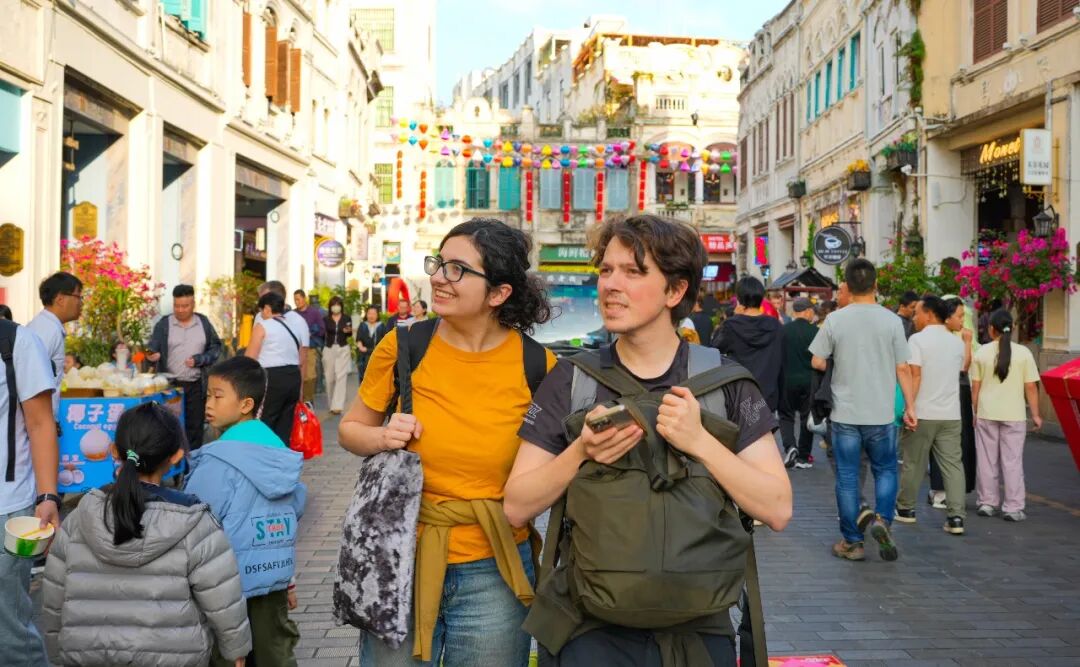
Core Insights - The Chinese tourism industry is experiencing a significant surge in inbound travel during the Lunar New Year, with an expected daily average of over 2.05 million inbound and outbound travelers, marking a 14.1% increase compared to last year [1] Group 1: Policy and Infrastructure - The implementation of visa-free policies for the UK and Canada has expanded China's "visa-free circle," enhancing the country's openness to international visitors [2] - Digital upgrades in customs and consumption, such as smart travel inspections and "buy now, return later" services, are improving the overall experience for foreign tourists [2] Group 2: Changing Consumer Behavior - There is a noticeable shift in the consumption structure, with foreign tourists moving from mere sightseeing to immersive experiences, blending ancient traditions with modern attractions [2] - New attractions like LED virtual shooting experiences and themed accommodations are becoming popular among young foreign visitors [2] Group 3: Destination Diversity - The trend of inbound tourism is expanding beyond major cities like Beijing and Shanghai, with a fourfold increase in foreign tourists planning to visit smaller cities such as Hohhot and Lanzhou [3] - The growth of inbound tourism in rural areas reflects a proactive approach in the cultural tourism industry and benefits from China's coordinated regional development [3] Group 4: Cultural Exchange - The Lunar New Year has evolved into a cultural bridge connecting China with the world, showcasing a vibrant and dynamic image of China through its rich cultural festivities [3]
“长虹号”启航 开启东北与长三角两地的“飞驰人生”
Xin Lang Cai Jing· 2026-02-16 06:48
Core Viewpoint - The launch of the "Changhong" high-speed train marks a significant improvement in connectivity between Northeast China's industrial base and the Yangtze River Delta economic region, enhancing cross-regional efficiency and collaboration [1][2][3] Group 1: Operational Efficiency - The "Changhong" train operates daily, reducing travel time between Changchun and Shanghai to just 9 hours and 22 minutes, a decrease of 2 hours and 15 minutes compared to the fastest previous service [1] - The train's operational model, which includes limited stops at key hubs and quick boarding times, allows for efficient travel akin to air transport, facilitating same-day business meetings and reducing travel costs for passengers [1][2] Group 2: Service Quality - The train features a range of passenger-friendly amenities, including multiple charging ports, quiet carriages, and diverse meal options that cater to regional tastes, reflecting a shift from merely transporting passengers to enhancing their travel experience [2] - The onboard staff is trained in various skills, including English and emergency response, to ensure a comfortable journey for all passengers [2] Group 3: Regional Integration - The "Changhong" train serves as a vital link between the Northeast and the Yangtze River Delta, promoting industrial collaboration, talent exchange, and cultural interaction, thereby reducing both institutional and physical barriers to resource flow [2] - The train supports the ongoing revitalization of Northeast China and the deepening integration of the Yangtze River Delta, highlighting its role in facilitating coordinated regional development [2] Group 4: Societal Impact - The train not only transports passengers but also symbolizes opportunities for entrepreneurs, students, and families, fostering connections that transcend geographical distances [3] - The "Changhong" train embodies hope and progress, facilitating daily commutes and enhancing the quality of life for residents in both regions [3]
固原农文旅推介,推动东西协作促消费
Xin Lang Cai Jing· 2026-02-12 22:40
Group 1 - The event "2026 Guyuan Agricultural, Cultural, and Tourism Promotion and Liupan Mountain New Year Goods Fair (Xi'an Station)" was held in Xi'an, focusing on the theme "Minning Together, Connecting Three Qin for a Win-Win Future" [1] - The fair featured 48 exhibition booths showcasing local agricultural products such as Liupan Mountain beef and lamb, cool-season vegetables, and potatoes, along with cultural tourism products [1] - A customized gift box named "Minning Family" was launched, including eight categories of New Year goods, and a green channel for corporate group purchases was established [1] Group 2 - Private enterprises from Shaanxi, including Zhuque Industrial Group, actively participated in various activities during the event, promoting one-on-one negotiations between businesses from both regions [2] - The Shaanxi Ningxia Chamber of Commerce emphasized its role in facilitating economic and cultural exchanges between Shaanxi and Ningxia, aligning with national regional development strategies [2] - Future efforts will focus on deepening cooperation with Guyuan City in areas such as agricultural, cultural, and tourism integration, as well as upgrading specialty industries [2]
在中国式现代化征程上建功立业——习近平总书记在北京市考察时的重要讲话凝聚奋进力量
Xin Hua She· 2026-02-11 00:54
Group 1: Innovation and Technology Development - Emphasis on the importance of technological self-reliance and innovation for building a modern socialist country, as highlighted by Xi Jinping during his visit to the National Innovation Park in Beijing [2] - The need for collaboration between manufacturing and service industries to promote strategic emerging industries and talent development in Beijing's economic zone [2] - Encouragement for technology workers to contribute to modernization and tackle challenges in logistics and transportation using innovative solutions [2][3] Group 2: Elderly Care and Community Services - Xi Jinping's visit to community services for the elderly underscores the importance of respecting and caring for older citizens, which is a traditional virtue in Chinese culture [4] - Community initiatives for aging-friendly home modifications are being implemented without financial burden on residents, enhancing the quality of life for the elderly [4] - Local governments are urged to improve elderly care services and respond to community needs effectively [4] Group 3: Urban Development and Housing - The focus on urban governance efficiency and the enhancement of public services in major cities, particularly in Shanghai, to ensure affordable housing and improved living conditions [5][6] - The promotion of coordinated development in the Beijing-Tianjin-Hebei region, with an emphasis on optimizing urban functions and enhancing the capital's role [6][7] - The establishment of a technology service ecosystem in the Tianjin Binhai-Zhongguancun Science Park to attract investment and foster innovation [7] Group 4: Cultural and Tourism Integration - The integration of cultural resources with tourism and commerce is encouraged to enhance the appeal of traditional crafts and boost local economies [10][11] - The promotion of non-material cultural heritage through innovative product design aims to make traditional crafts more fashionable and marketable [11] Group 5: Community Engagement and Public Sentiment - The importance of community engagement and public sentiment during the festive season is highlighted, with efforts to ensure a joyful experience for citizens [9][10] - Initiatives to improve transportation services during peak travel times reflect a commitment to enhancing public service and community satisfaction [10]
张家港在六个方面重点发力
Su Zhou Ri Bao· 2026-02-10 23:40
Core Viewpoint - Zhangjiagang City is focusing on economic development and modernization, aiming for quality improvement and reasonable growth in 2026, which marks the 40th anniversary of its establishment as a city [1][2] Group 1: Economic Development - Zhangjiagang has maintained its position among the top three cities in the country for 32 consecutive years and has received multiple national honors, including the "Seven Consecutive Years" award for being a National Civilized City [1] - The city aims to optimize and upgrade its industries, enhance traditional sectors, and foster emerging industries while expanding the service sector [2] - The focus will be on releasing domestic demand potential, stimulating consumption, and increasing effective investment to ensure smooth economic circulation [2] Group 2: Innovation and Reform - Zhangjiagang is committed to strengthening its innovation capabilities by building innovation platforms, expanding the innovation enterprise tier, and enhancing the entrepreneurial ecosystem [2] - The city plans to deepen reform and open up, creating a high-level collaborative environment and improving the port's development capabilities [2] Group 3: Urban and Rural Development - The city will focus on organic urban renewal, improving construction standards, and enhancing livability [2] - Rural revitalization will be prioritized, with efforts to develop modern agriculture and improve the effectiveness of agricultural support policies [2] Group 4: Social Welfare and Stability - Zhangjiagang aims to enhance social welfare, optimize public services, and respond to citizens' expectations [2] - The city will strengthen social governance and safety measures to prevent and mitigate risks, ensuring a stable social environment [2]