
区域合作

Search documents
“西伯利亚日”活动在上合示范区举行
Zhong Guo Jing Ji Wang· 2025-12-19 05:27
Core Insights - The "Siberia Day" event held in Qingdao aims to enhance cooperation between Qingdao and the Siberian region of Russia, focusing on supply chain collaboration and exploring new regional cooperation opportunities [1][2] Group 1: Event Overview - The event was organized by the Siberian Interregional Association "Siberian Agreement" with support from various Russian institutions and local companies [1] - It featured a thematic promotion session where representatives from Siberian government, key enterprises, and cultural institutions engaged with domestic and international businesses across various sectors [1] Group 2: Business Promotion and Cooperation - The Russian representatives provided detailed presentations on trade, technology, cultural exchange, agriculture, digital trade, and tourism, showcasing Siberia's resources and industrial advantages [2] - A B2B negotiation area was established to facilitate direct discussions between Chinese and Russian companies, leading to preliminary cooperation intentions in sectors like agricultural processing and digital trade [2] - The event included a Siberian brand exhibition and performances to highlight local cultural charm [2] Group 3: Follow-up Activities - On December 18, the Russian delegation visited key enterprises in agriculture, food processing, and machinery manufacturing in the surrounding areas to understand regional industrial capabilities [2] - The delegation is scheduled to participate in the 2025 SCO International Modern Agriculture and Catering Industry Expo, where they plan to sign memorandums of cooperation with Chinese companies in agriculture and machinery [2]
本钢板材:公司进一步加大高附加值的产品研发与生产,缩小与头部企业的产品竞争力差距
Zheng Quan Ri Bao Wang· 2025-12-18 14:11
Core Viewpoint - The company is focusing on enhancing its product offerings by increasing the research and production of high value-added products to narrow the competitive gap with leading enterprises and improve pricing and gross margins [1] Group 1: Product Strategy - The company is increasing its investment in the research and production of high value-added products [1] - The strategy includes differentiating products to enhance pricing power and gross margins [1] Group 2: Cost Management - The company is continuously working to reduce procurement costs through strategic purchasing, product substitution, and volume-price discounts [1] - Economic inventory management is being scientifically developed to optimize costs [1] Group 3: Sales and Distribution - The company is exploring regional cooperation to expand its sales radius and reduce cross-regional transportation costs [1] Group 4: Operational Efficiency - The company is advancing the intelligent transformation of production processes [1] - Operational management is being refined to optimize personnel and equipment efficiency, thereby improving capacity utilization [1]

美国学者:世界经济并非零和博弈 中国发展是机遇而非威胁
Xin Hua She· 2025-12-18 01:52
Core Viewpoint - The world economy is not a zero-sum game, and China's development should be seen as an opportunity rather than a threat [2][3] Group 1: Economic Perspectives - Jeffrey Sachs emphasizes that zero-sum thinking originates from 19th and 20th-century social Darwinism, which views resources as limited and necessitates competition among nations for survival [2] - Modern economic welfare is increasingly derived from technological advancement, talent cultivation, and effective governance, rather than competition for finite resources [2] Group 2: China's Role in Global Governance - China's experience provides significant insights for global governance, showcasing that systematic planning and long-term investment can drive sustainable national economic development without harming other countries [2] - Sachs expresses a positive view of China, highlighting cultural appreciation and suggesting that misconceptions in the U.S. stem from a lack of firsthand experience [3] Group 3: Regional Cooperation - Sachs advocates for regional cooperation over confrontation, proposing that the world can be divided into interconnected regions that achieve economic prosperity and stability through collaboration [3] - This cooperative model is deemed more sustainable and beneficial for development compared to a unipolar or bipolar confrontation approach [3]


美国学者:世界经济并非零和博弈 中国发展是机遇而非威胁
Xin Hua She· 2025-12-17 16:41
Core Viewpoint - The world economy is not a zero-sum game, and China's development should be seen as an opportunity rather than a threat [1] Group 1: Economic Perspectives - Jeffrey Sachs argues that zero-sum thinking originates from 19th and 20th-century social Darwinism, which posits that resources are limited and nations must compete for survival. However, in the modern economy, economic well-being is derived more from technological advancement, talent cultivation, and effective governance rather than competition for limited resources [1] - Sachs emphasizes that China's experience provides important references for global governance, highlighting that systematic planning and long-term investment can drive sustainable economic development without harming other nations [1] Group 2: Regional Cooperation - Sachs advocates for promoting regional cooperation instead of confrontation, suggesting that the world can be divided into interconnected regions that achieve economic prosperity and stability through collaboration and coordination. This model is deemed more sustainable and beneficial for all parties compared to a "unipolar dominance" or "bipolar confrontation" approach [1]
广东老板不远万里来到双鸭山
Xin Lang Cai Jing· 2025-12-15 09:08
Core Viewpoint - The article highlights the philanthropic efforts of Guangdong entrepreneurs, particularly in response to the COVID-19 pandemic, focusing on their contributions to the city of Shuangyashan in Heilongjiang Province, and the strategic partnerships formed between local businesses and Guangdong companies [5][11][24]. Group 1: Philanthropic Contributions - Shenzhen Qianhai Zhifu Financial Holdings Group and Foshan International Trade Co., Ltd. donated 2 million yuan and 1 million yuan respectively to Shuangyashan for local public welfare and charity projects [5][18]. - During the pandemic, Ma Shaofeng from Shenzhen Zhifu purchased 3000 N95 masks and 10,000 KF94 masks worth 120,000 yuan for Shuangyashan's epidemic prevention efforts [5][18]. - Baoneng Investment Group made three rounds of donations to Shuangyashan, totaling over 1 million yuan, including 10,000 medical masks valued at nearly 260,000 yuan and 5,000 KN95 masks worth 525,000 yuan [5][18][24]. Group 2: Logistics and Coordination - The Shuangyashan Business Bureau and the Shuangyashan Pearl River Delta Cooperation Service Center coordinated the logistics for mask delivery, overcoming various challenges such as temperature differences and road closures, ensuring timely arrival [7][20]. - Ma Xingquan, a local entrepreneur and representative, played a crucial role in facilitating communication and coordination between Guangdong companies and Shuangyashan for mask procurement [7][22]. Group 3: Strategic Partnerships - In May 2021, Baoneng and the Shuangyashan government established a high-level strategic partnership to develop a large food industry park focusing on deep processing of soybeans and corn [11][24]. - Baoneng aims to leverage its industrial advantages and Shuangyashan's resources to promote comprehensive development and contribute to the revitalization of Heilongjiang Province [11][24]. Group 4: Labor Mobility Initiatives - Ma Xingquan organized labor mobility initiatives, sending workers from Shuangyashan to Shenzhen for better employment opportunities, addressing the challenges of industrial transformation and labor surplus in the region [11][24][25]. - In 2017, the first batch of 53 workers from Shuangyashan was sent to Shenzhen, with local government support highlighting the importance of connecting local labor with opportunities in major cities [11][24].

印尼前驻华大使答21:关键矿产遇上中国技术,两国合作前景广阔
2 1 Shi Ji Jing Ji Bao Dao· 2025-12-13 14:15
Group 1 - Indonesia is rich in mineral resources, while China has strong technological capabilities, indicating a high potential for economic cooperation between the two countries [1] - The former Indonesian ambassador to China emphasized the need to upgrade the partnership from a traditional supply chain relationship to a more equal innovation partnership focused on high-end product production in Indonesia [1] - The 75th anniversary of diplomatic relations between China and Indonesia was marked by a forum discussing the achievements and future of bilateral relations, highlighting the importance of the "One China" principle as a political foundation [1] Group 2 - The ambassador expressed satisfaction with the experience of using a Chinese-made electric vehicle, suggesting that such positive experiences should symbolize the shared benefits of cooperation between the two nations [1] - Indonesia and China are encouraged to strengthen coordination and cooperation in trade, climate change, technology transfer, and global development agendas, with significant prospects in electric vehicles, green energy, digital economy, and critical mineral development [1] - China has officially taken over the role of host for the 2026 APEC, which is expected to deepen regional cooperation and promote peace and development in the Asia-Pacific region [2]
山东自贸区38项制度创新成果在全省复制推广
Da Zhong Ri Bao· 2025-12-08 01:04
Core Viewpoint - The Shandong provincial government has issued a notice to promote 38 institutional innovation achievements from the China (Shandong) Pilot Free Trade Zone across the province, focusing on replicating successful reform experiences and best practices [1][3]. Group 1: Institutional Innovation Achievements - The 38 institutional innovations are categorized into two groups: 14 strong and effective innovations for replication as reform pilot experiences, and 24 high-integrated and demonstrative innovations as best practice cases for reference [1]. - The innovations cover various fields including trade facilitation, high-quality industrial development, financial openness and innovation, and government management innovation [2]. Group 2: Characteristics of Innovations - The innovations demonstrate significant reform effects, emphasizing broader and deeper reform initiatives, and fully implementing national strategies [1]. - Specific innovations include new models for tax and customs credit sharing, comprehensive reforms in marine equipment manufacturing and processing trade supervision, and new financing models for bonded standard warehouse receipts [2]. Group 3: Implementation and Coordination - Local governments are required to enhance implementation efforts to ensure the smooth progress and effectiveness of the replication and promotion work [3]. - The provincial commerce department will coordinate with relevant departments to strengthen oversight and guidance, promoting the shared benefits of free trade innovations across the province [3].
11月份全球制造业PMI为49.6% 亚洲制造业保持温和扩张
Zheng Quan Ri Bao· 2025-12-07 15:35
Core Insights - The global manufacturing PMI for November 2025 is at 49.6%, a slight decrease of 0.1 percentage points from October, indicating a continued but weakening recovery in the manufacturing sector [1] - Analysts suggest that countries are adjusting their development strategies in response to a complex external environment, focusing on expanding domestic demand and fostering stable regional cooperation [1] Regional Analysis - Asian manufacturing PMI remains stable at 50.7%, indicating moderate expansion, with China showing an increase in PMI while India experiences a decline [2] - The manufacturing PMIs in ASEAN countries vary, with Thailand, Indonesia, and Vietnam above 53%, while the Philippines is below 50%, reflecting diverse economic conditions across the region [2] - European manufacturing PMI remains below 50, indicating ongoing uncertainty in economic recovery, while African manufacturing has entered a contraction phase [3] - The Americas continue to show weakness in manufacturing, with PMIs below 49, reflecting sluggish demand and investment delays due to economic uncertainties [3]
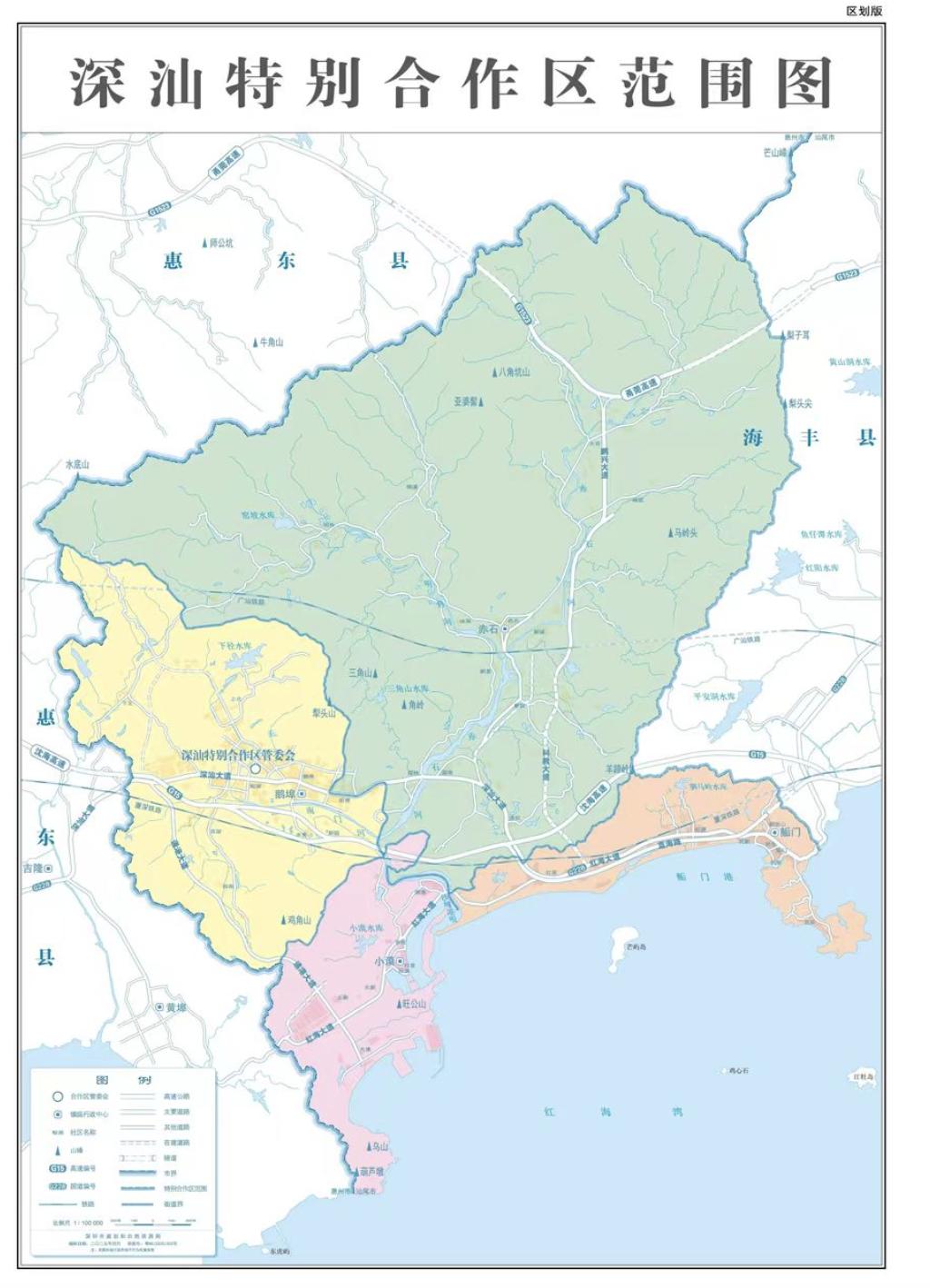
深汕合作,两市各有什么好处?
3 6 Ke· 2025-12-03 02:27
其实我觉得,广东人是最务实的,做任何事情都会有利他思维、互利思维,这样才能可持续。 2017年9月,广东省下发《关于深汕特别合作区体制机制调整方案的批复》,明确深汕成为深圳的"第10+1区",由深圳全面主导经济社会事务。次 年,深汕特别合作区正式揭牌。 如今,合作区交给深圳已经7年了,现在建得咋样了? 01. 深圳为何舍近求远,到汕尾接管一个区? 第一个问题,深圳为何跑那么鬼远,到汕尾管了一个区? 要知道,深汕合作区位于汕尾,与深圳之间还隔了一个惠州,距离深圳边界约80公里,距离深圳市区约120公里。 考察后得知,这个合作区,不是纯粹的经济开发区概念,而是兼顾了"深圳土地资源紧缺"与"广东区域平衡发展"两方面的破局之策。 合作区地处珠三角衔接粤东的门户区域,这个地方如果搞活,对推动广东区域发展平衡意义重大。同时,它仍处于深圳都市圈100公里的辐射半径 内,也符合国际大都市空间发展的客观规律。 讲通俗点就是,如果是个纯粹的开发区,那放在惠州或者东莞, 肯定更贴近市场需求,但问题是惠州和东莞也舍不得给啊,即使舍得,想必也 给 不出这么大的地块(深汕合作区的面积468公里)。 但汕尾不一样, 其经济基础非常薄弱,发 ...
关于投资中国,英中贸易协会总裁发现这样一个趋势
Xin Hua She· 2025-11-30 07:20
Core Insights - The President of the China-Britain Business Council, Peter Burnett, highlighted the diverse development characteristics and resource advantages of Chinese cities, providing ample cooperation opportunities for international investors, including British companies [2][3] - The recent China-Scotland Economic and Trade Cooperation Forum in Edinburgh emphasized the evolving landscape of investment cooperation between the UK and China, moving beyond traditional hubs [2] Group 1 - Chinese cities such as Shenzhen, Hong Kong, Xi'an, Beijing, and Shanghai each have unique attractions and development focuses, including innovation, internationalization, and entrepreneurial vitality [2] - The openness of China to foreign investment remains strong, welcoming foreign enterprises while supporting Chinese companies in expanding overseas [2][3] Group 2 - Investment cooperation is increasingly extending to inland Chinese cities like Chengdu, Chongqing, and Wuhan, which are becoming new hotspots for investment [3] - In the UK, Chinese companies are broadening their investment focus beyond London to other regions, with Edinburgh being a notable example of successful collaboration in new technology and sustainable development sectors [3]