半导体并购

Search documents
收购两公司 探路者加码芯片业务
Bei Jing Shang Bao· 2025-12-01 16:36
Core Viewpoint - The acquisition of semiconductor assets by the outdoor equipment giant, Explorer (探路者), highlights the growing trend of A-share companies entering the semiconductor industry, with a focus on high-premium mergers and acquisitions [1][2]. Group 1: Acquisition Details - Explorer plans to invest a total of 678 million yuan to acquire 51% stakes in two semiconductor companies: Shenzhen Betel Electronics Technology Co., Ltd. and Shanghai Tongtu Semiconductor Technology Co., Ltd. [1][2] - The acquisition involves a high premium, with Shanghai Tongtu's valuation increasing by 2119.65% [1][2]. - The transaction does not constitute a related party transaction or a major asset restructuring, and it can be implemented after board approval [2]. Group 2: Company Profiles - Betel is a leading design company in the mixed-signal signal chain chip sector, ranking first in the smart lock fingerprint recognition field and holding strong positions in various other sectors [2]. - Shanghai Tongtu specializes in video compression, AMOLED display driving, and video processing technologies, with its IP successfully licensed to over 20 medium to large chip companies [3]. Group 3: Strategic Intent - The core purpose of the acquisition is to create a deep complementarity and comprehensive reinforcement with Explorer's existing chip business, enhancing its product range and customer base in the analog and mixed-signal chip market [5]. - The integration of Betel's technology and Shanghai Tongtu's IP resources is expected to accelerate technological upgrades and market expansion in Explorer's chip business [5]. Group 4: Financial Performance - Explorer's chip business revenue has shown an upward trend, with projected revenues of approximately 842.72 million yuan, 1.33 billion yuan, and 2.22 billion yuan from 2022 to 2024, representing 0.74%, 9.6%, and 13.97% of total revenue, respectively [4]. - In the first half of 2025, Explorer reported approximately 5.38 billion yuan in outdoor business revenue and about 1.15 billion yuan in chip business revenue [4]. Group 5: Market Context - The trend of A-share companies acquiring semiconductor assets is driven by policy support, industry cycles, technological integration needs, and strong market expectations for emerging technologies [3]. - The semiconductor IP-related industry is currently in a golden development period, characterized by technological innovation and market demand [3].

高溢价豪赌!探路者拟6.78亿元收购两公司 加码芯片业务
Bei Jing Shang Bao· 2025-12-01 14:17
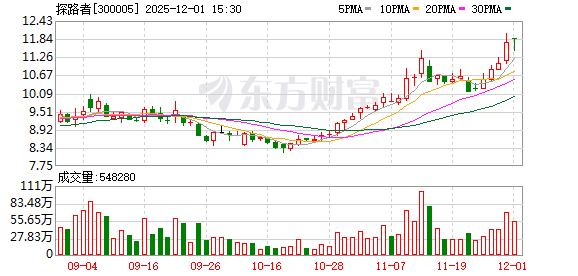
Core Viewpoint - The company, Explorer, announced a significant acquisition plan involving a total investment of 678 million yuan to acquire 51% stakes in two semiconductor companies, Betel and Shanghai Tongtu, aiming to enhance its chip business portfolio [1][4]. Group 1: Acquisition Details - The acquisition involves using self-owned funds of 321 million yuan for Betel and 357 million yuan for Shanghai Tongtu, and it does not constitute a related party transaction or a major asset restructuring [1][4]. - Betel is a leading design company in the mixed-signal chip sector, particularly in smart lock fingerprint recognition, while Shanghai Tongtu excels in video compression and AMOLED display driver technologies [2][4]. Group 2: Financial Performance and Projections - Betel's estimated revenue for 2024 is approximately 179 million yuan, with a projected net loss of 25.19 million yuan, but it is expected to turn profitable in 2025 [6][7]. - Shanghai Tongtu is projected to achieve revenues of about 56.06 million yuan in 2024 and 105 million yuan in the first eight months of 2025, with corresponding net profits of 5.54 million yuan and 18.89 million yuan [7]. Group 3: Strategic Rationale - The acquisitions are intended to create a deep complementarity with the existing chip business, enhancing the company's product range and customer base in the analog and mixed-signal chip markets [9]. - The integration of Betel's signal chain technology and Shanghai Tongtu's IP resources is expected to significantly boost the company's competitive edge in display driving and video processing technologies [9]. Group 4: Market Context and Trends - The trend of A-share companies acquiring semiconductor assets is on the rise, driven by policy support, industry cycles, and strong market expectations for emerging technologies [3][4]. - The semiconductor IP sector is currently experiencing a golden development period, characterized by technological innovation and market demand [5]. Group 5: Recent Financial Performance - Explorer's revenue and net profit have shown a decline in the first three quarters of the year, with revenues of approximately 953 million yuan, down 13.98% year-on-year, and a net profit of about 33.04 million yuan, down 67.53% [10][11]. - Despite the recent downturn, the company's stock price has surged by 42.77% from October 20 to December 1, outperforming the broader market [11].

A股半导体行业并购近一年超40起
2 1 Shi Ji Jing Ji Bao Dao· 2025-11-10 14:15
Core Viewpoint - The significant rise in the stock price of Ying Tang Zhi Kong (英唐智控) following its announcement of a major asset restructuring plan, which includes acquiring 100% of Guilin Guanglong Integrated Technology Co., Ltd. and 80% of Shanghai Aojian Microelectronics Technology Co., Ltd. [1][3] Company Summary - Ying Tang Zhi Kong's stock surged by 19.96% to 13.7 CNY per share after a 10-day trading suspension due to the announcement of its restructuring plan [1] - The company aims to transition from a low-margin electronic component distributor to a high-barrier semiconductor IDM (Integrated Device Manufacturer) through a series of acquisitions [5][6] - The financial performance for 2022-2024 shows revenues of approximately 5.169 billion CNY, 4.958 billion CNY, and 5.346 billion CNY, with net profits of about 57.49 million CNY, 54.88 million CNY, and 60.27 million CNY respectively [6] - In the first three quarters of 2025, the company reported a revenue of 4.113 billion CNY, a 2.4% year-on-year increase, but a net profit decline of 43.67% to 26.07 million CNY [6] - R&D expenses surged by 90.06% to 68.64 million CNY in Q3 2025, primarily focused on self-developed MEMS micro-mirrors and automotive display chips [6] Acquisition Targets - Guanglong Integrated specializes in optical switches and reported revenues of 71.97 million CNY and a net profit of 17.46 million CNY in 2023 [7] - Aojian Microelectronics, established in 2015, has shown weaker performance with revenues of only 1.844 million CNY and a net loss of 1.51 million CNY in the first eight months of 2024 [7] - The acquisition of Guanglong Integrated is expected to synergize with Ying Tang Zhi Kong's MEMS micro-mirror business, while Aojian's power management chips are essential for automotive electronics [6][7] Industry Context - The ongoing acquisition trend in the semiconductor industry reflects a broader movement among companies like Chip Origin, Guoke Micro, and others, driven by policy support and the need for technological enhancement [10][11] - The semiconductor sector in China is characterized by a large number of small-scale companies, with domestic firms holding only about 10% market share in the analog chip segment [11] - The recent policy initiatives have encouraged mergers and acquisitions, with over 40 semiconductor asset acquisition cases disclosed in the A-share market since September 2024 [10][11] - The success of these acquisitions in creating industry giants will depend on the strategic vision and integration capabilities of the companies involved [12]

A股半导体行业并购近一年超40起
21世纪经济报道· 2025-11-10 14:07
Core Viewpoint - The article discusses the recent significant asset restructuring plan of Yintan Zhikong, which aims to acquire 100% of Guilin Guanglong Integrated Technology Co., Ltd. and 80% of Shanghai Aojian Microelectronics Technology Co., Ltd. This move is part of the company's strategy to transition from a low-margin electronic component distributor to a high-barrier semiconductor IDM enterprise [1][5][6]. Group 1: Company Overview - Yintan Zhikong's stock surged by 19.96% to 13.7 yuan per share following the announcement of its restructuring plan [1]. - The company has a strong foundation in optical signal conversion, MEMS mirrors, and automotive chip design and manufacturing, while the target companies have deep expertise in optical devices and MEMS technology [3][4]. Group 2: Financial Performance - Yintan Zhikong's revenue for 2022-2024 is projected to be approximately 5.169 billion yuan, 4.958 billion yuan, and 5.346 billion yuan, with corresponding net profits of about 57.49 million yuan, 54.88 million yuan, and 60.27 million yuan [6]. - In the first three quarters of 2025, the company reported revenue of 4.113 billion yuan, a year-on-year increase of 2.4%, but net profit dropped by 43.67% to 26.07 million yuan [6]. Group 3: R&D Investment - The company's R&D expenses surged by 90.06% year-on-year to 68.64 million yuan in Q3 2025, primarily focused on self-developed MEMS micro-mirrors and automotive-grade display chips [6]. Group 4: Acquisition Targets - Guanglong Integrated's main business includes passive optical devices, with 2023 revenue of 71.97 million yuan and a net profit of 17.46 million yuan [7]. - Aojian Microelectronics, established in 2015, reported revenue of only 1.844 million yuan and a net loss of 1.51 million yuan in the first eight months of 2024 [7]. Group 5: Industry Context - The article highlights a trend of active mergers and acquisitions in the semiconductor industry, driven by policy support and the need for scale and technology integration among smaller firms [10][11]. - The semiconductor sector in China is characterized by a large number of small companies, with domestic firms holding only about 10% market share in the analog chip segment [11]. Group 6: Challenges and Strategic Outlook - Despite multiple acquisitions, Yintan Zhikong remains primarily an electronic component distributor, with over 90% of its revenue coming from this segment in Q3 2025 [12]. - The article emphasizes that successful mergers and acquisitions in the semiconductor industry require clear strategic vision and strong integration capabilities, as the sector demands high investment and long cycles [12].
英唐智控涨停背后,半导体行业并购持续活跃
2 1 Shi Ji Jing Ji Bao Dao· 2025-11-10 11:58
Core Viewpoint - The recent acquisition activities of Ying Tang Intelligent Control (英唐智控) reflect a broader trend in the semiconductor industry, characterized by companies seeking to enhance their technological capabilities and achieve vertical integration through mergers and acquisitions [1][6]. Company Summary - Ying Tang Intelligent Control's stock price surged by 19.96% to 13.7 yuan per share after announcing a major asset restructuring plan to acquire 100% of Guilin Guanglong Integrated Technology Co., Ltd. and 80% of Shanghai Aojian Microelectronics Technology Co., Ltd. [1] - The company aims to transition from a low-margin electronic component distributor to a high-barrier semiconductor IDM (Integrated Device Manufacturer) by leveraging its existing strengths in optical signal conversion, MEMS mirrors, and automotive chip design [2][4]. - Financial performance shows that from 2022 to 2024, Ying Tang's revenue was approximately 5.169 billion yuan, 4.958 billion yuan, and 5.346 billion yuan, with net profits of about 57.49 million yuan, 54.88 million yuan, and 60.28 million yuan respectively. However, the net profit margin remains below 0.6% [2]. - In Q3 2025, the company reported a revenue of 4.113 billion yuan, a year-on-year increase of 2.4%, but a net profit decline of 43.67% to 26.07 million yuan [2]. - R&D expenses surged by 90.06% in Q3 2025, reaching 68.64 million yuan, primarily focused on self-developed MEMS micro-mirrors and automotive-grade display chips, leading to a net loss of 4.67 million yuan for that quarter [2]. Industry Summary - The two target companies, Guanglong Integrated and Aojian Microelectronics, are relatively small, with Guanglong's 2023 revenue at 71.97 million yuan and net profit at 17.46 million yuan, while Aojian reported only 18.44 million yuan in revenue for the first eight months of 2024, with a net loss of 1.51 million yuan [3]. - The semiconductor industry is experiencing a wave of mergers and acquisitions, driven by policy support, capital influx, and industry needs, with over 40 semiconductor asset acquisition cases reported in the A-share market since September 2024 [6][7]. - Many domestic semiconductor companies are small, with over 400 firms in the analog chip sector holding only about 10% market share, prompting a trend towards mergers for scale and technological complementarity [7]. - Cross-industry mergers are also on the rise, although successful integration remains rare, as evidenced by the mixed results of companies attempting to diversify into semiconductor sectors [7]. - The success of the current acquisition wave in creating industry giants will depend on companies' strategic vision and integration capabilities, as the semiconductor industry requires significant investment and long-term commitment [8].
停牌!A股公司,突然公告!
券商中国· 2025-10-26 12:39
Core Viewpoint - The semiconductor industry is experiencing a wave of mergers and acquisitions, with several companies announcing significant transactions aimed at enhancing their market positions and capabilities [1][5]. Group 1: Recent Mergers and Acquisitions - Yintan Zhikong plans to acquire 100% of Guanglong Integrated and 76% of Aojian Microelectronics through a combination of share issuance and cash payments, with the stock suspension starting from October 27 [2][3]. - Yinxin Development announced its intention to acquire 81.8091% of Changxing Semiconductor, a company specializing in memory chip packaging and testing [5][6]. - DiAo Micro plans to acquire 100% of Rongpai Semiconductor, focusing on high-performance analog chip design and sales [6][7]. - Chip Origin plans to invest in a special purpose company to acquire control of Zhudian Semiconductor, with a valuation of 950 million yuan [6][7]. - Dike Co. intends to purchase 62.5% of Jiangsu Jinkai Semiconductor for 300 million yuan, extending its reach into the semiconductor packaging and testing sector [7][8]. - Huada Technology aims to acquire 100% of Huayi Microelectronics to enhance its power device packaging and testing capabilities [8]. Group 2: Company Financials and Operations - Yintan Zhikong reported a revenue of 2.639 billion yuan in the first half of 2025, a 3.52% increase year-on-year, but a net profit decline of 14.12% to 30.7358 million yuan [3][4]. - The distribution business segment of Yintan Zhikong generated 2.417 billion yuan in revenue, a 2.34% increase, with a gross margin of 6.60% [4]. - Guanglong Integrated's operations include a wide range of services such as AI application software development, integrated circuit design, and IoT technology services [3]. - Aojian Microelectronics focuses on microelectronics and semiconductor technology, providing technical development and consulting services [3].

半导体并购“不香”了!拿下上海荣湃全部股权等不到涨停,牛散何明坤退出帝奥微前十大流通股东
Hua Xia Shi Bao· 2025-10-22 07:33
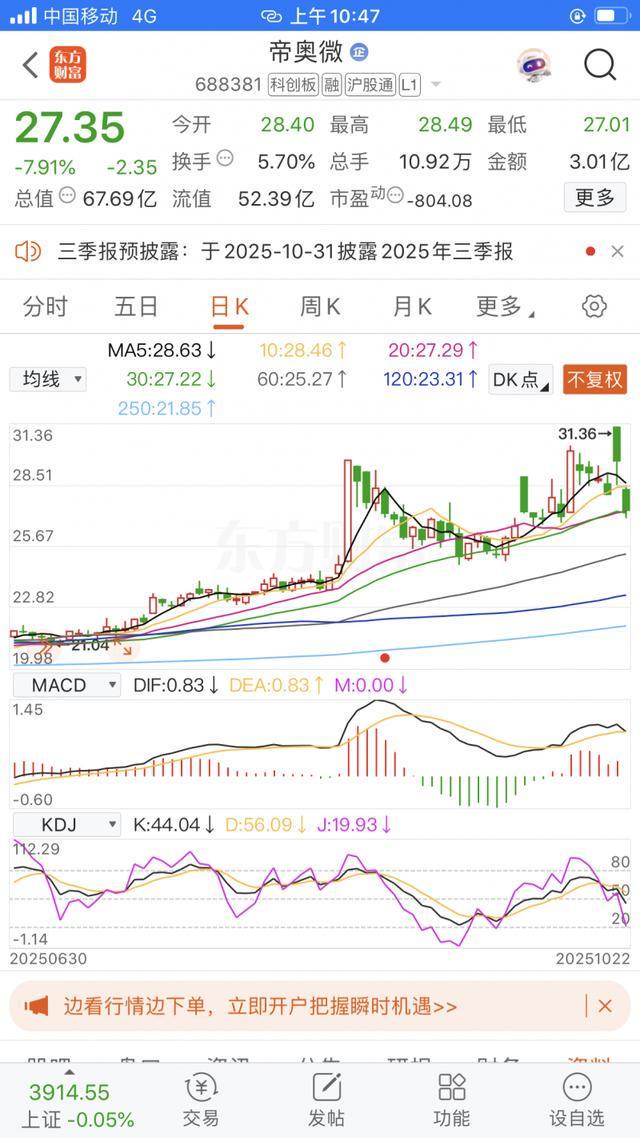
Core Viewpoint - The semiconductor company Diaowei (688381.SH) announced plans to acquire 100% of Shanghai Rongpai Semiconductor through a combination of stock issuance and cash payment, while also raising funds from specific investors. However, the market response has been lukewarm, with the stock price not experiencing a significant increase post-announcement, indicating skepticism about the merger's potential benefits [2][3][7]. Group 1: Acquisition Details - Diaowei plans to acquire Shanghai Rongpai Semiconductor, which specializes in products like digital isolators and isolation interfaces, through issuing shares at a price of 19.84 yuan per share [2][4]. - The acquisition aims to enhance Diaowei's product offerings in the analog chip sector and leverage Rongpai's established technology and customer resources, particularly in automotive electronics and industrial control [4][5]. - The deal is seen as part of a broader strategy to integrate resources within the Xiaomi ecosystem, as both companies have received investments from Xiaomi Changjiang Industrial Fund [5]. Group 2: Market Reaction - Following the announcement, Diaowei's stock saw a brief surge during pre-market trading but closed with a modest gain of less than 6% on October 21, and then dropped over 8% the following day, reflecting market skepticism about the merger [3][7]. - Notably, prominent investor He Mingkun, who had previously invested in Diaowei, has exited the top shareholder list, indicating a potential lack of confidence in the stock's future performance [2][7][9]. Group 3: Financial Implications - Shanghai Rongpai has reported losses in recent years, with projected revenues of 61.1 million yuan in 2023 and a net loss of approximately 66.3 million yuan, raising concerns about the financial impact of the acquisition on Diaowei [8]. - Analysts from various brokerages have expressed cautious optimism about the acquisition, highlighting the potential for market expansion in high-tech sectors like new energy and automotive electronics, contingent on the successful integration of the two companies [6].

不到3折卖掉公司,控股方“自掏腰包”补偿VC丨投中嘉川
投中网· 2025-10-19 07:04
Core Viewpoint - The article discusses the trend of semiconductor companies facing significant valuation corrections, as evidenced by recent acquisitions at prices much lower than previous valuations, indicating a shift in the investment landscape within the semiconductor industry [4][5][6]. Group 1: Acquisition Trends - Semiconductor companies are increasingly engaging in mergers and acquisitions, with 90 related transactions disclosed in the A-share market since January 1, 2025 [4]. - The acquisition of ZD Semiconductor by Chip Origin is highlighted, where the company was valued at $500 million (approximately 3.56 billion RMB) but was acquired for only 950 million RMB, representing 26.7% of its previous valuation [5][10]. - Another example includes the acquisition of Ruicheng Semiconductor by Gelaun Electronics, where the highest valuation was 4.878 billion RMB, but the transaction price was only 1.9 billion RMB, reflecting a significant discount [6]. Group 2: Transaction Structure - Chip Origin's acquisition of ZD Semiconductor involved the establishment of a Special Purpose Vehicle (SPV) called Tian Sui Xin Yuan, where Chip Origin holds 40% of the shares, allowing it to control the acquisition while minimizing cash outlay [9][19]. - The acquisition price of 950 million RMB includes 930 million RMB in cash and transaction fees, with the deal structured to ensure that external investors could still participate and benefit from the transaction [9][19]. - The transaction structure allowed external investors to increase their ownership stakes, with Pixelworks reducing its stake from 78.14% to 49.49%, thereby compensating external investors and ensuring they would not incur significant losses [14][17]. Group 3: Financial Performance and Strategic Decisions - ZD Semiconductor's financial performance has been poor, with projected revenues of 385 million RMB and a net loss of 120 million RMB for 2024, raising concerns about its future viability [20]. - Pixelworks, the parent company, is also facing declining revenues and increasing losses, prompting a need to liquidate assets to stabilize its financial situation [20][22]. - The urgency for Pixelworks to divest its Chinese operations is compounded by geopolitical risks and the need for cash flow, making the sale of ZD Semiconductor a strategic necessity [22].


传统材料龙头突发!禾盛新材董事吴海峰因涉嫌违法发放贷款被拘,此前曾在多家银行任职
Mei Ri Jing Ji Xin Wen· 2025-10-13 16:21
Core Viewpoint - He Sheng New Materials Co., Ltd. announced that its director Wu Haifeng is under investigation for illegal loan issuance, but this matter is personal and does not affect the company’s operations or control [1][2]. Company Overview - He Sheng New Materials specializes in the research, production, and sales of appearance composite materials for home appliances [2]. - The company has seen its stock price increase by over 140% year-to-date, reaching a peak of 42.96 yuan per share on October 13 [3]. Management and Governance - Wu Haifeng, born in November 1976, holds a master's degree from Fudan University and has held various senior positions in banking and asset management before becoming a director at He Sheng New Materials [2]. - Wu Haifeng has not received any remuneration from the company and does not hold any shares in He Sheng New Materials [2]. Recent Developments - He Sheng New Materials plans to invest 250 million yuan in Yizhi Electronics, which has a pre-investment valuation of 2.25 billion yuan, aiming to acquire a 10% stake [2]. - Yizhi Electronics is one of the few companies in China that has commercialized ARM server processor chips, with products targeting AI and cloud computing applications [3]. Shareholder Activity - On October 9, key executives, including the chairman and general manager, collectively reduced their holdings by approximately 167,300 shares, representing 0.0675% of the company's total shares [3].

华虹公司拟买华力微复牌新高 2023IPO募212亿净利连降
Zhong Guo Jing Ji Wang· 2025-09-01 03:10
Core Viewpoint - Huahong Company (688347.SH) resumed trading on September 1, 2023, with a significant price increase, reflecting positive market sentiment following the announcement of a planned acquisition and fundraising [1][2]. Group 1: Acquisition and Fundraising Details - The company plans to acquire a 97.4988% stake in Huazhi Microelectronics through a combination of issuing shares and cash payments, making Huazhi Microelectronics a subsidiary post-transaction [1][3]. - The fundraising will not exceed 100% of the transaction price and will involve issuing shares to no more than 35 specific investors, with the total shares issued capped at 30% of the company's post-transaction total [2][3]. - The proceeds from the fundraising will be allocated for working capital, debt repayment, project construction, and transaction-related fees, with a maximum of 25% of the asset purchase price or 50% of the total fundraising amount designated for working capital and debt repayment [2][3]. Group 2: Financial Performance - For the first half of 2025, Huahong Company reported a revenue of 8.018 billion yuan, a year-on-year increase of 19.09%, but a net profit decline of 71.95% to 74.32 million yuan [8][9]. - In 2024, the company experienced a revenue drop of 11.36% to 14.388 billion yuan, with a net profit decrease of 80.34% to 380.58 million yuan [10][11]. - The 2023 revenue was 16.232 billion yuan, down 3.30% from the previous year, with a net profit of 1.936 billion yuan, reflecting a 35.64% decline [11][12]. Group 3: Strategic Implications - The acquisition is expected to enhance Huahong's 12-inch wafer foundry capacity and create synergies in technology and operational efficiency, thereby improving market share and profitability [5][6]. - The integration of resources and technology between Huahong and Huazhi Microelectronics is anticipated to foster innovation and strengthen competitive advantages in the semiconductor industry [5][6].