可重复使用火箭

Search documents
估值超百亿 中科宇航IPO辅导验收
Xin Lang Cai Jing· 2026-01-19 23:21
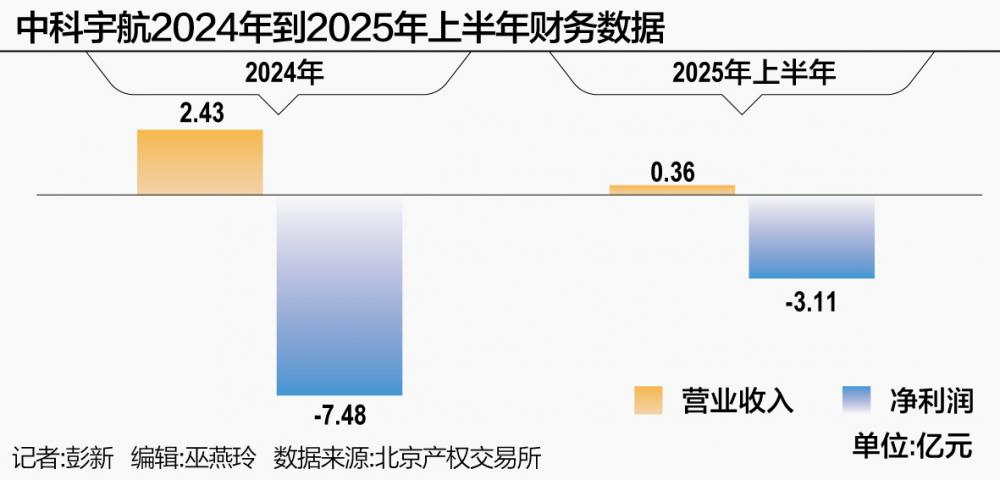
Core Viewpoint - Zhongke Aerospace Technology Co., Ltd. has made significant progress towards its IPO, transitioning to "acceptance of guidance" status as of January 17, indicating it is one of the fastest commercial aerospace companies to pursue an IPO after Blue Arrow Aerospace [1] Company Overview - Established in December 2018, Zhongke Aerospace is a high-tech commercial aerospace company incubated by the Chinese Academy of Sciences, and it is the first mixed-ownership rocket enterprise in China, focusing on medium to large rocket development, customized space launches, suborbital scientific experiments, and space tourism [3] - The company is primarily controlled by Beijing Pengyi Junlian Space Technology Center, which holds 27.7476% of its shares, with Yang Yiqiang as the actual controller [3] - Yang Yiqiang, aged 58, has a notable background in China's space industry, having held various leadership roles in significant projects, including the Long March 11 rocket [3] Investment and Valuation - Zhongke Aerospace has attracted investments from well-known institutions such as Guangzhou Chantuo, CITIC Securities, and Yuexiu Industrial Fund [4] - The company is valued at approximately 11 billion yuan (around 1.1 billion USD) according to the Hurun Research Institute's 2025 Global Unicorn List, ranking 807th [5] - A share transfer listing indicated a valuation of about 11.1 billion yuan based on a 0.7928% stake being sold for 88 million yuan [5] Market Position and Achievements - Zhongke Aerospace's "Liqi 1" rocket successfully completed its maiden flight in July 2022, providing commercial launch services and has since launched 84 satellites into orbit, with a total payload mass exceeding 11 tons, making it the leading company in terms of cumulative payload for a single rocket model among Chinese private/commercial rocket companies [6] - The company has also successfully launched for international clients, including Egypt, Oman, and the UAE [6] Product Development - The company is advancing the development of multiple products, including the Liqi 2, Liqi 2 Heavy, and the Lihong series of reusable vehicles to meet diverse transportation needs [7] - The Lihong 1 vehicle recently completed a suborbital flight test, reaching an altitude of approximately 120 kilometers, marking a significant breakthrough in reusable technology [7] Financial Performance - Despite its rapid growth, Zhongke Aerospace's single rocket launch revenue has not yet covered its costs due to low launch frequency and underutilization of payload capacity, leading to high unit costs [8][9] - In 2024, the company reported revenues of 243 million yuan with a net loss of 748 million yuan, and for the first half of 2025, revenues were 36 million yuan with a net loss of 311 million yuan [9] Industry Context - The commercial aerospace sector in China is experiencing rapid growth, with expectations for significant IPO progress in 2026, supported by new regulations from the China Securities Regulatory Commission [10] - Five domestic companies focused on launch vehicles, including Zhongke Aerospace, have initiated IPO processes, with Blue Arrow Aerospace already in the acceptance stage for its IPO [10] - The cost competitiveness of Chinese commercial aerospace has improved, although there remains a significant gap compared to international leaders like SpaceX [10]

长征十一号首任总指挥掌舵!估值超百亿 中科宇航IPO辅导验收
2 1 Shi Ji Jing Ji Bao Dao· 2026-01-19 11:53
Core Viewpoint - Zhongke Aerospace has made significant progress towards its IPO on the Sci-Tech Innovation Board, marking it as one of the fastest commercial aerospace companies to advance in this process after Blue Arrow Aerospace [2][3]. Company Overview - Zhongke Aerospace Technology Co., Ltd. was established in December 2018 and is a high-tech enterprise in commercial aerospace incubated by the Chinese Academy of Sciences. It is the first mixed-ownership rocket company in China, focusing on medium to large rocket development, customized space launches, suborbital scientific experiments, and space tourism [4]. - The company is controlled by its founder and chairman, Yang Yiqiang, who has extensive experience in the aerospace sector, including leadership roles in significant national projects [4]. Shareholding and Valuation - The major shareholder of Zhongke Aerospace is Beijing Pengyi Junlian Space Technology Center, holding 27.7476% of the shares. Other notable investors include Guangzhou Chantuo, CITIC Securities, and Yuexiu Industrial Fund [5]. - As of 2025, Zhongke Aerospace has an estimated valuation of 11 billion yuan, ranking 807th on the Hurun Global Unicorn List [5]. Market Position and Achievements - Zhongke Aerospace's "Liyuan-1" rocket successfully completed its maiden flight in July 2022 and has since provided commercial launch services, successfully placing 84 satellites into orbit with a total payload mass exceeding 11 tons [6]. - The company has also engaged international clients, providing launch services for countries such as Egypt, Oman, and the UAE [6]. Financial Performance - Despite its achievements, Zhongke Aerospace's single rocket launch revenue has not yet covered costs due to low launch frequency and underutilization of payload capacity. In 2024, the company reported revenues of 243 million yuan and a net loss of 748 million yuan [7]. Industry Context - The Chinese commercial aerospace market has grown significantly, with the market size increasing from 1.02 trillion yuan in 2020 to an expected 2.34 trillion yuan by 2024, driven by satellite internet demand and supportive policies [8]. - The number of commercial aerospace companies in China has surpassed 600, covering the entire industry chain from rocket development to satellite manufacturing [8]. IPO Landscape - Five major commercial rocket companies, including Zhongke Aerospace, have initiated the IPO process, with significant progress expected in 2026 [9]. - The China Securities Regulatory Commission has reintroduced standards for unprofitable companies to list on the Sci-Tech Innovation Board, specifically supporting sectors like commercial aerospace [8]. Technological Developments - Zhongke Aerospace is actively developing reusable rocket technologies, with recent advancements in the "Liyuan-2" and "Lihong" series of vehicles to meet diverse launch demands [6][11]. - The company has also filed a patent for a rocket recovery system designed to improve landing accuracy and reduce recovery difficulty [11].
一天两枚火箭发射失利 中国航天科技集团、星河动力两家公司发文:具体原因正排查
Mei Ri Jing Ji Xin Wen· 2026-01-18 05:26
Group 1: Rocket Launch Failures - On January 17, two rocket launch failures were reported, including the Long March 3B rocket and the private company Star River's Gushen II rocket [1][2] - The Long March 3B rocket experienced an anomaly during its third stage, leading to mission failure, while the Gushen II rocket also faced flight anomalies during its first test flight [4][6] Group 2: Long March 3B Rocket Overview - The Long March 3B rocket is China's first rocket model to exceed 100 launches, with a total of 115 launches, 110 successful and 3 failures [6] - It is primarily used for launching heavy satellites into geosynchronous transfer orbits and is a key player in China's commercial launch services [4][5] Group 3: Star River Company Profile - Star River, established in 2018, is the first private company in China to achieve mass production and high-density launches of rockets [8] - The company has raised over 5.3 billion yuan through multiple funding rounds, with a post-investment valuation of 15-16 billion yuan after a recent 2.4 billion yuan Series D financing [8][9] Group 4: Industry Context and Challenges - The Chinese commercial space industry is transitioning from technology validation to large-scale operations, facing challenges such as low rocket supply and high launch costs [12][13] - The industry is experiencing a downturn following a surge in stock prices, with significant declines in commercial space concept stocks observed recently [14][16]

星链竞争对手Eutelsat与欧洲玛雅航天公司签署卫星发射协议
Xin Lang Cai Jing· 2026-01-16 13:20
Core Viewpoint - Eutelsat has signed an agreement with French space startup MaiaSpace to launch its future low Earth orbit (LEO) satellites, marking a strategic move to compete with SpaceX in the European market [1][5]. Group 1: Agreement Details - The agreement with MaiaSpace involves a multi-batch launch contract, with launch operations set to begin in 2027 [1][5]. - MaiaSpace is a subsidiary of the European rocket manufacturer ArianeGroup and is developing a partially reusable small launch vehicle, which would be the first of its kind in Europe if successful [2][7]. Group 2: Strategic Importance - Eutelsat owns OneWeb, which is currently the only operational LEO satellite constellation globally, aside from SpaceX's Starlink [6]. - OneWeb is considered a strategic asset by the French and UK governments, which are also major shareholders in Eutelsat [6]. Group 3: Market Context - French President Emmanuel Macron has called for Europe to accelerate its space strategy to counter Starlink, emphasizing the need for rapid deployment of LEO satellite constellations [7]. - Eutelsat's recent satellite launch tasks have relied on SpaceX and the Indian Space Research Organisation, following the termination of cooperation with Russia's Soyuz rocket after the Ukraine conflict [3][7]. - Eutelsat plans to launch 440 LEO satellites manufactured by Airbus in the coming years to expand its satellite constellation [3][7].
三年内达到“每年生产1万艘星舰,每小时发射1艘”!马斯克这牛吹的太大
Sou Hu Cai Jing· 2026-01-15 12:14
Core Viewpoint - Elon Musk's ambitious goals for SpaceX include launching a Starship every hour within three years and producing 10,000 Starships annually, which may not align with actual market demand for space transportation [1][18][20]. Group 1: Launch Frequency and Production Goals - Musk claims that SpaceX will achieve a launch frequency exceeding one per hour within three years, translating to 8,760 launches annually [12][14]. - The target of producing 10,000 Starships per year is significantly higher than the projected demand for heavy-lift space vehicles, which is estimated to be only a few hundred tons annually [12][20]. Group 2: Spacecraft Capacity and Market Demand - The Starship is currently the largest rocket tested globally, capable of carrying 100-150 tons in reusable mode and up to 250 tons in expendable mode, making it the strongest reusable launch system [4][6]. - However, the actual demand for such capacity is limited, as future space activities will focus on specific missions like lunar base construction and deep space exploration, which do not require high-frequency launches [8][10]. Group 3: Reusability and Economic Viability - The reusability of the Starship is a core advantage, allowing for multiple launches per vehicle each year, which contradicts the need for producing 10,000 units [16][18]. - If a Starship can be reused 10 times a year, only 10 Starships would be needed to meet a hypothetical global demand of 1,000 tons, indicating a potential overproduction scenario [12][18]. Group 4: Competitive Landscape - Other countries, including China and Russia, are advancing their own heavy-lift rocket capabilities, which could limit SpaceX's market share and render Musk's production goals unnecessary [18][20]. - The space exploration market is expected to be competitive, with multiple nations and companies vying for contracts, suggesting that SpaceX's ambitious targets may not be realistic [20][22]. Group 5: Conclusion on Musk's Projections - Musk's projections appear to be more of a marketing strategy to attract investment and establish a dominant narrative in the space industry rather than a reflection of actual operational needs [18][20]. - While SpaceX has made significant contributions to the aerospace industry, the gap between Musk's aspirations and practical requirements highlights the need for a more grounded approach to space transportation [22].
商业航天,送了股民开年第一辆过山车
吴晓波频道· 2026-01-15 00:48
Core Viewpoint - The article discusses the rapid rise and subsequent volatility of the commercial aerospace sector in the A-share market, highlighting significant stock price movements and the underlying factors driving these changes [4][9][11]. Group 1: Market Performance - From December 24, 2025, to January 12, 2026, the aerospace equipment sector achieved a 12-day consecutive rise, with a cumulative increase of 79% [9]. - On January 12, 2026, the A-share market recorded a historic trading volume of 3.64 trillion yuan, with many aerospace stocks hitting the daily limit [9][11]. - Following the peak, many companies in the sector issued risk warnings, leading to a sharp decline in stock prices, with over 60 stocks experiencing significant drops [11]. Group 2: Industry Dynamics - The commercial aerospace sector is experiencing a surge in demand, driven by China's recent application to the International Telecommunication Union (ITU) for an additional 203,000 satellites, marking one of the largest resource declarations in recent years [16][19]. - The cost of satellite launches is high, with estimates ranging from 50,000 to 100,000 yuan per kilogram, necessitating the development of reusable rockets to reduce costs significantly [21][22]. - The successful launch of the reusable rocket "Zhuque-3" by Blue Arrow Aerospace represents a significant milestone in the industry, despite its recovery failure [24][26]. Group 3: Future Prospects - The commercial aerospace industry is positioned as a critical infrastructure for future communication technologies, with low Earth orbit satellites expected to enhance connectivity in underserved areas [29][30]. - The competition in the global aerospace market is intensifying, with various countries, including the U.S., Europe, and India, investing heavily in their commercial space sectors [34][36][37]. - China's commercial aerospace strategy involves both state-owned and private enterprises, aiming to deploy thousands of satellites to create a comprehensive satellite internet network [38][41].


商业航天股熄火,但商业航天潮才刚刚开始
3 6 Ke· 2026-01-13 11:03
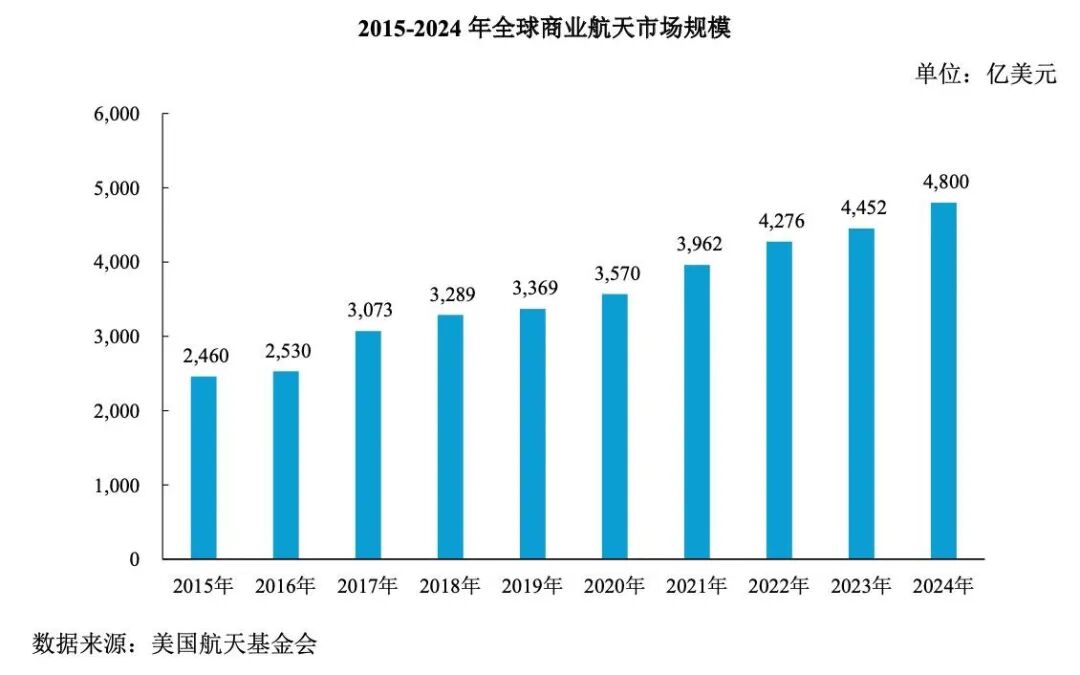
Core Viewpoint - The Chinese commercial space industry is transitioning from a phase characterized by "PPT rockets" to a more structured and sustainable business model, driven by the recent IPO guidelines that allow private rocket companies to enter the capital market [2][11]. Group 1: Market Dynamics - The commercial space sector is experiencing a "golden window period" as multiple private rocket companies, such as Blue Arrow Aerospace and Star River Dynamics, begin the IPO process [2][11]. - The focus of market attention is shifting from technological breakthroughs to engineering capabilities and cash flow certainty, with investors looking for stable launch frequencies and order visibility [3][11]. - Demand is reversing, with low Earth orbit satellite communications and remote sensing driving rocket production planning, indicating a shift from supply-driven to demand-driven dynamics [7][15]. Group 2: Company Strategies - Star River Dynamics has established a stable launch rhythm with its "Gushenxing" series solid rockets, expanding its applications in commercial remote sensing and low Earth orbit tasks [4]. - Blue Arrow Aerospace is betting on reusable technology with its liquid oxygen-methane engines and medium to large launch vehicles, aiming to emulate SpaceX's early-stage strategies [5]. - Zhongke Aerospace benefits from its affiliation with the Chinese Academy of Sciences, providing stronger certainty in engineering capabilities, while Tianbing Technology emphasizes rapid iteration and engineering efficiency [6]. Group 3: Infrastructure Development - The future of the space industry is increasingly viewed as a foundational infrastructure rather than a series of isolated projects, with stable and predictable launch demand emerging [8][15]. - The global space economy is projected to reach $612 billion by 2024, with commercial space revenue accounting for $480 billion, highlighting the growing importance of the sector [11]. - China's unique advantage lies in its complete supply chain, enabling large-scale domestic manufacturing across various components, which positions it well for future demand surges [15][16]. Group 4: Comparative Analysis - The Chinese model differs from SpaceX's approach by integrating multiple stakeholders, where the state ensures foundational technology and safety, while private companies focus on efficiency and market applications [14]. - The Chinese commercial space sector is not merely about individual company success but is evolving into a national-level industrial infrastructure, contrasting with the concentrated and overvalued U.S. commercial space market [17].
钱塘号”火箭 最快年底实现“海上往返
Mei Ri Shang Bao· 2026-01-08 22:25
Group 1 - The "Qiantang" rocket project marks a significant step for Qiantang in the commercial aerospace manufacturing sector, with the establishment of a large liquid rocket assembly and recovery base [2] - Arrow Yuan Technology, founded in 2022, focuses on the research and manufacturing of medium to large reusable liquid rockets, with a total investment of 5.2 billion yuan for the first phase of the project [2] - The "Qiantang" rocket will have a height of 66 meters, a diameter of 4.2 meters, and a launch weight of 575 tons, featuring capabilities for 20 reuses, which is a key highlight of the project [2] Group 2 - The strategic location of the project in Qiantang is attributed to its advanced manufacturing platform and existing aerospace industry presence, which includes nearly 40 aerospace companies [3] - Qiantang aims to create a leading aerospace industry cluster in the Yangtze River Delta, supported by innovation centers and research institutions [3] - The establishment of the rocket project is expected to enhance the local manufacturing ecosystem and fill gaps in the aerospace sector, promoting a collaborative industrial environment [3]
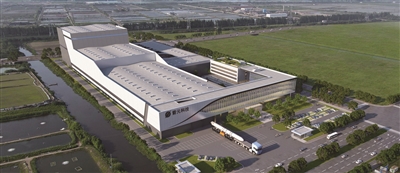
年产25发火箭?国内首个海上回收复用火箭基地开工
Guan Cha Zhe Wang· 2026-01-08 09:35
Core Viewpoint - Arrow Yuan Technology has initiated the construction of China's first large-scale liquid rocket assembly and recovery reuse base, focusing on sea recovery and featuring a stainless steel rocket manufacturing facility [1][3]. Investment and Project Details - The total investment for the project is approximately 5.2 billion yuan, with plans to establish a recovery reuse center, testing center, and manufacturing center, aiming for an annual production capacity of 25 rockets [3]. - The first rocket to be manufactured at this base will be named "Qiantang," which is based on the core product "Yuanxingzhe No. 1," measuring 66 meters in length and 4.2 meters in diameter, with a launch mass of 575 tons [3]. Technical Specifications and Advantages - The "Qiantang" rocket is designed for high payload capacity, low cost, rapid delivery, and frequent reuse, with a maximum near-Earth orbit payload capacity of 14 tons and a first stage designed for 20 reuses [3]. - The goal is to reduce the launch cost to below 20,000 yuan per kilogram [3]. - Arrow Yuan Technology utilizes a unique technical route of "stainless steel body + liquid oxygen-methane propellant," which offers lower costs, better high-temperature performance, and structural strength suitable for reusable rockets [3]. Industry Context and Comparisons - The use of liquid oxygen-methane engines and stainless steel bodies is gaining attention in the commercial aerospace sector, with advantages in maintenance and cost-effectiveness [4]. - Current domestic commercial launch prices are around 220 million yuan per launch, with payload costs between 80,000 to 100,000 yuan per kilogram; achieving 20 reuses could lower costs by approximately 70% [6]. - The commercial aerospace industry in China has reached a scale of 2.5 to 2.8 trillion yuan, with an annual growth rate exceeding 20% [6]. Market Response - Following the announcement of the sea recovery base's construction, the commercial aerospace index rose by 3.56%, with several stocks hitting the daily limit [7].

蓝箭航天IPO遭遇大考
Xin Lang Cai Jing· 2026-01-06 13:00
Core Viewpoint - The IPO process of Blue Arrow Aerospace has encountered new variables due to the random selection for on-site inspections by the China Securities Association, raising concerns about its IPO progress [1][3]. Group 1: IPO Process and Market Reaction - Blue Arrow Aerospace is among 11 companies selected for on-site inspections, with a significant focus on its potential to become China's first commercial rocket stock [1]. - Following the announcement of the inspection, the commercial aerospace sector experienced a decline, indicating market apprehension regarding Blue Arrow's IPO [1]. - The company’s IPO was expedited after the successful launch of its Zhuque-3 rocket in early December, which increased its market visibility [10]. Group 2: On-site Inspection Implications - The on-site inspection is a critical part of the IPO process, assessing whether the company meets listing conditions and disclosure requirements [4]. - Historical data shows that being selected for inspection can adversely affect IPO outcomes, with only 30% of companies passing in previous years [5]. - However, industry experts suggest that a successful inspection could enhance Blue Arrow's credibility and expedite its IPO process [8][9]. Group 3: Financial Performance and Funding Plans - Blue Arrow Aerospace plans to raise 7.5 billion yuan through its IPO, with allocations for enhancing reusable rocket production and technology [10]. - The company has reported significant losses over the past few years, totaling nearly 3.5 billion yuan from 2022 to mid-2024 [10]. - Revenue figures indicate a gradual increase, with 2022 revenue at 782,900 yuan and a rise to 36.43 million yuan in the first half of 2025 [11]. Group 4: Industry Context and Future Outlook - The commercial aerospace sector is viewed as a key component of China's "14th Five-Year Plan," with Blue Arrow being a representative company in this growing field [9]. - The recent surge in stock prices within the commercial aerospace sector has raised concerns about market overheating, despite optimism surrounding reusable rocket launches [12]. - As of January 6, the commercial aerospace index rose by 3.01%, reflecting positive market sentiment, although caution is advised regarding unsustainable growth [12].