
品牌农业

Search documents
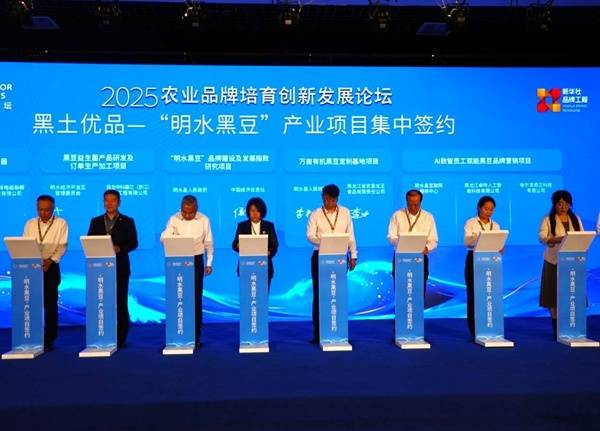
“明水黑豆”亮相2025企业家博鳌论坛
Sou Hu Cai Jing· 2025-12-04 05:34
Group 1 - The core event was the 2025 Entrepreneur Boao Forum, where Ming Shui County showcased its "Ming Shui Black Bean" brand, enhancing its reputation as "China's Black Bean Town" and promoting high-quality development of local industries [1][3] - The forum featured a special promotion for the "Ming Shui Black Bean" geographical brand, highlighting the county's ecological, agricultural, and cultural advantages, and inviting collaboration from entrepreneurs [3][5] - The launch of the "China·Ming Shui Black Bean Health Food Development Index" signifies a new phase of standardization and branding for "Ming Shui Black Bean," with the brand receiving recognition through various certifications [5][7] Group 2 - Five projects were successfully signed during the forum, focusing on black bean product development, production processing, sales, and brand building, which will enhance the brand value assessment system and promote the transition to high-value products [5][7] - The exhibition area featured over 100 high-quality products, including innovative black bean foods, and utilized a dual-mode e-commerce live broadcast to expand brand awareness [7] - Ming Shui County initiated a "Winter Investment" campaign during the forum, successfully signing contracts for 10,000 acres of organic black bean cultivation and three processing projects, with a total signing amount of 150 million yuan [7]

中经评论:“四个农业”铺就农业强国路
Jing Ji Ri Bao· 2025-12-02 00:09
Core Viewpoint - The "Four Agricultural" concepts—Technology Agriculture, Green Agriculture, Quality Agriculture, and Brand Agriculture—are essential for addressing challenges in building a strong agricultural nation in China, as highlighted in the 15th Five-Year Plan proposal [1][4]. Group 1: Technology Agriculture - The overall level of agricultural technology innovation in China has entered the world's top tier during the 14th Five-Year Plan, with significant advancements in seed industry competitiveness [2]. - Challenges remain, such as low-level repetition and inefficient technology transfer, necessitating collaboration among over 800 agricultural research institutions and more than 120,000 researchers [2]. Group 2: Green Agriculture - Green agriculture is viewed as a revolutionary approach to agricultural development, emphasizing that farmland is not just a production resource but also an ecological asset [2]. - Despite improvements in environmental pollution and ecological degradation, the supply of green ecological products is still insufficient, prompting ongoing efforts to reduce chemical fertilizer and pesticide usage [2]. Group 3: Quality Agriculture - The focus is shifting from quantity to quality in agriculture, with an emphasis on producing high-nutrition, visually appealing, and flavorful products [3]. - Quality agriculture relies on standards, full-chain control, and risk management, encouraging the development of unique and high-quality agricultural products [3]. Group 4: Brand Agriculture - Branding is crucial for enhancing consumer trust and amplifying the value of agricultural products, with a shift towards more organized market entry strategies [3]. - There is a push to develop regional public brands and cultivate a mix of large and small product brands to enhance market competitiveness [3]. Group 5: Interconnectedness of the Four Agricultural Concepts - The "Four Agricultural" concepts are interrelated and must be implemented together to effectively promote agricultural development [4]. - A systematic approach is required, focusing on technology empowerment, ecological prioritization, quality enhancement, and market orientation to achieve comprehensive agricultural growth [4].
中金 | 深度布局“十五五”:农业农村现代化篇
中金点睛· 2025-11-15 00:07
Core Viewpoint - The modernization of agriculture is driven by technological advancements and brand enhancement, which are essential for the transformation and upgrading of the modern agricultural industry chain [1]. Group 1: Agricultural Production Capacity Enhancement - The key to enhancing agricultural production capacity lies in agricultural technology modernization, with global food production increasing by 379% from 1961 to 2023, where yield growth contributed 75% [2]. - In China, the single crop yield for corn and soybeans in 2023 was only 59% and 57% of the levels in the United States, indicating significant room for improvement [2][4]. - The strategy of "storing grain in the land and technology" is crucial for ensuring food security, emphasizing the importance of land protection and quality improvement [2]. Group 2: Agricultural Technology Modernization - Agricultural technology modernization is vital for improving comprehensive agricultural production capacity, with a focus on seed technology and equipment technology [6]. - The 2025 Central Document No. 1 emphasizes the need for collaborative efforts in agricultural technology and the development of new agricultural productivity [6]. - The seed industry is experiencing a revival driven by strengthened intellectual property protection and technological advancements, with R&D investment by leading listed seed companies increasing from 40 million to 980 million yuan from 2010 to 2024 [7]. Group 3: Smart Agriculture - The continuous increase in policy support for smart agriculture is expected to drive long-term industry development, with land transfer areas rising from 450 million mu in 2015 to 590 million mu in 2023 [10]. - The penetration rate of smart agriculture in China is approximately 9%, compared to about 60% in Europe and the U.S., indicating significant future growth potential [10]. - The 2025 Central Document No. 1 and various action plans highlight the importance of smart agriculture in modern agricultural development [10]. Group 4: Intelligent Agricultural Equipment - The trend of urbanization has led to a decrease in agricultural labor supply, with the number of agricultural workers dropping from 330 million in 2005 to 160 million in 2023, resulting in rising labor costs [11]. - Technological advancements in intelligent agricultural equipment have improved efficiency across various agricultural operations, marking a turning point for "machine substitution" in agriculture [11][14]. - The cost of intelligent agricultural equipment is gradually decreasing, enhancing the competitiveness of machine-based operations over manual labor [11]. Group 5: Brand Agriculture - The high-quality development of the agricultural industry chain requires collaboration between upstream and downstream sectors, with a focus on enhancing the quality of agricultural products and processed foods [14]. - The development of brand agriculture is crucial for upgrading the overall value chain of agricultural products, with examples from kitchen foods and tea demonstrating successful practices [14][15]. - The kitchen food sector benefits from order agriculture, which ensures standardized and large-scale supply, while brand positioning enhances product value [15][19]. Group 6: Tea Industry - The tea industry faces challenges due to non-standardization and high trust costs, making brand positioning and channel layout critical for success [19]. - High-end brand positioning can effectively reduce consumer recognition difficulties and enhance brand value [19]. - The evolution of offline channels in the tea industry aims to strengthen customer experience and brand trust through differentiated services [19].
兴科技 延链条 搭场景——“农博会”上看现代化大农业的安徽实践
Xin Hua Wang· 2025-11-08 09:18
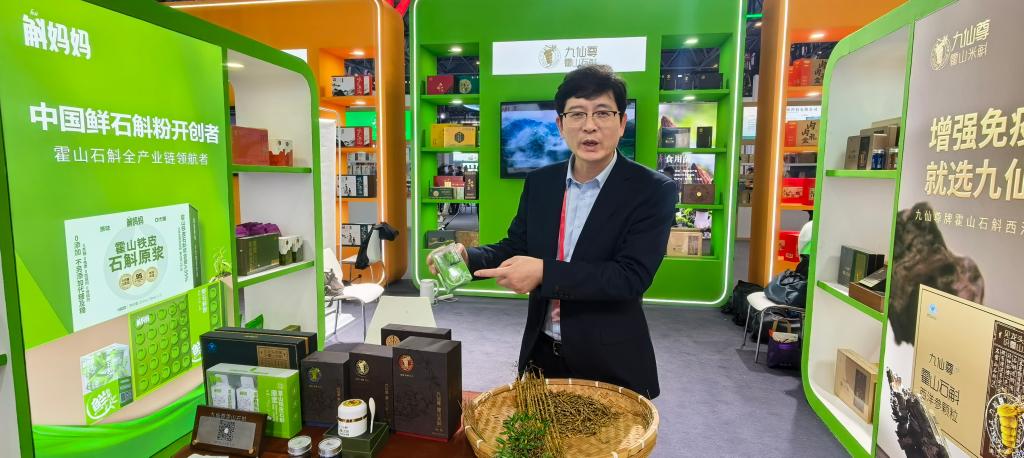
Core Insights - The article highlights the advancements in modern agriculture in Anhui province, showcasing the integration of technology, green practices, and quality improvements in the agricultural sector [1][2]. Group 1: Agricultural Innovations - The 2025 Anhui Green Food and Circular Agriculture Expo featured 16 high-end products representing the best of Anhui's green food industry, demonstrating significant progress in agricultural development [1][2]. - Jiuxianzun Houshan Dendrobium Co., a leading agricultural enterprise, has transitioned from 12 years of losses to a 57% increase in sales in the first three quarters of the year, with a single product exceeding 100 million yuan in sales [2][3]. - The company has developed various health food products from Dendrobium, including granules, extracts, tablets, and capsules, while also promoting agritourism [1][2]. Group 2: Industry Growth and Statistics - Anhui province has established nine national-level characteristic industrial clusters and boasts 5,195 green food products and 1,875 organic agricultural products [2][3]. - The total output value of the ten major green food industry chains in Anhui reached 1.12 trillion yuan, reflecting an 11% year-on-year growth [2][3]. Group 3: Sustainable Practices - Anhui Fengyuan Biotechnology Co. showcased biodegradable products made from agricultural waste, emphasizing the sustainable use of resources in agriculture [4]. - The company has developed new types of agricultural films from straw waste, which help in pest control and reduce the need for chemical fertilizers and pesticides [4]. Group 4: Digital Agriculture - The "Agricultural Data Cockpit" developed by Anhui Agricultural Reclamation Group covers over 450,000 acres of farmland, integrating various aspects of agricultural management into a digital platform [6]. - This platform allows for real-time monitoring of crop conditions and soil health, transitioning agricultural management from traditional methods to data-driven precision management [6].
中金2026年展望丨农林牧渔:破内卷,寻新机(要点版)
中金点睛· 2025-11-05 23:52
Group 1: Industry Cycle - The new paradigm in livestock farming is reinforced, while the planting cycle is stabilizing after fluctuations. For pigs, the "anti-involution" policy highlights the value attributes of leading companies, with a slight decline in average pig prices expected in 2026 compared to 2025, showing a pattern of initial suppression followed by recovery [3][7]. - In the poultry sector, chicken prices are expected to remain stable due to abundant supply and moderate demand recovery, with leading companies enhancing operational resilience through integrated development across the supply chain [3][8]. - The feed industry shows long-term growth potential, particularly in aquaculture feed, supported by recovering farming profitability, while demand for livestock feed is expected to remain stable in 2026 [3][9]. - Domestic grain prices are anticipated to stabilize at the bottom, with corn prices expected to show weak fluctuations and soybean prices slightly recovering [3][9]. Group 2: Consumer Trends - The pet economy is entering a mid-stage, focusing on market share enhancement, with the pet food industry projected to grow at over 10% annually in the next 3-5 years, driven by high-quality growth and increased competition [4][11]. - In pet healthcare, the industry is rapidly expanding, with a shift from land-grabbing to quality improvement, and leading companies are expected to optimize their market positions through enhanced operational efficiency [4][12]. - The kitchen food market, valued at trillions, is seeing structural opportunities with the popularity of fresh corn products, while the tea industry is experiencing brand upgrades that enhance consumer recognition and improve consumption experiences [4][13]. Group 3: Technological Advancements - The agricultural technology narrative is shifting towards automation and biotechnology, with the mechanization of agriculture reaching a critical point due to reduced labor and increased demand for smart agricultural equipment [4][15]. - The seed industry is expected to see accelerated growth in genetically modified corn cultivation by 2026, supported by favorable policies and reduced price drag on grains [4][15]. - In animal health, the competition is intensifying, with opportunities for domestic pet health products to increase market penetration, particularly in differentiated categories like ruminant health [4][15].
“十五五”新蓝图·新机遇丨强基础补短板 农业加快迈向现代化大产业
Xin Hua She· 2025-11-05 01:50
Core Insights - The article emphasizes the importance of modernizing agriculture in China, particularly in the context of the "14th Five-Year Plan" and the upcoming "15th Five-Year Plan" [1][2][3] - It highlights the need to enhance agricultural production capacity and quality, aiming to transform agriculture into a modern large-scale industry [2][3][4] Agricultural Production and Modernization - China's grain production is expected to achieve another bumper harvest, with a total grain output surpassing 1.4 trillion jin last year, ensuring food security for 1.4 billion people [1][2] - The per capita grain availability in China has reached 500 kg, indicating a stable supply of staple food [1] - The self-sufficiency rate for soybeans increased by 4 percentage points from 2020, while the self-sufficiency rate for edible vegetable oil rose by nearly 5 percentage points [2] Challenges and Strategic Focus - Despite progress, challenges remain in agricultural modernization, including low production efficiency, insufficient industrial chain extension, and weak international competitiveness [2][3] - The "15th Five-Year Plan" prioritizes addressing agricultural issues, promoting urban-rural integration, and enhancing living conditions in rural areas [2][4] Technological Advancements - Technological progress is deemed crucial for agricultural modernization, with a contribution rate of 63.2% from agricultural technology by the end of last year [3] - The mechanization rate for crop farming has exceeded 75%, and the coverage rate for quality seeds is over 96% [3] Future Outlook - The development of agricultural technology will be emphasized, focusing on high-yield, high-quality varieties, efficient water-saving technologies, and advanced machinery suitable for hilly areas [4] - Cold chain logistics is identified as a significant shortcoming in the agricultural supply chain, with potential for growth driven by e-commerce [5] - Investments in cold chain logistics are expected to increase, enhancing the digitalization and industrialization of the sector [5]
促进小农户和现代农业发展有机衔接
Ren Min Ri Bao· 2025-11-04 22:02
Core Insights - The modern agricultural industrial park model aims to enhance agricultural productivity and value through a combination of production, processing, technology, sustainability, and branding [1] - As of the end of 2024, the average output value of these parks is projected to be nearly 9 billion yuan, demonstrating significant industrial agglomeration effects [1] Group 1: Achievements - A total of 400 modern agricultural industrial park projects have been approved by the Ministry of Agriculture and Rural Affairs and the Ministry of Finance [1] - The ratio of agricultural processing value to total agricultural output in these parks averages 3.2:1, surpassing the national average [1] - Nearly 60 agricultural brands, such as Wuchang rice and Anhua black tea, have been developed, each valued over 10 billion yuan [1] - The parks have established 1,830 research and innovation platforms, including expert workstations and technology institutes, leading to innovations like autonomous high-power agricultural machinery [1] - Over 10 million people have found employment in these parks, with more than 70% of farmers establishing benefit-sharing relationships with new agricultural operators [1] - The average disposable income for farmers in these parks is 33,000 yuan, which is higher than the national average [1] Group 2: Challenges and Future Directions - The construction of these parks faces challenges such as insufficient extension of the industrial chain, inadequate resource aggregation, and low levels of specialized management [2] - The "14th Five-Year Plan" emphasizes the need for high-quality development of modern agricultural industrial parks, focusing on integrating technological, green, quality, and brand agriculture [2] - There is a call to strengthen the industrial chain and promote the integration of resources to enhance overall agricultural production capacity and quality [2]
农业农村部:农产品“三品一标”品质提升要做到四点
Nan Fang Nong Cun Bao· 2025-10-30 06:34
Core Viewpoint - The Ministry of Agriculture and Rural Affairs emphasizes the importance of enhancing the quality of agricultural products through the "Three Products and One Standard" initiative, aiming to strengthen agricultural competitiveness and boost consumption [6][11]. Summary by Sections Growth and Development - During the "14th Five-Year Plan" period, the quantity of agricultural products under the "Three Products and One Standard" initiative has significantly increased, with over 87,000 green, organic, and geographical indication products now available, becoming a primary channel for high-quality agricultural product supply [7][8]. Strategic Focus - The meeting highlighted the urgent need to develop agricultural products under the "Three Products and One Standard" to build a strong agricultural nation and enhance product competitiveness. It calls for a focus on technological, green, quality, and brand agriculture [11][12]. Key Actions Proposed 1. **Standard Improvement**: Enhance agricultural and veterinary drug residue standards, promote quality standards, and improve international standardization levels to solidify quality enhancement foundations [14]. 2. **Scale Expansion**: Aim to increase the number of certified products to 130,000 by the end of the "15th Five-Year Plan," thereby boosting the supply capacity of green and high-quality agricultural products [15]. 3. **Quality Classification**: Promote quality classification for representative varieties, encouraging graded product listings to achieve better quality and pricing [16]. 4. **Brand Building**: Utilize data on quality, publish development reports, and leverage new business models like live e-commerce and social media to enhance brand recognition and sales [17][18]. Observations - The meeting included a visit to the planting base of Fengjie navel oranges and a smart regulatory platform, attended by representatives from the Ministry of Agriculture and Rural Affairs and local agricultural departments [19][20].


“十五五”规划建议发布,给茶产业带来了哪些启示?
Nan Fang Nong Cun Bao· 2025-10-29 14:02
Core Insights - The "15th Five-Year Plan" emphasizes the modernization of agriculture and rural areas, highlighting the tea industry as a key pillar for rural revitalization and a means to increase farmers' income [2][3][4]. Group 1: Modernization of the Tea Industry - The plan calls for the integration of technology, green practices, quality control, and brand development in agriculture, setting a framework for the modernization of the tea industry [10][11]. - Current challenges include low technology adoption, with only 28% of tea gardens in Fujian utilizing smart technology, and only 11% of tea gardens being organic [12][13]. - The tea industry needs to enhance technology application, expand organic certification, establish a comprehensive quality control system, and strengthen brand development to compete effectively [18][19][20][21]. Group 2: Seed Industry Revitalization - The plan advocates for the implementation of seed industry revitalization actions to address the shortcomings in tea plant genetics, which is crucial for high-quality development [23][24]. - There is a pressing need for the development of high-quality, disease-resistant tea tree varieties, as existing research does not meet industry demands [25][26]. - Protection measures for ancient tea trees are being established, such as the "Chaozhou Ancient Tea Tree Protection Regulations," which provide a framework for safeguarding these valuable genetic resources [27][28][30]. Group 3: Integration of Industries - The plan encourages the development of distinctive county economies and the deep integration of primary, secondary, and tertiary industries, which can enhance the value and income potential of the tea industry [36][37]. - Various regions are exploring ways to upgrade the tea industry, including extending processing chains and developing tea-related products and tourism experiences [38][39][40]. - There is a need for further advancement in the integration of the tea industry, focusing on high-quality raw material bases, extending processing chains, and enhancing tourism experiences to create more value [44][45][46][48][49].
农业农村部:加力实施新一轮千亿斤粮食产能提升行动
Xin Hua Cai Jing· 2025-10-24 13:59
Core Viewpoint - The Ministry of Agriculture and Rural Affairs emphasizes enhancing agricultural production capacity and quality, promoting various forms of agriculture, and ensuring sustainable rural development [1] Group 1: Agricultural Development Initiatives - The Ministry plans to implement a new round of actions to increase grain production capacity by 100 billion jin (approximately 50 million tons) [1] - There is a focus on developing technology-driven, green, quality, and brand agriculture to optimize agricultural structure and promote a comprehensive green transformation [1] Group 2: Poverty Alleviation and Rural Support - Continuous efforts will be made to consolidate and expand the achievements in poverty alleviation, establishing mechanisms to prevent large-scale poverty recurrence [1] - The Ministry aims to enhance support policies and strengthen assistance in key areas to boost internal development momentum [1] Group 3: Rural Development and Community Building - The Ministry encourages the application of successful experiences from the "Ten Thousand Projects" to promote livable and workable rural areas [1] - There is a strong emphasis on developing rural industries that benefit the population and improving rural living environments [1] Group 4: Policy and Reform Enhancements - The Ministry seeks to improve the effectiveness of agricultural support policies and promote urban-rural integration [1] - Further reforms in rural areas are planned to unleash development potential and ensure that farmers benefit more from modernization [1]