工业生产者出厂价格指数(PPI)

Search documents
我省去年12月份核心CPI同比涨1% CPI同比涨幅持平 PPI环比继续上涨
Nan Fang Ri Bao Wang Luo Ban· 2026-01-12 09:45
Group 1: Consumer Price Index (CPI) Analysis - In December 2025, Guangdong's CPI increased by 0.4% year-on-year, remaining unchanged from November, while the month-on-month CPI decreased by 0.1% [1][2] - The core CPI, excluding food and energy, rose by 1% year-on-year, with the growth rate expanding by 0.1 percentage points compared to November [1][2] - Average consumer prices in Guangdong for the year 2025 decreased by 0.2% compared to the same period in 2024 [1] Group 2: Food and Non-Food Price Changes - Food prices in December 2025 were flat year-on-year, with fresh vegetable prices increasing by 10.5%, contributing approximately 0.22 percentage points to the CPI increase [2] - Non-food prices rose by 0.5% year-on-year, with service prices increasing by 0.4% and industrial consumer goods prices rising by 0.5% [2] - Significant increases in precious metal prices were noted, with platinum, gold, and silver jewelry prices rising by 95.3%, 70.3%, and 19.2% respectively, collectively contributing about 0.31 percentage points to the CPI [2] Group 3: Producer Price Index (PPI) Analysis - In December 2025, Guangdong's PPI decreased by 1.5% year-on-year, with the decline narrowing by 0.1 percentage points compared to November [4] - The PPI for production materials fell by 2.1%, while the PPI for living materials decreased by 0.4% [4] - Among 38 major industries surveyed, 10 experienced price increases, while 26 saw declines, maintaining an industry increase rate of 26.3% [4] Group 4: Industry-Specific Price Movements - The manufacturing sector for cultural, educational, and sports goods saw a price increase of 25.9%, while the recycling industry rose by 13.1% [4] - The oil and gas extraction industry experienced a price decline of 6.8%, and the automotive manufacturing sector saw a decrease of 6.3% [4] - In December 2025, the PPI increased by 0.1% month-on-month, with both production and living materials prices rising by 0.1% [5][6]
去年12月广东核心CPI同比上涨1.0%
Guang Zhou Ri Bao· 2026-01-11 12:41
Group 1 - The Consumer Price Index (CPI) in Guangdong increased by 0.4% year-on-year in December, while it decreased by 0.1% month-on-month [1][2] - The core CPI, excluding food and energy prices, rose by 1.0% year-on-year, with the growth rate expanding by 0.1 percentage points compared to the previous month [1][2] - The Producer Price Index (PPI) for industrial producers in Guangdong decreased by 1.5% year-on-year, but increased by 0.1% month-on-month [1][2] Group 2 - In December, the CPI's year-on-year growth rate remained stable, while the month-on-month decline narrowed [2] - Food prices in December changed from a 0.3% increase in the previous month to flat, while service prices rose by 0.4%, with travel agency fees and housekeeping services increasing by 1.5% and 1.0%, respectively [2] - The PPI's year-on-year decline of 1.5% was a reduction of 0.1 percentage points compared to the previous month, with production material prices down by 2.1% and living material prices down by 0.4% [2]
上月CPI同比上涨0.8% 回升至2023年3月以来最高
Sou Hu Cai Jing· 2026-01-11 12:33
Group 1: CPI Analysis - In December 2025, the Consumer Price Index (CPI) increased by 0.2% month-on-month and 0.8% year-on-year, marking the highest level since March 2023 with a 0.1 percentage point increase from November [1] - The core CPI rose by 1.2% year-on-year, maintaining a growth rate above 1% for four consecutive months [5] - The increase in CPI was primarily driven by rising prices of industrial consumer goods, excluding energy, and a significant rise in food prices, particularly fresh fruits and seafood [4][6] Group 2: PPI Analysis - The Producer Price Index (PPI) fell by 1.9% year-on-year in December 2025, but the decline was less severe than in November, with a 0.3 percentage point narrowing of the drop [3][7] - Month-on-month, the PPI increased for three consecutive months, indicating a strengthening trend [3] - Factors contributing to the PPI increase include seasonal demand improvements and rising prices in the non-ferrous metals sector, which have been supported by anti-involution measures [7][8] Group 3: Sector-Specific Insights - The prices in the non-ferrous metal mining sector have been rising for 22 consecutive months, driven by both international demand for key metals and domestic growth in high-end manufacturing sectors such as lithium batteries and photovoltaic equipment [9] - The government's policy to stabilize growth in the non-ferrous metal industry aims for an average annual increase of 5% in value-added output from 2025 to 2026 [9]

2025年12月份广东PPI同比下降1.5%
Xin Hua Cai Jing· 2026-01-10 09:06
Core Viewpoint - In December 2025, Guangdong's Producer Price Index (PPI) decreased by 1.5% year-on-year and increased by 0.1% month-on-month, while the Industrial Producer Price Index (IPI) fell by 1.6% year-on-year and rose by 0.6% month-on-month. The average PPI for the year 2025 was down 1.5%, and the IPI decreased by 2.8% [1]. Group 1: Year-on-Year Changes - In December, the prices of production materials decreased by 2.1%, contributing to a total index decline of 1.34 percentage points. The mining industry saw a price drop of 5.1%, raw materials fell by 4.1%, and processing industries decreased by 1.6%. Consumer goods prices dropped by 0.4%, with food prices down 0.6% and clothing prices up 1.2% [2]. - The prices of industrial producer purchases showed significant changes, with non-ferrous metal materials and wires increasing by 13.2%. Conversely, fuel and power prices decreased by 7.3%, agricultural products fell by 7.0%, and wood and pulp prices dropped by 4.9% [2]. Group 2: Month-on-Month Changes - In December, the prices of production materials increased by 0.1%, with the mining industry prices decreasing by 0.3%, raw materials rising by 0.5%, and processing industries increasing by 0.1%. Consumer goods prices also rose by 0.1%, with food prices up by 0.1% and durable goods prices down by 0.4% [3]. - The prices of industrial producer purchases showed a mixed trend, with non-ferrous metal materials and wires increasing by 2.9%, while fuel and power prices rose by 1.7%. Other categories, such as building materials and non-metallic prices, increased by 0.6% [3].
广东:2025年12月PPI同比下降1.5%
Di Yi Cai Jing· 2026-01-10 08:09
Core Viewpoint - The data from the Guangdong Investigation Team of the National Bureau of Statistics indicates that the Producer Price Index (PPI) in Guangdong continued to rise month-on-month in December 2025, while the year-on-year decline narrowed [1] Group 1: Month-on-Month Analysis - In December, the Guangdong PPI increased by 0.1% compared to the previous month [1] - This increase is attributed to adjustments in supply and demand, international input factors, domestic policies, and fluctuations in upstream raw material prices [1] Group 2: Year-on-Year Analysis - Year-on-year, the Guangdong PPI decreased by 1.5% in December [1] - The decline in PPI compared to the previous month has narrowed by 0.1 percentage points [1]
开好局、起好步“数”里行间感知信心 多领域亮眼表现积聚发展澎湃动能
Yang Shi Wang· 2026-01-10 02:43
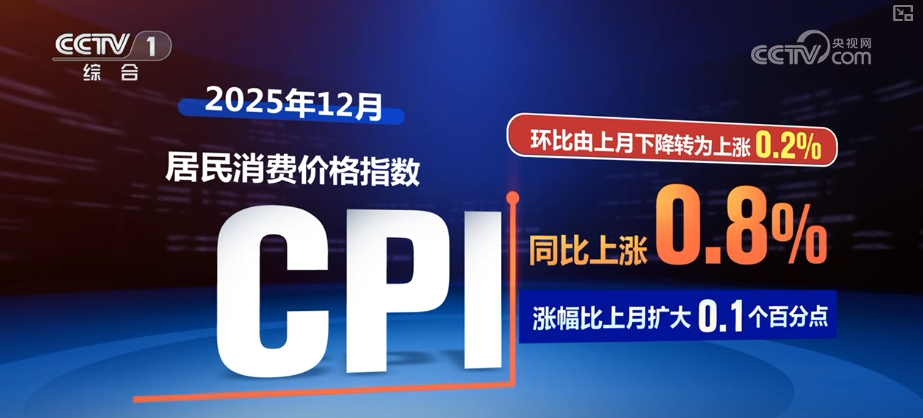
Group 1 - In December 2025, the Consumer Price Index (CPI) increased by 0.8% year-on-year, with the growth rate expanding by 0.1 percentage points compared to the previous month, and a month-on-month increase of 0.2% [4] - The implementation of policies promoting the replacement of consumer goods has boosted consumption, particularly in sectors such as automobiles, mobile phones, and home appliances [7] Group 2 - In December, the Producer Price Index (PPI) rose by 0.2% month-on-month, marking the third consecutive month of increase, with the growth rate also expanding by 0.1 percentage points compared to the previous month [11] Group 3 - The national rural water supply coverage has reached 96%, with significant progress in water infrastructure projects, including the completion of 9,420 rural water supply projects benefiting 134 million rural residents [15] - During the "14th Five-Year Plan" period, 181 major water conservancy projects are underway, which is an increase of 65 projects compared to the previous five-year plan [18] Group 4 - Since the implementation of the "Australian and Hong Kong vehicles northbound" policy in 2023, over 200,000 vehicles have been registered, with a total of 8.43 million crossings recorded at the border, averaging 18,000 vehicles per day [23]
2025年12月居民消费价格指数同比上涨0.8%
Ren Min Ri Bao· 2026-01-10 00:43
Group 1 - The consumer price index (CPI) increased by 0.2% month-on-month and 0.8% year-on-year, reaching the highest level since March 2023, primarily driven by rising food prices [1][2] - Food prices rose by 1.1%, contributing approximately 0.17 percentage points to the year-on-year CPI increase, while energy prices decreased by 3.8% [1][2] - The core CPI, excluding food and energy, maintained a year-on-year increase of 1.2% for four consecutive months [1] Group 2 - The producer price index (PPI) rose by 0.2% month-on-month, marking the third consecutive month of increase, with a year-on-year decline of 1.9% [2] - Key industries such as coal mining and lithium-ion battery manufacturing saw price increases, with coal mining prices rising by 1.3% and lithium-ion battery prices by 1.0% [2] - The decline in PPI year-on-year has narrowed by 0.3 percentage points compared to the previous month, indicating positive changes in some industry prices due to ongoing macroeconomic policies [2]
CPI同比创2023年3月以来最高
2 1 Shi Ji Jing Ji Bao Dao· 2026-01-09 23:30
Group 1: Consumer Price Index (CPI) Insights - In December 2025, the Consumer Price Index (CPI) increased by 0.2% month-on-month and 0.8% year-on-year, with the year-on-year growth rate reaching its highest since March 2023 [1][3] - The rise in CPI was primarily driven by an increase in food prices, which rose by 1.1%, contributing approximately 0.17 percentage points to the year-on-year CPI increase [4] - The overall CPI for 2025 remained flat compared to the previous year, indicating a relative lack of effective consumer demand and a mismatch between supply and demand [2][6] Group 2: Producer Price Index (PPI) Insights - The Producer Price Index (PPI) saw a month-on-month increase of 0.2% in December 2025, marking the third consecutive month of growth, while the year-on-year decline narrowed to 1.9% [7] - Key industries such as coal mining and lithium-ion battery manufacturing experienced price increases, reflecting improvements in supply-demand structures and ongoing capacity management policies [7][8] - The PPI's year-on-year decline is expected to continue narrowing due to the implementation of macroeconomic policies and improvements in market competition [7][9] Group 3: Future Outlook - The gradual release of "stabilizing growth and promoting consumption" policies is anticipated to lead to a moderate increase in CPI in 2026, surpassing the flat growth of 2025 [2][6] - Positive factors for 2026 include the expected improvement in upstream mining and extraction sectors due to "anti-involution" policies and the construction of a unified national market [9] - The complex domestic and international economic environment may drive up prices for upstream raw materials, contributing to an increase in PPI in 2026 [9]
2025年12月居民消费价格指数同比上涨0.8% 回升至2023年3月以来最高
Ren Min Ri Bao· 2026-01-09 22:10
Group 1 - The core viewpoint of the articles indicates that consumer demand is increasing due to effective policies aimed at expanding domestic demand and promoting consumption, leading to a rise in the Consumer Price Index (CPI) [1][2] - The CPI increased by 0.2% month-on-month and 0.8% year-on-year, with the year-on-year increase being the highest since March 2023, primarily driven by a 1.1% rise in food prices [1][2] - The core CPI has maintained a year-on-year increase of over 1% for four consecutive months, indicating stable underlying inflation trends [1] Group 2 - The Producer Price Index (PPI) rose by 0.2% month-on-month, marking the third consecutive month of increase, with improvements in supply-demand structure contributing to price rises in certain industries [2] - Key industries such as coal mining and lithium-ion battery manufacturing have seen price increases, with coal mining prices rising by 1.3% and lithium-ion battery prices by 1.0%, both continuing their upward trend for several months [2] - The year-on-year decline in PPI narrowed to 1.9%, reflecting the positive impact of macroeconomic policies and improved market competition, with price declines in certain sectors also showing signs of stabilization [2]
感知中国活力丨表现亮眼 透过多组数据感知我国经济活力
Yang Shi Wang· 2026-01-09 15:14
Group 1 - The Consumer Price Index (CPI) increased by 0.8% year-on-year in December 2025, with the growth rate expanding by 0.1 percentage points compared to the previous month, and a month-on-month increase of 0.2% [3][4] - The Producer Price Index (PPI) rose by 0.2% month-on-month in December, marking the third consecutive month of increase, with the growth rate also expanding by 0.1 percentage points from the previous month [4] - The implementation of the "old-for-new" consumption policy has led to significant growth in the consumption of related goods such as automobiles, mobile phones, and home appliances [3] Group 2 - The national rural water supply coverage has reached 96%, with significant progress in the construction of major water conservancy projects, enhancing water supply security for 134 million rural residents [7] - The national water network now covers 80.3% of the country's land area, with 27 major water conservancy projects initiated in 2025 and 9,420 rural water supply projects completed [7] - During the "14th Five-Year Plan" period, 181 major water conservancy projects are planned, which is an increase of 65 projects compared to the "13th Five-Year Plan" [8] Group 3 - Since the implementation of the "Australian and Hong Kong vehicles northbound" policy in 2023, over 200,000 vehicles have been registered for this program, with significant traffic through the border [10] - The total number of vehicles passing through the border at the Gongbei Customs has exceeded 8.43 million, averaging 18,000 vehicles per day [10]