开源技术

Search documents
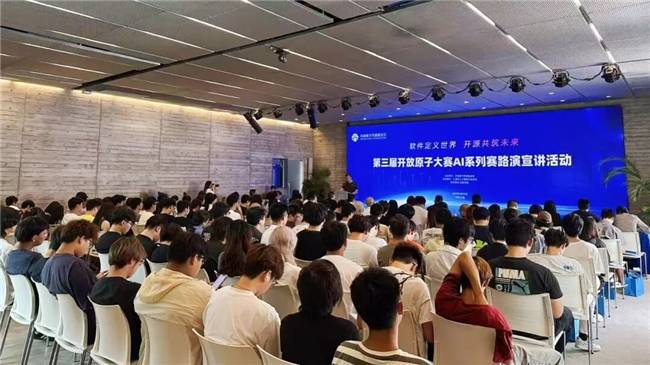
开放原子大赛AI系列赛路演宣讲成功举办,共探开源AI创新未来
Sou Hu Cai Jing· 2025-09-27 12:00
Core Insights - The third Open Atom Competition has been officially launched at the 2025 Open Atom Open Source Ecology Conference, aimed at addressing technical challenges in the open-source field and promoting open-source technology and talent discovery [1][3] - The competition has successfully attracted over 80,000 participants and issued more than 270 million yuan in prizes since its inception in 2023, with a focus on real-world problem-solving and high-value technological outcomes [3] Group 1: Competition Overview - The third Open Atom Competition will continue the open-source philosophy of "co-construction, co-governance, and sharing," focusing on key areas such as basic software, industrial software, and artificial intelligence, with around 50 competition items planned [3] - The competition is open to individuals, teams, enterprises, and universities globally, providing official certificates and substantial prizes to winners, as well as internship and interview opportunities with major companies like Huawei, Tencent, Inspur, and vivo [3] Group 2: AI Focus and Technical Challenges - The recent roadshow highlighted AI technology innovation and open-source ecosystem development, featuring multiple significant competition items in cutting-edge fields such as operating systems, large models, and robotics [3][4] - Specific challenges include the openKylin series, which offers four tasks with a total prize of 1 million yuan, focusing on optimizing openKylin's intelligent engine and developing multi-agent interaction technology [3][4] Group 3: Developer Support and Engagement - The competition organizers have established dedicated communication communities to enhance participant experience, offering technical documentation, development tools, and hardware support throughout the competition cycle [5] - Various industry experts shared insights during the event, showcasing technological breakthroughs and applications of open-source models in real-world scenarios, further encouraging developer participation [5]

联合国“开放共创·可持续发展大会”落地杭州 GOSIM,携全球专家共探 AI 如何拯救世界
AI科技大本营· 2025-08-26 09:10
Core Viewpoint - The "Open for SDG Conference" aims to accelerate the achievement of the United Nations Sustainable Development Goals (SDGs) through open collaboration and innovation in artificial intelligence (AI) and open-source technology, scheduled for September 13, 2025, in Hangzhou, China [1][5][7]. Group 1: Conference Objectives and Themes - The conference focuses on exploring how AI and open-source technologies can address global challenges such as poverty, hunger, health, education, and climate change [1][7]. - It serves as a key platform for the UN's "AI for SDGs" initiative, discussing four main themes: Open Data, Open Policy, Open Science, and Future AI, emphasizing the integration of technology with sustainable development goals [7][39]. Group 2: Notable Speakers and Participants - The conference will feature influential speakers, including Huang Tiejun, a professor at Peking University, and Mehdi Snene, Chief AI Officer at the UN, who will set the tone for the event [10][11]. - A diverse array of experts from academia, industry, and the open-source community will share insights on how AI and open-source can empower sustainable development [9][45]. Group 3: Action-Oriented Initiatives - The conference will include a "Show & Tell" segment to showcase practical examples and open-source projects contributing to the SDGs, transforming dialogue into actionable inspiration [45]. - Initiatives such as an open contribution framework and an open data initiative will be launched to facilitate meaningful participation in open-source projects aligned with the SDGs [46][47]. Group 4: Future Vision and Collaboration - The conference aims to catalyze global collaboration among innovators from various fields to identify and undertake impactful projects supporting the SDGs, with a progress report to be submitted at the UN OSPOS for Good conference in 2026 [47][48]. - It emphasizes the importance of creating partnerships and translating shared visions into a more equitable, prosperous, and sustainable future [48].

麦当劳回应招募退休人员:此前就有,提供合规报酬和保险|首席资讯日报
首席商业评论· 2025-08-13 14:06
Group 1 - Huawei plans to officially open source UCM by September 2025, initially launching in the Magic Engine community and gradually contributing to mainstream inference engine communities and sharing with all Share Everything storage vendors and ecosystem partners [2] - Samsung is developing a 415mm x 510mm panel-level advanced packaging System on Panel (SoP) to compete for large-scale chip system integration orders against Intel and TSMC, utilizing a technology that eliminates PCB substrates and silicon interlayers [3] - Ford is recalling over 103,000 F-150 vehicles in the U.S. due to potential fatigue-related failures of rear axle hub bolts, highlighting the company's proactive responsibility in addressing safety concerns [4] Group 2 - JD Group CEO Xu Ran stated that the current subsidy war lacks innovation and creates a negative impact on the market, emphasizing that the company will not participate in harmful internal competition [5][6] - Micron announced a global halt on the development of future mobile NAND products due to ongoing weak financial performance in the mobile NAND market, while continuing to support other NAND solutions [6] - The film "Adventure" has surpassed 70 million yuan in total box office revenue within five days of its release [7] Group 3 - McDonald's clarified its recruitment of retired employees, stating that it adheres to legal regulations and provides compliant compensation and commercial insurance [8] - Douyin e-commerce has taken strict measures against infringement and counterfeiting, processing over 24,000 accounts for violations related to unauthorized use of creators' images and AI-generated content [9] - Galaxy Entertainment reported a 19% year-on-year increase in shareholder profit to 5.2 billion HKD for the first half of 2025, with net revenue rising 8% to 23.2 billion HKD [10] Group 4 - The all-new Tank 500 has officially started pre-sales with a starting price of 360,000 yuan, featuring advanced intelligent driving systems and achieving 7,289 orders within two hours of pre-sale [11] - Xiaomi's car sales personnel clarified that the requirement to settle over 200,000 yuan in remaining payments applies only to specific customers with special circumstances, aiming to improve delivery efficiency [12] - Former Honor CEO Zhao Ming denied rumors of joining Zhijie Auto, emphasizing his focus on personal recovery and planning [13][14]

华为计划于2025年9月正式开源UCM
Zheng Quan Shi Bao Wang· 2025-08-12 06:57
Group 1 - Huawei plans to officially open source UCM in September 2025 [1] - The initial release will be in the Magic Engine community [1] - Huawei aims to gradually contribute to mainstream inference engine communities and share with all Share Everything storage vendors and ecosystem partners [1]
2025 CCF中国开源大会在沪举办
Zhong Guo Jing Ji Wang· 2025-08-04 06:32
Core Insights - The 2025 CCF China Open Source Conference focuses on key areas such as open-source operating systems, chips, large models, and embodied intelligence, highlighting the importance of open-source technology in driving innovation and collaboration in the tech industry [1] Group 1: Open Source Development - Open source is recognized as a significant path for promoting open and collaborative development in technology innovation, with universities encouraged to adopt an open-source approach [2] - Shanghai Jiao Tong University has established an open-source Harmony technology club, aiming to integrate open-source principles into its curriculum and cultivate future leaders in operating systems [2] Group 2: AI and Data Infrastructure - The transition from a "model-centric" to a "data-centric" paradigm in AI emphasizes the need for high-quality data infrastructure to lower barriers for AI implementation [3] - The rise of large model technology presents new opportunities for addressing challenges in high-quality output, potentially reshaping the open-source chip ecosystem and industry landscape [3] Group 3: Contributions to Open Source AI - Open source plays a crucial role in the AI field, with significant developments and trends being discussed, including the achievements of the Shanghai Artificial Intelligence Laboratory in the open-source domain [3]
从分钟级到秒级的运维管理,开源是企业降本增效的最佳路径么?丨ToB产业观察
Tai Mei Ti A P P· 2025-08-01 05:46
Core Viewpoint - The debate between open-source and closed-source models in AI continues, with open-source gaining traction as a more favorable option for digital transformation and cost efficiency [2][3][4]. Group 1: Open-Source Advantages - Open-source models allow companies to better control technology and innovate based on their specific needs, contrasting with the limitations of closed-source systems [3][4]. - Companies like Wells Fargo and Haokang Medical have successfully implemented open-source AI solutions, enhancing operational efficiency and compliance while reducing costs [5][6]. - IDC predicts that AI investments in the Asia-Pacific region, including China, will reach $175 billion by 2028, with a compound annual growth rate of 33.6%, indicating a rapid growth in AI commercialization [4]. Group 2: Cost and Efficiency - Open-source technology helps companies balance cost, efficiency, and innovation, breaking the "impossible triangle" and fostering a positive cycle of knowledge sharing and commercial feedback [3][4]. - SUSE AI provides a scalable and open enterprise-level AI infrastructure, enabling companies to easily expand AI applications and meet future challenges [6][7]. Group 3: Challenges of Open-Source - Despite its advantages, open-source technology presents security risks due to its open nature, making it challenging for companies to manage and secure their systems effectively [8][9]. - Companies must ensure their IT teams are knowledgeable about open-source technologies and focus on practical applications to address real business problems [8][9]. Group 4: Security Concerns - Security issues are a significant challenge for open-source AI, with 57% of IT decision-makers citing privacy and data security as primary concerns, and 84% of code repositories containing known vulnerabilities [9][10]. - SUSE's "AI guardrails" technology aims to help companies comply with regulations, monitor AI models, and prevent data poisoning, addressing some of the security challenges associated with open-source AI [10].

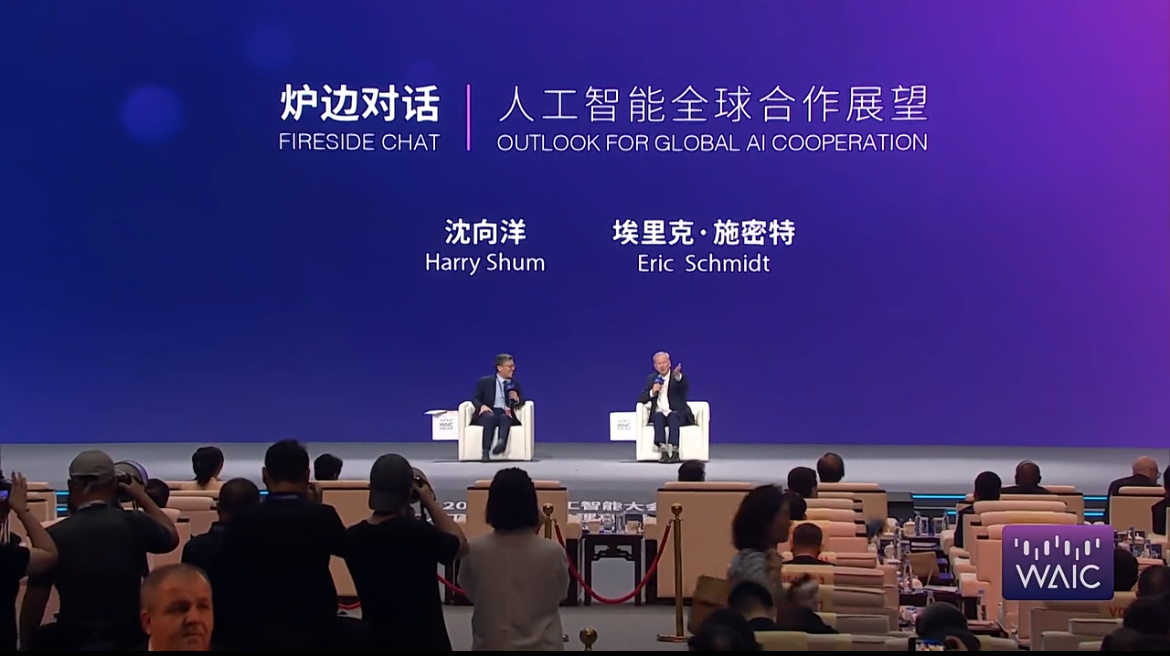
谷歌前CEO施密特:中美大模型之间存在一个显著区别|文末赠书
AI前线· 2025-07-31 05:02
Core Viewpoint - The article discusses the rapid development of AI in China, highlighting the importance of global cooperation in AI governance and the potential risks associated with technology misuse [1][3]. Group 1: AI Development in China - In the past two years, China's AI technologies, particularly large models like DeepSeek, Mini Max, and Kimi, have achieved remarkable global recognition [3][5]. - Chinese AI models are characterized by their open-weight approach, contrasting with the closed strategies of many leading models in the U.S. [5]. Group 2: Global Cooperation and Governance - Eric Schmidt emphasizes the necessity of open dialogue between China and the U.S. to navigate the challenges posed by AI and to foster a responsible and sustainable future [3][8]. - The establishment of a continuous dialogue mechanism is crucial for both sides to define issues clearly and seek collaborative solutions [8][10]. Group 3: Risks and Ethical Considerations - There are concerns regarding the potential misuse of AI technologies, including issues of deception and harmful behaviors that AI systems might learn [11]. - The need for a balance between open-source technology and regulatory measures is highlighted, as open-source can lead to rapid dissemination of technology, which may pose risks [10][11]. Group 4: Future Outlook - The next two years are expected to witness the emergence of intelligent agents that can perform tasks and interact within various workflows, significantly impacting businesses and governance [14][15]. - There is optimism about the potential for AI to bring about profound societal changes, provided that key concerns are addressed through dialogue and cooperation [15].

《中国开源发展深度报告》:我国活跃开发者数量超227万
Zhong Guo Jing Ying Bao· 2025-07-30 13:53
Core Insights - The "2025 Open Atom Open Source Ecology Conference" marked the release of the "China Open Source Development Deep Report (2024)", reflecting breakthroughs in China's open source development in 2024 and the transition trajectory from 2022 to 2024 [1] - China leads globally in the number of active open source developers, reaching 2.2729 million in 2024, a year-on-year increase of 22.95%, with an average growth rate of 31.58% over the past two years [1][3] Group 1: Global Open Source Contributions - The global open source contribution volume surpassed 700 million for the first time in 2024, with the top three contributors being the United States (89.5645 million), India (54.8372 million), and China (50.3361 million), accounting for 39.78% of the total contributions from the top 30 countries and regions [2] - There is a slight downward trend in the contribution share of these three countries over the past three years, indicating a shift from concentrated contributions to a more diversified global open source innovation landscape [2] Group 2: Active Developer Growth - The number of active open source developers globally is steadily increasing, with China and India emerging as key growth engines, contributing to the evolution of the global talent structure [3] - China's share of active open source developers among the top 30 countries rose from 15.13% in 2022 to 18.29% in 2024, while India, the EU, and the US ranked second to fourth in active developer numbers [3] Group 3: Open Source Ecosystem in China - The open source ecosystem in China is characterized by a solid "head" of major cities like Beijing, Shanghai, Shenzhen, and Hangzhou, with emerging "waist" cities like Guangzhou and Chengdu showing strong growth [3] - Over 100 organizations, including major companies and institutions, are leading the open source trend, with more than 150 typical application cases across various critical sectors [4] Group 4: Open Source Projects and Applications - The open source HarmonyOS has been deployed in over 1.19 billion devices across multiple sectors, including finance, education, and healthcare, showcasing its practical value [5] - Other open source projects like OpenEuler and openKylin have also achieved significant deployment numbers, with openKylin exceeding 24 million installations [6] Group 5: Open Source Talent Development - Open source education is identified as a key pathway for cultivating talent in the open source ecosystem, with recommendations for policy support, enhanced teaching capabilities, and deeper collaboration between academia and industry [7]
谷歌前CEO施密特:中美大模型之间存在一个显著区别
Feng Huang Wang Cai Jing· 2025-07-30 06:22
Core Insights - The World Artificial Intelligence Conference (WAIC) in Shanghai highlighted China's rapid advancements in AI technology, particularly in large models like DeepSeek, Mini Max, and Kimi, emphasizing the importance of open-source and technological collaboration for healthy AI development [1][4][5] - Eric Schmidt expressed optimism about US-China cooperation in addressing AI challenges, advocating for open dialogue to ensure responsible and sustainable AI development [1][10][11] Group 1: AI Development in China - China's AI models have made significant progress in the past two years, showcasing impressive achievements on a global scale [4][5] - Unlike the US, where many leading AI models are closed-source, China has adopted an open-weight approach, which is a key characteristic of its current AI development [5][13] Group 2: Global AI Governance - The discussion emphasized the need for global AI governance principles and standards to address the societal impacts of AI, as highlighted by figures like Henry Kissinger [4][8] - Cooperation between the US and China is essential to mitigate negative impacts of AI while embracing its positive potential, particularly in areas like health, engineering, and climate change [9][18] Group 3: Future of AI Collaboration - There is a consensus that rapid technological advancements necessitate swift action to enhance mutual trust and collaboration between the US and China in AI [10][20] - Establishing continuous dialogue mechanisms is crucial for both sides to clearly define issues and seek joint solutions, focusing on shared insights and risk assessments [11][20] Group 4: Open Source vs. Closed Source - Eric Schmidt supports open-source technology, acknowledging its potential risks but advocating for measures to manage these risks effectively [13][14] - The balance between open-source and closed-source approaches is critical, with an emphasis on who controls the technology and where it is applied [13][14] Group 5: Future Outlook - The next two years are expected to witness the emergence of numerous intelligent agents that can perform tasks and drive significant changes in business workflows [18][19] - There is a need for consensus among nations regarding critical issues, particularly concerning AI's autonomous capabilities and its potential to act independently [20]
交易后解决方案推出开源风险引擎的第13个版本,确保开源技术保持领先地位
Refinitiv路孚特· 2025-06-25 02:02
Core Insights - Open-source technology is widely applied across various industries, enabling companies to access professional functionalities at minimal or no cost, particularly in the post-trade sector [1] - The latest version of the Open-source Risk Engine (ORE) has been released, featuring significant updates aimed at enhancing user experience and optimizing outcomes [1][2] User-Centric Development - Since its launch, ORE has provided a diverse range of examples that simplify project development and showcase its powerful capabilities, now categorized by themes such as market risk and product analysis for easier navigation [2] - The new ORE wrapper prototype supports Excel, Python, and Restful API, allowing users to operate in familiar environments and integrate ORE functionalities seamlessly into existing workflows [2] Functionality Enhancements and Extensions - The 13th version of ORE introduces support for mid-term coupon exercises, enhancing the accuracy of valuation and risk metrics for financial instruments [3] - The American Monte Carlo simulation framework has been expanded to include stock trading, and the stress testing module has been optimized to output cash flow data under stress scenarios, providing more detailed analysis [3] Commitment to Accessibility and Innovation - The continuous development of ORE since its inception in 2016 is driven by ongoing dialogue with users, ensuring that feedback is incorporated into software updates [4] - The goal is to make powerful, transparent pricing and risk analysis capabilities accessible to all companies, not just those with the resources to develop or purchase expensive solutions [4] Integration with QuantLib - ORE is built on the open-source quantitative finance library QuantLib, facilitating integration with applications written in Python or Java through its SWIG language binding feature [5]