
战略投资者

Search documents
证监会:拟扩大战略投资者类型,明确最低持股比例要求
财联社· 2026-01-30 11:20
Core Viewpoint - The China Securities Regulatory Commission (CSRC) has modified the regulations regarding the application of certain articles in the "Administrative Measures for the Registration of Securities Issuance by Listed Companies," expanding the types of strategic investors and clarifying their roles and responsibilities. Group 1 - The types of strategic investors have been expanded to include national social security funds, basic pension insurance funds, enterprise (occupational) annuity funds, commercial insurance funds, public funds, and bank wealth management products, which are now classified as capital investors [1] - A minimum shareholding requirement has been established, stating that strategic investors must hold at least 5% of the shares in a listed company, allowing them to participate in corporate governance [1] - Basic requirements for capital investors have been clarified, emphasizing the need for long-term, significant shareholding and involvement in corporate governance, as well as the ability to enhance the company's strategic resources and governance [1] Group 2 - Information disclosure requirements have been improved, mandating that listed companies disclose the implementation and effects of strategic resource integration in their annual reports [2] - Regulatory requirements have been strengthened, prohibiting strategic investors from circumventing minimum shareholding and lock-up period requirements to maintain institutional credibility [2] - Related textual expressions have been refined to simplify and enhance the clarity of the rules based on practical experience [3]


证监会:战略投资者不得通过协议代持或者其他方式规避持股比例、持股期限要求
智通财经网· 2026-01-30 11:20
智通财经APP获悉,1月30日,中国证监会就《关于修改〈证券期货法律适用意见第18号〉的决定(征求 意见稿)》公开征求意见。意见稿提到,战略投资者不得通过协议代持或者其他方式规避持股比例、持 股期限要求,在限售期内不得融券卖出该上市公司股份、参与以该上市公司股份为标的的衍生品交易或 者以其他方式锁定收益,变相减持。战略投资者在获得具有限制转让期限股份前,存在未了结的该上市 公司股份融券合约的,应当在获得相关股份前了结该融券合约。 原文如下: 战略投资者应当愿意并且有能力认真履行相应职责,提名董事实际参与公司治理,提升上市公司治理水 平,帮助上市公司显著提高公司质量和内在价值,具有良好诚信记录,最近三年未受到中国证监会行政 处罚或者被追究刑事责任;战略投资者本次认购比例原则上不低于本次发行完成后上市公司总股本的百 分之五,以资产管理产品认购的,按产品单独计算认购股份数量。战略投资者可以为产业投资者或者资 本投资者。 1.产业投资者 产业投资者作为战略投资者,应当具有上市公司同行业 或者相关行业重要战略性资源,通过领先的技术、市场、渠道、品牌等战略性资源,能够带动上市公司产 业技术升级或者增强上市公司的核心竞争力 ...
证监会:拟扩大战略投资者类型 明确最低持股比例要求
Hua Er Jie Jian Wen· 2026-01-30 10:59
中国证监会就《关于修改〈《上市公司证券发行注册管理办法》第九条、第十条、第十一条、第十三 条、第四十条、第五十七条、第六十条有关规定的适用意见——证券期货法律适用意见第18号〉的决定 (征求意见稿)》公开征求意见。征求意见提到,证监会拟扩大战略投资者类型,明确全国社保基金、 基本养老保险基金、企业(职业)年金基金、商业保险资金(保险公司运用保险资金自行投资或者委托 关联保险资产管理机构以及作为单一投资人通过关联保险资产管理机构发行的股权投资计划投资)、公 募基金、银行理财等机构投资者可以作为战略投资者,以耐心资本作为战略性资源对上市公司战略投 资。同时,在规则上将该类投资者界定为资本投资者,将其他实业投资者界定为产业投资者。证监会拟 明确最低持股比例要求。坚持战略投资者应当持有上市公司较大比例股份,进一步明确战略投资者本次 认购上市公司股份原则上不低于5%,可以根据持股比例参与上市公司治理。 风险提示及免责条款 市场有风险,投资需谨慎。本文不构成个人投资建议,也未考虑到个别用户特殊的投资目标、财务状况或需要。用户应考虑本文中的任何 意见、观点或结论是否符合其特定状况。据此投资,责任自负。 ...
对新股战略配售应从严把关
Guo Ji Jin Rong Bao· 2025-12-19 17:32
Core Viewpoint - The introduction of strategic placements in IPOs aims to attract long-term, stable strategic shareholders, but the current practice has allowed non-strategic investors to benefit, potentially undermining the original intent of the system [1][2][3] Group 1: Strategic Placement Mechanism - New IPOs have generated significant wealth effects, with some investors seeing profits exceeding 240,000 yuan on the first day of trading [1] - Strategic investors are allocated 20% of new shares at the IPO stage, with some receiving more shares than traditional institutional investors [1] - The intention behind strategic placements is to bring in investors with important strategic resources that can enhance the company's competitiveness and long-term value [2] Group 2: Current Issues with Strategic Placement - Current practices have allowed entities that do not meet the criteria of strategic investors, such as financial investors and related parties, to participate in strategic placements [2] - This situation raises concerns about the potential for strategic placements to become a channel for利益输送 (benefit transfer), rather than serving the intended purpose of supporting the company's development [2] - There is a call for stricter regulations to ensure that only genuine strategic investors are allowed to participate in strategic placements, thereby protecting the interests of smaller investors and maintaining market fairness [3]
险资支持科技创新:从“财务投资者”到“战略赋能者”
Jin Rong Shi Bao· 2025-11-05 01:29
Core Viewpoint - The insurance capital is evolving from a purely financial investor to a strategic investor that deeply understands industries and actively empowers value creation in supporting technological innovation [1][2]. Group 1: Role of Insurance Capital in Technological Innovation - Insurance capital is becoming an indispensable force in supporting technological innovation, characterized by its large scale, long duration, and stable sources [1]. - The investment landscape of insurance capital now covers key sectors of new productive forces, including advanced manufacturing, artificial intelligence, semiconductors, new energy, biomedicine, and high-end equipment [1]. - Insurance asset management is constructing a multi-layered, comprehensive "investment toolbox" and "industrial ecosystem" to support the entire lifecycle of technology enterprises [2]. Group 2: Investment Strategies and Tools - The insurance capital industry has evolved from being a simple capital provider to a resource integrator and strategic enabler [2]. - There is a combination of direct and indirect investments, with insurance funds injecting capital into high-quality tech companies through direct equity investments and participating in venture capital and private equity as limited partners [2]. - The insurance capital supports technology finance through a variety of asset classes, including equity investments, bonds, and alternative assets, to meet the diverse financing needs of tech companies [2]. Group 3: Balancing Stability and Innovation - The insurance capital industry faces the challenge of balancing the high risks and uncertainties of technological innovation with the need for safety and stability in fund management [3][4]. - A "core + satellite" strategy is commonly adopted, where approximately 80% of funds are allocated to low-risk, stable-return assets, while a portion is invested in high-growth, high-volatility assets to enhance long-term returns [4]. Group 4: Risk Management Framework - A comprehensive risk management system is established, covering the entire investment process from pre-investment to post-investment [4]. - The pre-investment phase involves rigorous due diligence, while the investment phase emphasizes diversification to mitigate individual risks [4]. - Post-investment, insurance institutions provide strategic consulting and market connections to enhance the value of invested companies [4]. Group 5: Future Outlook and Challenges - The strategic position of the insurance asset management industry in supporting technological innovation is expected to become more prominent, although it faces new challenges and higher demands [7]. - There is a need for continuous improvement in research capabilities and early project identification in cutting-edge technology fields [7]. - Recommendations include restructuring organizations to focus on macro analysis, asset allocation, risk management, and selecting excellent managers, as well as enhancing research capabilities in emerging industries [7][8].
加拿大鹅的买家是谁?
Hu Xiu· 2025-08-29 12:13
Core Viewpoint - Bain Capital, the major shareholder of Canada Goose, is considering selling its stake and has received a verbal offer from Hillhouse Capital, while also discussing with Advent International, both valuing Canada Goose at approximately $1.35 billion [1][5] Group 1: Potential Buyers - The interested buyers can be categorized into two types: strategic investors like Bosideng and Anta Group, and financial investors like Hillhouse Capital and Advent International [3][4] - Anta Group and Bosideng have publicly denied their interest in acquiring Canada Goose, with Anta stating it is "not a potential acquirer" and Bosideng claiming the reports are inaccurate [2][9] Group 2: Canada Goose's Financial Performance - Canada Goose has transitioned from a North American wholesale clothing company to a global high-end brand under Bain Capital's leadership, with revenue growth from CAD 591 million in FY2018 to CAD 1.348 billion in FY2025, reflecting a compound annual growth rate of 12.5% [5][6] - Despite revenue growth, Canada Goose has experienced a slowdown in growth and uneven performance, primarily relying on the Asia-Pacific market, while North America and EMEA markets lack stable growth [6][7] Group 3: Valuation and Market Position - As of August 26, Canada Goose's market capitalization was $1.18 billion, significantly lower than its peak of over $7.8 billion, with the reported valuation of $1.35 billion representing a premium of approximately 14.4% [7][8] - The valuation multiples for high-end down jackets and luxury apparel typically range from 7 to 12 times EV or EBITDA, with Canada Goose currently at around 8 times, which is considered reasonable given market uncertainties [7][8] Group 4: Strategic vs. Financial Investors - Financial investors focus on short to medium-term financial performance and aim to enhance valuation through supply chain optimization and brand management, while strategic investors consider long-term growth and synergies with their existing brands [4][5] - Given Canada Goose's current market pressures and profitability challenges, strategic investors may be better suited for driving the next phase of growth, particularly in expanding into the Chinese and Asian markets [7][8] Group 5: Other Potential Buyers - The likelihood of Bosideng and Anta Group acquiring Canada Goose is low due to their lack of interest and existing strategic focuses [9][10] - Few Chinese apparel groups have the capacity to acquire Canada Goose, and the overall luxury market is facing headwinds, leading to cautious behavior from financially capable companies [10][11] Group 6: Financial Investors' Interest - Hillhouse Capital and Advent International may still have interest in Canada Goose, with Hillhouse focusing on the Chinese market and having experience in consumer retail investments [11][12] - Advent International has a strong track record in investing in high-end fashion and beauty brands, favoring those in rapid growth phases [12]
明微电子实控人方拟询价转让 扣非连亏3年半A股募7亿
Zhong Guo Jing Ji Wang· 2025-08-22 02:20
Core Viewpoint - Mingwei Electronics (688699.SH) plans to transfer 6,228,432 shares, representing 5.66% of its total share capital, to optimize its shareholder structure and introduce potential strategic investors while addressing its own funding needs [1][2] Group 1: Share Transfer Details - The share transfer will not occur through centralized bidding or block trading, and the transferee cannot transfer the shares within six months after acquisition [1] - The transfer price will be set at a minimum of 70% of the average trading price of Mingwei Electronics' shares over the 20 trading days prior to the issuance of the subscription invitation [2] - The transfer is organized by CITIC Securities Co., Ltd., and the transferees must be institutional investors with appropriate pricing capabilities and risk tolerance [2] Group 2: Financial Performance - Mingwei Electronics has reported net profits of 0.11 million, -0.87 million, and 0.07 million for the years 2022 to 2024, with non-recurring net profits of -0.28 million, -1.10 million, and -0.20 million respectively [2] - In the first half of 2025, the company achieved revenue of 2.86 million, a year-on-year decrease of 1.64%, with a net profit of -0.35 million compared to 0.07 million in the same period last year [2] Group 3: Company Background - Mingwei Electronics was listed on the Shanghai Stock Exchange's Sci-Tech Innovation Board on December 18, 2020, with an initial issuance of 18.59 million shares at a price of 38.43 yuan per share, raising a total of 714 million yuan [3] - The company planned to raise 462 million yuan, with allocations for various projects including 190 million yuan for high-end display driver chip R&D and 138 million yuan for integrated circuit packaging [3] - The company executed a capital increase on September 30, 2022, distributing 0.48 shares for every share held, resulting in a total share capital of 110,064,640 shares [4]

恒大汽车公告:股票将继续停牌
Sou Hu Cai Jing· 2025-08-08 13:15
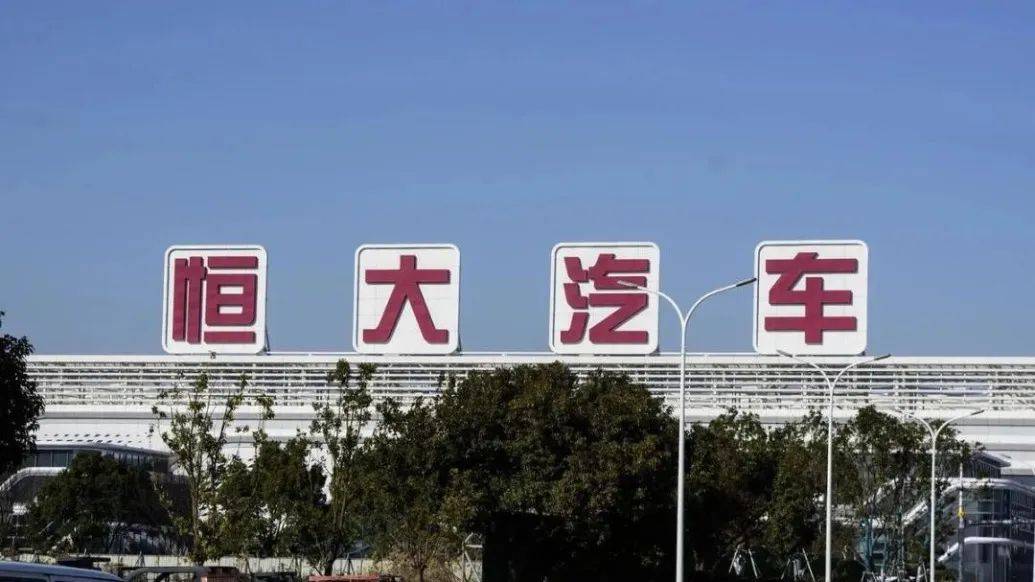
Group 1 - Evergrande Auto announced that it failed to meet the listing requirements of the Hong Kong Stock Exchange and must follow supplementary resumption guidelines [1][3] - The company does not have the required number of independent non-executive directors and committee members as stipulated by the listing rules, which could lead to delisting if issues are not resolved by September 30, 2026 [3] - Evergrande Auto's shares have been suspended from trading since April 1, 2025, and the company will continue to provide quarterly updates until trading is resumed or delisting occurs [4] Group 2 - The company has not yet disclosed its full-year results for 2024 [5] - Evergrande Auto has struggled to find strategic investors or buyers to alleviate its liquidity issues, citing a challenging operating environment in the electric vehicle market [6] - The company has implemented layoffs and reduced operational expenses to conserve cash, which is currently being used to maintain basic operations and asset conditions [6]
*ST亚太(000691) - 000691*ST亚太投资者关系管理信息20250521
2025-05-21 10:28
Financial Performance - The company's 2024 annual revenue was ¥443,007,956.50, with total operating costs of ¥485,734,631.60, resulting in a net loss of ¥105,034,809.41 [4] - The basic and diluted earnings per share were -0.3249 yuan/share [4] Business Strategy and Measures - The company plans to optimize its capital structure by seeking diversified financing channels, including introducing strategic investors and implementing equity financing to enhance liquidity and improve the balance sheet [3] - Effective measures will be taken to restructure debts, optimize the debt structure, and reduce the debt ratio to improve asset quality [3] - The company aims to enhance the competitiveness of its main business by developing practical plans to improve quality, efficiency, and profitability, increasing R&D efforts, and adjusting product structure based on market demand [3] Industry Outlook - The fine chemical industry is expected to grow, driven by increasing demand for new environmentally friendly materials and electronic materials [5] - The industry is moving towards diversification and refinement, with a focus on high-tech applications and the production of specialized raw materials [5] - The company’s main products include pyridine and nitrated products, which are essential for the agricultural and pharmaceutical sectors [6] Corporate Governance and Control - The actual controller of the company changed to Guangzhou Wanshun Technology Co., Ltd. after a shareholding transfer on July 1, 2023 [6] - As of March 19, 2025, Guangzhou Wanshun Technology Co., Ltd. increased its shareholding by 3.35 million shares, becoming the controlling shareholder [6] Future Plans and Challenges - The company currently does not have a clear restructuring or asset injection plan [4] - There is no debt-to-equity swap plan in place for the over ¥200 million owed to the controlling shareholder [4] - The board is committed to improving the company's operational and financial conditions to mitigate risks and protect shareholder interests [6]

美晨科技(300237) - 300237美晨科技投资者关系管理信息20250515
2025-05-15 09:32
Group 1: Investor Relations Activities - The investor relations activity was an earnings briefing held on May 15, 2025, via an online platform [1] - Key participants included the CFO Liu Zengwei and Board Secretary Li Weigang [1] Group 2: Business Development and Strategic Initiatives - The company is actively pursuing strategic investments to enhance core competitiveness and product quality, with a focus on integrating resources for sustainable development [2] - Specific revenue growth measures include strengthening technological innovation, upgrading traditional products, and expanding into new markets such as energy storage and hydrogen energy [3] Group 3: Asset Restructuring and Financial Performance - The company is in the process of a significant asset restructuring involving the sale of 100% equity in Hangzhou Saishi Garden Group, which is complex and ongoing [4] - The company has not yet received a conclusive opinion from the China Securities Regulatory Commission regarding an ongoing investigation, and will disclose any significant developments as required [4] Group 4: Product and Market Insights - The company provides various products for military vehicles, but these account for a relatively low percentage of overall revenue, minimizing impact on financial performance [4] - The company has no current plans to further develop its wine business, which has not been industrialized [4]
