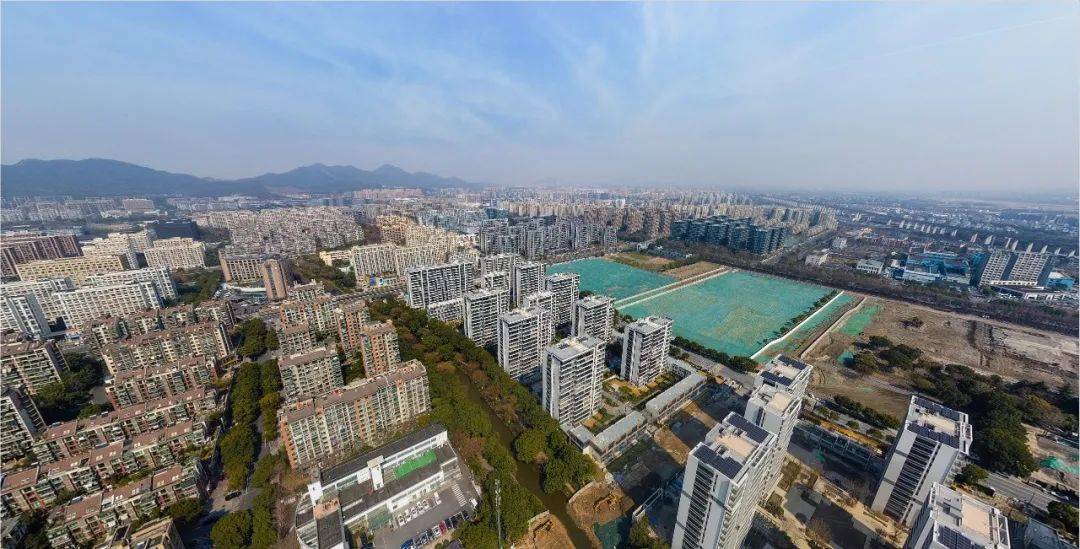
房价涨跌

Search documents
谁敢买暴跌的商品房?
Sou Hu Cai Jing· 2025-08-18 08:51
Core Viewpoint - The real estate market is experiencing a significant decline, yet potential buyers are hesitant to purchase properties despite lower prices, leading to extremely low transaction volumes [2][4]. Group 1: Market Conditions - Major cities like Shanghai, Shenzhen, and Guangzhou have seen drastic price drops, with some properties losing nearly half their value [2]. - Transaction volumes have plummeted, with instances of zero sales recorded, indicating a lack of buyer interest [2]. Group 2: Buyer Sentiment - Many potential buyers are waiting for prices to drop further, despite current prices being significantly lower than peak levels [4]. - The fear of further declines in property values is causing a psychological barrier for buyers, leading to missed opportunities [4][5]. Group 3: Economic Implications - The article draws parallels to the U.S. housing market's past, warning that excessive lending practices can lead to financial crises, suggesting that current market conditions could have similar repercussions [4]. - The narrative of falling prices is detrimental to buyer confidence, as it creates a negative expectation regarding future price movements [5]. Group 4: Future Outlook - The market is approaching a stabilization phase after two years of decline, presenting a potential buying opportunity for those willing to act [5]. - Economic recovery signals and increasing incomes may lead to a resurgence in buyer interest, making it crucial for buyers to act before prices rise again [5].

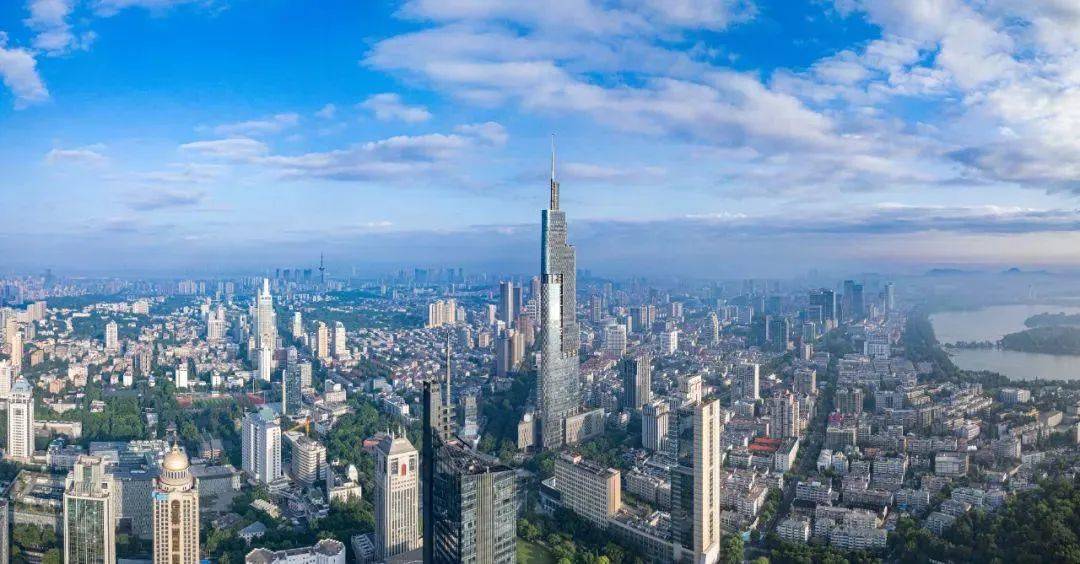
各线城市房价同比降幅收窄,上海、乌鲁木齐环比涨0.3%领跑
2 1 Shi Ji Jing Ji Bao Dao· 2025-08-15 04:24
8月15日,国家统计局发布的2025年7月份70城房价数据显示:环比方面 新房价格环比上涨城市有6个,其中上海、乌鲁木齐环比涨0.3%领跑;二手房价格环比上涨的城市有1个。 总体来看,各线城市房价环比下降。同比方面 7月份,新房价格同比下降城市有65个,相比上月减少了2个。 总体来看,各线城市房价同比降幅继续收窄。 | | | 00城 下跌 | | --- | --- | --- | | 60城· 下跌 | | | | 新房涨跌 | | 二手房涨跌 | | 新房领涨城市(环比) | | 新房领跌城市(环比) | | 上海、乌鲁木齐 | 公 0.3% | 海口、扬州 ¥ -0.8% | | 宜昌、三亚 | 公 0.2% | 武汉、兰州、襄阳 √-0.7% | | 长春、常德 | 公 0.1% | 宁波、厦门、南昌、 郑州、深圳、包头、▽-0.6% | | | | 泉州、北海 | | 二手房领涨城市(环比) | | 二手房领跌城市(环比) | | 太原 | 会 0.2% | 北京、武汉 ¥ -1.1% | | | | 广州、徐州 ¥ -1.0% | | | | 上海、深圳、西安 v-0.9% | 各线城市房价环比 ...

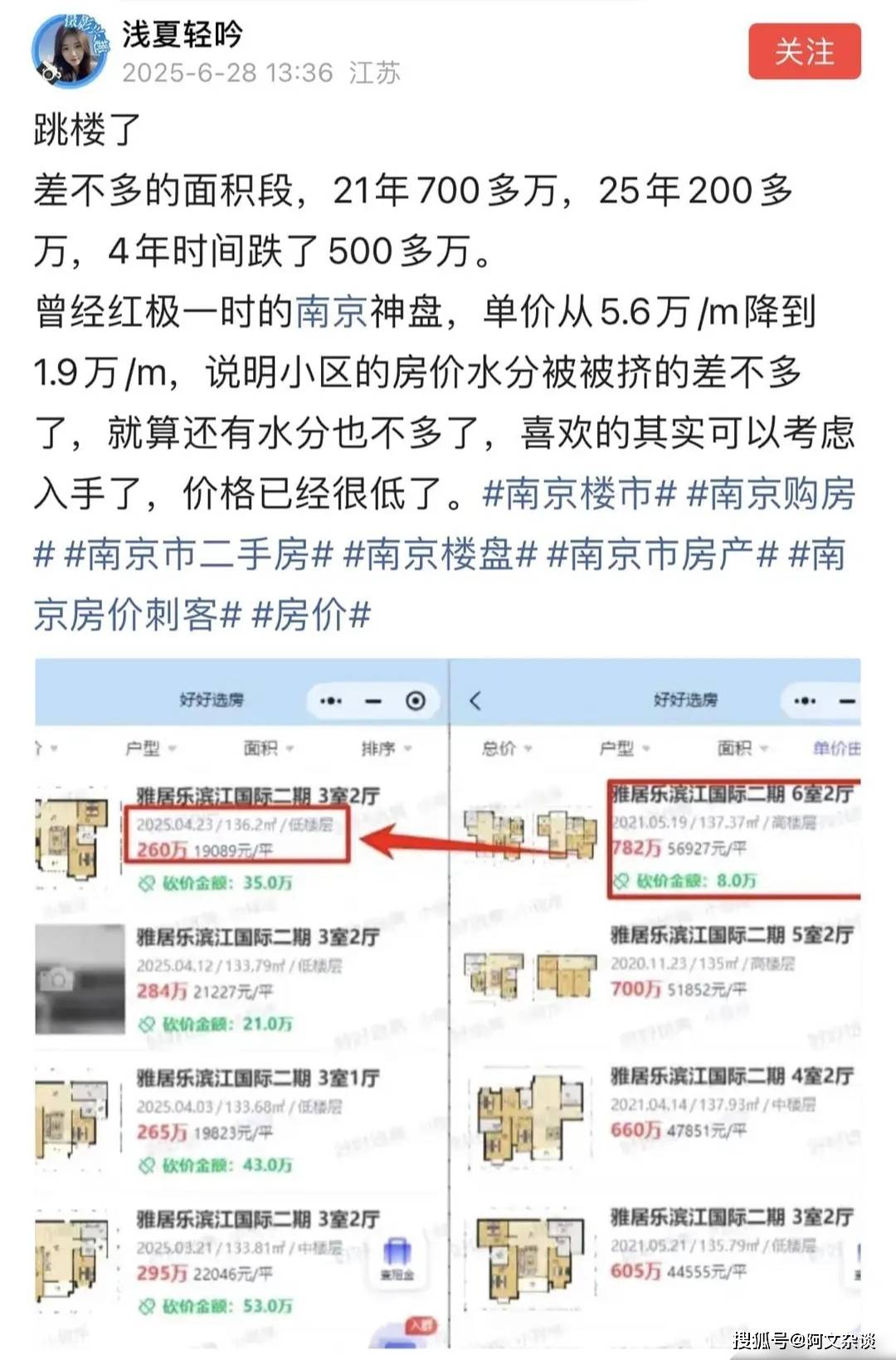
跌太惨了!南京这个小区从单价56927元到19089元,市值蒸发70%…
Sou Hu Cai Jing· 2025-06-29 03:56
Core Insights - The real estate market in Nanjing has experienced significant price declines, with some properties seeing reductions of up to 66.8% from peak prices, indicating a correction in the market [4][12]. - Despite the price drops, many residents still find housing unaffordable, highlighting a disconnect between market prices and local income levels [4][12]. - The current market dynamics suggest a shift towards price-driven sales, particularly in the second-hand housing market, which recorded a 4.9% increase in transactions recently [12][13]. Price Trends - For example, the price of a property in the Yaju Le Binjiang International Phase II dropped from 56,927 yuan per square meter in May 2021 to 19,089 yuan per square meter by April 2025, representing a nearly 70% loss in market value [4]. - Another property saw its price fall from 26,179 yuan per square meter in 2017 to around 10,000 yuan per square meter in the current year, with the lowest recorded price at 8,694 yuan per square meter [12]. Market Activity - The second-hand housing market in Nanjing showed signs of stability with 85 transactions recorded in a single day, indicating a potential recovery in buyer interest [12][13]. - The new housing market remains relatively stable, with average prices around 30,000 yuan per square meter, suggesting a more resilient segment compared to the second-hand market [15]. Economic Context - The overall decline in housing prices reflects broader economic conditions, including reduced income levels for many residents, which has affected their purchasing power [4][12]. - The market's fluctuations are attributed to supply and demand dynamics, emphasizing that real estate is fundamentally a commodity subject to market forces [16].
高盛预测房价还要下走40%?辟谣,谁在为房价裹挟民意?
Sou Hu Cai Jing· 2025-06-24 00:20
Core Viewpoint - The Chinese real estate market is experiencing a stark contrast, with some individuals facing losses while foreign investors are seizing opportunities to acquire properties at lower prices [1] Group 1: Goldman Sachs Report - Goldman Sachs' report highlights three core indicators: a significant oversupply of housing requiring 32 months to sell, a high household debt ratio of 63%, and a 96% urban homeownership rate indicating limited demand for new homes [3] - The report's data is supported by national statistics, showing a new housing inventory of 7.6 billion square meters and sluggish sales in third and fourth-tier cities [3] Group 2: Ministry of Housing and Urban-Rural Development Data - The Ministry's latest data presents a different picture, indicating a 21% increase in sales of improved housing in 30 key cities compared to 2020, with luxury properties in cities like Shenzhen selling quickly despite a slight national average price drop of 2.3% [6] - The land market shows a divide, with high prices in cities like Beijing while some areas like Zhengzhou face repeated failed land auctions [6] - Investment from banks is concentrated in economically strong regions, contradicting Goldman Sachs' prediction of a nationwide decline [6] Group 3: Foreign Investment Strategies - Foreign investment strategies appear contradictory, with firms issuing bearish reports while simultaneously purchasing distressed assets, leading to an 89% increase in foreign investment in Chinese real estate in Q1 [8] - Approximately 60% of these investments target "problem assets," suggesting a strategy of capitalizing on distressed sales following negative market sentiment [8] Group 4: Consumer Sentiment - Consumer anxiety is rising, with reports of mass selling in response to rumors about project failures, indicating a rapid decision-making process influenced by online discourse [10] - The prevalence of misinformation online complicates consumer perceptions, with significant viewership on topics like "housing price collapse" often based on outdated data [10] Group 5: Market Responses - In response to market confusion, cities like Hangzhou are implementing transparency measures, which have extended decision-making times for buyers while reducing return rates [12] - The National Bureau of Statistics is refining its housing price tracking methods, resulting in reduced volatility in major cities [12] Group 6: Conclusion - The current real estate landscape is characterized by divergent trends, with some areas experiencing price increases while others face declines, emphasizing the importance of localized analysis rather than broad generalizations about market direction [14]

上海2019-2020年最热项目现在房价是涨是跌?
3 6 Ke· 2025-06-16 02:22
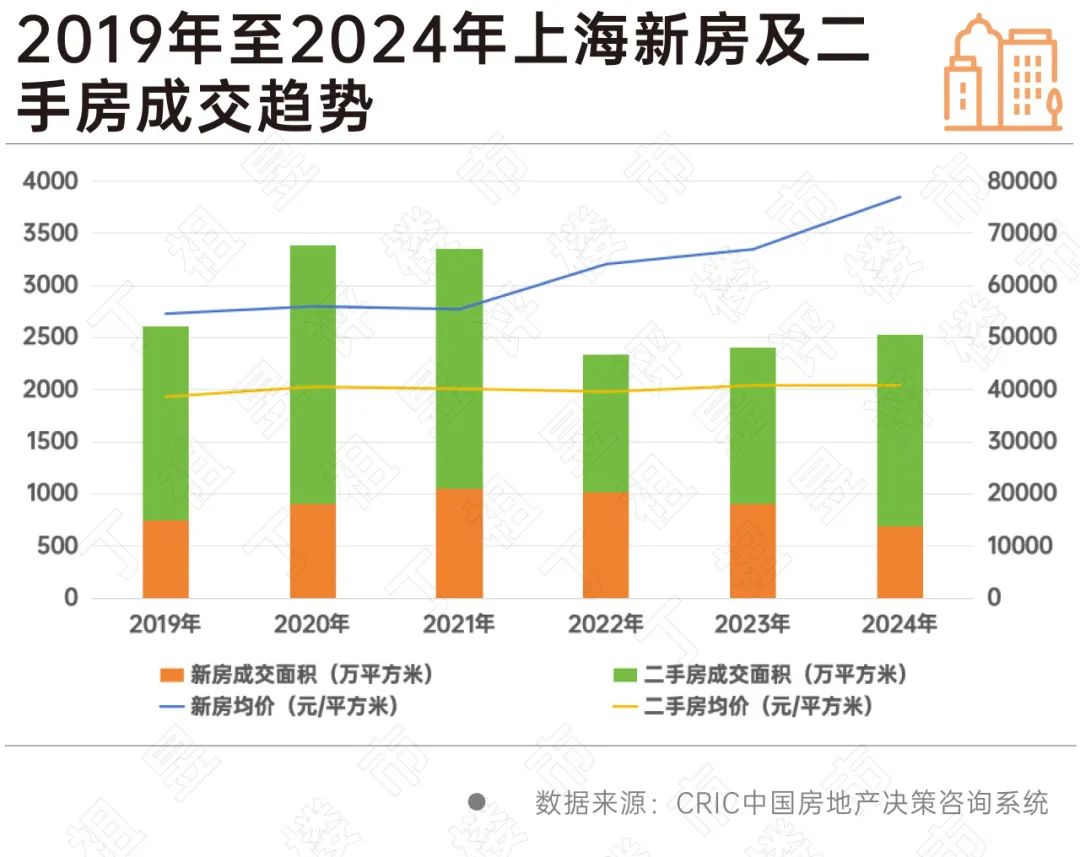
Core Viewpoint - The Shanghai real estate market has shown a significant divergence in property price trends, with high-end properties maintaining value while lower-end properties have experienced declines, reflecting the impact of market regulations and location on property values [1][13][16]. Group 1: Market Trends - The period from 2019 to 2020 is identified as a peak for the Shanghai real estate market, with a notable increase in sales volume and prices [1]. - In 2021, despite a record high in industry scale, the market began to decline due to tightening regulatory policies, particularly in the second half of the year [1][15]. - The average price increase for the sample projects from 2019-2020 was only 0.41%, with significant variations among different projects [5][6]. Group 2: Price Analysis - Properties priced above 100,000 yuan per square meter have generally not seen declines, while those below 50,000 yuan per square meter are the most affected by price drops [9][12]. - The highest price increases were concentrated in the Xuhui and Pudong areas, while the largest declines were observed in suburban districts such as Jinshan, Minhang, and Baoshan [2][12]. - The average price increase for properties priced above 100,000 yuan per square meter was 18%, while those below 50,000 yuan per square meter experienced an average decline of 9.47% [12][16]. Group 3: Regulatory Impact - The "price limit" and "price inversion" policies have significantly influenced the market dynamics, leading to a surge in demand for new properties, especially in core areas [14][15]. - The introduction of public lottery systems for property purchases has further complicated the market, creating a competitive environment for buyers [15]. - As the five-year holding period for certain properties approaches its end in 2026, these properties will likely enter the secondary market, potentially increasing competition and affecting prices [15][17].
14亿人口6亿栋房子,为何开发商还在不断盖房,房价还能涨吗?
Sou Hu Cai Jing· 2025-05-18 00:20
Group 1 - The core viewpoint of the articles highlights the paradox of a declining birth rate and increasing housing stock, yet developers continue to build new properties, raising questions about future housing demand and price trends [2][4][15] - As of the first quarter of 2025, the total urban housing stock in China is projected to reach 3.35 billion units, with an average of 3.62 units per person, indicating a saturated housing market [2][7] - The birth rate in China is at a record low of 6.77‰, with only 9.54 million births in 2024, contributing to an aging population and potential housing oversupply [2][7] Group 2 - Despite a significant drop in housing prices, with some areas seeing reductions of up to 30%, developers are still acquiring land at high prices, suggesting a belief in future price recovery [4][15] - Real estate agents speculate that ongoing development and improved infrastructure will eventually lead to price increases, although this is questioned given the current market conditions [5][11] - The construction of new properties continues in rural areas and small towns, despite high vacancy rates and a lack of demand, raising concerns about the sustainability of such developments [9][13] Group 3 - Developers are leveraging financial tools to maintain cash flow, often relying on a cycle of land acquisition and project pre-sales to sustain operations, which may lead to financial instability if halted [11][15] - Local governments depend on land sales for revenue, creating a cooperative dynamic between developers and authorities, which may perpetuate overbuilding despite market saturation [13] - The ongoing urbanization trend is expected to increase demand for urban housing, but the current demographic shifts suggest that rural populations may not significantly contribute to this demand [13][15]
1567套!4月,中山多个板块房价涨了…
Sou Hu Cai Jing· 2025-05-16 09:05
Market Overview - In April, the real estate market in Zhongshan showed signs of slight cooling, with developers slowing down their sales pace, particularly with new launches scheduled towards the end of the month, coinciding with the "May Day" holiday [1][5] - The total transaction volume for Zhongshan's commodity housing in April was 1,567 units, representing a month-on-month decrease of approximately 5% [7] - The total transaction area was about 172,400 square meters, down about 4% month-on-month, and the total transaction amount was approximately 2.026 billion yuan, a decrease of about 6% [7] Supply and Demand - The supply of commodity housing also saw a significant decline, with only 545 units supplied in April, a month-on-month decrease of about 66% [7] - The total supply area was approximately 65,400 square meters, down about 61% month-on-month [7] - Throughout the first four months of the year, demand has generally exceeded supply, except for March where supply and demand were roughly balanced [8] Price Trends - The overall average transaction price in Zhongshan for April was approximately 11,800 yuan per square meter, with an average transaction price per unit of about 1.29 million yuan, showing a slight decrease compared to March [12] - Despite the overall price drop, 14 districts saw an increase in average transaction prices, with the highest being the Ma'anshan area at approximately 19,300 yuan per square meter, up about 2.73% month-on-month [12][14] Transaction Rankings - The top developers by transaction volume in April included Yuan Yang, Jinle, Huafa, and others, with Yuan Yang leading at 201 units sold [17][20] - The top-selling projects were concentrated in the southern group, with Yuan Yang's "Fan Hua Li" leading with 194 units sold, followed by Jinle's "Shang Dong Cheng" with 104 units [20][21]

房价的下跌是由于有人故意唱衰造成的吗?
Sou Hu Cai Jing· 2025-05-14 05:57
Core Viewpoint - The article discusses the significant shift in the real estate market from a booming investment opportunity in the 1990s to a current state of uncertainty and caution among potential buyers, highlighting the dichotomy between housing as an investment and as a necessity for living [1][3]. Group 1: Historical Context and Current Sentiment - The 1990s saw a housing boom where buying a home was seen as a ticket to urban life and prosperity, contrasting sharply with today's market where concerns about falling prices dominate public sentiment [3]. - The decline in housing advertisements and the rise of pessimistic views reflect a broader societal anxiety about the future of real estate investments [3]. Group 2: Data and Market Dynamics - Despite predictions of a 20% increase in housing prices based on outdated urbanization models, current trends show a preference among young people for renting rather than buying, influenced by factors like rural revitalization and remote work [5]. - In the past year, national housing sales dropped by 6%, while mortgage balances reached record highs, indicating that buyers are taking on more debt as their income growth fails to keep pace with rising housing costs [5]. Group 3: The Impact on Ordinary People - Ordinary individuals face challenges due to sudden changes in housing policies, which disrupt their plans, such as selling old homes to buy new ones [5]. - The market is characterized by a divide between those who are anxious about falling prices and those who still have a genuine need for housing, raising questions about the true nature of housing demand [5]. Group 4: Future Outlook and Demand - The article emphasizes the importance of understanding population trends and real housing demand, suggesting that the peak population by 2030 and shifts in work patterns could reshape the housing market [5]. - The high prices in first-tier cities are driven by resource concentration, while new infrastructure and industrial shifts may alter urban dynamics, presenting opportunities for innovation in the existing market [5]. Group 5: Conclusion and Personal Reflection - The fluctuations in housing prices are fundamentally tied to confidence and demand, urging stakeholders to reflect on the true meaning of homeownership—whether as an investment or a place to live [7]. - The article concludes that clarity of purpose and understanding one's position in the market are essential for navigating the evolving real estate landscape [7].
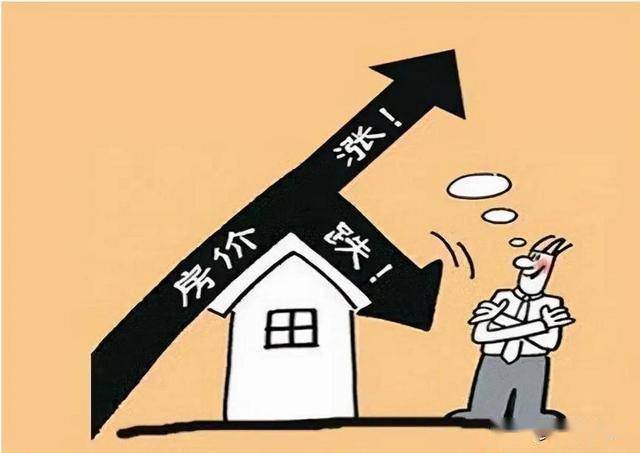
中介告诉我房东肯降价了,但我又陷入了犹豫
Sou Hu Cai Jing· 2025-04-27 11:56
Core Viewpoint - The real estate market in the Huafeng area is showing signs of price stabilization after a previous surge, with some homeowners willing to negotiate on prices, indicating a shift in buyer sentiment and market dynamics [1][3][9]. Group 1: Market Trends - A recent drop in property prices in the Huafeng area has been observed, with a specific example of a property that was previously listed at 5 million yuan now being open to negotiation [1][3]. - Several properties in the area have seen significant price adjustments, with examples including a 139㎡ unit that dropped by 10 million yuan after a previous increase of 6 million yuan [5][6]. - The overall transaction volume in April has decreased compared to March, suggesting a cooling market, although certain properties still maintain reasonable sales activity [9]. Group 2: Buyer Behavior - The typical buyer, represented by the character Ye, is experiencing indecision between purchasing now or waiting for further price drops, reflecting a common sentiment among potential homebuyers [7][11]. - Many buyers lack the confidence to make decisive moves in the market, often influenced by external information and market fluctuations, leading to a tendency to delay purchases [9][11]. - The current market conditions may favor buyers looking to negotiate, as sellers are more open to discussions compared to previous months when they were less responsive [11].